According to work in a new study, scientists have said that playing action games may actually help to boost reading skills in Dyslexic children. The study was carried out by researchers from the University of Padua in Italy, and was funded by grants from the CARIPARO Foundation and the University.
The study found that twelve hours of gaming achieved more than a year of reading development and was as effective as the best remedial treatment currently available. The Children involved in the study played nine sessions of 80 minutes on either action games or non-action games. The children playing the action games provided the only notable benefit with the improvements including being able to read faster and more accurately than their counterparts. They also improved in other tests of attention.
This study could support the idea that the roots of dyslexia lay in visual attention deficits. Video games are thought to affect visual attention pathways in the brain which may influence reading ability. The fast paced nature of action games forced the children to focus more efficiently in order to gather the information which was needed to progress in the game.
Dr Andrea Facetti, who is from the University of Padua in Italy, said:
“Action video games enhance many aspects of visual attention, mainly improving the extraction of information from the environment.”
This could be a way of getting video games into the classroom, as many scientists and educational thinkers now profess that not every child learns in the same way, and that video games may be of major benefit to both academic learning as well as cognitive skills in many children.
However, more research is needed before games should be considered a treatment for dyslexia and the amount of time children spend playing video games should be limited, warn scientists. What do you think about the findings? Let us know in the comments section below.
Thanks to Xbox Australia and EB Games, I recently got some hands-on time with Gears of War: Judgment’s campaign. Epic Games lead level designer Jim Brown also graced us with his presence, and an interview which you can readright here.
To preface this preview, I must say that I did not get too much time with the game as there were only 5 game stations and more than 20 guests so we all gave up the controller after a short while to be courteous and allow everyone a fair chance to play part of the 1.5hr long chunk of gameplay (but I did observe A LOT and make many notes).
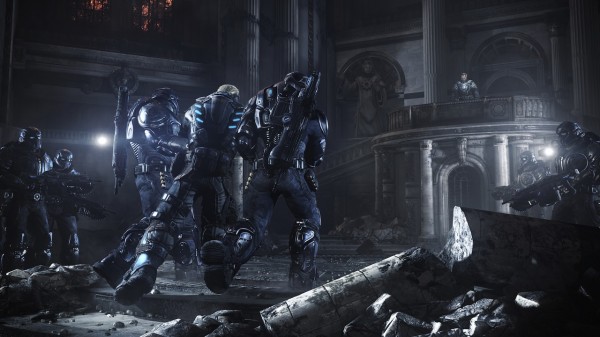
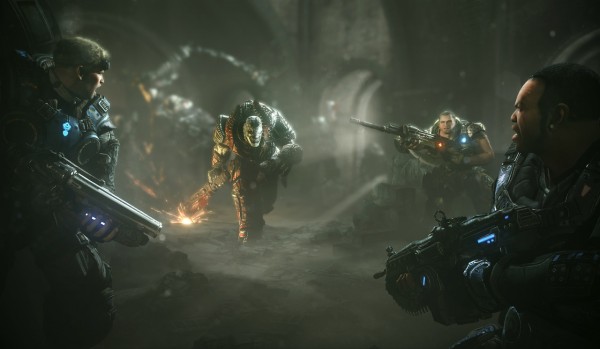
So, this time around you will be playing apparent fan favourite Lt. Damon S. Baird. Along with Pvt. Augustus Cole (COOOOLE TRAAAAIIIN!), Kilo Squad has some familiar faces. Joining them are trainee of the Onyx Guard Academy, Sofia Hendrik, and COG soldier Garron Paduk. The story starts off as Baird and the team are being tried for war crimes by Col. Ezra Loomis. Players will then get to experience Kilo Squad’s actions brought forth as testimony in the trial as a series of flashbacks. This is the story structure for a sizeable portion of the game.
The majority of this opening section takes place in and around the ‘Museum of Military Glory’ in Halvo Bay; one of the first big cities to get attacked on Emergence Day. Kilo Squad jump straight into the action, defending the city from Locust swarms. I am not a fan of detailing plot points, so I will just get into the mechanics and gameplay. Judgment makes some key tweaks and changes to the control scheme that, if you’re like me, may catch you off guard at first. Firstly, gone is the use of the D-Pad to select your weapon. That functionality has now been assigned to the ‘Y’ button (Up on the D-Pad now zooms in on a point of interest and Down on the D-Pad brings up your mission objective).
It’s a move that mirrors many FPS’ out there, but has good reason to. In Judgment, the “Smart Spawn System” means that enemy types and enemy spawn locations are randomly generated, sort of like how ‘The Director’ worked in the Left 4 Dead series. Coupled with the fact that the sheer number of threats on screen has increased, you may find yourself surrounded or overwhelmed and streamlining the weapon swapping – which is also quicker animations-wise – ensures you aren’t caught off guard while an animation cycles or distracted by an unnecessary interface element in the heat of intense battle. Those moments are critical.
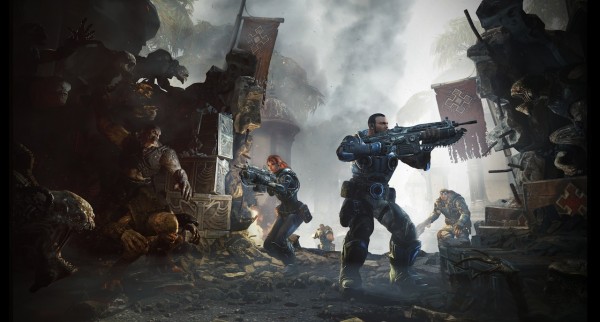
Also, grenades are now mapped to the ‘LB’ button and can be thrown without any wind-up, although that is still an option for when you have the spare time to aim. Many weapons were featured in this demo, including the Boomshot Grenade Launcher, Mortar, Gnasher, Lancer, One-Shot, Scorcher Flamethrower, Breechshot, Mulcher and Boom Shield. The newly revealed Stim-Gas Grenade was also made available, which heals anyone who enters its radius of blue mist. I was surprised to see so much of an arsenal acquirable from the get-go, but with wave after wave of Locusts, I was glad to have access to them.
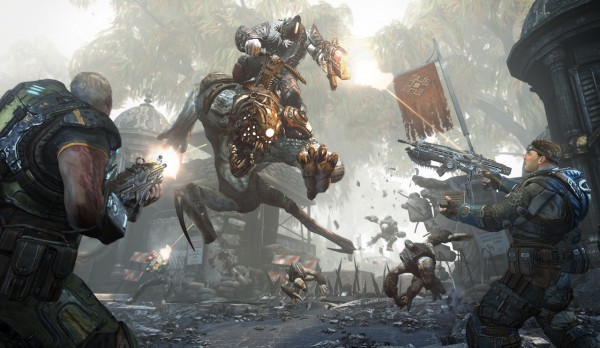
Speaking of Locusts, a litany of enemy types entered the battlefield throughout the play-through. Grenadiers, Tickers,Wretches, Kantus, Mulchers, Boomers and Butchers were all present. I found the A.I. of the average Locust Drone to be disappointedly simple, and even confused at times. I experienced them, first-hand, facing the complete opposite direction to me as I brushed by them, lost as to who to attack as a priority; me or my teammates. Nonetheless, the onslaught is brutal across the board and you will actually find yourself frantically on the move quite often, rarely able to stay behind a piece of cover for too long before being forced out.
Back to the weaponry, there are certain weapons that are utilised only in specific scenarios, such as the Sentinel – a placeable turret that adds significant firepower to your defences. The Hammer of Dawn even makes an appearance, although specifically during a Declassified Mission. These missions are a huge selling point for the campaign, along with the new star rating system. Every section of the game is bookended by a stats page of sorts that lists all your battle achievements, adding up to a star rating out of 3. It’s a system that encourages replay, which can be done immediately by pressing ‘Y’ instead of ‘A’ for continue on said page.
The aforementioned star rating system carries over to the Declassified Missions, which pose a series of challenges for the player to complete in the ensuing level or area. These conditions vary from restrictions on weaponry to time limits and more. Successfully completing these tasks and the missions themselves grant more points that fill up your star rating much faster. This, in turn, will unlock special items or weapons down the line. These missions are billed as the “off-the-record” recounts of Baird; the events that actually went down, although, it’s up to you if you want to tackle them – and if you don’t, then they never really happened did they!?
These alternate events take place in different routes and locations than you would normally experience outside of attempting them. The same ground is not being covered here; there is always something new to see or do in these missions, which hold even more value because of that fact. Again, replay-ability is clearly something the teams at Epic Games and People Can Fly wanted to instil. It also makes the game that much less linear, which is always welcome. So when you get your copy, I suggest accessing that massive red Gears omen plastered on a wall somewhere in your current level. Oh, and play on higher difficulty levels for more rewards!
All in all, Judgment looks like the original Gears of War in the sense that it is grittier, darker and much more muted than the later titles. The action comes on thick and heavy, more than ever before. To me, with the added elements of the Declassified Missions and the star rating system, I felt like the campaign took on an arcade style approach, and adopted particular multiplayer ideas/concepts as well – especially the Horde mode-like moment or two. It plays like you want it to; faster, more refined but also familiar. But this is definitely not just another Gears game. The team took risks here, and it’s refreshing to see.
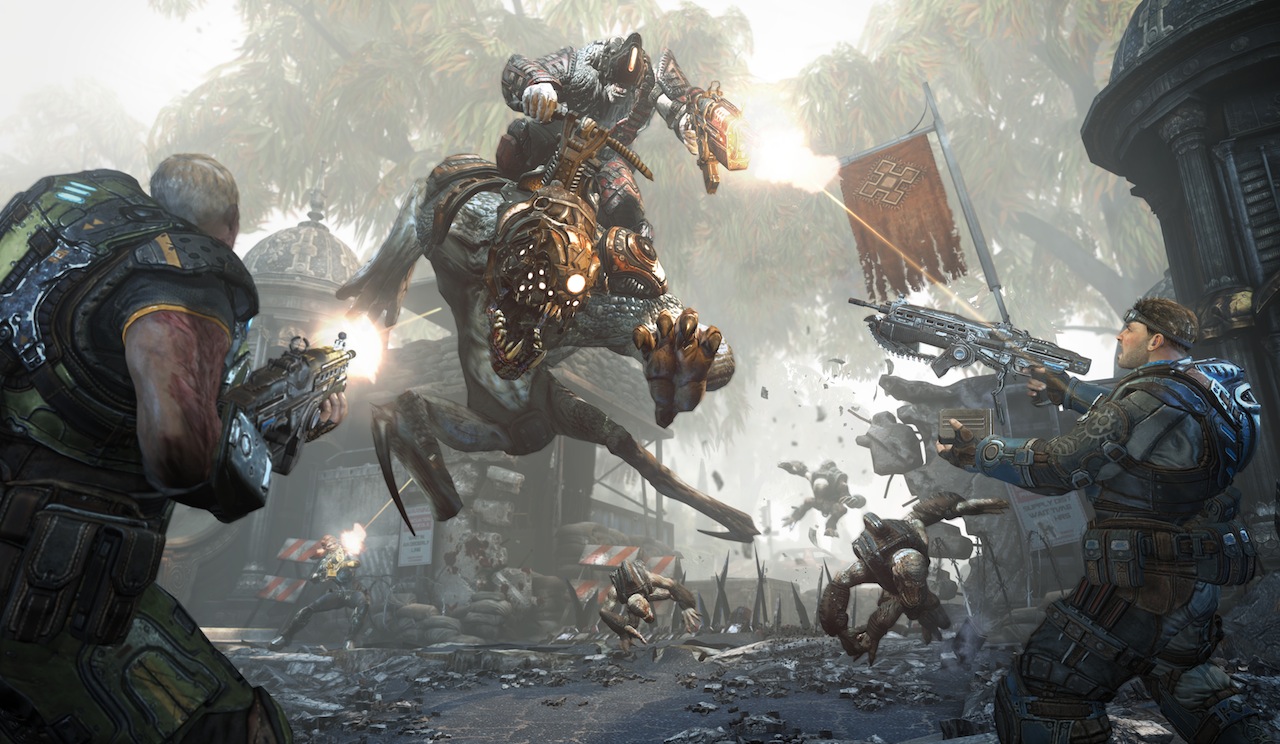
All good things must come to an end and it seems that the end of the Fairy Tail anime is coming to a lot sooner than anyone would have thought. As first found by 0takomu, it has been announced in the latest issue of Kodansha’s TV Magazine that Fairy Tail’s anime broadcast will end on March 30th.
The scan of the announcement from the magazine can be seen above and is clickable for a very high-res version of the announcement. It is currently unknown as to why Fairy Tail’s anime is ending, especially since the series is currently in one of the longest arcs in the Fairy Tail franchise.
The Fairy Tail manga appears to be continuing without interruption, but this isn’t the first time we’ve seen a popular manga’s anime come to an end despite the manga itself continuing with no interruption.
Update: Hiro Mashima, Fairy Tail’s mangaka, has taken to Twittersaying that he has good news, but that he will not reveal it yet and fans have to wait until the time comes for the announcement. Considering this Tweet comes immediately after news broke of the anime’s ending and is being classified as “good news,” we’ll leave it up to you to decide what this news could be.
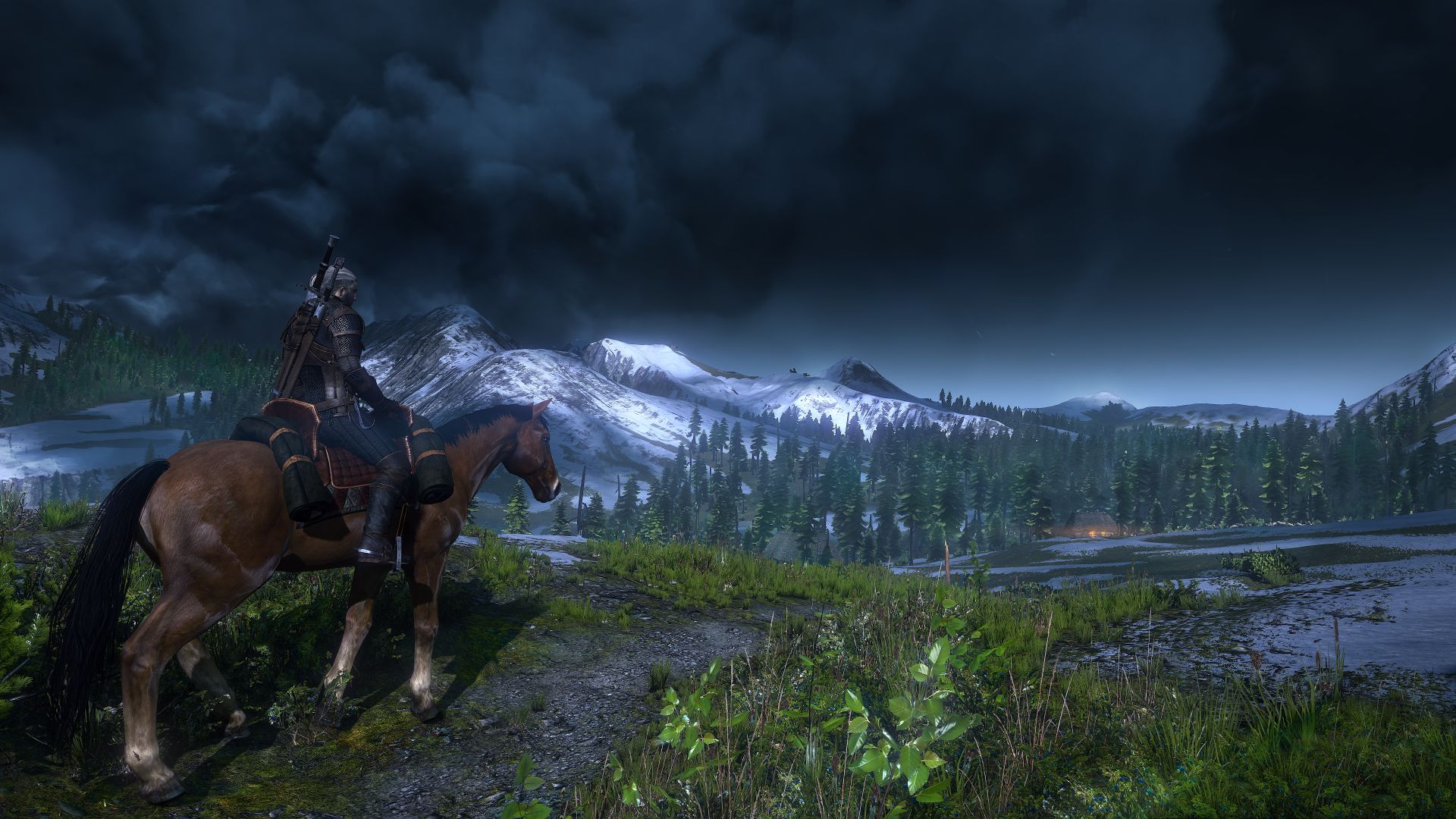
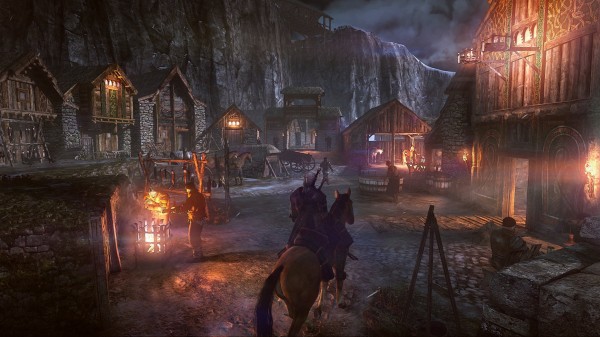
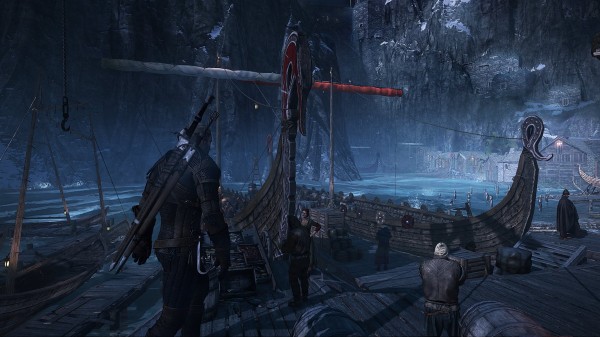
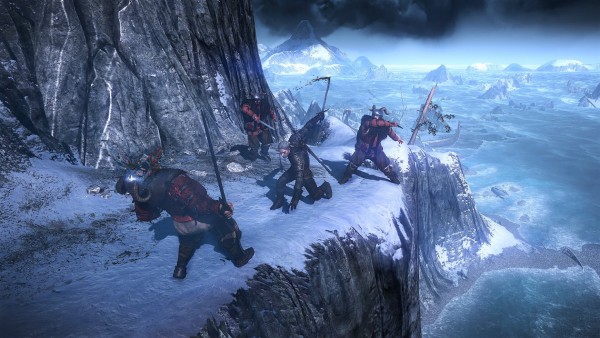
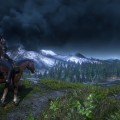
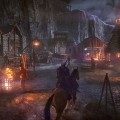
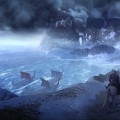
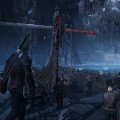
After it’s initial announcement, The Witcher 3: Wild Hunt hasn’t revealed all that much about the world that players would be exploring other than just how much bigger it would be than Witcher 2. Luckily however, CD Projekt RED has talked more about this huge world for their players as well as a set of screenshots to show it off.
Detailing the story it was stated that inside of the living-open world players would be free to complete missions in any order, but their decisions would have a deep impact on everything from the locations, to the creatures, to the NPCs. Better for those that missed out on the first 2 games, the story has also been designed as a standalone adventure to allow those new players to not have to worry about details in the games they didn’t play.
As for the world that the story will take place in, only three locations have been confirmed so far: the archipelago of Skellige, the City of Novigrad in the delta of the Pontar river, and No Man’s Land. In addition, these locations are set to differ drastically in terms of cultural and adventure, as well as being filled with “living” props that will change under Geralt’s influence throughout the Northern Kingdoms. As such, the world will have predators hunting prey and monsters attacking villages organically through the games AI.
Combat in The Witcher 3: Wild Hunt has come further since it predecessor as well, with more abilities and skills as well as more animations for Geralt as he fights, a total of 96 almost 5 times that of Witcher 2. A greater variety of tactical options through the use of equipment like traps and bombs means players will have more than just basic combat sequences to engage in during fights. Players will also be able to use the environment to their advantage, such as using bee hives to get their inhabitants to attack enemies.
Lastly, the RPG elements in the game have also bee expanded upon from an expanded Witcher Sense that will aid players in more than just combat, to a broader sign casting with each of the 5 signs having 2 different modes of use, an intuitive alchemy system that allows players to make things from pyrotechnics to elixirs, and a crafting system that can impact gameplay. Even though that seems like a lot to learn and handle, Witcher 3 will feature a tutorial system a feature sorely missed in Witcher 2.
The Witcher 3: Wild Hunt looks to include a whole lot of expansion in many of it’s different areas, which is great to see for the final installment in the trilogy story of Geralt. Interested players can check out the new full-size screenshots in the gallery below to see some of the locations Geralt will be visiting when the game releases next year, 2014, for PC, PS4, and all high-end platforms.
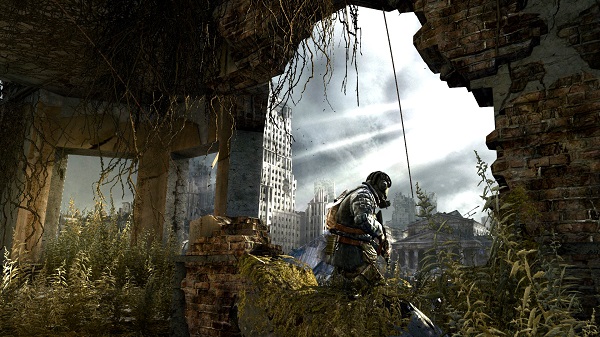
After THQ went bankrupt and it’s assets were sold off to a number of different publishers, many fans wondered what would happen to games that were meant to be released soon, such as Metro: Last Light. Well today Deep Silver, the company that acquired the license and the studio for Metro, has announced that fans can expect Metro: Last Light on store shelves on May 14th in North America and May 17th in Europe.
The title is coming out to the Xbox 360, PlayStation 3 and PC and is still set in Moscow 2034 where the underground tunnels have become home to the survivors from the nuclear war that devastated the world. Players step into the boots of Artyom as he fights for survival against other factions in the tunnels and tries to track down a doomsday device that could lead to their victory.
The Museum of Modern Art, better known around the world as MoMA, has acquired 14 video games to include in its ‘Applied Design’ Exhibition opening on the 2nd of March. ‘Applied Design’ focuses on the how design can be used in problem solving, whether the problem is found in the real world or constructed by the designer for the purpose of creating meaning. Sitting along designs that have changes the world, the games will be archived for MoMA’s permanent collection. Other works in the collection include Massoud Hassani’s ‘Mine Kafon’ landmine detonator, a glass maker that utilises the desert sun and sand for 3D printing and ‘The Earthquake Proof Table.’
The playable games on exhibition are:
Passage
Tetris
Pac-Man
Katamari Damacy
Vib-ribbon
Cannabalt
flOw
Portal
Another World
Games that are to be demonstrated through video or walkthroughs are:
Eve Online
SimCity2000
The Sims
Myst
It’ll be interesting to see what Robert Ebert has to say about this exhibition. For now though, check out the promotional video for this exhibition down below.
Indie developer New Horizon Games unveiled the Kickstarter for their newest project – an Action Roleplaying Game (ARPG) by the name of Empire Eden.
Empire Eden is set to be a cross between some of the finest classics of all time: Metal Slug, Contra Hard Corps, Metroid, and Castlevania. The game aims to combine roleplaying elements with puzzles and run ‘n gun gameplay to create an experience you will never forget.
In Empire Eden you play as a surviving member of a tribe that was slaughtered by the Empire. Unaware of the Empire or its reasoning for such a heinous act, you only want to recover the members of your tribe who still live. As you play through the journey you will unlock various animal powers to help you along.
The Kickstarter will run until March 27 and has a funding goal of $19,000. Check out the trailer below, and be sure to check out their Kickstarter page here.
The Godfather Slots Developer: Elephant Mouse Platform: iPhone, iPod touch, iPad (4.3 or higher) Release Date: February 7, 2013 Price: Free – DOWNLOAD NOW!
Overview
The iOS has transformed in the past few years to a legitmate gaming sector – to a pit of gambling, where players have to pay to get their entertainment. I always find it to be a sad feeling when I pay for a platformer or RPG, just to find out half the game is locked behind the “freemium” structure on the service. Gripes aside, I do still enjoy gaming on my iPad, but I go the casual route with it and partake in Bejeweled Blitz, that hot game of the moment, and slots. Yes, Slots are definitely a niche thing to partake in on the device, as you don’t really win anything, but as someone who finds himself visiting casinos on occasion, the thrill of a potential jackpot is an exciting endeavor – no matter what it is that the player wins in return.
Elephant Mouse have now graced us with The Godfather Slots, paying homage to the classic franchise with several themed machines already included. Does this slot sim pay it big, or is it just another freemium title that has it’s eyes on your wallet?
Gameplay
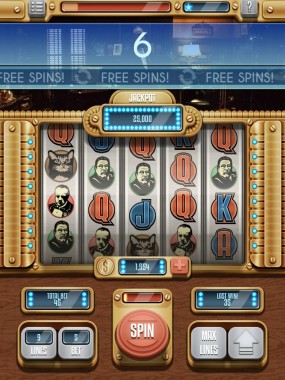
I would be lying to say that The Godfather Slots has any real strategy behind it. I mean, all you really do is hit “Spin”, and wait to see if you are lucky enough to get a proper line-up of symbols in order to get a payout. Well – thankfully, that is the premise of slots to start with, so those who download this themed compilation of slot machines will more than likely already be ready for this concept from the launch of the game.
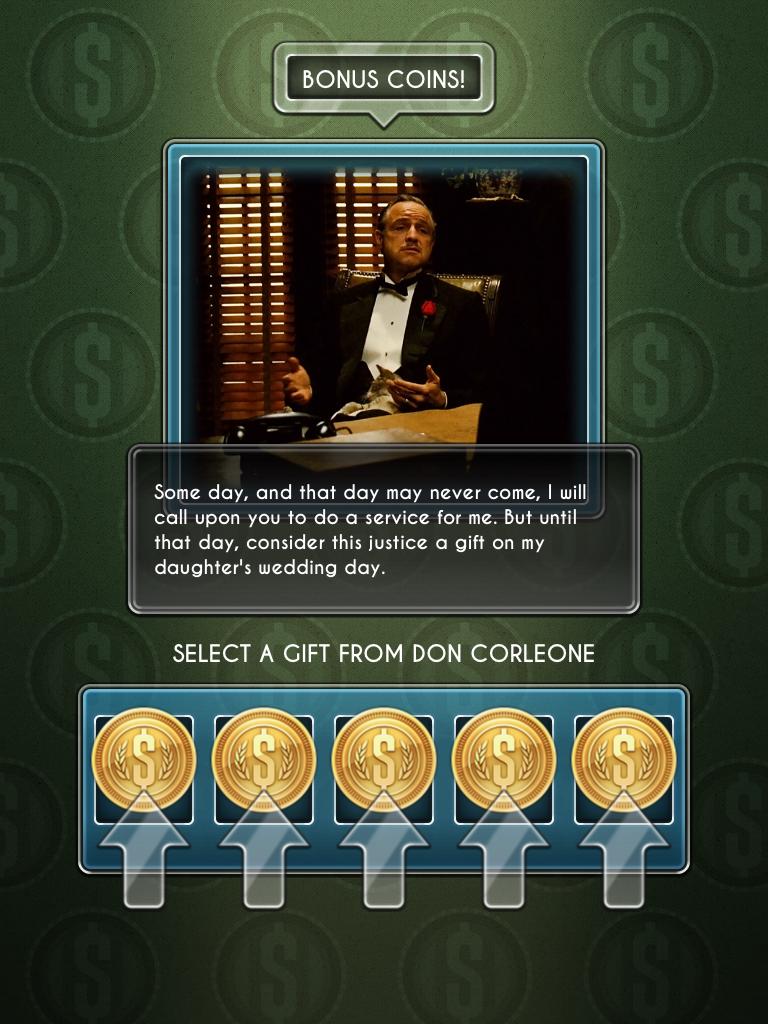
Like most digital slots, The Godfather plays with a leveling system attached, where players gain experience points as they spin. Once a certain amount of points are obtained, new slots and power-ups are unlocked, letting the player enjoy a new machine or use one of the many special abilities to enhance their own odds in game. From time to time, the player will also be awarded Free Spins or a bonus mini-game as well, which of course increases the chance for a greater payout.
I can’t really say that I am a huge, die-hard fan of The Godfather franchise, but this set of slots does capture the essence of the product nicely. Once a mini-game is unlocked, the player will be treated to a still image of the man himself as he offers you to pick one of a set number of mystery prizes. Yeah, it’s nothing too exciting, but the free digital cash is a nice incentive to keep playing. Other rewards come in Hot Streaks that offer extra coins for wins for a limited time, as well as power-ups that lock reels in place and offer double the winnings for one spin.
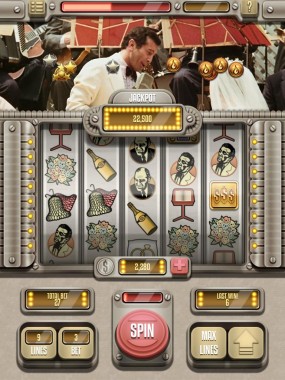
That leveling system I spoke of earlier is really the main reason to continue tapping away. As of the time I am writing this, there are four machines that can be played if your level grants it, and a good number of machines marked “Coming Soon” that are sure to be added as time passes. This means that the more successful the player is, the more variety they will have in the app. Each machine also can be leveled up to add reels and larger bets, allowing the player’s win amount to increase as they unlock more perks. Sadly, the freemium portion of the game takes over for the hardcore investors who are spinning away. Once your money is gone, you will have to wait four hours to be given $500 to gamble on unless you decide to pay for digital coins. Yes, I like slots just fine on occasion, but paying for digital currency is just not my cup of tea. Sure, I wanted to unlock more after going broke, but I found little problem waiting for more coins to come as the payouts are decent enough to provide a decent portion of gametime with that free $500.
If you so choose, you can share your big wins and free spins with friends on Facebook and Twitter as this app is fully featured with Leaderboards, sharing, and bragging utilities, which is quite impressive compared to most of the free slot games I have tried out on the service. I will say though that while Godfather Slots is fully loaded when it comes to social networking, it can be a bit irritating to have the app constantly ask you if you want to share the win, but for the older crowd who live for these types of experiences – I doubt they will mind too much simply tapping that button to brag to their other gambling addict pals.
Visuals and Audio
I don’t really know how to explain what a decent looking slot machine should look like, as most who get this app are more than likely are going to be content with the machines provided. Every button is vibrant and sleek, and the machines themselves never once putter or lag while spinning (I have seen that little problem occur a lot during other iOS slots). As for the movie fanfare…well, expect images of the cast of the godfather, with machines and bonuses incorporating the most famous scenes into the slots themselves.
Audio wise, things are lacking. Sure, the start-up and menu music makes everything seem promising if you are a Godfather fan, but while playing you will only get to hear the noise of the machine itself as each reel comes to a stop and experience points are added to your current level. Plunk, plunk, plunk…repeat. Sure, those who play slots in a casino expect this, but why not make this title a bit more flavorful? Even if it was generic mobster stock music, this title would definitely feel more true to the franchise if it payed tribute to the pretentious flicks by making the player feel as if they were reliving each scene through some decently themed audio.
Overall
Have you ever heard the phrase “it is what it is”? That is a bit of a bland way to describe The Godfather Slots, but there is no better way to detail these machines than with those five words. While addictive, these digital slot machines keep the true rewards for playing reserved for the extremely patient or the crowd that pays. With that said, I have played quite a few iOS slot sims, and this one definitely offers a lot more game time and bonuses than others, while still staying true to the design by keeping it “All in the Family”. Sure, it’s a freemium cash-grab, but slots are that anyway. Anyone looking for a nice little diversion at no cost are sure to get some entertainment here, but keep in mind to keep your wallet distant – as this Godfather might just make you an offer you can’t refuse.
Capsule Computers review guidelines can be found here.
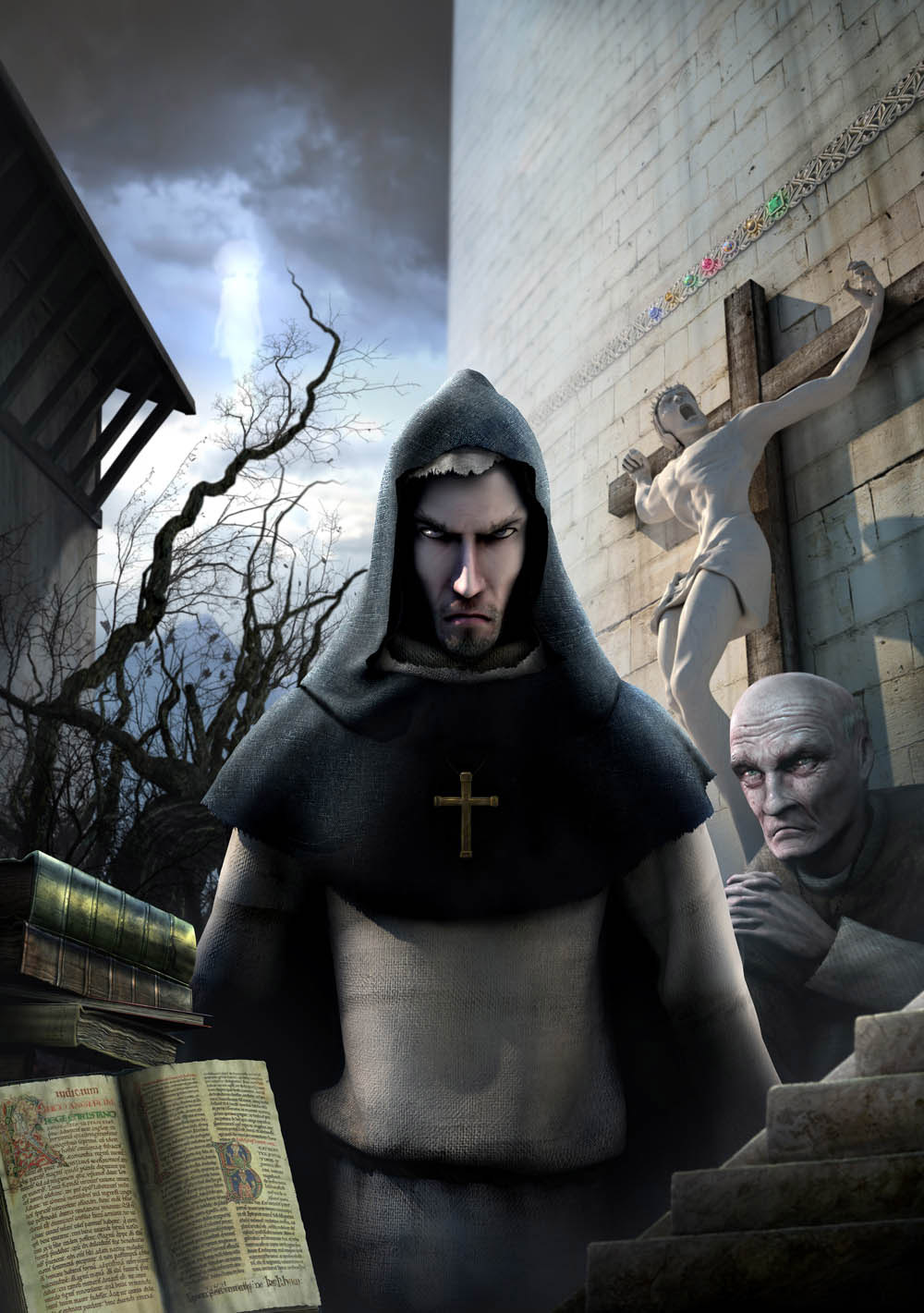
Anuman Interactive has announced that it will be adding a new series of adventure games to its catalog of Microïds games. The new series will be based off of the Nicolas Eymerich novels, by Italian writer Valerio Evangelisti, about the historical character who wrote the Directorium Inquisitorum, the procedure for the Spanish Inquisition.
The new game series will follow the character throughout his history, which Anuman hopes as “the beginning aof a long series of successful titles”. The games will be coming from Ticonblu, an Italian developer like the author of the novels, with the first part of “The Inquisitor: The Plague” series to come in Q2 of 2013 for PC, Mac, Android, and iOS. Those interested can check out the full artwork by clicking the screenshot below.
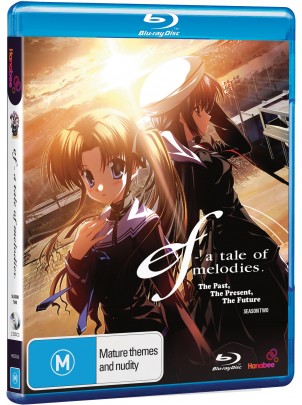
Ef – A Tale of Melodies Studio: Shaft Publisher: Hanabee Format: DVD, Blu-Ray (Reviewed) Release Date: Feb 6th, 2013 – Out Now Price: $49.99 (Available Here)
OVERVIEW
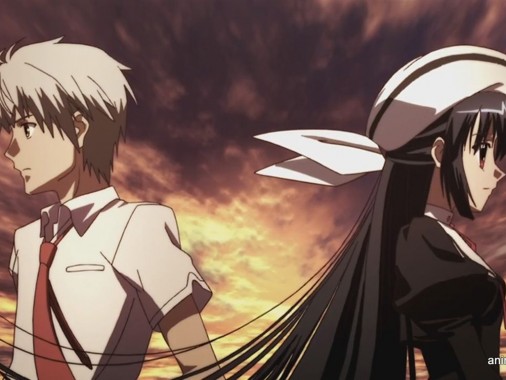
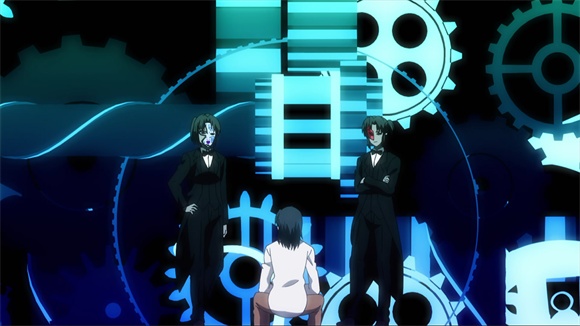
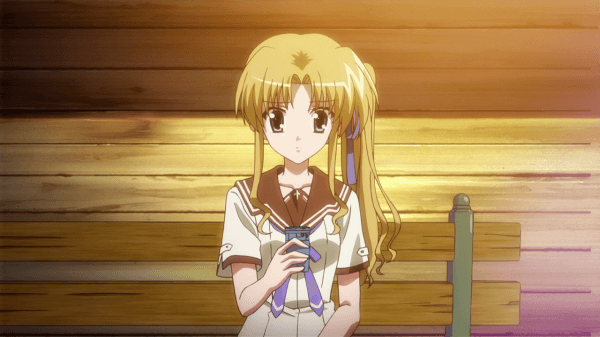
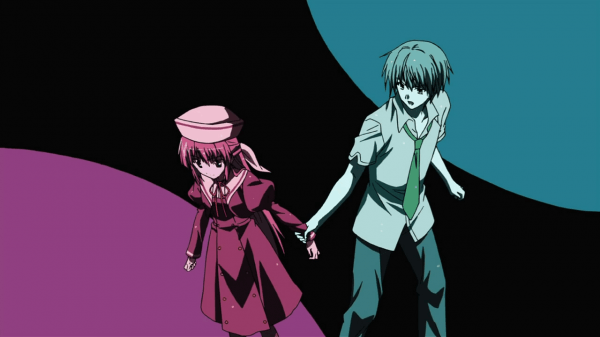
Ef: A Tale of Melodies is the second season of the Ef anime series. Not to be confused with the first season: Ef: A Tale of Memories, this season details a completely different plot focusing on completely separate characters. Animation Studio SHAFT (famous for other anime releases like Madoka Magica and Negima) along with publisher Hanabee have brought this second season to Australia shores in both DVD and Blu-ray. Set as both a modern drama and romance, Tale of Melodies tells a relatively dark tale of relationships and fate. Putting numerous spins on the classic “happily ever after” romance, what kind of appeal does this collection have for western audiences?
STORY
The plot of Tale of Melodies is broken up into two separate timelines, one set in the present, and the other set in the past. The present timeline revolves around a talented musician named Shuichi Kuze. A world class violinist, the young Kuze should have the world at his feet. At least, that would be the case if he weren’t dying. Resigning himself to this fate, Kuze goes about the remainder or his days trying to keep as distant from other people as possible. However, when he meets Mizuki, a young girl with a thirst for life and adventure, he begins to develop genuine feelings of affection. We see that Kuze is torn between his innermost desire to live out the rest of his days in happiness, but doing so would bring inevitable heartbreak to this girl when his time finally comes.
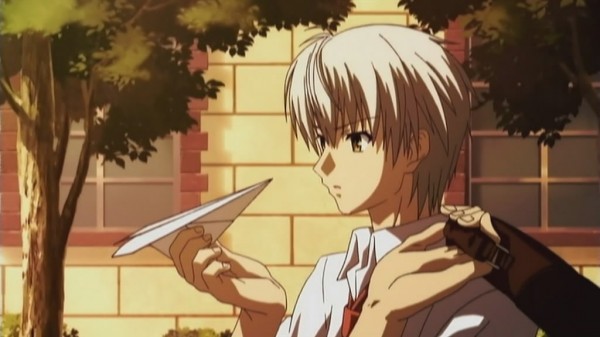
The second timeline, set in the past, is focused on a high school budding romance where our hero Himura Yuu encounters a girl from his own past named Yuko. Unaddressed feelings are shown to resurface, and while the two initially avoid contact with one another, circumstances force the pair to acknowledge both the romantic tension, as well as their painful memories of the past. Even when things start going smoothly for the pair, some secrets are still hidden between the two, and the story falls into a very VERY dark place.
As far as the plot of this series is concerned, the whole story feels rather oddly disjointed. The telling of multiple stories during the runtime of twelve episodes feels unnecessary, and greatly breaks up the plot flow of the two individual continuities. It feels like this series attempted to take a page out of Durarara’s book of storytelling by having multiple characters and story elements overlap in one ultimately grand structure. We know for a fact that this style of storytelling can be done well. However, the story themes in Tale of Melodies attempt to link these two continuities together in a rather weak and ambiguous fashion. Only a very few nods are made to the suggestion that these stories take place in the same universe. They might as well have been completely separate.
The plot lines feel quite removed from one another entirely. As a result of this, audiences are more than likely to gravitate towards one of the stories more so than the other. This reviewer found the past storyline involving the high school style romance to be initially bit more appealing than that of the dying musician. (At least until around the sixth episode, where things start to get pretty nasty.) Having the second storyline jump up in the middle of a particularly dramatic moment really shatters the pacing. I can understand the artistic nature of what the series is trying to achieve, but on the whole it feels like it’s trying too hard to do so for the sake of being artsy.
This is not to say that the series doesn’t have its memorable or enjoyable moments. The ones that tended to stick the most were scenes such as Yuu coming to Yuko’s aid when the latter was beset by bullies, despite his own personal reservations about doing so. And while I wasn’t too fond about the plot of the present tense story in general, I found Kuze’s own self-sacrificial way of life rather admirable. However, few specific revelations and scenes in the two stories will really challenge some viewers’ ability to stomach numerous taboo themes.
Characterisations of the main cast are a rather mixed bag of quality. On the whole, the entire cast feels damaged, for lack of a better word. All of the lead cast are defined by some horrible or unfortunate event of their past, and this angst is still carried over into their present characterisations. In Kuze’s case, this feels a bit more justifiable, given his condition, but for the other cast members, character development is pretty limited. Beyond this, the only character I really felt that broke this mould in a convincing fashion was Mizuki, whose upbeat mannerisms appealed far more than the monotonous angst of the other leads. Character development only really happens secondarily to romance development, and not in tandem.
VISUAL
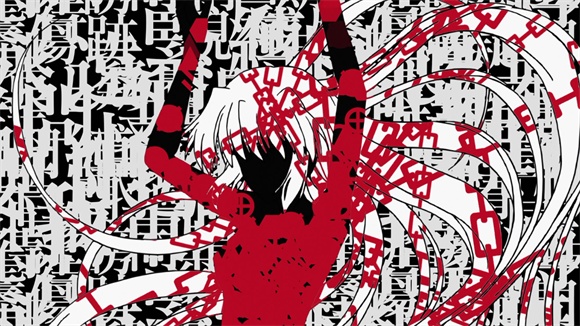
The art house nature of Tale of Melodies is apparent throughout all twelve episodes. Environments, features and characters are spectacularly detailed in the Blu Ray release. SHAFT has a pretty good history when it comes to art design of its characters and scenery. Even the “removal from reality” type scenes are drawn spectacularly well, never once leaving the viewer in a state of confusion. The juxtaposition of the real world and that of the inner corners of the mind is one that is made very subtly.
Naturally as a SHAFT anime project, the character drawings and animation are done in a typical moe style, with large focused eyes and well defined facial features. Emotional expression through this visual medium is pretty distinctive, especially in a series where the viewers are taken on something of an emotional rollercoaster in both plots.
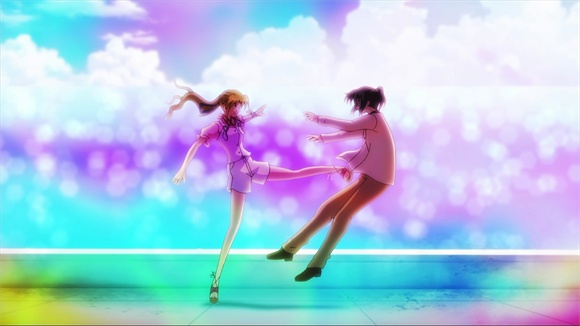
The two different timelines of the collection are well divided visually. The visual distinction between the two was probably the most effective tool in discerning which continuity the viewer is facing. One the one hand, the visual style and colourings of the past timeline are generally darker in shading and colouring selection is a bit more monotone. The present timeline features a brighter and wider array of colour styles, most often used to reflect Mizuki’s bright and upbeat nature. However, the impact of this also serves to divide the two plot lines further from one another. Take that for what you will, however it does not detract from the fact that the drawing and animation style is certainly breathtaking where appropriate, and dark and shocking in other areas.
AUDIO
The musical score for the opening and closing theme songs were certainly exciting, providing a beat that anyone could tap their feet to. The mood set by the opening in particular sets the appropriate stage for the genre of the series. The background scores are decently considered, featuring a slow clam pace for the majority. The violin sections of Kuze’s story are superbly well done and speak as a powerful allegory for his own inner struggles with the notions of death and love.
The English voice cast play their respective roles quite well, though the presence of the Japanese dub may hold a higher degree of appeal to many hardcore sub fans. This is especially true of the dialogue, where, despite the pretty solid performances of the voice actors, many of the lines sound rather clichéd in the English dialect. Overall however, the sound quality can’t be faulted here.
EXTRAS
The extras section of the Blu Ray release features your pretty standard anime DVD release format. Of course there is a collection of trailers for other series released by the publisher Hanabee. The only other significant mentionables are those of the opening and closing sequences of the collection cut and cleared of credits. Certainly worth watching through, if for no other reason besides the addictively catchy theme songs.
OVERALL
Creating a successful anime series that addresses the drama and romance genre is understandably a difficult one to perfect. In comparison to its predecessor season, Tale of Melodies is likely to hold a degree less appeal due to the presence of pretty powerfully dark themes and situations. Of course it is visually quite stunning as a whole, but the same level of praise can’t truly be aimed at the plot and characters. Of course such opinions are subjective, and to art house fanatics and the dramatic at heart, Ef Tale of Melodies will deliver some pretty powerful and memorable moments. But to the average anime fan whose exposure to the dramatic genre is limited, it might not be their proverbial cup of tea.
For all of the impressive visuals and the high grade of sound quality, these features cannot hold up what feels like a disjointed plot as a whole. A word of the wise to the curious: approach this series with an open mind and be prepared for some very shocking stuff. The divide between artistically challenging and uncomfortably morbid is a line very thinly drawn.
Capsule Computers review guidelines can be found here.



![Fairy Tail anime to end on March 30 [Updated]](https://www.capsulecomputers.com.au/wp-content/uploads/2013/03/fairy-tail-ending.jpg "Fairy Tail anime to end on March 30 [Updated]")