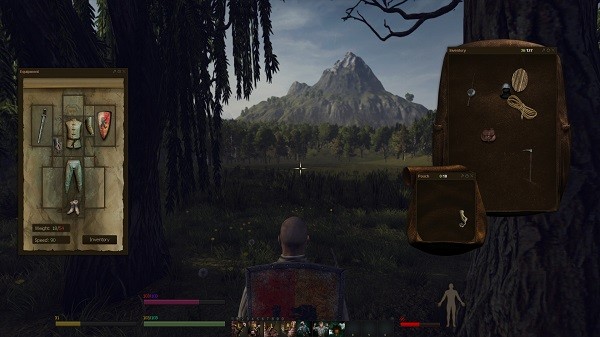
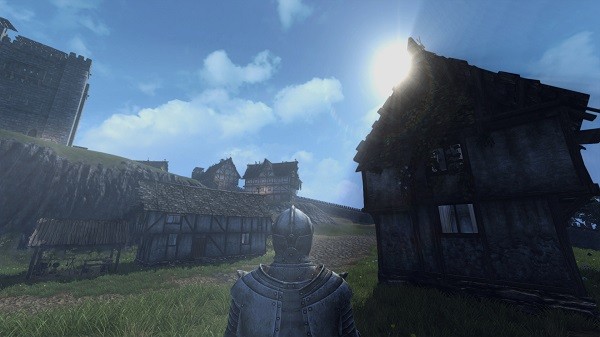
In recent memory, there appears to have been a deluge of survival games with players trying to survive everything from plane crashes to dinosaurs. Amongst contemporary entries we find examples like The Forest and Don’t Starve we see examples in which, although the style might be different, the goal is the same: to survive and thrive. Life isFeudal, developed by Bitbox Ltd,is a part of this deluge but stands out with some very interesting design choices and its depth of simulation. In fact, the game is highly reminiscent of an older title called A Tale in the Desert in which the game’s entire economy was completely player driven in a fairly in-depth simulation of Ancient Egypt.
I spent some time with one of the game’s fans, a man by the name of ‘Bill’, who would take me through the features of the game and explain its various concepts. The first thing that struck me (besides Bill’s enthusiasm) was the sheer scale of the gameplay. The world and the player’s capability interact with it is incredibly fleshed out and detailed. Trees that you cut down have a quality level attached to them which then affects the quality of the timber you harvest, which then further affects the quality of weapons that you might make with said timber.
In addition to the wood you’ll need to build a simple tool or weapon, you’ll need iron and possibly leather (for the handle) and these require further work. Although on some servers it is possible for players to become completely self-sufficient and build everything themselves, the game normally implements a skill cap on how many points a player can accrue throughout their production skills. Combat works in a similar fashion with different skills being open for the player to learn but an overall cap in place to stop them from excelling in everything.
This effectively means that players will have to work together and trade (or loot) to obtain the items that they would like. This promotes a play-style in which a player specialises in one skill and becomes a master at it to fill a niche in the game’s economy. Speaking with the devs, they plan on opening a mega-server to facilitate a huge amount of players in one world (currently you can have up to 64 on a server) and virtually create a space in which players can form their own feudal society.
Basically in this game, just like in real life, you have to find and pursue your calling to fit in… except there’s a slightly higher chance of death by bandit attack. It seems like a bit of an acquired taste but if you’re a fan of putting in long hours of blood and toil, you’ll probably have fun surviving and thriving in this little game.
I was also given the chance to talk to Vladimir Piskunov, one of the brains behind Life is Feudal, and you can read about it here.
So it turns out that those crazy/awesome/crazy awesome people at In The House decided that they would start off their newest screening season with the anime classic; Akira. Needless to say, I was excited to see Katsuhiro Otomo’s landmark film in a cinema as I unfortunately missed the film’s original theatrical release in 1988… largely due to the fact that I wasn’t born yet.
The screening itself started off to a late start (due to traffic caused by an accident) with MCs Anthony Kierann, David Quinn, and Ardella doing their best to pump up the crowd. I particularly enjoyed Quinn’s little tidbits of trivia about the film and it’s clear to see that he has an earnest passion for the film.
Story
The story takes place in an alternate timeline in which World War 3 broke out and the city of Tokyo was destroyed in a huge blast which was assumed to be a nuclear weapon. The city has been rebuilt as ‘Neo-Tokyo’ in the thirty years which have passed since the war and is now a metropolis once more. Tensions arise in this state of affairs as corrupt politicians, religious fanatics, and political dissidents push the city to breaking point.
The narrative begins by introducing us to the two ‘bōsōzoku’ gang (fancy motorbike) protagonists; Tetsuo Shima and Shotaro Kaneda. On this particular night, they fight with a rival gang called ‘the clowns’. Carnage ensues on the streets and highways of Neo-Tokyo as these gangs fight each other as they ride at high speeds.
At the same time; an infiltrator is trying to escape military authorities with a small, child-sized, blue person by the name of ‘Takashi’. He is what is called an ‘esper’ and possesses psychic abilities. They attempt to make use of some protests as cover for their escape but the spy is ultimately gunned down. Takashi escapes and continues running into the ruins of old Tokyo.
The two storylines collide (literally) when Tetsuo accidentally crashes into Takashi. From this encounter, Tetsuo begins to develop mysterious mental powers and the rest of the gang (including Kaneda) being arrested by the military. Things develop further from there as the gulf between Kaneda and Tetsuo widens both emotionally and physically.
What I found interesting was just how quick and effortless the film transitions between various themes and scope. The first act is a stylish cyberpunk thriller with motorcycle gangs. The second act is a supernatural monster movie with Neo-Tokyo being the urban playground. The third act is a Cronenbergian horror and exhibits body-horror galore.
These changes aren’t without their drawbacks however as my friend who saw the film with me was not quite able to keep up with what was happening in the story. A lot of what goes on in Akira, happens without explanation and the audience is to draw out much from what little the movie gives them.
Largely, the film is quite adept at explaining what is happening visually and we get a sense of the world through images rather than exposition. That being said, the last act (and especially the last shot) will confuse most people who have not read a synopsis of the film beforehand. Luckily, this humble writer did read a synopsis beforehand and I was able to mightily enjoy the screening.
One aspect of the film’s narrative I found to be quite disturbing was the character of Kaori. Do not get me wrong; there’s nothing wrong with anything she says… but rather that she doesn’t anything and instead gets some pretty nasty things done to her. Her entire on-screen existence can pretty much be summed up as being a passive victim of (sometimes sexualised) violence. I’m not entirely sure what purpose she had to serve in the story beyond, perhaps, shock value for the audience.
Visuals
The thousands of frames of animation in this film are beautifully hand-painted. The use of lighting particularly provides for some interesting visual design during the early scenes with the fighting biker gangs. The images are all animated and directed with such a frenetic energy to them that it’s hard not to be drawn into the action on the screen.
Equal parts disturbing and beautiful; I particularly enjoyed the scenes where surreal, supernatural events are depicted as Tetsuo goes through his psychic transformation. I’d liken it to horror by way of Dali or google’s ‘deep dream’ program given life although some of it could also be quite disturbing nightmare fuel.
Audio
The soundtrack is, without a doubt, absolutely amazing. Composed by Tsutomu Ohashi (under the pseudonym of Shoji Yamashiro), it is an eclectic mix of which features chanting vocals, drumbeats, organs, and more. The sound this creates feels suitably ethereal to match the surreal moments throughout the film. These aren’t exactly tunes which you’ll be able to sing-along to, but they are distinctive enough that they’ll stick with long after the surreal experience is over.
Overall
As you might already be able to tell; I love this movie. The story might be a bit confusing, but the action will no doubt help see most people through. The animation is brilliant and the audio compliments perfectly. It was an absolute pleasure to watch this film up on the big screen.
For other films which In The House is screening, feel free to check out their schedule here.
Capsule Computers review guidelines can be found here.
Logitech have unveiled their latest advancement in technology for individuals in their everyday work life, the MX Anywhere 2 Wireless Mobile Mouse. The portable mouse is defined by its extraordinary features, with an advanced Darkfield Laser Sensor that tracks on virtually any surface, dual connectivity and Easy-SwitchTM between 3 devices, hyper-fast scrolling, advanced power management and customisation options for Window and Mac users.
Kit Williams, Mice and Keyboards Senior Product Manager at Logitech ANZ stated, “The Logitech MX Anywhere 2 Wireless Mobile Mouse is our mobile version of the award-winning MX Master Wireless Mouse and delivers the best combination of connectivity, size and comfort. It is designed to work wherever you do, and it’s by far the most versatile portable mouse that we offer today.”
The Logitech MX Anywhere 2 Wireless Mobile Mouse will be available soon in August, for the suggested retail price of $129.95. For further details on product specifications, please head to the official website of Logitech here.
Start August off on the right foot with a ton of doujin themed indie games. The 71st Indie GalaEvery Monday Bundle has nine games + DLC’s this week for a low low price of only $1.99.
Bionic Heart 2– The fight against Nanotech continues for Tanya and Tina; but Tom, Luke, and Helen are now on Mars to start a new life.
Tokyo Hosto– Jayson Traish is the newest employee at the host bar, where he’ll do everything from keeping women company to cleaning the toilets.
Quantum Conscience – Like any hero with superpowers, you have some serious responsibilities to go with it. Use Blaire’s telepathic abilities for good or evil, it’s up to you.
Step into the Rift – First Person Exploration Virtual Reality Adventure, P.O.L.L.E.N, Coming to PC, Mac, Linux, HTC Vive, Oculus Rift and PlayStation 4 Morpheus in early 2016
Inspired by Science Fiction Classics Solaris and 2001: A Space Odyssey, P.O.L.L.E.N Coming to Desktop and VR Headsets
Helsinki, Finland – 3rd August, 2015 – Virtual reality studio Mindfield Games today announced that its first person virtual reality exploration game, P.O.L.L.E.N, will be coming to PC, Mac and Linux in early 2016 and will support HTC Vive, OSVR and Oculus Rift in the launch. Later in the year P.O.L.L.E.N will also be available for PlayStation 4 Morpheus.
“P.O.L.L.E.N is a new breed of exploration and storytelling in games“, said Olli Sinerma, Co-founder of Mindfield Games. “Virtual reality is about freedom to do whatever you like and everything in the gameworld has been made interactive for the player to experiment with. All the objects can be examined or operated – just like in real-life and it’s the player actions which define how they uncover what has happened in Research Station M”.
Inspired by science-fiction classics Solaris, 2001: A Space Odyssey and Moon, as well as adventure games Gone Home and The Dig, P.O.L.L.E.N places the player inside the space suit and helmet of a space mechanic in a fully interactive world where each object has a functionality and action.
P.O.L.L.E.N is a first-person space exploration game set on Titan, the sixth and largest moon of Saturn and the only moon in the solar system with an atmosphere and vast liquid seas, where life may exist. In P.O.L.L.E.N the player is sent as a replacement for the space company Rama Industries mechanic who was lost on this moon in a work related accident. Once there he is to join the four remaining personnel of the research station M to continue their work with the unknown object they have discovered below the Titanian crust. Inside the research station each step forward leads to new discoveries about the fate of the crew and the secrets that they have uncovered.
Mindfield Games is an eleven person company from Helsinki, Finland that focuses on virtual reality. The team consists entirely of game industry professionals with a background on PC, console and mobile game development from companies such as Remedy, Rovio, Housemarque and Redlynx/Ubisoft.
Mindfield Games first title, the first person exploration adventure game P.O.L.L.E.N. will be released for PC in Q1/2016 and is optimized for Virtual Reality.
MangaGamer has a bit of good news for fans who fall into two different categories, those who want a good story to go along with some of their hentai as well as those who simply want to see how strange things can become. First of all, the company has announced that they have released a demo for Kara no Shojo 2, the sequel to Kara no Shojo and Cartagra. While the current release window for the PC game is sometime in Fall 2015 fans can experience a small portion of the new mystery that awaits them in the game as the demo serves as the prologue to Kara no Shojo 2 and features content that will not be included in the standard retail release. Those wanting to check out the demo can download it on the game’s official page (18+ Only).
As for the other camp, MangaGamer has also announced that they are now accepting pre-orders for Warrior Princess Asuka: The Final Chapter which is set to be released at the end of this month for $9.95 though those who pre-order will be able to save 10% off that initial price. Featuring plenty of tentacle sex, body modification, and various different kinds of sex, those who want to pre-order the title can do so on MangaGamer’s website here(18+ Only).
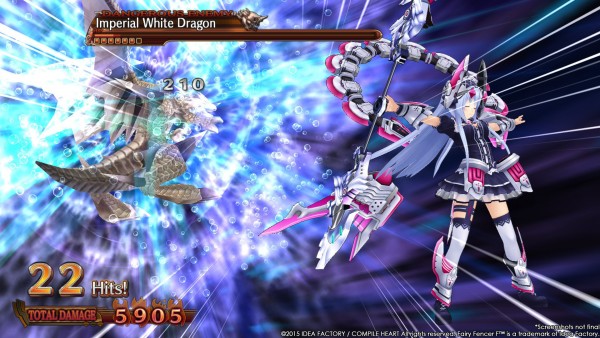
If you’ve been waiting for Idea Factory International to release Fairy Fencer F on the PC then you won’t have to wait much longer as the company recently announced that the PC version will be released on Steam tomorrow on August 4th.
Fairy Fencer F was originally released on the PlayStation 3 but this PC version now supports 1080p resolution. When released there will be two pieces of add-on content that will be available for free to help players start their journey and these pieces are called the “Beginner’s Pack” and “Secrets of Shukesoo’s Tower Pack.”
To go along with this announcement a number of screenshots and the opening video for the game have been released and you can check those out below.
After being surprisingly absent last year, EA’s premier golfing franchise is back. Not only has the PGA Tour returned to consoles, but this is the first installment in the franchise that has been designed for the Xbox One/PS4 generation of consoles. Now I’m not an avid golf fan… Or a casual golf fan… To be honest I dislike any form of golf that doesn’t have the word “mini” in front of it, but I was pretty eager to give Rory McIlroy a fair chance because this is a new console generation, and it is always interesting to see what new additions the developers can come up with to set the new generation of games apart from the old… The sad truth this time around is that not only is there nothing really to write home about.
Gameplay
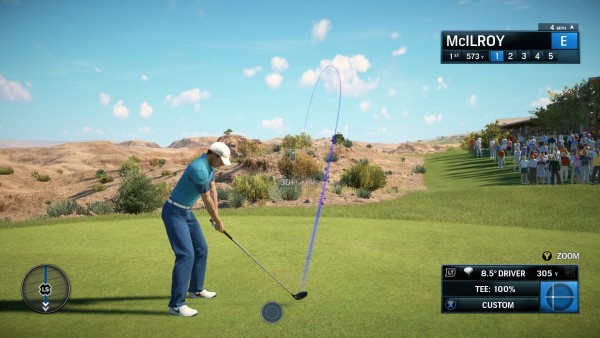
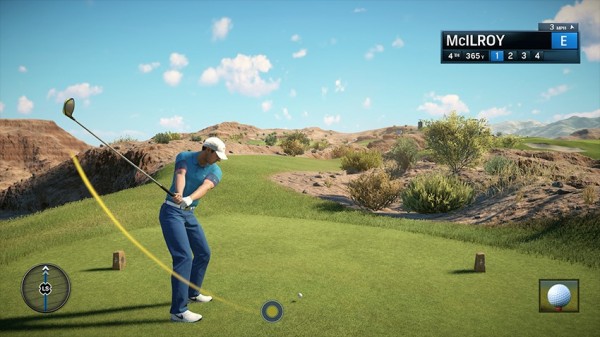
So like I said above, I’m not a golfer and honestly I probably never will be, and while that might make it a bit hard for me to accurately judge a golfing game I can say that I was super impressed with how tight the controls were right off the bat. There are a couple of different control schemes that you can change between depending on how you best want to play, but with all of them the simple act of hitting a ball across a grassy field felt so good. The Frostbite Engine (previously used for the Battlefield franchise) does some amazing physics work here, and the way that the ball flies through the air, bounces, curves in the wind etc are all phenomenal. I’m not sure if it is exactly how it plays in the real world, but it is definitely how I think golf plays in the real world.
Aside from super tight control,s the game itself is pretty bare bones. There is a career mode where you create a character (n probably the least fleshed out character creator I have seen in many years) and run them through the pro circuit. As you would expect from a PGA Tour game, there are a number of licensed courses to play on, each with their own unique traits and characteristics. There is a multiplayer mode but even this is limiting in the game modes it allows you to compete in.
For those who grow tired of the vanilla golfing experience, there are also two arcadey gameplay styles available in Rory McIlroy PGA Tour; the first being aa challenge mode where the aim is to not get the ball in the hole, but to complete a series of tasks. Some of these tasks have you hitting floating rings of light, or chipping your ball through a portal. These challenges felt more fun and exciting (for me anyway) than traditional golfing, almost to the point that it felt like a completely different game. Secondly, there is a mode where a ship from Battlefield will crash into your course, forcing you to play around the behemoth. This was touted as a defining feature in a lot of the trailers and promotional pieces in the lead-up to the game’s release, but it is not anywhere near as dynamic or interesting as I (and I’m sure many of you out there) would have hoped.
For all the lacklustre, unexciting, vanilla gameplay that Rory McIlroy’s PGA Tour brings to the table, there is one particular feature that I cannot speak highly enough of; the controls. Like most games, there are a choice of a few different control set-ups in order to make you feel as comfortable in the game as you can, but the real treat is the fact that you can take elements from these control schemes and manufacture your own. This kind of control customisation is usually reserved for PC players using a keyboard, but having it here is a welcome addition.
Visuals & Audio
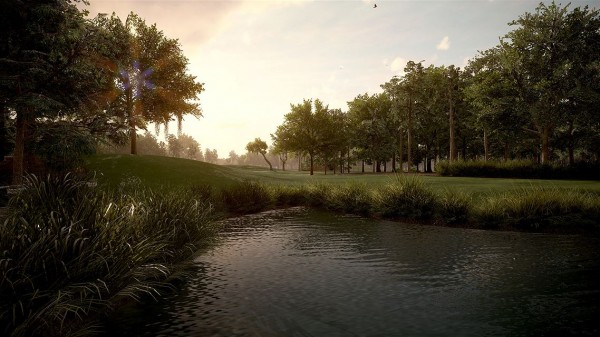
In terms of visual fidelity, Rory McIlroy’s PGA Tour is a nice enough looking game. It isn’t going to be winning any visual awards for sure, but the courses in particular are really well rendered. The light way that grass moves as wind blows through it is impressive and the clean interface makes for some simple and hassle-free golfing. However, there are times where I noticed some rather intrusive framerate dips, which is almost unexcusable considering the fact that there is never too much for it to be rendering at once. I will say though that the Frostbite engine’s speed in loading and rendering the courses means that there is little to no wait time as you move from one hole to another, really speeding up the process immensely.
When it comes to sports game, be they golf, WWE, basketball or anything else, one thing that always manages to grate on me is the commentary. While this has improved in recent years, sports game commentators always come across as so dry, lifeless, and worst of all; repetitive. Sadly, these are not issues that PGA Tour has managed to overcome. Taking over the reigns of commentary are Frank Nobilo and Rich Lerner. Now, the two have a great chemistry with one another but their quotes, quips and observations are repeated a lot. Not only are they repetitive but they are quite often completely wrong in what they are saying. I think I had listened to the commentary for about three hours before I was completely done with it and needed to play the game muted for a while.
Overall
With golfing moving into the next generation, a new mascot and a new lease on life, I expected a lot from Rory McIlroy’s PGA Tour, but sadly none of these expectations were met. Sure the game is a solid golfing sim with enough to keep die hard fans happy with the experience, but it just feels so boring, bland and lackluster that it is hard to imagine your friends all gathering around the console for a round. The arcade modes add a lot to the experience but it just isn’t long enough. This is the first game to make its way to the current generation of consoles, so lets hope these are some hurdles that EA can overcome in time for the next installment.
Capsule Computers review guidelines can be found here.
Work on Master of Orion inspired the company to launch an innovation platform
August 3, 2015 — Wargaming is excited to announce WG Labs, a lean and agile platform designed to foster innovation within the videogames industry. This platform will support external development teams in game creation and publishing, as well as generate, evaluate, and launch in-house products that go beyond the company’s paradigm.
WG Labs is interested in seeing playable prototypes and Alpha/Beta/Pre-Release versions of games. There are no restrictions in regards to platforms. WG Labs is looking to collaborate with development teams who are able to deliver a truly exceptional product in line with their own vision. In this partnership, WG Labs provides support in game production, monetisation, analytics, marketing, customer services, QA, as well as other areas.
“Working with NGD Studios has been a very positive and rewarding collaboration,” said Victor Kislyi, Wargaming CEO. “Thoroughly impressed with their work, the project served as inspiration for us to create an actual innovation center within the company. WG Labs is set to become a breeding ground of ideas that inspire and resonate with both consumers and companies, and allow us to further foster partnerships like this.”
To learn more about WG Labs and also submit your project, please visit:
Wargaming is an award-winning online game developer and publisher and one of the leaders in the free-to-play MMO market. Founded as a privately held company in 1998, Wargaming has shipped more than 15 titles. Currently, Wargaming is focused on its team-based MMO war series dedicated to the mid-20th century warfare that will include the armored World of Tanks, the flight combat World of Warplanes, and the naval World of Warships. The three intertwined titles will form a common gaming universe integrated within the portal www.wargaming.net.
As part of its multiplatform line-up, the company has introduced World of Tanks: Xbox 360 Edition and World of Tanks Blitz. Launched in 2014, World of Tanks: Xbox 360 Edition introduced epic tank-on-tank battles to console gamers and the mobile MMO game World of Tanks Blitz has opened up Wargaming’s trademark team-based military IP to smartphone and tablet users worldwide.
Visual novels are an interesting creature aren’t they? More book than video game, these Japanese created choose-your-own adventure games (which usually focus on forming relationships and going on dates) have never really appealed to me. So when a copy of Hatoful Boyfriend for the PSVita happened across my desk, I was skeptical; I knew that the game was basically a dating sim but in lieu of human companions, you were partnered up with a series of birds but beyond that I didn’t have any idea what to expect, and now after playing through the campaign a few times… I still don’t.
Story
At the begining of Hatoful Boyfriend, you are the only human girl in a school for intelligent, sentient pigeons. I know what you’re probably thinking “no, you’ve gotta be making that up!” ’cause frankly that’s exactly what I thought when I heard about it, but I kid you not that is the plot. The most interesting part about being the only human in a school for birds is that you face nearly no bigotry at all. People acknowledge that you’re a human but nobody seems to care. Maybe we all have a lesson or two to learn from this game already?
At its core, Hatoful Boyfriend is a dating simulator with a side-order of suspense thriller. As a sophmore at the prestigious St. PigeoNation Institute, you will take the protagonist on a journey through the school year and along the way meet a cast of characters that you will have the option of romancing. If this sounds weird then that is because it definitely is. Oh also, there are conspiracies and world ending apocalypses to contend with on the way to finding true romantic bird love.
Having never really experienced a Visual Novel before, I did some research after finishing Hatoful Boyfriend to see how it different it was from other games in the genre (aside from the obvious winged cast). Sadly, I found that many of the characters were stock-standard archetypes of the genre; the sickly childhood friend, the egotistical aristocrat etc, making the game feel a lot more generic than I first thought it would be. I would have loved to see the characters exhibit some birdlike characteristics, but aside from a few bird related puns, there was none of the sort to be found.
Gameplay
In terms of gameplay, there isn’t much here. This is a game that is focused almost entirely on its story (which is to be expected, considering the genre) and as such there are little to any gameplay elements involved. You press a button to move to the ne
There are two main types of branching options that I noticed during my play through: Ones that change the story and ones that level up your character. While there are plenty of the former, each offering you a different take on the story and different romance options, I found almost no use for the latter. Maybe I am not able to look closely enough at the mechanics of the game, or maybe the changes of earning a few extra vitality points are so subtle that I just didn’t notice them, but really I felt like nothing in particular was changing aside from a few numbers on the screen.
Since this is a kind of choose-your own adventure story, the replay (or should I say reread) ability is definitely present. With I believe it is eight different romance options, there are at LEAST eight different ways that the story can go. Not to mention the fact that once you have beaten the game more than once, more storyline choices open up in subsequent playthroughs and completely new storylines become available to you.
Making the replayability even more impressive is the fact that at the press of a button you can effecticely skip over all of the dialogue until either you choose to stop and start reading again, or you reach a decision. Being able to skip over the first 10 or so minutes of the game really made me more entusiastic to play through the story again than I would normally be.
Visuals & Audio
Like most Visual Novels, Hatoful Boyfriend has a very simplistic and motionless animation style for the game, leaving it feeling like you are holding a small manga or comic book in your hands. Backgrounds are reused time and time again and are colourful yet simplistic drawings of hallways, classrooms of playgrounds in order to convey where the particular chapter of the story is taking place, but there is really nothing exciting or energetic about them.
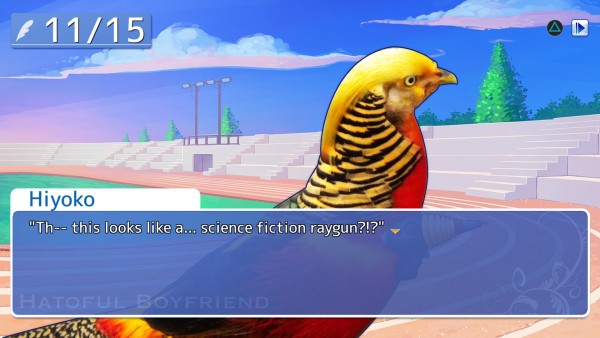
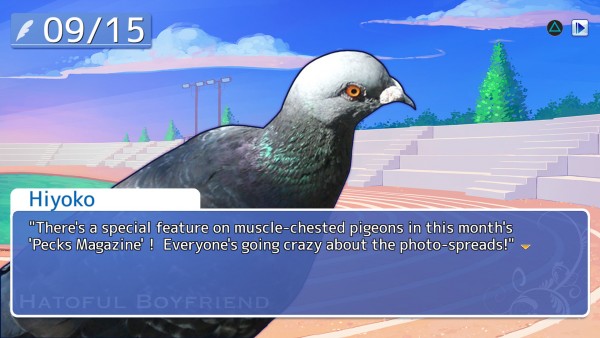
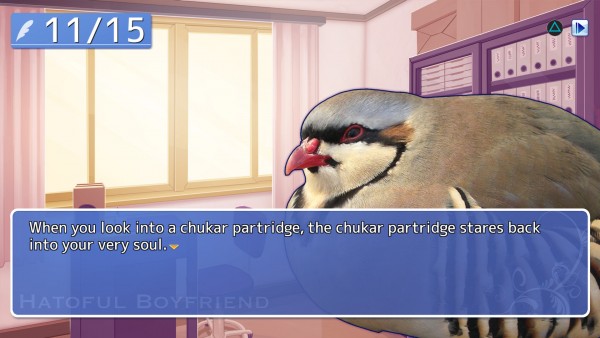
What does really stand out is the way that characters are portrayed on-screen. Instead of the traditional anime styled drawings that one might expect from a Visual Novel, Hatoful uses high definition photos of birds to represent each character. It is a really bizarre contrast between the highly colourful backdrops and the 1080p bird photos in the foreground, but surprisingly it works really well. I’m not the biggest bird-watcher out there (and I’m sure I’m not the only one) so it took me some time to recognise the differences between some of the characters. I didn’t really see the immediate differences between some characters which made some dialogue a little clumsy for me.
As for sound, the game is incredibly minimalist. While there is a full voice cast credited, nobody actually speaks. ( I believe the cast is credited to keep it in line with all the other Hatoful Boyfriend installments across various mediums). The music is soft and quiet so as to create almost an ambient white-noise while you’re playing, but that’s about all there is to listen to. I am to understand that the simple style of animation and music is pretty common in the genre so I can’t be too harsh on it, but I personally was hoping for something a little more interesting.
Overall
I just… I’m not sure what to think about Hatoful Boyfriend. Honestly, I am not the target for this type of game and that makes it really hard to judge objectively. The story itself seems pretty solid, if not derivative of other games in the genre and once you move past the zaniness factor of all the other characters being birds, there seems to be nothing overly unique about the experience at all. All that being said however, the novel’s short nature and branching paths make for some real replay value as you explore what might have been. In the end however, I left Hatoful Boyfriend without any strong feelings one way or the other. If you are looking for a new visual novel to occupy your time or are an avid fan of pigeons then definitely pick it up, otherwise it isn’t a game that you need to play.
Capsule Computers review guidelines can be found here.