



Halo: Campaign Evolved
Developer: Halo Studios
Publisher: Microsoft
Platforms: PC, PlayStation 5, Xbox Series X/S (Reviewed)
Release Date: Available Now
Price: $49.99 USD – Available Here $89.95 AUD – Available Here
Overview
When it comes to the FPS genre there are certain games that have been monumental to the foundation and creation of what fans have come to know and love over the decades. What started all the way back with a certain angry marine fighting demons evolved even further with a genetically modified soldier fighting aliens in Halo: Combat Evolved. Since then the Halo franchise has continued to evolve and see countless sequels, a prequel, spin-offs, books, and even a show that most should skip but it has always remained a staple of the genre and with Microsoft and Halo Studios bringing it all back to the beginning with Halo: Campaign Evolved, now is a chance to revisit it in all its glory. For the first time ever on other platforms, offering revamped graphics, new story content, and revised gameplay, is this campaign as iconic now as it was in 2001?
Story
The original storyline of Halo: Combat Evolved remains mostly untouched, though a few refinements and new cutscenes have been added here and there to add some extra contextualization and characterization. Players find themselves taking on the role of Master Chief, Spartan 117, being woken from cryosleep just as the Pillar of Autumn slides out of slip-space in an attempt to flee pursuing Covenant forces. Humanity has been in a losing war against the Covenant, a “religious” alliance of multiple alien species and now the Pillar of Autumn is on its last legs with Covenant boarding parties already breaking through. Ordered by Captain Keyes to take the ship’s AI, Cortana, off to the mysterious ring-like structure they’ve come across, Chief manages to escape in a life boat and crash lands onto the ring just like the Pillar of Autumn does.

Once aboard the ring, Cortana begins hacking her way through the Covenant battle net and learns that the structure is called Halo and appears to be a weapon of some sort, all while Chief is battling against Covenant forces and trying to rescue what marines he can, eventually leading to tracking down the internal map of the structure, control room, and discovering that Halo not only is holding far greater significance than being a simple weapon but also a horrific force that neither the humans nor Covenant could face all while discovering the true purpose of Halo.
As mentioned, Halo: Campaign Evolved’s primary campaign is mostly the same as before but does feature some reworked scenes and dialogue to allow it to flow better into the rest of the franchise that followed. For example, Keyes now mentions giving his pistol to his daughter if he doesn’t make it, compared to simply handing an empty handgun to the Chief at the start of the game because now his daughter plays a prominent role in the following games whereas she never existed at the time of the original’s writing. Similarly, various other characters now have new pieces of dialogue trying to humanize more of the marines that Chief fights alongside in numerous missions, making their eventual demise far more striking for those who never played the original. It is also worth noting that while not super important in a narrative sense, a couple of levels have had certain sequences reworked to make far more sense, especially the final level, given the crash site.

Alongside the original campaign there is also a three level campaign of “bonus” prequel levels and the addition of the hidden terminals that are now scattered throughout every original level and prequel level. The prequel is set a year prior to the events of Halo and works to bridge a bit of narrative gap between Halo: Reach and Halo: Combat Evolved while also expanding on Chief and Johnson’s interactions as the two are given a mission to board a high-value Covenant warship as humanity desperately needs to locate any information they can regarding the Covenant’s assets. These levels provide a unique look at the difference in style between a normal battleship and a grand warship while also introducing a handful of new characters and a bit of lore.
Brutes make their first appearance here though are treated way differently than ever before as they seem to be under a sort of mind control to function as soldiers for the “Prophet Harmony” who has also ironically taken up a sizable squadron of ODST and made use of them for entertainment. Chief and Johnson come across this squad, led by Lieutenant Williams who has kept the team scrapping by and, despite usually being scene in awe by many, is actually gruff with Chief for once. This is a bit of a unique approach given that all of the prequel missions give Chief and Johnson some time for a bit of humorous back and forth with Johnson making jokes against a brick wall most of the time and then Chief having to deal with a rebellious marine. Unfortunately while the setting for these missions is interesting and does a good job to build up not only the sequel but connect to the main game, it does feel like both Harmony and Williams lack any type of development other than Williams coming to respect Chief at the end.
Gameplay
In many ways stepping into the boots of Master Chief in Halo: Campaign Evolved feels like putting on an old familiar suit. Most levels play out similar to how they did in the original and even the way players start with specific weapons and the way weapons feel when unleashing a torrent of assault rifle rounds into an Elite or popping the head off of a Grunt with the ever powerful magnum. Aiming down with a sniper rifle to pick apart Covenant forces as they scramble around while the marines make their move, targeting the hands or feet of Jackals poking out from around their shields, and more. But this time things have been far expanded as far as weaponry is concerned as players will almost immediately see that SMGs are available to be traded from marines, energy swords can be picked up from slain Elites, Fuel Rod Cannons, Needle Rifles, and more, plus even enemy vehicles can now be hijacked, elements that were never possible in the original game.
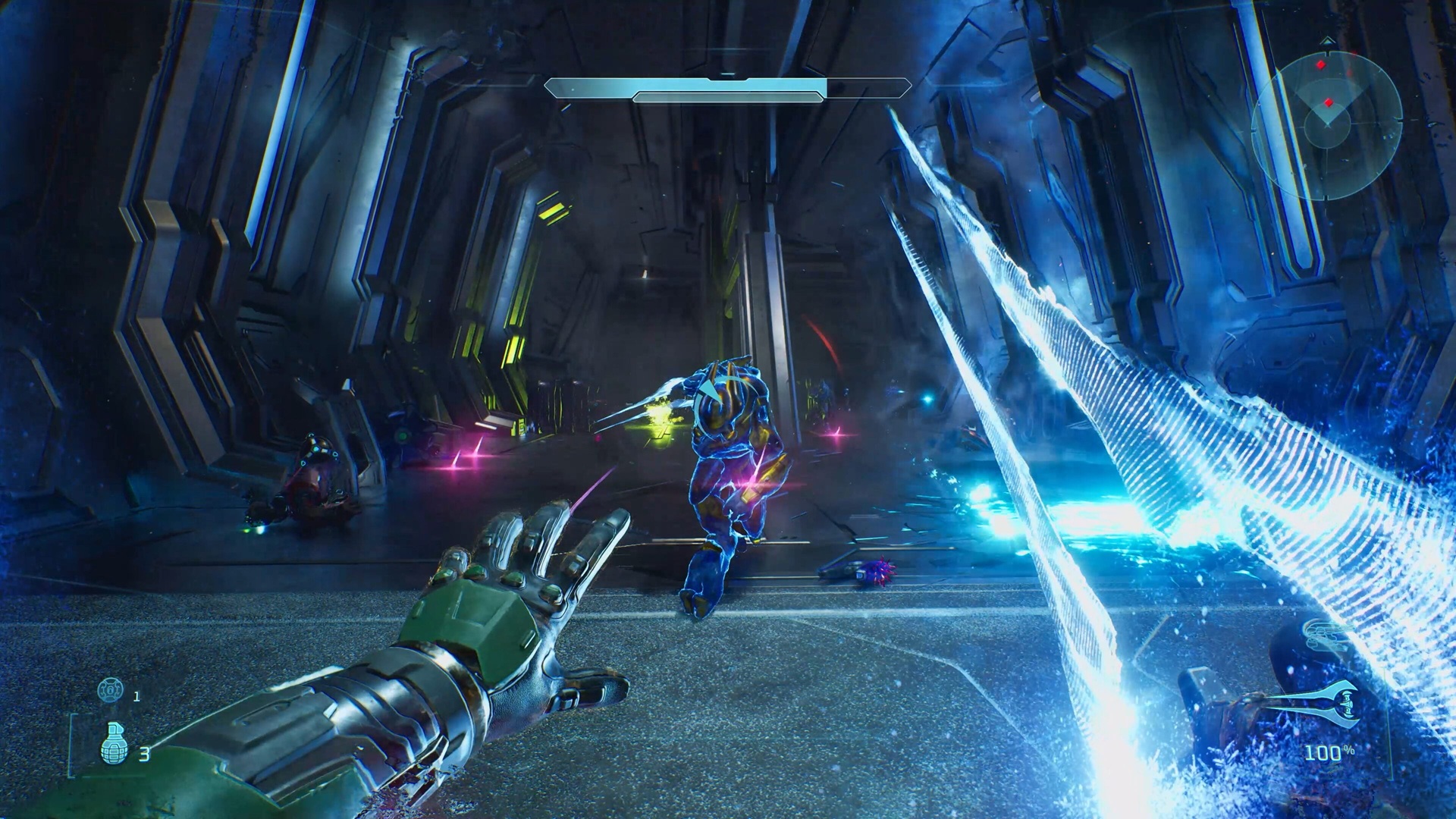
Similarly while the original game always saw the Master Chief having a regenerating shield, his health would always need to be restored from health kits either on walls or found on slain marines. Now though Chief’s health also regenerates over time, something that makes a bit of sense given his advanced armor but does lower the challenge ever so slightly at least on easier difficulties. Similarly, Chief is now able to “Sprint” at will like he can in later games which wasn’t available in the original either but players can choose to either not sprint or find a certain item to disable it altogether but more on that later. Playing on Hardcore or Legendary really pulls out all the stops though as the game unleashes everything that enemies can throw at them, be it even deadlier grenades, charged energy pistol blasts that rip right through the Chief like paper, and smarter enemy AI that is ever more aware of player positioning, even when there are two forces fighting against one-another.
Now earlier we mentioned that a few levels went through some make-overs and this is certainly for the better, though one change was a bit strange. The Library has been completely revamped to feel far less repetitive than before and add a bit more variety to what players will be doing as they follow their “guide,” Two Betrayals now oddly sees players destroying three energy units around each energy reactor instead of walking into the beam and blowing Chief’s shields to overload the reactor, and finally The Maw’s final sequence has been heavily modified to better fit the feeling of a crashed space ship. Nearly all of these additions are improvements though Two Betrayals does feel like it is rather unnecessary.

While Halo: Campaign Evolved does not offer any form of competitive multiplayer which is a bit unfortunate, it does support local two-player co-op and online four-player co-op that allows for all kinds of fun, especially when factoring in the new gameplay modes players unlock once they complete the main story for the first time. This mode is called Remix mode and changes everything about a level from what weapons players spawn with and will find scattered around a level while also changing up the enemy placement and types, making for a chaotic and wild experience that constantly adds replay value since every level offers this mode.
This, and even standard levels, can be further modified by using Skulls. Skulls are hidden throughout every level and this new version adds even more. Unlocking the required skulls also unlocks the incredibly challenging LASO mode which will test every skill the player has if they try it solo and even a group of friends is going to find themselves facing one hell of a challenge here. These modifiers can also be applied to the prequel bonus missions as well, giving players plenty of options to work with if they so choose, though beyond the campaign and bonus unlocks, that’s about all there is to Halo: Campaign Evolved outside of the incredible graphic improvements.
Audio & Visuals
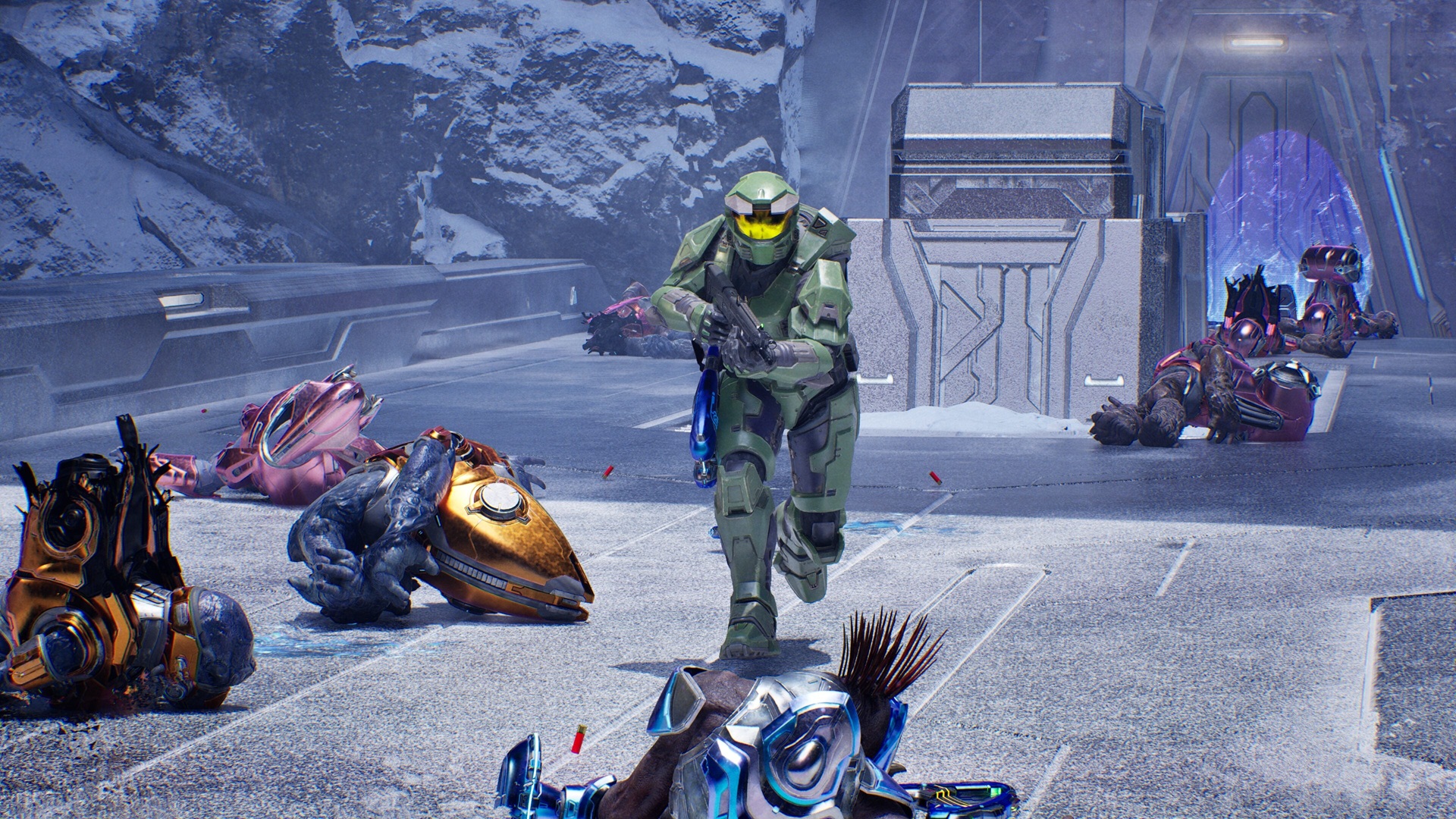
From the ground up Halo: Campaign Evolved is a complete remake with every cutscene revamped and redesigned to look as impressive as possible and it is clear that Halo Studios knows what they are doing with the style of the franchise. The character models of enemies, especially some of their more “higher ranked” armor forms are exceptional and the chaos of a firefight has never felt more real with different types of plasma flying around and gunshots ricocheting off enemy shields or rocks. The different biomes scattered throughout the ring are gorgeous looking and the later Flood style levels are gorgeously brutal in a way that feels more akin to a horror game than an FPS. There are even a few sequences where players will find the screen appearing to fog fully up in a way to portray heat and flames in a way I don’t think I’ve seen in a game yet. Descending into a level only for it to grow more and more overgrown is a true treat and something a certain stage desperately needed. Cortana looks as impressive as ever in her design while Master Chief’s armor is as iconic as ever, though there are a surprising amount of “buyable” skins for some reason, including weapon skins.
All of the voice work from the original game has been completely re-recorded and is fitting for the characters with many appearing to reprise their original roles. There is also the iconic “I Would Have Been Your Daddy” skull to unlock additional humorous lines as well from marines and Covenant alike. As for the soundtrack, it remains as iconic as ever and doesn’t sound like it was touched, or if it was, it is only made all the more impactful.
Overall
Halo: Campaign Evolved succeeds at what it sets out to do by reintroducing one of gaming’s most influential campaigns with enough modernization to feel fresh without losing the identity that made it iconic. The expanded lore, refined level design, added prequel missions, and flexible modifiers give returning fans plenty to chew on while still preserving the core rhythm of Bungie’s original masterpiece. Even with a few odd design choices and the absence of competitive multiplayer, the sheer quality of the remake’s presentation and the strength of its moment‑to‑moment gameplay make this a definitive way to experience Halo’s beginnings. Whether you’re stepping onto the ring for the first time or the tenth, Halo: Campaign Evolved proves that some legends really do stand the test of time.
Capsule Computers review guidelines can be found here.

