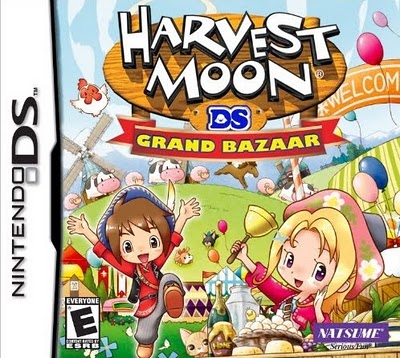
Harvest Moon: Grand Bazaar Developer: Marvelous Entertainment Publisher: Rising Star Games Platform: Nintendo DS Genre: Farming Released: 30th September (UK)
It’s hard to believe that Harvest Moon: Grand Bazaar comes as the fifth Harvest Moon game on Nintendo DS, almost putting it among the ranks of FIFA and other games that release a new edition each year. So with Harvest Moon games releasing with such regularity, it’s nice to see that the developers are still able to add something new in Harvest Moon: Grand Bazaar, with this game’s feature that sets it aside from the others being the titular ‘bazaar’, a large weekly market.
The bazaar was once the pride of Zephyr Town, drawing in huge crowds as the best market in the region, but has fallen into disarray following dwindling customer numbers. Now you, the new kid on the block, have been assigned to the town’s farm by the Mayor himself in the hope of restoring the bazaar to its former glory by selling your amazing produce, bringing prosperity to the town once more.
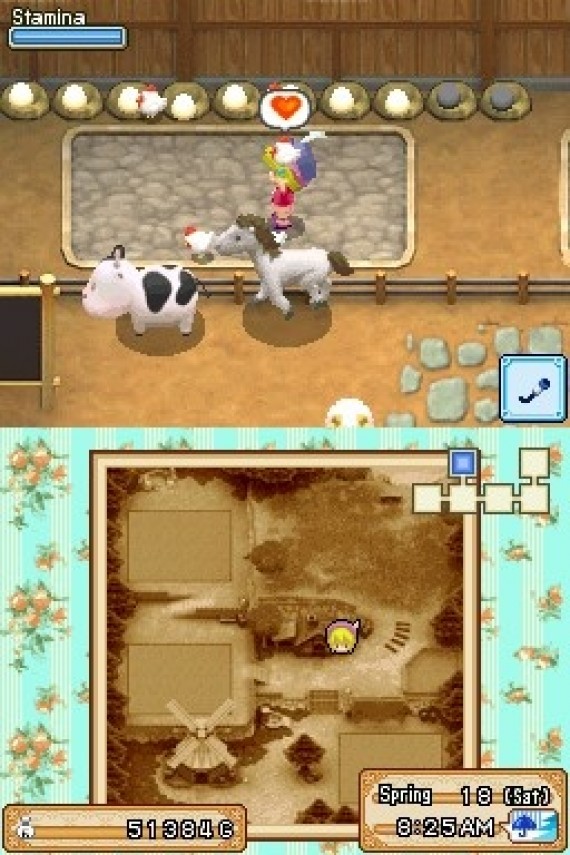
It’s one of the better handheld Harvest Moons thanks to some differences, particularly the grand bazaar at the end of every week, although it seems to offer a slightly slower, more relaxing pace of play than previous Harvest Moon games which had you rushing around in order to squeeze everything you needed to do into one day and dealt out punishment with a heavy hand when you did anything wrong. You still have to water your plants otherwise they shrivel up and die (likewise with your livestock, minus the shrivelling), but Harvest Moon: Grand Bazaar seems to be more forgiving in this respect, a subtly done and welcome change.
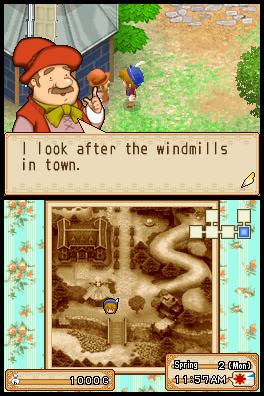
However, this more sedate pace of play could easily be perceived as dullness. There’s no denying that the town you find yourself living in doesn’t have a whole lot going on most of the time, with conversations with the various residents being little beyond a greeting out of courtesy, and deep discussions hindered by limited set phrases from others and a lack of many two-way conversations. To liven things up a bit there are festivals dotted through the calendar, but just hope they don’t clash with your birthday, as this way everyone will be too absorbed in the festival to care, mark or even mention the occasion at all. The first week is so uneventful you will even find yourself heading to bed early to pass the time in your boring schedule, waking up the next day at 6am only to have exhausted everything possible to do by noon, using just a fraction of your stamina bar (which depletes based on the level activity you have been undertaking) in the process. When it really looks up though, is once you are talked through and introduced to the first bazaar.
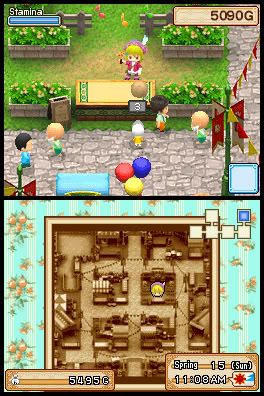
As well as selling your wares, the selection of market stalls provides a place to spend your earnings, with animals, special tools, things that are crucial to your progress as a farmer, all accessible from the bazaar alone. A satisfying selling system is in place where you have to ring a bell to attract attention to your stall and the goods you’ve got lined up, and if they’re interested the punters will display a number above their heads. This number represents the amount of their chosen item they would like to buy, and subsequently the amount of times you need to press A.
The Mayor gives you a target turnover for the market, giving large goals to ensure the market can grow and prosper. Although there is a normal shop to sell things to during the week, you soon learn to hold onto your items for selling until the bazaar, as things fetch a higher price among the public and every penny is needed to reach the Mayor’s ambitious goals. It provides a much more engaging way of selling than packing your goods into a basket to earn a living, even though the basket does play its part still and now acts as storage, something you learn to make use of for perishables if you want them to last until the sale date. As the in-game weeks go by, you realise the quality of your products increasing, with more advanced recipes having been learnt or a better standard haul of vegetables/animal produce, and the cycle adds a sense of structure in a departure from the usual dragging-on-without-any-significant-feeling-of-progress of its predecessors.
The graphics are a totally safe effort, but in lacking ambition use the system really well; characters have basic animation, but the whole in-game world is cute, clear and colourful, plus visual touches like smoke puffing out of chimneys and insects (which you can also catch) roaming free add an element of life to the otherwise fairly static scenes. Despite the lot of them being a boring bunch, getting to know the locals features much like in other games too, with you eventually wooing one of the town’s women into slotting into the farmer’s wife role, or the opposite if you picked the female character at the start of the game. Convincing a member of the opposite sex to be your spouse consists of barely more than throwing flowers and gifts at them daily until they give in, though given their uninteresting personalities, some may even prefer a solitary existence.
Overall, Harvest Moon: Grand Bazaar is a bit of a slow-burner in that it gets off to a slow start initially, and from there the majority of gameplay hinges on the weekly bazaar which acts as your primary source of cash and equipment. Interacting with the other residents isn’t advised for fear of falling asleep, slumping over and accidentally lodging a stylus up your nose, but your otherwise peaceful existence makes it a relaxing game to play, and by having your calendar in-game, rather than based on real-life (a la Animal Crossing), means there’s no pressure to tend to your farm every day, leaving you free to progress through the game casually at your own pace.
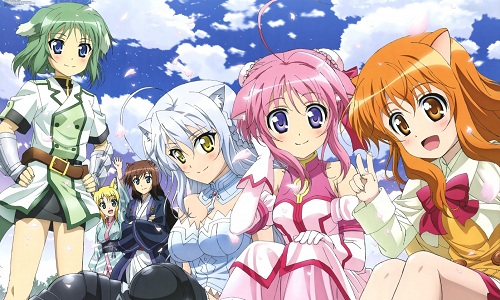
It appears the anime Dog Days, created by studio Seven Arcs, is going to be receiving a second season. The anime twitter of HMV tweeted earlier today that a second season of the animal-eared anime was announced earlier the same day during a Dog Days Special Promotion that was held in Tokyo.
The anime finished airing during the Spring series of anime and finished with an open ended ending so a second season should flow nicely from the first. In the anime, Princess Millhiore Biscotti performs a ritual to summon a hero from another world to help defend her country from her once childhood friend and leader of a rival, country Leonmitchelli Galette. The hero she summons is named Cinque and he soon learns that not all battles are violent… but amongst the peaceful war dark shadows move in the dark. Currently there is no information about when fans can expect the second season to begin airing.
Nintendo have been preparing for the November release of Fossil Fighters Champions, the follow-up to Fossil Fighters for the DS that released back in 2009. This title has players dig up fossils, clean them up, and then revive the rocks into Vivosaurs. Once a player has their monsters of choice, they then can battle them in a tournament like setting.
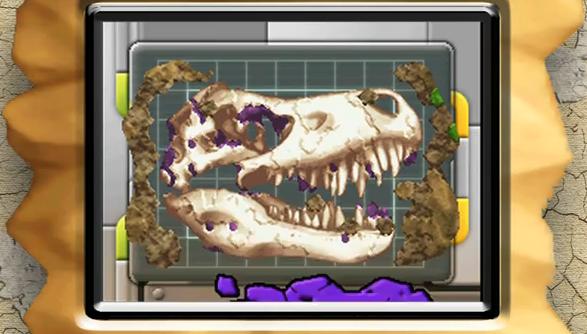
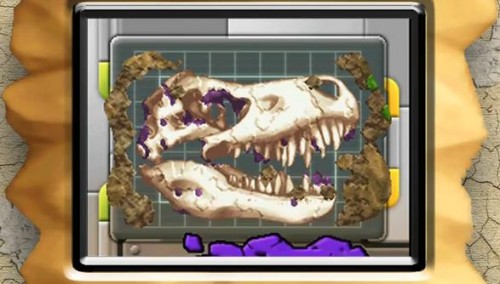
The latest trailer released over the weekend shows off the detailed cleaning process from Champions, as players must chip away at each rock with their stylus and even use their mic to carefully blow the dirt and sediment away from the fossil so that no damage is caused. The better each rock is cleaned, the more powerful the revived Vivosaur will be. Even though the first had quite a following, Champions seems to be bringing a new level of depth to the series this time around.
You can check out the new trailer for Fossil Fighters Champions below and get your tools ready as this new DS dino romp launches on November 14th.
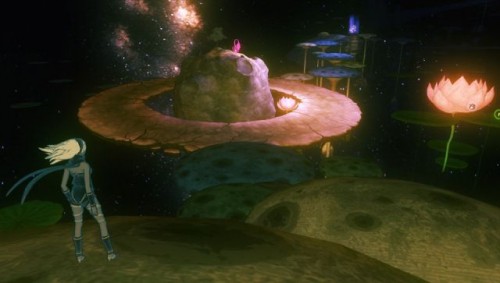
Gravity Daze was shown back at E3 this year as part of the Vita’s first E3 outing. Many have complained about the loading time. If you watch the video below, you will see that the game takes roughly one minute and thirty seconds to boot up. Naturally, the developers had their say on the load times.
Keiichiro Toyama, who is creating the highly anticipated Playstation Vita title, reveals through his Twitter (translated by Andriasang) that the load times are those in the video but the game was not optimised for the hardware yet. The team has been working on the load times and they seemed to be better since them. He also revealed that the game will feature an open world, so, although the game may take time booting up, the game will run seamless and smoothly once you start playing it.
Expect the game, being developed by SCE Japan Studios, to grace the Playstation Vita in 2012.
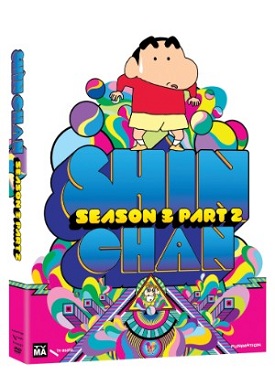
ShinChan: Season Three Part Two Studio: Shin-Ei Animation Localization: FUNimation Release Date: September 27, 2011 Price:$39.98 DVD
Overview:
After nearly two years of absence the entire Shin Chan Season 3 has been released, with Part 2 gracing store shelves this week. Now although the series may have been a children’s show back in 1992 that was only for the Japanese version. In fact the Shin Chan here in the United States is something that a child should probably stay a little bit away from because not only does FUNimation’s re-imagining take a completely different spin on everything, there are also plenty of dirty jokes, foul language and ass dances. I reviewed the first part of season 3 back in July and now with part 2 released, how does it close out this season of Shin Chan?
Story:
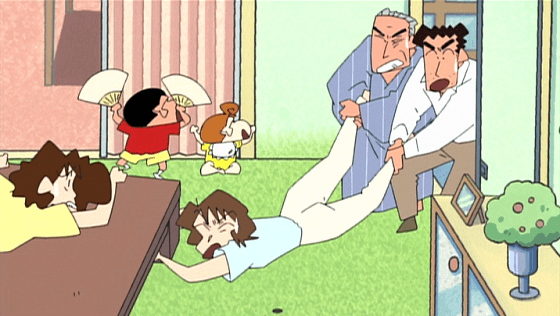
Shin may appear to be your average young child but that is only if you glance at him for a few seconds and then look away, never finding the truth behind his child-like appearance and never seeing his ass. Shin Nohara and his family Mitzi, Hiro and Hima; his friends Georgie, Penny, Maso and Boo; and even his teachers may all look normal at first but of course this is just a façade to their strange personalities and dark potty mouthed humor.
Now it is important to know that Shin Chan very rarely follows a set episode list and most of the episodes will follow a roughly standalone story with three parts to them each jumping from place to place. There is a certain sense of storyline progression however, including a series of episodes for Flamer which is an interesting bunch of episodes and things never really jump around out of continuity so everything which occurred in part 1 of season 3 is still relevant here.
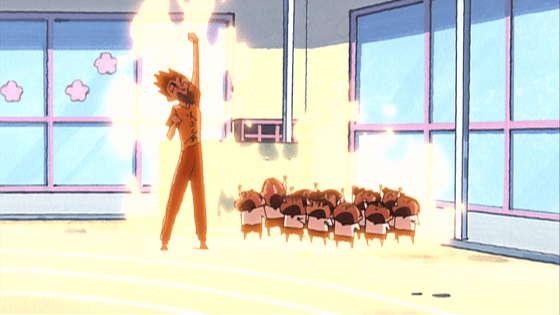
As such the newly introduced character from part 1, Flamer makes a number of appearances in the episodes and he takes things quite out of proportion with his anarchist mutant personality. Even going so far as to train the children to be mutants just like him and create fire at will. Plus with his name being Flamer and how he wants them all to be little flamers, the gay jokes runneth over. This is only the tip of the iceberg however.
All of the characters retain their same personality and a number of them are still used for running gags such as Georgie’s crazy conservatism making dark jokes about Obamacare and many other political dealings in the past few years to Penny and her mother’s longing for spousal and child abuse or even the crazy side of Mitzi’s family. There comedy is quite dark at times and there are plenty of things which may still make you laugh, but also there are those that can offend. While all of the jokes made are all in good fun, some viewers may end up being offended by a few jokes as I myself was.
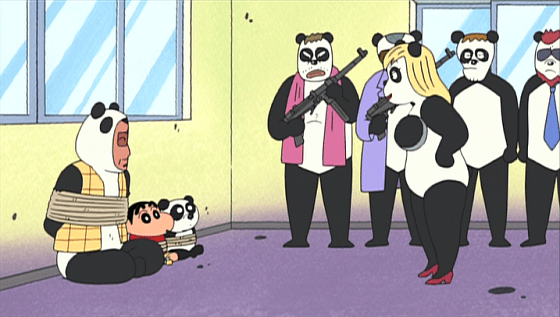
Of course that doesn’t mean everything is dark and twisted in the comedic world of Shin Chan. There are also plenty of flat out perverted humor and potty jokes as well. Shin is ever in love with his ass dance and seeing his Grandfather reveals where he gets his perverted attitude and potty mouth from (‘specially when you see Baby Shin). Let me put it this way, when a show takes panda bears and not only turns them into militant gun toting pandas, but also makes them talk about codpieces and whipping out children’s underwear with an Action Bastard figurine sticking out in a very suggestive way you know this isn’t a game for children. Of course there are tons of laughs to be had and although it can offend some, nearly everything is going to make you at least giggle. With a huge cast of characters, all with insane personalities you practically never know what is going to happen next.
Artwork:
Now Shin Chan may be a series that is relatively new for us here in North America. Sure he showed up on our shores only a few years ago but in fact the series has been running for quite a long time in Japan, being that it started in 1992. What this means of course is that the artwork isn’t up to par even with normal children’s cartoons today let alone what you would expect from anime.
The artwork is very poor in appearance but honestly has a decent charm to it. It is commendable that FUNimation uses the pre-designed situations to create the comedy and honestly if the artwork was top notch it would seem out of place. Plus FUNimation has also edited and put new wording on a number of signs similar to season 3 part one which are fun to keep an eye out for as the rewording is usually funny enough for a chuckle at least.
Audio:
Everyone returns to voice their same characters from the first half of Season 3 and again these voice actors nail their roles perfectly. The recording studio for the characters certainly had to be cracking up most of the time because their dialogue is just so out of control at times and full of jokes ranging from political, dark and potty humor. Now add this into the fact that most of the characters are all supposed to be younger than kindergarten age and the English dub works perfectly.
Currently there is still the same Ending and Opening songs used in all of the past seasons so you will know what to expect with Season 3 Part 2. There are a few extra songs in this part however, including a rather funny song that is sung by the children at the command of their fiery recess teacher Flamer.
Extras:
Unfortunately as far as Special Features go, Shin Chan Season 3 Part 2 comes with very little. There are your standard trailers for other FUNimation releases, mostly for already released titles but a couple for upcoming bundle releases. Besides the trailers for other FUNImation products, there is also the Season 3 Part 1 and Part 2 trailer which are English commercial-like videos which are relatively funny and can give a quick laugh but are worth only a single glance and that is all.
Overall:
Shin Chan Season 3 Part 2 is still just as hilarious as ever. There are jokes here for nearly every kind of funny bone; dark, satire, slapstick, gross and all other kinds. Of course some people can be offended by the jokes and the appearance is just appalling. Still, the amount of jokes and laughter contained in this package should give you plenty of laughter around the jokes you cringe at.
The Mobile Suit Gundam anime series is well known for defining the mecha-anime genre. Since its inception in the form of the original ‘Mobile Suit Gundam’, each of the successive series and the universes constructed within them have won the hearts of many anime fans the world over. A multitude of the stories exist within a multi-verse. While many of the series such as Wing, SEED, 00 and G Gundam all feature similarities in terms of themes and visual design, each takes place in their own separate continuities, often referred to by fans as ‘Centuries’. (for example’ Future Century’ in G Gundam, and ‘After Colony’ in Gundam Wing). However, one of these Centuries has featured an ongoing story in many separate series. This is the Universal Century (UC), the first timeline constructed in the original ‘Mobile Suit Gundam’ anime, and subsequently continued in the series’ 08th MS team; Stardust Memory; Zeta; Double Zeta; and Char’s Counterattack.
The Unicorn series is the latest entry into not only the Gundam multiverse, but also to the keystone UC era. The series essentially aims to return the audience to the grass roots of this long running franchise. Featuring a new hero, a new villain, and a new Gundam, the UC Unicorn series has the potential to pull viewers attention back to where everything started.
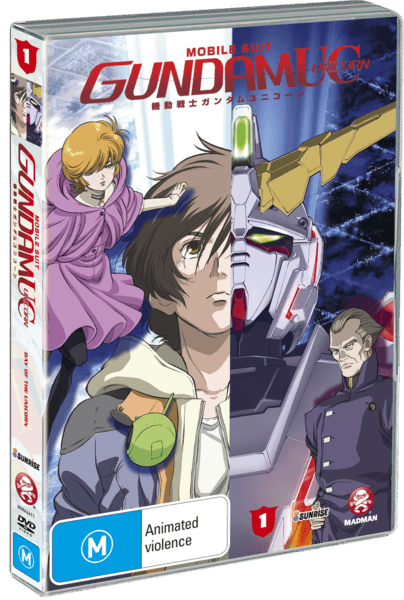
‘ The year is U.C. 0096. Three years have passed since the end of the Second Neo Zeon War.It is said that the Vist Foundation manipulates the Earth Federation and Anaheim Electronics from behind the scenes. Hoping to create a new world, the Foundation attempts to hand over a certain secret to the Neo Zeon remnants known as the Sleeves. This will mean the opening of Laplace’s Box, which holds a great secret tied to the origins of the Universal Century.The exchange between the Vist Foundation and the Sleeves is to take place at the manufacturing colony Industrial 7. This is the home of the student Banagher Links, who rescues a girl he sees falling through the colony’s zero gravity area. The girl gives her name as Audrey Burne and says she wants to prevent a war, spurring Banagher to step into the conflict surrounding Laplace’s Box, almost as if he is drawn in by his own bloodline.Based on a story by author Harutoshi Fukui, the newest Gundam work dynamically unfolds against the backdrop of the Universal Century. It all begins with this first shocking episode.’ -DVD Blurb
STORY
The Universal Century is one that has been scared by conflict since its inception. Even from the very moment the Anno Domini year system was replaced with the ‘UC’ term, violence has rocked both Earth and Space. The series opens with an attack upon a formal ceremony ushering in the new UC era in the years leading up to the One Year War. This original war was waged between the forces of the Earth Federation, and the space faring forces of Zeon. The events of the original Gundam series saw the Federation victorious, and the remnants of Zeon scattered over Earth and Space alike. Since then, forces, such as Neo Zeon have made attempts at destabilising the Federation from its seat of power to usher in a new era for humanity. However, each time has proven unsuccessful.
It is now three years since long time villain Char Aznable and his Neo Zeon forces attacked the Earth, only to be fended off by Amuro Ray and the Federation once again. However, in the final conflict, both Amuro and Char disappeared. Life on Earth and in Space have continued, and the wars of the past are now topics for discussion in the modern school system. It is here where viewers are introduced to Banagher Links, the main character of the series. He becomes embroiled in a plot by the mysterious Vist Foundation to hand over a secret dubbed ‘Laplace’s Box’ to the remnants of Zeon known as the Sleeves. It appears that, despite the peace that has been achieved in the past 3 years, conflicts between the Federation’s Londo Bell force and the Sleeves still continues, as is highlighted by an intense space battle.
The story told in this first volume of Gundam Unicorn is very well told and sticks very well to the continuity of the Universal Century. The plot flows a little bit quickly and disjointedly at certain points, but ultimately does a good job at establishing context, regardless of whether or not a viewer is already familiar with the Gundam universe. The main issue I have with the story of this first volume is the length. Almost all of the time spent in this first volume involves talking, philosophising and establishing context for an entire hour. During the whole viewing time, there were only two short lived mobile suit battles, neither of them actually featuring the Gundam. The most frustrating part is the fact that the hour long episode simply cuts off after the Unicorn Gundam is mobilised but before it can see any real action. One of the things that keeps Gundam fans glued to this series is the presence of kick-ass mobile suit battles. Gundam is not an anime to be watched for humour or deep drama, but for the point of seeing giant robots clash with one another in fast paced, intense battle scenes that serve as an extreme visual feast for the eyes. For me, it was simply a case of episodes being cut down too short.
CHARACTERS
Banagher Links
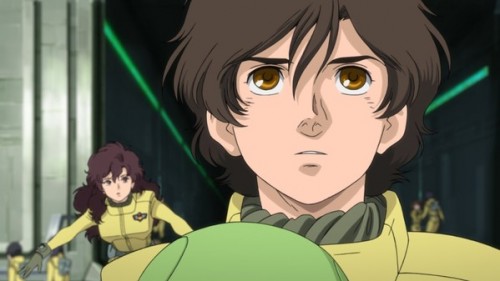
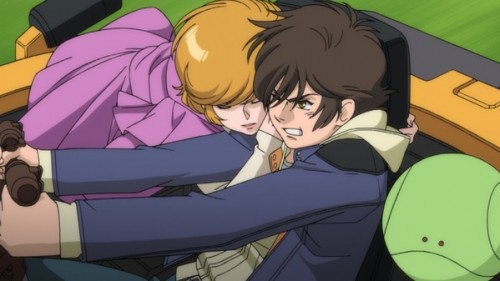
Banagher is the protagonist of the Unicorn series. Originally a student living in one of the many space colonies founded by humanity in the UC era, he is dragged into a new conflict and a potential war by the rapid series of events unfolding around him. Banagher’s origins bear a striking resemblance to those of Amuro Ray, the very first Gundam protagonist of the original Mobile Suit Gundam series. This is not only in terms of their personality, but also by the fact that both were students living in space until they become the pilots of a Gundam mobile suit secretly designed by their fathers. He is by no means a weakling, as he displays both martial arts prowess and technical skills. It is believed that Banagher is a Newtype, a breed of human beings better adapted to living conditions in space, and even better adapted to piloting mobile suits. As a protagonist, and as such, the window into the Gundam Universe, Banagher is a simple and relatable character with a helpful, but somewhat reserved and undefined personality. However his appearance and attitude is displayed as though the weight of the world is on his shoulders, and yet his only real problem is having a standard teenage search for identity. His personality as a result seems needy and clingy, made all the more apparent when he states that he just wants Audrey to “need him around”, which is made all the more confusing because she is a complete stranger.
Audrey Burne
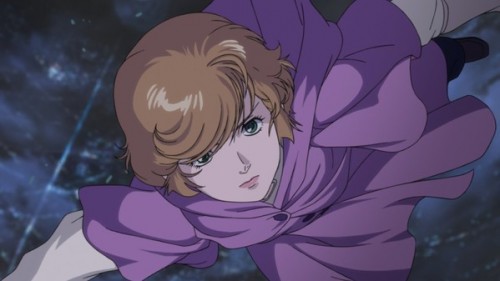
Audrey is the female lead of the series. While her background is still a mystery, she is apparently someone of great importance, given her formal speech and upper-class personality. She appears to have some link with the Sleeves and with the Vist Foundation, although her exact position is not yet discussed. She is introduced into the series as she is trying to stop a potential war that could result from the opening of Laplace’s Box. Her encounter with Banagher ultimately drags him into the conflict, as much as she did not wish for it too, and her insistence that he cease aiding her. Unfortunately Audrey falls into the same trap as many of the Gundam female leads like Relena Peacecraft and Marina Ismail. As a character in an action oriented anime, she is not particularly likable because she pretty much shoves the “anti war” message down the throats of all the characters around her, as well as the viewers themselves. We know war is a bad thing, but we don’t want to be told every time you talk. And like many of the female leads, she tries to be strong and capable when she really isn’t. She says she doesn’t need Banagher’s help, and yet she seems to always need it. In a majority of cases with Gundam female leads, kudos to them from trying to act nobly to prevent war and death, but they ultimately all end up being captured at some point or in need of a male protagonist to rescue them. Unfortunately, Audrey is no different.
Marida Cruz
Marida is an Ace Pilot of the Sleeves and whose attire and mannerisms might as well scream “I am a bad guy”. However, her actions seem driven more by loyalty than personal interest. She is clearly a very capable pilot, able to utilise funnel weapons on her mobile suit, an ability that is almost exclusively reserved for Newtypes. During the entire screening, she sees the most action in her mobile suit, tearing through the forces of the Federation and Londo Bell with relative ease. Given the time period since the ZZ series, I could not help but think that Marida bears a striking resemblance to Puru-Two. It must be said that I like Marida’s character. She is cold, calculating, a capable soldier and loyal to a fault. Everything that a villain would want in a henchwoman, and everything the viewers could want in a potential anti-hero.
Cardeas Vist
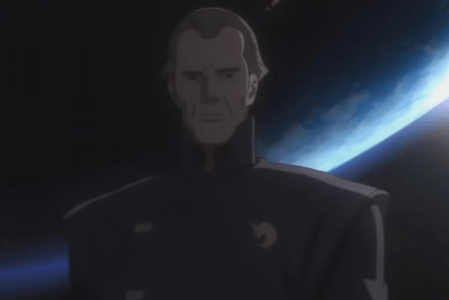
This strange, but wealthy old man is the head of the Vist Foundation. It is his resolve to hand Laplace’s Box over to the Sleeves that ignites this new conflict. His intentions are not entirely clear, but it can be assumed that they will be made so in subsequent episodes. Due to his wealth, he is a man of clear standing and influence in the colony. He also appears to have some form of link with Banagher, but the nature of it remains a mystery until close to the end.
AUDIO / VISUAL
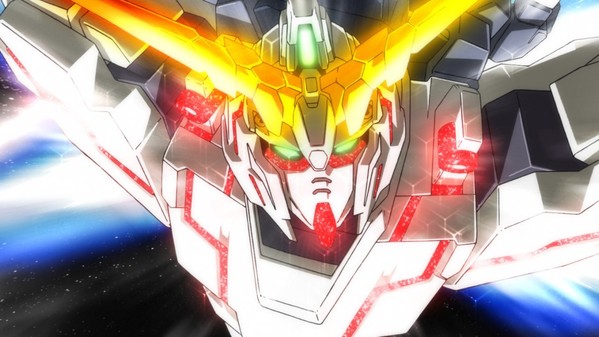
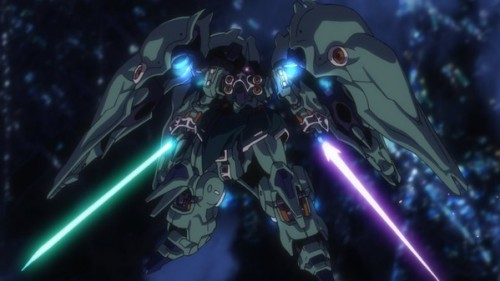
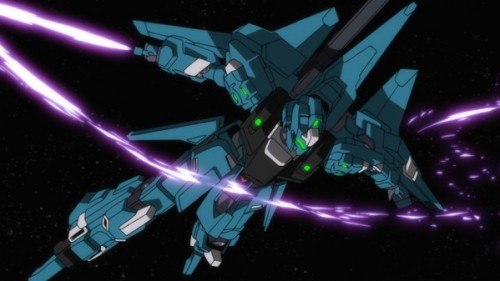
As the latest release in the Gundam multiverse, the Unicorn series features the most up-to date visual style among the Gundam series. What I particularly like about the visual designs applied to this first episode is how the graphic designers have taken the visual design of decades old mobile suits and ships from the older UC series’ and re-imagined them both in terms of design and animation. Seeing the newly designed Nahel-Argama battleship and the Jegan mobile suits animated in battle was fantastic to see. Not only is the series remaining faithful to the continuity of the Universal Century, it has also evolved in terms of graphic quality. The character designs are also well drawn and defined, though the colour scheme is a bit too bright at points. The visual style also tends to swap between 2D animation and 3D CGI modelling during points in the mecha battles, best seen when the Unicorn Gundam is launched. That said, I find the design of the Unicorn a bit puzzling. It’s pure white design and single pronged horn on the helmet provide for its mythical namesake, but lacks the trademark Gundam chest until it engages in a red-tinted transformation mode. Until that point, it just looked like a simple white mobile suit.
The attached soundtrack is good at conveying the feel of events and situations, but does not seem as paced or as epic as other Gundam series like Wing and 00. The voice acting is decent enough, though annoying from some of the extra cast, but nothing that one would classify as the stuff of legend. Ultimately the soundtrack and VA work provides a strong introductory experience, but it does not emotionally involve the audience too greatly, simply by virtue of the fact that it is too early to entirely do so. Sound effects are well appropriated, especially in battle scenes. Overall the audio delivered a good, but not great audience reaction to the visual presentation.
CONCLUSIONS
This first volume of Gundam UC is a competent introduction to the series made stagnant mostly through its disappointingly short runtime, and overdone character axioms. The first volume acts as a good episode for establishing context, and catching up viewers on the current nature of the Universal Century. However, for fans wanting to see a large degree of action take place, one had best wait for a second volume to be released, and then watch the two in tandem. The lack of action is understandable but still disappointing. However, as a return to the Universal Century, since almost two decades, this introduction to the new series Mobile Suit Gundam Unicorn is certainly a must see for the hardcore anime fanbase.
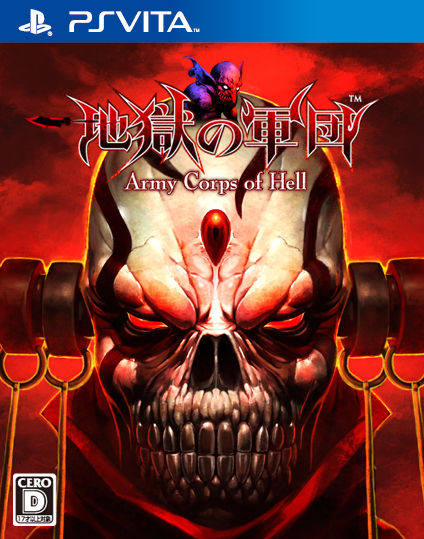
The demon of Square Enix has awaken from his slumber in Hell and has given us the launch pricing scheme to his potential Playstation Vita minions in Japan for his first adventure, Army Corps of Hell. For those who want to trek to a Japanese retail store, the demon will ask for 4,980 of your yen in order for him to depart a piece of his soul, manifestered into a video game. For those who prefer to face the Playstation Store on their dark pieces of technology, then you must hand over 3,990 electronic yen and it will be yours.
Jokes aside, below is what the boxart shall be. The demon on it looks kinda… angry. The game will be given a D rating by CERO, which is essentially a MA15+ rating in Australia. It is the rating before Z, which indicates a game that can only be played by adults (18+). If you buy the game at retail, then you will not require a Memory Card to save your progress. The game card will permit you to do that. If you download, however, expect to save up some more yen and start searching for a affordable memory stick. The game will be available at the Vita’s launch on December 17.
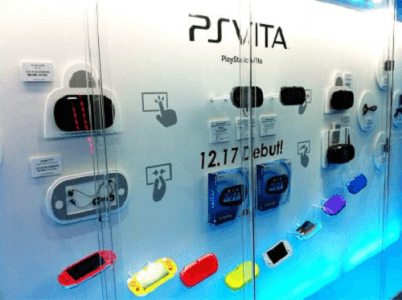
With the inclusion of 3G into their newest handheld, the Playstation Vita will be the first dedicated gaming handheld to sport such a feature. Fans everywhere lick their lips at the prospect of dowloading games everywhere they go. But hold it for one second, everyone. It might not happen when it is first released.
Sony Japan has confirmed that there will be a 20MB download limit for 3G users. For PSP and Vita games, this is impossible to do on 3G. However, with speeds of 128Kbps, downloading on 3G would be quite silly. It doesn’t mean that 20MB will be the final limit as Sony revealed that it may be increased later in the handheld’s life. ASCII, who conducted the interview, questioned the download and upload (64Kbps) speeds on the affect of online gaming. Sony reassured that support will be given to developers to ensure that titles won’t have a feeling of technical limitation. I hope that support will help create smooth online gameplay on the go.
NTT DoCoMo is taking care of the Vita’s 3G needs, with a 20 hour plan for ¥980 while 100 hours will set you back ¥4,980, all available on pre-paid cards. If you buy the 100 hour plan, then you get three bonus hours of 14Mbps/5.7Mbps speeds. Please note that this is only for Japan. The download limit for other regions will probably be announced closer to their launch.
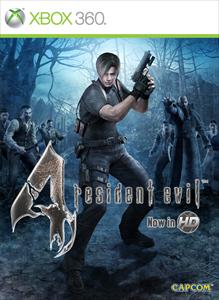
Resident Evil 4 Developer & Publisher: Capcom Platforms: Xbox Live Arcade (reviewed) and PlayStation Network Release Date: 20/09/11 Price: $19.99 or 1600 MSP – Purchase Here!
Overview:
Many people speak of the upcoming titles, the breathtaking leaps that the gaming industry is taking in the realms of animation and gameplay and the exciting things that are coming up for the world of gaming. Yet, stepping back into the stories of some of our past favourites is just something that never gets old (no pun intended) and developers are beginning to notice. Rather than blowing the dust of some of our out-dated systems, more and more of our favourite classics are being re-released onto the current consoles available.
Capcom have noticed this trend and have followed with their own releases, including the re-release of Resident Evil 4. Taking a step back from the Nintendo roots for this particular title, it has managed to return to more suitable locations, rather than the more ‘family friendly’ Wii and GameCube. Although it was also released for PlayStation 2, but was met with critical reviews which favoured the Nintendo releases.
Will Resident Evil 4 HD have players wishing for the days of the Nintendo systems or will all the upscale digital mayhem haven them foaming from the mouth?
Story:
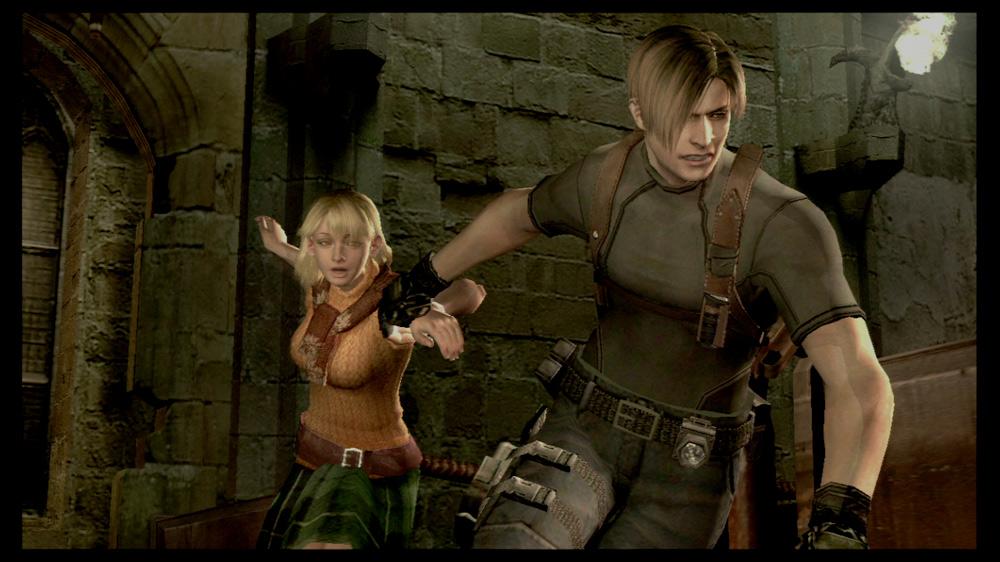
After the events and eventual destruction of Racoon City, Resident Evil 2 protagonist Leon S. Kennedy is recruited by the U.S Secret Service to act as the bodyguard to Ashley Graham, the daughter of the President. However just before he is assigned the role, Ashley is kidnapped and is tracked to a small rural village in Europe.
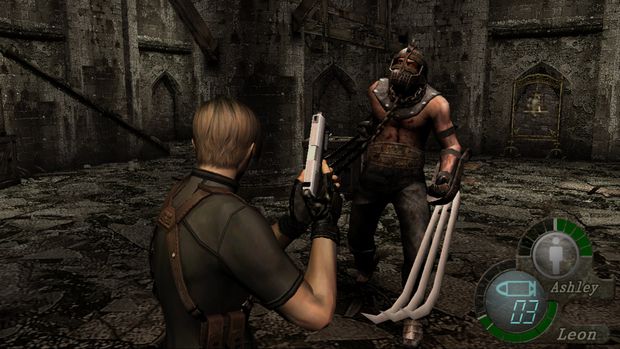
The game begins as Leon arrives at the village to rescue Ashley and investigate and eliminate those responsible. The villagers meet him with murderous hostility, outright trying to kill him and stop his advancement into the town. Leon finds the town taken over by a religious cult, who are using sinister means to control the minds and bodies of the people in the small rural village.
There are mixed feelings about the story of the Resident Evil games, but I have to say, the depth of the plot makes the mindless enemies more than just senseless violence. The more information that is given makes the experience more terrifying, not knowing enough encourages characters hope, where the abundance of knowledge stamps out their ability to reason a way to survive. That makes the protagonist succeeding in the game so much more enriching, because you know the odds that have been beaten.
Gameplay:
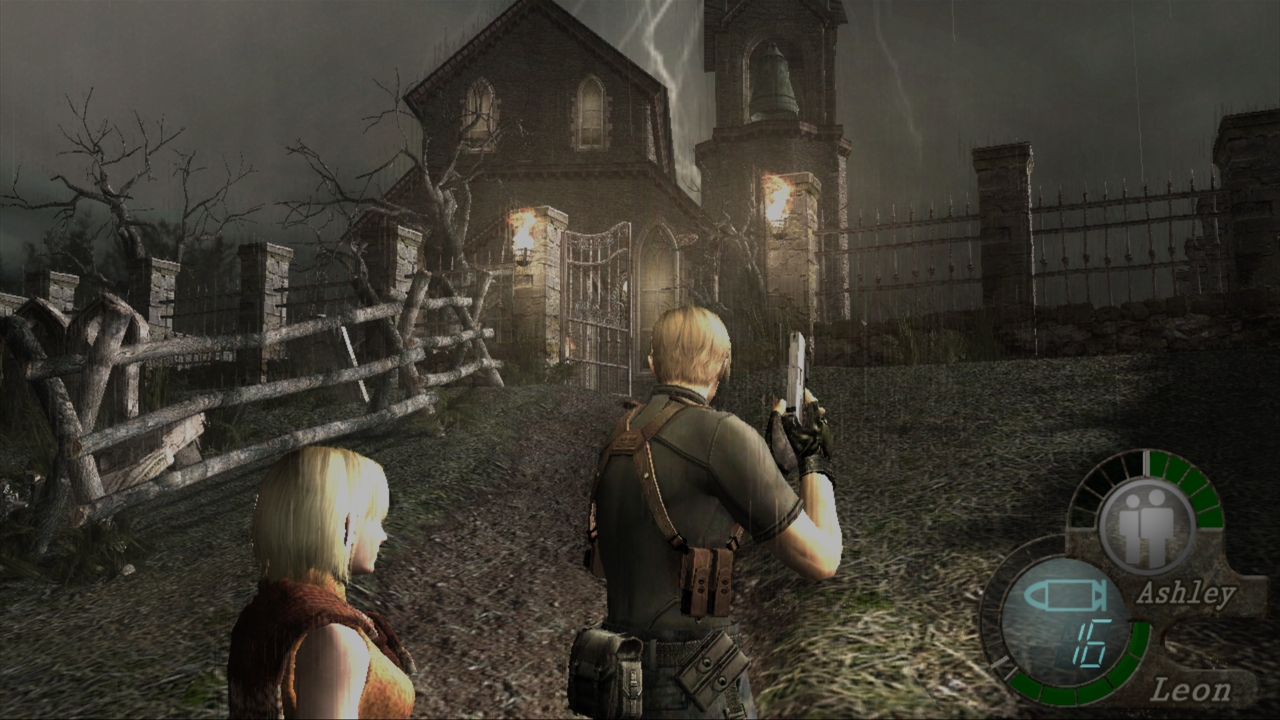
Resident Evil 4 was the beginning of a new style of gameplay compared to the titles of the past, moving from an almost birds eye 3rd person view to the over the shoulder camera that is stuck to the protagonists back. Since I had a horrible time trying to adjust to the old style (and in many cases ended up throwing the controller away in rage), it was exciting to have a crack at the newer views. It is a massive improvement, allowing for more precise aiming with use of laser targeting, allowing for most players to nail the illusive headshot.
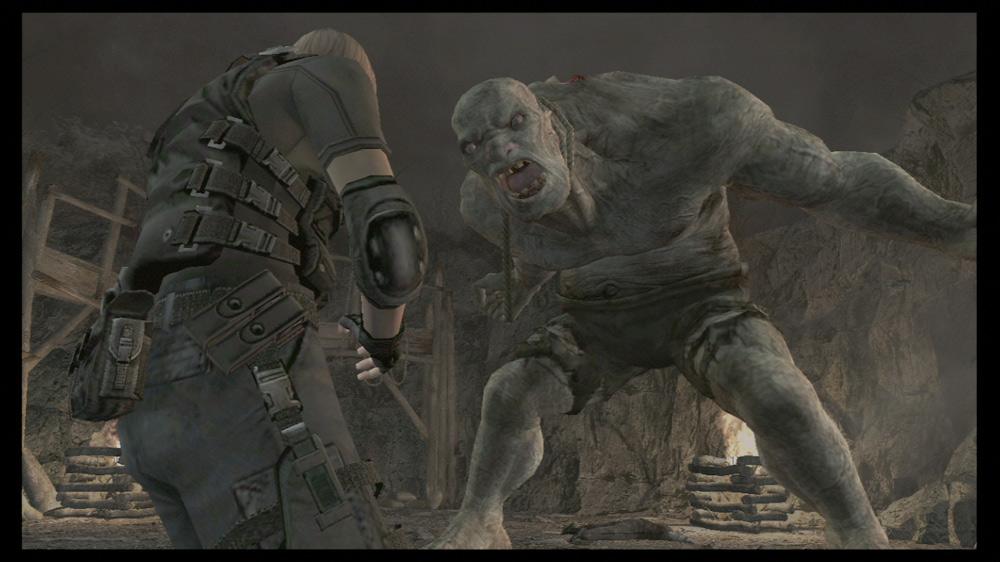
The controls are not what you would call traditional, being in that the triggers only pull out you weapons, and doesn’t actually shoot them. However players should be able to adjust fairly easily to the newer control layout. The big negative about the controls of Resident Evil 4 is the fact that you can’t walk and shoot at the same time. It is extremely frustrating trying to shoot a large ogre looking man who can crush you under his feet, then having to drop your aim, run away and quickly turn around and aim again. By that time, he is almost on top of you again!
The inventory system in the game is very realistic and challenging, which is a refreshing change. Players have to be very careful on which guns, ammo and healing products they carry, because you are only give a certain amount of space to store everything. This also allows for the player to customize their pack to their own playing style, if they don’t use the shotgun very often (although who doesn’t love shooting with one and causing head explosions!) then they don’t have to carry one. Sell it and replace with maybe a rifle for long distance shooting. The pack size can be upgraded via the travelling merchant who appears periodically throughout the game to sell you weapons, weapon mods, healing items and will also improve your weapons for a price.
Resident Evil 4 was also the beginning of the quick response button presses, where your character must quickly push the buttons flashing on the screen to run, dodge or any action that needs to be done quickly. It is an excellent way to keep the player on edge; however in the HD release (although it may be the same for its predecessors) the buttons rarely changes. So if you know the player is going to sprint, you can automatically move your finger to the right button, before being asked to. It may have worth putting in some variation, just to keep things from becoming predictive.
Not much has been added to the re-release of the game, it includes the bonus gameplay which was in the original release. ‘Separate Ways’ and ‘Assignment Ada’ are bonus missions that shows the story of Ada Wong’s involvement in the game, as well as ‘The Mercenaries’ mini game, where you have limited time to kill as many enemies as possible with a variety of characters. The addition of a leader board system is only beneficial to those gamers who have to be the best at everything, rather than actually enjoying the game. It allows you to compete with your friends on how fast you complete the title, but only for normal or professional difficulty. The player also gets the added bonus of achievement systems on the XBLA title, although they don’t stretch very far out of the imagination of the main storyline.
Graphics/Audio:
Now with the HD title, there are some players that would expect big changes in the way the game is presented, that is not the case in Resident Evil 4. That is not to say the game looks bad, not at all. The animation is well done and consistent throughout the game, rather than having overdone cut scenes that leaves the player controlled animation a lot to be desired. Leon looks the same regardless if he is having a deep conversation with Ashley or if he is blowing the heads off the local populous.
The background music throughout the game represents the mood well, but I believe the developers missed out on creating the jump out of you seat scares, because the music always lets you know when enemies are approaching. When the music begins, you can start looking for the enemies, so there is no evil villager that suddenly sneaks up on you unless, he just walks up behind you while you are shooting someone else because you cant move while you shoot.
Overview:
All in all, I thoroughly enjoyed Resident Evil 4 HD, the improved controls and smooth animation inspired me to dive deeper into the Resident Evil series altogether. The game would only need minor tweaking to achieve perfection, in making it less repetitive. If trying to decide whether to upgrade from the previous releases, it would be hard to say. I prefer the XBLA version because of the achievements, but otherwise there is not much difference.
Here I am reminiscing again and thought I’d make a small list of a few games you might like to try if you are looking for a true challenge. It is PS1 onwards as there are just way too many older NES, SNES, Master System and Megadrive games to count such as Contra, Alienstorm, Zelda II to name but a very select few. Like any other list of this nature it is completely subjective. I haven’t played even a fraction of the games out there so please don’t comment with things like “What are you talking about; this game xxxxx was heaps harder than any that you listed”. Tell me which games they are rather and I shall try them for myself and make my own judgement on it.
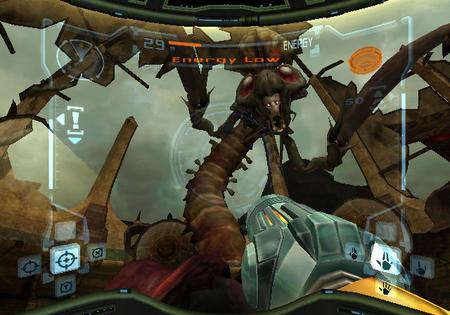
Metroid Prime Series Nintendo Gamecube
November 2004
Nintendo
Metroid Prime is the only game where I needed to sit with a laptop and the walkthrough on permanently. This game has by far and away the most complicated and extensive mapping system of any I have ever encountered. Add to this the fact that Samus can roll into a ball and go through secret tunnels and small gaps and you almost need a university degree to read the maps. Presented in a 3D holographic style the map system is superbly crafted, it’s more the sheer vastness of the landscape coupled with the fact that specific doors require specific weaponry to open, resulting in huge pilgrimages to different environments. In the second GameCube instalment Metroid Prime Echoes all the above applies with the addition of the concept of Dark and Light worlds each with their own distinct characteristics. In my opinion the Metroid Prime series is probably the best rounded, most challenging series I have ever played.
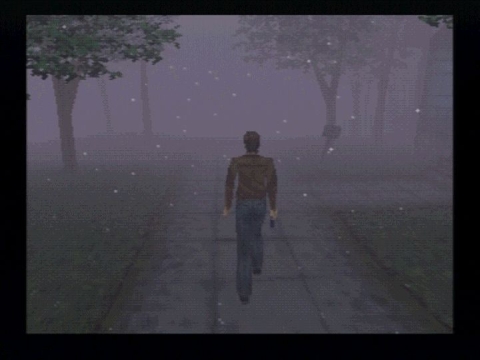
Silent Hill PS1
January 31st 1999
Konami
The first instalment in the series was very different to the current Silent Hill games most of us horror fans are enjoying. While the feel of the game is the same, and they both ooze the same ambience of despair and fear, there was more of an emphasis on puzzle solving combined with combat, rather than a combat based game with small amounts of semi-predictable puzzles to solve. Despite the less appealing graphics Silent Hill on PS1 was just as scary and enjoyable as future instalments and required you to use your brain in a more practical and complex manner than most other adventure based titles. A particularly memorable puzzle i remember having the whole family in frustration was the Piano puzzle involving a cryptic poem and bird references.
Ghosts n goblins Arcade
September 19th 1985
Capcom
An old School game that had the capacity to send the player straight to the local Asylum through its sheer difficulty. Being a 2D side scroller, the premise was quite simple, move forward, up or down to reach your goal, avoiding all the little flying, walking and squirming undead enemies in your path. It isn’t surprising that this game is exceptionally hard considering it was designed as an Arcade machine to have you raiding your little sisters piggy bank for those valuable 20c coins. It truly took a master player to get through Ghosts n Goblins. The game was set over 7 levels and players had 5 different weapons to choose each varying greatly in their abilities. (Leave the torch alone). As is the norm, there is a princess that requires saving with you being her knight in shining armour. Play at your own peril.
Metal Gear Solid PS1
October 21st 1998
Konami
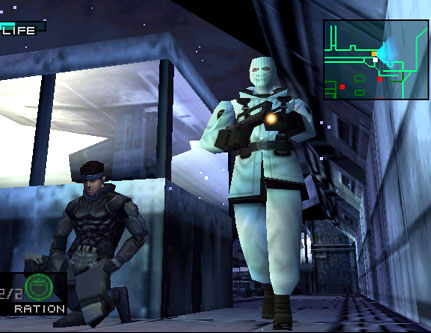
Is it just me or does anyone else think Solid Snake was based on Kurt Russell as Snake Bliskin from the Escape from L.A and NY movies. Either way, MGS provided players with a gaming experience like no other taking the concepts of stealth combat and realistic AI to spectacular new highs. Enemies react to Snakes every movement and while it was probably no more difficult than todays instalments, it required a totally different mode of thought to anything else seen before it.
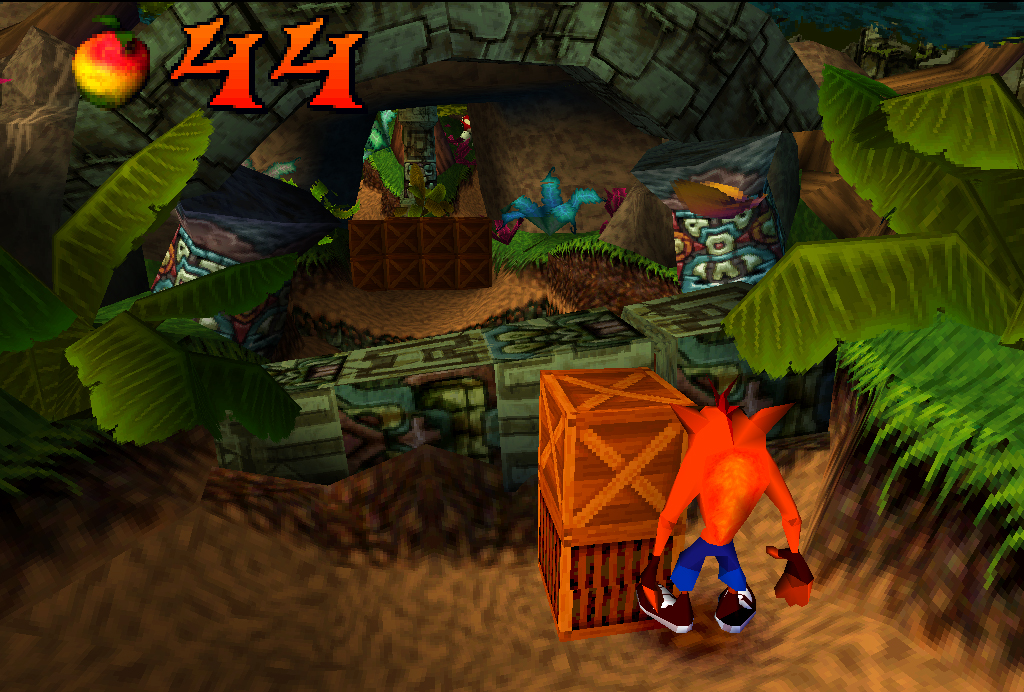
Crash Bandicoot PS1 –
Naughty Dog/SCEA
August 31st 1996
Crash is one of my favourite platform games, offering the player a huge array of challenges, combining elements of 2D side scrollers as well as free roaming 3D style play. Completing each level earns you a clear gem, but the real challenge of this game is collecting the coloured gems. Unfortunately this usually requires you to redo a level, taking an alternate path that is more often than not going to drain at least 20 or so of your hard earned lives from you. Think jumping across single boxes randomly placed in mid air, some surrounded by TNT, others by NITRO, where one mistake results in a delicious char-grilled bandicoot. Seriously though, these levels are #@#$% hard and require precision timing and control to complete. I think after years of play we finally got 24/25 gems with 1 or 2 of them being unobtainable. Subsequent instalments while being just as enjoyable didn’t come close to this in difficulty in my opinion.
Have a go and please let me know if there are any games you remember as being ultra frustrating and worthy of a challenge, theres plenty out there just remeber the last time you hurled a controller and what game it was.