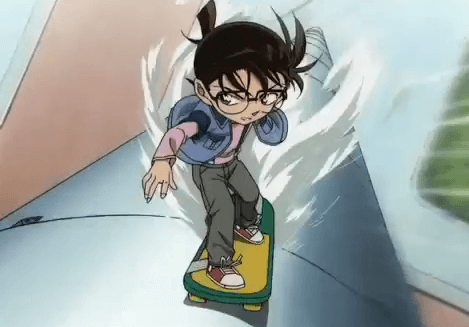
A trailer for the upcoming Detective Conan film has made it’s way online and you’d be excused for thinking this is the new Inazuma Eleven film at first glance. The film is titled Detective Conan: The 11th Striker and is the 16th cinematic installment of the popualr detective series.
The trailer shows off some of the plot of the film which involves a serial bomber who plans to level an entire soccer stadium filled with people. Who better to crack the case than Detective Conan?
You can check out the trailer for Detective Conan: The 11th Striker below. The film is set to strike cinemas in Japan next year.
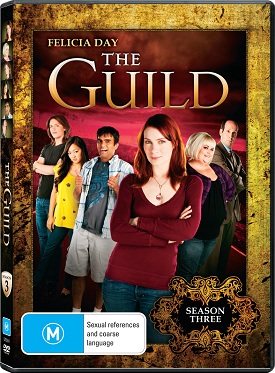
The Guild Season 3 Directors: Jane Selle Morgan, Greg Benson, Sean Michael Becker Starring:Felicia Day, Vincent Caso, Jeff Lewis, Amy Okuda, Sandeep Parikh, Robin Thorsen Composers: Don Schiff Producers: Felicia Day, Kim Evey, Jane Selle Morgan Distributor: Siren Visual Price: $19.95 – Available Here
Overview:
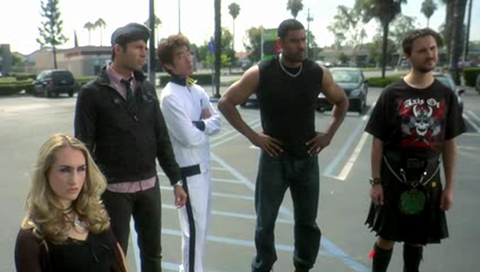
The Guild is a fantastic series which captures the essence of hardcore MMORPG gamers and shows their lives in and outside of the gaming world. Season 3 starts with the characters of the guild trying to rebuild the pieces after the destructive ending of Season 2. They run into some trouble with a rival guild called Axis of Anarchy and compete with them to overcome obstacles.
Story:
Season 3 starts off with the members of the Knights of Good in line to pick up the new expansion from the game store. While waiting, a rival guild called Axis of Anarchy shows up and causes trouble for the Knights of Good, getting them sent to the back of the line. At this point, Vork (Jeff Lewis) resigns as guild leader and lets the other vote on who should lead them. Codex (Felicia Day) ends up taking over as guild leader and Tink (Amy Okuda) runs off to join Axis of Anarchy. The Guild takes a turn from here, all characters have their own self developing stories up until the end.
Zaboo: At the end of season 2, Zaboo (Sandeep Parikh) meet Riley (Michele Boyd) and started dating. This relationship is the main focus point of Zaboo in season 3, and most bizarre turn of events The Guild has encountered. He and Riley start off infatuated with one another, but things change when she starts to treat him like a dog. Zaboo despite being beaten up continues to stay with Riley up until the near the end of the season. His character also has another turning point when he and Codex confront Valkerie (Mike Rose), one of the members of Axis of Anarchy. Zaboo starts going crazy while deleting items of Valkerie’s game character, while they interrogated him. Ashamed of himself he cuts himself off from the others, while still being Riley’s lap dog. Zaboo has a change in heart towards the end of the season when he joins back up with the guild to take on Axis of Anarchy. He also builds up the courage to break up with Riley over a text message. Although being more of a supporting character in this season, he still has his comedic moments that break the tension.
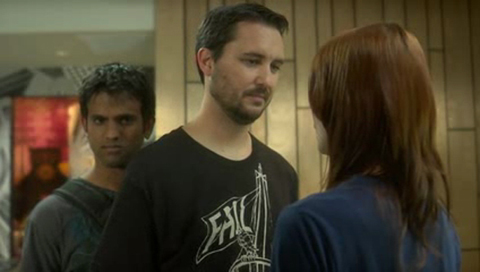
Codex: Codex would have to be the main focus of season 3 with her new responsibilities as guild leader. During this season she grows the most out of all the characters, becoming a stronger person and gamer. She tries to get Tink to come back but when that fails she ends up trying to recruit a new guild member. After many auditions for the vacancy, Codex fills the spot with Clara’s (Robin Thorsen) husband Mr.Wiggly (Brett Sheridan). During this time Axis of Anarchy are causing mischief to hinder the Knights of Good, so Codex tries to sort things out with them but ends up provoking them. Fawkes (Wil Wheaton) then declares an all out war against the Knights of Good, causing even more havoc for Codex. With the guild falling to pieces, she builds up the strength and courage to take the offensive and strike back. She and Zaboo sneak into Valkerie’s work and interrogate him for info of the Axia of Anarchy. After getting the info she needs she gets everyone back together, to have an all out battle with the rival guild. During the battle she finds herself talking to her priest and has a moment of clarity when she grows into her stronger self. While beating Fawkes and Tink in battle, she manages to rebuild and fix the problems of the guild and returns leadership back to Vork. Codex emerges victorious and causes Fawkes to not take her so lightly. If only it came to all of us that easily.
Vork: Passing on his responsibilities to Codex, Vork goes onto a self discovery search while trying to find a stable, free wi-fi connection to game from. Upon his journey, he comes across a lot of people that seem strange to him but in fact find him even more weird. After his interactions with others, he realizes that not many people in real life like him but that is why he was able to be such a great guild leader. Vork may not be a major character in this season but his awkwardness and sense of timing is what makes him funny.
Clara: After kissing another man at the end of season 2, her husband finds out about it and confronts her. Clara’s focus during this season is to work on and rebuild her marriage with her husband. In finding a middle ground to spend more time together, he starts playing along with the Knights of Good. Clara is a big support factor throughout this season, and she and her husband ended working things out.
Bladezz: A victim is more what you would call Bladezz (Vincent Caso) in season 3, with being an easy target for Axis of Anarchy. After deleting Tink’s game character, she sought revenge from within the rival guild by revealing his model career to his high school. If that wasn’t enough torture for him, Axis of Anarchy planted ‘weapons’ inside his school locker and one of them even slept with his mother. He overcomes these obstacles and turns out to be a likable character after some of the things he has done.
Tink: Tink is once again a support character, and provides some drama for the guild. After having her character deleted by Bladezz, she goes off to join the rival guild. She doesn’t appear much in this season, but does show up again towards the end. In the end she comes back to the Knights of Good.
Visuals and Audio:
The aspect ratio of the DVD is 16:9 widescreen and the audio is Dolby 2.0. The picture and lighting of the episodes are excellent, well shot, sharp and felt like you were there watching in real time. The audio is crystal clear and well balanced, that it feels like the characters are right there with you in the same room. While watching this it was really easy to forget that it was originally a web series they way it has been produced. The DVD also comes with English subtitles for all episodes, for those who need them.
Extras:
The DVD comes with interviews, gag reel, script of the season, tips on how to make a web video, a Halloween special, a music video and the making of the music video. These bonus features have had a lot of work put in them to provide an insight into what the cast and crew do to make the series.
Overall:
Overall The Guild Season 3 is a very well put together DVD. If the show wasn’t enough, it’s packed with some fantastic extra features. This DVD is a must have for fans of the show, gamers or even people who just want to have a good laugh at someone else’s expense.
Despite Sentai Filmworks revealing that they had acquired the license to Dream Eater Merry (Yumekui Merry) in February of this year, they had not made any actual announcement about the series since then. Some were worried that the series was stuck in limbo but it seems that their worries were for naught as David Williams from Sentai Filmworks revealed today in the below video that the company is indeed still working on Dream Eater Merry.
Sentai Filmworks will be providing an English dub for the series and will be releasing it on Blu-ray though at the moment they have not revealed when fans could expect to see this release for purchase. For those who don’t know, Dream Eater Merry follows the story of Yumeji Fujiwara who possesses a strange ability to predict whether a person will have a nice dream or a nightmare. Then he suddenly meets Merry, a girl who has come from the world of dreams and must now fight alongside her to try and stop the Nightmares from consuming his friends.
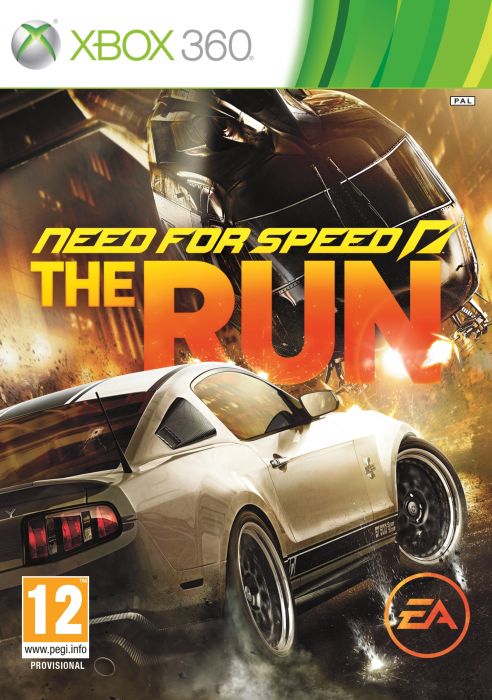
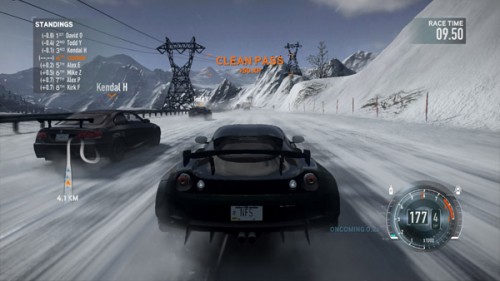
Need for Speed: The Run Developer: EA Black Box Publisher: Electronic Arts Platform: Xbox 360 (reviewed), Playstation 3, PC, Wii Release Date: November 17, 2011 Price: $59.99 – (Available Here)
Overview
Need for Speed games have been churning out yearly for quite some time now, but it’s been three years since the original Need for Speed team, Black Box Studios, have released a game on the market, with the two most recent entries in the series being “guest-developed”. Black Box are trying to come back with a bang: story is being brought back to the franchise, and along with it some of the most impressive set-pieces ever seen in a racing game. Does the adrenaline-fueled formula give The Run a straight shot of nitrous, or should it be dumped through a grinder?
Gameplay
Need for Speed: The Run comes packed with quite a few things to do, but the mode that sets it apart is, unsurpisingly, The Run. This singleplayer adventure tells the tale of Jack Rourke as he races across the United States to win a 25 million dollar prize. Why? Well, he owes the mob money, you see, and the mob tend to do mean things when they don’t get their money back.
That’s about as deep as the plot goes. You’ll “meet” other characters throughout the course of The Run via a description in the pre-race loading screen, and that’s all you’ll get. The plot merely exists to serve up the intense, adrenaline packed scenarios and tracks that occur during The Run, and though the context is hazy, the game makes you feel as if you are driving for your life; that it’s all on the line.
You start The Run in San Francisco below 200th place, and each stage provides different challenges to get you up towards the top spot. Some races will simply tell you to win against the racers on the stage, others will pit you in “battles” where you have limited time to pass single racers and maintain a lead before moving on to the next racer and repeating the process, and others will pit you in one-on-one races against the aforementioned “rivals” who will drive with more skill and far more agressively than the standard, AI drivers.
The game’s stages are really quite varied, and rather than making you memorize track layouts and perform laps, you’ll race from point A to point B across mountains, plains, cities, and deserts. Each stage allows you a certain number of “resets” should you crash, leave the track, or manually reset with the Back button. The checkpoints are generally generous, but on the larger, more elaborate stages the limited number of resets can definitely be a hassle, as running out sends you back to the beginning of the race. This wouldn’t be too problematic if load times for The Run stages weren’t so long. All you want is to get back into the race, but you’re stuck with a loading screen for 30 seconds; it kind of doesn’t mesh well with the action-emphasis of the game.
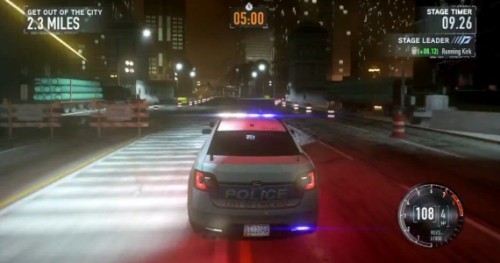
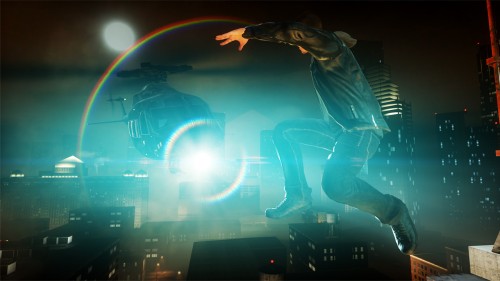
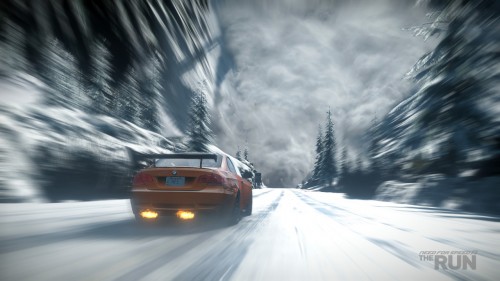
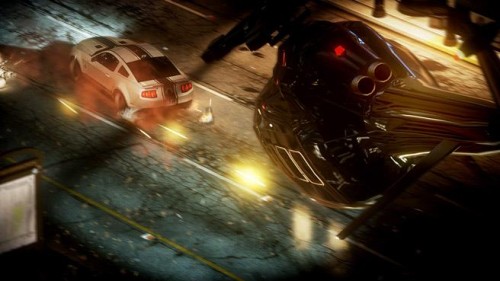
The Run is also extremely linear, and it suffers both the benefits and the pitfalls of that design. The benefits being that there is nothing more thrilling than racing through an avalanche, or being chased by policemen across San Francisco, or avoiding trains in the New York subway system. It’s seriously intense, and the much toted out-of-car sequences only serve to add to the intensity. These sequences occur about four times in the game, and each time for not much over a couple of minutes, but they essentially amount to quick time events where Jack must outrun cops, the mob, or anything else that wants to beat his face. They’re actually quite well done, and being stuck in a crashed car, trying to break out as a train hurtles towards you was definitely one of my favorite moments in the game.
But, the game is linear to a fault. The developers don’t want you going off the beaten path, and sometimes very harshly so. There were times when I’d round a corner and my left tires would leave the road and roll onto a hill or some dirt, and the game would send me back to a checkpoint, costing me a reset. While these moments occur rarely enough to cause serious damage to the overall experience, they are there and they are very frustrating.
On top of that, you don’t get the option to switch cars before a race starts while playing through The Run; you have to stop at designated gas stations to change rides, and this can often have a negative impact on your race position. And while the autolog feature returns from previous title entries so that you can compare stage times with friends, you can’t simply go back to individual races to try and improve your time. If you want to, say, replay the avalanche sequence, you’ll have to start at the beginning of the mountain sequence and play through every track leading up to it.
These odd design decisions hamper The Run’s gameplay, and it seems strange that such miscues were overlooked. The Run will take you about five to seven hours to complete, and aside from some of the frustrating mechanics, the game succeeds in capturing the blockbuster action of a summer movie, and it will keep you on the edge of your seat.
But The Run isn’t just about The Run. The game’s other singleplayer option are the challenge maps, which unlock as you complete The Run mode. These use a variety of the locations from the campaign and twist them with new objectives and race types. Each track has 4 types of medals you can earn; the faster you finish, the better the medal. The times on these tracks are also uploaded to Autolog, and, as there are over fifty, they should provide plenty of additional game time to leaderboard addicts.
The game also comes with solid Multiplayer content, which, much like the singleplayer, sacrifices options, for simple, edge-of-your-seat action. You can choose from playlists which suit the kind of driving you want to do and what car you’ll be racing in, and the game does the rest. To encourage people playing together for a while, creating a sort of mini-community, each track offers group and solo objectives which give bonuses in XP to the players. And when the tracks in a playlist have run out, the players can vote on what playlist they’d like to go through next.
The Run features a profile levelling system to keep you into the game. Experience can be earned via both singleplayer and multiplayer, and level progression will unlock new ways to build up nitrous as well as profile icons and backgrounds which are shown off whenever you win an online race. The Multiplayer portion of the game, despite lacking the over-the-top setpieces of the campaign, can be just as intense because you’re not playing agaisnt squeaky clean AI players.
Players will knock each other off cliffs, crash through civilian traffic, and occasionally a group of five people will miscue a turn and all fly into a river at the same time. It’s mayhem, and boy is it fun. And because Multiplayer is required to unlock certain high-end cars for use in other modes, there’s plenty of incentive to keep playing.
Audio
Need for Speed: The Run seeks to emulate summer blockbuster films, and it does so excellently in the sound department. Epic orchestral themes will sweep you through the game’s major setpieces and tracks, and when those go away, they’re replaced by an outstanding array of quality music, mostly Rock, and thankfully, not a whisper of dubstep, rap, or electro. Someone at Black Box has good taste in music.
The voice acting does it’s job, not that people speak a lot. Christina Hendricks, of Mad Men fame, plays your sponsor and advisor via phone line, while Jack replies with grunts and “yes”s.
Voice acting aside, The Run’s audio effects are just spectacular. The roar of the engines, the wind blazing past your speeding car, the crash of metal on metal; it all feels real and visceral, and it just adds to the overall intensity of the experience.
Visual
There was a little game called Battlefield 3 that came out earlier this year, and it looked great because it used a powerful, new graphics engine. Well, the Frostbite 2 engine is back, baby! And it’s gorgeous.
If you can’t actually drive across America, this is the next best thing. Everything from the lighting, to the game’s grand vistas, to the way cars move on the road looks amazing. There’s occasional pop-in and some of the textures can be a bit blurry when you look closely, but overall, the game looks fantastic. And though there’s no emphasis on Frostbite 2’s destructibility capabilities like in Battlefield, there’s a very dynamic feeling to the way you’ll crash through wooden barriers and crates. The Run wants to emphasize blockbuster action, and looking this good does it a great many favours in that department.
Overall
Need for Speed: The Run is a game with issues. Some off-kilter design decisions and the frustrating linearity of it all can majorly detract from the experience, and the story isn’t something you’ll tell your kids about.
In the end, that’s not a flaw. Need for Speed: The Run is the Call of Duty of racing games. Sure the plot is paper thin, but you’ll be on the edge of your seat more often than not. As you guide your car through mobster gunfire, weave through exploding steel mills, or escape the police in Las Vegas, the game is an intense, non-stop action experience that manages to satiate the adrenaline junkie in me.
If you’re looking for a racing simulation, The Run isn’t for you. But if you’re after thrills, spills, and a driving experience that’s all about action, then you don’t have to look any further. This is the game for you.
In Australia, the economic crisis hasn’t been treating our video games industry quite well, with very few big publishers actually staying put. 2K Games have been one of those publishers, but for some time, rumours developed of layoffs at the Canberra studio. Actually, it seems that the opposite is happening. Not only has the studio re-introduced the name 2K Australia, but their experience in the Bioshock games have been rewarded as they have received work on the latest game in the Bioshock world, Bioshock Infinite.
According to MCV Pacific, this news came from an employee of the studio. The studio was working with 2K Marin, under that name, on teh game XCOM. It seems that work on that has been halted in favour of Infinite, which is turning out to be a fantastic and creative game. What section of the game they are working on is currently unknown. This is great news for the studio since those rumours emerged. Maybe those particular rumours can now be put to bed as the studio works hard on one of the most anticipated games of 2012.
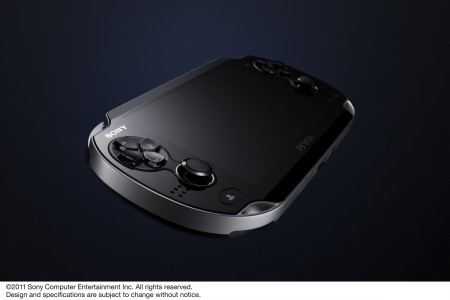
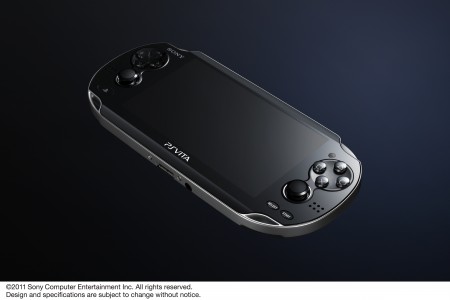
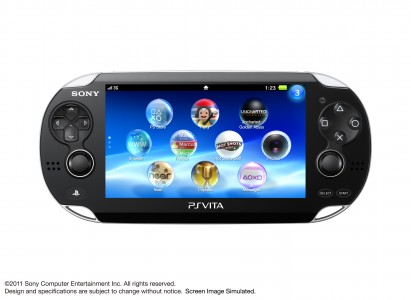
The Playstation Vita is going to feature Remote Play, just like its predecessor, the Playstation Portable, did. Remote Play is how the handhelds connect to the Playstation 3, thus the Playstation 3 is streamed through the portable handheld. This includes the streaming of selected Playstation 3 games (sounds familiar). For the Playstation Vita, it will be compatible with all Playstation 3 games through a future firmware update, according to Eurogamer.
The games will be at 480×272 resolution, that of the Playstation Portable. Of course, the games will be upscaled to fit the 5 in. OLED screen. Future Playstation 3 releases, however, will support a 480p mode specifically for the Vita, which would have to be added by the developers themselves. The Vita is capable of displaying a resolution of 960×544.
This is a great solution for those who share the television that the Playstation 3 is hooked up. If one has a show or a movie which is going to be on, the other can simply switch to their Vita, provided they actually have one. Watch the video below, from this year’s Tokyo Game Show, to see the Vita handling Killzone 3 via Remote Play.
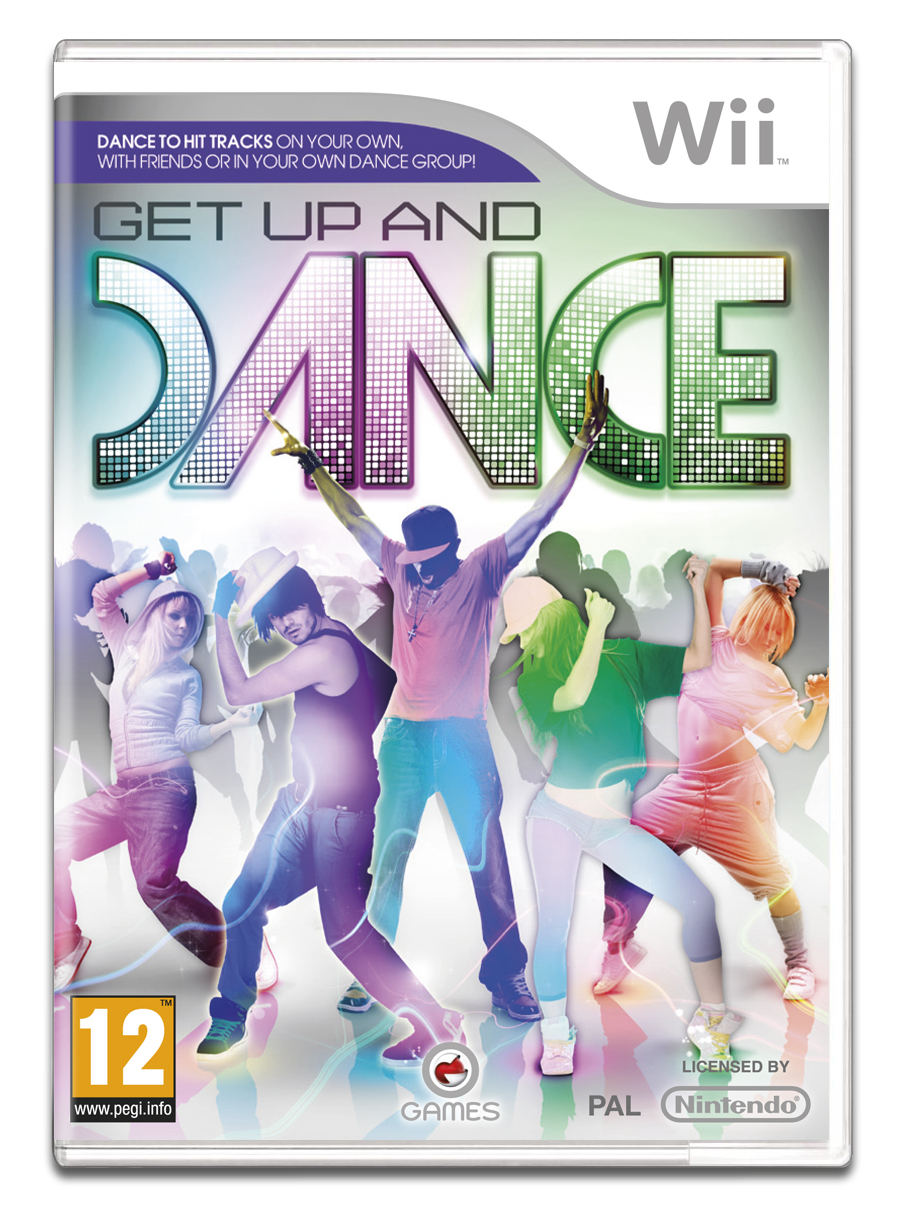
Get Up And Dance Developer: Gusto Games Publisher: O Games Platform: Nintendo Wii (PS3 Move) Release Date: 8th November Available Here
Overview:
Promoted as a game that anyone could play, regardless of age, fitness, gender and the rest, Get Up And Dance aimed to relieve people of their inhibitions by getting them up and dancing, in the process probably making a fool of themselves and/or causing injury – as comes naturally to many Wii games. Arriving just before the holiday season where relatives young and old, male and female, will be down to visit, it’s right on time for everyone to crowd around the TV and get up and dance. The only problem is, there doesn’t seem to have been any extra-special effort from Get Up And Dance to facilitate this niche and justify the game’s ownership of its title over any of its other dancing game competitors.
Gameplay:
The routines can be pretty complicated if you want to master them or even execute the moves correctly, and the features to teach you the choreography leave a lot to be desired. Some dance games have a great way of breaking down and slowing down routines to allow you to learn the moves and perform them accurately. Get Up And Dance does now; no explanation of moves or sequences, no choreography guide to help, just a very basic ‘Rehearse’ mode in which you can select specific sections of songs to practise. While more in-depth teaching would be contradictory of the game’s title, you can’t help but feel the back-to-basics rehearse mode doesn’t have much to offer over just repeatedly replaying a song you’re finding difficult in a normal game mode…
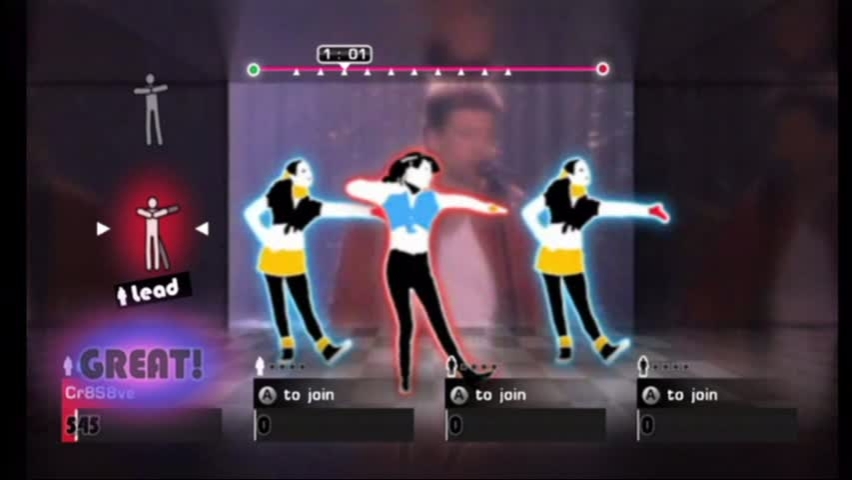
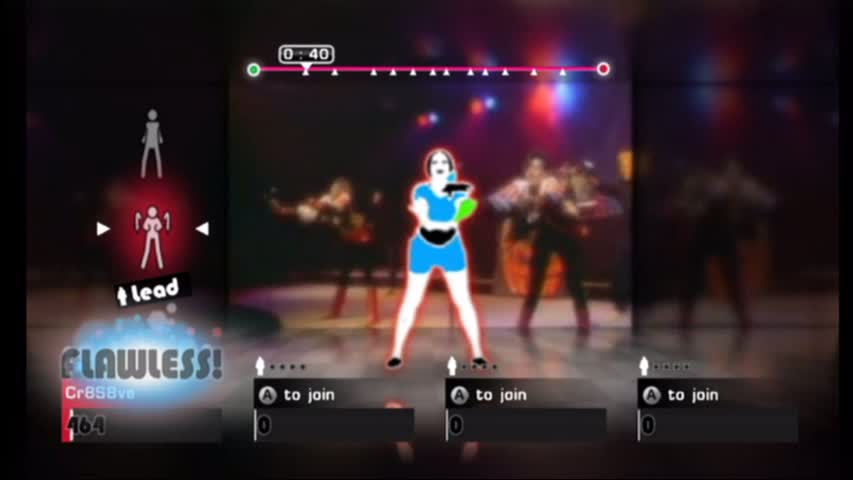
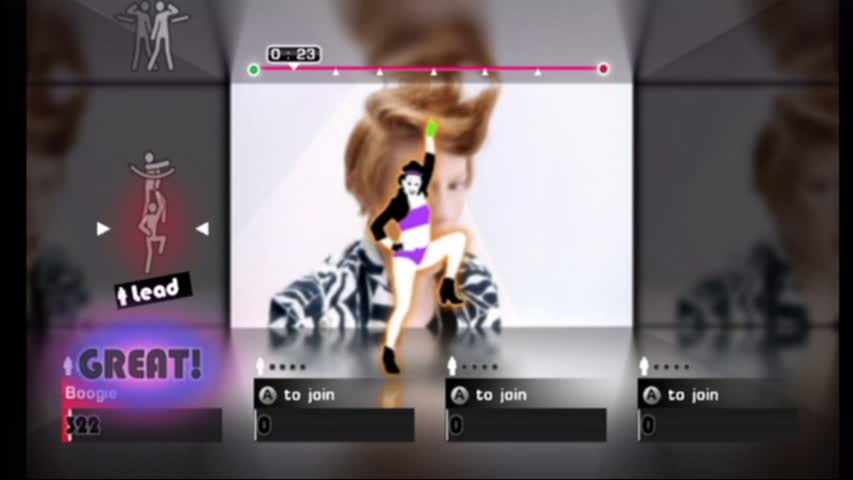
A normal, instant-action game mode like ‘Get Up And Dance’ mode or ‘Get Up And Party’ mode, for example. These straight forward modes are always going to be the most played part of the game. With a group of people behind you waiting for the game to start, you’ll usually jump into the first available game mode. As well as dancing to receive a score in these modes, Get Up And Party is home to a couple of extra multiplayer variants like ‘Tug of War’ and ‘Last Man Standing’. Although ultimately they have the exact same routines, it mixes it up by injecting an added sense of competition to proceedings.
In addition, there’s Get Up And Dance Group which poses the interesting idea of a talent show to progress through. Your dancing must be good enough to avoid getting three ‘X’s from the judges and being booted from the contest. The entertainment industry seems to be obsessed with applying a competition format to everything – not only singing and dancing, but business, cooking, even hairdressing – so it’s a nice try by the developers to appeal to the mass market by acknowledging the public’s interest in talent competitions. The game’s routines can slightly alter for players when doing multiplayer, because some players inherit the role of backing dancers and have slightly different routines to follow that the lead, though still stick to the style of dance of the song.
However, it almost seems like none of this matters in the long run just because of the monotony of it all. Although not totally the game’s fault as the Wii is starting to show its age, the unresponsive controls make it hard to distinguish one routine form the next. None of the choreography is particularly memorable and it can be disheartening to go all out like you’re starring in a music video, only to look over your shoulder and find your Aunt Patty waving the remote in a circle yet yielding similar scores. Although you would only be cheating yourself if you chose to flick and shake the Wii remote at random instead of following the choreography, it’s still disappointing. At least this way everyone’s rewarded for their efforts, though.
Visuals & Audio:
The setlist is mainly made up of contemporary tracks – it’s in keeping with the times, with mostly recent stuff which did well in the charts, giving it an instant and current appeal but depriving it of any lasting qualities. Perhaps it’s easier for a song to appear in a game once it’s already been in a couple previously, as there are definitely some recurring tracks here, though it is a positive that familiar, slightly older dance hits like Reel 2 Real’s ‘I Like To Move It’ are included.
The graphics carry the same neon glow design of the Just Dance games. While conveniently skirting around the Wii’s weaker visuals, it’s a design choice that doesn’t bode well considering Get Up And Dance should be trying to distinguish itself, not trying to get itself confuses with Ubisoft’s dancing series in the hope of extra sales from misled gift-buyers.
Overall:
Get Up And Dance always ran the risk of being too similar to Just Dance – even the names carry the same sentiments. Unfortunately, it has emerged from its misguided development as a Just Dance clone without many of its rival’s finer points. It also manages to highlight many of the Wii’s motion control shortcomings. Given Just Dance is on its third iteration with numerous other spin-offs, Get Up And Dance was up against something with plenty of time and experience in its craft, time and experience which Get Up And Dance didn’t have.
Before the Playstation Vita is actually release in the West, there is a small territory known as Hong Kong that will be releasing it in the same month as the Japanese. Recently, retailers around Hong Kong have opened pre-orders for the handheld. What was the reception? Lines were long, eager buyers flowed like champagne and online stores had a sudden spike in visitors in their gaming sections. All in all, Hong Kong is very excited, if a report on Engadget China is to be believed.
This picture is a store in Hong Kong with a long line of people waiting to pre-order their Vita:
Unfortunately, this has also led to opportunities of the scalping kind. But, with the release date looming closer, one has to wonder whether the crowds would only be bigger on December 23. Two stores actually sold all of their pre-order stock, which was the only way the crowds dispersed. This is also the release date for Taiwan. This comes two days before a widely celebrated Western holiday and six days after the Japanese release date of December 17, which will be the first country to receive the Vita.
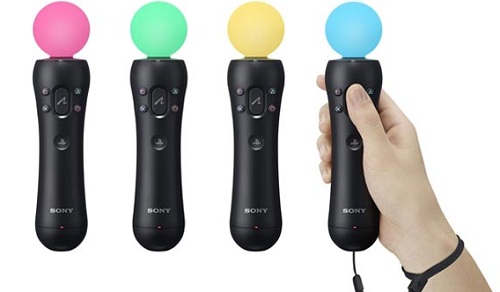
Sony have released the latest shipping figures on their motion control peripheral the Playstation Move. According to the Japanese electronics giant, they have shipped nine million Playstation Moves. This figure goes back to the release of the Playstation Move, which was September 2010. In addition to the total units shipped since launch, Sony also released a figure of one million units since April, which is in a time period of seven months.
This isn’t that great of a figure, having one million shipped in a seven month period, compared to eight million units shipped from launch to April, which would suggest that the Move is not selling to expectations. This could be down to a lack of software within that period of time. However, the Move has had a resurgence of software recently released, which should pick up sales to an extent. The Move is a great peripheral for the Playstation 3 with software for both the casual gamer and the more hardcore gamer.
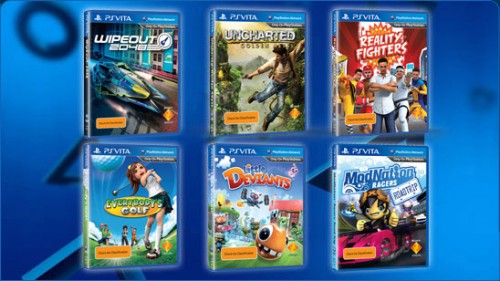
Some time ago, I had brought the news that the first party launch lineup for the Playstation Vita has been finalised. So, what do these packshots look like? Well, here is a screenshot below of six games: Uncharted: Golden Abyss, WipEout 2048, Little Deviants, Modnation Racers: Road Trip, Everybody’s Golf and Reality Fighters.
In addition to those titles, Sony is releasing the following for launch day:
Escape Plan
Top Darts
Hustle Kings
Unit 13
MotorStorm RC
These games will be joined by third party games. Some, like Army Corps of Hell from Square Enix have been announced, however, other companies have yet to announce their own plans for the Playstation Vita launch. The Playstation Vita will be released on February 23 in Australia and New Zealand. The price of the Wi-Fi model will be at $349.95 and the price for the Wi-Fi/3G model will be $449.95.