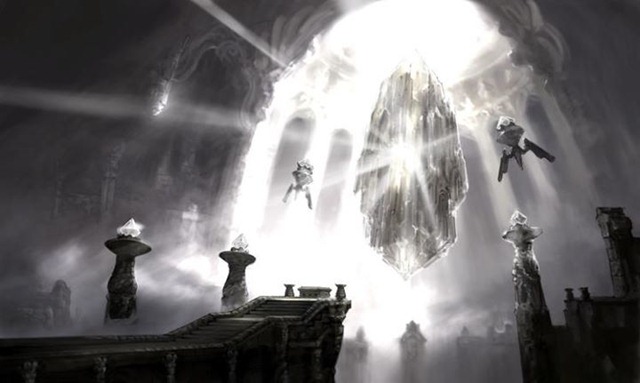

Fans of Final Fantasy’s first three games (and their soundtracks) will be happy to hear that there will be a new album containing piano arrangements of some of the tunes that appear in these games will be released in the near future. In fact, this collection, entitled Piano Opera Final Fantasy I/II/III, will be released in Japan on February 29, so start saving if you love both piano arrangements and Final Fantasy soundtracks.
The official site is now open. On it, one can see both a track list (in Japanese) and a message from Nobuo Uematsu, who created the iconic soundtracks and is supervising the project (also in Japanese). A sample of the “Prelude” rings through the speakers (or headphones). A price has been revealed, which is ¥2,800, which converts to $35.90USD or $35.33AUD. Click on this link to go to the official site. Below is the cover of the album.
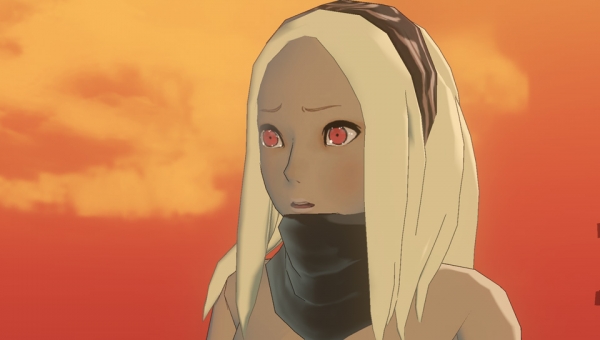
For those who want a physical copy of Gravity Rush and live in Europe, the only way that will happen will be importation as it has been confirmed that Europe and PAL territories will see a download only version of Gravity Rush being released, instead of both a retail copy and download copy as seen in Japan and North America. This was confirmed by a comment made by the Playstation Vita European Product Manager Adam Grant in the comments section of this blog post on the Euro PS Blog. It can be found on the first page of comments.
For those who wants the comment right now, here it is below:
Question: Is Gravity Rush going to be a retail title when it releases or just PSN only?
Answer: Gravity Rush will be launching on PSN only.
Considered one of the most anticipated Playstation Vita titles within the launch period, this is in fact a blow for potential consumers. Despite figures in the digital market in Japan “exceeding expectations” according to Sony, the Western market has not warmed up just yet to buying games on the digital market. Look at the PSP Go, a great idea poorly executed. Plus, if there were fears that Gravity Rush would not sell well, then sometimes playing the game with some form of risk can bring great rewards.
The game should release at retail in North America when it is launched sometime in 2012.
If you have plans to purchase a 32GB Memory Card and live in Europe or one of the PAL territories, then those plans have been derailed as it has been confirmed that the 32GB Memory Card for the Playstation Vita will not be available at launch in those territories. This was confirmed when the card was not listed in a post on the European Playstation Blog.
The post also confirmed the varied pricing that was confirmed for North America. Here is the list of prices for some first party titles that will be launched alongside the handheld on 22nd and 23rd (Australia and New Zealand) of February. These are retail prices, not download prices, which should be cheaper:
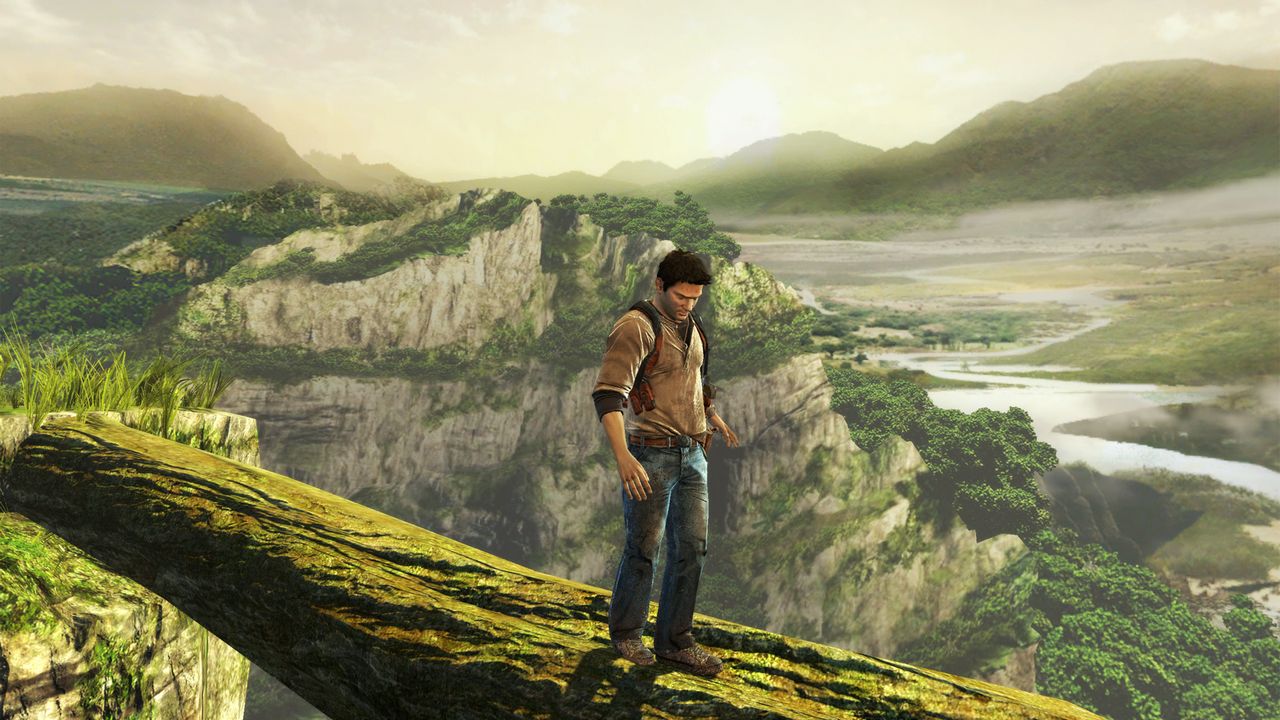
Uncharted: Golden Abyss – €49.99/£44.99/$69.95 AUD/$89.95 NZD
Despite a lack of a 32GB Memory Card at launch, it doesn’t rule out an eventual release in these markets. However, once that 32GB card does release, expect to put down quite a bit of cash. Not so for AR cards, as six will be bundled with every Playstation Vita. AR cards were not included in the Japanese launch models.
Nintendo Japan has announced that a second Nintendo Direct conference will be held just after Christmas on December 27. Nintendo Direct is a web conference that brings the latest news to its fans all over the world (despite being in Japanese). Like the first Nintendo Direct conference, which was held on October 31, it will divulge into the Wii and 3DS, so no Wii U news as of yet.
The video will be streamed on UStream at 12pm JST (2pm AEDT). According to a Twitter post by Nintendo CEO Satoru Iwata, the conference will be focused on games being released right through to March 2012. Iwata will also host it like he did with the first one.
With the conference focusing on games that will be released by March 2012, maybe one will finally hear a release date on Kid Icarus: Uprising, considering that was delayed to early 2012. Maybe there will be some news on Luigi’s Mansion 2 and Animal Crossing 3DS as well. No matter what it is, I’m sure Nintendo will reveal something worthwhile… or maybe not.
Captain America: The First Avenger Studio: Marvel Studios Publisher: Paramount Pictures Format: DVD (reviewed), Blu-ray Release Date: October 25, 2011 Price: $14.99 – Available Here
Overview
Joining the ranks of the Avengers film releases, comes Captain America. My views on Captain America are divided, on one hand he’s a brave hero with perfect pectorals, on the other he takes patriotism to a ridiculous level that really highlights America’s self-obsession. The Captain America comics had their hey-day during World War 2, when America was rallying itself for the fight against the Nazis, and the popularity since has waned. Can the Cap make himself relevant in the modern times?
Still, Chris Evans is a great actor to watch, he has proved in the past that he treads the line of humour and action hero easily, the line that Robert Downey Jr makes his bitch without any real effort. So can Captain America: The First Avenger join the ranks of the rest of the legendary Avengers movies?
Story
The movie starts by discovering something out in the snowy tundra – something circled back to later. While this may make some people feel all happy about the idea of a circular plot line, personally it gave the movie away for me a bit too much.
We’re introduced to Steve Rogers and his many attempts to make it into the army, he’s been denied them consistently due to his lackluster build and medical issues. Since everyone knows that Steve Rogers is Captain America, either through general knowledge, or the trailers, the biggest reveal is the fact that he is the size of a pre-teen. That doesn’t stop him for standing up what he believes in though, and he takes a lot more beatings than someone with that many medical issues should.
They spend a long time establishing his character, in a lot more ways than they probably should have. It’s pretty clear that he’s a decent guy who always does the right thing, but can’t do much due to his stature and health issues.
Enter, German doctor who sees the goodness in him and decides he’d be perfect for an experimental serum that will turn him into a super soldier. He doesn’t really get much in terms of super powers, he just becomes epically built, is super fast, and seems to be unable to die or age.
If you think that once he undergoes the transformation the pace of the movie will speed up, then you’re unfortunately mistaken. There’s even more stagnancy in the plot after the transformation, and it’s kind of exaggerated by the fact that you’re expecting a lot more to happen since he is now Captain America. However, it does explore the other side of the war, which I thought was pretty interesting. The propaganda and sale of bonds is something that isn’t usually gone into, and not something I was expecting from the movie. However, it does actually seem natural that they would try and make him raise money for the cause, rather than fight for it and risk his death.
Once he starts fighting, all of the character and situational exploration flies out the window. It seems like the movie never reaches that real sweet spot of managing to have both fast paced action and mixing in the character development. Steve Rogers never really changes, or has a real epiphany; he just remains the same righteous guy he is in the beginning, only with more muscles.
The villain of the movie, Red Skull, is not one of Hugo Weaving’s best roles. He pretty much just has to be constantly leering and yelling. He is one of the characters that you just don’t really understand where he’s coming from, although in a Captain America movie I am not surprised that good and evil is so firmly defined.
If you watch this movie expecting Chris Evans’ usual characters then you will be quite disappointed, because humour isn’t as present in Captain America as it is in the other Marvel Avengers films. While there are a few jokes here and there, most of the film is as straight edged as the Cap himself.
It’s pretty cool that the movie so strongly references the other avengers, with the power source coming from Odin’s treasure room, and of course Tony Stark’s father, Howard Stark. It’s always been something that I’ve enjoyed about Marvel movies, and is a great way to pump people up for the Avengers movie.
Visuals
The late forties styling is awesome, the way that the sets, costumes, make-up, everything is done is reminiscent of the period and really makes the movie feel authentic.
Cap’s costume, which underwent a lot of drafting, adjustments, and reimagining, looks great in the end. The choice to show the evolution of his costume through the movie was very cleverly done, and the end product is truly amazing looking, while not stepping too far out of line. Given the cheesiness of the initial costume, the fact that the end result is so badass really speaks well on behalf of the costume design team.
The fight scenes are, in no small terms, epic. No expense is spared in the visual effects, and in one particular section of the movie you will be blown away by how many explosions, fire, and fighting they can fit into five minutes.
Audio
The soundtrack is just what you’d expect from a movie that so heavily embodies Captain America, it’s rousing and patriotic, and reminiscent of what someone would expect from the propaganda of the time.
Overall
It might seem like I didn’t enjoy the movie so much, but I actually did. While it is self-righteous and a little too black and white for me, it was quite a fun movie to watch. The fact that it is quite black and white means that there isn’t too much inner conflict, and it’s easy watching. It is the polar opposite from the shades of grey of the Batman franchise, and if that is what draws you in to superhero movies then look elsewhere. Captain America is a man who always does the best possible thing, regardless of the situation, and fights plainly evil men without faces.
It’s Christmas time, and the best way to celebrate is by giving gifts! We here at Capsule Computers have a $25 Amazon Gift Voucher to give away, and we want YOU to have it! So show us your Christmas Spirit!
All you have to do is simply comment below and tell us:
What did YOU get for Christmas?
You can comment by signing in with Facebook or Twitter so it’s really easy to do. Competition will close on December 27, the day after boxing day, and this post will be updated announcing the winner. For more information, check the video below featuring Santa Claus himself!
UPDATE: The winner has been selected! The winner is: Cypherrr!
Congratulations! Our editor-in-chief Phil will be in contact with your shortly! If for any reason you encounter any problems, don’t be afraid to email us at: [email protected]
Thanks very much for all your amazing entries and please stay tuned as we’ll have many more competitions to announce soon! In the meantime Merry Christmas and Happy New Year from Capsule Computers!
Infinity Blade Developer: ChAIR Entertainment Publisher: Epic Games Platforms: iPhone (reviewed), iPad, iPod Touch Release Date: December 1, 2011 Price: $6.99 – (HERE)
Overview
We games journalists like to begin our reviews with a basic summary of a game and then pose a suspensful question as to whether the game is good or if it is not. It’s a simple method, peaks curiosity, and very often there’s the potential for some game-related puns. But to even question the design integrity of Infinity Blade II is to do it a disservice; the game is not only an instant iOS classic, it is also one of the best handheld games of all time.
Story
The original Infinity Blade‘s story could, at best, be called bare-bones, with only two major plot points, and both were infuriatingly cryptic. That problem has been resolved in the sequel.
Infinity Blade II is no Deus Ex, but its narrative is evolved in a more traditional and progressive manner, which helps infinitely in giving the player a bread-crumb trail of plot points until the game’s climactic ending. Twists abound, and several mysteries introduced by the first game are resolved, much to the contentment of my puzzled, on-the-point-of-an-aneurysm brain cells.
Siris, the developer-given name of the series’ hero (though you can change it to whatever floats your boat), is out to free humanity from the tyranny of the Deathless, and to do so he must find the Worker of Secrets and give him the now fully-activated Infinity Blade. Now that its on-button has been pushed, the sword will permanently end the life of whomever it slays, including the immortal Deathless.
Trouble is, the God King manages to get the sword back just after Siris figures out where the Worker is locked up; and on top that, to free the Worker, he’s going to have to eliminate a hit list of Deathless guarding the seals to the prison’s entrance in a well-fortified tower.
Queue adventure.
While the ending is as sequel-inducing as that of the first, you’ll definitely feel like the game resolves more questions than it poses, and it’s rather clear where the series is headed from there.
Gameplay
Remember that tower I mentioned? The minion-guarded, Deathless-containing one?
Well, much like the first game, Infinity Blade II charges you to undertake several assaults on the fortress; assaults that span multiple deaths and rebirths. Where the sequel surpasses its predecessor, however, is in the actual design of the tower.
No more are you retreading the same corrdiors and rooms over and over despite the passage of decades. This tower crumbles and ages as you progress through Siris’s rebirths.
A sapling will grow into a tower-encircling monolithicic tree, the clock-hall disentegrates as years fly by, and new passages are constantly opening and appearing, offering new paths to loot and monsters. You’ll never have to retread your steps exactly as there’s always a new way to explore the fortress, and this ensures that the game feels anything but repetitve.
ChAIR could have left it at that, in terms of changes to the original’s formula, and Infinity Blade II would have been a satisfactory sequel, but they went above and beyond in building upon the solid combat foundation laid down in the first entry of the series. Fights still rely on players avoiding damage in the buildup to a “break”, in which they can deal damage unhindered for a few seconds, but they now have more options in how to dish out the damage.
Players can stick to the classic sword and shield as equipment, which allows them to block, dodge, and parry enemy attacks, while dealing a predictable amount of damage on each break. But there’s also two new ways to battle and slay the monsters of Infinity Blade II, and both feel different enough to shake things up.
First, Siris can dual-wield weapons. This takes away the ability to block attacks, but upon parrying and evading into succesful breaks, players can tear into enemies by quickly building up high damage multi-combos. The second new combat option is equipping two-handed weapons. Wielding one of these hefty things takes away the ability to dodge, and you’ll have to correctly predict the direction of incoming blows to block them. Though this opens you up to taking far more damage, you’ll deal out massive amounts of punishment on each break if you correctly follow the on-screen queues informing you of which direction to swipe.
Each of the three loadouts has its benefits, and it’s hard to go back to the sword and shield after the high damage output of the other options. However, if you’re looking for the safest bet, with the most ways in which to survive a fight, there’s nothing as reliable as the classic Infinity Blade equipment.
The end of each fight sees you granted some gold and experience, and as you develop your ideal play-style, you’ll hone in on whether you want to add a few extra attribute points to boost your health or increase your damage output, among other options. The gold is used to purchase bigger and better items.
Though the game’s loot system will occasionally roll you a powerful item (I got a two-handed mace valued at well above anything I could afford on my second rebirth), for the most part, you’ll rely on gold to upgrade your weapons and armour. This will appeal to anyone who was a loot-hunter in Diablo or Borderlands, as every fight, every bag of gold, brings you closer to that bigger and better item. I was actually disappointed when I completed the game without having fully maxed-out my character. Thankfully for those who end up like me, upon completion, there’s New Game +, where you keep all your items, experience, and gold to play through the game’s gauntlets of enemies all over again.
There’s also been a plethora of smaller tweaks: the hidden keys that open locked chests with valuable items inside, the new, much cleaner inventory system, many more hidden sacks of gold in each environment for the keen observer, enemy attack patterns that are far less predictable than in the original, and the gem system that lets you imbue your loot with powerful attack, defense, gold, and experience bonuses.
It’s quite clear that in designing Infinity Blade II, ChAIR set out to address the concerns that the original game was repetitive. With the multiple combat styles, an ever-increasing number of branching paths, and the large amount of hidden secrets and items to look out for, the game’s greatest flaw is not that it ever feels repetitive, but rather that its loot and experience gain systems don’t always tie into the pacing of the overall story progression.
Audio & Visual
In case the screenshots haven’t tipped you off, playing through Infinity Blade II is a gorgeous experience. Everything from the lighting to the textures to the impressive vistas show that the game is getting the very most out of the Unreal engine, and there’s absolutely no other iOS game out there that can even come close to saying, “I look better.”
Very often, while scanning a location for bags of gold and hidden items, I found myself stopping and just enjoying the ambiance created by the game’s graphics. The best part is that Infinity Blade II‘s environments are far more varied than those of its predecessor. Whether it’s the Asian-themed opening location, dark crypts beneath the fortress, or an arena-like construct in which the aforementioned tree sprouts up from the ground, the game not only provides a feast for the eyes; it provides a feast that satisfies the wide variety of daily requirements from the food pyramid (that’s a metaphor everybody, the game doesn’t actually feed you).
And the sound design doesn’t hold any punches either. The dramatic clang of metal on metal, Siris’s slow footsteps on stone ground, and the haunting soundtrack that rises at just the right moments add to a stunning visual experience in a way that makes the world of Infinity Blade feel like a place that could exist, in a land far away.
That feeling is helped significantly by the designer’s decision to voice-act the game in English, rather than the subtitled language of the first game. Dramatic moments are much better punctuated when a character speaks with the nuances and hesitancies of a language you recognise, rather than the single-emotion mumbo-jumbo of the first game, and Infinity Blade II expertly plays out such moments.
My only issue with the game’s overall presentation is that the kill animations are all catered to the original’s sword and shield. That means that when I was dual wielding a two-handed warhammer, the final blow often resulted in Siris using the weapon one-handed and somehow shoving the blunt object through a monster’s stomach. While it always brought forth a chuckle, I’m fairly certain comedy wasn’t what the developers were going for.
Overall
Infinity Blade II is an outstanding game. It betters the original, which was great in its own right, in every conceivable manner and makes it look like B-grade amateur work.
The furthering of the combat mechanics, the depth of the game’s loot collecting systems, and the grand graphical spectacle all ensure that ChAIR’s latest effort will become a classic, renowned not only in this generation, but in those to come. It has a few pacing issues, and the odd animations occasionally take you out of the exerience, but Infinity Blade II is an experience that gets the best out of the iOS devices, through its smooth controls and wonderful presentation.
Do yourself a favour and buy this game.
Then together we can climb tall cliffs, look at distant castles, and darkly proclaim, “Worker, I will free you.”
Australian anime distributor and sponsor of our CC: Anime Podcast, Siren Visual, have announced 2 new license acquistions. That being the second season of popular horror/mystery anime series When They Cry (Higurashi no Naku Koro Ni) and Princess Resurrection, a 26 episode horror/comedy series.
Siren have previously released the first season of When They Cry, to much critical acclaim (see our review here). Unfortunately due to Funimation no longer dubbing the series, the second season of When They Cry will be released under it’s Japanese title (Higurashi no Naku Koro Ni Kai) as subtitle only release.
This release will mark the second seasons first ever time being distributed outside of Japan. The first part of the second season will be released in March 2012, with the second part hitting shelves later next year.
Princess Resurrection has been previously dubbed and released in the U.S. by Sentai Filmworks and thanks to our friends at Siren Visual, Australia will be getting the same treatment come March 2012, when the series will be released on DVD in a 4 disc collection.
What do you think of these newly licensed titles from Siren Visual? Let us know in the shoutbox and comments section.
Appleappears to be investigating the possibility of powering their Macbooks using fuel cells, which could lead to laptops that could be lighter and smaller than the Macbook Air, which is itself already less than an inch thick. The US Patent and Trademark Office published two patent applications last December 22, 2011 that indicated Apple’s intent on “coupling” fuel cells to a “portable computing device” to power it.
In the patent applications, Apple states that fuel cell powered portable computers can potentially last days or weeks without recharging, or in this case, refueling. The fuel cell system being proposed can power and receive power from a separate rechargeable battery. The most significant implication, however, is the possibility of completely replacing batteries with fuel cells. This would make portable devices much more portable than they already are, making them not just lighter and smaller, but also possibly less costly – not to mention it could allow them to operate longer without having to refuel.
Fuel cells in the form of fossil fuels are the predominant power source for automobiles and other devices, though its use in laptops is unprecedented. A fuel cell turns chemical reaction energy into electrical power. Today’s modern hydrogen-powered fuel cells can combine oxygen and hydrogen in a chemical reaction that can power cars and leave by-products similar in constitution to plain water.
Apple filed one patent application as far back as August 2010, and the other just April of this year.
Welcome to Capsule Computers’ weekly anime segment, Anime Say! Each week I will be diving into some of the biggest anime related topic of the week and having my say on anything that matters in the anime world. To top it off each episode will conclude with a recommendation from your’s truly of an anime or manga that you should check out.
This week, you all get an episode early. It’s a Christmas miracle! In this episode, I continue my discussion from episode 3 on Penguindrum, this time as a retrospective on the series after taking into account all that nonsense, known as the Penguindrum finale. You can check out this week’s Anime Say! below.
Got any questions for Anime Say? Send all your queries to [email protected] and I will do my best to answer anything you can throw at me.
What do you think of the sixth episode of Anime Say? Let us know in the shoutbox and comments section.