In what is quickly becoming an all too common occurrence, Sentai Filmworks has announced that they will be dropping the Japanese voice track from their Blu-ray release of Persona 4: The Animation. This means that the Blu-ray version of the anime will only feature the English dub and will be sold at a $10 discount for $59.98, though it is interesting to note that the DVD version seems to be unchanged.
Before you go laying the blame on Sentai Filmworks for this one, it turns out it was the Japanese license holder who forced Sentai to make the change. This is obviously due to the xenophobic reverse importation fears that have been growing at a ridiculous rate for Japanese anime companies.
Square Enix’s Kingdom Hearts 3D, also known by its much more complicated name Kingdom Hearts 3D: Dream Drop Distance, has hit store shelves today and with it comes a launch trailer similar to the one that was released back when the game hit shelves in PAL regions.
Kingdom Hearts 3D features not only Sora as the main protagonist but also Riku as they take the fight to the dream eaters with new flowmotion combat and attacks. Along the way they’ll meet new types of dream eater and even spirits which will help them fight against the nightmares. Players will also be able to experience a number of new worlds such as Pinocchio, Fantasia and TRON.
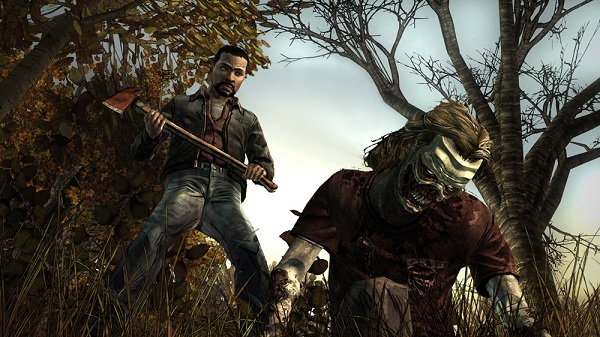
That PlayStation Plus membership you have is about to pay off in a big way, because there will be two games… well episodes of a game, available to anyone who is a PS Plus member on August 7th. On this date the first two episodes of Telltale’s The Walking Dead will be made available for free.
As you may know, these are the first two episodes of a five episode series and both of these episodes have been given glowing reviews from both us and others. It is worth noting that every other episode in the series, once they are released, will cost an additional $4.99. Of course this does mean that at the moment you’ll only have to pay $14.99 if you end up getting the first two episodes.
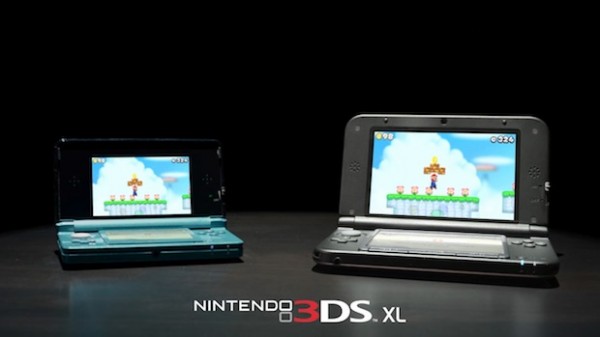
If you thought that the 3DS XL was going to be dead on arrival well you won’t have to worry about that happening in the Japanese market at least. The sales data for the weekend of the 3DS XL’s launch list the upsized handheld selling 193, 441 units in only two days.
This is about twice the amount that Nintendo saw during the same time-frame with their DSi XL. Of course it probably helps that the release of New Super Mario Bros. 2 was released alongside the 3DS XL, so this probably helped boost sales at least a little bit, as those who didn’t have a 3DS at that point may as well get the XL version to play NSMB2 on.
The runaway train that is the OUYA has gained another passenger, further accelerating the currently unreleased android-based console towards either great success or the most stupendous failure in recent years. Today Square Enix has announced that they will be the first major publisher to come out and support the OUYA.
They will be doing it with one of their biggest franchises, Final Fantasy and this time around it is Final Fantasy III getting the port. It is worth noting that FFIII is already available for a number of platforms including the iOS and Android system, so in the end this isn’t too much of a stretch.
Today Tecmo Koei fixed that small problem by releasing three extra large images that can be shown below featuring Tina, Christie and Ayane wearing their Devil Bunny bikinis. If you still can’t make up your mind on which swimsuit set you would want to acquire when you pick up Dead or Alive 5 you can simply pick up the collector’s edition of Dead or Alive 5 which contains both swimsuit collections as well as a few other goodies.
Offroad racer Jeremy McGrath had a game release a few weeks ago and now he’s decided to do something good with his share of the profits. Jeremy McGrath has announced that he will be donating his profits to Bethematch.org, a website dedicated to finding bone marrow donors which had found a match for Jeremy’s wife Kim McGrath to be able to get treatment for her Leukemia.
Racing game fans who passed on downloading Jeremy McGrath’s Offroad on Xbox Live Arcade and PSN when it came out, might want to reconsider as Jeremy’s profits will be going to a pretty good cause. Even if not interested in the game Jeremy hopes that people will get tested to be added to the Bethematch.org registry to change a life like Kim’s. Players can check out the Bethematch website HERE. And those wanting to send well wishes for Kim’s treatment now that she’s found a donor can post them to their Facebook HERE.
Enough romancing those 3 Kingdoms, a new Free to Play MMO strategy game begins the rage. Rage of 3 Kingdoms is currently in open beta from publisher RMS Entertainment Studio and brings players back to the Chinese 3 Kingdoms to fight for dominance. With over 600 heroes from the period, with more than 100 special abilities and unit types, players will have plenty to choose and explore. Some of the generals are a little harder to get though as players must earn them through different means such as naval scenarios and infiltrating levels, but these can also reward with resources like Crystal and Soul.
Better yet OffGamers is making it even easier to get into the game, offering exclusive Newbie Codes to aid brand new players by providing 100 Gold, 500 Merit, and 2000 Silver to give a little starting boost. Players wanting to check out the beta for this new experience with the 3 Kingdoms can get access from the OffGamers website HERE.
Recently an interesting thread opened up on reddit about Game development, it posed the question “Describe what developing for each console you’ve developed for is like”, I don’t think anyone expected some sort of awesome response. But programmer Cory Bloyd (corysama) responded with a pretty lengthy explanation about his experiences, like mini reviews for each console over the years. You probably could have guessed it, but yes the PS3 is the hardest, disappointingly the Dreamcast didn’t get much of a wrap either. The reviews don’t really go into too much detail, but it gives you the general jist, I was suspicious about this because it almost sounded like someone had just made it up when you read it. But apparently the guy works at Munky Fun, so there you go. See below!
PlayStation 1: Everything is simple and straightforward. With a few years of dedication, one person could understand the entire PS1 down to the bit level. Compared to what you could do on PCs of the time, it was amazing. But, every step of the way you said “Really? I gotta do it that way? God damn. OK, I guess… Give me a couple weeks.” There was effectively no debugger. You launched your build and watched what happened.
N64: Everything just kinda works. For the most part, it was fast and flexible. You never felt like you were utilizing it well. But, it was OK because your half-assed efforts usually looked better than most PS1 games. Each megabyte on the cartridge cost serious money. There was a debugger, but the debugger would sometimes have completely random bugs such as off-by-one-errors in the type determination of the watch window (displaying your variables by reinterpreting the the bits as the type that was declared just prior to the actual type of the variable —true story).
Dreamcast: The CPU was weird (Hitatchi SH-4). The GPU was weird (a predecessor to the PowerVR chips in modern iPhones). There were a bunch of features you didn’t know how to use. Microsoft kinda, almost talked about setting it up as a PC-like DirectX box, but didn’t follow through. That’s wouldn’t have worked out anyway. It seemed like it could be really cool. But man, the PS2 is gonna be so much better!
PS2: You are handed a 10-inch thick stack of manuals written by Japanese hardware engineers. The first time you read the stack, nothing makes any sense at all. The second time your read the stack, the 3rd book makes a bit more sense because of what you learned in the 8th book. The machine has 10 different processors (IOP, SPU1&2, MDEC, R5900, VU0&1, GIF, VIF, GS) and 6 different memory spaces (IOP, SPU, CPU, GS, VU0&1) that all work in completely different ways. There are so many amazing things you can do, but everything requires backflips through invisible blades of segfault. Getting the first triangle to appear on the screen took some teams over a month because it involved routing commands through R5900->VIF->VU1->GIF->GS oddities with no feedback about what your were doing wrong until you got every step along the way to be correct. If you were willing to do twist your game to fit the machine, you could get awesome results. There was a debugger for the main CPU (R5900). It worked pretty OK. For the rest of the processors, you just had to write code without bugs.
GameCube: I didn’t work with the GC much. It seems really flexible. Like you could do anything, but nothing would be terribly bad or great. The GPU wasn’t very fast, but it’s features were tragically underutilized compared to the Xbox. The CPU had incredibly low-latency RAM. Any messy, pointer-chasing, complicated data structure you could imagine should be just fine (in theory). Just do it. But, more than half of the RAM was split off behind an amazingly high-latency barrier. So, you had to manually organize your data in to active vs bulk. It had a half-assed SIMD that would do 2 floats at a time instead of 1 or 4.
PSP: Didn’t do much here either. It was played up as a trimmed-down PS2, but from the inside it felt more like a bulked-up PS1. They tried to bolt-on some parts to make it less of a pain to work with, but those parts felt clumsy compared to the original design. Having pretty much the full-speed PS2 rasterizer for a smaller resolution display meant you didn’t worry about blending pixels.
Xbox: Smells like a PC. There were a few tricks you could dig into to push the machine. But, for the most part it was enough of a blessing to have a single, consistent PC spec to develop against. The debugger worked! It really, really worked! PIX was hand-delivered by angels.
Xbox360: Other than the big-endian thing, it really smells like a PC —until you dug into it. The GPU is great —except that the limited EDRAM means that your have to draw your scene twice to comply with the anti-aliasing requirement? WTF! Holy Crap there are a lot of SIMD registers! 4 floats x 128 registers x 6 registers banks = 12K of registers! You are handed DX9 and everything works out of the box. But, if you dig in, you find better ways to do things. Deeper and deeper. Eventually, your code looks nothing like PC-DX9 and it works soooo much better than it did before! The debugger is awesome! PIX! PIX! I Kiss You!
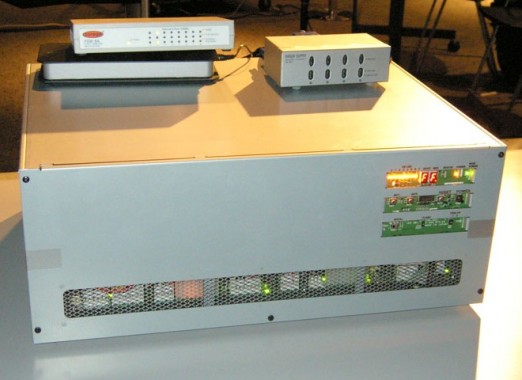
PS3: A 95 pound box shows up on your desk with a printout of the 24-step instructions for how to turn it on for the first time. Everyone tries, most people fail to turn it on. Eventually, one guy goes around and sets up everyone else’s machine. There’s only one CPU. It seems like it might be able to do everything, but it can’t. The SPUs seem like they should be really awesome, but not for anything you or anyone else is doing. The CPU debugger works pretty OK. There is no SPU debugger. There was nothing like PIX at first. Eventually some Sony 1st-party devs got fed up and made their own PIX-like GPU debugger. The GPU is very, very disappointing… Most people try to stick to working with the CPU, but it can’t handle the workload. A few people dig deep into the SPUs and, Dear God, they are fast! Unfortunately, they eventually figure out that the SPUs need to be devoted almost full time making up for the weaknesses of the GPU.
Episode 08 of CC: Anime is nowlive. Each month, thanks to our good friends at Siren Visual, we will be giving away a prize in a monthly competition held through CC: Anime.
To win, listen to the podcast for the question and once you have an answer email it in along with your name and address to[email protected]. At the end of the month, a winner will be randomly selected from the pool of entries. The winner will then be announced on the next podcast.
This month, we will be giving away a copy of Durarara!! – The Complete Series, on DVD thanks to our good friends at Siren Visual. If you have yet to listen to CC: Anime you can do so here.
Listen to the podcast and then send your answer in along with your name and address to [email protected] Good Luck!