

Home Blog Page 4925

A Certain Magical Index Season 1 Part 1 Review


A Certain Magical Index Season 1 Part 1
Studio: J.C. Staff
Publisher: FUNimation
Format: DVD
Release Date: December 11, 2012
Price: $64.98 – Available Here

Overview:
Over a decade ago, many anime fans were lucky if a company managed to produce an English version of the show shortly after its release in Japan. Nowadays it has become somewhat commonplace for many anime series to be released in English within a year or at most two thanks to various advancements in technology and working relationship between studios.

However thanks to a number of issues involving the Japanese side of things, one series called A Certain Magical Index (Toaru Majutsu no Index), which originally aired back in 2008, met with many delays. Now the first season has finally come to North America courtesy of FUNimation in two separate parts. Does Part 1 A Certain Magical Index’s first season kick things off well? Let’s find out.

Story:
In Japan there exists a technologically advanced city known as Academy City where many students from around the globe are gathered. What makes Academy City so special however, is not it’s advanced technology but the fact that many of the people who live there are “espers” or people possessing supernatural abilities. The city ranks these espers with level one being the weakest and level five being the strongest. Now A Certain Magical Index’s story follows a very unlucky boy named Kamijo Toma who happens to be the lowest of the low, a Level 0 who has no powers whatsoever.

However unbeknownst to nearly everyone in the city, Kamijo does indeed possess a special ability, something which is eventually called the “Imagine Breaker.” You see, his right hand can dispel any supernatural power regardless of where it originated from. Kamijo’s life suddenly changes when he discovers a hungry nun hanging on his balcony rail. This nun is named Index and she is on the run from a magical society with ties to the Church. The church wants Index because she happens to hold 103,000 magical grimoires within her memory and even one of those grimoire could cause devastation on a massive scale.

With magicians from the church closing in on Index, Kamijo must face off against forces he never even thought existed just a few days before, however even within the scientific Academy City, threats begin to rear their ugly head and Kamijo must do everything in his power to not only save Index but also stop the machinations of those around him. Can his Imagine Breaker shatter the enemies’ plans?

A Certain Magical Index is formatted in a way that makes each story arc within the series individually contained for the most part. There are two and a half arcs presented here in Part 1 of the series and each arc manages to stay relatively separate from one another, with only character relations staying true between each arc transition. While this does help keep Kamijo on his toes as he must face off against not only magic but also science as he helps those around him, it does mean that the story can be a little disjointed thanks to these transitions.

The series does feel a bit cliché at times thanks to the fact that Kamijo seems to always be the underdog in these situations as he faces off against everything from giant firebeasts, skilled sword users and even people who can bend reality to their will, and, at least so far, he also seems to attract many of the women around him and each story arc in Part 1 focuses on helping a damsel in distress and the only one who can help her is Kamijo and his miracle shattering right hand.

On the other hand, that is what makes the series very enjoyable so far. Now while that may seem contradictory, it is far from it. The reason for that is because it takes these clichés and makes them work through plenty of exposition and some complicated, but well-explained, systems unique to the series. While Kamijo usually solves things with his right hand, the way that he manages to figure out an enemy’s weakness usually involves some thought on his part. Rather than just charge in blindly, Kamijo often manages to figure out exactly what he needs to do to try and overcome an obstacle.

This leads to plenty of emotional scenes and a few plot twists along the way that are then explained with heavy amounts of dialogue. A Certain Magical Index Part 1 is loaded with exposition and explanations which are handled well and easy to understand though it would be understandable if a few viewers managed to get lost in the sea of exposition that makes up many of the story arcs in part 1.

That being said, there is still plenty of action and a nice dose of humor (usually involving Kamijo being the butt of the joke) laced throughout the first half of the series and the show manages to find a nice balance between talking and action. In fact many action sequences usually involve a mild amount of exposition, which actually makes the fights more enjoyable as the emotions of the fighters are brought to the surface and each fight feels more intense thanks to the amount of dialogue exchanged between the combatants.
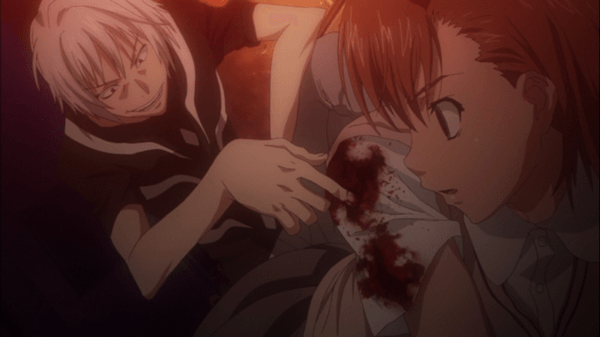
Now A Certain Magical Index Part 1 ends smack dab in the middle of a story arc, and cruelly enough the story arc it ends on is one of the most interesting ones introduced in the series at the moment thanks to the dark and cruel turn the arc takes right from the get-go.  It is worth noting that the first two story arcs are not bad by any means, though the middle arc is weaker than the first, this is a great cliffhanger for fans who don’t immediately pick up Part 2 alongside the first half.

Visuals:
A Certain Magical Index Part 1 is a gorgeous anime at times, especially when it comes to action sequences but it still has its faults. Anytime that the characters are not in the middle of a battle the visual quality in the characters’ faces drops in quality, especially when it comes to mid-range shots of the characters.

That being said, any scenes that focus on one or two characters only and any action sequences feature some great animation and visual splendor. The powers displayed by the magicians feel nice and powerful and even Kamijo’s Imagine Breaker, despite being simplistic, always has some great impact whether it is to punch someone out or block an incoming attack.
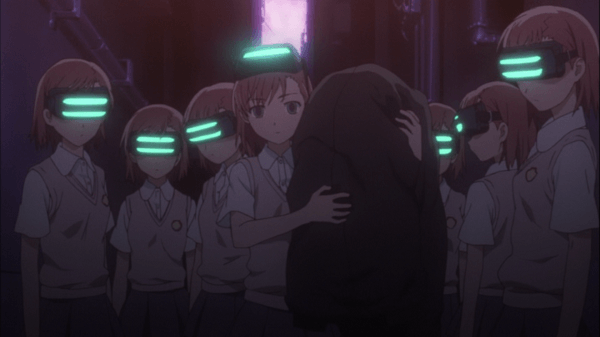
It is also worth noting that  the character’s that are introduced in Part 1 feature some very memorable designs and each one seems to step out of the norm in some way or another and their facial animations in combat are handled gloriously. As for the environments, many events seem to occur at night or in dark areas which serve to provide a nice sense of foreboding.

Audio:
As one would expect from a FUNimation release, A Certain Magical Index Part 1 features both the original Japanese voice track as well as the brand new English dub. The English dub cast manages to fit well with the characters and Michah Solusod’s portrayal of Kamijo’s various emotions is worth noting and the same can be said for Monica Rial’s work with the energetic Index, especially whenever she has to drop to a monotone voice for the character. For fans of the original Japanese voice work, it is worth noting that the Sister dialogue displayed in Part 1 does match the original Japanese, where Brittney Karbowski includes the “says Misaka” part at the end of each statement.

A Certain Magical Index features some rather impressive background tracks throughout this first half of the season with memorable tracks for comedic scenes as well as action scenes. The opening music for Part 1 of A Certain Magical Index is “PSI-missing” by Mami Kawada which serves as a great rock opener for the series while the ending song is “Rimless~Fuchinashi no sekai~ by Iku. Iku’s closing song is more melodramatic and calmer and serves as a great way to end many of the dramatic scenes the first half of the show loves to end an episode on.

Extras:
As far as bonus features go for A Certain Magical Index Part 1, there are your standard fare of extras in the form of a textless opening and closing song, trailers for other FUNimation shows and episode commentaries for Episode 3 and 6.

Episode 3’s commentary features Monica Rial who handles the voice work for Index, Jad Saxton the voice of the little teacher Komoe and Micah Solusod the voice of Kamijo Touma. The three have great chemistry in the commentary and there are plenty of humorous moments as they discuss work and their time with the show. The three comment often on the events of the episode and have plenty of “d’aww” moments whenever Index or Komoe are on screen.

Episode 6 features commentary by Zach Bolton, the voice director, Robert McCollum the voice of Stiyl the flame magician and Cole Brown who voices the “Frog-Faced Doctor.” This commentary follows the episode heavily and contains plenty of explanation, mostly thanks to the fact that a lot of elements of the series have to be explained to the (new to me at least) Cole Brown. While this is a bit entertaining, the commentary is rather sub-par and could be passed up without missing much.

Overall:
A Certain Magical Index Season 1 Part 1 manages to not only take cliché elements and make them exceptional, it does so by finding the sweet-spot on the balance between exposition and action. While there are some drops in visual quality throughout the first half of the season, each battle is well animated and thought out well. With great characters and story arcs to kick things off and a killer cliff hanger leading into part 2, it appears that when science and magic collide, a great anime is born.


9-0-capsules-out-of-10

Metal Slug charging onto iOS and Android

Fans of the Metal Slug series will be pleased to hear that SNK Playmore have announced the release of the groundbreaking Metal Slug for both iOS and Android devices. For those who cant remember, Metal Slug has had 10 installments and was responsible for bringing the NEOGEO console into popularity with its state of the art pixel like graphics and addictive gameplay. Such is the demand that they have also decided to release Metal Slug 2 and Metal Slug X in the near future.

Now mobile users can enjoy a perfect arcade port complete with bonus features such as Mission Mode as well as a massive array of weapon upgrades and bonuses all nicely rounded with precise customisable controls. Players can also connect with friends through bluetooth and battle together or check their scores out in the online rankings to see where they place.

Metal Slug is $1.99 and is available now through the itunes and Google Play App Stores.

Are all Anime Openings the same?

Do most anime follows the same structure for their opening theme song videos? Well judging by youtuber Kickinthehead’s eye-opening opening theme compilation/deconstruction there is indeed a common structure that the majority of anime studios utilize for their anime openings.

The structure seems to be as follows: Birds soar into the air, long shot of sky/location, characters running, characters close up, character looking out to distance, shot of cast of characters, action shots, rapid fire flashbacks, characters walking, characters running towards one another, possibility of holding hands and finally the end shot.

Of course not all follow this formula but many do. Don’t believe me? See for yourself in the video below. Check it out and let us know what you think in the comments section.

Hitman HD Trilogy Coming Soon

Hitman Absolution (check our review for it here) has brought Agent 47 back to the limelight, so it was of course only a matter of time before we started to see some re-releases of the classic Hitman titles. Amazon has now listed a trilogy for both the Xbox 360 and Playstation 3, which contains Hitman: Contracts, Hitman 2: Silent Assassin, and Hitman: Blood Money.

Along with the trio of titles will come an art book for around $40, which is a decent enough deal. Right now, Amazon have the listing to release on January 29th, but take that date with a grain of salt as Amazon love to create “placeholder” dates that may be inaccurate. Click here to check the listing for yourself.

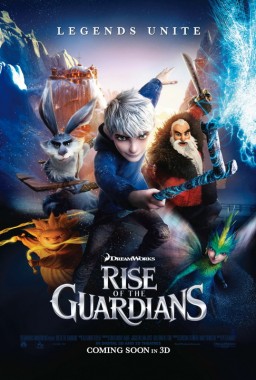
Rise of the Guardians Comes to Theaters Today

December 13th has finally come and that means that DreamWorks Animation’s latest Rise of the Guardians is now in theaters in Australia. A little about the film:

“An epic adventure that tells the story of a group of heroes – each with extraordinary abilities. When an evil spirit known as Pitch lays down the gauntlet to take over the world, the immortal guardians must join forces for the first time to protect the hopes, beliefs and imagination of children all over the world.”

You can find Capsule Computer’s own review of the film HERE, but the movie isn’t the only fun that can be had as the Official Website also has plenty of additional content for the kids to have fun with HERE.  Or check out the film’s Facebook page HERE.  Lastly, viewers can check out the Secrets of the Guardians Featurette embedded below (viewable for AU viewers only though).

Assassin’s Creed III Sales Figures and Data Released

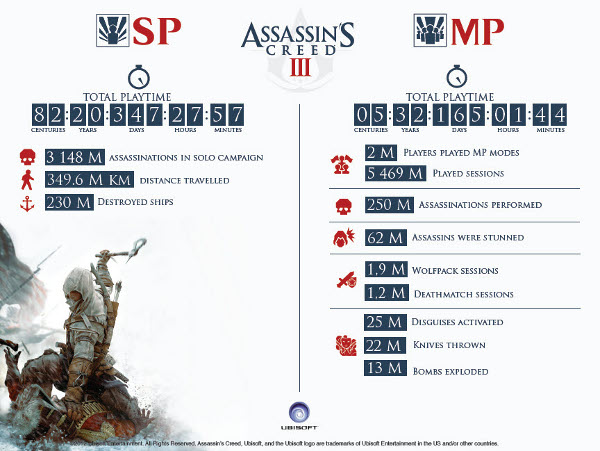
Wondering how much time players have logged into the latest Assassin’s Creed game so far?  Well, look no further as Ubisoft has not only released the information, but placed it into a nifty image so players can find what they want with a glance.  With about 87.5 centuries of gameplay under the collective player base’s belt in single player and multiplayer combined, it looks like Ubisoft has some solid numbers.  While the bulk of play time is definitely in single player, it is also important to note that with more than 2 million multiplayers it more than doubles the number of players from the previous game Assassin’s Creed Revelations.

However, the most impressive number for Assassin’s Creed III is absent from this image as the game has sold more than 7 million copies now worldwide a little more than a month after release.  This makes it the fastest selling game in Ubisoft’s history.  Ubisoft must be pretty pleased with how it has turned out so far, especially with the stiff competition this year and the numbers will probably go up even more after the holidays finish up.

Big Sky Infinity Out On PlayStation Network

Big Sky Infinity, the newest release from indie developers Boss Baddie and VooFoo has launched today on the PlayStation Network for both PlayStation 3 and PlayStation Vita. Big Sky Infinity, the follow-up to Really Big Sky, is one of the first games to utilize the cross buy initiative, allowing players to have the game on both the PlayStation Vita and PlayStation 3 for a single purchase price.

The game touts Cloud synchronization, 4 player local  play on the PlayStation 3, asynchronous multiplayer on the Vita, and adaptive, randomized gameplay to ensure you never play the same game twice. The game will be available for £7.99 in the UK, €9.99 in the EU and $9.99 in the US, with European PlayStation Plus members having free access to the game for a limited time starting December 12th 2012. (click here)

Check out the launch video below to be hypnotized by the colors and lured into grabbing this beautiful, fast-paced game.

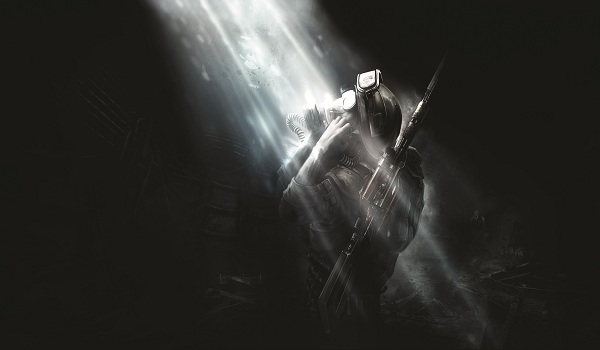
Metro: Last Light Preview

Yesterday, we here at Capsule Computers were given the opportunity to preview the latest build of one of THQ’s biggest projects, Metro: Last Light. This “hands-off” demo was commentated and played by Creative Manager Jeremy Greiner, who took us through a number of different elements of the game as well as three very different levels to demonstrate the variety in environments. And I have to say, it’s all looking very impressive.

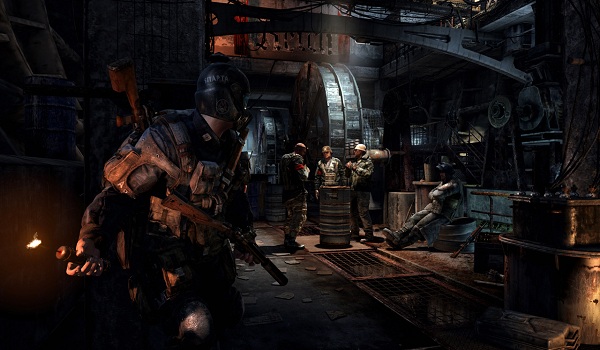
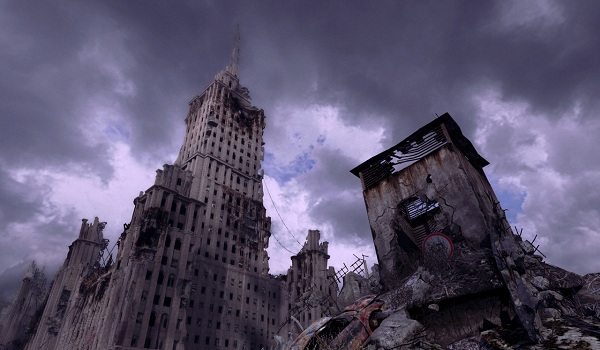
Our demo begins with hero and protagonist of the first game, Artyom, crawling through a vent (a very detailed vent full of cobwebs and rust I’ll give it that), and into our very first level of the game, an old run-down Metro maintenance facility. Anyone familiar with the original Metro 2033 game will instantly be able to recognise the minimalist HUD, the atmospheric apocalypse vibe and of course the attention to detail present in the game. Environments looked absolutely gorgeous throughout our entire hour long presentation and sound design is no miss either.

Jeremy decided upon an attempt at stealth play, showing off the various improvements to the entire system since the previous game. As he entered a room full of Communist goons, he eloquently pointed out the several different ways a player could traverse the combat environment. Go directly up the middle for a full frontal assault or slide into the sewers and take your enemies out one by one so they’ll never know you were there. Various alternatives also dotted the garage with paths running along either side of the room and many opportunities for bloody mischief on each and every one. Players can now flip switch boards in these areas to turn off all the lights not powered by a generator or operated by human hand. Even those gave little trouble however, as Jeremy demonstrated after killing a lone guard that the flashlight mounted to his helmet could also be shot out. Individuals lights can be turned on and off at will, so if you don’t want to attract any attention whatsoever this tactic can come in pretty handy if your enemies manage to run the power back on.

You may also recall the level of frustration you would feel as you attempted to knife someone in the back, only to have them turn around and somehow make every single enemy in the level aware of your presence, despite how quickly you finished him off. Both those faults have disappeared from Last Light altogether and it is with great style that they are fixed. Enemies can now be stealth killed by Artyom with the push of a button (as long as they haven’t detected you that is) and lone enemies will no longer bring down the masses just because you mistimed a head shot. Demonstrated in game, Artyom simply tapped a soldier on the shoulder and when he turned around in surprise a quick strike to the neck took him out for good. While bodies cannot be moved, players can loot them for ammo and grenades, while taking out their personal lights to prevent drawing undue attention.

The AI in the game has seen an enormous improvement as well, with enemies now reacting in several different ways to disturbances, rather than simply peaceful and hostile. If you make a noise or turn off the lights in a part of the level experiencing technical malfunctions for example, enemies will usually either ignore it or simply attempt to fix it. Other ways include how they will radio in to check on soldiers periodically, meaning that if four out of seven of their comrades are lying face down in the mud, they’ll always eventually know about it. Soldiers once alerted to your presence will never stop being suspicious even if you hide out in a dumpster for a while. As Creative Manager Jeremy Greiner put it, “If someone tried to kill me I don’t think I’d ever forget about it,” which of course rings true with the realistic feel that THQ is going for in this game.

Enemies will also use cover effectively and sometimes even use it against you in a fire fight. At one point in the demo, a Communist soldier pushed over a book case in an attempt to land it on top of Artyom and injure him. Enemies themselves are affected in more ways than one when it comes to stealth and real full force combat. Initiate a shoot-out and your foes will take more bullets than when they were unaware of you, utilising a kind of ‘adrenaline’ system, encouraging you to stealth it up every now and again as heroes must. Turn the tide of battle against them however, and some soldiers will attempt to surrender to you, allowing you to take all their gear and do what you want with them. Jeremy opted to stab them stating, “he said don’t shoot me,” which I guess is quite true.

Gamers may be wondering about the unique moral system of the first game, in that certain actions you performed during Metro 2033 would result in one of two different endings. Last Light looks to continue this system in a more unique way. With the developers saying that they wanted people to play more “in the moment” rather than worry about what sort of karma they might want to achieve by the end game. But by doing things “in the moment” players might look back on a past action and think they could have handled the situation far differently.

Showing off the in-depth detail and time the developers put into each weapon, time was slowed as Artyom reloaded a familiar pump-action bolt gun from the first game. With this slower speed we could see tiny individual moving parts you just didn’t even notice when reloading the gun normally and it was explained that each piece of the gun is actually a real moving part, spring and all. Okay well not real, (it is a video game after all) but to the point where they all move in sync and create the necessary actions needed to propel a proper, loaded bolt on its way. This is instead of the regular FPS fashion that we see now days, blocks of plastic painted by textures with added in spark effects for drama. Noise in the game is also particularly impressive, with the infamous Bastard making a very loud and dare I say it ‘authentic’ return to the sequel. It sounds like it has real kick and proper impact, slightly different to the weak sounding original. There’s cursing, muttering, explosions and howls all recorded with what must be some pretty impressive equipment. This noise compliments the absolutely gorgeous visuals of Metro: Last Light which were apparently only running on “modest PC specs”. The lighting in particular is beautiful, with faint lines of sunlight cascading through trees and both artificial and natural light reflecting in puddles above and below ground. If you’re a visual buff you really need to see this game for yourself to believe it. Running on the ‘Aurora’ Engine, really not enough good can be said about the level of detail seemingly capable with the software, all with no noticeable drops in frame-rate.

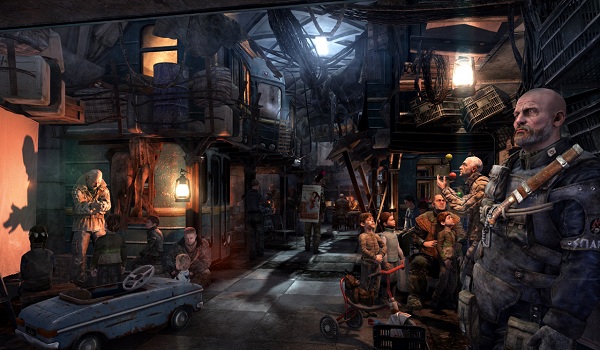
In the second level, we visited a hub town, levels in the game where you can restock, buy more equipment or attachments and participate in mini-games, all whilst being lost in the heavy, dripping atmosphere the game does so well. NPCs will sometimes speak in Russian or other times in English, depending on their personal preference (with some swapping fluently between the two) and all cycling through a range of different conversations or going about their daily business. The unique bullet currency returns in full force, with pre-war bullets being traded as money when buying new weapons or attachments and ammo for your current gun. These bullets can actually be used in your regular gun for a significant boost in damage but of course that means that you are literally shooting your money away.

One very funny and surprisingly detailed facet of this town was the bar where you could purchase some form of alcohol shots called “Bullets”. As you drunk more and more of these, the lady to your right who was originally an old, grey haired women, slowly turned into a pretty young red-head who of course drunken Artyom took much interest in to the amusement of all watching. As his vision fades out and then back in at a later time, our (I imagine) somewhat dejected hero with the splitting headache looks upon the old lady laying next to him with fresh eyes. A hilarious jab at drinking mechanics in games if there ever were one.

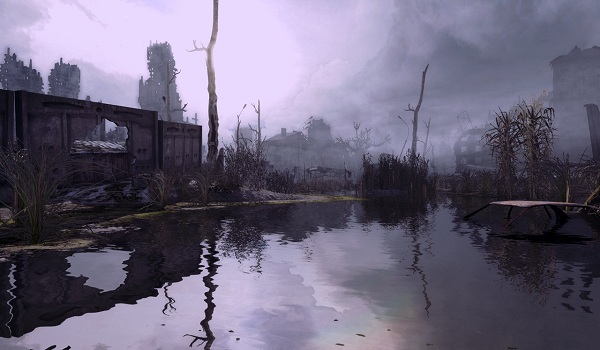
Getting on to the third and final level now and my personal favourite, Artyom heads top-side to seek out a base on the other side of a swamp. To do so he has to grab some petrol on the way to power a ferry, the only way across the treacherous waters. It is here that we really see the passion and dedication that go into the game by its developers. The above ground Moscow has been totally ruined by the War and broken buildings and crashed planes dot the surrounding landscapes, with the air to toxic to even breathe. This is where Gas Masks come in to the game, which the player must wear at all times if he wishes to last more than ten seconds in this poisonous and incredibly hostile environment. When wearing a gas mask, players have five minutes to explore and collect all the things they need before their filter goes bad in the radiation, to counter this intriguing aspect of play, one must always be on the look out for more filters to take and use. Filters can be kept in your inventory so you there’s little need to worry about getting a lot more to live outside, the game makes sure that this element really reinforces the hostility of the land while still keeping it fair to the player. You won’t ever feel like you’re under a time limit to do your mission in, with filters and spare gas masks scattered strategically throughout the entire area. Why more gas masks I hear you ask? Well, when you are wearing a gas mask it can become cracked and damaged, so much so that it no longer functions properly and you’re forced to ditch it. Remember those ten seconds I told you about before? Well it’s now time to scramble for another gas mask, which cannot (to my knowledge in the demo) be carried around. This is in line with Metro 2033’s system so it is still quite reasonable. Players can now wipe their gas mask whenever they wish, which is incredibly useful when it gets coated in water, blood or mutant brains.

The air isn’t the only thing that will kill you topside. Unique mutated creatures known by the locals as “Shrimp” make their homes amongst the swampy waters and let me tell you something, they’re definitely not shrimp sized. These mutants can attack with both their many claws as a close attack and with their poison acid stuff for longer range. They seemed to emerge from the waters and reeds at random times and even Jeremy admitted that he had no idea where they were going to come from. Whether this means that he hadn’t played the level much (highly unlikely), that they spawn in at random places (slightly more likely) or that they work as a team and hunt you across the map before exposing themselves at an opportune moment (what I’m really hoping for) remains to be seen.

This above ground section really showed what I believe is the game at its best, being stalked by unknown creatures, having to deal with the deadly lack of oxygen and really taking on the full survival horror aspect that the game deserves is definitely where it shines. A surprise attack by a massive mutant when searching for petrol and a successful stand-off against hordes of “shrimp” signified the end to the demo and our time with the game.

Over the entire time I had my “hands-off” demo with the game I grew more and more impressed with the direction 4A Games is going with Metro: Last Light. They acknowledged themselves that the previous game lacked any survival horror and they are now working to add that in, a theme that so compliments the world they’ve already created (with the help of author Dmitry of course). Apparently while no supernatural elements were present in our demo (present in Metro 2033), they will supposedly be implemented in the game before release. I know I’ve said it countless times in this article already but the amount of detail in the game really is incredible. With lights and noise attracting enemies, a dynamic weather and day/night system (newly implemented for this release, spend a long time underground and it will be a different time to someone who spent a short time there), clouds that move across the sky with actual particles rather than just a skybox and the ever impressive minimalist HUD really show how atmospheric the game is trying to be.

Metro: Last Light works off the assumption that you got the bad ending in the original (that is blew up all the Dark Ones) and goes from there. While they don’t follow the story of Metro 2034, by getting the original author to help and construct a story purely for the game the developers show how much they care about the world. And such an awesome world it is too.

Metro: Last Light will release in March 2013 for PC, Playstation 3 and Xbox 360. With the incredible detail, overwhelming atmosphere and tight gameplay we’ve seen so far this surely looks like a title not to miss.


PS Plus Getting God of War: Ascension Multiplayer Beta Early Next Year

Sony has released a few announced tied to God of War: Ascension the prequel to the God of War franchise, that will be coming out sometime next year.  The announcements that Sony made in relation to the game however dealt solely with the multiplayer for the game, the first being that PlayStation Plus members will be able to access a special beta of the Ascension multiplayer on January 10, 2013.

The multiplayer maps of the prequel boiled down to two variant types based on size, with large maps with plenty of open space and small maps with plenty of close-quarters combat.  Other information released describes mode Team Favour Rush where players will be pitted against other teams to try and beat them a specific number of favour points from the gods themselves to earn additional customization.  Though solo players should be glad to hear a special variant will allow for them to go it alone.

Players itching to see what the multiplayer will have to offer can check out at least some from the new trailer dedicated to the multiplayer of Ascension titled “Evil Ways”, which players can find embedded below.  God of War: Ascension is set to release March 14th, 2013 for PS3.

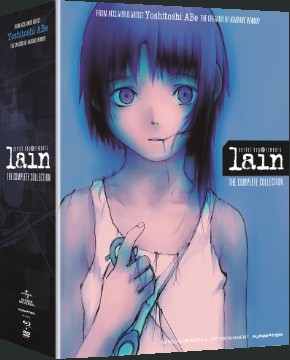
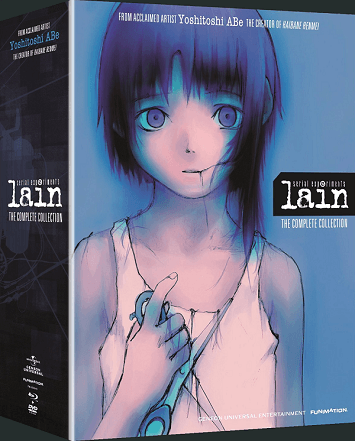
Serial Experiments Lain Review


Serial Experiments Lain
Studio: Triangle Staff
Publisher: FUNimation
Release Date: November 27th, 2012
Format: Blu-Ray/DVD
Price: $89.98 – Available Here

Overview: 
Before getting back together to make the series Texhnolyze, reviewed HERE, writer Chiaki Konaka, producer Yasuyuki Ueda, and character designer Yoshitoshi ABe had their first collaboration with the anime Serial Experiments Lain.  While their later collaboration would be a dystopian future, Serial Experiments Lain takes place in modern day.  Being the series that lead to later collaborations, what is there to expect from this anime, besides the experimental style that seems to be this groups forte.

Story: 
What happens when the barrier between the real world and the digital or Wired world begins to blur and disappear?  Is it a good thing as people are free to truly live how they wish in either world or a bad thing for pretty much the same reason?  The idea behind Serial Experiments Lain is that this line is blurring in ways people aren’t expecting as the show starts out with characters receiving emails from a classmate.  Only problem is that the classmate is dead.

The show follows Lain a simple little girl that only really gets the basics of technology, i.e. she barely reads email.  To the point that even though she received an email from this classmate, she didn’t know about it until other classmates were fretting over their own.  This phenomenon though is all it took to get Lain hooked and set on a drive to know more and more about the Wired world and upgrade her computer more and more to access it better.

The main story of Serial Experiments Lain is dark and deep, exploring identity and how people choose to communicate with each other.  While starting out to seem a little bit like an after school special about the dangers of burying yourself into the internet, the way the story progresses is extraordinarily done.  Lain moves from almost a social outcast, to fitting better into the group, to outside of it from losing herself in the Wired world.  Then stuff starts getting crazy, as the show doesn’t become about dangers of internet at all, but a dark mystery of just what is going on in the real world and the Wired as Lain becomes famous for things shes never done.

While it is a little confusing at times, that’s exactly other the story is supposed to be as the viewer is trying to figure out alongside Lain whether there is someone else pretending to be her or she’s just going crazy.  Two of the episodes are even more unique with their storytelling, as they dump information on the viewer just like it would be like accessing it as data.  Transitioning drastically from background information to the story or recapping with a series of clips as if fast-forwarding through the story.

With a story like this, Serial Experiments Lain isn’t for everyone because, while the story itself is interesting and deep, the execution is something that will confuse some, probably to a point of unwatchability.  Fans of experimental or surreal anime shouldn’t have any problem though, in fact this is probably one they’ll enjoy a hell of a lot.

Visuals: 
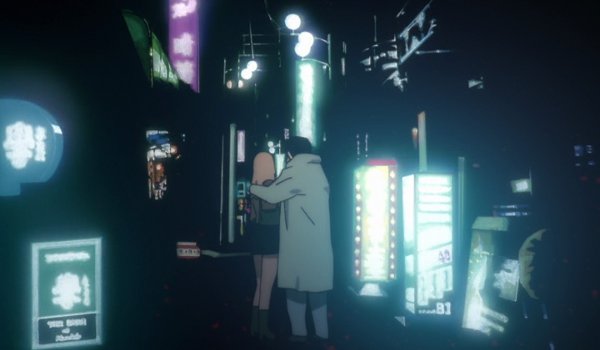
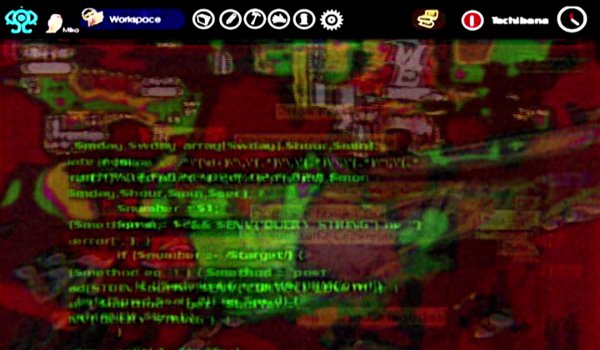
As the story is pretty surreal, the visuals of the anime are as well, which actually helps it age better.  While a lot of the color is often washed out there is also a lot of layering in terms of giving depths, such as the patterns of red within the shadows visible fairly often.  This results in scenes and shots that range from highly realistic to very surreal as the characters interact in their real world and the Wired.

The characters for the most part start out all looking very generic and as the show continues the variety of character design varies more and more.  Lain herself stays pretty consistent between the different version, which is useful when trying to tell the difference between all of them that seem to be floating around their world.  The other characters tend to be consistent unto themselves, which makes it easy to get a better understanding for who they all are, especially for the Men in Black like guys with their Splinter Cell style goggles.

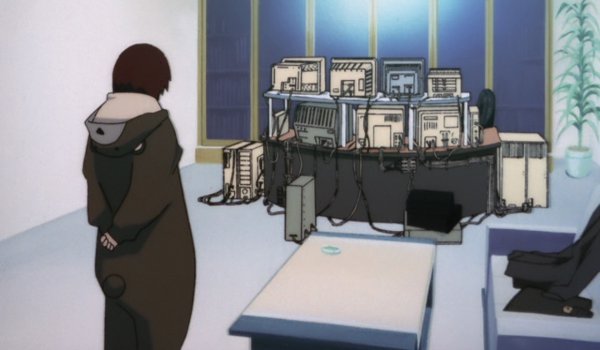
Characters are the only ones with specific design either as computers being such as big part of the anime are themselves very personalized for each character.  From Lain’s original “kiddy” computer fit only for email, to souped-up cell phones, to fully mobile PCs with a VR helmet, to computers taking up entire rooms the computers almost seem to be characters themselves in addition to given a glimpse into the characters that they belong to.  This is an interesting side aspect to see so much work put into.

As the show goes on it continues to get darker and darker in subject matter, which is interesting since the show starts out with classmates getting emails from their dead classmate, but the show does a great job becoming darker and darker with its visuals as well.  Lain’s computer overtaking her room and making it so dark and gloomy, adds much more to the scenes to imply how far she is going into the Wired.

Audio: 
The character voices of the series do a fairly good job, though interestingly every episodes starts with the same two English voices regardless of Japanese or English.  The first setting a creepy mood as the show is sited as taking place in present day and times and the second being an automatic program reading the episode title and number re-enforcing the electronic focus of the show.  Characters themselves do a good job of fitting to their voices, however at first viewers of the English may have doubts about the flatness of Lain’s portrayal at the beginning of the show.  There isn’t a big reason to worry much about this though as it is a part of her character being so detached and is in fact how to easily tell the difference of the Lains.

Music in the series does a great job just a mood and fitting the style.  Well, music might not even be the correct term for some parts as a lot of the audio to provide backgrounds may not even be described as music.  That isn’t a hindrance at all though and in fact helps the show to be more mysterious and eerie.  The opening theme “Duvet” by British alternative rock band Boa fits well with the shows themes of loneliness and trying to fit within others lives.  The closing theme “Toi Sakebi” by Serial Experiments Lain‘s lead music writer Reiichi “CHABO” Nakaido focusing on lamenting past actions and having to live with them.

Extras: 
Another re-release of a much older anime, another slim selection of special extras.  For the most part the extras of Serial Experiments Lain break down into 3 different types, with only 2 options of each type.  First are the promotional extras, which are just a promo video and original commercials for the series back when the first came out.  Somewhat short these are more actually for the soundtrack CD than the anime itself, so the best part of it is the music.  Second are the clean opening and closing songs, with just 13 episodes there was only one song and one sequence for each, but now they can be viewed free of credits and other text.  Lastly are the trailers, the first selection is the re-release trailer toting it’s first time on Blu-Ray, while the second are the other recent and upcoming FUNimation releases.

Also included in this complete collection of Serial Experiments Lain is a thin book that features some commentary from Saito and Ueda where they mention various notes for each episode. There is also a very large art book that contains sketches of practically everything in the show, including backgrounds, characters and other things.

Overall:
Serial Experiments Lain will mess with the viewers mind, it gives a deep thought provoking story that leaves those watching trying to piece it together.  Even with older visuals, the surreal style keeps that from be any kind of negative.  Those willing to give the series a try should find something that leaves them thinking even if it does somehow fail to entertain.

8-0-capsules-out-of-10