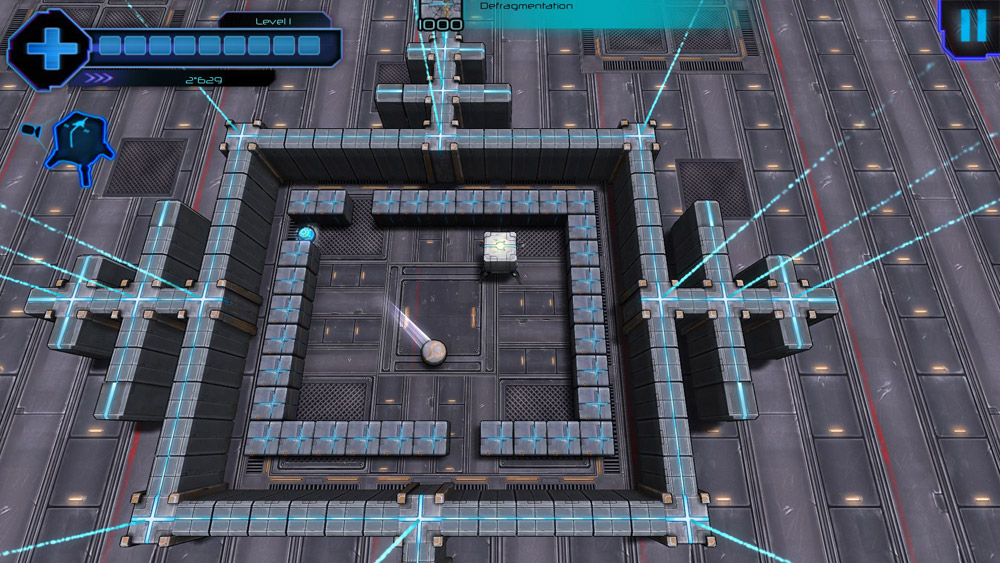
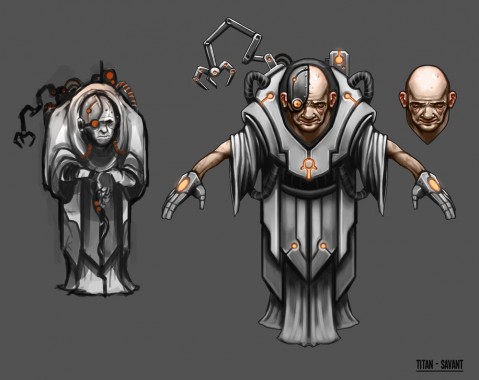
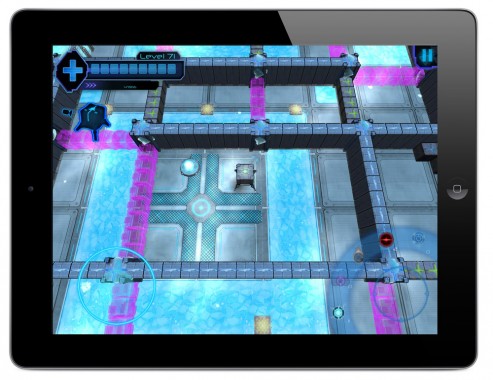
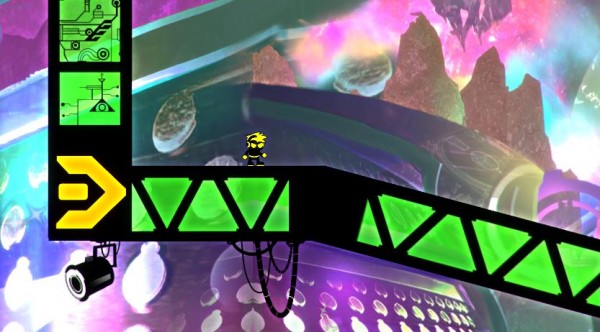
It seems like publisher Anuman Interactive is loooking to expand their Joystick Replay brand even more thanks to a remake of the classic block breaking game Titan. The new game, titled Titan: Escape the Tower, will recreate 80 levels of the original game with all new engine, graphics, gameplay and two difficulty levels. Still trying to place the old game? Well, the original Titan was released back in 1989 for such classic systems as Atari ST, Commodore 64, Amstrad CPC and Amiga.
Titan: Escape the Tower sees players taking control of the hero in Vegapolis city in the distant future of 2218. But it wont be all fun and destruction taking out blocks to try and progress, as players will have to navigate the hero around traps and defeat bosses. Those looking forward to the game wont have to wait long as the game is set to release June 6th for PC, Mac, Android, and iOS.
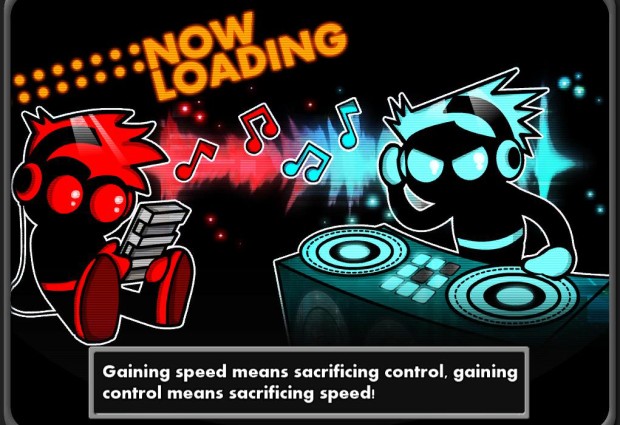
Rush Bros is a slick, professional feeling indie title that sends players straight into the modern world of side scrolling puzzle racing. Players must race local, online or ghost opponents through chaotic, addictive levels packed with obstacles and traps generated by the player’s own soundtrack. Players who want to jump right in can also take on a stage playing an Infected Mushroom track, which is oodles of fun in its own right. The developers recommend using a 360 pad so that’s what I did, but in the name of balance, I also used the keyboard. We’ll talk about that a bit later on.
Gameplay
The gameplay here is more than your average side scroller. In fact, to call it a side scroller would be a bit unfair. It’s actually more along the lines of an up-down-up-left-right-“oh wait…” scroller. The panning is smooth, the whole thing can develop quite a pace and races are often won by a hair. (There’s something a little sonic the hedgehog about Rush Bros that really hits the spot.) The level design is intelligent and challenging, but also tuned to the racing format. Taking it online will introduce you to some already established competition, so its worthwhile playing the stages in solo mode to work out the navigation side of things before taking it to a competitive level.
Looking at the control scheme, it becomes quickly apparent why a pad is the way forward. Mainly because your special moves (such as sliding along the floor to skim over obstacles and traps) are fiddly to reach on a keyboard and no matter how google-fu you think you are with your key bindings, you’re going to encounter frustration. With a pad, binding the slide function to a the right bumper upped the satisfaction level somewhat instantly. Suddenly I was a DJ ninja, fully in my element. I still got destroyed routinely by the ghost, but I was leaps and bounds ahead of what I was doing on a keyboard. So if you’re missing a 360 pad, you may want to hold off until you get one. Especially if you’re thinking of taking this online.
Visuals
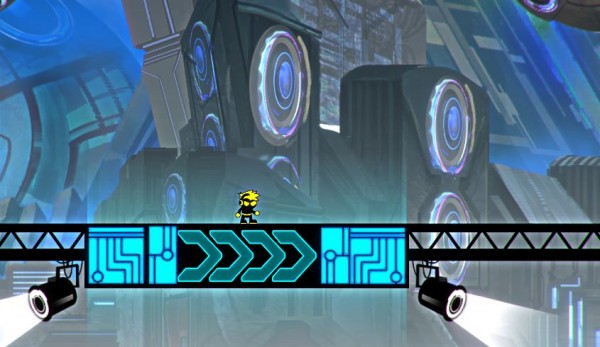
The cell shading style textures are solid, vibrant, and easy on the eyes at speed. Visuals were clearly a key consideration here and the interactivity of the environment with the music is extremely well pulled off. The graphics have a new age cartoon feel, a mixture of subtle Photoshop work and hand-drawn textures. It both feels nostalgic and advanced, and offers something many indie titles aren’t doing at the moment, advancing the canon, as it were.
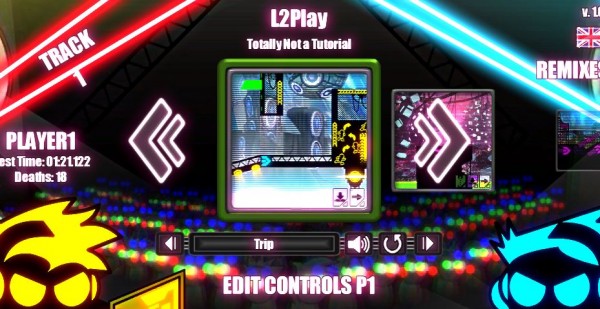
The interface is professional, simple and clean. Everything is set up ideally so as to please both game pad and mouse users when navigating the menu and settings. The built in file explorer system is very easy on the eyes and reminded me a little bit of my Foobar music player. which leads us neatly on to accessing your music.
Audio
Saving the best ’til last, the audio features absolutely hands down make this title the great game that it is. Straight after launching Rush Bros, I went straight for the audio settings, before even binding any keys. The ease of creating a playlist and sourcing my music really, really impressed me. I was expected a ton of file format related issues, but there were none that I could observe. It seems to play everything without complaint without reducing the quality and the environment just absorbs all of the bass and treble seamlessly. I reviewed this title using Dark Side of the Moon – by Pink Floyd. I also tried it with Metallica. And I suppose here’s where the replay value comes from, the ability to see your music as a level in a video game is a very rare and intriguing opportunity. After an hour I found myself saying things like “I wonder what it’ll do with the Ozric Tentacles?” and from there I soon realized that this is going to be one of those games that you never uninstall and always revisit.
Overall
Overall, Rush Bros is a slick, addictive, inventive title packing tons of features, support and replay value. Although the price tag may seem slightly steep for an Indie title, I assure you that this has the feel of a feature release. The care, attention and style applied to this game makes it one for everyone’s library. And that’s another point, they music you enjoy will hugely impact the pace of play, the way you play, and the way you interact with the game. In this sense, this game has no demographic beyond those who enjoy music and games, and surely that’s everybody.
Capsule Computers review guidelines can be found here.
Secret of the Magic Crystals Developer: Artwaregames Inc. Publisher: Artwaregames Inc. Platforms: Mac, Windows PC (Reviewed) Release Date: 4 Feb 2010 Price: $4.99 – Available Here
Overview
Secret of the Magic Crystals is a game that takes you into a fantasy realm of a horse-breeding farm. The indie simulation is designed for players to procreate, train and take care of mythical stallions; Unicorns, Pegasus and Ice, Fire and Demon steeds. Despite a magnificently artistic portrayal of horses within a realistic atmosphere; Secret of the Magic Crystals does not excel beyond monotony and disappointment.
Story
The vague storyline could have been anything as simple or absurd as a meteor crashing into earth and leaving behind special crystals that give horses unique abilities. The next logical sequence involved the grandfather, who had been studying the nature of meteorite crystals, abandoning his farm and grandchildren. Accordingly, players are requested to select either the grandson or granddaughter as their main character, although there really is no difference in choice, based on the level of interaction with them. Throughout the game, the objective is to breed special horses and help find the lost meteorite crystals by following the same procedure of quests and training, amidst jovial music and changes in the weather and seasons.
Gameplay
If you manage to get past the first level of Secret of the Magic Crystals, than you deserve an achievement. Unsurprisingly, the gameplay is more or less a repetitive and slow paced rhythm that challenges your patience to maintain sanity.
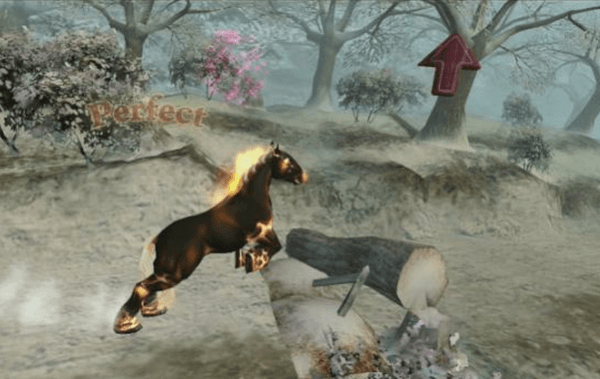
The most annoying aspect of the gameplay was not being included visually in the experience beyond the Gate. When you enter a race you do not see your horse complete any of the obstacles, show jumping, gallops, steeplechases or weight pulling events. Imagine how disappointing that would be, after all that hard effort training with your horse in the Corral! Honestly, I expected a little more action than on-screen written comments of the race and a counter clock ticking down until your horse returns.
The same dreary graphic display applied for the quests your horse accepted, as you miss out on seeing your horse pulling a neighbours plough, carrying a letter to the village, helping a forester with his brushwood cart and replacing the milkman’s sick horse.
As a reward for your horse’s hard work, you receive at least 30 gold coins and a found item, such as minerals or herbs that may be useful in the production of horseshoe making or formulating magic potions. I found obtaining enough gold coins to be a challenge when most of my high cost expenses to level up involved upgrading buildings in the farm and purchasing a new breed of horse. Other expenses include new horse-caring equipment at the shop in the Stable and remedies when your horse falls ill.
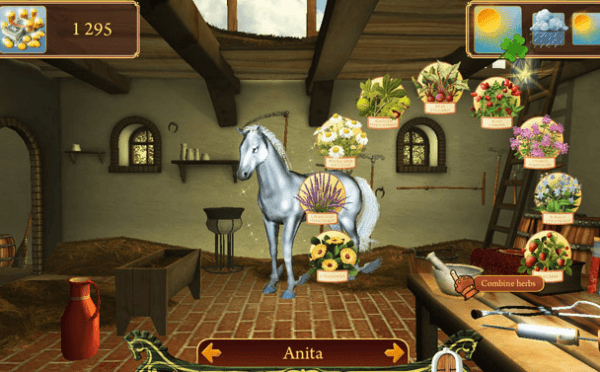
The most interesting element of the gameplay involved creating the perfect potion or mineral using the required ingredients from each recipe book, which gives each of your horses different combinations of increased levels of strength, dexterity, speed, stamina, reflex or intelligence.
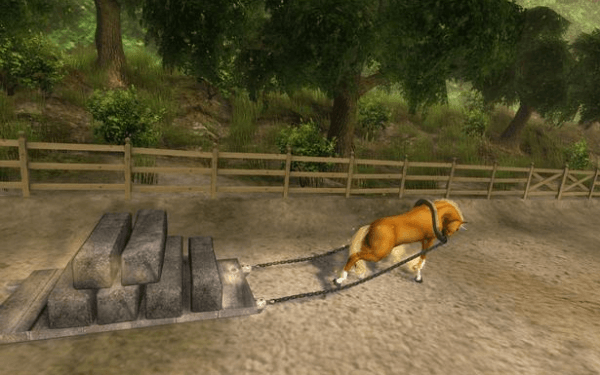
Of course, the most enjoyable and engaging component of the game was spending the majority of my time training my horses in sledge pulling, obstacles, forest and dressage courses. By reaching the horses maximum level of abilities, you are then able to breed supreme steeds. However, a frustrating setback in the game was the constant change in weather, which impacted on how well the horses performed in training, quests and races.
In addition, to measuring the performance of each of these activities, players are rated based on their ability to press the identical arrow on their keyboard, when it spins on screen. My guess is that they needed to add this feature to create some point of effort in the care-taking process, which ultimately affects how quickly the player progresses in the game.
Visuals
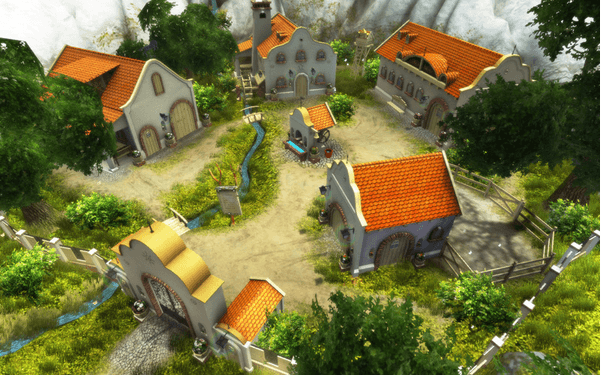
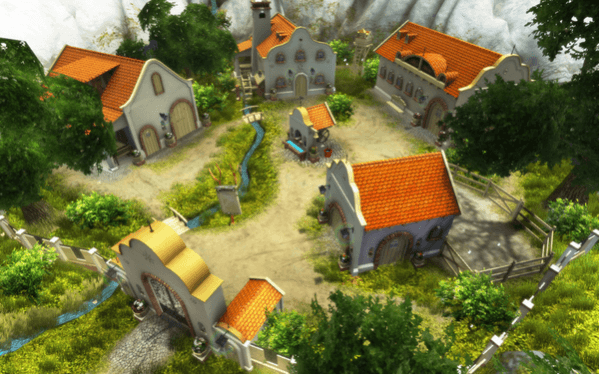
Secret of the Magic Crystals should be congratulated for the extensive visual quality and 3D art design within the simulation, improving the gameplay experience across a beautifully constructed farm, along with stunning legendary horses. The natural atmosphere creates a visionary wonderland for young girls and boys that dream of working on a farm and taking care of animals, particularly breeding horses.
Audio
The distinctive and very similar audio tracks enhance the lifelike season and weather, with each track played in sync with the changes. I did not particularly enjoy the cyclic motion of the soundtracks. Although, the in-game sound effects proved to be very effective and relaxing to listen to the horses galloping in the Corral, huffing in exhaustion after a race and panting with enthusiasm during grooming in the stables.
Overall
Secret of the Magic Crystals is the kind of game that can only be completely enjoyed by players who have the perseverance and motivation to take care of the five mystical horses. My main point is that this simulation game is only suited to a particular type of target audience, a younger generation.
I did not particularly enjoy playing the game, as the repetitive tasks made the experience painful to complete. That being said, I do not regret having tried playing Secret of the Magic Crystals to draw a review from it. Nevertheless, if you love horses, fantasy games and are maybe even a fan of the My Little Pony series, than there is no reason you should not play Secret of the Magic Crystals.
Capsule Computers review guidelines can be found here.
Man of Steel is just around the corner and it seems Warner Bros. don’t think we are excited ENOUGH for the upcoming Superman epic. After a brand new trailer, dropping just last week, we are treated to yet another bunch of teaser footage for the already much-hyped superhero flick. The marketing team at WB have been working in over-time on this film as over the last two days alone there have been three new TV spots for Man of Steel; each has given us a some brand new footage to keep our interest.
The TV spot, which you can take a look at below, has taken a much more light hearted and fun approach than most of the other promotional footage so far. For all the latest Man of Steel information as it becomes available, be sure to stay tuned to Capsule Computers.
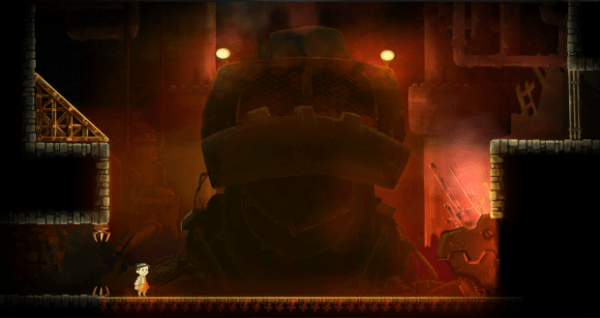
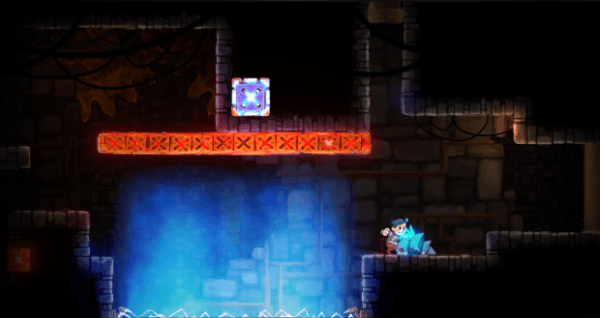
Teslagrad is the upcoming platformer from Rain Games which adds adventure and platforming elements with magnetic based puzzles. The following preview is based on an Alpha build of the game and almost all of the information presented within is likely to be subject to change. Teslagrad will be made available on the PC and is currently listed on the Desuraand Steam Greenlight services.
What makes Teslagrad interesting is that it is a puzzle-based adventure platformer. While those elements are nothing new, the games gimmick is what truly makes Teslagrad what it is. As you can probably already guess from the title, the game utilises mechanics based around the basic principles of electromagnetism. Of course, early on in the game, the puzzles based on those skills are rather simple to work through. Though, they do very quickly increase in difficulty. The puzzles aren’t just based on activating things in the right order. For some puzzles, you have to also time things correctly. One example of this is early on in the game where you have this platform. What you have to do is make it so that it is repelled magnetically upwards, but before it can settle upwards, you have to change it’s polarity so that it is then repelled across the room whilst you’re still on board. The puzzles are interesting like that.
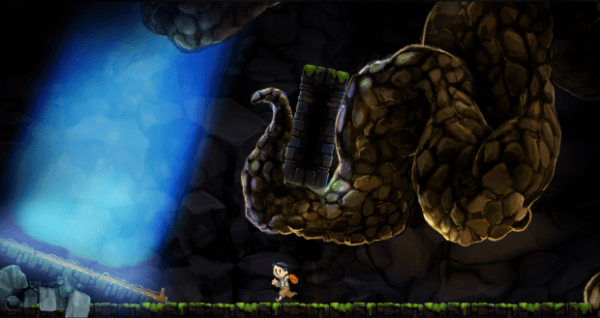
Some of the things that look like they will kill you in the game, don’t. This was quite interesting as there are these 4-legged spider-things that occupy a lot of the early game. Initially, they’re pretty easy to avoid; however, later on you actually need to get hit by them in order to clear an area. This is because they pass on an electromagnetic field onto the player character. Sometimes this is dangerous as they will magnet you into things that will kill you, but other times they’re necessary.
One of the things that are a bit odd about Teslagrad, at least so far, was that the story was told entirely through interaction within the game. For instance, right at the start of the game, the player is treated to a brief scene where a few angry looking non player character’s are running through a town and end up at the player characters house. It is unknown as to why it is that they’re there, but it is evident that this is just a reason to have the game push the player forward. The player needs a reason to kick the game off, and as such, the game gives it to them.
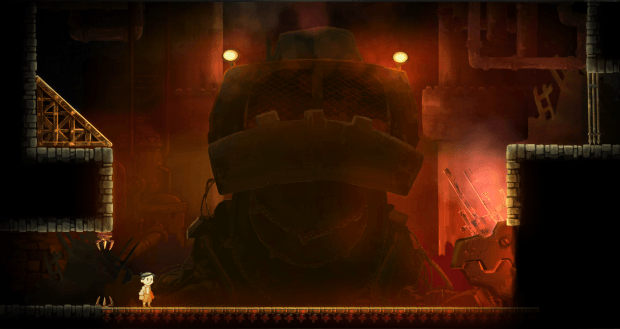
This is definitely a visual game, with a clear amount of effort behind the aesthetics of the game. At a glance, it has a simple vibe to it, one that is quite cartoony. However, once elements start coming together, you can kind of tell that the world has some kind of darkness to it. Even more, in motion, there is a lot of attention being paid to the back and foregrounds of each area, with visual elements gliding in the foreground as players travel, as well has having the backgrounds perspective shift subtlety.
By default the games controls are linked to WASD for movement and the arrow keys for your skills. As a control scheme, this is workable, but it really is not the most comfortable control scheme. Players should take the time to re-adjust all of the settings to their comfort, assuming they defaults are uncomfortable or confusing. However, for this play through, the default controls were used and they only offered a minor level of confusion in some instances. What is odd was that there was no controller support for the game. We have to remember that this was an Alpha build, so it is likely that the controls and control options will be expanded in the future.
As a gamer that loves audio, it was a little saddening that the build had not yet had any background music implemented, or if it did, it wasn’t working on this machine. For a game that is so bent on having an atmosphere, even having a trailer released about it, it was kind of disappointing that this was not reflected enough through the audio. I expect that the finished product will have a backing score, so this is just a minor disappointment that will likely be alleviated.
One thing that is important to take away from the experience of a game is the way it feels and the resonance that the game leaves the player with. As it stands right now, Teslagrad is definitely a game that will leave a good feeling and impression on any player that takes the time to play through it.
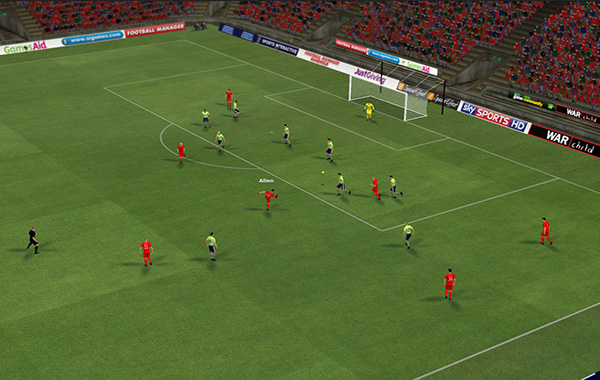
Football Manager 2014, produced by Sega, is set to be the first in the series to release on Linux, and to feature crossplay on Linux, Mac and Windows. This was revealed by studio director of Sports Interactive, Miles Jacobson on Facebook who said :
So the promised snippet of #FM14 news. As well as being on Mac & Windows, it will also be on Linux. With crossplay. One price for all 3 – so if you have a Macbook, Windows laptop and Linux desktop (for example) you’ll be able to play the game on each of those machines via Steam.
There was also some good news in regards to Football Manager 13with it being announced that the title had just become the best selling game in the Football Manager series, and Jacobson thanking all the fans for their support.
Unfortunately no details about gameplay or feature updates, nor the release date was announced. But as soon as any news drops, Capsule Computers will be sure to let you know.
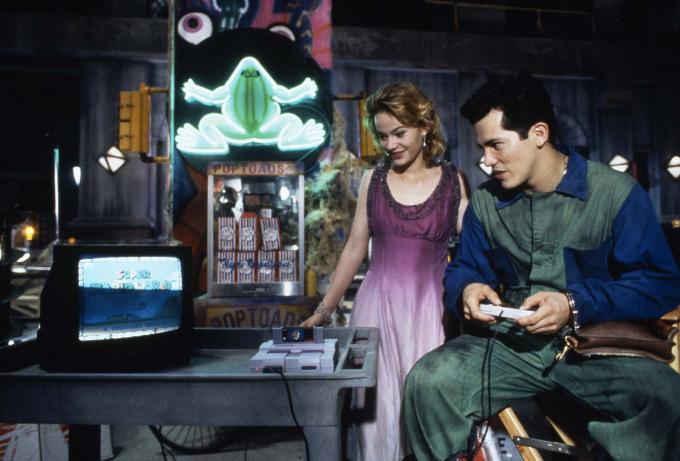
John Leguizamo made history by participating in Super Mario Bros.: The Movie as Luigi. Sure, we all have our opinions on it, but as of recent, the actor took it upon himself to create a speech for the 20th Anniversary of the film.
In video form, Mr. Leguizamo recalls his time creating this legendary film, as well as the perils of shooting with the constant problems on set. It’s quite an interesting video to say the least, and whether you like it or not – is one nice way to celebrate one of gaming’s little oddities that has went down in history for being one of the first film adaptations of a medium. Check out the clip below and also our review for Luigi’s Mansion Dark Moon here.
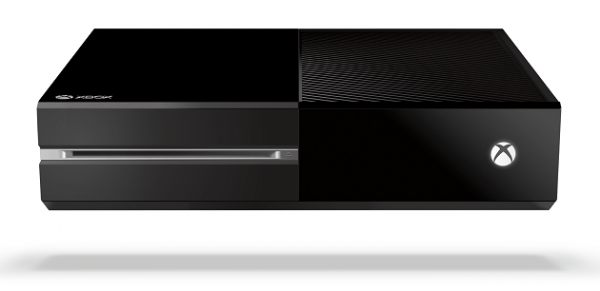
If all of the recent news about the Xbox One wasn’t worrying enough, it looks like anyone who is eager to import games from other countries is going to be out of luck when it comes to the Xbox One. Speaking with Digital Trends, a Microsoft spokesperson said “Similar to the movie and music industry, games must meet country-specific regulatory guidelines before they are cleared for sale. We will continue to work with our partners to follow these guidelines with Xbox One.”
This means that anyone who imports a game will need to have a Xbox One with that region’s code. It is worth noting that most Xbox 360 games are region locked but the console itself is not, as the choice falls to the publisher. This new twist is unfortunate but not too unexpected, and given the lack of Xbox support in Japan it likely won’t affect too many games.
Given the series’ popularity this was only a matter of time. Today 0takomu found a promotional poster which was released to bookstores in Japan that is announcing the anime adaptation of the romantic comedy manga Nisekoi which has been running in Weekly Shonen Jump since November 2011.
Interestingly enough, the manga has seen quite a bit of popularity in the West as well, as it is part of Viz Media‘s digital Weekly Shonen Jump and its digital manga volumes have been topping the company’s digital sales charts.
The announcement poster can be seen below and for those who don’t know, Nisekoi follows the story of Raku Ichijo who wears a locked pendant around his neck and the owner of the key was his childhood love. Raku is an average high schooler who also happens to be the son of the leader of the local Yakuza gang. However when he is engaged to a rival gang’s daughter named Chitoge, his current crush and a number of other girls around him start falling for Raku.
Tiger & Bunny: Volume 2 Author: SUNRISE Illustrator: Mizuki Sakakibara Publisher:Viz Media Release Date:July 9, 2013 Price:$9.99 – Available Here
Overview Since the first release of Tiger & Bunny in North America in February, Viz Media has also started bringing the manga for the series over as well. So far with Volume 1 we’ve seen that the story follows that of the anime very closely much to its benefit. Now with Tiger & Bunny Volume 2 hitting stores, does the manga successfully take the greatness of Tiger & Bunny and translate it into print?
Story As those familiar with the series should already know, the city of Sternbild is protected by a number of heroes that are called NEXT, a special type of human that has developed super abilities. These heroes participate in a television program called Hero TV where the heroes’ triumphant rescues and captures of criminals are televised to the public, but also where they compete against one another for the title “King of Heroes.”
When we last left the heroes, veteran hero Kotetsu had been forced to partner up with a rookie with the same abilities as him called Barnaby after Kotetsu’s sponsor was purchased by another company. The two reluctantly began working together but thanks to their conflicting styles and work ethic, Kotetsu prioritizing the safety of the public and acting on instinct while Barnaby cares only for television time and points, the two were off to a rocky start.
This second volume picks up after the events of the ice-rink and slows down the pace a bit to focus on the characters and their relationships with one another. There is a bit more focus this time around on building Kotetsu and Barnaby up as a partnership, but their conflicting personalities and Barnaby’s inability to see Kotetsu as anything more than a burden continue to drag their working relationship down.
It is worth noting that the manga continues to cover the material from the anime very closely and this volume actually contains the events that occur during the third and fifth episode of the anime, while the events of the fourth episode are mostly glossed over. The comedy that comes from the odd couple of Kotetsu and Barnaby continues to be the highlight throughout the manga, though this volume is more action and background oriented than the former.
There are a few new scenes and reactions included in the manga, but for the most part a number of scenes are skipped entirely and while Blue Rose and Kotetsu’s background are explored a bit throughout this volume and more of Barnaby’s past is revealed, there is a certain rushed feeling to the events portrayed in Volume 2.
Artwork The illustrations handled by Mizuki Sakakibara remain very impressive with the heroes outfits being nicely detailed and with a great deal of effort put into make sure the characters’ faces are expressive when they are out of their suits. The lack of sponsor placement remains consistent throughout the volume which means that, outside of Origami Cyclone’s focus on sponsors, they will likely remain omitted throughout the manga series.
As far as the backgrounds go, there are a few nicely detailed scenes and a number of two-page spreads including the debut of Tiger and Barnaby’s “Good Luck Mode” which is nicely detailed on paper. It is worth noting though that unlike the previous volume, there is an overabundance of plain or empty backgrounds used in panels.
Again Viz has impressed with their work with the manga’s translation and handling of the text. Each sound effect has been translated into English and the insertion of the English text hasn’t damaged the original artwork in any way even when the text is inserted over the image itself and not within a basic voice bubble.
Extra Content This second volume is unfortunately rather barren as far as extra inclusions are concerned. When readers open this volume there is a nice color page featuring Kotetsu and Barnaby in kimonos and a small image of Blue Rose also in a kimono. Outside of that there is a minor color image following that with a basic image of Kotetsu and Barnaby in street clothing and the volume closes out simply with a preview of what readers should expect in Volume 3.
Overall With the second volume of the Tiger & Bunny manga the status quo seems to be established as far as the artwork goes with impressively detailed character outfits and facial expressions, though the backgrounds in later have suffered. While told in a slightly altered way, the story of Tiger & Bunny continues to be nicely handled in this manga adaptation, even if it skips a number of scenes without much in the way of new additions.
Capsule Computers review guidelines can be found here.