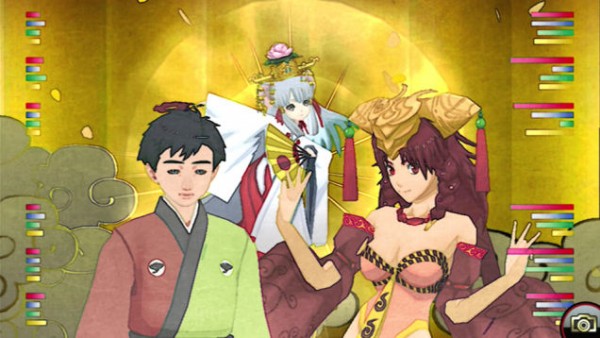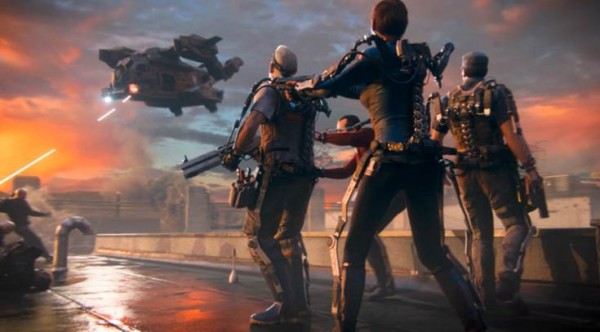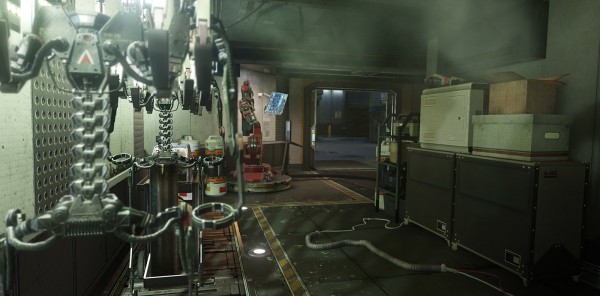

Earlier this year Bandai Namco announced that they were working on a third game in the One Piece: Pirate Warriors series and over the weekend they announced that not only will One Piece: Pirate Warriors 3 be heading to the West in Summer 2015, it will also be released on PC through Steam.
One Piece: Pirate Warriors 3 follows the original story of One Piece and follows Luffy’s departure from Fuschia Village all the way up to the most recent Dressrosa Arc and features characters like Sabo, Fujitora, Ace, and Doflamingo. Check out some new screenshots as well as a new trailer for the game below.
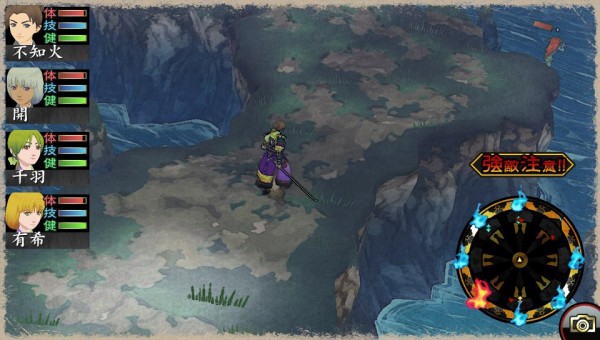
It was said that it wouldn’t be possible, that Bandai Namco would never be able to organize all of the licenses for Western release similar to Project X Zone, but it looks like they have pulled it off. Bandai Namco has revealed that they will be releasing an enhanced version of J-Stars Victory VS., featuring an Arcade Mode, in North America and Europe in Summer 2015.
When J-Stars Victory VS+ is released in the West it will be available for the PlayStation 3, PlayStation 4, and PS Vita. For those who never followed the game previously, J-Stars Victory VS+ features fifty characters from thirty-two different Shonen Jump titles though a number of these characters are simply support fighters. It is currently unknown whether Bandai Namco will be able to retain the entire cast when the game is released in the West but let’s hope so.
This weekend during Jump Festa Square Enix released a new trailer for Final Fantasy Type-0 HD and now they have released an English subtitled version of the trailer which you can check out below. In this video, we are presented with mostly new gameplay footage set to impressive sounding background music as well as new cut-scene footage showing English subtitled dialogue.
Final Fantasy Type-0 HD is currently set to be released on the PlayStation 4 and Xbox One on March 17th and those who pick up a launch copy of the game will be given access to an exclusive Final Fantasy XV demo.
T’was the night before Christmas and all through the house, not a creature was stirring… Except for Mickey Mouse. The Disney Infinity news has been a little bit quiet for the past few weeks, but in celebration of the holiday season, the guys over at Disney have given us an early present in the form of two free downloadable Toy Box Maps for Disney Infinity 2.0: Marvel Super Heroes. Based on snow, Christmas Carols and of course delicious food, you can get the following Toy Boxes right now, totally free:
Mickey’s Christmas Carol– The Toy Box Community Team forgot to send you a Christmas card, so they decided to build you a Toy Box instead! Enjoy this Toy Box, and take on the beloved Disney classic, Mickey’s Christmas Carol.
Snow Park Challenge – Hop on the snowmobile and race to find all the pastry collectibles as fast as you can!
So whether you’ve been playing Disney Infinity 2.0 since launch or you are expecting it under the tree this week, you will be able to get into the Christmas spirit with Mickey, Donald, Spider-Man and the rest of the Infinity figures.
Bandai Namco Games Europe and CyberConnect2 have release a trailer today for the upcoming Naruto Shippuden: Ultimate Ninja Storm 4. The game is based off the popular Naruto anime series, and boasts an impressively large roster of characters. The quality of the graphics is very impressive, as suits a game being launched on the latest generation of consoles.
Cyberconnect2 claims that the combat will be extremely fast paced; if it’s faster than prior games in the series, then this is true. The Ultimate Ninja Storm series has always had high quality combat, and with a no-doubt increased roster, this one will be no exception. I’ve enjoyed the combat and number of characters in prior titles. I expect with the series now complete, this game will have the definitive character roster.
Online and offline modes will return for the title, and Bandai Namco Games Europe has stated that it will join the STORM League.
Naruto Shippuden: Ultimate Ninja Storm 4 will be released on PS4, Xbox One, and Steam in 2015. See the launch trailer below.
This week’s bundle has a bit of a Christmas theme in honour of the holidays this week! For one price, gamers can snag six indie games in the Indie GalaEvery Monday Bundle.
Cyto – Cyto is an adorable little ball with amnesia. Players will have to conquer 104 levels of puzzles to help piece together his lost memories.
Flower Shop: Winter in Fairbrook – A dash of Harvest Moon mixed in with the classic Japanese dating sim, Flower Shop: Winter in Fairbrook picks up where Flower Shop: Summer in Fairbrook left off.
Boson X – Test your reflexes in a massive particle accelerator by colliding into other particles in the quest for the legendary Boson particle.
Viscera Cleanup Detail: Santa’s Rampage – After years of dealing with greedy children, elf unions, and generally being forced to be a merry guy, Santa has gone bezerk and slaughtered everything in sight. Now you’re the poor janitor stuck cleaning up after him.
Pixel Hunter – A side scrolling platformer in a 3d voxel style. The game features five worlds and epic boss battles to conquer.
Koya Rift – An action platformer that randomly generates everything, including your weapons, your enemies, and the level.
Grab your bundle at Indie Gala before the price rises. It’s only $1.89 for the first 24 hours!
Gamers have long bemoaned that Sid Meier’s Alpha Centauri never received a sequel. Although not a true sequel, Sid Meier’s Civilization: Beyond Earth serves as a spiritual successor to Alpha Centauri, while bringing the Civilization series to space. After a great tragedy strikes Earth, humanity sends out colonists to distant planets in hopes of saving the species. To survive, players will need to outsmart the alien creatures that inhabit the world and the other competing colonists.
Story
After “The Great Mistake,” the regional organizations and countries sponsor special space ships to be filled with colonists and sent to distant planets. These colonists hope to establish bustling civilizations in attempt to save the species and possibly the humans still left on Earth. There are is a small journal entry displayed during the loading screen from the leader of each sponsored group, but that is about it. The plot really is in the meta-game.
Gameplay
Like most 4X strategy games, Sid Meier’s Civilization: Beyond Earth is a meaty game with plenty of mechanics and strategies to learn. Compared to many games in the genre, Civilization: Beyond Earth is one of the more newbie friendly titles with its advisor capable of providing a full walkthrough of almost all mechanics, along with links to the relevant Civilopedia articles that provide more information. That being said, Civilization: Beyond Earth is definitely not for the faint of heart. There is still a large amount of reading and experimenting to be done to really learn the game.
The Civilopedia is organized well and has a much needed search function. Almost all the entries are well written and very clear. The only weak entry I could spot were the entries detailing the victory conditions. They did not provide step by step instructions on how to achieve them. To find that information, I had to go through the victory pane in the quest tab.
Civilization: Beyond Earth plays like a pretty standard 4X game. Players will start their empire out with their capital city and slowly expand by building colonies that will eventually grow into cities. There are three affinities in the game based on the direction players want to lead their new civilization. The affinities will influence how their units develop and provide a variety of bonuses. At the same time, players will complete a variety of quests which will provide extra bonuses, research new technologies, gain Virtues through culture, maintain a spy network and manage diplomatic relations.
Combat is similar to Civilization V. Much to some veteran player’s fury, unit stacking has not returned. Only one combat unit can occupy a hex, though non-combat units can share the space. Players will get a quick preview of the combat, which will help new players decide when to engage. Units vary for technology based weapons of war to tamed aliens, providing a huge variety of units.
As with all 4X titles, there are multiple ways to win. However, the methods are less diverse than previous Civilization titles. There is a much greater focus on the research tree, as all three Affinity victories require technological research to complete. The remaining two victory methods is the traditional military victory and a contact victory that mixes technological research and exploration. I was rather disappointed to see that there is no victory based on diplomatic, cultural, or economic prowess.
Sid Meier’s Civilization: Beyond Earth’s controls are very good. Most of the menus are well organized, easy to navigate, and clear to read. The only portion of the menu that drove me nuts was the “Play Game” button. After a couple decades of gaming, play game has always meant continue from your last save to me. Instead, the button kicks off a new game with default settings. I would have preferred to see this option renamed to “New Game.”
Modding makes its return in Civilization: Beyond Earth. Firaxis has integrated Steam Workshop into the game, making it very easy to find, install, and update mods. With the vibrant modding community, several projects are already underway to improve the game’s balance and tweak the UI. Of course, there are plenty of mods that also add new content to the game, including factions from Alpha Centauri.
Although there was nothing game breaking, Sid Meier’s Civilization: Beyond Earth has some bugs that need to be ironed out. There was the odd time a certain piece of land could not be purchased or an explorer was unable to create an expedition. Usually these problems disappeared after reloading the save. These are not major bugs, but obvious enough to be annoying.
Visuals
Sid Meier’s Civilization: Beyond Earth looks great. Each of the three affinities bring unique looking units and the models and animations are solid. The UI works on a sci-fi palette of blues and greys, while the world itself is colourful.
Hardware wise, the game has a DirectX 11 and AMD Mantle flavours. The hardware requirements aren’t particularly taxing, so low end laptops should have no problem running the game. The graphics scales nicely in ultra quality. My only complaint is that the borderless window mode is not very clear. The game seems to run in full screen as a borderless window, but the options do not explicitly say this. To play the game with a multi-monitor set up, gamers will actually need to go into the interface option and remove the frame lock on the mouse cursor.
Audio
Following Sid Meier’s Civilization V’s Grammy award winning soundtrack is understandably difficult. Although not quite getting there, Civilization: Beyond Earth does a respectable job. The soundtrack hits the right notes to compliment the game’s themes of isolation and hope, all while having an epic feel to match the depth of space and the complexities of the game. There is a little bit of voice acting in the game for the leaders of each sponsor organization and for the assistant that provides players advice. The actual lines are a little limited, but the acting is decent. Like the voice acting, there are not many sound effects, but what is there is very good.
Overall
Sid Meier’s Civilization: Beyond Earth is an interesting new or maybe old step in the Civilization franchise. There are still some kinks to work out and the learning curve is still a tad steep. However, it is solid on all fronts and it worth a try for all strategy fans and newbies willing to do a little leg work.
Capsule Computers review guidelines can be found here.

Bronies are people who enjoy watching My Little Pony: Friendship Is Magic that are outside the target demographic. They have been around for a few years now. Maybe it is just a passing fad, or maybe it is going to be around for many more years to come. Either way, these people are looked down upon by society because of their choice to watch a show aimed at young girls. If you are curious to find out what it is they see in that show, you may be interested in watching this documentary, but is A Brony Tale the best tool to help you understand why bronies are so passionate about the show?
Content
Ashleigh Ball is the voice of Apple Jack and Rainbow Dash in the series My Little Pony: Friendship Is Magic, a part of the fourth generation of My Little Pony. She had been doing voice work for several years before auditioning for a role in the show. Not knowing what to expect, she auditioned for the role of a young male character but ended up getting hired to provide the voice of two female ponies. She had no idea that she was going to end up becoming famous amongst a group of older people known as ‘bronies’, or ‘bro’ ponies’. Having only met a few bronies before, she was surprised to be invited to BroNYCon 2012 after the production of season 3 finished. Faced with the decision of whether or not to attend the convention as a guest of honour, she set out on a journey across North America. Inserted between shots of her journey are interviews with bronies of many different shapes and sizes and an insightful interview with two psychologists who researched the brony culture.
Although the documentary’s title suggests that it will focus mainly on bronies, it is also about Ashleigh’s journey from hearing about a group that sounded creepy to her to actually meeting them and understanding why they are so passionate about the show. From two psychologists, we find out why people become bronies and the ages and sexual orientations of those people. Some may find a comparison of bronies to hippies a bit far-fetched, but the comparisons to other fandoms are accurate and make an excellent point: why belittle a group of people who are able to find joy in watching something, even if that something is primarily aimed at young girls? This is something that Ashleigh learns, along with the viewer.
All of the interviews in this documentary provide fascinating discussions about masculinity, which will interest anyone who believes that the gender roles society forces people into are outdated and inappropriate. Many people subscribe to the traditional belief that men have to be ‘macho’ and that they have to be interested in the ‘blue’ toys, not the ‘pink’ toys, however bronies prove that this does not have to be the case. One interviewee states that they are far away from the harmonious world of Equestria, because even though they are creating a new form of masculinity, many others do not accept them or their type of masculinity. This shows that bronies do not believe that they are in some fantasy world and they are not trying to escape from reality like some people may suggest.
A common theme throughout the documentary is that people who found it hard to make friends and people who got teased about their interest in Friendship Is Magic are able to make friends with those who do share their interests. This is where the appeal in the show lies: in the messages that the show gives them about positive values such as friendship and harmony. From this, it is easy to see what makes them appreciate it so much.
Visuals
The camerawork here is average. There are two different types of shots used throughout, one with a camera in a single fixed position and one with a handheld camera. The use of the handheld camera is not particularly distracting, but it is not smooth either. A very noticeable visual flaw occurs when scenes from Friendship Is Magic are shown; the watermark and rating information from the television broadcasts are present, something that would not be expected in an otherwise high quality, professionally-produced documentary. It is not explained why the producers used broadcast recordings of the show instead of taking clips directly from the source, but it detracts from the quality of the documentary. Dozens of fan-art images are shown in montage sequences during the film, so not only will people who have never seen Friendship Is Magic get to see just how inspired and passionate about the show bronies are, bronies themselves will get to see many pieces of artwork of their favourite characters that have been drawn by skilled artists.
Audio
The soundtrack is suitable and not overused. It is largely made up of techno music, but it works as a backdrop to the film. At the beginning of many scenes, a short segment of one of the songs plays at a noticeably louder volume than everything else does. That is not to say that the audio mixing is a major problem, but viewers should note that the documentary will become loud at times. Fans of Ashleigh Ball will be treated to a demonstration of voices she has provided for other animations, again making this documentary not only appealing to those interested in bronies but bronies themselves.
Overall
A Brony Tale is as much about showing Ashleigh’s journey from beginning as a voice artist to attending BroNYCon as it is about the bronies themselves. Some may find that disappointing given that the title suggests that it will focus more on bronies, but others will find it eye-opening and appreciate the use of unintrusive interviews as a way of explaining why society’s idea of bronies is unfair. Ashleigh’s journey from being worried about what bronies are to reaching an understanding of them is worth watching, because bronies are just ordinary people who love a show that happens to be primarily aimed at young girls. Whether you simply do not understand the appeal of Friendship Is Magic or are someone who subscribes to the negative beliefs about bronies, this documentary may be the best tool to change that. I cannot say for sure that it offers a correct interpretation and discussion of the brony fandom, however, not being a part of the fandom myself.
Capsule Computers review guidelines can be found here.

Overview
People make many decisions throughout their lives and although some of these decisions may seem unimportant, one never knows exactly what will happen. In one such anime that bears such a long name that fans simply called it NouCome at the time, the choices presented to the main character are far from ordinary. Now with Sentai Filmworks releasing My Mental Choices Are Completely Interfering With My School Romantic Comedy in North America, is the anime worth picking up?
Story
Kanade Amakusa was extremely popular back in middle school but now in high school he finds himself part of the “Reject Five” due to the many strange actions that his classmates see him perform. In fact, viewers find out why Kanade is so strange within the first few minutes of the series as he stumbles across a lewd magazine in the park. While hoping that the wind might blow open a page or two, a voice comes from above telling him to Choose.
Accompanying this voice are two different choices that begin to fill Kanade’s vision, telling him to either put his face in the magazine and sniff it or to eat it. While trying to avoid making a decision, agonizing pain is inflicted on his head before he opts for option number one. You see, Kanade has been cursed with something called “Absolute Choice” and with this curse he is forced to make decisions that range from absolutely absurd to strangely perverse and everything in-between, making it impossible to guess what terrible situation he’ll find himself placed in next.
Due to his curse, only a handful of girls at his school still speak with him and that is due to their own quirky personality traits, with Furano Yukihiro’s strange tendency to tell insulting jokes with no emotion and Oka Yuoji’s generally carefree air-headed nature, these are the only two not bothered enough by Kanade’s strange actions to abandon him. However one day after school when Kanade must choose between his clingy middle-aged neighbor falling on him from the sky or a random girl, one more girl is added to the group.
Proclaiming herself as someone sent from God, a beautiful girl who chooses to call herself Chocolat promises that she will help Kanade cure himself from the Absolute Choice curse which has been inflicted on him by God. Of course the actual God that laid this curse upon Kanade has vanished and the lackadaisical God that is now in that position seems to enjoy seeing Kanade struggle more than anything else as the amnesiac Chocolat acts more like a dog than anything else. Despite their ineptness they inform Kanade that he will be given missions to complete and if he manages to do so, he will be cured of his Absolute Choice curse.
With a goal in sight, Kanade finally sees the light at the end of the tunnel. Or at least that is what you think would happen but instead My Mental Choices Are Completely Interfering With My School Romantic Comedy is more a series about seeing just how crazy Kanade’s life can become while also exploring the girls close to him. Thanks to the fact that if he fails any of the missions given to him, he will suffer Absolute Choice forever, Kanade finds himself desperate to complete each mission no matter how absurd it might be.
Throughout the course of the series, it feels like every episode has to be even more absurd than the one before it. With missions ranging from having a predominantly emotionless and unfeeling girl laugh from the bottom of her heart to getting certain girls, ranging from those he barely knows to those already close to him, to say they like him, and Absolute Choices that simply cannot be described as they have to be seen for the best comedic value, this one upmanship creates a ridiculously hilarious series where practically anything that can happen, though it does come at a cost.
Thanks to the comedic focus of the series and the number of girls that are in the picture, the story and most of the cast suffer. Throughout the series we do find hints as to what Absolute Choice is, how to possibly solve it, as well as who may be behind it but nothing is answered in the time-frame of the series as instead viewers are only presented with various changes to how Absolute Choice works.
The same can be said about the many female characters. As mentioned before, many of the characters have their own quirks though it feels like only Yukihiro is explored in any meaningful way. Even Chocolat who appears to be the main heroine thanks to her role in the story is treated more as a gag than anything else though she does have one episode to really shine. As such, most of the cast that is introduced becomes nothing more than constant gags featuring a brother and sister obsessed childhood friend and a sadistic blonde with a secret hanging on her chest and nothing more.
Visuals With the series being released on Blu-ray, the bright and colorful artwork really shines. The background designs are fairly standard though the flying text that overrides things in the environment with Absolute Choice is a nice touch. Something that this series does have going for it is great character designs. While most of the cast is a bit standard looking, the female cast and their different outfits and the amount of detail put into them is a really big highlight. It is also worth mentioning that although a number of revealing outfits are on display, the amount of panty shots can be counted on one hand and they usually only appear thanks to something in the story.
Considering how much text floats by in this series, especially whenever the Absolute Choice decisions appear, one must compliment how well Sentai Filmworks handled the subtitles for this series. They managed to properly and easily transcribe the subtitles onto the picture without any issue and give vierwes a chance to read the choices themselves, even if they are generally always read aloud anyways.
Audio With the release of the series, Sentai Filmworks has only provided the original Japanese voice track. While this is a bit unfortunate, the Japanese voice actors really do make the series their own as the absurd jokes and events that take place fit perfectly with their voice acting. In fact this comes as a bit of a surprise as many of the voice actresses in this series have had very few big roles, meaning that many viewers will likely not have heard some of them before.
As for the background music, this series sports some standard themes that do fit nicely with some of the strange moments that take place but for the most part it is forgettable. The opening and ending themes are much better however as the opening “S・M・L☆” is a perfect fit for a series like this while the ending theme “Taiyou to Tsuki no Cross” by Two Formula is a more melancholic closer that shifts visuals depending on what girl was focused on the most in that episode.
Extras This release comes with two clean opening themes and four clean ending themes, though the actual differences between each of these is quite minor as the songs do not change. Also included is the “Kataomoi Otome” OVA that sees Kanade and the main female cast dropped into a dating game where the only way for Kanade to escape is to complete a route. Though if you consider how Absolute Choice even appears in the game to ruin his chances, his routes are quickly ended thanks to ridiculous actions he is forced to take.
Overall My Mental Choices Are Completely Interfering With My School Romantic Comedy is a strange series thanks to its premise that constantly sees how absurd everything can be. While the depth of the cast is disappointing considering the various hints that we are shown throughout the course of the series, where this series shines is when it is trying to make you laugh.
Ranging from complete random silliness to strange jokes and perverted humor, this show is as ridiculous as it comes and those looking for that type of humor in their romantic comedies need to look no further than this ridiculously long named series.
Capsule Computers review guidelines can be found here.

Video games are one of the wonders of our age. They bring storytelling into a new form, taking a passive form of entertainment like reading or a watching film and make it active. Players become the story; they are the center and focus. But like all things, games have an end, the plot ties up, the world is saved, the hero goes back to their farm.
For many games, this leads to finishing up sidequests or to moving on and away from the game. Sure, people may come back and play the game, or go on to the multiplayer world in tactical games or in FPS’ like Call of Duty. But even then, these other side events must eventually end, as players experience all they have to experience, or grow weary of the constant repetitive similarity.
In comes DLC. Downloadable Content is one of the biggest wonders of modern gaming. Once a game is beaten, more content comes, new stories, new quests, new goals, new maps, just new things. For a cost.
DLC is killing triple-A titles.
DLC started out as a good thing, in a different form, for PC gaming. Originally, you would complete a game such as Starcraft, beat all its extended campaigns, and run through the multiplayer. You’d reach the top of the ladders or where you felt satisfied and complete. And then, expansions packs would come out, offering new campaigns, units, gameplay, etc., and this was a good thing.
With the advent of downloadable games across all consoles, this has morphed into a bad thing. Developers now leave out content, only to release it for sale on day one, removing parts of the game for their own later profit. They spend less time on the main campaign, doing as little as they can, to start the development cycle of DLC earlier, to release new campaigns and maps after the game. The goal is all in money, and isn’t even a bad thing by itself.
However, it’s become so.
When before, you would receive a what was effectively a new game for your $30 expansion pack, now, in games like most modern FPS’ or action-RPG’s, you pay $15 for a couple multiplayer maps, $10 for a couple small quests, or $5 for a character skin (previously just neat unlockables hidden in the game). The modern FPS is a chronic offender of this, but other games are no exception.
Some developers are good about this, providing huge missions and new lands, like in Fallout 3 and Fallout: New Vegas. The amount of content added in each DLC pack only adds to an already huge game. The reasoning is that the added development time for these packs requires additional costs, and thus, they must charge for them.
The problem with this, for example Shadow of Mordor’s Lord of the Hunt DLC, is that they aren’t properly integrated into the game. They don’t become part of the game; they become a side game, not associated with the main game. This can work somewhat in more open world games like Fallout and The Elder Scrolls, but it breaks the narrative flow of many games, to just have this new area that didn’t exist in the rest of the game.
An example of how it does work can be seen in the excellent Deus Ex: Human Revolution. Human Revolution was a very linear game to start, and while the DLC isn’t integrated into the main story, it brings its own side story to bear, playing differently but integrated into a missing gap in the main quest. It felt like its own game, but part of the main story. While I do lament that it wasn’t included in the main game, such a side campaign was fully worth the cost of entry to me because I couldn’t get enough of Human Revolution.
And here is where comes in the rub. While I feel that DLC and charging as much as many developers do for the content is wrong (especially if it’s unintegrated), if you love the game and world, it’s worth it. I rarely buy DLC myself; I don’t’ find it to be worth the price of entry in most cases. In some examples, I’ve bought game of the year editions. I have Borderlands 2, and while I appreciate some of the various DLC it came with, I find myself looking at them and thinking that I would have been disappointed to pay for these for what I got in them. There just isn’t enough content that distinguishes itself and stands out in an impressive way.
I lament for the days of the old expansion packs. While installing from a CD and running of that was cumbersome and lacking in the convenience of Steam, players just got so much more. A lot of what modern DLC has become is just what PC modders used to do as a standard, creating maps, weapons, characters. Now, the modders grow ever more restricted, as games become more complex and locked down and DLC looms on the horizon.
I don’t want to have to pay to get half the game. A consumer’s $50 should cover the entire game; it should cover what many developers have made DLC into. When game modes are locked away and hidden on a game’s release, like Borderlands: The Pre-Sequel where you have to pay to unlock the challenge arena, level caps, it’s wrong. To get all the content as of this article, you can pay $25, or spend $30 for a “season pass,” and receive all of the DLC as it comes out.
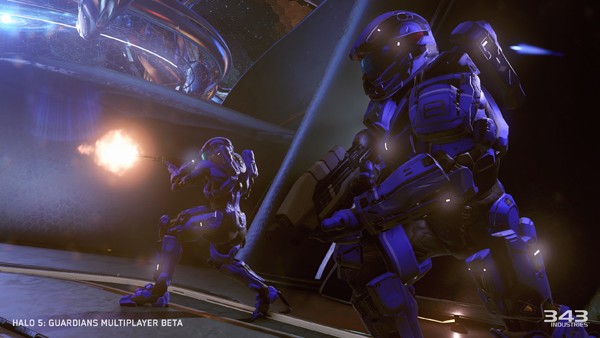
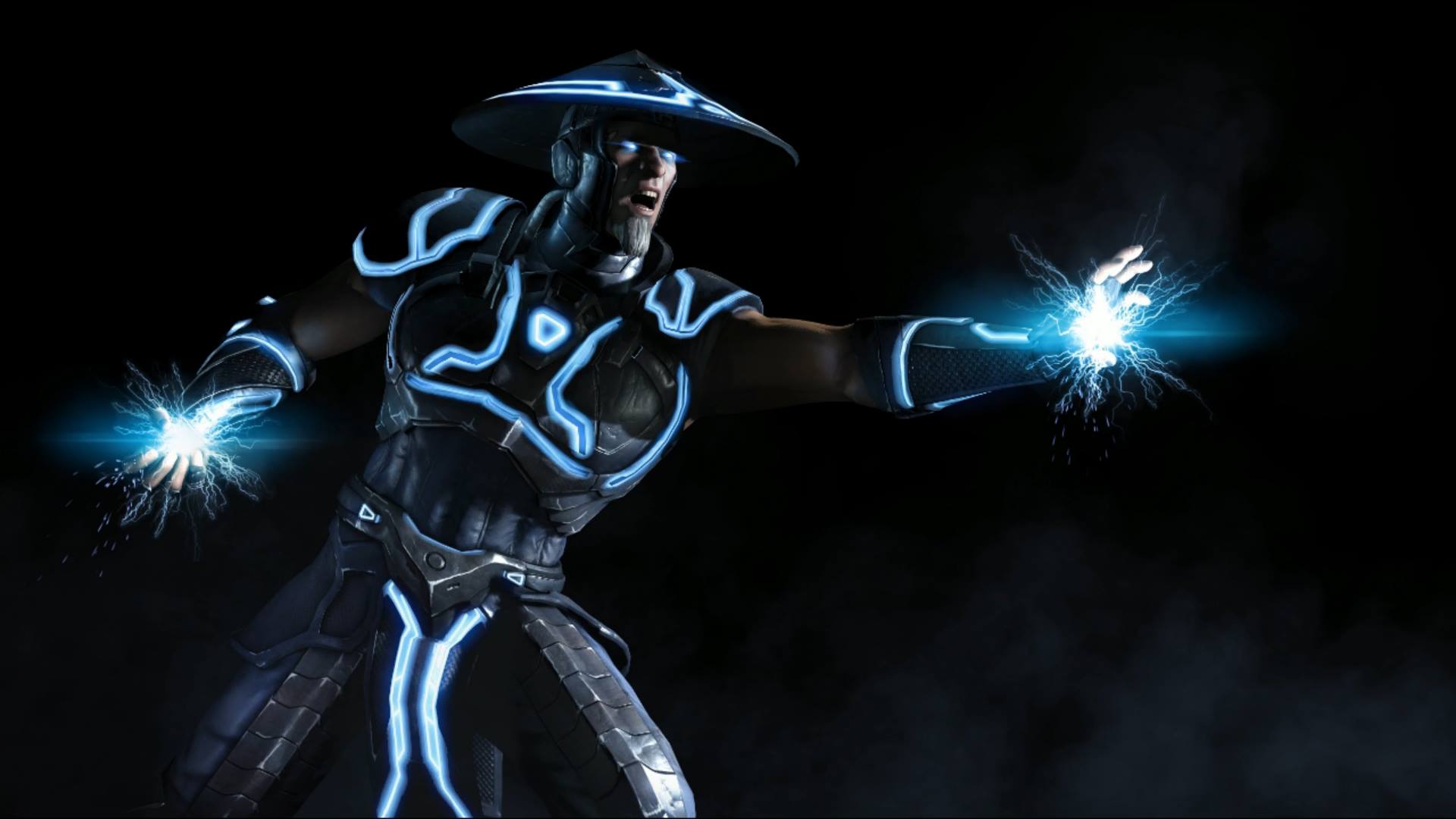
Season Pass’ are even worse than just DLC. You have to pay in advance for DLC you don’t know is coming, if it’s coming. If it will add content, or just skins. Usually, developers do provide a fair amount of content, but it could be anything.
The way forward is clear, and unfortunately it is obvious that DLC will be the way forward. Some companies may choose not to do so, which I applaud them for, but I feel this will be restricted to smaller developers and indie companies. The prospect of charging for expanded content is too much for larger developers to resist; why include content for free, if profit can be made?