When a franchise becomes a franchise, the next step to keep relevance is to expand the lore behind your product. Ubisoft are doing just that with the freshly revealed title dubbed “Assassin’s Creed Chronicles”, heading to the Playstation 4, Xbox One, and PC this month. Assassin’s Creed Chronicles: China is due out first and will see a release on April 21st.
Here are some more details of the reveal:
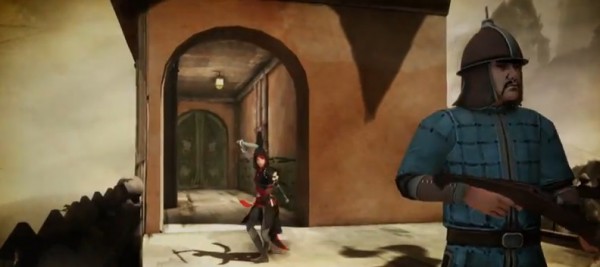
Developed by Climax Studios in collaboration with Ubisoft Montreal, Assassin’s Creed Chronicles brings the thrill of being a Master Assassin to 2.5D. Players will journey to three distinct civilisations and time periods throughout history including the Ming dynasty at the start of its downfall, the Sikh Empire as it prepares for war in India and the aftermath of the Red October revolution. Each chronicle stands on its own with a unique setting, art style, story and Assassin, but is tied together narratively.
Players will embody legendary Assassins, including Shao Jun from the animated short Assassin’s Creed Embers™, and Arbaaz Mir and Nikolaï Orelov from the Assassin’s Creed graphic novels. Assassinate from the shadows, master the art of parkour and take the leap of faith in a collection of stunning, living paintings. Each chronicle has its own artistic signature, from the beautiful brush paintings of China to the vibrant colors of India and the distinctive propaganda art style of Russia.
You can watch the trailer down below and stay tuned, as more footage and chapters are sure to emerge as release dates draw near. Oh yeah, if you invested in the Season Pass to Unity before it got pulled, you very well may be entitled to the first chapter, as it was promised before release.
Who doesn’t love soundtracks? Rockstar are ready to launch “Welcome To Los Santos”, a full collection of music inspired by the world in Grand Theft Auto V. This collection features a diverse assortment of tracks spanning several genres, with the track ‘Play It Cool’, by Gangrene featuring Earl Sweatshirt and Sam T. Herring of Future Islands available for download now with every pre-order.
Here is a sneak peak at the tracklist:
1. Gangrene – Play It Cool feat. Samuel T. Herring (of Future Islands) & Earl Sweatshirt
2. Ab-Soul – Trouble feat. Aloe Blacc
3. Tunde Adebimpe – Speedline Miracle Masterpiece feat. Sal P & Sinkane
4. MC Eiht & Freddie Gibbs – Welcome to Los Santos feat. Kokane
5. Phantogram – K.Y.S.A
6. Vybz Kartel – Fast Life
7. King Avriel – 20’s 50’s 100’s feat. A$AP Ferg
8. MNDR – Lock & Load feat. Killer Mike
9. Popcaan – Born Bad feat. Freddie Gibbs
10. E-40 – California feat. Dam-Funk & Ariel Pink
11. Wavves – Leave
12. Curren$y & Freddie Gibbs – Fetti
13. Little Dragon – Wanderer
14. Action Bronson & Danny Brown – Bad News
Not too shabby at all, and those who want to indulge can do so now – with the album available on CD, vinyl and digital download on April 21 via Mass Appeal Records or follow this link to pre-order off iTunes.
2K Games and their mobile division have been keeping up with WWE SuperCard quite well, and have delivered a new update that looks to cash in on Wrestlemania. This new update features new themes and features, with new cards, bonuses, and so on.
Here is a look at what to expect:
New “WrestleMania” Rarity Level: More powerful than Survivor, this new card rarity is a permanent addition to the game and gives WWE SuperCard a total of nine card rarity levels;
50+ New Cards: Featuring the likes of WWE Superstars John Cena, Brock Lesnar and Roman Reigns, WWE Diva Paige and new Support cards, WWE SuperCard continues extending its array of collectible content;
Daily Login Bonuses: Beginning April 1, players will earn rewards for daily logins; the more days a user logs in each month, the better the rewards;
King of the Ring Rewards: A revised King of the Ring rewards structure for players;
Key Improvements: Players will notice Card Locking now helps players lock cards to keep them from accidentally being deleted or trained without authorization, a revamped My Cards menu and other fixes.
You can download these updates today and get to battling foes for card supremacy.
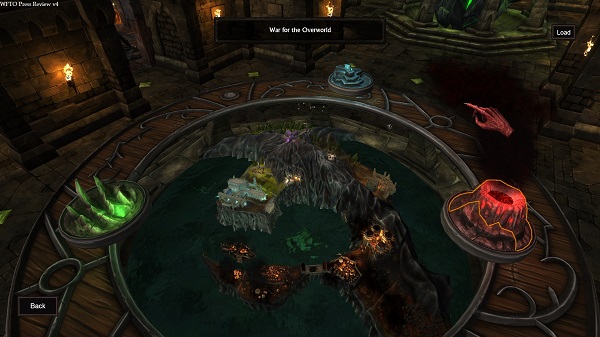
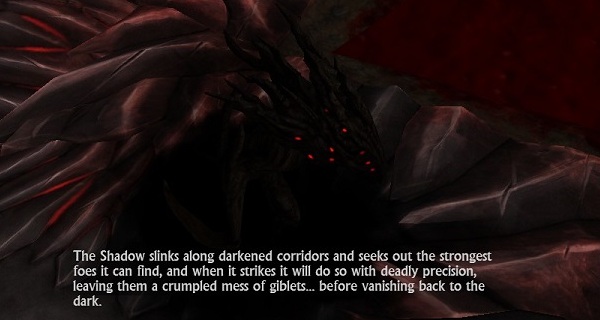
If, like me, you were playing strategy games from when you were a miniature version of a human then you may have come across a game by the name of Dungeon Keeper. It was one of those quintessential late 90s games by legendary studio, Bullfrog Productions (which was founded by Peter Molyneux). When I heard there was a spiritual successor in the works and that Molyneux himself had given the development his blessing; I was eager to get my hands on it. After a long delayed release, Subterranean Games has finally released War for the Overworld. Read on to find out what I thought…
Story
The game narrative is fairly straightforward. You play as an ‘Underlord’, an Eldritch evil being who seeks to gain dominion over the land of Kyros. You play across a campaign which will take you through a variety of dungeons in the overland empire and the netherworld. The story does unfold with some manner of an arc as the secrets of the demonic narrator (voiced by Richard Ridings who gives an amazing performance) and his motivations are revealed. The story isn’t too complex but it does treat the audience to Ridings dulcet tones beyond the snide remarks which the narrator occasionally throws out during a level… so I wasn’t complaining. The writing and dialogue isn’t the best I’ve heard, but there are a few zingers in there which are worth hearing.
I do feel that the method for telling this story through narration during a level, while I’m hurriedly excavating or directing my minions towards the enemy, was not an optimal approach. However, in this type of game, I was not expecting too much from the story and was focused more on the level design.
Gameplay
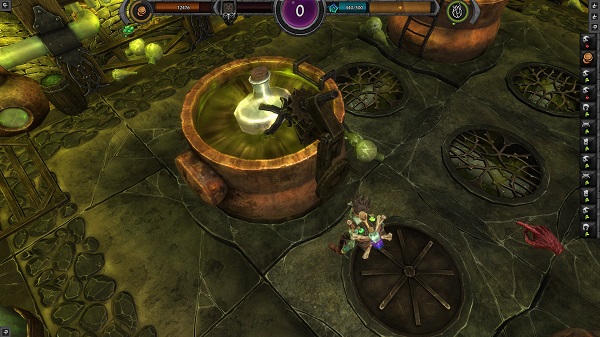
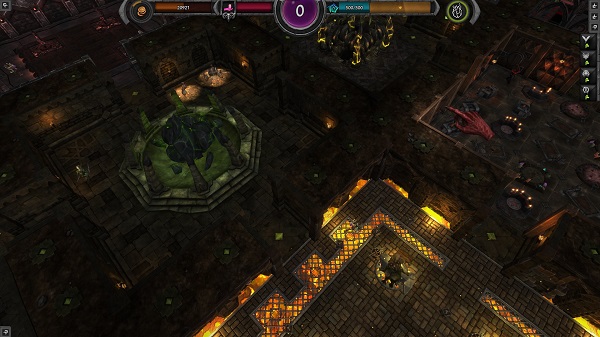
The gameplay is largely a holdover from the original design of Dungeon Keeper and the player indirectly controls the goings on in their dungeon. Players are able to order their minions to excavate and claim underground rooms and tunnels. The player expands their dungeon, manages their gold reserves, and attract minions to live under their rule. The level generally also requires that you repel enemy incursions and ultimately destroy their base or complete some other objective. There isn’t too much variation in this area of the game as you are largely trying to make your dungeon as efficient as possible while you try and take down your opponent (or stop them from taking you down). This is pretty much classic Dungeon Keeper gameplay which we all know and love.
As much as I love the old-school game design of this spiritual successor to one of my favourite classics, I still find that I could not get much mileage out of the game’s campaign. Playing through the game I felt that War for the Overworld had not gone through a significant amount of playtesting. I feel that the elements which make up the game simply do not fit together.
An example of this is that the AI feels incredibly stupid for both minions and enemy units, as they go about their business and traverse the map. The need for me clarify my to order to a minion to attack a trap which is actively attacking my forces as opposed to a door in the nearby vicinity seems to be a bit silly. Granted, there could be a tragic backstory to said minion wherein they lost their entire family due to the machinations of a dastardly door and thus have an irrational hatred of all manner of doors, gates, and portcullises… but prioritising their quest for revenge does annoy me a significant amount in that it confounds my attempts at tactical planning.
The enemy AI is similarly stupid as hero units (not so much other underlord enemies) are only able to attack you along a predetermined route. Generally this involves following a tunnel which was already hollowed out in the level until they get to your dungeon. This leads to some very cheap exploits wherein the player can erect a dirt wall in the path of these advancing heroes and magically snipe sapper units (who dig through walls). Instead of attempting to walk around and find another entrance to your dungeon, these heroes appear to engage in a form of subterranean moshing in the general vicinity as they wait for the next sapper to come along and dig through the wall.
You might fault me for finding and using these exploits, but I did not feel that the game was giving me any other option than attempting to stack the odds overwhelming in my favour through means fair and foul. The levels simply do not feel fair and after about the third level, the difficulty spikes up dramatically. It begins to feel like the level does not have sufficient resources for you to get through as there aren’t enough gold, minions, or time between enemy attacks. Too often you’re on the defensive and not able to accomplish anything beyond simply repulsing the enemy, although I admit that this might be the result of sub-par management skills on my end.
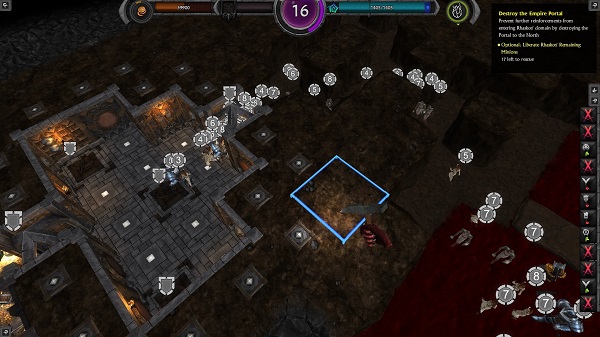
The game requires you to engage in a ridiculous amount of micromanagement while also forcing you to manage everything with a hands-off approach. You can’t directly order your minions to attack a specific hero unit or trap and instead have to move them around the map through the use of rally flags which you can place on the ground. Your imps (which you have slightly more direct control over) are also similarly rage-inducing to control as they appear to be under the impression that your orders are more suggestions than anything else. If this sounds infuriating, that’s probably because it is.
Part of the reason so much micromanagement is necessary is that the levels just don’t feel particularly well designed. Too often I would excavate into a river tunnel which would worm across the width and breadth of the map. This usually ends up providing an easy route for the heroes to enter into my domain and cause havoc. The game encourages you to place down traps to waylay and damage these hero units as they approach. The problem with this strategy is that these traps lock away a portion of your mana bar with each placement and so by using them, you are limiting your capability to directly interact with the game through spells.
These design choices are largely carried over from the previous Dungeon Keeper series, and kudos to the developers for keeping true to the spirit of the series, but they don’t appear to be implemented effectively in this title as of yet.
Visuals & Audio
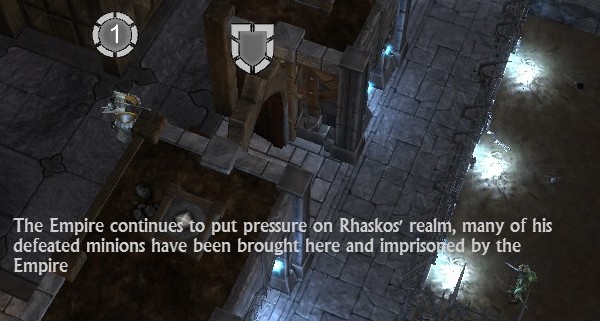
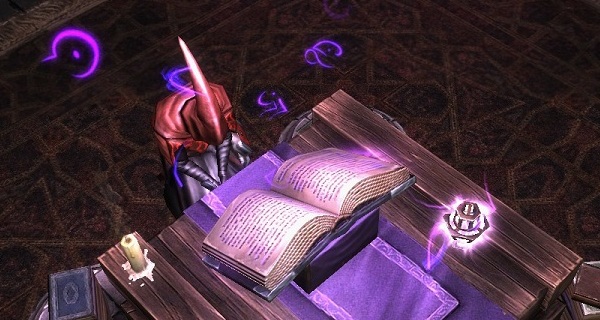
The graphics and visual style are not particularly cutting edge. The dungeon room and creature designs largely feel like an update to the classic Dungeon Keeper. The creature designs are all largely creative and give a sense of character to the monsters, even if they could not use the same ones as from the original Dungeon Keeper to avoid IP infringement. The UI feels a bit clumsy and can become cluttered quite easily with superfluous details.
The narration by Richard Ridings is absolutely spot on. It is a joy to hear him giving audible existence to one of classic gaming’s most (audibly) iconic characters again. Kudos for getting him involved with this title!
Overall
Overall, I was disappointed by War for the Overworld. I felt like the game had a significant amount of promise, but just needed more polish to make it truly shine. The flaws that I’ve outlined can easily be fixed with balance and playtesting. I understand that the game was kickstarted with an aim to finish and release the product before last year, but I feel the game would have done better to remain in early access a bit longer while various aspects were fixed. I hope Subterranean Games continues to support this title and refine it into something amazing (all the pieces are there), but as it is now I cannot recommend it.
Capsule Computers review guidelines can be found here.
The Lykan Hypersport is one of the most exclusive and expensive cars ever to be made with additional options such as embeddable diamonds, emeralds, and sapphires being available and you can own it free in Project CARS as it will be the first car to be given away by developers Slightly Mad Studios.
The Lykan Hypersport is capable of reaching 62mph in just 2.8 seconds with a top speed of 245mph whilst also showcasing breathtaking styling and futuristic technology such as a holographic mid-air dashboard. It is also the first supercar to be produced in the Middle East and is one of the central cars in the upcoming film Fast & Furious 7. Project CARS Creative Director, Andy Tudor, commented:
“We are immensely pleased to have this awesome machine in the game and to give fans the chance to get behind the wheel of a truly amazing vehicle. The Lykan Hypersport represents the first of a series of free cars we’ll be giving away every month as a thank you to our fans for being so patient in the lead up to the release of the game. We’ll have more info on the full schedule of further content for Project CARS soon but we hope that this is a great sneak peek of just one way in which Project CARS is going to expand in the future.”
The constant delays to Project CARS has indeed been a dampener on the hype but excellent news like free content does help. Project CARS is releasing mid May for PS4, Xbox One and PC with a Wii U version in the works as well. Fast & Furious 7 will hit theatres in Australia on April 2nd, one day before the U.S. Before you speed off, be sure to check out the Hypersport in action in the trailer below.
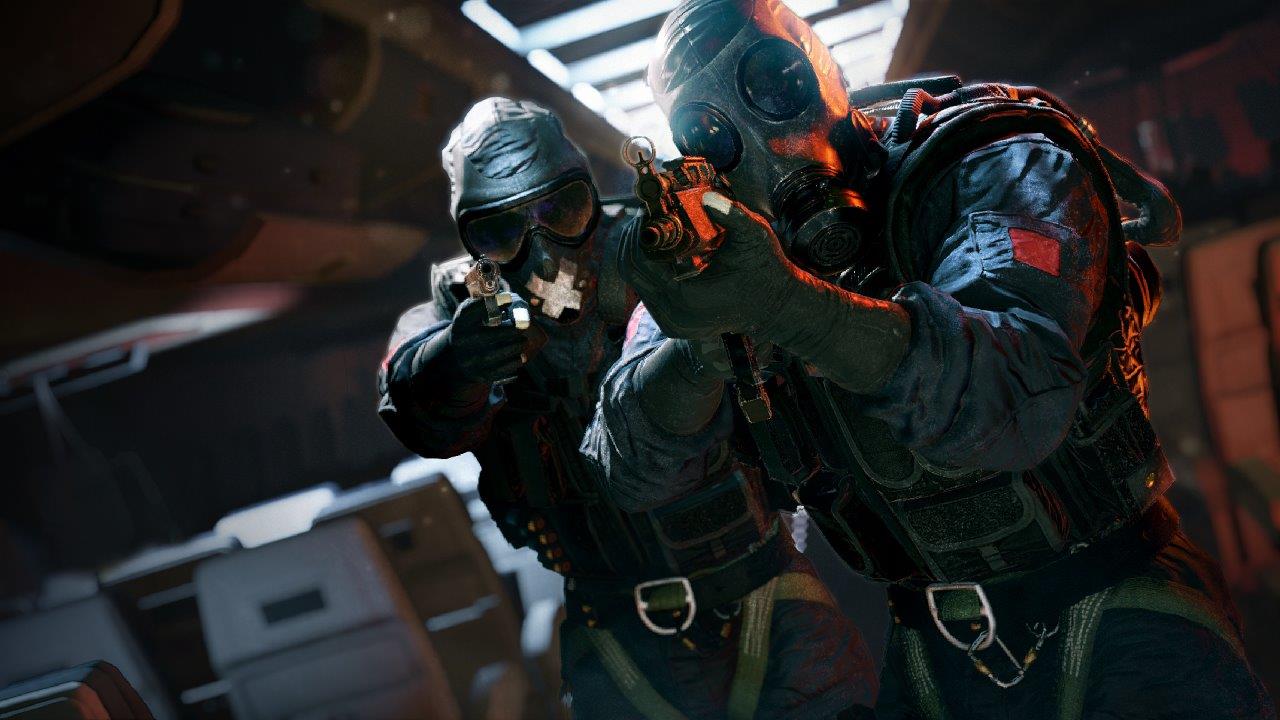
Ubisoft Montreal released a new gameplay trailer and a dev diary of the upcoming title Tom Clancy’s Rainbow Six Siegeto announce the Operators feature. It pays homage to the franchise’s literary roots by allowing players to select from a range of characters with unique skills. The game will offer twenty operators from five counter-terrorist units from around the world. I would not be surprised to see the roster increase in size through content updates or DLCs post-launch.
Each operator has a unique ability, their own personality, personal strengths, and weaknesses. Only one of each operator can be part of a single team, so players will need to choose their operators wisely to create a well balanced team that not only compliments their play style, but also their teammates.
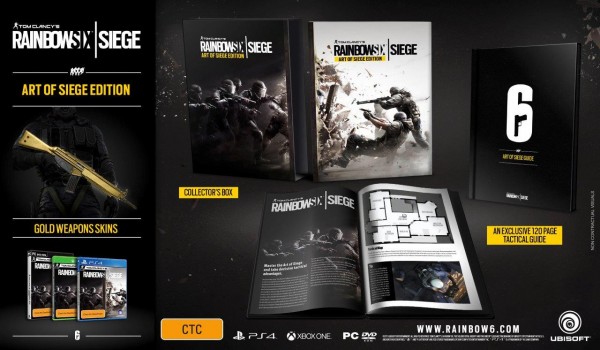
Ubisoft made a second announcement regarding the game, revealing the Tom Clancy’s Rainbow Six Siege Art of Siege collector’s edition at the same time. It is available for pre-order at the Uplay shop and contains the game, a collector’s box, a Gold Skins Pack for all weapons, and a 120 page tactical guide providing vital stats and intel to help players plan.
Indie Gala and Capsule Computers is kicking of another year of Every Monday Bundles with seven new indie games this week. Buyers will snag the following titles for Windows (and even a few on Mac and Linux):
Ostrich Island– MeDungeon have mixed together RPGs, platformers, adventures, and ostriches for one quirky game that may just win your heart.
BiT Evolution– A platformer that pays homage to retro games, going from simple pixel based hockey games all the way to the glory days of the SNES.
SickBrick– A fast paced sci-fi FPS featuring 15 levels, 5 weapons, and a hover tank.
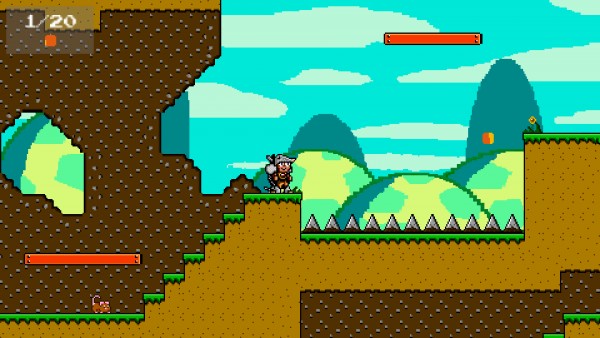
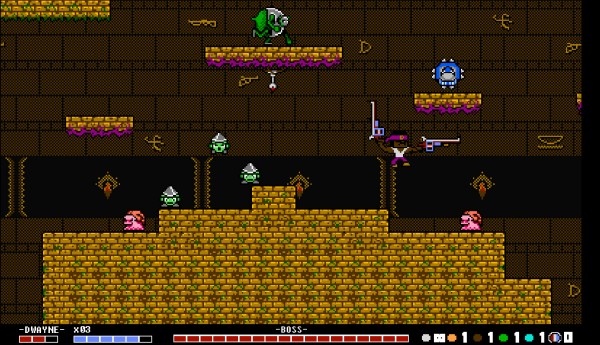
GunWorld– A non-linear action-platformer designed as a love letter to the 8-bit era.
Aviator – Bush Pilot– Players will engage in one of the most dangerous but vital jobs in aviation, flying small planes in far flung places like the Serengeti.
Cahors Sunset– This old French man is entering the sunset of his life and players are in control of the decisions, in hopes of keeping him alive as long as possible.
Chaos Ride– A fast paced racer inspired by the dead genre that was inhabited by the likes of Wipeout and Ballistics.
For the first 24 hours of the sale, all seven games can be purchased for only $1.89 USD. Grab your copy at Indie Gala before the price goes up.
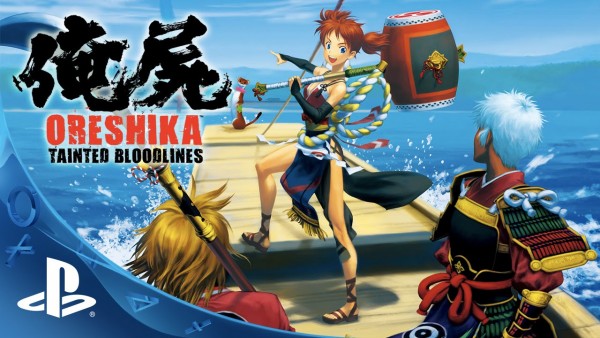
JRPGs have kind of fallen out of favour as of late haven’t they? The old turn-based system that many of us grew up with has been done away with in lieu of a more immediate style of gameplay. However all is not lost, as coming straight from Japan themselves is Oreshika: Tainted Bloodlines, an old school JRPG with a cool family tree mechanic and a gorgeous art style, that is here to show us that the genre is far from dead.
Story
After the capital of Kyoto is ravaged by natural disaster, the emperor believes his kingdom cursed and hires a sorcerer to unravel the mystery. The sorcerer arrives and puts blame wrongfully onto a single samurai clan, and orders them all to be brutally killed.
When the gods intervene and resurrect the clan, they discover that they are cursed, being able to only live a life span of two years while also being unable to reproduce. The gods again intervene, and allow the clan members to procreate with them in order to produce offspring to help find the sorcerer and eliminate him for what he did to the family.
The concept for Oreshika: Tainted Bloodlines is pretty cool and a little out there, but the interesting part about it is how well the storyline is reflected in the actual gameplay mechanics themselves (which I will go into a little later on). However, the fact that you are only with your team members for a short time before they die and are replaced with the next generation means that there is little to no time to become invested in any characters, leaving the whole experience a little hollow.
Gameplay
This is one of those games where the storyline is built right into the game’s mechanics, creating a seamless experience that just makes sense as you play it. Firstly, since the clan members only have a life span of 2 years, it means that your party is constantly changing on your quest to fell the sorcerer who cursed you. Not only that, but you will reproduce with a number of ancient gods and goddesses in order to keep your bloodline alive and fighting fit. There is a strategy to procreating, as the gods all have their own set of skills and abilities that can be used to either complement or balance out the weaknesses of the clan members and create the perfect offspring. There is a bit of a eugenics vibe going on here, but I’m sure we can all ignore that for the sake of gameplay.
Since time is such a key part of the storyline, it is not unexpected to see it integrated into the gameplay in multiple ways. Certain events only happen at certain times of the year, meaning you have to budget the very limited time you have in order to attend festivals, have children, buy items, explore dungeons and fell demons all before your character’s 2 year limit is up.
When a new clan member is born, you are able to select with of the game’s classes they will belong to. There are initially 8 classes to choose from, and the various choices you make affect how affective and synergistic the clan is during combat. The advantage to the system presented in Oreshika is that if your current clan isn’t working out, you don’t have to wait too long before you can fix it up just the way you like.
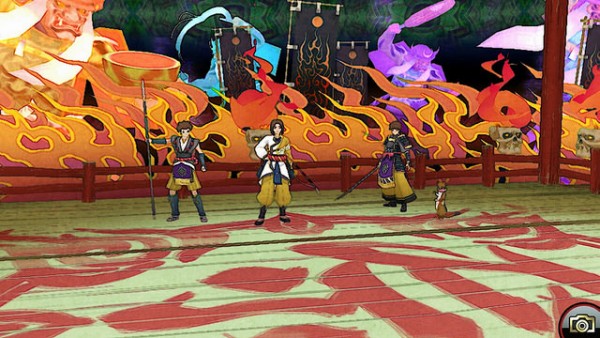
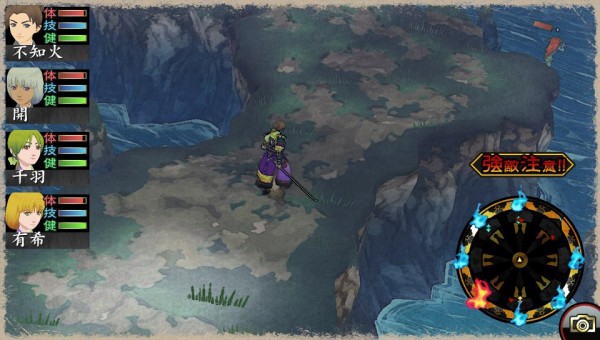
At its core, Oreshika is an old school JRPG with a modern twist. After deploying yourself to one of the game’s numerous, huge dungeons, you will traverse the landscape and encounter random enemies for your party members to do battle against. Battles are done in a turn based style that is rarely seen nowadays, and runs as smooth as you would expect it to. Each of your party members has suggestions about what skills or attacks they think they should use in combat, but as Clan Leader you are free to ignore their advice and command them to do what you want instead. This is a double edged sword because ignoring their advice too often will lower their loyalty towards you, which in turn can have them leaving the clan for good.
Visuals & Audio
The art style used in Oreshika is some of the most impressive and unique that I have seen in a video game. It combines the style of ancient water colour paintings that are synonymous with the feudal Japanese era of clans and samurai, and mixes it with a more modern, anime-inspired look. The two very different, yet both very Japanese art styles blend perfectly and the result looks like an ancient scroll come to life on the screen. One of the cooler things to see is the fact that many attacks are highlighted in what looks like heavy black ink, which makes them pop and contrast perfectly with the otherwise faded watercolour look of the world and its inhabitants.
As for audio, since this is a Japanese game, the language is set to Japanese from the moment you boot up. This will no doubt be a pleasing feature for all of you anime lovers out there who prefer to hear audio presented in its original language. The character voices all suit their roles perfectly, and there is a good mix of voice actors so not everybody sounds the same.
Overall
Oreshika: Tainted Bloodlines is the kind of game that I really like to see; a JRPG with new elements that manages to keep itself fresh and interesting all throughout my time with it. Sadly though, as much as I enjoyed it, the whole experience felt kind of hollow, like I hadn’t achieved anything and there was no real pay off in the end. I think this is largely due to the 2 year lifespan mechanic, since your team is constantly rotating you never get the time to become invested in your characters the way you would in say Final Fantasy VII. However despite this, Oreshika is still an enjoyable game with some really solid, mechanics and an art style that is a real pleasure to look at.
Capsule Computers review guidelines can be found here.
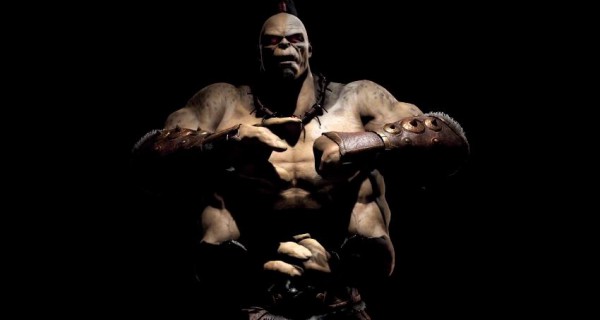
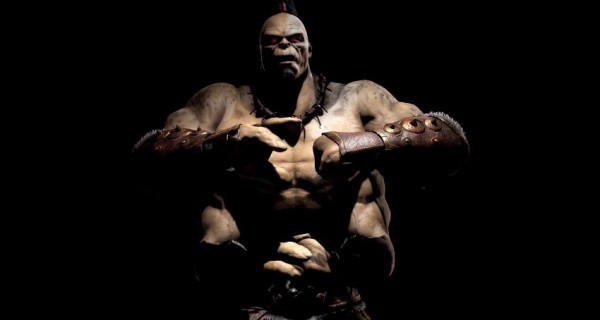
Warner Bros. Interactive Entertainment has debuted the official TV Spot for Mortal Kombat X, coming to the Xbox One, PlayStation 4 and PC April 14 in the U.S., and April 15 Australia-wide. The spot features System of a Down’s “Chop Suey!” and can be viewed embedded below.
Come April 6, the Launch Trailer for Mortal Kombat X will be released, also featuring System of a Down’s “Chop Suey!”, but as a special cut edited by band member Shavo Odadjian. ‘Kombat Kast’ 7 was just this past Friday, with another scheduled for this Thursday. And for anyone who missed it, and haven’t pre-ordered yet, it’s worth mentioning that the PS3 fight stick/s released in conjunction with Mortal Kombat (2011) are forward compatible with the PS4 version of Mortal Kombat X.
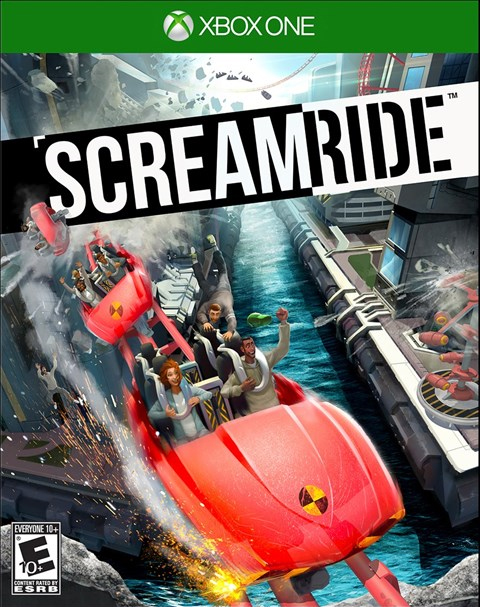
When I first heard about ScreamRide, I thought it was a bit like Roller Coaster Tycoon but reimagined for a new generation. Armed with only that knowledge, I was less than eager for ScreamRide, having never really enjoyed the park management games. However, once I booted it up and started playing, I found an experience that not only WASN’T Roller Coaster Tycoon, but was an incredible amount of fun. No ticket booths or public utilities to worry about here, ScreamRide is a game all about roller coasters…. or should I say, roller coasters and destroying buildings with them.
Gameplay
ScreamRide isn’t just about building roller coasters. In fact, players are able to choose between three distinct jobs within the futuristic setting; Engineer, ScreamRider and Demolition Expert. These jobs are all completely different to one another and in that way it feels like ScreamRide is three different games in one.
Engineer Mode has you building tracks to meet certain requirements, often with very limited resources. Your job is to build the best coaster you can from the pieces you are given, almost like a LEGO set with only the picture on the box to guide you. The game gives you slight hints and tips as to whether or not your coaster works as planned, or sends its patrons hurtling into the side of a building. Hint systems in games can often come across as patronising or demeaning, so I was a little taken aback when one popped up on my screen, however all of the ones I saw more pointed me to which specific piece(s) of my track were giving me grief so that I could fix them specifically.
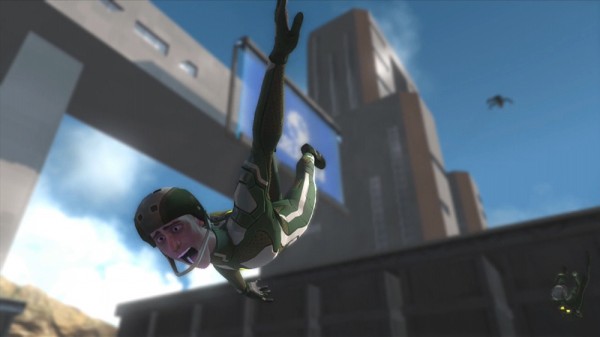
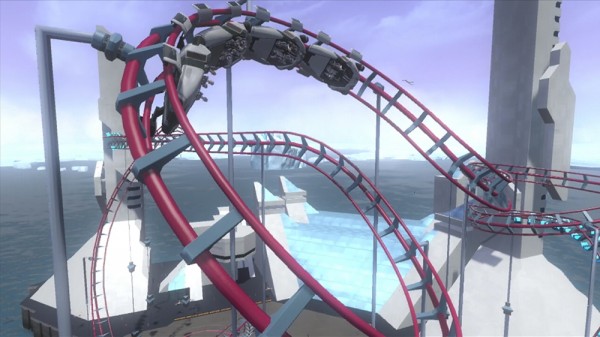
ScreamRider mode puts you in the driver’s seat… literally. You take control of the wild and insane coasters as they go around bends, up steep inclines and upside-down. The goal is to not let the passengers fall off of the track, which sounds easy right? In practice it is a lot more challenging and fun than it seems, having to reposition yourself back on the track and to ensure you aren’t using your boost at a time that will careen you off the track and into the ocean.
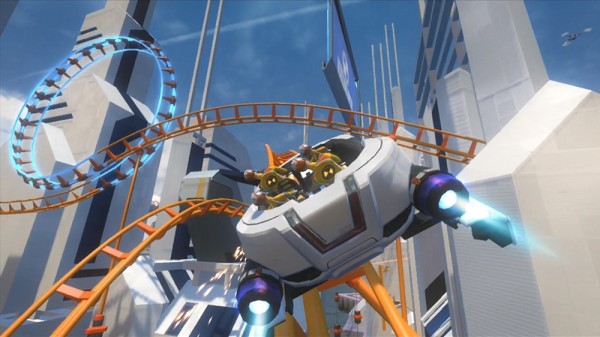
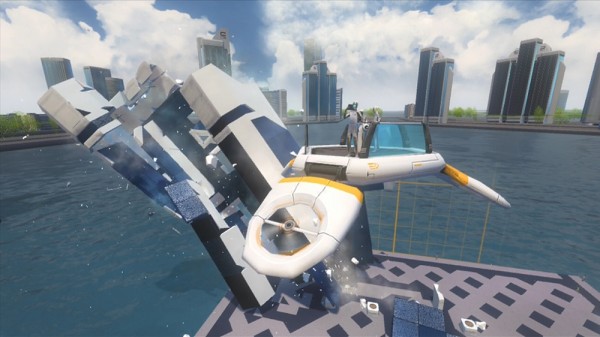
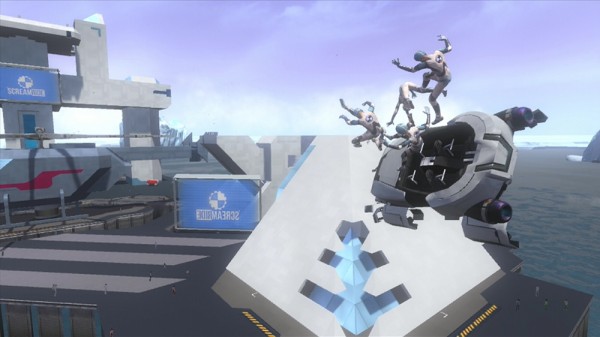
The last game mode, Demolition Expert has almost nothing to do with roller coasters. In this mode, you are tasked with launching spherical cabins filled with people at the roller coasters and surrounding buildings in order to wreck the absolute crap out of them. Think Angry Birds but in 3d, with awesome destruction physics and you have a bit of an idea what Demolition Expert mode is all about. The most destruction you cause, the more points you gain, and everything is connected in one way or another so a perfectly angled shot will cause a chain reaction for an insane amount of points.
ScreamRide features a campaign mode that allows you to experience all three facets of the game through a series of increasingly difficult stages. Each level is broken up into challenges to complete and points to earn. I will note however, that ScreamRide’s campaign has a tremendous difficulty spike towards the end of the game. The last few levels are exhaustingly difficult and downright tedious at moments. However the desire to achieve all of the possible
For those of you who love to build and create without limitations, ScreamRide also includes a pretty awesome sandbox mode where you can create your own coasters, attractions and destructible buildings all from the ground up. The sandbox mode can seem a bit overwhelming at first glance, but the tools are really intuitive and in no time you will be creating and sharing your awesome new creations online.
Speaking of online, ScreamRide doesn’t feature any multiplayer mode. For many of you I know this will be a huge disappointment, but on the flip side – it does contain leaderboards so you can track your skills against other players from around the globe, as well as the ability to share and download user created maps.
Visuals & Audio
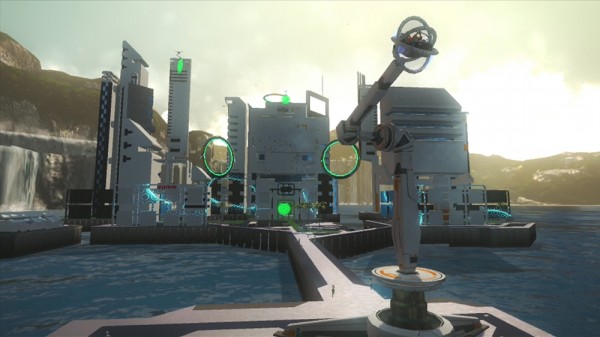
ScreamRide is set is a futuristic wonderland where everything is grey or chrome and looks like it is coming at you straight out of Interstellar or Star Wars. While a futuristic setting normally leads itself to a lot of extra flash and detail, this is the type of game where super high-end graphics aren’t necessary and the developers knew this. Opting instead to scale back and make room for the physics engine, a decision that I believe has paid off nicely for the game as a whole.
The audio is very similar in this regard, most of the sounds you will hear are the riders screaming in excitement (or is it fear?) and the sounds of buildings collapsing. Well that’s not actually entirely true, when you are running through the coasters as a ScreamRider, you will hear the constant almost incessant computerised voice telling you how well you are doing. It gets downright annoying after the first few missions and by the end you’d wish you were just playing on mute.
One thing I noticed during play was that some of the bigger levels suffered from really noticeable frame rate issues. This was particularly the case when causing destruction and toppling buildings, and it really made it hard to enjoy these sections to their full extent.
Overall
I didn’t have the greatest of expectations when heading into ScreamRide, but my misconceptions were immediately vaporised and replaced with high octane fun. Building coasters, racing through them and launching yourself into giant buildings has never been so exciting, and I think I can say that ScreamRide is the most fun I have had with my Xbox One in a long time.
Capsule Computers review guidelines can be found here.