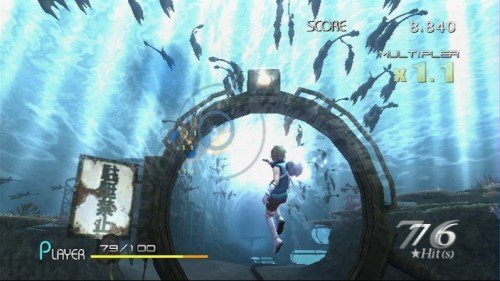

While gamers in North America already knew that Persona 4: Dancing All Night would be released in their region sometime this fall season, gamers in Europe have been left wondering when exactly this unique rhythm game featuring everyone’s favorite characters would arrive on their shelves.
Thankfully it seems that there won’t be much delay compared to their North American counterparts as NIS America has announced that they will be bringing Persona 4: Dancing All Night to Europe sometime this Fall as well with gamers having the option of either picking up the previously announced “Disco Fever” edition or the standard and digital versions of the game.
Back in April NIS America announced that they would be assisting with Love Live! The School Idol Movie‘s limited theatrical showing in the United States. Now the company has announced that the film will be distributed by Azoland Pictures and will start screening on September 12th. When shown in theaters Love Live! The School Idol Movie will be shown with the original Japanese voice track accompanied by English subtitles.
To go along with the NIS America released an English subtitled trailer for the film which you can check out below. As for the theaters and the dates of the screenings, you can check out the list below, or herefor more details, to see if Love Live! The School Idol Movie will be shown at a theater near you.
Tempe, AZ | Harkins Theatres – Valley Art
Los Angeles, CA | Downtown Independent
Sacramento, CA | Tower Theater
San Francisco, CA | New People
San Diego, CA | Carmel Mountain 12
San Diego, CA | Gaslamp 15
Littleton, CO | Alamo Drafthouse Cinema Littleton
Washington DC | Angelika Pop-Up
Honolulu, HI | Ward Stadium 16
Cambridge, MA | Brattle Theatre
Bloomfield, MI | The Maple Theater
Kansas City, MO | Alamo DrafthouseMainstreet
Manville, NJ | Manville 12 Plex
New York, NY | Village East Cinema
Williamsville, NY | Dipson Eastern Hills Cinema
Columbus, OH | Gateway Film Center
Dallas, TX | Angelika Film Center & Café – Dallas
Katy, TX – | Alamo Drafthouse Mason Park
San Antonio, TX | Alamo Drafthouse Cinema Westlakes
Sandy, UT | Megaplex Theatres – Jordan Commons
Fairfax, VA | Angelika Film Center & Café – Mosaic
Indie Gala and Capsule Computers released a brand new Every Monday Bundle today. The indie bundle has a distinctively Japanese theme to it, as it is packed with plenty of visual novels and anime art styles.
eden* – The world is about to end and the only hope for humanity’s survival rests on the shoulders of genetically modified superhumans known as felixes. eden* focuses on the blossoming romance between one of the most powerful felixes and the soldier tasked with guarding her.
Higurashi When They Cry Hou – Ch.1 Onikakushi – This visual novel became so popular in Japan that it spawned an anime! Higurashi mixes a full multimedia experience for an unforgettable ride.
X-Note– Essi is on a quest to solve a murder and possibly unlock the mysteries of the USB key her deceased mother left behind.
Blue Rose – Lena, a knight of the Templar of the Blue Rose, is stuck in a small village in the mountains. Here, she will finally have the chance to become her own woman.
Super Chain Crusher Horizon – An arcade shoot ’em up that is perfect for owners of Ultra Widescreen monitors.
Go! Go! Nippon! ~My First Trip to Japan~ – If you can’t afford a vacation in Japan, then Go! Go! Nippon! will show you the best of what Japan has to offer from the comfort of your own home.
The Clans – Saga of the Twins – A lighthearted point and click adventure/RPG hybrid about Catz, Kitsune, and Xenonight and their wild adventure.
Project Root – A classic arcade shoot’em up updated with modern graphics.
For the first 24 hours of the sale, the entire bundle can be purchased for only $1.99. Be sure to grab your bundle at Indie Gala before the price goes up.
Blockbuster Puzzle Game Will Launch on Apple App Store and Google Play
London, United Kingdom — June 29, 2015— The Pokémon Company International announced today that Pokémon Shuffle Mobile is currently in development for mobile devices and will launch later this year.
Pokémon Shuffle Mobile is a new mobile game where players will battle wild Pokémon with their wits and puzzle-solving skills. By matching three or more Pokémon, players can deal damage and whittle down their opponents. Fans can even battle through difficult stages by using Mega-Evolved Pokémon. Pokémon Shuffle for the Nintendo 3DS family of systems has been downloaded more than 4.5 million times on the Nintendo eShop. Pokémon Shuffle Mobile will be downloadable at no charge on the Apple App Store™ and on Google Play™.
The Pokemon Company International has published and launched several successful apps including Pokémon TCG Online, Pokémon TV, Pokémon Jukebox, Pokédex for iOS, and Camp Pokémon.
###
About Pokémon
The Pokémon Company International, a subsidiary of The Pokémon Company in Japan, manages the property outside of Asia and is responsible for brand management, licensing, marketing, the Pokémon Trading Card Game, the animated TV series, home entertainment, and the official Pokémon website. Pokémon was launched in Japan in 1996, and today is one of the most popular children’s entertainment properties in the world. For more information, visit www.pokemon.co.uk
Overview When the first game in the Hyperdimension Neptunia series was released in 2010, very few people thought that the title would launch a franchise that has seen a total of four main series games, plenty of remakes, an idol spin-off, and even a SRPG spin-off. As such it didn’t come as too much of a surprise when Idea Factory announced that the next spin-off would be an action game. What is surprising is that the title, Hyperdimension Neptunia U: Action Unleashed, would be developed by the Senran Kagura developers Tamsoft. So now that this action game takes our favorite characters and drops them into a battlefield, is Hyperdimension Neptunia U: Action Unleashed worth picking up?
Story While Hyperdevotion Noire was a spin-off title that didn’t require players to have a whole lot of pre-existing knowledge about the Hyperdimension Neptunia series to enjoy it, Hyperdimension Neptunia U is similar to Performing Perfection in the way that potential players should have some knowledge of the game’s characters from the start of the game or they simply won’t be able to enjoy it quite as much.
I say this because very little attention is actually given to the story in Hyperdimension Neptunia U. With the CPUs and CPU Candidates working together every difficult enemy that has risen up in Gamindustri has been defeated. With no strong enemies left to fight and the realm almost entirely at peace, the citizens of the land have grown complacent while the CPUs have simply grown bored.
In an effort to revitalize the citizens’ focus on the CPUs, two journalists, Dengekiko and Famitsu (who are clearly pointed out as characters based off of popular Japanese magazines) are tasked with coming up with articles about the CPUs and CPU Candidates. When approached by these two, the girls agree that they wouldn’t mind taking on a few quests here and there to have some nice things written about them.
That is more or less the entire set-up that Hyperdimension Neptunia U is given. From this point on players are given a large number of quests that can be completed in any order with certain quests resulting in the characters talking with one another after completion or commenting about events that may have happened in a fight. This means that the core of the story is fairly flimsy this time around and as mentioned before, newcomers will be receiving no backstory and very few details about the characters and the world.
Despite being lackluster, the characters still serve as the strongest aspect of Hyperdimension Neptunia U’s story and humor. Throughout the game the characters will break the fourth wall by commenting on the various aspects of the game, such as mocking that the destroyed clothing must be this game’s unique selling point and that they’ll power through it, or when Blanc tries to act out of character in an effort to make herself stand out a little more. These moments do come few and far between but fans of the series will certainly appreciate seeing their favorite characters in new scenes.
Gameplay Almost all of the time players spend with Hyperdimension Neptunia U will be on the battlefield as there is very little to do other than take on quests and battle against enemies. When players aren’t fighting they can access extra scenes for their favorite characters, use basic customization to change the outfit colors of the girls or equip various weapons that can be unlocked with coins earned by defeating a certain amount of the same type of enemy.
Once players do step onto the battlefield they’ll find a very solid title. Almost every character has a completely different move-set (with Ram and Rom being the only extremely similar characters though those familiar with the series should know why) featuring a mix of light attacks and heavy attacks to create various attack strings as well as skills taken from past games that have been reworked to work into an action game such as this.
Players must make use of skills sparingly as they work off a slowly recharging meter that can be refilled quicker by picking up dropped healing items from defeated enemies. A separate meter is used to let players know how close they are to being able to transform into their CPU forms where even Dengekiko and Famitsu obtain new stronger abilities and new basic attacks for a limited amount of time. This meter recharges over time though since players bring two girls into battle, the resting character generally fills their CPU meter faster allowing for quick transitioning or the use of a last ditch skill if used in a pinch.
Those familiar with Tamsoft’s Shinovi Versus will find the combat system extremely similar to that with elements of the Warriors’ series mixed in. Players will enter a stage where they will be tasked with either defeating a certain amount of enemies, taking down a boss, or completing a certain unknown goal that players will have to figure out to complete the mission. There unfortunately isn’t a whole lot of variety to be found in the missions players take on and even though the levels are nicely varied, most of them take place in a single room with very little exploration.
It also doesn’t help that the enemy AI is almost always limited to being rather idiotic. Unless the player is facing off against a boss enemy, standard foes will generally stand still and make the rare attack that can easily be interrupted and even on the higher level missions players will only be punished by attacks that deal large amounts of damage instead of intelligent AI to face off against. Despite these limitations Hyperdimension Neptunia U is a great title to play for a few missions at a time and there are even a few extra modes available once the player manages to complete the game.
Visuals & Audio Hyperdimension Neptunia U: Action Unleashed works quite well on the Vita as not only does the title look great, featuring nicely detailed character models that look just as impressive as they do in the games but almost no slowdown whatsoever, even when the player utilizes their strongest, and therefore flashiest, abilities. As mentioned earlier the levels are a bit small at times but nicely varied as players will be fighting in a variety of stages against a number of enemies commonly found in the RPGs. There is even a nice little touch of fan-service in the game since, as the girls take damage or utilize too many strong attacks in battle, their clothes will become torn. If that isn’t to your liking however, it is possible to unlock clothing that cannot be broken, though on the other side of things there is also clothing made to rip with little effort.
Those who wish to enjoy either the original Japanese voice track or the returning English voice cast will be able to choose as freely as they wish as switching between the dubs is quite easy while the actual performances are what fans have come to expect from the respective voice actresses. The soundtrack is familiar and charming and I must say that the team put in a nice touch of giving each fighter their own unique piece of background music that automatically begins playing when they transform.
Overall Hyperdimension Neptunia U: Action Unleashed is a far different title than fans of the series are used to but this step outside the box is a welcome change that features enjoyable fast paced combat featuring everyone’s favorite characters. While the storyline may be a bit iffy and there is little variety in the missions, there is plenty of fun to be had with this game, especially if you happen to be a fan of what Tamsoft has done in the past and Hyperdimension Neptunia.
Capsule Computers review guidelines can be found here.
It seems like everyone who is 25 or older looks back and sees their teenage years as the best time of their entire lives. Now, that doesn’t include everyone – but the majority of us reflect on our teen years as the most worry-free and least troubling period of our lives as a whole. As a typical teen, you don’t have bills, serious jobs, or serious stress, as your biggest worry is some quick relationship and being able to get to hang out with your friends so new experiences can be had. It’s a hopeful time in everyone’s life, and Hollywood has made millions cashing in on youthful ignorance for decades now.
That is really what the teen comedy is all about. You take an ensemble, put them in situations of discovery, and let the cameras roll as the dialogue tells a story of how others spent their best years throughout high school. Hell, part of being a teenager is watching television as it has been for a long time now, so these little shows that focus on growing up really stick when they’re done correctly.
For this edition of Pop Capsule, we will be grabbing our books and taking a look at the best televised products focused on young adults, with a lot of shows that have now become timeless and branded a good amount of actors into that black hole that comes with the term “typecast”. It’s a fun topic, but the art of making a successful teenage comedy is not as easy as it seems. Join us as we head back to school to reflect on the best shows that display how hard it is to grow up.
I need to start with the biggest pop culture success in television history for the genre before even tackling other shows for this article, as let’s face it, if you are at least 23 years old, you spent your days watching Saved by the Bell during its hundreds of timeslots across various networks. Peter Engel started Saved by the Bell as Good Morning Miss Bliss, a Disney show that focused on a small group of students and their teacher in John F. Kennedy Junior High, located in Indiana. Oh, you thought it was always Bayside? Nope, as what would later become Saved by the Bell was focused on Miss Bliss and her life as a teacher. Miss Bliss was a peacemaker who cared about her students and was just trying to do the right thing with every difficult situation she would come across. Mr. Belding was there, as well as a few other adult regulars, and to be honest, the show was really good. Just after barely a year of being televised, the show was cancelled and rebranded as the Saved by the Bell we all know of today.
Some talk about this as if it was a big deal, but let’s face it – it was not in the least aside from losing the wonderful Haley Mills as a lead. Remember the theme song to this show? Nope? That is because when NBC repackaged Saved by the Bell, they took the entire season of Miss Bliss and put a new assortment of credits on top of the thirty-minute block, making it seem as if this show was the original pilot season for the kids we knew at Bayside high. I’ll speak more on that mess later, as Saved by the Bell is the show we want to focus on now.
Now located in a high school in California by the name of Bayside, Mr. Belding and three students made the transition to Saved by the Bell without losing much of their personality. Sure, Zack earned an odd and fitting ability to freeze time and break the fourth wall, but he was the same cool, confident, and scheming student he always was. Lisa Turtle kept her fashion sense of sorts, while also become a little more high maintenance (seriously though, I feel like she only wore long sleeve sweaters during the first show). Screech remained Screech, serving the purpose of Zack’s right hand and offering a bit of geeky comic relief along the way. The new students at Bayside are what truly put the show on the map, as their chemistry with the prior three is what made this ensemble work. We now have Jessie Spano, a tall and sassy liberal brainiac who was all about informing everyone about her rights as a female. A.C. Slater was the jock, but was not quite brainless and became the first true “friendly” rival to Zack Morris. Then there was Kelly Kapowski, a cheerleader and a “perfect 10” by 1990 California teen standards. Kelly was sweet, sharp, and charming, instantly putting her into the running as one of the first big bombshells of the decade.
Each episode would usually focus around Zack hatching some sort of plan that involved all six teens, while trying to avoid detention or some other sort of trouble from the Principal, Mr. Belding. If that wasn’t the topic, romance was, as Zack was in love with Kelly, and a lot of the time we saw several episodes with him trying to win her over while trying to shake off some other guy (such as Slater or any other guy who happened to show interest) from her affections. As time went on, we got to see more from the rest of the ensemble, learning about Slater’s constant issues with his strict Military father, Jessie and her constant need to be the best, and Lisa’s…shopping problem? Wait just a second before I continue as I want to make one point clear. While these seem like issues that might be serious, the show really never let the mood go into that zone of depth.
Like if depth were in Canada, Saved by the Bell would have ran to Bulgaria and hid in a cabin to ensure depth did not find out where it lived.
I feel like that was why Saved by the Bell was as big as it was, as it was essentially The Brady Bunch of teenage shows. It was at its best when the characters were fretting about one of the several proms that the students were getting ready for (SERIOUSLY HOW MANY PROMS CAN ONE SCHOOL HAVE!) or focusing on getting out of a test, and at its worst when it was trying to be 90210 by focusing on topics such as drug addiction. You remember, don’t you?
She was this EXCITED over caffeine pills. You know, the kind that have been sold over the counter forever now. I think energy drinks would be a bigger issue.
Saved by the Bell was still entertaining during these moments of cheesey depth. What makes it hard to watch is when you discover how much of a mess it was in terms of consistency. Remember when we spoke about Miss Bliss? That is still considered canon, even though the show acted like most of the cast knew each other since grade school. Oh yeah, the fact that it was set in a different part of the country might also raise a red flag. How about when cast members such as Jessie and Kelly would randomly disappear for several episodes and no one mentions their disappearance.
Seriously though, remember Tori who replaced them entirely during the last season, only to be forgotten when both came back to graduate?
Or when Zack is dating Kelly in one episode and then back on the market in the next one. I could go on and on, but you get the idea. Saved by the Bell was extremely bad in terms of writing and it should have been a bomb, but it was so much fun to watch that all of its flaws can be easily forgiven. When you have a show that is at its most popular in syndication, consistency does not matter as the viewer can hop in at any time without feeling that they are missing anything, and that is what makes this little show timeless and something that future generations will be able to enjoy for years to come.
I think it would be best to stay in California a bit for the next show. Peter Engel made a huge success of Saved by the Bell, so why not milk the concept for all its worth? Enter California Dreams. I honestly consider this little show to be the off-brand Saved by the Bell as while some remember it, it forever lives in the shadow of the product that it was inspired by. Much like Bell, California Dreams focused on a clique of teenagers. This cast however were much different as they were more ethnically diverse and to be honest, far more interesting. Instead of focusing on high school antics, this show followed a gifted brother and sister combo who happened to be gifted in the field of music. Add in a few friends who also had random talents for instruments and you have the formation of the California Dreams, a small band who played gigs and dealt with social issues.
I get really frustrated when I bring up this show as no one seems to remember it, even though it usually ran right after any re-run of Saved by the Bell. It had better writing, the topics were more diverse and the show never seemed to retread over the same territory. There were not a hundred school dances and the school was not even on display all that much, as most of the time the main setting was band practice or at the local eatery where most of the gigs took place. The teenagers were just far more varied, helping the show last for five seasons (which is long in teen show years). Tiffiani was the sporty blonde who played bass, Tony was the goofy drummer, and Jenny and Matt were siblings who sang lead and played piano. There was also Sly Winkle, the con artist cheeseball who happened to be the manager for the band. After just one season, Jenny left the show and was replaced by Sam, a foreign exchange student from Hong Kong with NO ACCENT who came to live with Matt’s family.
Oh yeah, she could sing as well – which was ever so convenient.
The second season also brought in Jake, a biker who had the leather jacket and slicked back hair routine going in full effect. Jake fell for Tiffani as well, which was probably the main relationship that was featured other than Sam and Tony. By the third season, Matt moved away, leaving Sam to stay with a new Italian cast member named Lorena – who became the band’s first groupie and later went on to date Sly. Matt was replaced by Sly’s cousin “Mark”, and while a lot of fans mourned the loss of the lead, I think the change actually improved the dynamic and chemistry between the cast.
While there were adults from time to time, there was never a voice of reason like Mr. Belding. That being said, the themes in California Dreams were far more mature than anything Saved by the Bell had displayed during its entire run. Instead of caffeine pills, we had one episode where Tiffani gets addicted to steroids so she can get better at volleyball. We also saw issues with racism, death, and divorce. This was pretty heavy stuff for someone to watch while he was in elementary school, but the fact that every episode ended with the band performing a song usually pertaining to the lesson of the day kept it from going off the edge and losing its light and airy charm. A lot of shows with a young audience try to involve music. California Dreams was special because it revolved around a band, but never sold out to a marketing craze that would pull all of the focus towards that topic. It is a rare thing when subject matter can be centered in any teenage comedy, but for a show with quite a few cast changes, I have to give it to California Dreams as its legacy will always be the “better” show that was hidden underneath its predecessor’s large shadow.
Go ahead, find some episodes on Youtube. They’re all there. Just don’t blame me for the cringing you may do to some of the featured songs.
One thing I used to get really annoyed with during the 2000’s was the heavy influx of shitty, scripted reality shows focusing on one rich girl in a big city. Laguna Beach brought a lot of shallow crap with it such as The Hills, The City, and so on, and don’t get me wrong, I am not an asshat. I understand there were girls and there still are girls and guys alike who were massively entertained by this. I just found those shows to be tacky and very materialistic, despite the amount of attention they received weekly. One teenage girl about ten years before all of that noise showed us how it was done by being herself. Whoa, that was terrible, and saying “Whoa” is half of what this little number is known for.
Blossom was about a girl who was your standard, awkward teenager. She wasn’t a stereotypical model, but instead an intelligent young woman who still managed to remain charming despite her own shortcomings. This show was like a good amount of television shows that feature kids Blossom’s age, but was layered in depth by the surroundings of reality. You see, Blossom and her friend Six seem rather normal, but Blossom’s family was far from traditional. Her dad was a divorced and struggling musician. Her older brother was a recovering alcoholic and addict, and her other sibling, Joey, was just the dumb other brother used as comic relief who would later find fame through that cheap catch phrase that made him and his brothers all-stars shortly after (you can cue the “Whoa” to play in your heads now). What made the whole program work was that even though Blossom should have been miserable, or torn, or broken – she was the complete opposite. She was able to be there for her dad as he went through relationship problems. She was there for her brother during a relapse. Blossom was televised proof that there is normalcy in chaos, and despite what cinema may teach us – you can still be a teenager while going through life’s bullshit at an early age with a bit of focus. The best quality of this quirky teenager? She didn’t whine or feel sorry for herself about any of it and still managed to do everything a teen does during her years of angst. This is also the show that coined the phrase “a very special episode” due to its tackling of major social issues such as addiction, rape, and puberty.
I would honestly say that for its time, Blossom is definitely one of most well written television shows to date for its little genre, as it was a teenage comedy that still managed to appeal to a primetime audience. Remember when we just talked about Saved By the Bell? It tried to survive in a primetime slot during “Saved by the Bell: The College Years” (which was still entertaining, mind you) but died because it couldn’t create an adult storyline with that same “silly” cast. Blossom had all of the tools to do that with ease as it remained wholesome, serious, comical, and appealing without losing its core, and as Blossom grew, the show simply got more material to work with. I also feel like Blossom ended on a perfect note. There was no attempt at viewing a college life. There were no spin-offs. Instead, she graduated high school, and that was that. We tuned in to see a teenager approach a not-so-perfect life with a chipper personality, and that is what we got for five years. When it was time for her to move on, it was time for the curtain to fall as we got to see her make it through her teenage years with that same smile and sparkle in her eye that was featured all the way back in the pilot episode.
I feel like Blossom or the legacy of the television show Blossom does not get the respect it so widely deserves. So many teenage shows of today have to throw some huge ass plot twist half-way through a series to keep it interesting. Oh, these characters are growing up? Here is a cousin that is younger to mix things up. Or here is an unexpected pregnancy, or a death. Chew on that, teenager! Blossom grew up while her immature family grew up with her, and when your show doesn’t have to rely on some overused trope, you deserve some credit. I will say that not all of these mid-series additions are a bad thing such as the examples I used, but when you make characters that can carry over a hundred episodes of a teenage comedy without resorting to a jump of the shark, then you definitely earned a pat on the back for a great run.
I can’t finish up this list without stating the “other” great primetime teen comedy of the 90’s. If you had the television turned to TGIF on a Friday night, you know all about the little show that followed Family Matters weekly. Boy Meets World Is probably the most loved of all of the teenage comedies that have ever existed, as its quality was met with the ability to still stand the test of time. The show was centered around a young Cory Matthews, who was extremely average. I know some people consider this more of a coming of age sitcom– rather than a teen comedy, but Boy Meets World gets lumped in the latter because it transformed from one genre to another.
Being honest, its greatest feat is also my biggest critique of the program. Boy Meets World started out as a family sitcom focused around a boy and his family. Sure, the school sessions were there and extremely charming, but we still got a few more storylines about the parents trying to pay bills and keep their job than Cory’s awkward love life. Well, that is how it started. When the second season hit, Topanga, Cory, and Shawn all hit Junior High to focus on life’s huge problems when you are 13. The centerpiece of the show went from the Matthews’ home to the hallways of the school, and Mr. Feeney made the transfer as well. Saved by the Bell did this transformation that we spoke of earlier, but it is easier to forgive the inconsistencies of Boy Meets World as it was a fantastic show and the changes only strengthened it. Topanga probably went through the biggest change that a lot of fans seem to point out when they make their little crappy commentary, trying to think of something negative to say about us adults who still love this show with our “nostalgia goggles on”. Sure, she lost the values that her family taught her as well as her “weirdness”, but that was ok as the show took a moment to address it. Kids grow up and change with their surroundings. Topanga did the same. Shawn Hunter was our troubled youth, and by bringing in storylines about a broken home to young adult television – some kids could finally relate and feel that there were other families out there that were not perfect. Seriously though, some kids don’t have a mom and a dad, or the picture of happiness, and Shawn was one of the first of his kind in this realm of television.
You can still be normal without being normal as the only person’s perception of normal is your own. That sentence can be used to describe more than Shawn’s family problems, as it honestly is just as relevant when speaking about every character in the show. Cory went through puberty, relationship issues, countless tests, innocent fears, and so on – but still seemed extremely human throughout. Boy Meets World wasn’t exactly smart television at all times, but it was a blast to watch and always remained entertaining throughout each episode due to its cast and sharp writing. Do I think Minkus would have made the show better if he stayed? Sure, but the character would have easily feel into a trap where he very well could have been the Steve Urkel that took over everything.
Boy Meets World is still talked about today as I feel a part of everyone who watched it religiously as kids has stuck with them as adults. Every episode had a life lesson. Every kid had their own tale, and even though they turned some characters into terrible comic relief (Eric….talking about you here), we still got to see a more direct point of view on the world from someone a little closer to our age.
I want to say Girl Meets World will be the same, but honestly I don’t see it being nearly as loved by its intended audience compared to the way that myself and countless others feel about the original product. Girl Meets World is one part fan service, one part great television, and one part nostalgia. If Marc Jacobs would have created a whole new family to focus on other than Cory and Topanga’s kids, then sure – it could have found its own feet, but as of now (I think we are in the second season as of this writing), it seems like it will always live in the shadow of Boy Meets World. People should be excited to see a future episode list and wonder about the future for Riley (Cory’s daughter) and her classmates, and not if Angela or some other former castmate will come back. That small rant aside, its still a fun show to watch – but it has GIANT shoes to fill if it wants to be half as captivating as the high school program that defined late 90’s television for my generation.
How to Rock was cancelled after one season. Why? It was terrible.
I watched a ton of other shows that were fantastic high school comedies – or high school centric growing up that almost got featured in this piece. Welcome Freshman sort of comes to mind but I don’t remember it all too well. The Secret Life of Alex Mack and Clarissa Explains it All were more about the characters and not the setting so I didn’t think either fit (I mean, Alex Mack could should lightning out her finger. Relate to that, will ya?). Some are also terrible and are better not mentioned. Hang Time, Saved by the Bell: The New Class, and many more fall into the category of “meh” as they never really clicked with me. Those who watch more recent Disney and Nickelodeon live action shows, well – those usually suck. Most of the time the school looks like it is for the rich, and while I am sure that is a demographic, I really feel old and out of place watching kids walk to a juice bar in their school while trotting down the hall with an iPad in their hands.
The biggest problem with the modern take on the teenager is there is no room for laughs and normalcy to run parallel at the same time. It is one extreme or another. You have Degrassi and those serious high school soap operas where on every season finale a character gets murdered, pregnant, or aids – or you get these absolutely fucking stupid shows that cash in on geek culture and character tropes, only offering the same quick joke over and over before they eventually get cancelled (that one was for you, Nickelodeon). I think it would be good to make high school the setting for a comedy yet again, but it has to be done right. It has to be interesting, feature an ensemble that works off each others strengths and weaknesses, and most of all – it has to be human. Make your characters care about one another. Maybe one day we will get another Boy Meets World, or a Blossom, or even something like Saved by the Bell that flourishes in its own bizarre pacing and humor, but until then – high schoolers of today are better off grabbing some DVDs and getting some education of what real television could be like.
So after hearing that Gearbox were working on a new title which wasn’t Borderlands, I was eager to take a looksies at Battleborn at the 2K E3 stall this year. I moseyed on over and had a look at what they had in store. This game is slated to be a FPS MOBA but I was not given the opportunity to give that side of the game a try. Instead, what I was able to see of the game was more focused towards the universe and the story mode.
Before we sat down to play the game proper, we were given a presentation by one of the developers from Gearbox software on the backstory of the game. It turns out that the universe of Battleborn is surprisingly grim and deals with the heat death of the universe itself as what remains of organic life have gathered around the last remaining star in the universe. Various factions wish to either preserve, study, or destroy the star for their own reasons which invariably leads to conflict.
This premise, although grim does lend itself to having a diverse roster of disparate characters with the game apparently featuring 25 altogether. From the looks of things, I kinda get the feeling that maybe the guys at Gearbox decided to bring out every character concept they ever had to feature in this game… which isn’t necessarily a bad thing but it can mean that the broad focus makes some characters less fun than others.
I found this to be the case to a certain extent with my playthrough as out of the two characters I was able to play, I had much more fun with one compared to the other. The gameplay and aesthetic is very reminiscent of the Borderlands series as the emphasis for most characters is to run-and-gun around the map to complete objectives. The level basically involved us moving from area to area, clearing out enemies and in the latter half; playing escort to a giant mechanical spider-drone.
The first character I played, Miko (a sentient mushroom being and healer), was quite good in this regard as I sped around the level healing other characters. The controls were responsive and enjoyable, even though I am a very infrequent console gamer. Movement was fast and fluid as I jumped my way across the map. As the level progressed, I unlocked various passive bonuses to complement my active abilities. For example, with one level up I was given the option of either being able to increase the rate of healing I was able to do or to increase the damage of my poison attacks. I chose to largely play my character as a support and so chose to specialise myself in ways that would help my allies.
The second character, Montana (a gun-toting, musclebound bruiser), did not nearly feel as fun to play. Although I was nominally meant to be a damage-soaking tank, my drastically reduced speed meant that I could not manouever myself into position for enemies to target me. By the time I had placed myself in such a position, most of the enemies were dead. The minigun weapon I was equipped with had an over-heating mechanic which meant that I would frequently become ineffective at long-range due to it’s low-threshold for over-heating. It wasn’t until late in the level that I unlocked a passive ability which allowed me to fire the minigun while overheated in exchange for damaging me.
Overall the game was enjoyable. The characters are eclectic and interesting, although some are more fun than others. What I could see of the game’s writing was also enjoyably silly with a similarly Borderlands vibe. In the end, I will admit I am looking forward to this game’s release.
Total War is the newest entry into the Total War series by Creative Assembly. The installment deviates from previous titles by being set in the fantasy Warhammer setting rather than a historical one. As a fan of both the Total War series and the Warhammer IP, I was very interested in seeing what I could about this new game at E3. After watching through the demo presentation, I was given the opportunity to have a sit down with the Total War:Warhammer Battle Designer, Simon Mann, to talk about all things grim and greenskinned.
With the announcement trailer you guys indicated that you guys would have four factions with the Empire, the Vampire Counts, the Dwarves and Orks making an appearance. How do the different armies play on the battlefield?
Yup, that’s correct… we call them the ‘greenskins’ though.
A bloodthirsty rose by any other name…
So basically one of the big things we wanted to do with this is that we’re concentrating on a small number of factions and trying to bring them as much depth as we can. Every faction in Warhammer is very different to play and that’s part of the joy of playing the tabletop game. You pick your faction and they have a playstyle you can go with and we’ve really tried to take the spirit of that and this isn’t just in battle but in campaign as well, but I’ll go on to that in a sec. So through the battle side, as you saw in the demo, you have the Empire who are the bastion of humanity, as it were, in the Old World so you’d see lots of units that would be more recognizable to Total War players. You have things like Halberdiers, spearmen, swordsman, heavy cavalry, ranged cavalry, rifles… but then you’ve got some slightly unfamiliar units as well such as the Luminark of Hysh, the steam tank, and then you have the leader, Karl Franz, on a gryphon called Deathclaw which is his own special mount which he has unlocked through the campaign. So you see that they play kind of like a more traditional human faction and they’re very balanced so you can do quite good things with them. You can build lines, you can back them up and build multiple rows. You can then have your cavalry doing flanking charges. They engage in a more traditional approach- like a hammer and anvil- so they play in that style.
Then you look across and you’ve got the Greenskins. They’re nothing like anything you’ve ever seen in a Total War game with different sizes of units, different heights, different numbers so you go from tiny little goblins to the orc boyz and you go all the way up to big trolls, who vomit acid up on people, and then giants! These are their more end-game units and this quite a late battle in terms of campaign. The Greenskins really rely on their big tough units who really hit hard but their main thing is sheer mass. They’re about being attacked by a HOST of Greenskins and once again this comes back to the difference in gameplay when you compare the factions on a campaign level as the Greenskins have something called the “WAAAAGH!”. Basically; greenskins don’t like losing battles and they hate it so much that they don’t want to follow anyone who loses. So as playing through a campaign and if you have a warboss who keeps winning battles then orcs will start coming to them and you end up having this giant host called a “WAAAAGH!”. Basically he’ll be really powerful and just have so many troops at their beck and call that they can kind of steamroll across the map. But on the downside is that they also have something called ‘animosity’ which that as well as not liking losing they hate each other. Greenskins if they’re not fighting someone else they’ll fight themselves as they just have to be hitting things constantly. So as I said if you slow down or start losing, the animosity starts to kick in and then suddenly you’re losing those units.
Well that’s very Greenskin of them… And with that in mind: in the tabletop version, Greenskins can also suffer from animosity in the middle of battle with regiments picking fights with each other and themselves, will this also be the case here?
Since we’re very much a Total War game we’re trying to take the spirit of the tabletop and that spirit we’re going to spread that across both the campaign and the battlefield. So animosity for us we’ve really portrayed as a more campaign specific mechanic in the same way that the “WAAAAGH!” is a campaign specific mechanic as opposed to a battlefield one. I think we’ve really taken a nice thing and taken the spirit and tried to spread it across the whole game. With Warhammer there are a couple of examples but it doesn’t really do campaigns strictly as a core feature so we’ve been able to take the spirit of it rather than directly copying and pasting. So we ask ourselves how do we make this just like it would in the game but fit it into the Total War medium.
So you guys have shown us the demo featuring the Empire and the Greenskins in the battle of Blackfire Pass, but can you tell us anything about the Vampire Counts and the Dwarves?
So I would love to tell you all about them but unfortunately we’ll be doing a seperate reveal for them at a later point, but I can say that they will be just as varied. Think of the demo being more of a statement of intent where we’re saying: look we’ve got this human faction and then you see the greenskins who are like nothing you’ve seen before. With the Dwarves and the Vampire Counts you’re gonna get that same difference and there’s gonna be that much juxtaposition between all the different races on both the campaign map and the battle map. If you imagine what the Vampire Counts are like in the tabletop game then you’re kinda starting to see what we’re going for.
Well I certainly look forward to hearing more about them. We know that there are four races (so far) slated to be in this title, Chaos was strongly suggested as having a presence in the game in the announcement trailer. Can you tell us a bit more about that?
I think you can’t make a Warhammer game without Chaos being involved somehow but once again we’re keeping things under wraps for now.
Dang, another locked door. You mentioned before that the Greenskins have the “WAAAAGH!” as a special resource. Will the Empire and the other races have similar unique mechanics when it comes to the campaign?
They’re all different. We’ve got lots of mechanics that Total War players will recognise certainly and they’ll be really familiar with things like diplomacy, politics, etc. They’re all going to be making comebacks in certain forms but different races have different levels of these. The Empire is very much a courtly- princely haven for intrigue with Karl Franz himself not being the first choice to be Emperor and not everyone is particularly happy that he’s landed the title. He has to deal with the internal politics and the struggle in the Empire. This is kind of where the Empire’s core comes from and they’re very much a more traditional style which is more in keeping with a Total War faction.
Whereas Greenskins of course, as I was saying, they don’t care about stuff like taxation. They are all about raiding cities, destroying their enemies and fighting battles. That’s how they keep themselves going and that’s how they progress and start to kind of expand their holdings as it were to become a larger faction. Whereas the Empire would be a lot more traditional where you’re building up your infrastructure and researching through your tech tree and then expanding outwards.
Also, this is the first game in a trilogy and we’re going to be expanding out with multiple expansions, DLCs, Free-LCs and all that coming along.
So the two other titles in this trilogy will be expansions?
Yup. So basically the idea is that they will be standalone so you can just buy one of the three but if you bring them together they kind of form up. The world and the things in it start expanding massively which is something we’ve never done before and is totally new for us.
So where will the map be focused in the base game?
So, since we’re starting off with the four core factions, we’re going to start off with the Old World and that’s kind of the traditional core of the Warhammer world. So you’ll have the Vampires, the Dwarves, the Empire, and the Greenskins all fighting for dominance in that space. It’s kind of like a melting pot where everything begins and as the expansions start to come out, we’ll start to spread our wings, as it were, geographically and increase the map size.
So with the expansions and the base game, the map should become pretty huge?
Absolutely. These aren’t just seperate maps, they link together.
So how will diplomacy function between the races considering vast differences between them? Will certain races negotiate better with others like the Dwarves and the Empire? Can one reason with an orc?
Yeah, yeah! There’s going to be diplomacy between factions to a certain extent and we’re setting it up. The Empire and the Greenskins- they do talk, this isn’t something that’s totally not allowed… but they do hate each other. So if you really want to put in the quite punitive resources to broker a peace agreement between the Empire and the Greenskins but… Orcs are orcs man, they’ll be like “yeah we’ll take that money” and in a couple of turns they’ll be back for you.
So yeah, if you want to do, you can. We are at heart a Total War sandbox and we’re really trying to push that. So we don’t really want to cut options away from players and we want to add as many as we can and then add the flavour of the Warhammer lore to go along with that.
Well, I guess it’ll be interesting to see if I can talk my way out of an Greenskin invasion during a full-blown “WAAAAGH!”. You guys have stated that in addition to the named heroes like Karl Franz and Grimgor Ironhide that the player will be able to recruit minor heroes as well. I’m guessing these heroes aren’t going to be as powerful as the big guys-
Ooooh no. Karl Franz is pretty dominant on a gryphon…
Well, putting the flying death mount in the corner for a moment, how would they rank up against them? How do they rank up against the rank-and-file trooper?
So you’ll have the traditional ability to see their unit stats and gauge them that way. That’s a given. These guys are your agents on the campaign. These heroes are doing missions for you on the campaign similar to the way you would have had spies and stuff in previous Total War games. So like wizards, the witchhunters, and the warrior priests are all your campaign undertakers basically. They’re not strictly a military unit and they can going off to perform their own things. They’re in an individual in themselves but when they’re attached to the army they come into battle and all of these characters have their own skill trees and it’s probably the most exhaustive skill tree that we’ve done to date.
So you’re getting a very light RPG feel to it so you’re expanding their skill trees to expand their campaign efficacy or you can go down the route of expanding their battle efficacy. So they can start out quite vulnerable in battle but through your choices of what skills to level up maybe they become not quite the best at all their campaign things but are really amazing in battle. And you can bring them and they will be able to have a greater effect with unlocked skills. This includes things like mounts and special attacks.
So I was able to spot a warrior priest of Sigmar and a Witch Hunter in the demo, and I’m guessing that these guys will be spreading the word of Sigmar and fighting back the corruption of Chaos, as Witch Hunters do, can you tell us a bit more about that?
They’ll be doing lots of different actions and will definitely be very different for each character type. We’ll be doing campaign reveals as we go and you’ll be able to see what they do. Each one of them has a very specific role in the campaign and every faction will have different numbers of these kinds of hero type units which they’ll be able to utilise. Like for example with the Greenskins who had two shamans shown in the demo. They’re heros on the campaign map and they bring lots of new abilities like the spells and stuff like that. Each one fulfils a very specific role in there and it’s another way we’ve been able to take the Warhammer lore set and actually bring it into the gameplay.
I think this is another thing as well where we’re kind of merging the line between campaign and battles a bit more. With things like the quest battles, this is something you take on the campaign map and you undertake a quest where you have to complete a number of missions. It’s another great way that we can let you know about Karl Franz’s history or Grimgor and his narrative. As you play through though, they always culminate in one of these major quest battles. In the demo, the battle is for Ghal Maraz, the warhammer, which is the whole game basically. So if he wins, Karl Franz will get this unique weapon which is just for him so it’s a way for us to tell stories but it’s also a way for us to merge campaign and battle. Blur the boundary between the two of them a bit more.
Will others heroes also be able to acquire powerful weaponry and equipment?
Totally, when you’re fighting and winning battles you’ll start unlocking loot and magic items. Completing other objectives on the campaign map will give you items. These can be traded between your heroes and lords and given or equipped. You’ll very much be equipping your lords and heroes as well as upgrading their skill trees and that way you’ll be crafting your own character. But the interesting thing is of course that these characters are also vulnerable, they can die.
The named lords like Karl Franz and Grimgor are immortal characters, they simply get wounded and come back since we really think they’re core to what makes the world the world. The heroes that you recruit they’re totally perishable. So using your celestial wizard goes into a bit of a risk reward management. If you bring them into battle and they somehow die, you’ve lost a character which you’ve spent maybe fifty to sixty turns on the campaign map building up and expanding. But to balance this out they’re really powerful and you want to bring them in and use them.
So we keep coming back to the Celestial wizard, but are there going to be any other schools of magic present in the game?
Yup. We’re gonna have lots of spell lores, all of which come from the Warhammer universe so we’ll be bringing them in. Races will have multiple spell lores available to them and multiple spell casters that can cast in those spell lores. So it’s definitely something that we’re going to have.
Can you tell us about any of the other unique heroes which will be present in the game?
I think the game is set around the year 2025 so it’s just after Karl Franz has become Emperor. So you’ll be seeing characters from around that time period. Mannfred Von Carstein will be leading the Vampire Counts, Thorgrim Grudge Bearer will be leading the Dwarves and there will be more characters coming out as go.
Sweet. Thank you very much for your time.
If you want to read more about Total War: Warhammer, feel free to have a look at my recount of their presentation here. You can also find a review of the recent installment in the Total War series here.
Outright I will say that I am a huge fan of both the Total War series and the Warhammer IP. For a long, fans like myself have dreamed of the two coming together in one glorious package. Earlier this year, such a dream was announced as becoming reality with Creative Assembly officially announcing that they were planning on releasing Total War: Warhammer. I was able to attend a hands-off demo at E3 and I spoke with one of the devs, which you can read about here, but for now we’ll focus on the demo…
The demo itself focused upon the battle of Blackfire Pass which itself is slated to be the culmination of a quest line for the Empire with a victory resulting in Karl Franz gaining access to Ghal Maraz (a powerful magic warhammer) as well as other “fat loots” as the developers described it. I imagine these questlines will run along a similar format to the mission system in Total War: Rome II but with a greater focus on narrative.
In this particular instance, the Empire were forming up against a horde of monstrous Greenskins led by Grimgor Ironhide. The camera panned across the pass and we were given close-ups (for a Total War game) of the units assembled. The Greenskin forces were an eclectic mix of orks, goblins, giant wolves, giant spiders, and giant… giants.
The Empire side was composed was composed of far more traditional (for a Total War game) units of human infantry, spearmen, and handgunners. Alongside artillery and a steamtank, these units came together to form a line against the horde.
In short order the Greenskin horde came crashing into the Imperial line with Orks and other beasties barreling into the human regiments to send men flying. Overhead, Karl Franz and his gryphon were in a deadly aerial ballet with an Ork warboss atop a wyvern.
It was at this point that the Empire pulled it trump card and flanked the Greenskin forces with outriders, knights, and demigryph knights. As these units broke cover and charged, a greenskin shaman cast a powerful spell called ‘Curse of the Bad Moon’ which effectively destroyed and routed the unit of outriders.
In the final stages of the demo, magic was let loose with spells flying left right and centre. A particular highlight for me in this magical exchange was a Greenskin shaman summoning Gork (or was it Mork?) to smash down on the Empire artillery and destroy the steamtank. The final closing spell was cast with a celestial wizard calling down a comet of Casandora onto the battlefield.
The demonstration was certainly interesting and it serves as a good proof of concept that Creative Assembly is adapting the world of Warhammer Fantasy to the Total War formula. The spells and aerial units are new and interesting to see. It was disappointing not to be able to see any of the campaign and I am skeptical of any ‘gameplay footage’ I see which is this carefully choreographed… but I am still eager to hear more. Until then, colour me ‘interested’ in Total War: Warhammer.
A COLLISION OF MANGA AND ANIME WORLDS DEBUTS IN THE WEST WITH BANDAI NAMCO ENTERTAINMENT’S J-STARS VICTORY VS+
Celebrate 45 Years of Shonen Jump and 20 Years of V-Jump Magazine with an All-Star Blowout of Famous Manga and Anime Characters
Sydney, June 26th – Leading digital entertainment company BANDAI NAMCO Entertainment Europe today announced that J-STARS Victory VS+ has launched in Europe, Middle-East, Africa and Australasia for the PlayStation®4 computer entertainment system, PlayStation®3 computer entertainment system, and the PlayStation®Vita handheld entertainment system. The game features an eclectic mix of manga and anime characters from over 30 different Shonen Jump franchises including ONE PIECE, NARUTO SHIPPUDEN, BLEACH, DRAGON BALL Z, Fist of the North Star, Assassination Classroom, etc.J-STARS Victory VS+ is one of the most ambitious manga and anime focused fighting games to ever reach Western videogame fans.
Developed by Japanese videogame studio Spike Chunsoft, J-STARS Victory VS+ delivers an incredibly robust roster of characters to stage epic battles through a variety of manga and anime worlds. Players can choose to begin their J-STARS Victory VS+ adventure from a multitude of game modes including; J-Adventure Story mode where players battle in different manga and anime environments to determine who is the strongest character, 2-vs- 2 Team Battle mode that allows up to four players to form teams to battle for bragging rights, and an exclusive Arcade mode for Western audiences that will deliver quick classic arcade style one-on-one matches.
“In the realm of anime and manga based videogames, J-STARS Victory VS+ is one of the most unique and ambitious undertakings ever. The fantasy of pitting so many anime characters from different worlds in one arena of battle has finally come true: the fates of the J-STARS Victory VS+ characters are now in the hands of Western anime and manga fans.” said Herve Hoerdt, Vice President of Marketing & Digital at BANDAI NAMCO Entertainment Europe
J-STARS Victory VS+ is available now in retail packaged form and digitally throughout Australia and New Zealand