

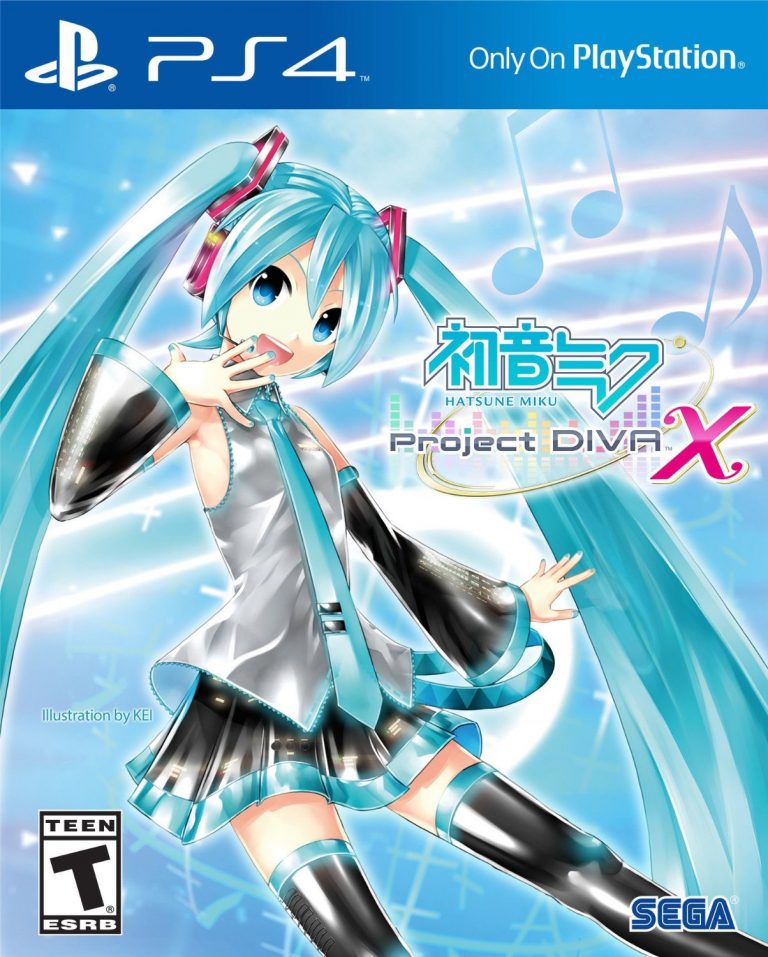
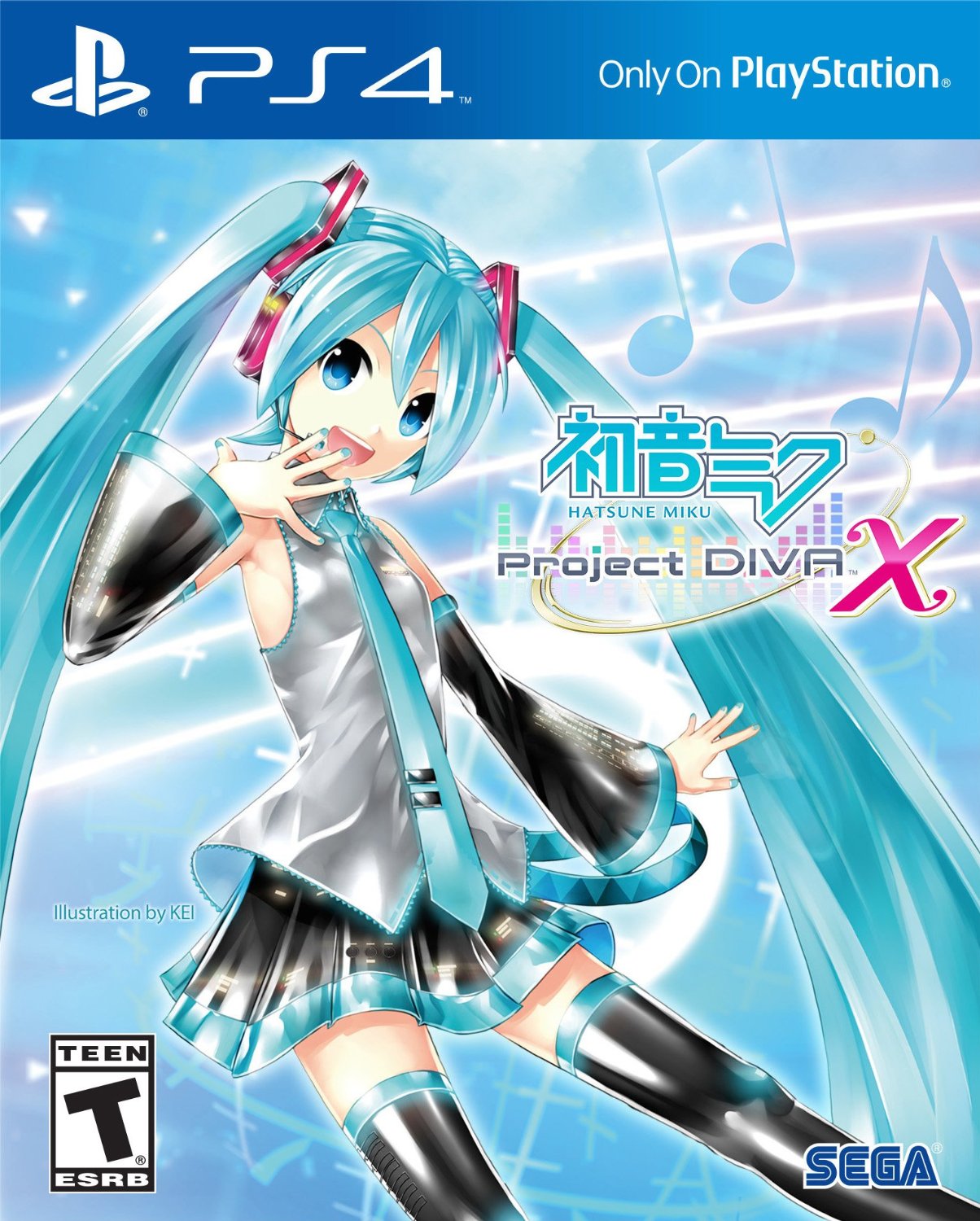
Hatsune Miku: Project Diva X
Developers: Sega, Crypton Future Media
Publisher: Sega
Platforms: PS Vita, PlayStation 4 (Reviewed)
Release Date: August 30, 2016
Price: $59.99 USD – Available Here
Overview
Hatsune Miku’s popularity as a digital songstress has always been incredibly high in Japan and over the past years her fanbase has grown so wide that not only have rhythm games featuring her and other Vocaloids been released in the West but she has even went on “tour” throughout North America and appeared on television. With Hatsune Miku: Project Diva X being the first title in the franchise to arrive on the PlayStation 4 in the West, how has the title grown since the last iteration?
Story
One of the first things that players will notice is that Hatsune Miku: Project Diva X actually has something of a story mode. This serves two purposes by allowing newcomers a chance to learn a little bit about the personalities of characters while also providing players with an unlocking system to advance the song collection.
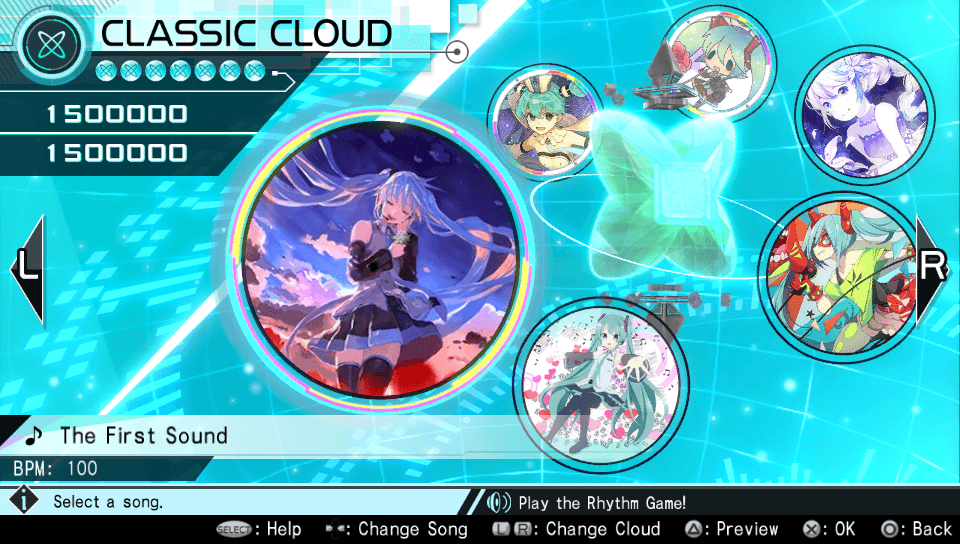 For unknown reasons, Hatsune Miku and her friends have lost their ability to broadcast their music to their fans and without their fans, they can no longer sing and generate power. As such they need the player’s help to bring their music to the world once again and unlock “Clouds” by completing performances. Each cloud has a little story snippet presented as a visual novel that only lasts probably for a few minutes per cloud and generally doesn’t reveal or develop much but does add a little something extra that otherwise has been completely lacking.
Gameplay
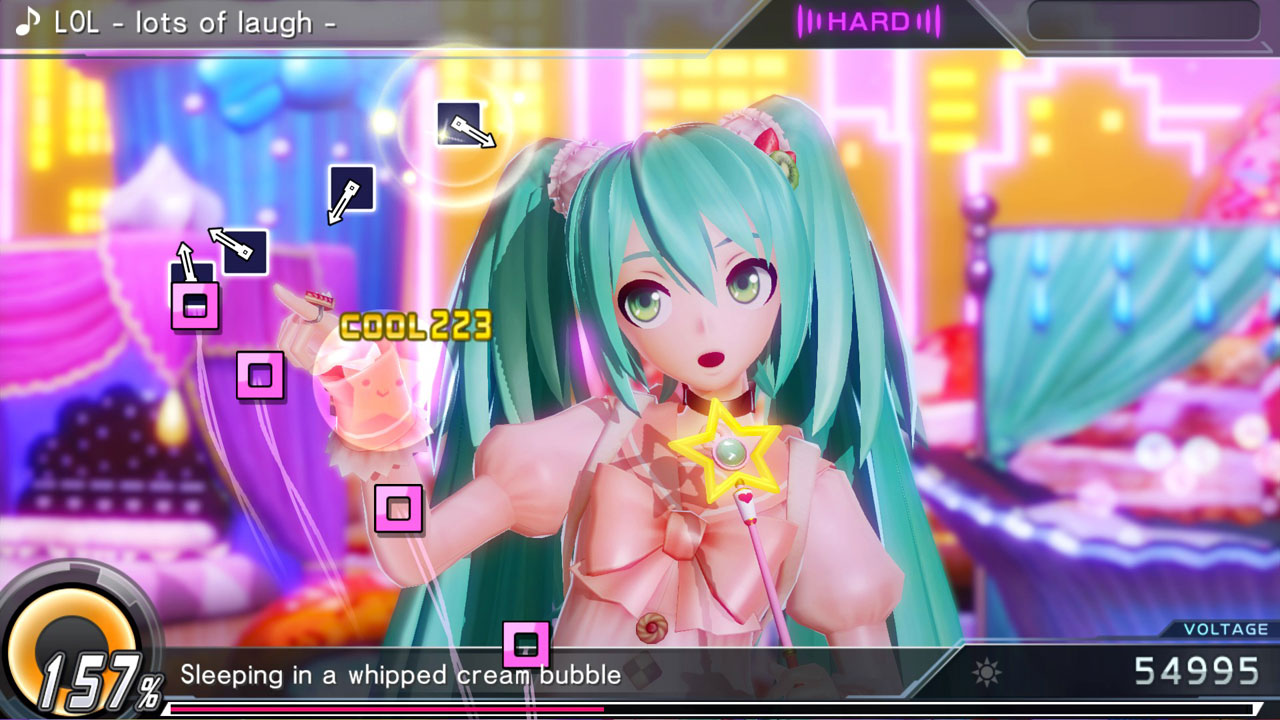
The basic gameplay elements of Hatsune Miku: Project Diva X remain mostly the same as players must still press the face buttons of the controller as they match up with the on-screen indicators or flicking an analog stick (or swiping the touchpad) to hit the star scratch notes with difficulties above Easy adding in extra challenges such as having to tap both a direction and a face button at the same time. A number of other types of notes have been removed from the game however and now the only real addition comes in the form of Rush notes that now, when properly hit, allows the player to rapidly tap the same button to gain as many points as possible before it vanishes.
 The real difference in this title comes in the way everything progresses. You see, unlike previous entries in the series where songs can be unlocked by completing other songs and, while doing so, the already completed songs can be played on the hardest difficulties, Hatsune Miku: Project Diva X instead limits this unlocking nature. Until players clear every single cloud in the game and unlock the songs available they are only able to play on Easy or Normal difficulty and that means that veterans will likely find the game extremely easy and a bit of a grind to start with unless they switch to free play mode and find themselves with more freedom of choice but also a lack of progression.
The same can be said regarding the game’s previous ranking system that gauged how well a player played and rewarded points. Now players earn “voltage” as a score that provides players with gifts that can be given to the characters or accessories that they can wear. As you play a song the voltage percentage increases and begins to multiply your score with certain accessories and Modules (costumes) matching a song’s aura, with the aura’s being the song type such as Cute, Quirky, Cool, etc., providing initial starting bonuses and the Modules themselves providing various buffs such as slowly increasing the percentage, make more “Rate Up” notes appear, or even an increased chance of gaining a new module or accessory.
 Speaking of unlocking Modules, players will now find that costumes come at a much easier but far more random rate in this game. Rather than purchasing them using in-game currency, if the player can clear the Chance Time mode, rather than triggering an on-stage special effect they will now trigger a costume change that will award the player with a random Module that will then be unlocked for use from then on. The problem here is that players do have a chance of obtaining repeat modules while also unlocking costumes they might not actually need for a given set of songs.
Along those same lines players will find that the grind for items and modules is a rather unfortunate one that isn’t really helped by the fact that Hatsune Miku: Project Diva X has the smallest song library in the series so far. Not counting the standard “Ievan Polkka” tutorial song and the two pieces of DLC, this title only offers a base of thirty total performances with twenty four single songs and six medleys featuring a mixture of four to five songs.
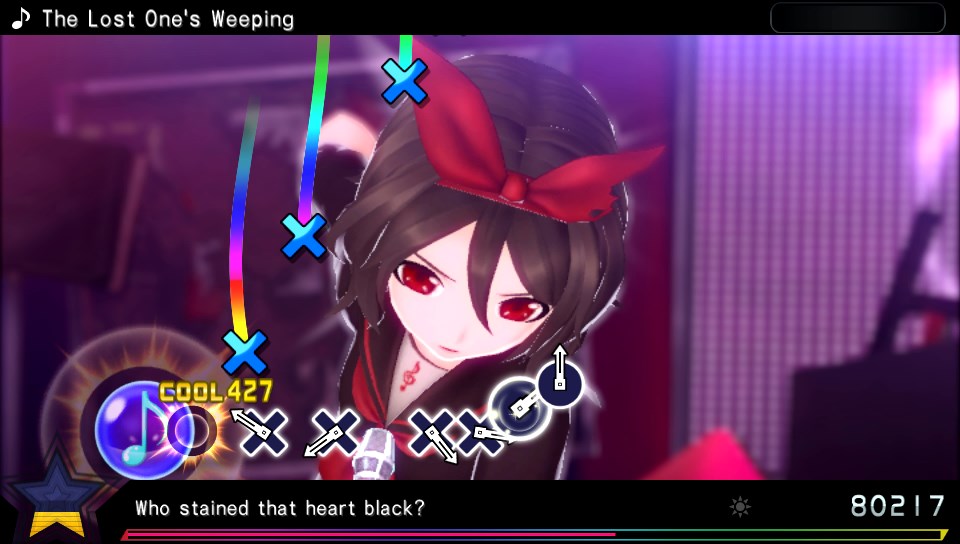 These medley songs make for some of the best performances in the game and thankfully players are given a way they can craft their own as, once you manage to reach a certain point in the game, you can create Festivals of three songs of your choice featuring complete freedom for character and costume choice as well, though only a few stages are available for this mode. It is worth noting that the Concert Editor that allows players to create your own performances is still available for the game but needs to be downloaded as a free piece of DLC.
Visuals & Audio
While not that much of an upgrade compared to the previous PlayStation 3 versions of the game, it is highly evident that, being the first PlayStation 4 version to be released in the West, that the performances and designs of the characters run far smoother than ever before. The designs of Miku, Luka, Rin, Len, Kaito, and Meiko remain similar and players will find that a lot of older Modules do make an appearance in this game alongside a large number of new costumes and accessories allowing players to really customize the looks of their favorite Vocaloids.
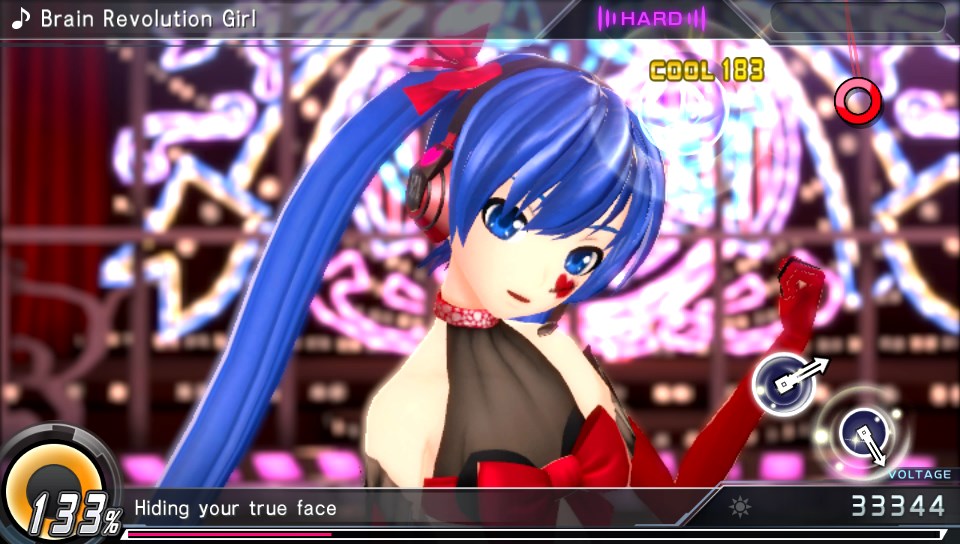 The actual performances still very impressive looking and feature a wide variety of stages and dance moves but unfortunately almost every performance is designed to be a stage performance meaning that there are no longer any music video style sequences that were found in previous entries though it is worth noting that more than a few of these performances are still quite extravagant looking. That being said, the company has continued their translations of every song’s lyrics which is a perfect addition for fans.
The songs themselves are a nice mixture of tunes featuring a number of brand new tracks and the Medleys are a real highlight. Given the smaller track listing players can expect only a few songs featuring Meiko, Luka, and Kaito as lead singers though the Kagamine twins are given a decent amount of representation.
Overall
Although Hatsune Miku: Project Diva X may offer a smaller set of songs than before the actual gameplay still remains as impressive as ever. Featuring a great set of tracks to choose from and the highly enjoyable medley and festival modes players will find quite a lot to like here especially since modules are easier than ever to unlock, though the new nature does require some grinding and luck in order to get the costumes you want.

 The only problem is, that if he doesn’t find a true love by the end of the day, the arrow’s effects will wear off and with it his entire life’s supply of potential love, meaning he will be forever alone and shunned even by animals. With only a day to try and find love, and thanks to the convenient return of a childhood friend as well as her elder sister beginning tos peak with Houdai again, there are already two potential love interests in sight.
 If players opt to simply rush through the game they will find that Gal*Gun: Double Peace’s basic story mode can be completed fairly quickly but that is partially the design for this title. I say this because this title implements the visual novel style of route unlocking by making it so players can, at least at the start, only pursue certain endings (even these endings have variations depending on dialogue choices and affection levels) and then once they have managed to clear these endings can opt for a different route. These multiple routes help extend an already highly replayable title that players will want to run through more than once simply to try and get better scores or unlock items by adding additional storyline options and new content that is specific to certain routes.
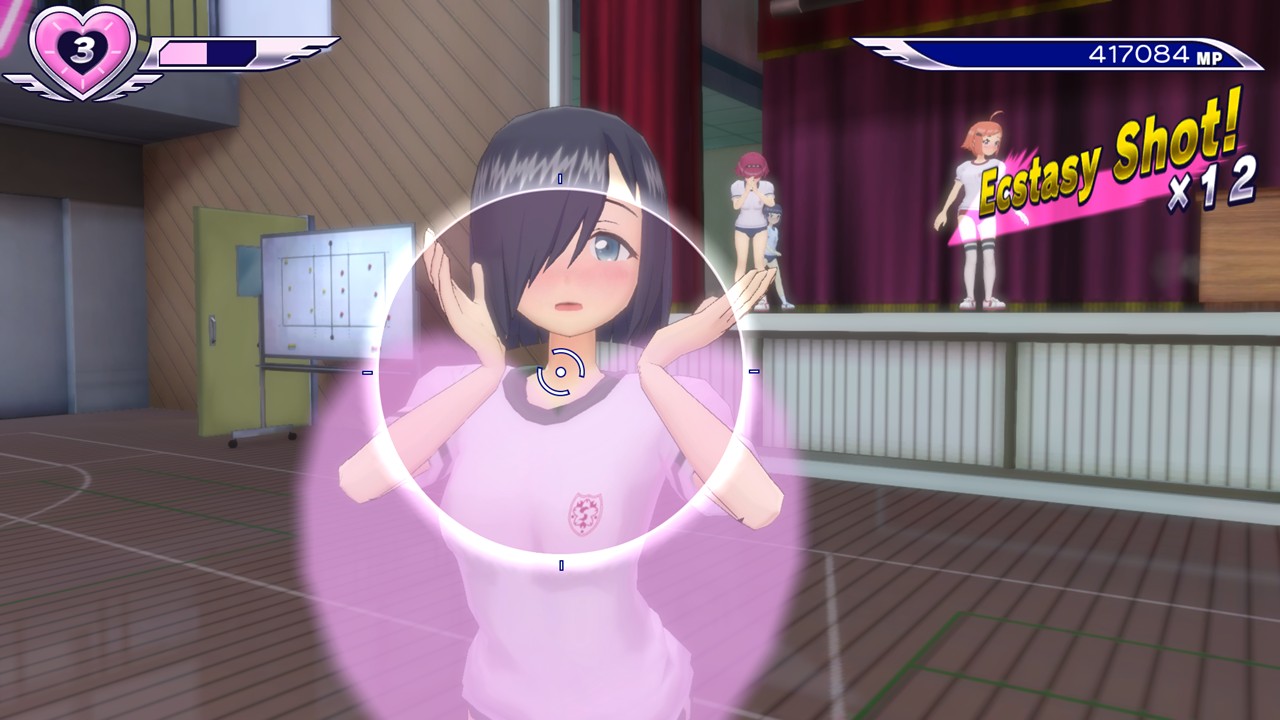 To do this players must make use of their “pheromone” shot that is provided to them by Ekoro and provide any girl confessing to them with euphoria and cause them to fall to the ground in satisfaction. The girls take on various methods of confessing their love such as handing love letters, shouting out kanji that can be shot out of the air, grabbing and hugging you, or simply kissing the player while other girls who are infected by the demon Kurona will take a bit more violent approach and often stomp on the player in a dominatrix fashion.
 As you make your way through a stage players will fill up a meter that allows them to trigger “Doki-Doki Mode” where up to three girls can be targeted at a time and brought into a separate mini-game. In this mode players must target (or on the Vita use the touch screen) various weak points on girls while the camera spins around them slowly in order to fill up a meter and give them a “climax” finish before a certain amount of time passes. While a great mode for the more perverted aspect of the game, this is also very useful at times as successfully clearing this mode detonates a euphoria explosion that subdues every girl on the screen and can help the player out of a tight spot.
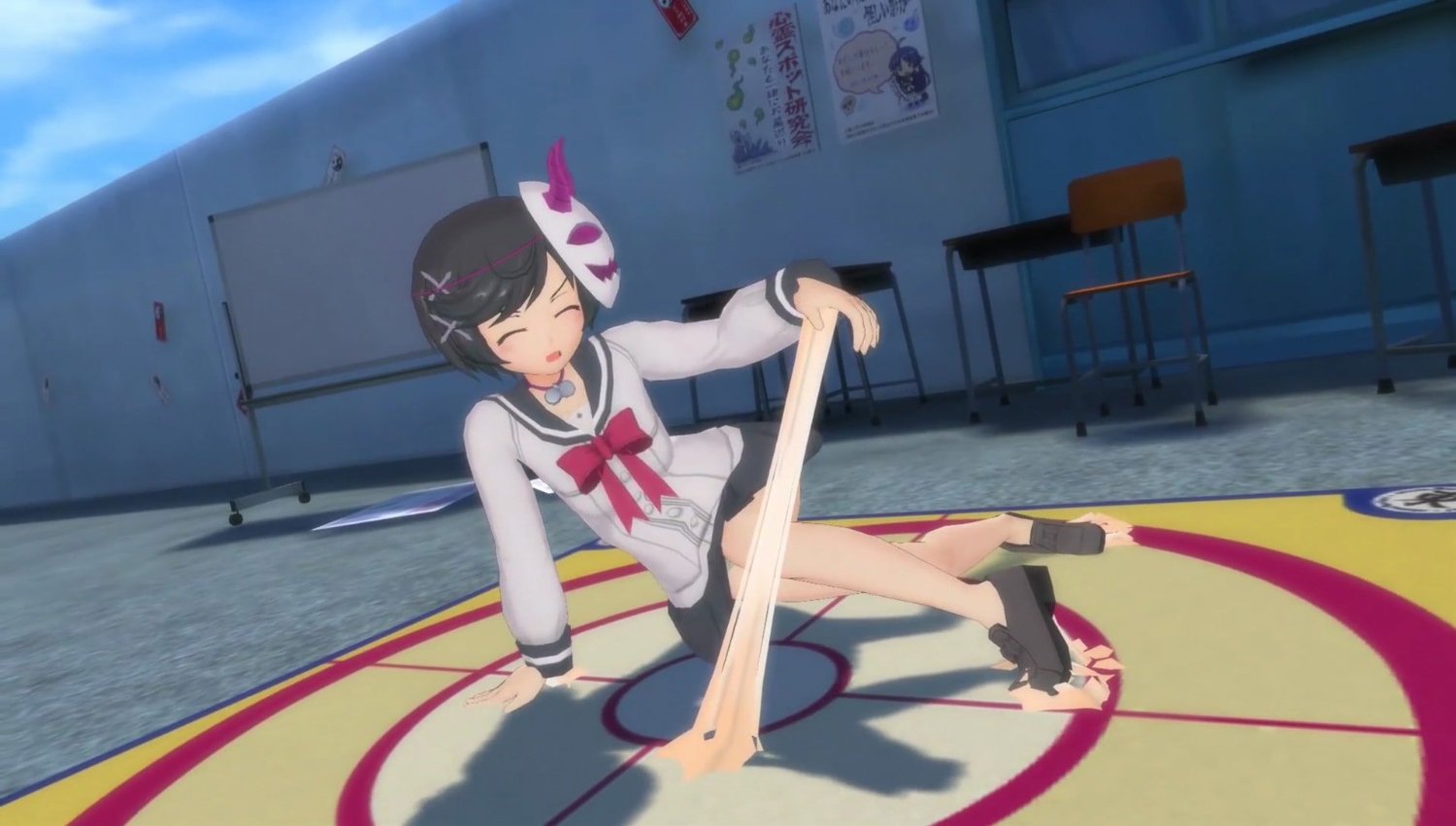 It is worth noting that while multiple difficulties are available, those looking for a bit of challenge to go with their light-hearted fan-service heavy fun will want to play on the harder option as the standard difficulty is fairly easy. Along those lines players can purchase various upgrades in-between stages from a school shop where they can buff various stats that allow them to make certain dialogue choices, increase their health or amount of damage dealt by shots, purchase items that allow them to avoid or diminish damage from certain attacks, or even add more camera angles to the Doki-Doki mode.
 Of course the various moaning when girls are struck with ecstasy shots or when the camera pans around in Doki-Doki mode might be a bit much for some but those looking forward to the fan-service will be right at home. The actual dialogue in the game is handled with well-translated English subtitles paired with the Japanese voice acting but it is a bit unfortunate that there isn’t more variety when it comes to the game’s soundtrack that quickly becomes repetitive and environments as most of the areas in the game are sparsely detailed and generic for a school setting.