

|
ZERO GRAVITY TO UNVEIL FIRST-PERSON SPACE SURVIVAL SANDBOX GAME HELLION TO CONSUMERS AT REBOOT INFOGAMER CONFERENCE, ZAGREB
The wait is over: Minecraft breaks new ground in Australian education
The wait is over: Minecraft breaks new ground in Australian education
Minecraft: Education Edition available in classrooms around the country
Sydney – November 1st 2016 – Microsoft Australia today announced the general availability of Minecraft: Education Edition, an open world game specifically designed for the classroom to promote creativity, collaboration, and problem solving.
The full-release of the Education Edition includes a companion application called Classroom Mode which allows teachers to have a map view of the Minecraft world as well as monitor and mentor students during game play.
It also offers a range of new, built-in lesson plans for educators to use across subjects and age levels and easy collaboration with up to 30 students able to work together to build projects and solve problems.
The release comes after months of feedback from over 50,000 educators and students worldwide who gained early Beta access in June 2016.
“Minecraft: Education Edition expands opportunities for K-12 students to engage in transformational learning experiences. Where previous versions have been very successfully adapted by visionary educators, this version has been designed to build on that vision and offer the affordances of Minecraft to all mainstream classrooms,” said Dr. Bron Stuckey, Global Consultant Specialist in Game Play, Gamification, Communities of Practice and Learning Communities.
She continues, “Minecraft: Education Edition provides a new opportunity to immerse learners in a highly motivational context for project building and problem solving. This dedicated Education Edition means teachers have access to an easy to implement platform of the game that kids know and that has been proven to successfully support design, construction, computational thinking, digital citizenship and community building. ”
Pip Cleaves, parent and Senior Education Consultant at Design Learn Empower said, “Minecraft: Education Edition is built on feedback from a global educator community and the principles of student-centered learning. The new features and capabilities give students the freedom to create and push their imaginations to the limit while also developing a higher-level of critical thinking.”
“In trialing Minecraft: Education Edition in some of the schools I work in, I not only see how the platform brings educational benefits, but also how it introduces positive social impact. Students want to collaborate and create in the Minecraft world, building a positive classroom environment through teamwork in a way that’s natural. For introverted students, Minecraft offers a world where they feel more comfortable to interact with students who they might not play with in the playground,” added Cleaves.
Minecraft: Education Edition will include new game features and the latest updates to Minecraft: Windows 10 Edition beta which will include user interface, leads and horses, additional player skins, pistons and the remainder of Redstone functionality.
For more information and resources on Minecraft: Education Edition, including lesson plans and a new Minecraft Mentors program, please visit education.minecraft.net.
The HITMAN season finale is here
The HITMAN season finale is here
Travel to Hokkaido, Japan today – https://youtu.be/tQKf5Yempjs
COPENHAGEN, October 31, 2016 – The Finale to Season One of HITMAN launches today.
The Season Finale for HITMAN Season One is here with a mission called “Situs Inversus” and is the culmination of everything players will have learnt in terms of both gameplay and story.
The HITMAN season finale trailer can be found here: https://youtu.be/tQKf5Yempjs
A journey which began with a Prologue and Paris location in March, continued with Episode 2: Sapienza in April, Episode 3: Marrakesh in May, the Summer Bonus Episode in July, Episode 4: Bangkok in August, Episode 5: Colorado in September as we reach the season finale, Episode 6: Hokkaido today.
“It was a brave decision to go fully digital episodic with Hitman, fundamentally changing how we make the game, and for us it has been a major success,” said Hannes Seifert, Studio Head, Io-Interactive. “I want to say a big thank you to all the players for making this possible! Together we’ve built and run the biggest and most replayable locations of any Hitman game and added new live content every single week since launch. And although we’re now completing season one, this is only the beginning for our ever expanding World of Assassination.”
The Hokkaido location is set within the grounds of the hyper-exclusive GAMA private hospital and resort. This secluded facility is a fusion of Japanese beauty and cutting-edge technology, featuring its own Zen gardens, organic sushi restaurant and traditional Japanese hot spring. Agent 47 must locate two targets in this climactic Season Finale.
Related Links: hitman.com / facebook.com/hitman / twitter.com/hitman /reddit.com/r/hitman
About HITMAN™
HITMAN is the sixth game in the blockbuster series and is the culmination of a journey started by Io-Interactive more than 17 years ago. It builds on the critically acclaimed and commercially successful foundation of games like Silent Assassin, Blood Money and the recent Hitman: Absolution.
About Io-Interactive
Io-Interactive, a Square Enix Studio, is the creative force behind some of the most talked-about multiplatform videogames to emerge in the last decade. Starting with the praised and ground-breaking Hitman series, Io-Interactive has since developed the cult classic “Freedom Fighters”, the controversial “Kane & Lynch” series and the adorable “Mini-Ninjas”. Dedication to creating original IP and unforgettable characters and experiences are the hallmarks of Io-Interactive.
About Square Enix Ltd.
Square Enix Ltd. develops, publishes, distributes and licenses SQUARE ENIX®, EIDOS® and TAITO® branded entertainment content in Europe and other PAL territories as part of the Square Enix group of companies. Square Enix Ltd. also has a global network of leading development studios such as IO Interactive™, Crystal Dynamics®, and Eidos Montréal. The Square Enix group of companies boasts a valuable portfolio of intellectual property including: FINAL FANTASY®, which has sold over 115 million units worldwide; DRAGON QUEST®, which has sold over 68 million units worldwide; TOMB RAIDER®, which has sold over 46 million units worldwide; and the legendary SPACE INVADERS®. Square Enix Ltd. is a London-based, wholly-owned subsidiary of Square Enix Holdings Co., Ltd.
More information on Square Enix Ltd. can be found at http://eu.square-enix.com/en
Hitman © 2016 Io-Interactive A/S. All rights reserved. IO-INTERACTIVE and the IO logo are trademarks of Io-Interactive A/S. AGENT 47, HITMAN and the HITMAN logo are registered trademarks or trademarks of Square Enix Limited. SQUARE ENIX and the SQUARE ENIX logo are registered trademarks or trademarks of Square Enix Co. Holdings Ltd. All other trademarks are the properties of their respective owners.
Dragon Ball Xenoverse 2 Review
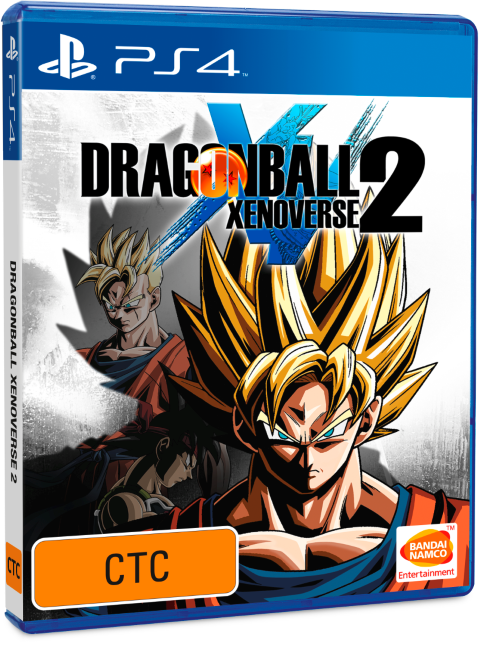
Dragon Ball Xenoverse 2
Developer: Dimps
Publisher: Bandai Namco
Platform: PlayStation 4 (Reviewed), Xbox One, PC
Release Date: 25th October, 2016
Price: $59.99 USD – Available Here $99.95 AUD – Available Here
Overview
When Dragon Ball Xenoverse launched early last year it was hailed as one of the best Dragon Ball games in recent memory. While the new fighting system was decent, it was the original story and ability to create your own character from one of five races that was the big draw card for the franchise. Now roughly 20 months later we have Dragon Ball Xenoverse 2, promising a new story mode, more playable characters, a new hub world and many improvements over the first game to deliver the ultimate Dragon Ball experience. Should players just wait for the holy third game in the series or does Xenoverse 2 bring us all we could wish for right now?
Story
The story presented in Dragon Ball Xenoverse 2 is mostly a choppy, mistake riddled, repetitive, poorly paced mess. Characters appear and disappear out of nowhere with no to little sensible explanation, all the time travel shenanigans have no set rules for how they work and character abilities are all over the place (I’d normally give a pass to that last one as it is a video game, but it is laughably bad in Xenoverse 2). There are also technical problems such as poor animations and graphical glitches, subtitles consistently not matching what is being said and even a moment where two audio lines were placed in the wrong scenes. Some story elements being ripped verbatim from the first game and others that are very similar is another large problem, if you’ve played the first game there is a lot here that will seem familiar to you.
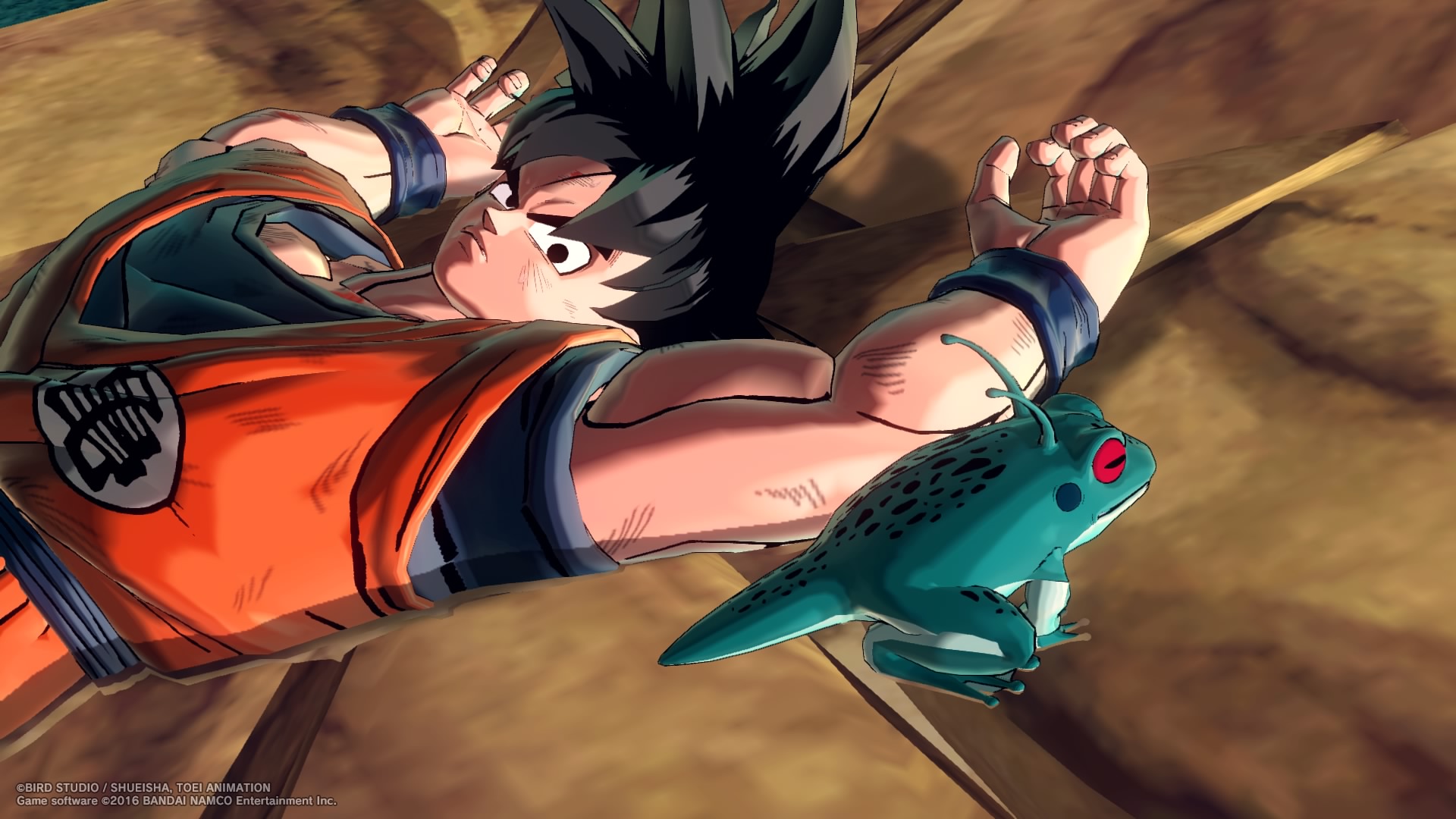
This is an example of a poor story scene that has a very slight, non important story spoiler. At some point you fight Janemba and Vegeta comes to assist you. At the start of the scene Trunks is laid out and exhausted, beaten by Janemba. The voice-overs then pop in with Trunks saying he wants to come and help out… even though he is already there… defeated. The scene ends with a base form Vegeta wiping out Janemba with a single blast, a scene that will have even the most basic Dragon Ball fan baffled. Why didn’t they at least make him Super Saiyan so it was at least slightly believable? Janemba and Broly are shoehorned into the story here, with little reason or development.
In the first game you’re level kind of stopped you from being able to progress in the story at will as villains would just get too strong for you to defeat. In XV2 the experience you get from the story is just enough to let you continue however other completely unrelated tasks stop you from doing so. These include a tutorial, a pointless quest to gather medals and the worst, forcing you to acquire a transformation which can take a couple of hours depending on your race and need to level up. This takes away from the player’s freedom to progress through the game as they like and is incredibly frustrating if you just want to see the end of the story play out. Story fights also won’t progress until all the dialogue is finished, meaning you could be sitting there for around 2 minutes with either side able to damage the other while the dialogue catches up to where you are in the fight. This is a common issue as you can often drain the enemy’s health bar much quicker than the dialogue progresses.
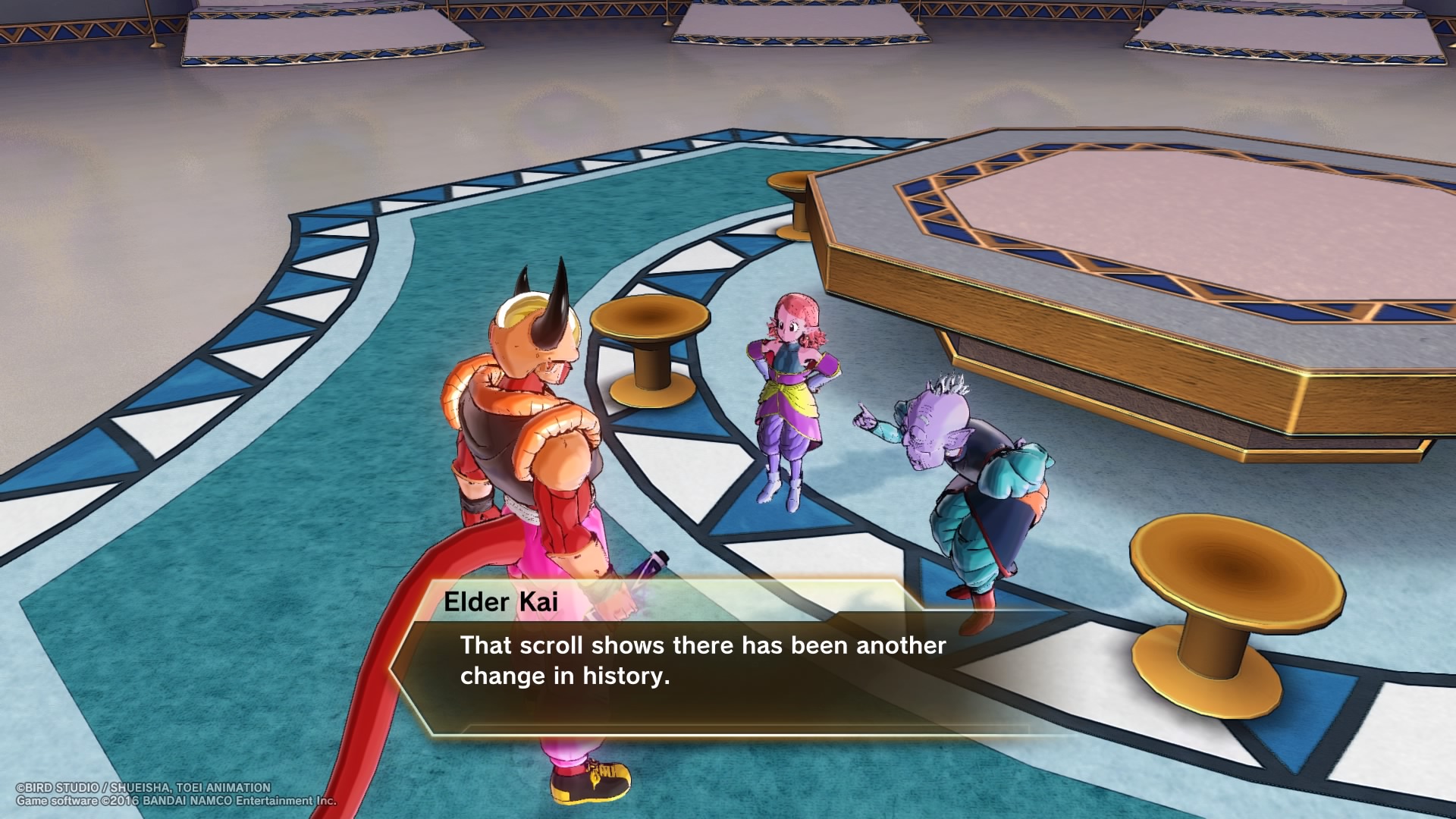
With all that being said, for a Dragon Ball fan there are a couple of scenes that are absolutely brilliant and brought a big smile to my face. I won’t spoil these as you should really see them for yourself, but during these moments all the problems take a back seat to some well thought out dialogue, good acting and great animation paired up with the perfect backing track. While these few scenes alone probably aren’t worth the pain of going through the story mode as a whole, they at least save it from being a complete disaster. The ability to import your Time Patroller from the first game is another great feature that is rarely seen in games. They even play a vital part in the story which surprised me and gave me an instant connection with the character.
Most parallel quests contain their own mini plot that either follow scenarios from the anime or have a ‘what if’ storyline. One example of these is Imperfect Cell being your partner while you fight Perfect Cell, who mocks Imperfect Cell for coming to the wrong timeline. The massive amount of flavor text that can change depending on the character you’re playing as and who you are fighting is impressive and well written, often delving into lesser known parts of the series lore which is a great payoff for knowledgeable fans. Training missions with mentors share these positive qualities as well.
Gameplay
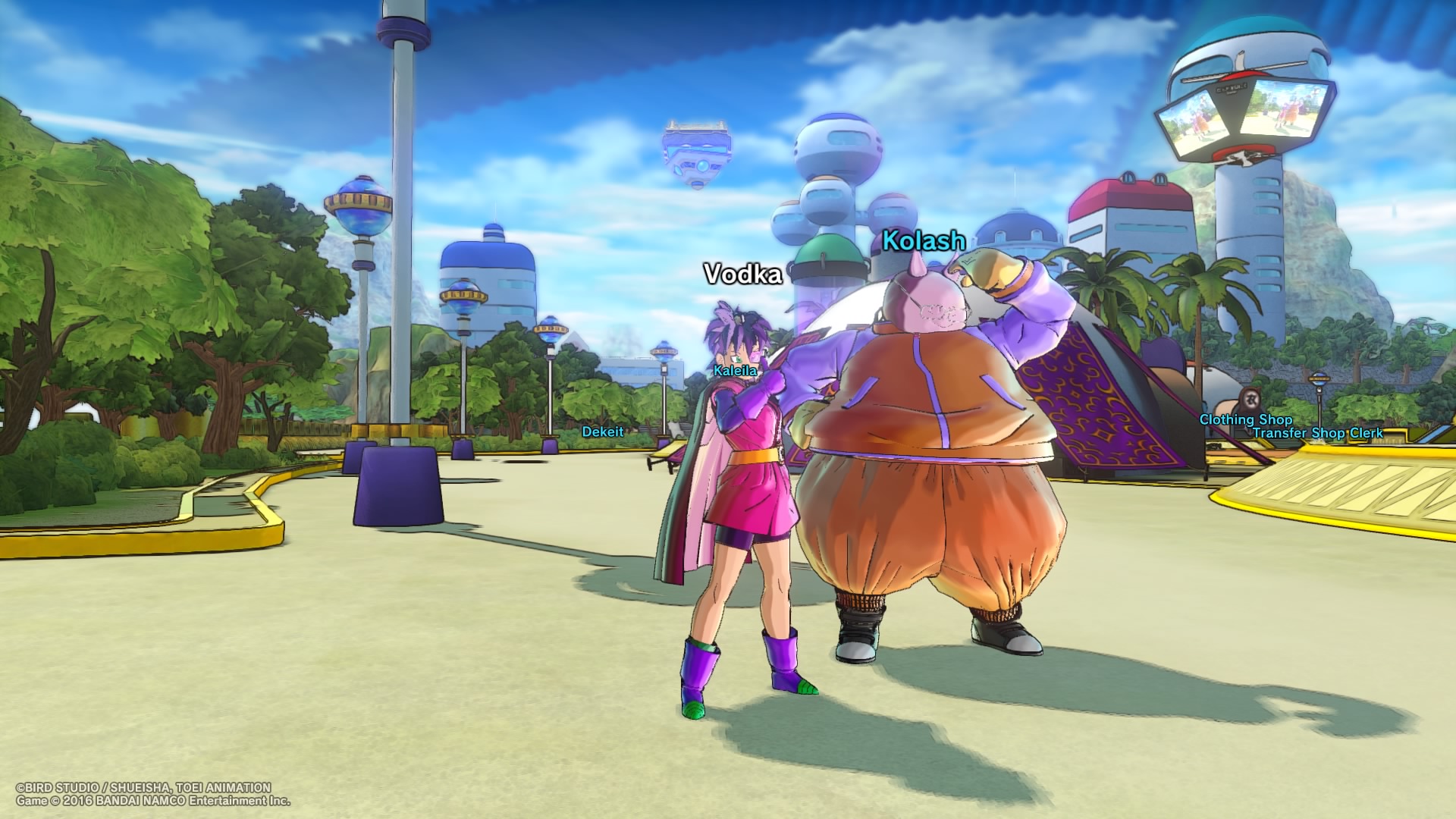
Where the bulk of Xenoverse 2’s improvements come is the game play. First off you will notice the hub world got a major overhaul. Conton City adds a lot to Dragon Ball Xenoverse 2 and is a hub world well worth exploring, especially in the multi lobby where you see other real life Time Patrollers and can interact with them with fun comments and emotes from the series. Where the first games hub world was seen as a poor excuse for a glorified menu, Conton City is fun to explore and rewards you for doing so with more side quests and other missions that then reward you with new outfits, attacks and other bonuses. The ability to fly (which you gain by progressing through the early part of the story) and vehicles, while trivial, makes traversing the world much more fun, as do the many robots around the town that allow you to teleport between them without any loading.
Unfortunately the trade off for no load times transportation is… ridiculously long load times. This wouldn’t be so bad if they happened once at the start of the game, but loading occurs every single time that you need to re-enter Conton City, which is a lot. These load times, by my own count, commonly last just under 40 seconds on a PlayStation 4 which is just unacceptable in this era of gaming. A confirmed patch to address the load times is coming but as it stands the load times are a huge drawback.
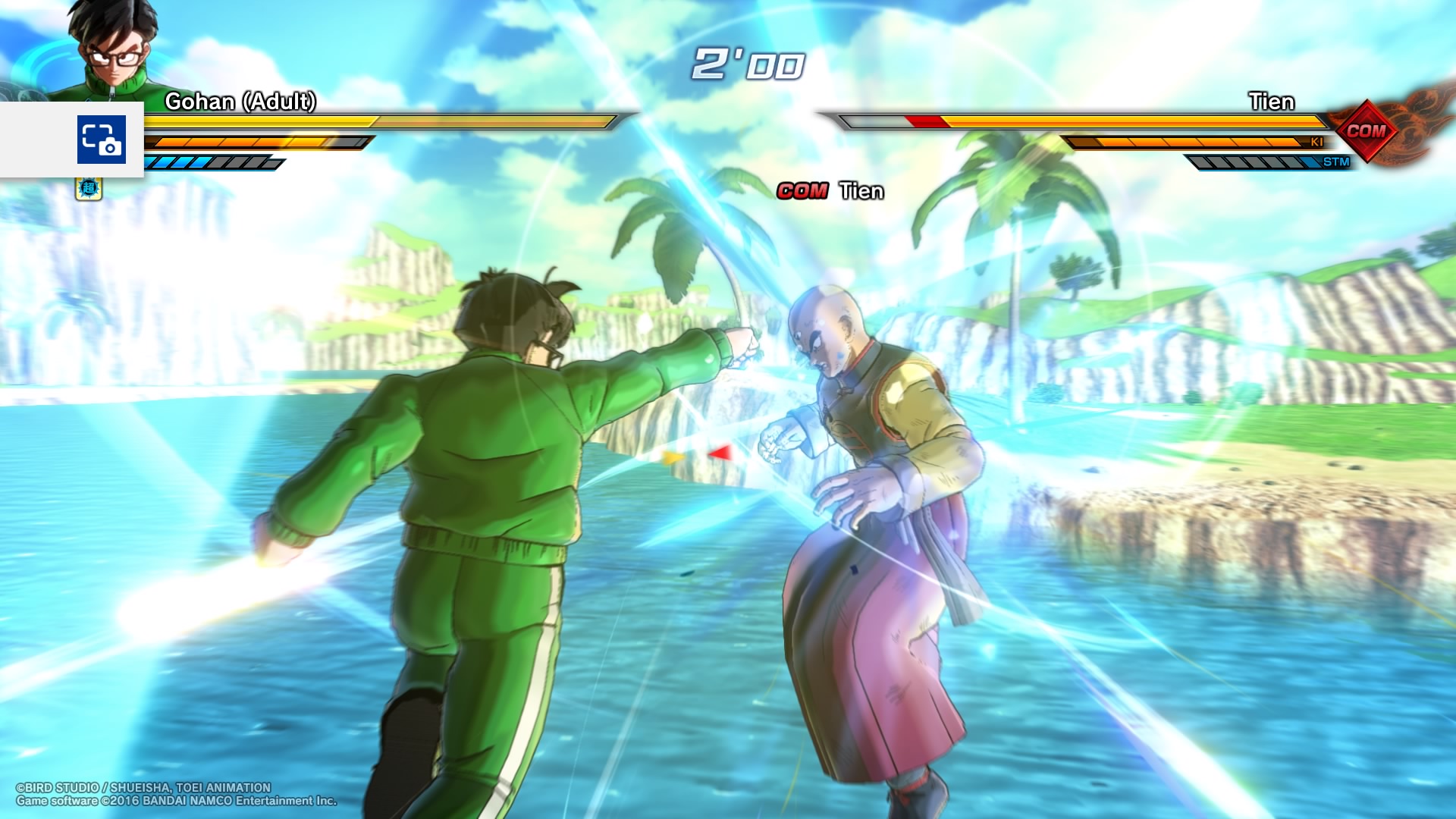
The fighting system was pretty decent in Xenoverse 1 and Xenoverse 2 expands on that, offering a smoother, faster, more varied combat experience. Attacks connect better in general and the new flash step technique really adds to the speed of battles as does the bump up to 60 frames per second. You can pull off some impressive looking combos simply by mashing a combination of the square and triangle attacks and supers and ultimates are just as easy to execute. Those looking for more depth in the combat will find it here, with the way combos link up and attack variety allowing players to experiment and come up with their own max damage combos using a combination of new and old techniques.
The new attack additions aren’t perfect however; all sharing one issue in common, the execution. Because all the buttons were already in use before the sequel, the way you pull off these new moves is slightly awkward. Burst dash for example forces you to press L1 and the square button at the same time (I’m using the often preferred C control option). This is almost impossible to pull off consistently due to the nature of the trigger which easily leads to frustration. Likewise, stamina break moves are pulled off by holding the control stick up and pressing square or triangle at the same time, another inconsistent combination. Lastly charged ki blast are simple to perform (simply hold circle) but are just awkward to use in combat, with long pauses before and after the move happens.

The games roster on its own is pretty impressive even though as a sequel the number of additions is pretty disappointing. Some characters like Hit and Goku Black from Dragon Ball Super see their playable debut and characters that probably should have been in the first game like Imperfect Cell and Android 16 make a welcome return alongside other fan favorites like Gogeta and Janemba. While there are definitely some questionable exclusions such as Dabura, many of the villain transformations and Android 13 and Bojack (I highly expect these two to show up in DLC), the 18 or so new characters we did get each bring something unique and are fun to play as. The roster select screen could use some cleaning up though, with the shameless clone ‘villainous’ versions of some characters now taking up their own slots as opposed to being an alternate outfit. Speaking of alternate outfits we did get shafted in that department, with only a small handful being added to existing characters.
The online experience has seen improvements. Conton City can hold up to 300 avatars at once, there are more mission types and modes for players online to compete in both competitively and cooperatively, and most importantly, online modes now have a lot less lag and are actually playable in contrast to the lag ridden online in Xenoverse 1. It’s still not perfect, but it’s a huge step up. Speaking of co-operative play, those who played the first game will take joy in knowing enemies no longer have access to super armour to stop them from flinching, instead being smarter and more difficult to fight to compensate.
In another big positive change, the impact of RNG (random number generator which is a pure chance way to determine if an event happens or not) has been severely reduced in Xenoverse 2, much to the praise of every gamer out there. Clothes and skills from quests now have a much higher drop rate and ultimate finishes will always trigger if you satisfy the conditions. You can also buy most outfits and skills from the shops now as well as acquire them by talking to NPC’s and completing side quests. Mentors now spawn in set locations, meaning it’s not up to RNG anymore if you find the one you’re after.
However, as seemingly to undo any good from that positive change, all your created characters are now treated as separate save files, only sharing skills and outfits between them. That means for every new character you wish to make you must unlock every mission, story mode progress and even unlock-able characters all over again. This is a baffling design decision, especially as the first game handled this so well with progress shared among all your created characters, allowing you to easily make new characters and play the game you have already completed as you see fit.
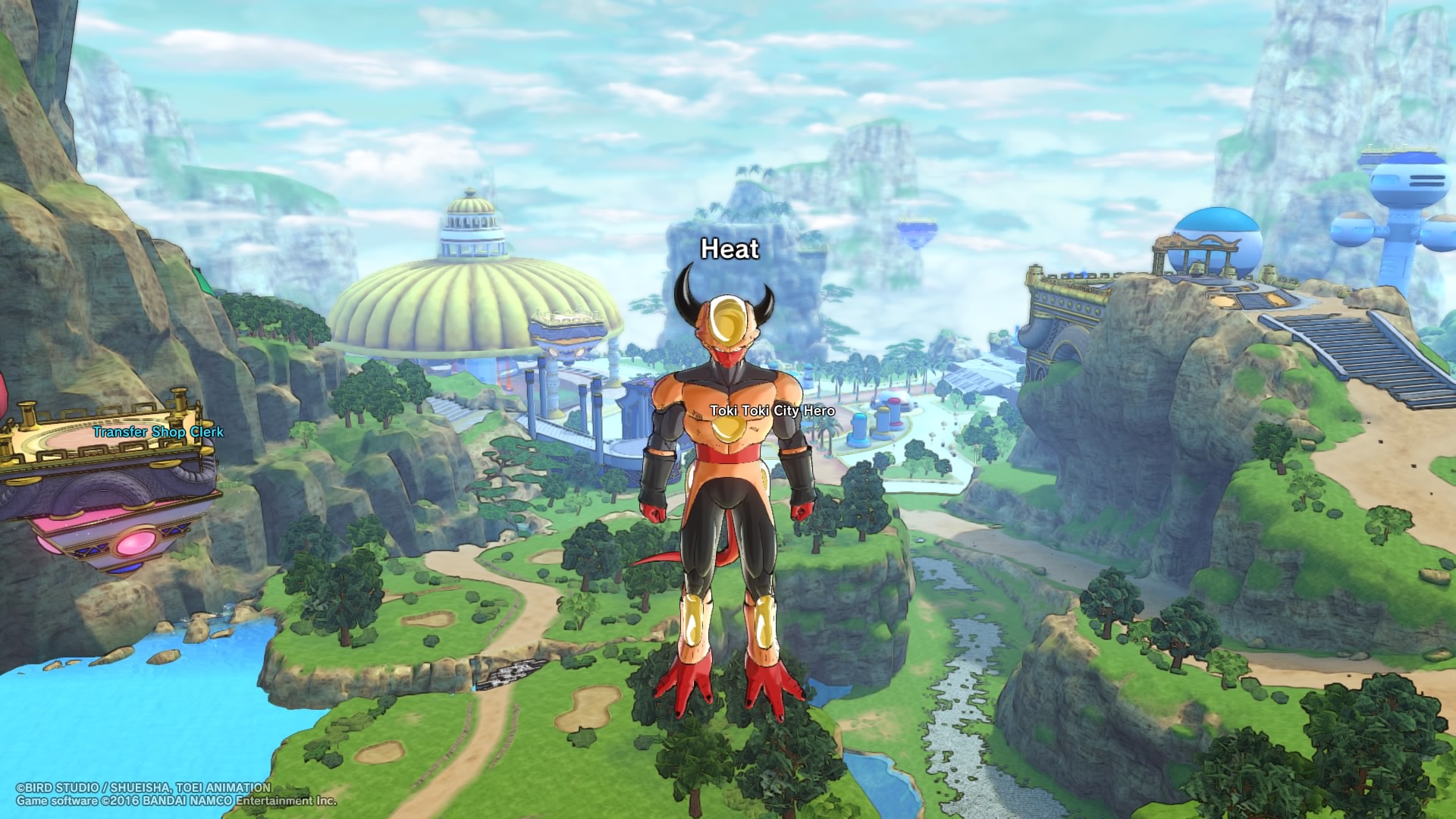
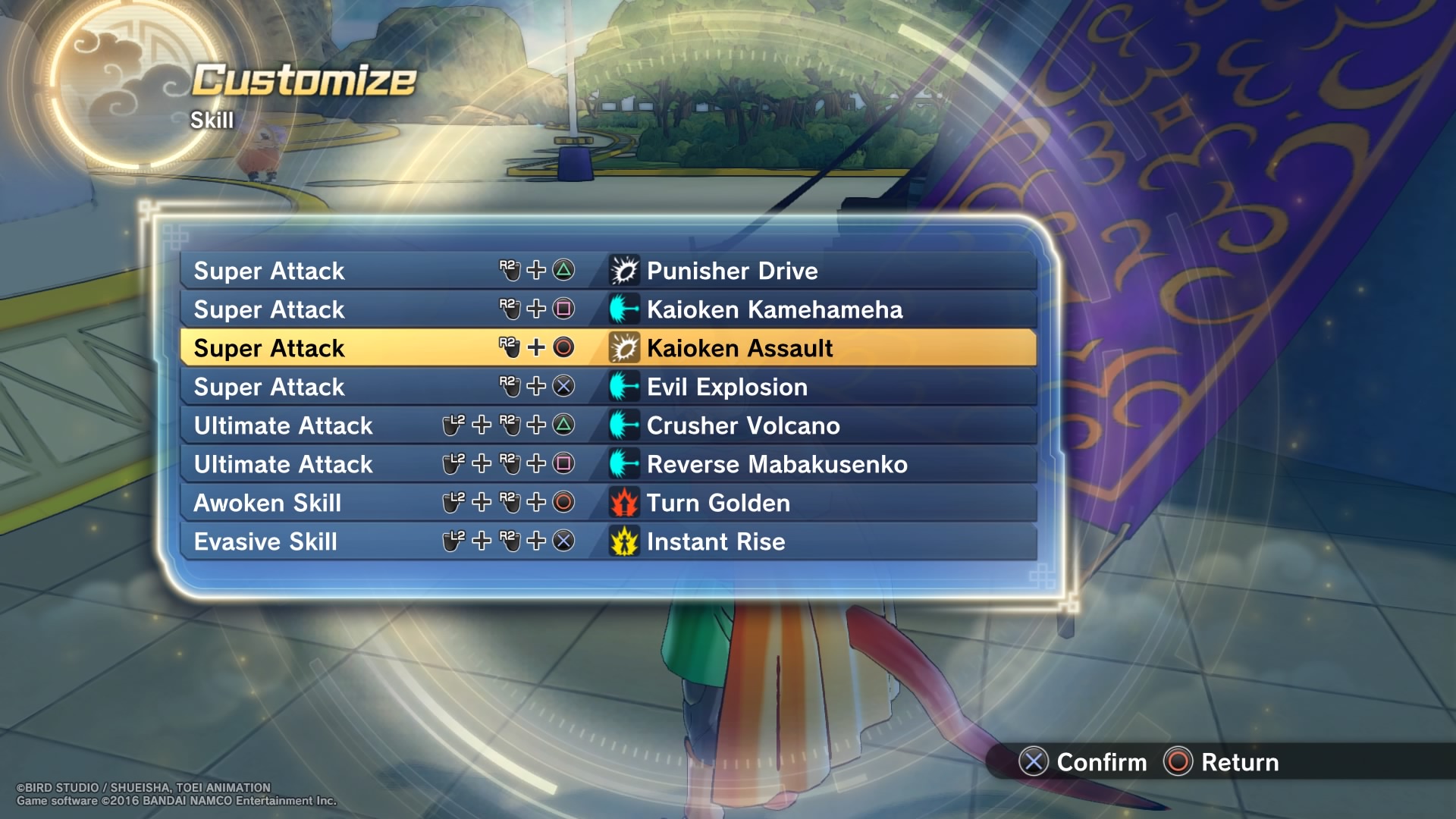
The customisation itself has unfortunately seen little improvements outside of the new race specific transformations, which are admittedly a great addition and very fun to play around with. Outside of those transformations though common requests for how to improve the create a character variety have been completely ignored and we still can’t customise even the simplest of preferences such as our aura, throw or even ki blast colour. Accessories are still limited to one, no matter where on the body they are placed and Super Saiyan hair still remains unfaithful to the series, simply turning gold and not spiking up. Popular accessories from the series such as Saiyan Tails, Potara Earrings and the Majin emblem were ignored as well and most outfits still can not have their colour changed although a few more with this ability have been added.
The number of added options for customising your body, such as hairstyles and body shape, is also underwhelming as are the number of new outfits and accessories. The first game was an awesome base for the create a character feature and while Xenoverse 2 brings everything from the last game forward, it fails to build upon that base in a substantial way in regards to content. A positive exception to this is in the move department where the development team somehow found many new attacks to add that weren’t present in the first games already impressive list. There are hardly any moves from the show that I can think of that aren’t in this game.
Visuals
The graphics have seen a slight improvement from Xenoverse 1 but nothing major. It’s bright and colourful, most textures are high resolution and characters and stages all look really good in the cel shaded style outside of a few anomalies. Conton City successfully mashes famous locales from all over the series and has a great draw distance, allowing you to see the whole world from the sky. There is a small problem with assets taking a bit of time to load (shop vendors and NPC’s for examples) when you enter an area but this isn’t too common and fixes itself after a few seconds.
The user interface also got a bit of a touch up with some slick looking menus, new battle HUD and a most appreciated feature, time gates in quests now have a small label pointing to their direction so you don’t have to aimlessly search for them in larger maps. I really wish there was a way to turn off some of the HUD (most importantly the characters names that are consistently above their head) as it just seems unnecessary and ruins the immersion a little. Considering this would be a simple matter I’m surprised this feature is omitted here.
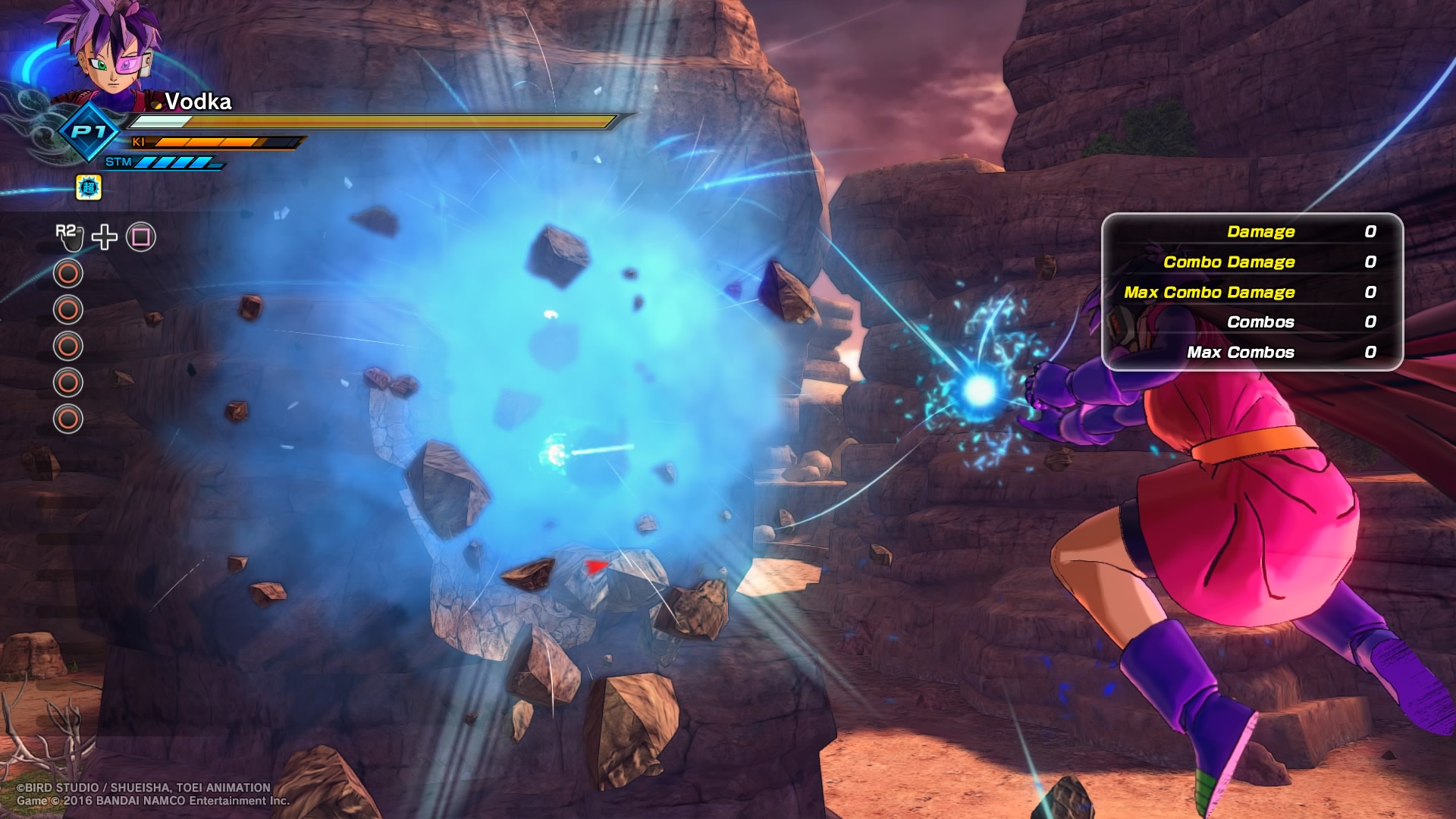
A few visuals flairs have been added to combat such as the screen shaking when you charge up ki. Arena damage now includes physical chunks of rock coming out of areas you hit with a blast. This looks really nice if you hit it with a multi ki blast attack and definitely adds to the immersion. Unfortunately you will be taken right back out of that immersion as any damage spots that appear on the ground or walls still disappear after 3 seconds. One day there will be a console powerful enough to handle real time arena destruction but for now this is a good step forward.
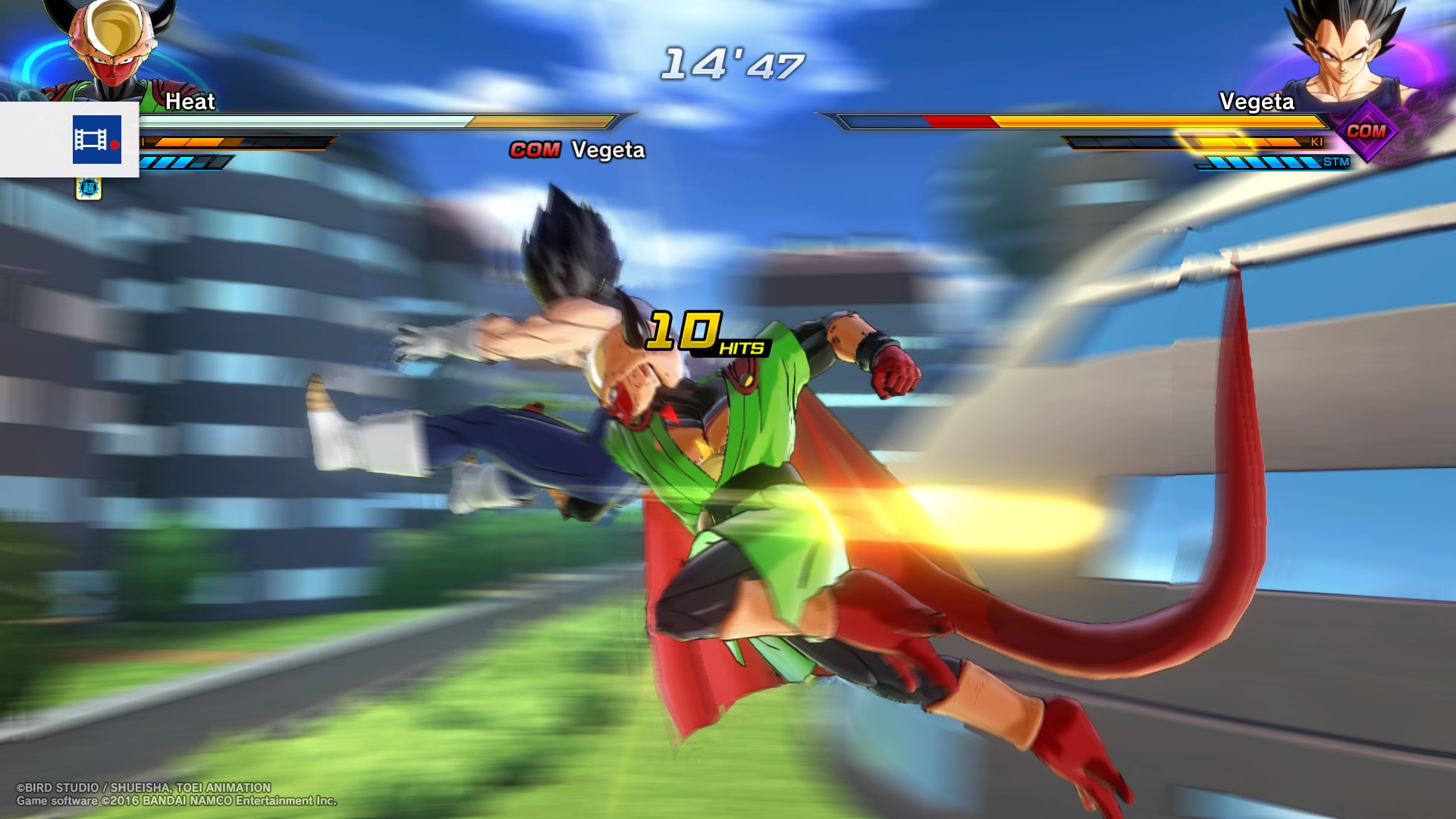
Another issue that ruins immersion is, for lack of a better term, the visual hit detection. In battles, attacks that look and feel like they should be hitting work fine so there is no problem on the game play side, but they still look awkward. This is really obvious when the camera tries to do something fancy, revealing how poor attacks (that are normally hidden by the back of your character) are connecting with your opponent. Things like a punch staggering an opponent when there fist is clearly a good length away from them or when two people have a melee clash. The way characters fly off in incorrect directions after being hit by an attack is another issue, or float awkwardly in the sky as they get knocked upwards but hit the top of the low sky boxes. The combat can actually look really epic at times but unfortunately these poor moments I describe above are just as common, if not more so. The image below is an extreme example but shows how ridiculous it can look at times.
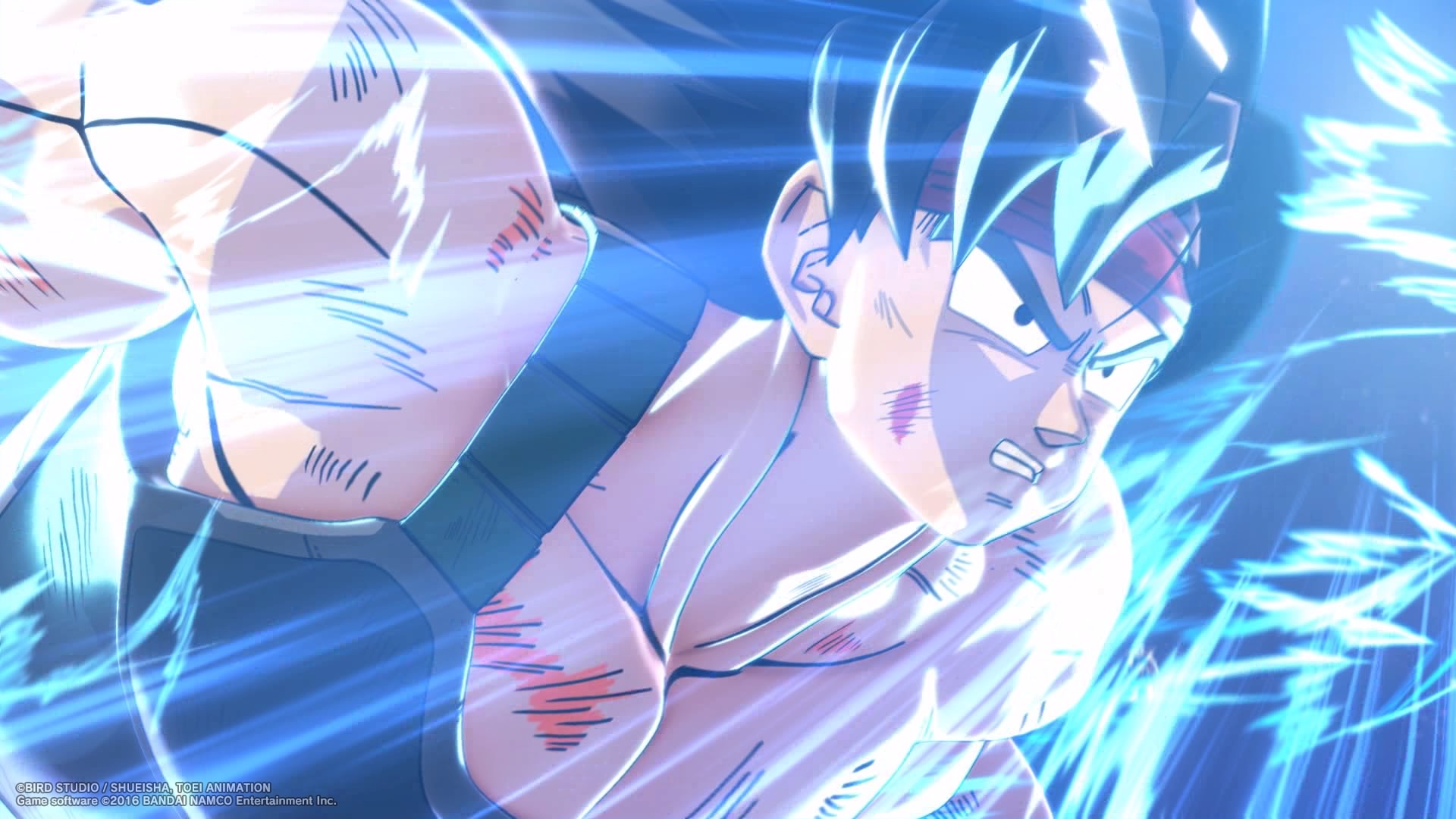
Ending on a positive note, the CGI cutscenes in story mode, while there are only two of them, are the best looking cutscenes we have ever seen in a Dragon Ball Z game, period. The anime style cutscenes, again while rare, also seem to be of a better quality than in the first game with much smoother animation and on model art.
Audio
The sound quality all around has seen marginal improvements but is still below average. There are still a lot of problems with volume mixing (just like the first game I recommend turning sound effects down to 2 for a more even sound) and sometimes voices are way too soft or too loud to be heard clearly. This even extends to the game’s opening video where you think such a problem would easily be corrected before release. There seem to be more sound effects for all the different moves and the quality of the sounds is much better at least. Music still annoyingly fades in and out of quests based on your opponent’s position, a terrible design choice that carries over from the first game.
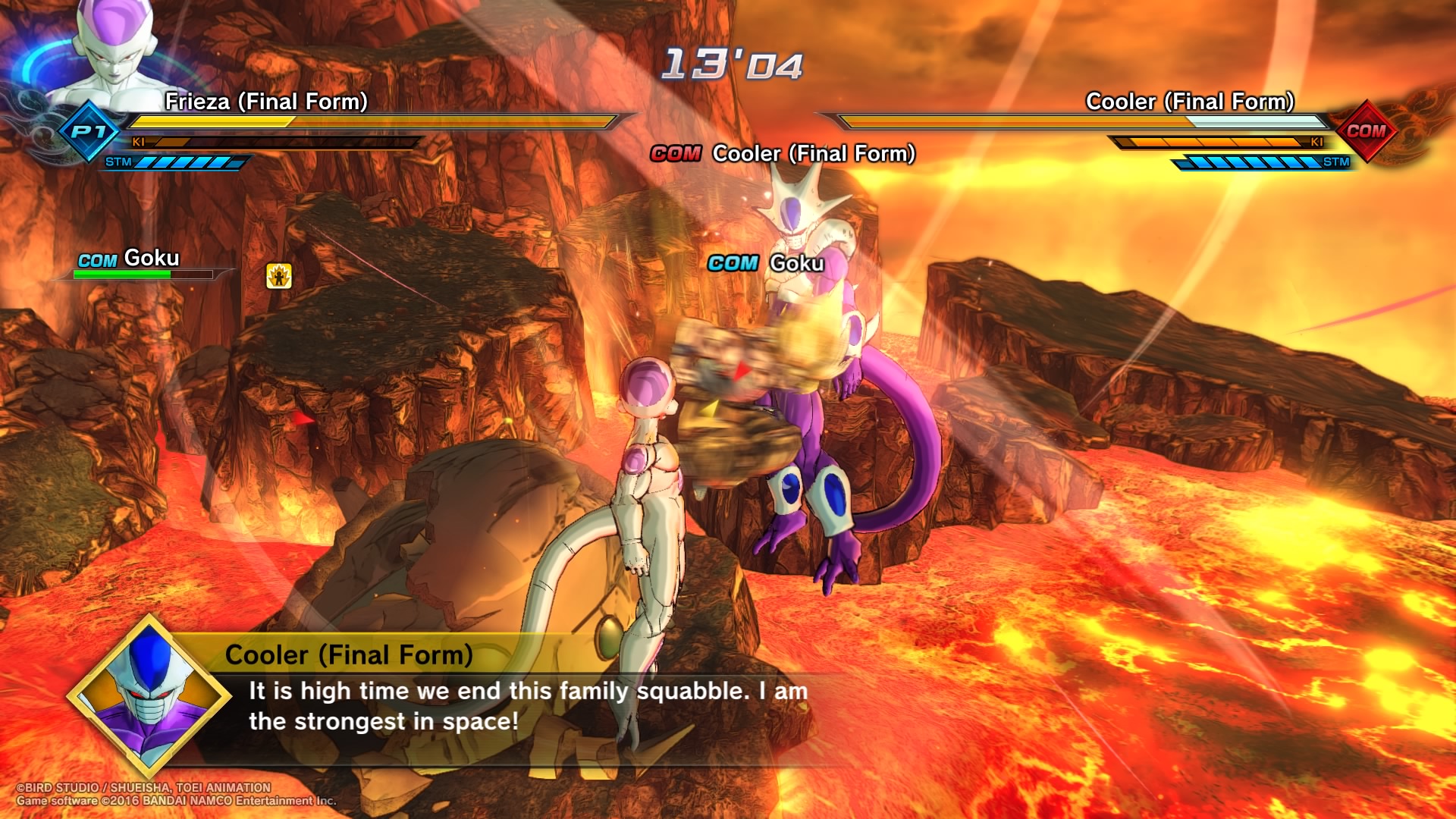
Most voice actors sound great and put in a good amount of gusto into their performances despite some awkward deliveries from time to time that may not be the actors fault but rather the direction given (e.g. Cooler rushing out to say his sentence while firing his Supernova attack). The English and Japanese dual audio is still present so you can listen to your preferred cast. While many old lines of dialogue seem to be reused, the new cast and new lines all sound good with many actors reprising their roles such as Cooler, Turles and Slug. This is the first time we hear Goku Black in English and I have to say I’m not a fan of the way Sean Schemmel portrays Goku Black here. It sounds more like a more grizzly Super Saiyan 4 Goku than the calm and menacing Goku Black we have grown to know from Japanese voice actress Masako Nozawa’s portrayal of the character.
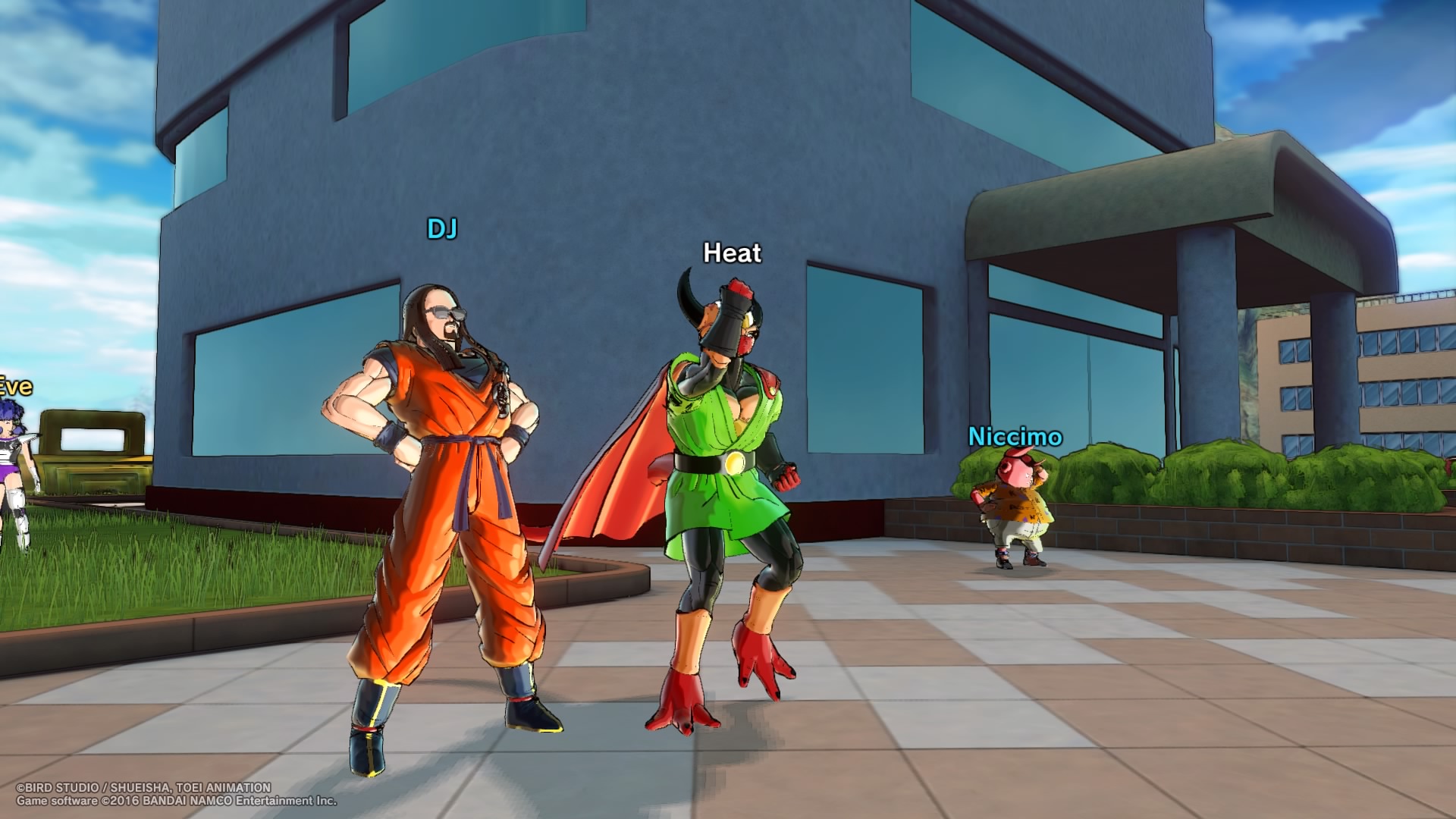
The music however is mostly new and nearly all of it sounds fantastic. This is the first Dragon Ball game in a long time where the original soundtrack created for the game sounds fresh and exciting. We have a great mix of new techno, heavy rock and even beautifully epic orchestral music in addition to most of the tracks from the first game. There are only a couple tracks that really didn’t gel with me, with the rest all being perfect for accompanying battles or the story mode. The main issue with the music is just when it’s used, as there are times where it doesn’t fit with the visuals such as in the opening scene of story mode. If you find DJ Steve Aoki in Conton City or beat the game, you can listen to his two house remixes of Head Cha-La and We Gotta Power! which is a fun Easter Egg. Not everyone will find these songs enjoyable but I think most will like them, especially if they are fans of house music.
Overall
Xenoverse 2 sadly does the bare minimum to justify its existence as a sequel but as a standalone product still offers loads of content and fan service. Questionable design choices, poor loading times, audio issues and a mess of a story mode with very few highlights weigh down what is a great looking game with some great features. The license is used very well particularly in regards to character creation and dialogue, the expansive new hub world is worthy of exploration and the fighting engine is one of the best we’ve ever had in a Dragon Ball title. The game has been promised to be supported with free updates and patches for a year so we shall see how it stacks up after that time, but for now, despite it’s problems, Dragon Ball Xenoverse 2 is still one of the best Dragon Ball games we’ve had in the past 20 years.
FUNimation Announces 2017 Release for ‘Steins;Gate’ Film
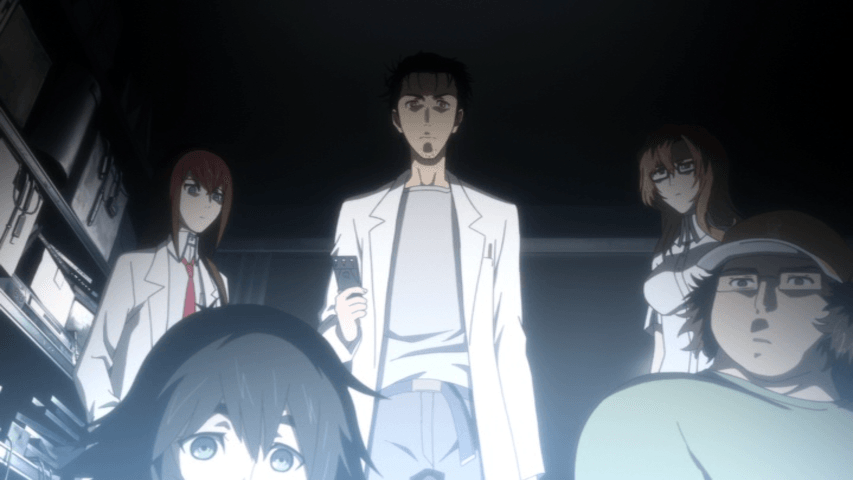
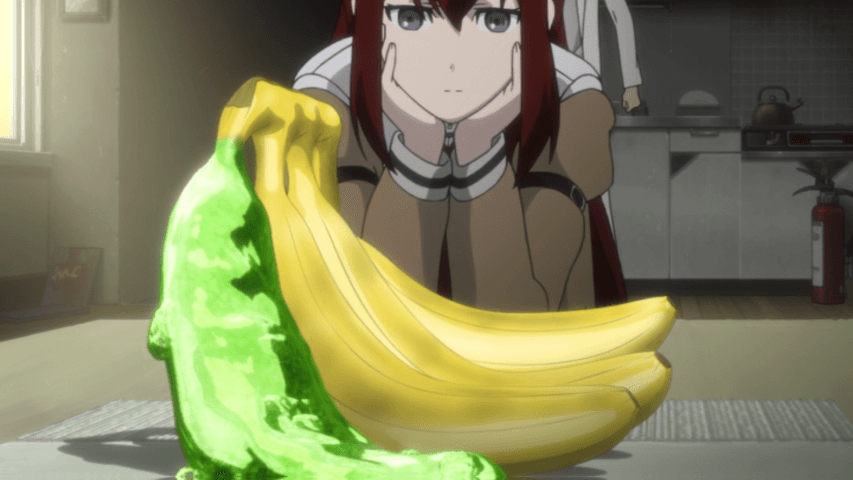
FUNimation Entertainment has just announced that they will be releasing the Steins;Gate film, subtitled Load Region of Déjà Vu, in North America in 2017. No specific details have been announced yet, such as the exact release date and what formats it will be released on, but FUNimation has stated that details of the release will be revealed at the end of this November.
FUNimation has previously released the full TV anime series on home-video in North America. PQube will be releasing Steins;Gate 0, a game set in an alterate timeline to the rest of the series, in English at the end of November. The special edition release of the game will come with an artbook, soundtrack and more.
‘Amagi Brilliant Park’ Premium Box Set’s Contents Revealed

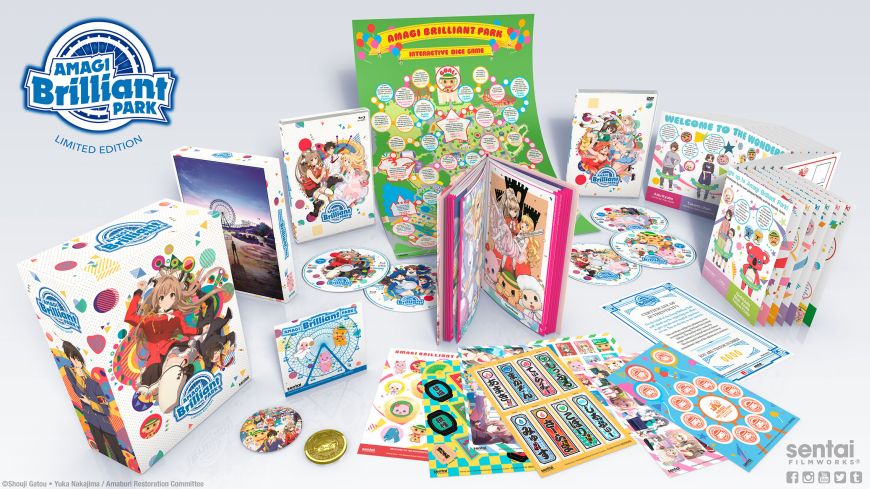
The upcoming U.S. DVD and Blu-ray release of Amagi Brilliant Park was recently announced by Sentai Filmworks. Now, they have revealed the full details of the contents of the premium box set release. In addition to the extra physical items, all 13 episodes will be included on both DVD and Blu-ray with dual audio and English subtitles.
The contents of the premium edition are all housed in a vibrant chipboard box. The items include: Moffle, Macaron and Tiramie metal mascot pins, a two-sided metal Moffle coin, a park map that doubles as a dice game, a collection of colourful stickers, an exclusive custom artbook, park guide book brochures, a 2.25 inch mirror featuring the characters from the series on one side and a certificate of authenticity.
The premium box set will not receive a second print run, so if you want to own one, be sure to pre-order it as soon as possible. It can currently be pre-ordered from Sentai Filmworks’ online store here for $125.99 USD (United States Dollars). The suggested retail price is $179.98 USD.
Sid Meier’s Civilization VI Review
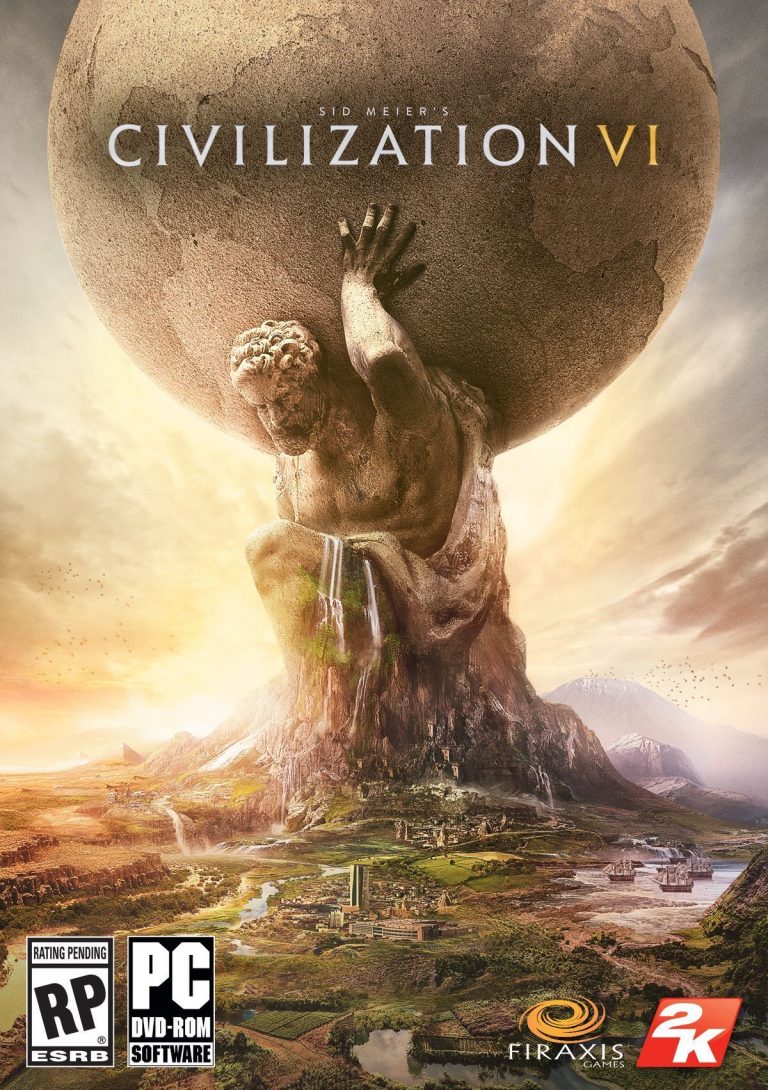
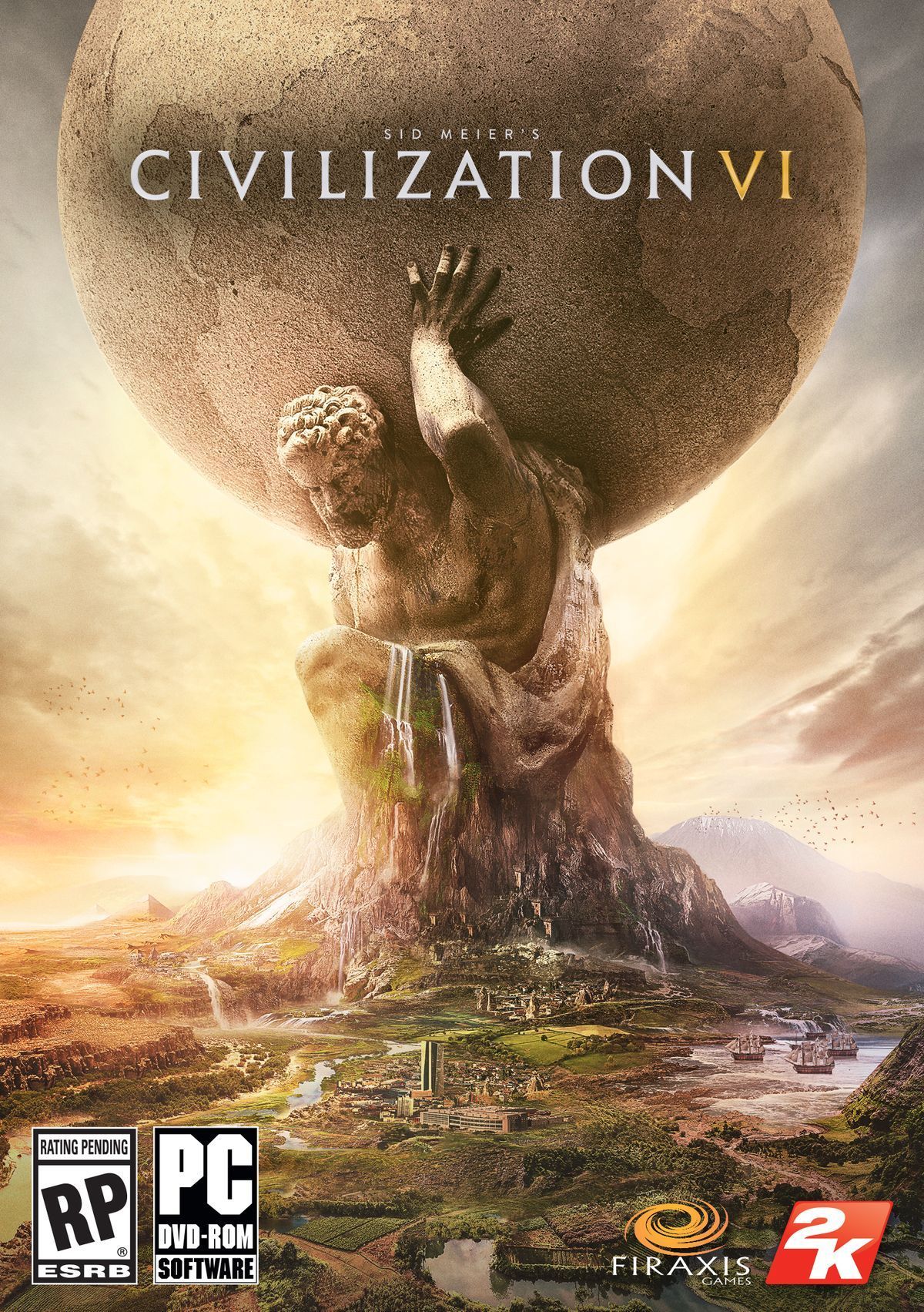
Sid Meier’s Civilization VI
Developer: Firaxis Games
Publisher: 2K
Platform: Mac, Windows (Reviewed)
Release Date: 20 October 2016
Price: $59.99 USD – Available Here
Video Review
Overview
After a quick jaunt through space, Firaxis Games is returning to Sid Meier’s Civilization’s roots on Earth. Sid Meier’s Civilization VI represents a modernization of Sid Meier’s classic series with new and updated gameplay mechanics. Launching with 20 great leaders, players will take their civilization from the Stone Age to the Information age while they attempt to seek victory through four different paths.
Story
As a 4X strategy game, Sid Meier’s Civilization VI does not have much of a story but rather a meta-game. There is a little bit of writing in the game when it comes to diplomatic interaction between nations. What little writing is there is decent, though there is not enough to be able to give a fair judgement on excellence. I appreciate that Civilization VI continues the tradition of adding quotes from famous people to the game. The collection chosen range from humorous to thought provoking words that often compliment the situation where they appear.
Gameplay
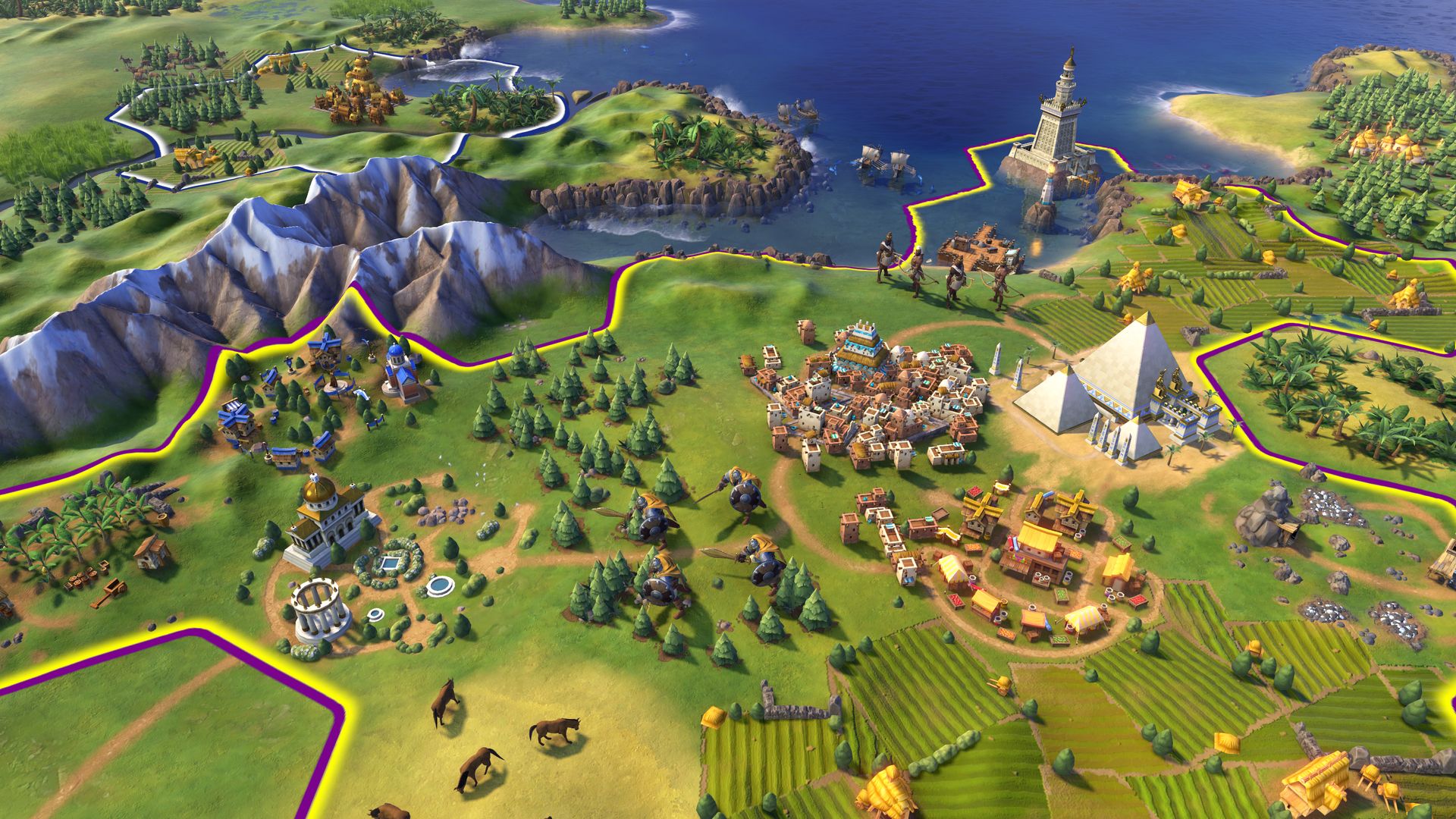
Sid Meier’s Civilization VI introduces a variety of new gameplay mechanics to the series, making a lot bigger changes to the gameplay than the previous title Civilization: Beyond Earth. At its core though, it is still a 4X strategy title. Players kick off the game by selecting a great leader that commands one of twenty powerful civilizations through history. Each civilization has its own specialty and many are optimized for specific types of victory. Each leader has their own main personality with some randomized influences when controlled by an AI that often reflects that civilization’s strengths.
The game kicks off in the Stone Age, with each player given a city and a warrior. There are four ways to victory. Domination victory is the most straight forward and familiar to gamers: conquer all enemy capitals and win the game. An equally aggressive, albeit more spiritual than physically violent, method of victory is a religious win. This method is new and is essentially a cross between a diplomatic and domination victory where a player must found a religion and spread it to at least 50% of all cities for every civilization. To attain a culture victory, players will need to develop culture and tourism that will attract outstrip all domestic tourism in other nations. Finally, a science victory will require players to run the long game by having them launch several vehicles into space. The four paths to victory are very diverse and provide a lot of different opportunities and scenarios for players. The victories need quite a bit of planning to pull off and while pivoting mid game is possible, it is definitely a huge challenge.
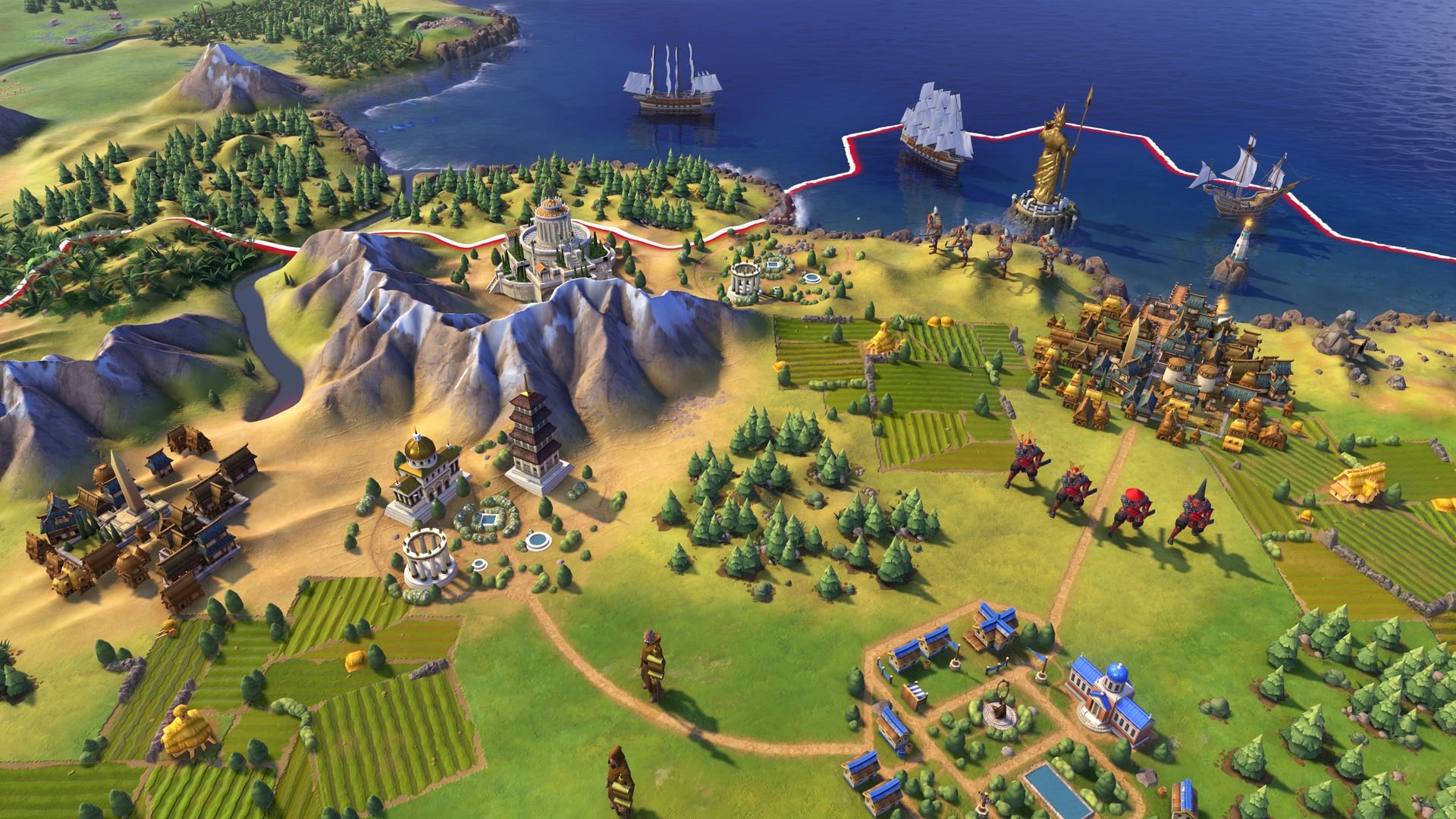
There are two research trees in Civilization VI serving two different purposes. The science tree is most familiar to 4X players, providing leaders access to a variety of technologies like new units and buildings. The civic tree focuses more on a variety of government policies, civilian units, and special buildings. Firaxis Games is introducing an active research system with Civilization VI. Almost every research has a set of conditions that will trigger a boost to research, halving the number of turns needed. The system goes a long way in further rewarding early long term planning with a quick ascent through the research trees. The new organization for research makes a lot more sense now and helps give players a little extra flexibility in their research paths as they are now able to research both simultaneously instead of having the two jammed together in one tree.
Government policy lets players pick several bonuses from policy cards unlocked in the civic tree. There are four tiers of government as a civilization progresses through the civic tree. Each type of government provide a certain number of slots for specific policy types. As new forms of government are unlocked, players are allowed to swap their government type to suit their needs. Government policy can be swapped by researching new policies in the civic tree, which allows players to swap their active cards to adjust their strategy or support their current direction.
While domination victory is likely the most straight forward victory method in Sid Meier’s Civilization VI, the game features a refinement of the warmonger system. Players have a few options on when and how to declare war, but must also balance the hefty warmonger penalties that now affect their own population. Normally, players need to give a five turn warning before going to war, but they can also opt for a surprise war if they are willing to accept a huge warmonger penalty. The new Casus Belli (just war) system allows players to research certain items on the civic tree to create situations that will allow them to go to war with a lower penalty. While the penalty for going to war is non-existent in the early game, the penalties climb rapidly as a civilization progresses through the ages, forcing players to plan their strikes carefully. The new system goes a long way in balancing out the domination victory with the other three victory paths.
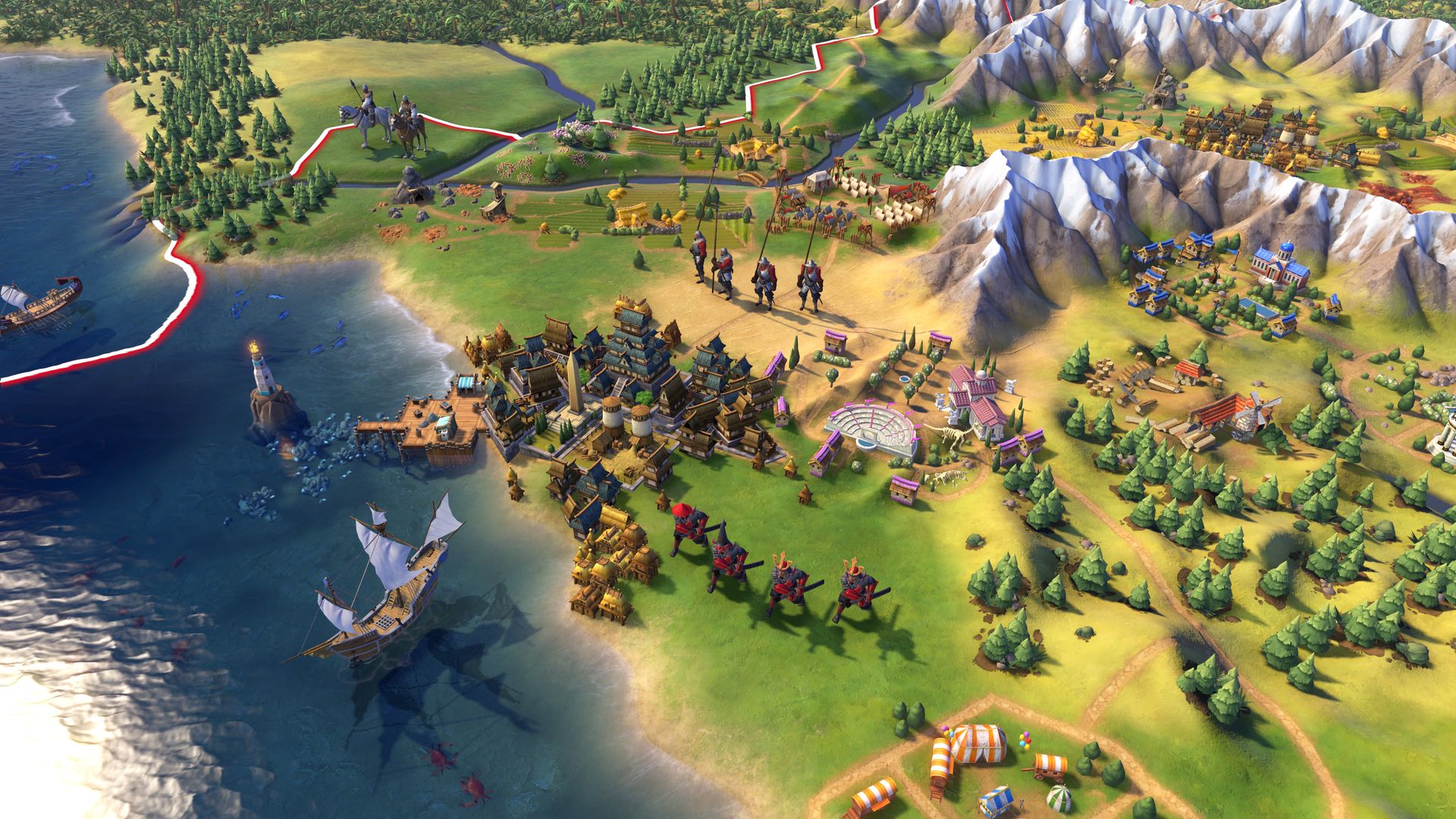
The revamped religion system is an interesting addition to the game. Religion is a two-step process in Civilization VI. Faith is a new resource that allows players to purchase religious units to convert enemy cities and conduct religious warfare. Early in the game, players will be able to found a Pantheon which lets players choose a bonus from a rather large pool. The pool is extremely well rounded and will serve any victory path well. The next step requires players to find a Great Prophet through the Great Person system or building the Stonehenge wonder. The Great Prophet will allow players to form their religion by selecting two bonuses from four different pools. Purchasing Apostles will open two more bonuses. The Apostle and Inquisitor religious units are aggressive units, but not in the traditional sense. Religious units can either spread their religion to cities a set number of time and can only attack each other. By essentially debating each other to death, the new religion system opens a second layer warfare that exists side by side with traditional military combat.
One of the most visible additions to the series is the new city district system. Cities can physically expand across multiple tiles by building specialized districts for things like faith or science. Many districts get bonuses on being positioned on or beside specific tiles, giving well placed cities a sizable advantage. In exchange, the builder system has been modified somewhat. Resource buildings are slightly less important now, so builders are now capped at three constructions before the unit is lost.
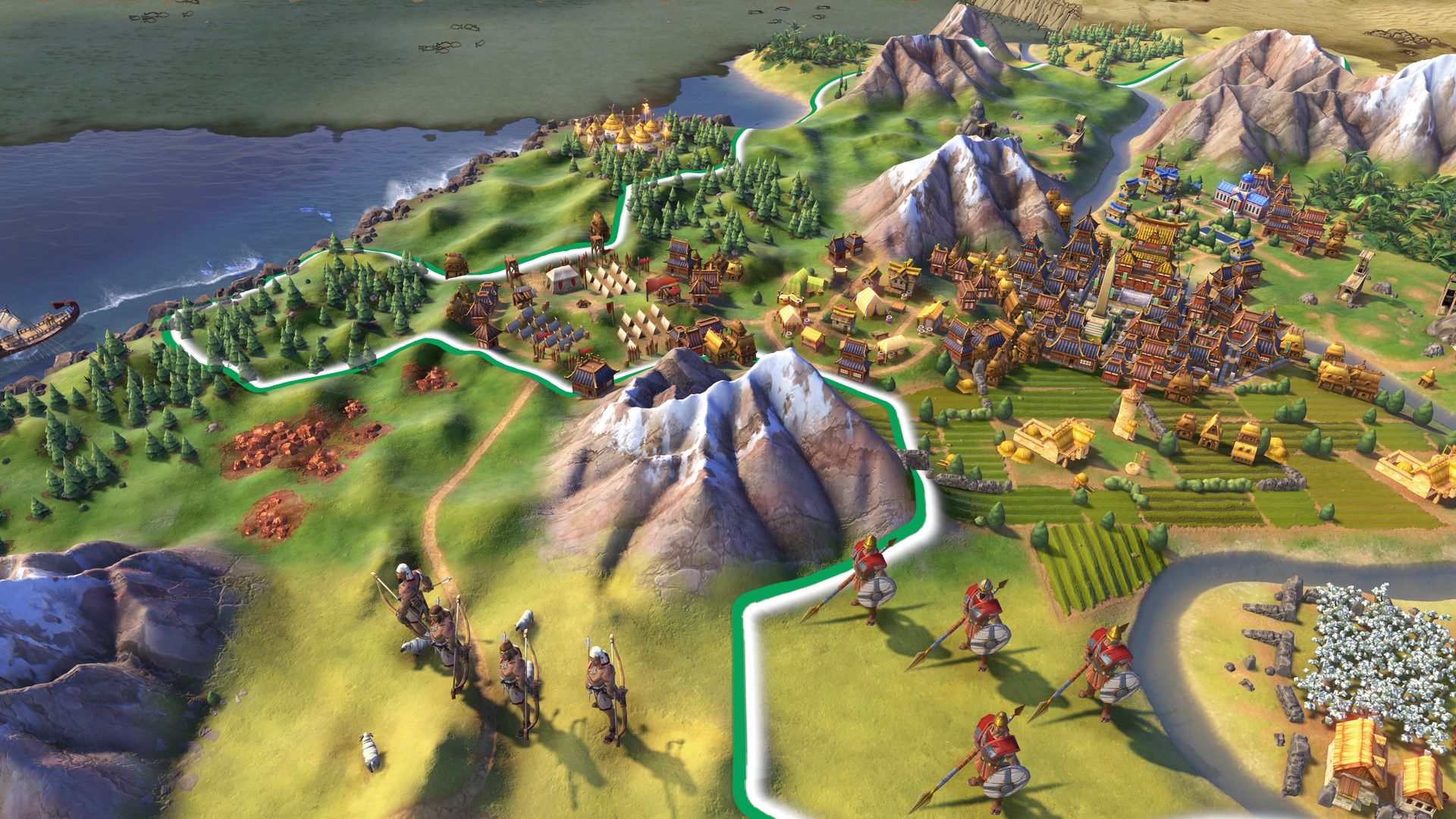
The introduction of the Great People system is almost like a bonus auction among all players. Great People grant some potent effects upon purchase or activation at a specific location. A variety of famous figures from history are available for purchase through Great Person points, city projects, and other bonuses. Only one of each Great Person can exist in a game and all players on the map can see the current pool of individuals available for purchase. All players can see the progress for each Great Person, opening some interesting options to disrupt their opponent’s plans. A player can choose to spend Gold or Faith to buy a particularly beneficial Great Person from under the nose of an enemy or attempt to bide their time in hopes of a better person will appear from the pool. I really like this system, as the open nature of each player’s progress adds a unique layer of strategy and diplomacy to the game.
A lot of Civilization IV players were heartbroken to see unit stacking disappear in Civilization V. While unit stacking has not returned entirely, Civilization VI introduces a new combined arms system. It adds a welcomed bit of complexity to unit management and strikes a decent balance between the one unit per tile design and the old unit stacking tactic.
Sid Meier’s Civilization VI makes some moves to lower the learning curve a little for players new to the 4X genre. Like every 4X title, an encyclopedia is included with the game that explains practically everything in the game; however, the encyclopedia is often way too hefty for new players to wade through. While it is well written and a search function is helpful, sometimes hands-on learning is the best way. The game provides many difficulty levels, but even the lowest difficulty level will pose a good challenge to new players or those particularly bad at 4X games. The advisor comes in two flavours, one that teaches all the basics of Civilization and one that brings players up to speed to the new changes. The advisor is quite unobtrusive as the game uses commentary from AI leaders to gently remind players about the player’s potential weaknesses. While Firaxis advertises a new tutorial system, it isn’t much different from other tutorial systems in 4X titles where an advisor will have a few words to say along with a suggestion to do some more reading in the encyclopedia. Civilization VI doesn’t conquer the Mount Everest of bringing down the 4X learning curve for new players, but the tutorial system is straight forward and flexible for players of different backgrounds.
Visuals
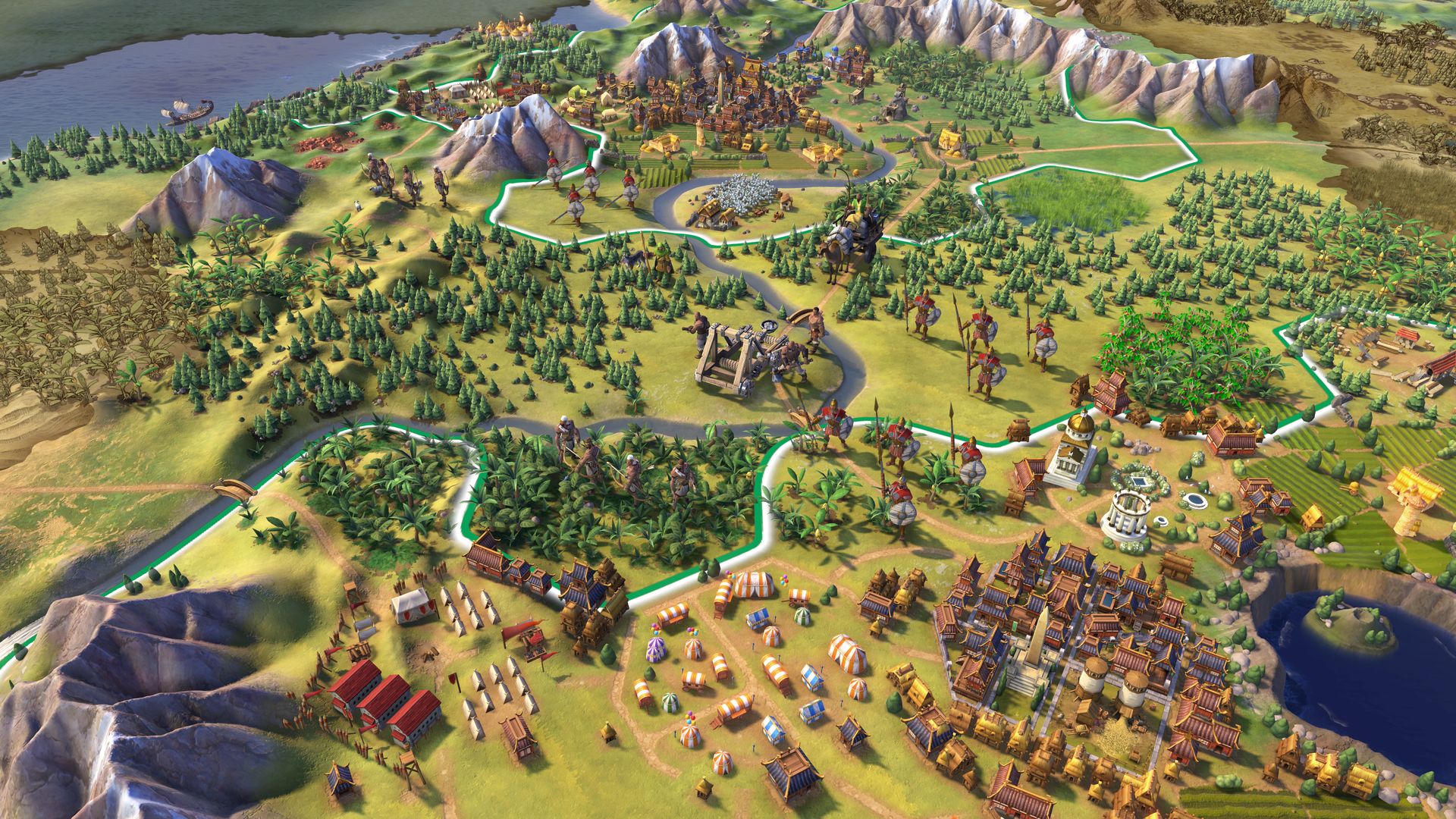
Sid Meier’s Civilization VI sports a slightly cartoony art style first seen in the series’ mobile titles. While the world map is very much a traditional Civilization art style with up to date graphics, the world leaders use the exaggerated, cartoon features. The style gives the game a more relaxed look than the very buttoned up Civilization V that I find very pleasing. On the technical side, there is plenty of options to tweak and I was pleasantly surprised to see a video benchmark tool.
Audio
The audio experience in Sid Meier’s Civilization VI is top notch. The sound effects and voice acting is solid. I like the fact that many of the leaders speak in their native language. The soundtrack is the star of the show. It strikes the perfect balance of being energetic and uplifting enough to keep players going for another turn, yet calm and relaxing enough to not be distracting. While composer Geoff Knorr did an excellent job scoring the game, the return of Christopher Tin for the game’s main theme blew me away.
Overall
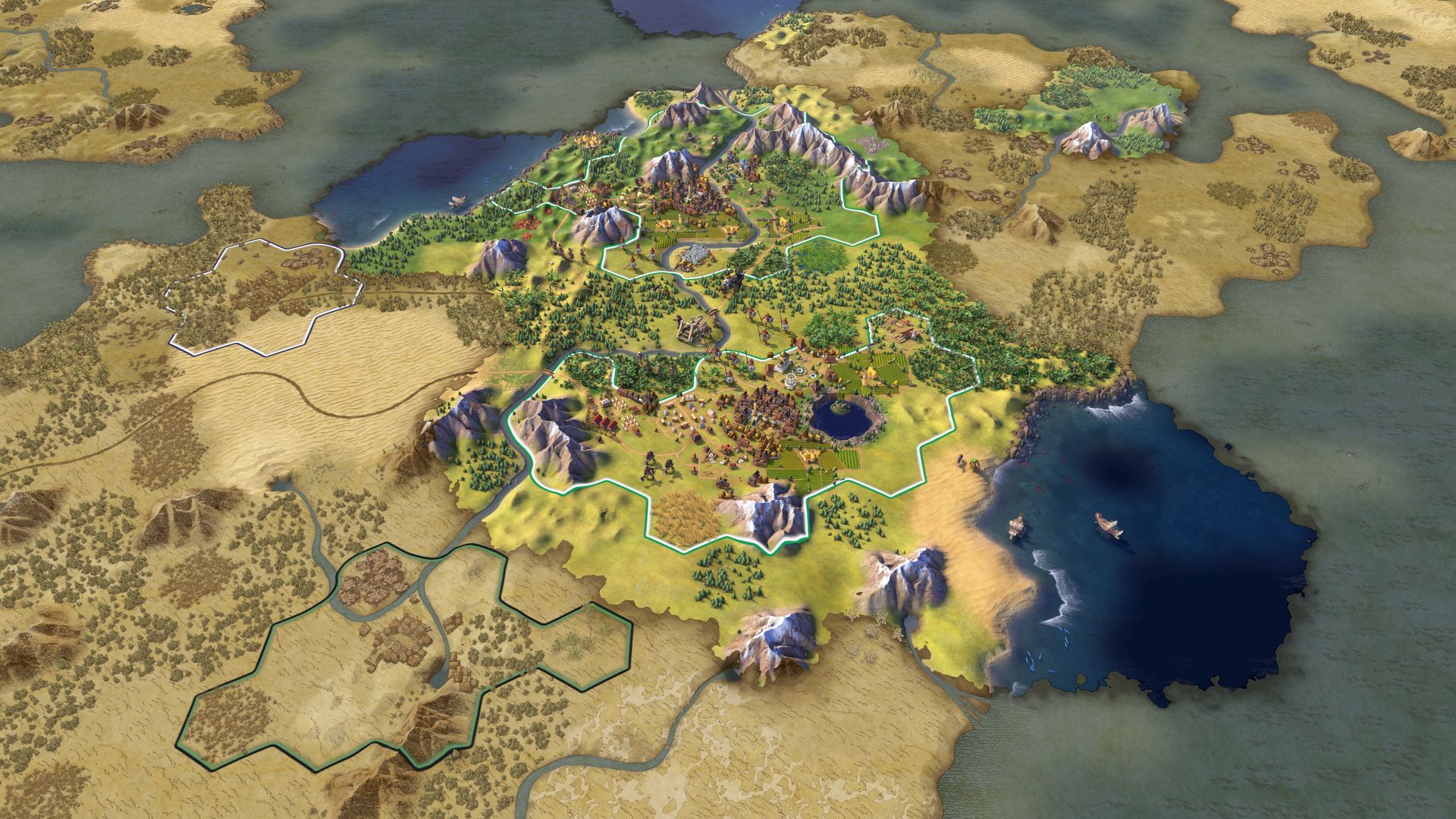
Sid Meier’s Civilization VI is another big shake up to the long running series. It maintains enough core mechanics to still be a Civilization title while introducing some new ones to add new layers of complexity and some modernization to the game. The four paths to victory create an intriguing dynamic between civilizations, especially with the addition of the religious victory. While it is still a bit of a steep learning curve for new players, Sid Meier’s Civilization VI will likely be the gold standard in 4X titles for years to come.
Capsule Computers review guidelines can be found here.
Hanabee Reveals Its January 2017 Releases

Hanabee Entertainment made their January 2017 releases available for pre-order yesterday. The following titles are all due out on January 12, 2016.
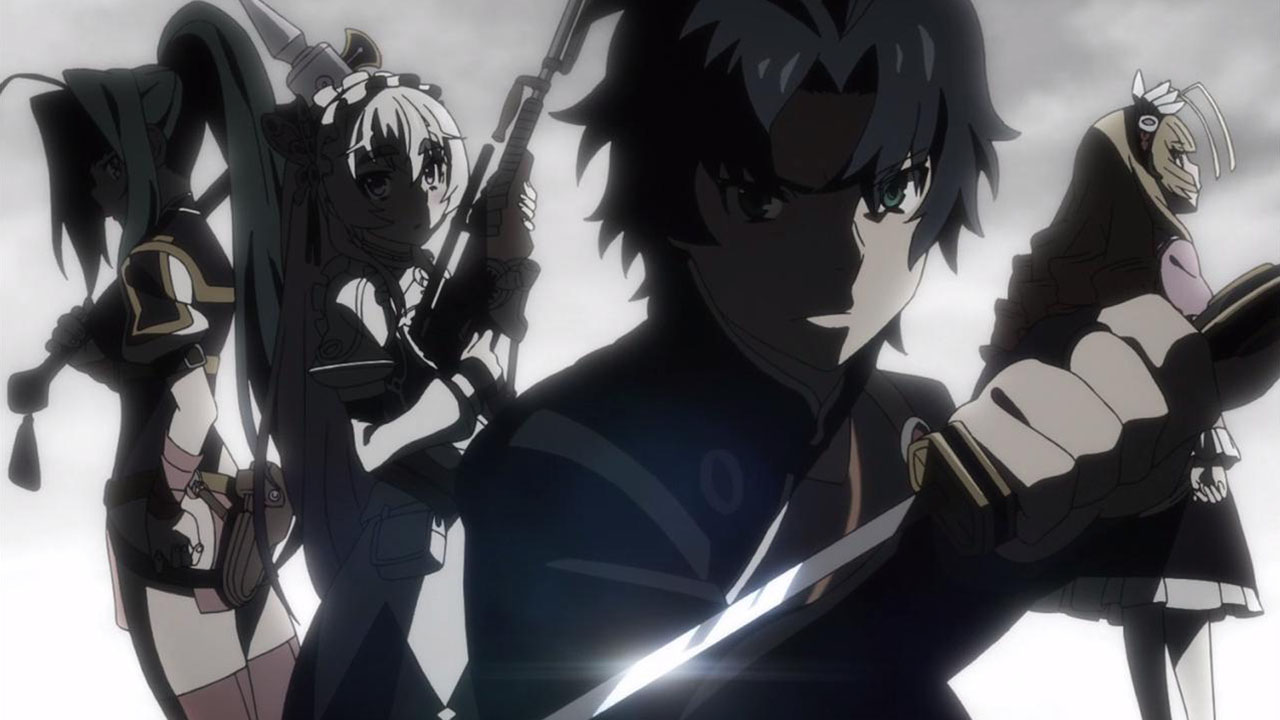
Chaika the Coffin Princess: Avenging Battle (Season 2) will be released on DVD and Blu-ray. All 11 episodes will be featured with dual audio and English subtitles. On-disc extras will include the textless opening and ending animation. The sets have a suggested retail price of $59.99
Owarimonogatari will be released on DVD and Blu-ray in a combo pack. This is the sequel to Tsukimonogatari. All 7 episodes will be featured with Japanese audio and English subtitles. The textless opening and ending animation sequences will be included as on-disc extras. The release has a suggested price of $49.99.
Re-Kan! will be released on both DVD and Blu-ray. All 13 episodes will be featured with Japanese audio and English subtitles. On-disc extras will include the the textless opening and ending animation. The suggested retail price for both editions is $59.99.
Back to 2016, Hanabee has stated that their November 2016 releases, including a RWBY SteelBook containing the first three seasons on Blu-ray and the latest season of Red vs Blue, will begin shipping next week.
All prices listed are in AUD (Australian Dollars).
Kingdom Hearts 1.5 + 2.5 Remix Announced for PS4
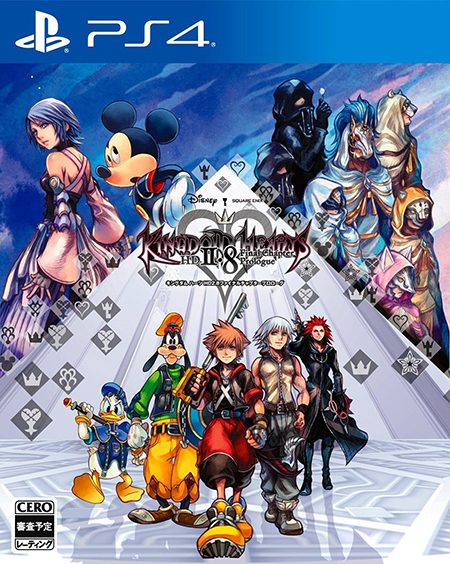
Huge news on multiple games in the Kingdom Hearts franchise was released at a recent special event, where we got an entirely new game (well remastered collection of a collection) announcement, the entire opening cinematic for the upcoming game Kingdom Hearts Birth by Sleep 0.2 and even a couple of screenshots of the elusive Kingdom Hearts III.
Let’s start with the big news, Kingdom Hearts 1.5 + 2.5 HD ReMIX has been announced exclusively for the PlayStation 4. This is a big deal as with this announcement, every important game in the series is finally available on one platform, even if that means a couple of the less important titles are only represented through (lengthy) cutscene stories. Even better though, each game will run at a full 60 FPS, a first for all of the games in this collection. Kingdom Hearts 1.5 + 2.5 ReMIX will be available March 9th in Japan, March 28th in North America, and March 31st 2017 in Europe. All these games will be included on a single disc.
The opening cinematic is always an important part of the game and although Kingdom Hearts 0.2 Birth by Sleep is a smaller experience, even it gets it’s own unique CGI intro video. These videos are often pretty cryptic so you won’t get much idea of the plot but it is very cool to watch and the new remix of Simple and Clean is just as impressive as the original. Be sure to check it out for yourself below. Kingdom Hearts 2.8, which contains 0.2 Birth by Sleep as one of it’s playable titles releases on January 24th.
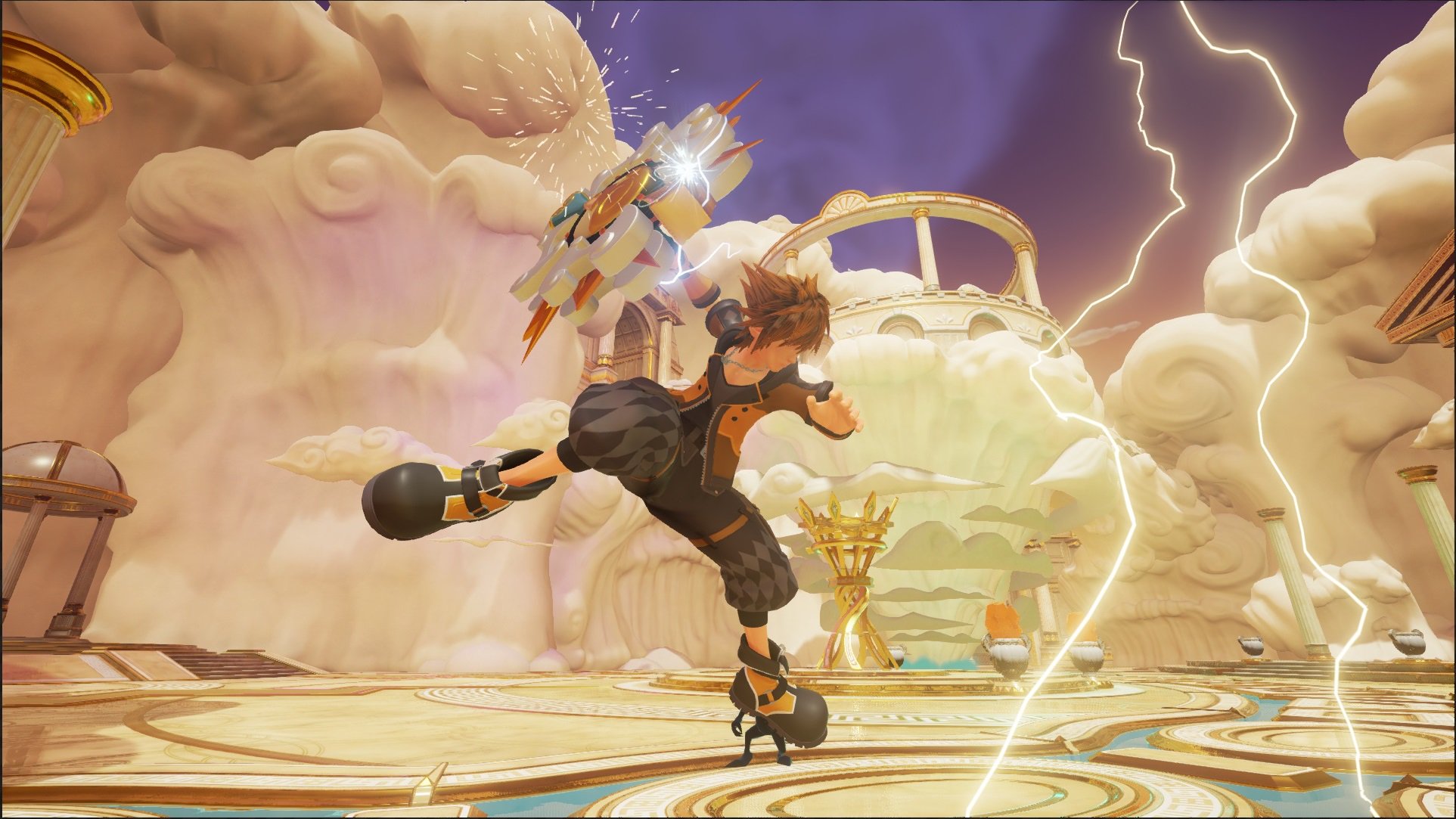
Lastly, Kingdom Hearts III got some new screenshots from the Hercules level which reveal a little more about the combat system. Drive forms from Kingdom Hearts II are returning and there are two all new ones, Guard Form and Power Form! The picture above shows Guard Form and the shield Sora is holding is actually a transformed state of the Mount Olympus keyblade. The amount of combat options this game is going to have is going to be crazy.
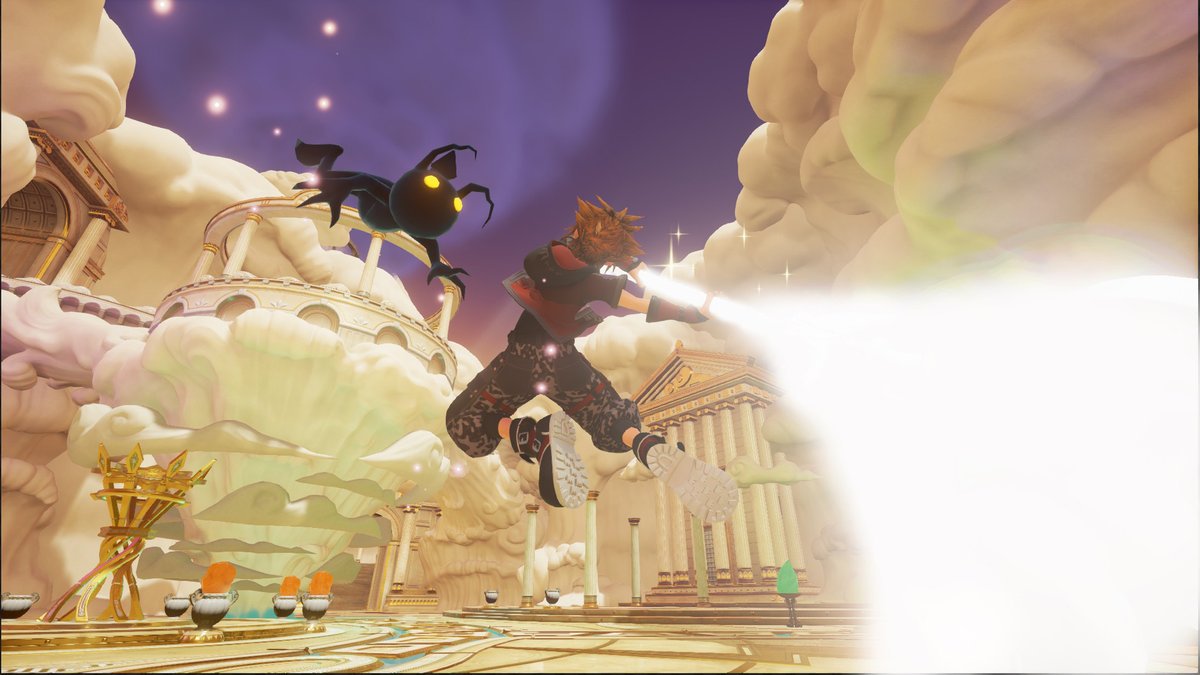
This other screenshot above shows Sora in Power Form. This shot has actually been edited as Sora was holding a keyblade from an as of yet unrevealed world, hence that big white light. Kingdom Hearts III still has no set release date, but with these other games filling the void the wait will at least be a little less painful.
ARK: SURVIVAL EVOLVED EXPANDS WITH THREE NEW CREATURES IN XBOX ONE UPDATE
ARK: SURVIVAL EVOLVED EXPANDS WITH THREE NEW CREATURES IN XBOX ONE UPDATE
Survivors Can Now Piece Together Story With Explorer Notes Left Behind By Ancient Warriors
Seattle, WA – October 28, 2016 – Studio Wildcard updated its popular survival-adventure game ARK: Survival Evolved on Xbox One today with an arsenal of highly anticipated dinos, mechanics and features. Three new creatures, the prey-grabbing Kaprosuchus, the boulder-tossing Chalicotherium, and the oxygen-giving Diplocaulus join the fray, while the ARK “Explorer Note” System finds its way into both the main Island and ARK: Scorched Earth. Survivors also can now wield their weapons when mount-riding smaller dinos.
Found within 130 treasure chests and available now, the Explorer Notes contain the stories of actual inhabitants who have previously lived on the isle, as well as provide a temporary XP buff to those Survivors who collect them. These 3D Explorer and Story Notes are punctuated with powerful personalities from a Roman Centurion to an Ancient Chinese Warrior to an Egyptian Priestess, each one chronicling their experiences on ARK and unveiling kernels of the story secrets they have uncovered. What will they reveal about the mysteries that surround the ARK?
The full ARK: Survival Evolved Update features a broad spectrum of additions, including:
- New Dinos: Kaprosuchus Paludentium, Diplodocus Insulaprincep, and Chalicotherium Obsideoquus
- New Mechanics:
- You can now directly wield your weapons when mount-riding smaller Dinos!
- Explorer Notes
- Tree Platforms now have +70% HP and +50% resistance to explosive damage
- Neuter/Spay option for Tamed Dinos (irreversible!)
Kaprosuchus Paludentium: A smaller relative of the Sarcosuchus, “Kapro” is a water-based carnivore primarily found among swamps and capable of high speed running on land or in water. Kapro is a solitary hunter that picks off small -to-medium creatures, especially those isolated from their packs. Survivors are generally split about the usefulness of this dino. Some love its versatile speed, while others do not like its physical frailty and do not think its high speed and damaging attacks make up for this shortcoming.
Diplocaulus Natatorinutrix: At home mainly on the island’s swamps, Diplocaulus Natatorinutrix is a small amphibian residing at the middle-bottom of the ecosystem. The few uses for tamed Diplocaulus include the (rather disgusting) practice of employing it as an oxygen bag. Because Diplocaulus stores air in the bladders of its head, divers can suck from these bladders to take deep breaths while submerged, supporting long-term underwater exploration without the use of external gear. Diplocaulus’ unique capability to retain vast quantities of oxygen allows to effectively remain submerged for hours at a time, usually outlasting even other amphibious creatures that might otherwise prey upon it.
Chalicotherium Obsideoquus: Found in small numbers in colder regions, Chalicotherium Obsideoquus is a primitive creature with simple behaviors. While normally a peaceful herbivore that prefers to spend its days lazing about or playing with its family, it is very territorial, and the entire family, young and old, will turn against an encroaching creature at just the slightest provocation. It’s believed that Chalicotherium is best used as a trained mobile artillery, as its unique playtime habit delivers a devastating long-range assault tactic when it is given boulders to throw, rather than snowballs!
Feel like riding a dinosaur? Join the ARK community forums HERE:
https://survivetheark.com/index.php?/forums/
ARK: Survival Evolved is in development for Xbox One via the ID@Xbox program, PlayStation®4 with VR support, and Steam PC. The game is currently playable in Microsoft’s Game Preview on Xbox One and Steam’s Early Access program, which includes Oculus Rift VR support and an integration of Steam community features such as Steam Economy and Steam Workshop for custom maps and mods. Players can host private/LAN servers and have access to a custom-built version of the Unreal Engine 4 Editor for creating mods. The world of ARK is designed to be modder-friendly and ever-expanding!
To join our growing band of survivors, journey to Steam or Microsoft’s Game Preview on Xbox One to download the game. For the latest updates follow us on Twitter, like us on Facebook, subscribe to us on YouTube, visit the Website at playark.com and watch us tame and train leviathan dinosaurs on Twitch.TV.
# # #
ABOUT STUDIO WILDCARD
Studio Wildcard was co-founded in 2014 by industry veteran Jeremy Stieglitz and Jesse Rapczak, former Technical Art Director at Microsoft Game Studios, with the mission of bringing AAA quality to ambitious indie productions that are designed for core gamers. With combined 25 years of industry experience across multiple independent and studio-backed titles, Jeremy and Jesse have teamed up with other veteran developers for Seattle, WA-based and Gainesville, FL-based development studios that also include distributed team members across multiple continents. Wherever talented, driven developers may reside, Studio Wildcard intends to seek out and work with them!
ABOUT INSTINCT GAMES
Instinct Games is Egypt’s leading game development studio. Started in 2011 by former Timeline Interactive co-founders, the Instinct Games team develops and produces video games on all major platforms utilizing its competent technical team. Its mission is to collaborate with world class partners to foster Egypt’s video game development ecosystem and set a precedent of high quality, low cost, entertaining indie games with worldwide appeal.