MASTER OF ETERNITY AMPS FIERCE MECHA
COMBAT WITH TEMPLE BOSS UPDATE
New story chapters, suits, Boss Raid, special
events and more arrive for Nexon’s immersive strategy role-playing game (SPRG)
on iPhone and Android
Seoul –
Feb. 4, 2019 –
Immersion in fan-favorite acclaimed strategy role-playing game (SRPG) Master
of Eternity (M.O.E.) just became deeper as NEXON Korea Corporation,
subsidiary of NEXON Co., Ltd. (“Nexon”) (3659.TO), a worldwide leader in
free-to-play online and mobile games, introduces the game’s massive Boss Raid,
New Suit and Temple Guardian update. Fans of both grid-based galactic combat
and loveable Pixie commanders can now plunge into the massive Temple Guardian
update for Master of Eternity (M.O.E.), the acclaimed strategy
role-playing game (SRPG) from. Today’s update is available for download
worldwide on iOS
and Android.
Master
of Eternity explores
a rugged war-torn universe engaged in a massive interstellar battle. Adorable
yet fierce Pixies command formidable Mecha suits to fight rivals, foes and even
friends on the battlefield. Players develop special in-game tactics and engage
in intense battle for ultimate control of the M.O.E. galaxy. Today’s
update boasts several new action-packed gameplay features, challenges and
events, including:
Unique New Chapter
& Temple – The
highly-anticipated Chapter 13 Part Two delivers an all-new story for
players to face, packed with a never-before-seen Temple Guardian;
New Boss Raid and
Mobility Production Center – Players
can now participate in Boss Raids and earn rewards to build exclusive
Mecha suits;
Powerful Rare
Suits – Enlist in galactic battle with 17 new Mecha
suits for the Assault, Support, Bombardier and Sniper classes, including
the coveted Kali’s Child Suit;
Special In-game
Events – Veteran and new players can
participate in several events until Wednesday, Feb. 6 to earn rewards,
including:
Chapter 7 Part
Clear: 300,000 Credits and S3 Crux
x5
Chapter 9 Part
Clear: 500,000 Credits and S3 Crux
x10
Chapter 10 Part
Clear: 700,000 Credits and S3
Guaranteed Ticket x5
The Master of Eternity Temple Guardian update is available now for iPhone and Android and is rated 12+.
Visit the official Master of Eternity Facebook page
About NEXON Co. Ltd. NEXON Co., Ltd. (“Nexon”) (3659.TO) is a
worldwide leader in free-to-play online and mobile games. Founded in Korea in
1994, Nexon developed one of the world’s first graphics-based massively
multiplayer online games. Nexon also pioneered the concept of microtransactions
and the free-to-play business model, setting a new standard in which play is
free, and users have the option to purchase in-game items to enhance their
experience. Nexon currently services nearly 100 titles in more than 190 countries. The
Company is headquartered in Tokyo, Japan and its shares are listed on the Tokyo
Stock Exchange.
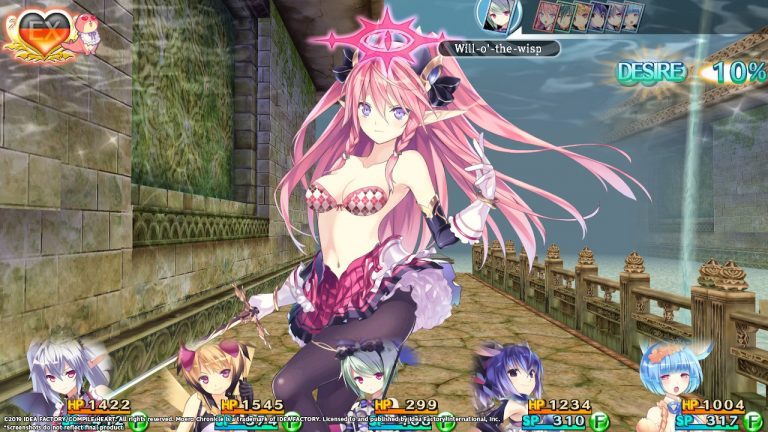
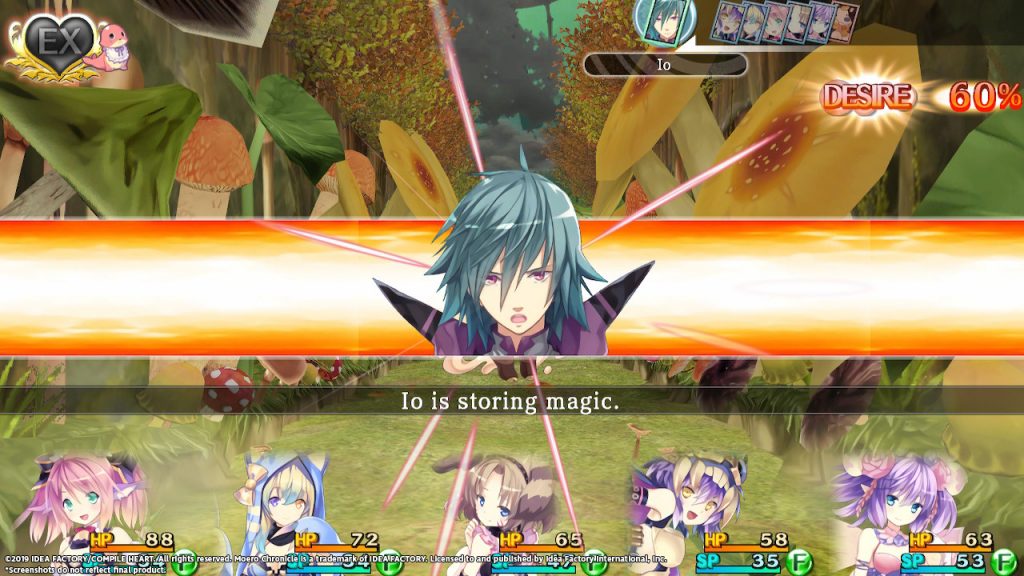
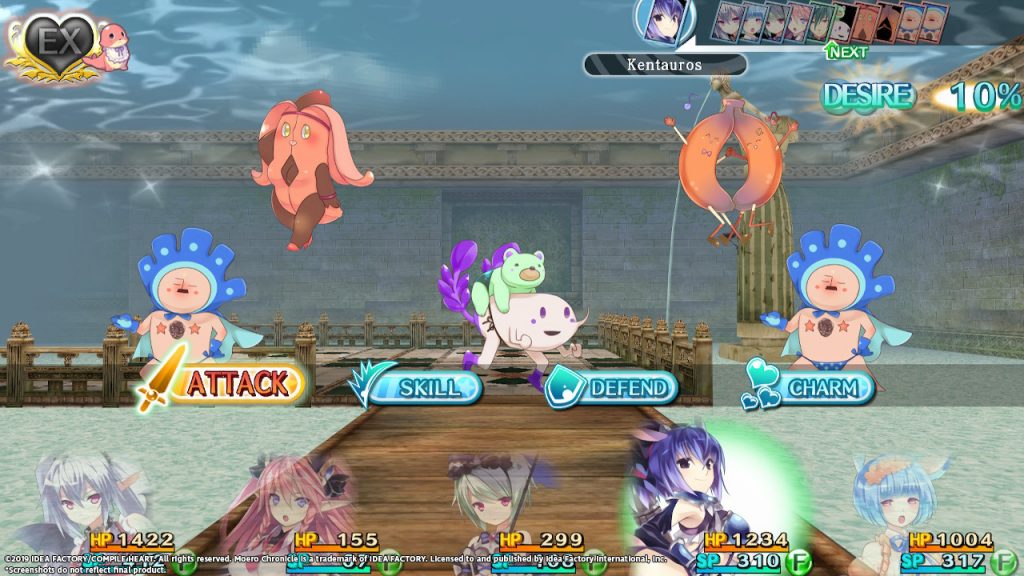
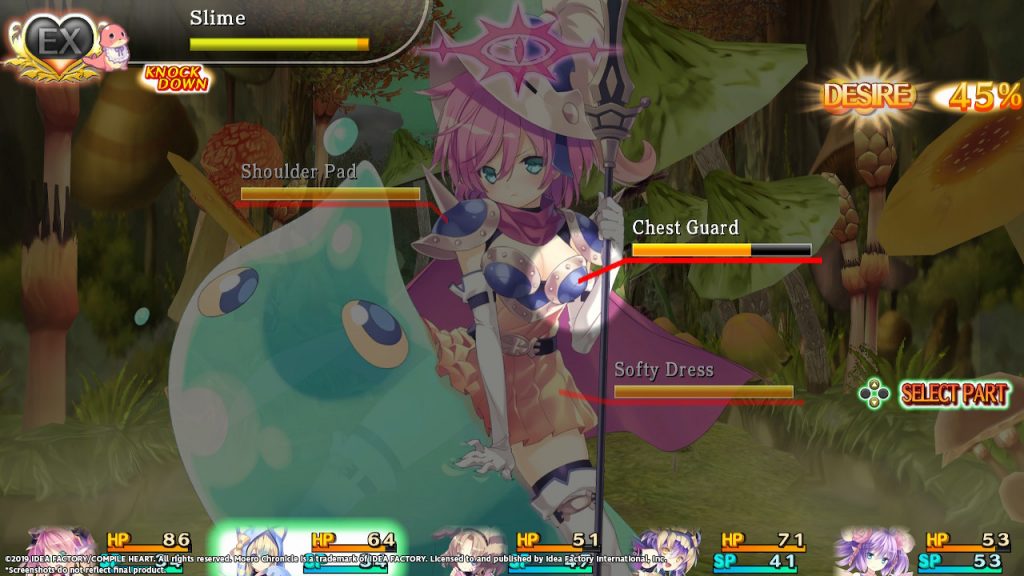
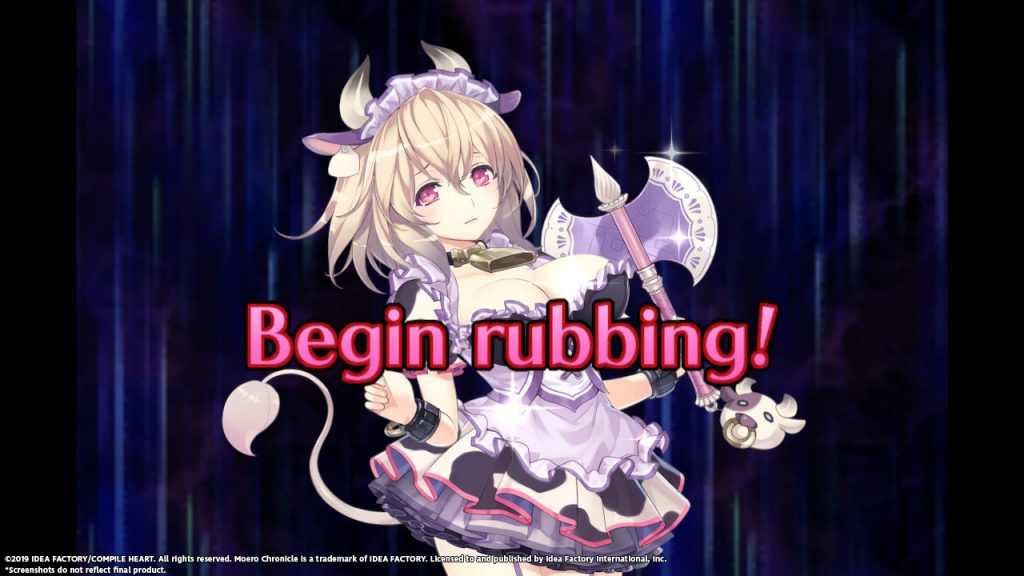
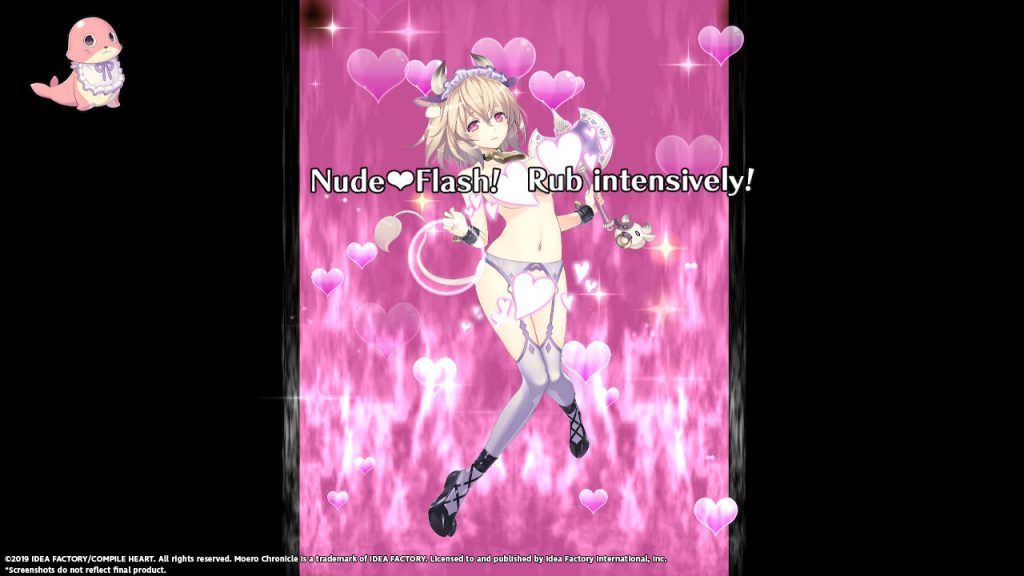
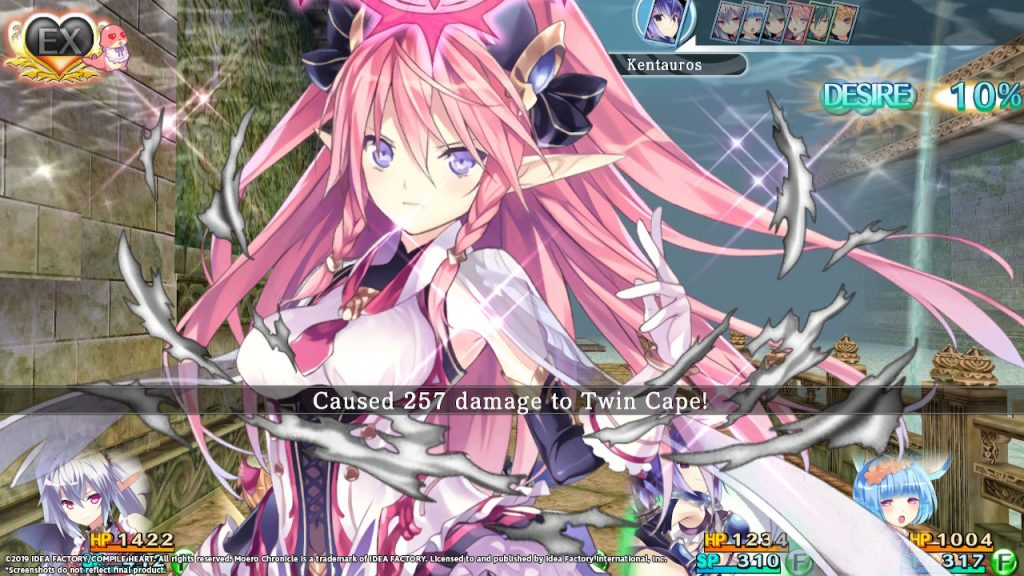
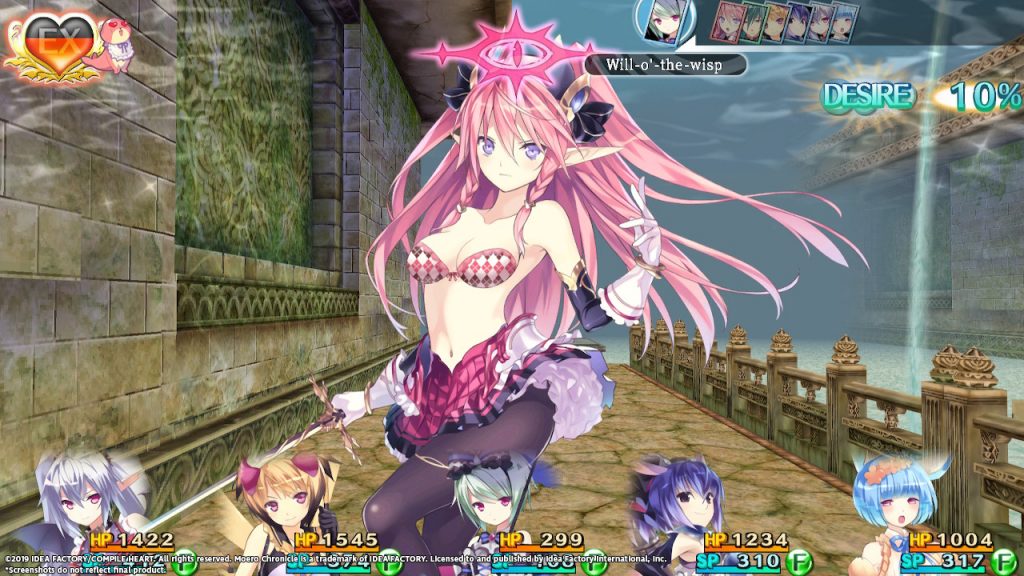
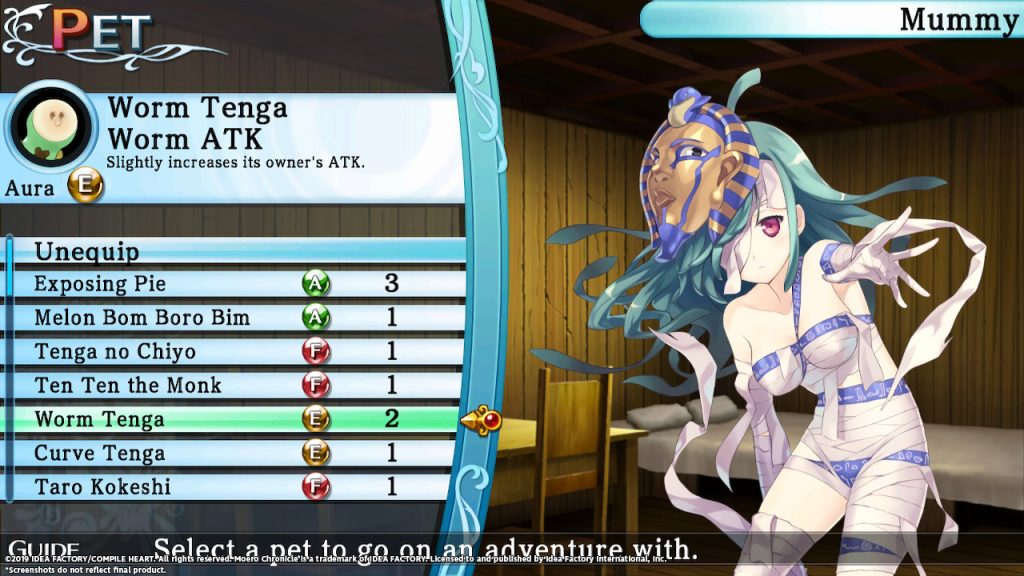
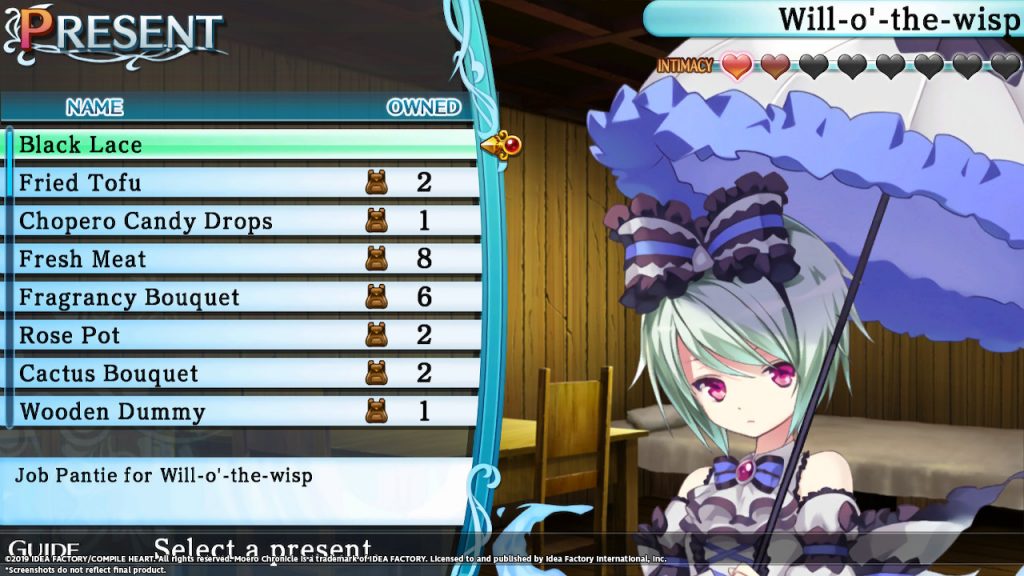
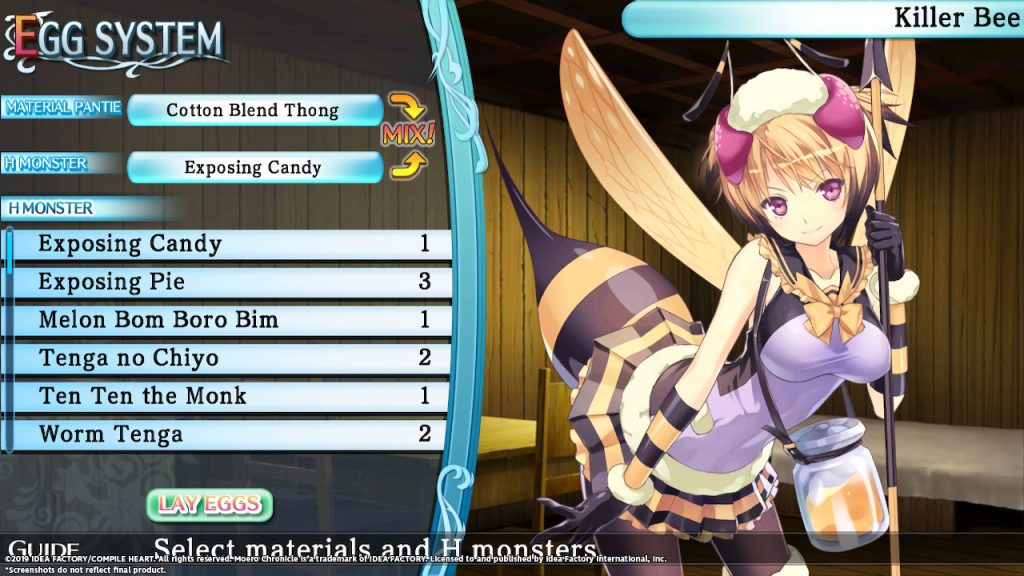
The Moero Chronicle series has had a bit of a rough time as far as English releases go but it looks like Nintendo is going to allow localizers some leeway as Idea Factory International has announced that they will be bringing Moero Chronicle Hyper to the West. The game will be released digitally only for the Switch through the Nintendo eShop in North America and Europe where it will be priced at $39.99 with a 30% launch discount when it is released sometime this spring.
Moero Chronicle Hyper follows the story of Io, a man that is so perverted that he simply cannot talk to a woman though he doesn’t seem to have problems talking to his best friend Lilia who happens to be a monster girl. This becomes the least of his problems when he’s tasked with going to the dangerous region of Monstopia and finding why the monster girls there have started going on a rampage.
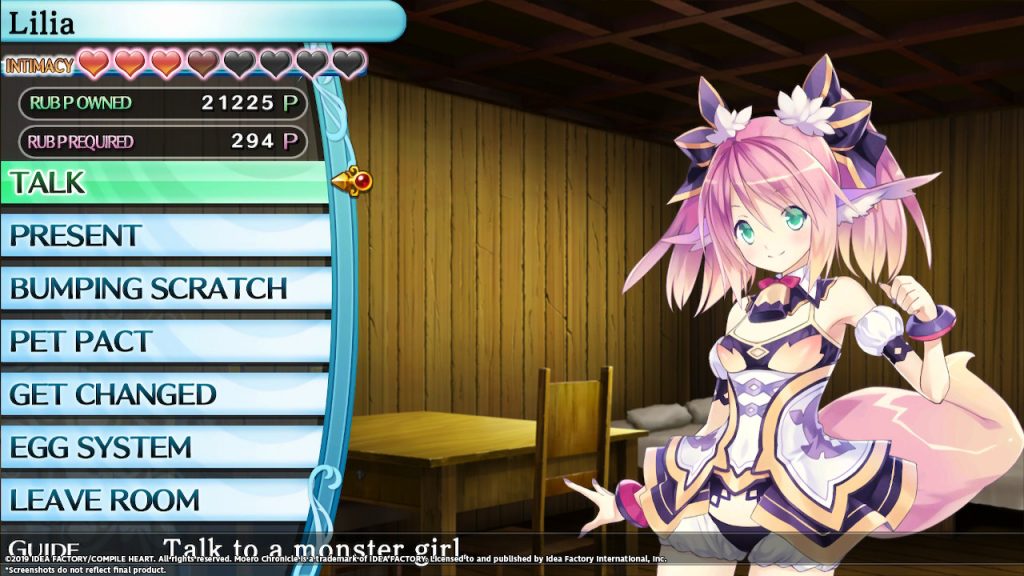
Players will be able to recruit up to fifty different monster girls with their own unique traits and skills while also building their relationships with each girl though the most “interesting” feature happens to be the “Bumping Scratch” that purifies them and returns them to their senses by finding their weakpoints and then touching, rubbing, and poking them until they are purified.
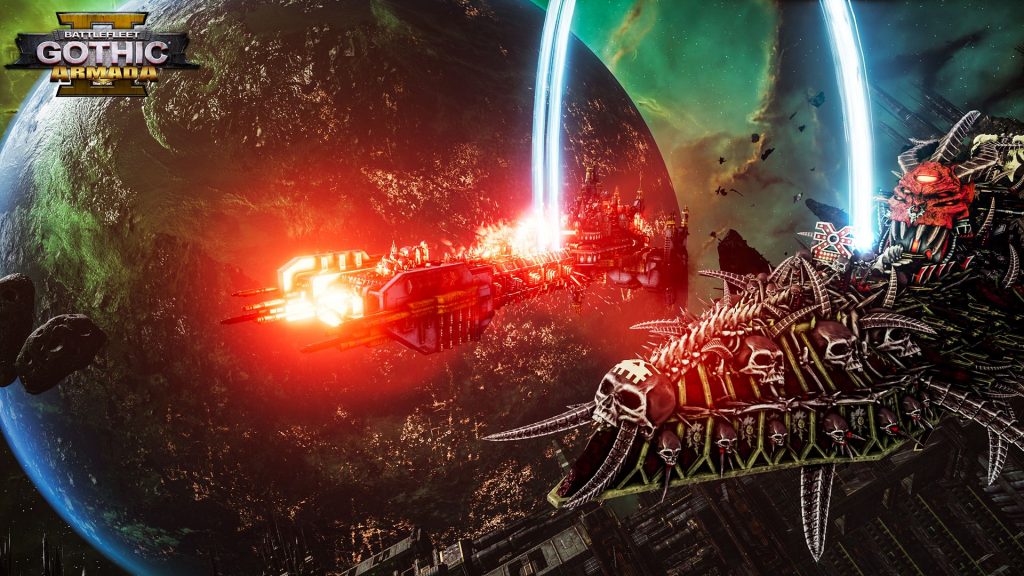
Battlefleet Gothic: Armada 2is based on the classic tabletop war game from the Warhammer 40,000 franchise. It is the first game to be set in the new “Gathering Storm” setting. The sequel improves on the first video game adaptation with larger fleets, more ship customization options, all 12 factions from the tabletop game, and improved gameplay.
Story
As the first video
game in the new “Gathering Storm” setting, Battlefleet
Gothic: Armada 2 does a lot better job at explaining the intricate Warhammer 40,000 universe than most
video games. The three campaigns for the Imperium, Necrons, and Tyranids introduce
players to each faction’s lore and their current situations. It’s still not a
complete introduction to all twelve factions, but I hope this signals a greater
interest in bringing new players into the world.
The writing is
solid. While the game is not text heavy like an RPG, the rally the troop
speeches are done very well. The cutscenes are well paced, providing just
enough information to sketch out the lore and keep the story going without
dragging into doldrums.
Gameplay
Battlefleet Gothic: Armada 2 offers three campaigns for singleplayer
and two player co-op. As of the writing of this review, the co-op is still in
beta testing, with a final release expected to come out sometime in February. The
campaigns are formatted in two phases. The overworld is a turn-based board game
style affair where players move fleets around different sectors to control
them. Controlled sectors are used for shipbuilding, resource production, and slowing
down enemy fleets with sector defenses. Battles for sectors can be handled
automatically by the AI or by the players in the RTS section of the game.
Multiplayer skips
the turn-based world map all together in favour of the shorter RTS matches. Multiplayer
matches are either 1vs1 or 2vs2 in either Domination or Cruiser Clash, their version
of team deathmatch. Players can opt for either skirmish mode or ranked play. I
would have liked to see random unranked matches for newbies to practice and
experiment in before wading into the deep end. Instead, Skirmishes are invite
only.
The RTS battles
are intense. Matches are like games of chess in motion, where players are attempting
to move into the right position to unleash their main guns on the enemy. Players
manage not only the integrity of their ship, but also the crew. A mutiny will
cause the ship to ignore commands and flee the battle, making morale just as
important as shields. Because the fleet battles only involve a handful of
units, micromanaging ships is a must, as well-timed skill usage can turn the tide
of a battle. The speed of multiplayer matches can’t be adjusted, but players
can slow down, speed up, or even pause the gameplay in singleplayer to give
themselves time to react or skip over dull moments of travel.
Battlefleet Gothic: Armada 2 is not for those who like a lot of variety
in their mission objectives. The game stays true to its tabletop wargaming roots
and generally sticks to either domination or cruiser clash. There are not many
epic set pieces created by the developers, and it’s a bit of a shame. Some of
the greatest variety is in the different faction’s ships, as they all have very
different playstyles. Since there are only three factions with campaigns so
far, I would have liked to see a versus AI mode for those who prefer to play singleplayer.
The learning curve
in Battlefleet Gothic: Armada 2 is steep.
The prequel campaign is long and will prepare players with some basic skills;
however, beating a campaign is still a challenge on easy. The campaign offers
three levels of difficulty and the option of disabling the emergency meter. As
players lose fights or fail objectives, the game becomes all the more difficult.
Combined with the 12 possible factions, Battlefleet
Gothic: Armada 2 offers a solid challenge for players willing to put in the
effort of learning the game’s intricacies.
The user
experience is usable, but there are room for improvement. In the overworld, I
would have preferred to move fleets between sectors by clicking either the
sector or the slot I wish the fleet to occupy, instead of just the sector. The
loading time for the build new ships menu also could be improved, as the game
currently locks up for several seconds. The ability bars on the bottom of the
screen works well for one or two types of ships, but commanding a fleet comprising
of several different types can make the ability bars very cramped. While ability
ranges are shown with a light blue overlay and the mouse icon show valid
targets, some abilities may not fire because of some other condition not being
met. It would have been nice for the text error message to show exactly why the
ability would not work, such as Lightning Strikes requiring the target to have
no shields.
Visuals
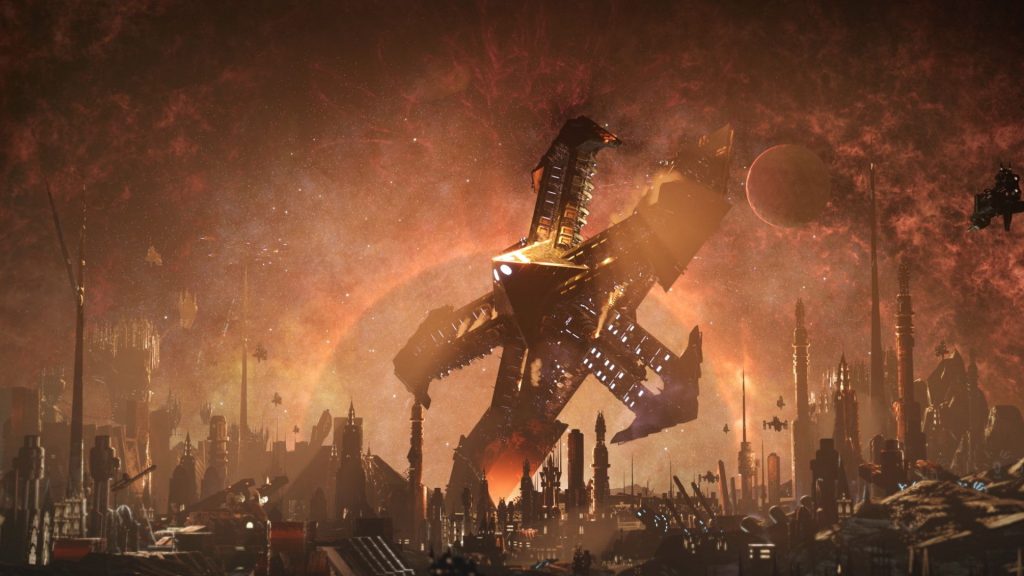
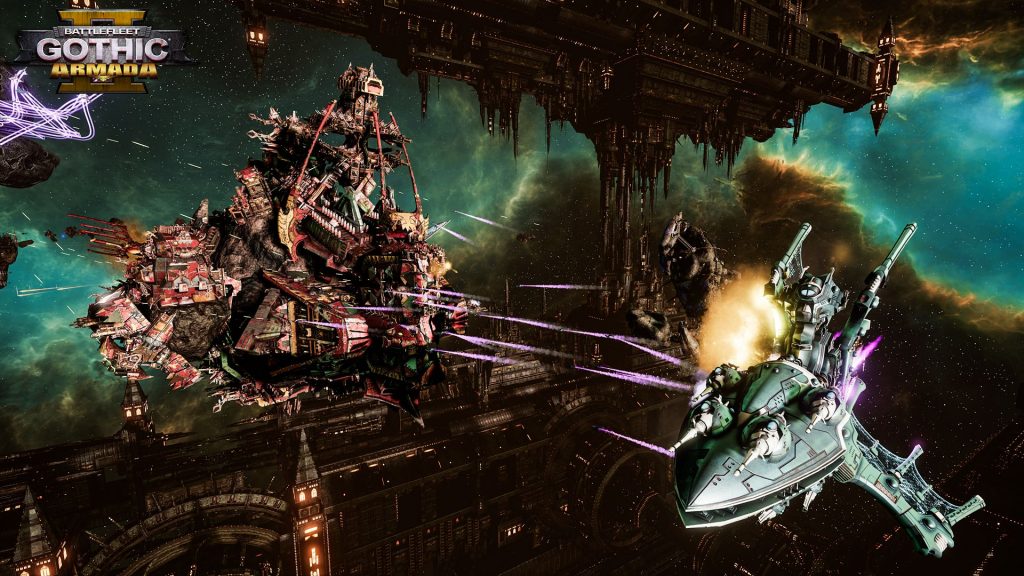
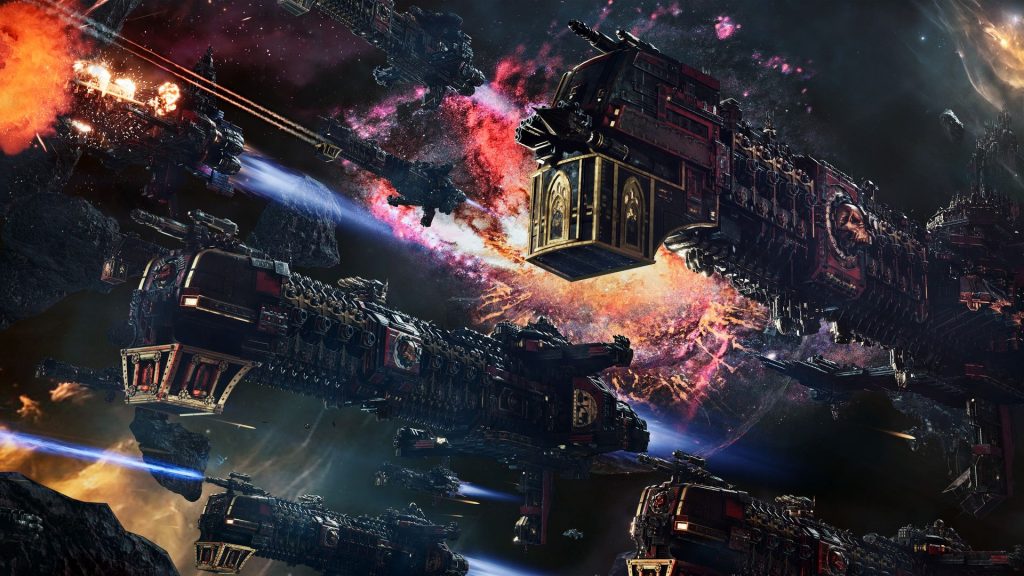
Battlefleet Gothic: Armada 2 looks fantastic. The ship design is
eye catching and unique, ranging from the regal Imperium fleets to the floating
rust buckets the Orks call a battleship. There are a few subtle nods to the game’s
tabletop roots like the bases the miniatures would traditionally be mounted on
and the background that is set below the playing grid. When combat strikes,
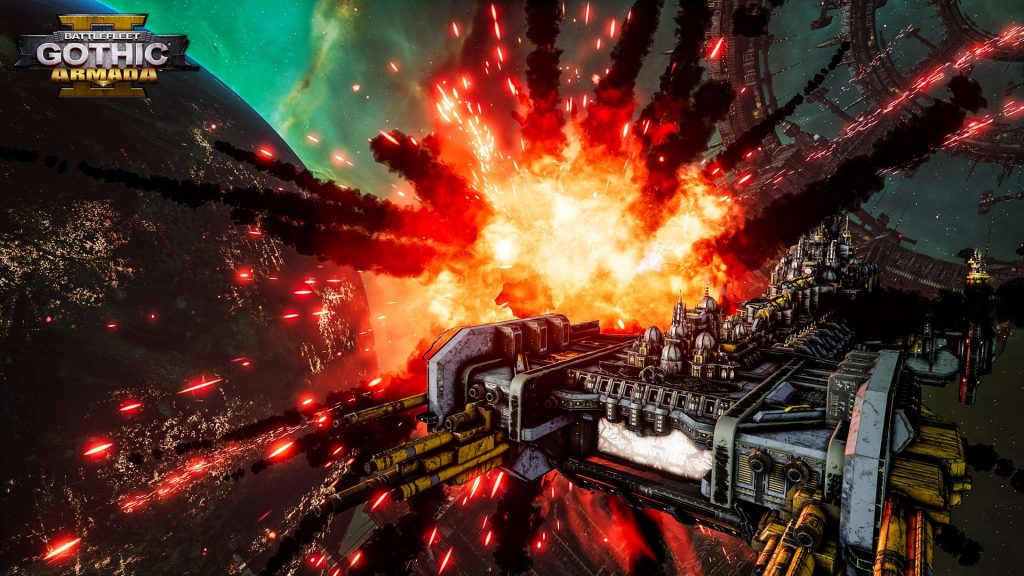
players are treated to an incredible light show. While the game emphasizes large
ship combat, there’s quite a bit of attention to detail, as small fighters and
bombers can be seen buzzing their way to enemy ships. The cutscenes are
gorgeous. They look hand painted with only a few moving elements. The style
reminds me of the illustrations found in tabletop rule and source books.
Audio
The audio is solid.
The voice actors do a good job of delivering their lines, though I would have
liked to see a little more variation for unit chatter. The sound effects are
enjoyable, doing a great job of immersing players into the massive space
battles. The music is subtle, but is pleasant to listen to.
Overall
Battlefleet
Gothic: Armada 2 does an excellent job of translating the
tabletop wargaming experience to the digital sphere. There are some
improvements that can be added in future patches or the next title in the series.
The user experience could use some polish and Skirmish vs AI mode is needed. Battlefleet Gothic: Armada 2 is a
challenging game that isn’t the easiest thing to learn, but it offers some of
the best fleet-level combat in the market.
Capsule Computers review guidelines can be found here.
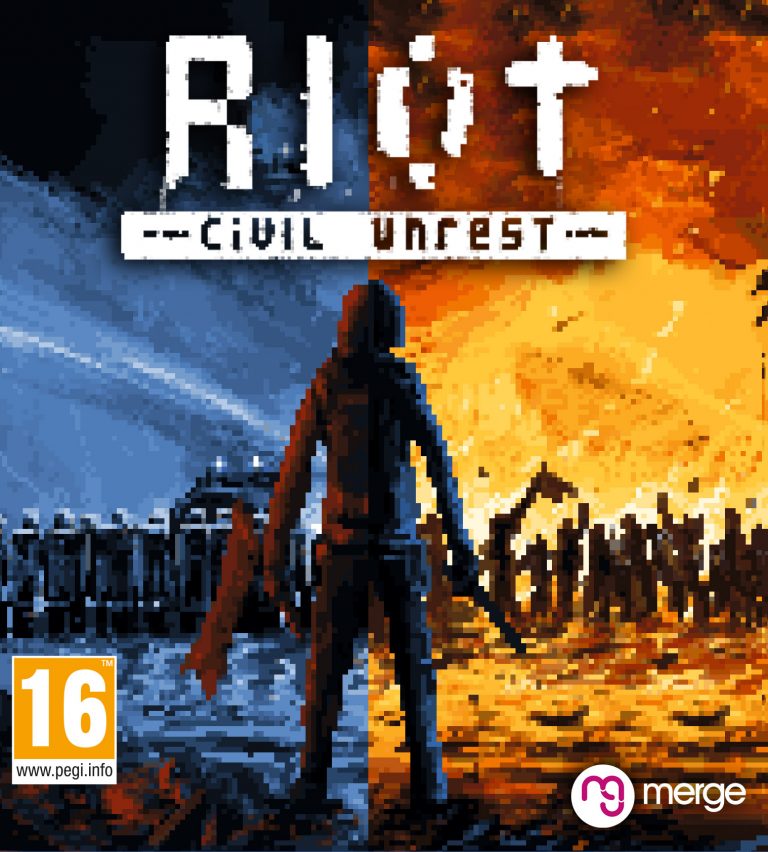
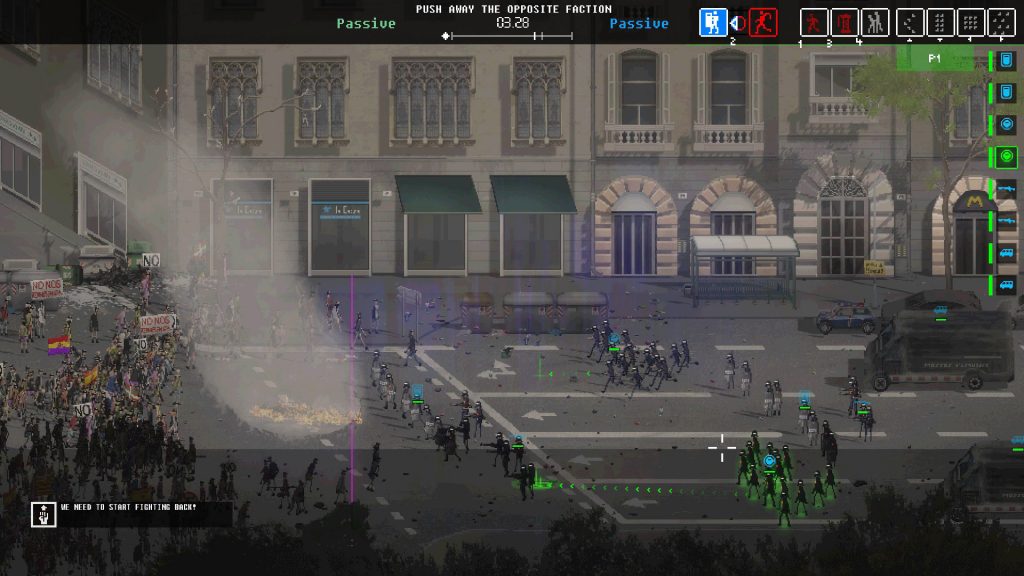
Inspired by developer Leonard Menchiari’s experiences surrounding the Italian NoTAV protests, Riot – Civil Unrest lures players with its real-time riot simulation. But after originally being crowdfunded six years ago, can this game deliver?
Story
In Riot – Civil Unrest’s story mode, you play as protestors/rioters or police over four campaigns based on real life protests and locations, with the cutscenes in between each level explaining the historical reasonings for the protests. The Egyptian campaign covers the Arab Spring protests which started in 2014 and lead to the overthrow of the Egyptian government, the Spanish Indignados campaign which features the anti-austerity campaigns that took place between 2011 and 2014, the Keratea, Greece protests that took place in 2011 over a planned landfill site, and the NOTAV movement (TAV being Treno Alta Velocita, the high speed train) which protested the construction of a high speed railway between Turin, Italy and Lyon, France.
Despite the story mode being very Mediterranean centric, the global mode features thirty scenarios around the world on top of the campaign levels, but the game doesn’t go very deep into the socio-economic and political reasonings behind the protests and riots, preferring to cover why they happen and not how they happen. Despite this, in an era where ‘edutainment’ games are in short supply, this feels like edutainment done right for the modern era.
Gameplay
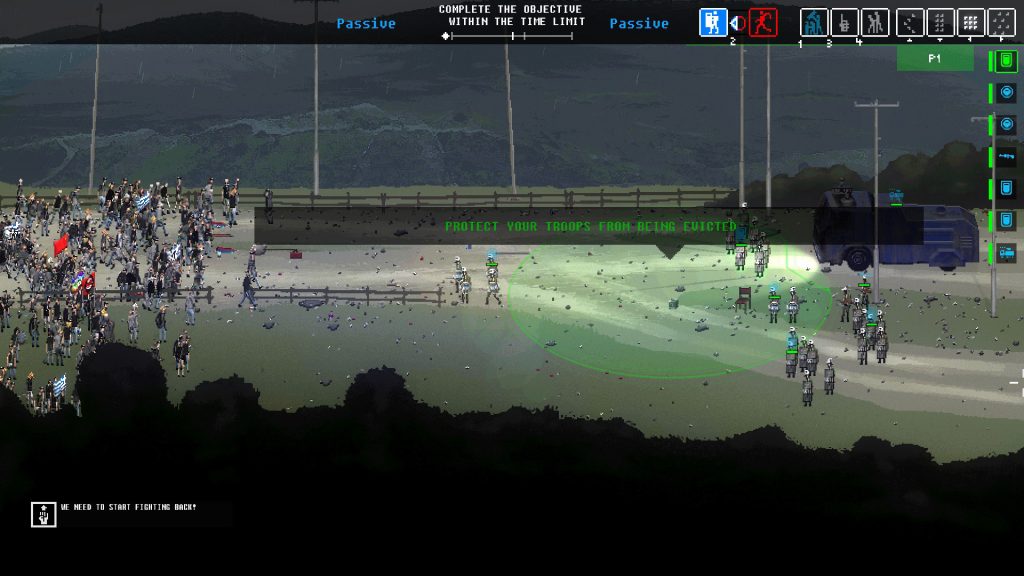
The game consists of playing as two separate factions, police and rioters. As the police you’re lower on manpower but have access to more sophisticated riot control weapons. Whereas rioters have much superior manpower, but less weaponry and the player has less control over them. To win each level in this game, you have to complete the goals of the level, which may consist of getting all of your side to a certain point, holding an area, or pushing back the enemy faction and advancing. The player must balance out military and political scores, as even if you win militarily, you can lose the level politically because you were too heavy handed. The AI will base its reactions in each level based on how you’ve played before, so playing violently as the police will lead to more violent protests and vice versa. At the end of each level you get a newspaper front page with the headline describing the result and a picture of the riot. If you use the camera ability it will be a picture you took on the front page, which is a nice touch.
Riot – Civil Unrest features multiple game modes, besides the aforementioned Story Mode, Global Mode has you trying to keep public opinion of your side positive with the levels getting harder if you don’t. On the protest side in this mode you choose special characters who have different abilities and strategies to help your riot defensively or offensively.
Along with these modes, the game has a spectator mode where you can set up the riots and watch them happen, journalist mode, which is basically a spectator mode where you’re on the ground taking pictures and could of really been something unique if it was more fleshed out, and on PC, the Steam Workshop levels, where you can download and create your own levels, with many already in the workshop covering the current Yellow Vest protests taking place in Paris. There is also a versus mode, where two to four players can play against each other.
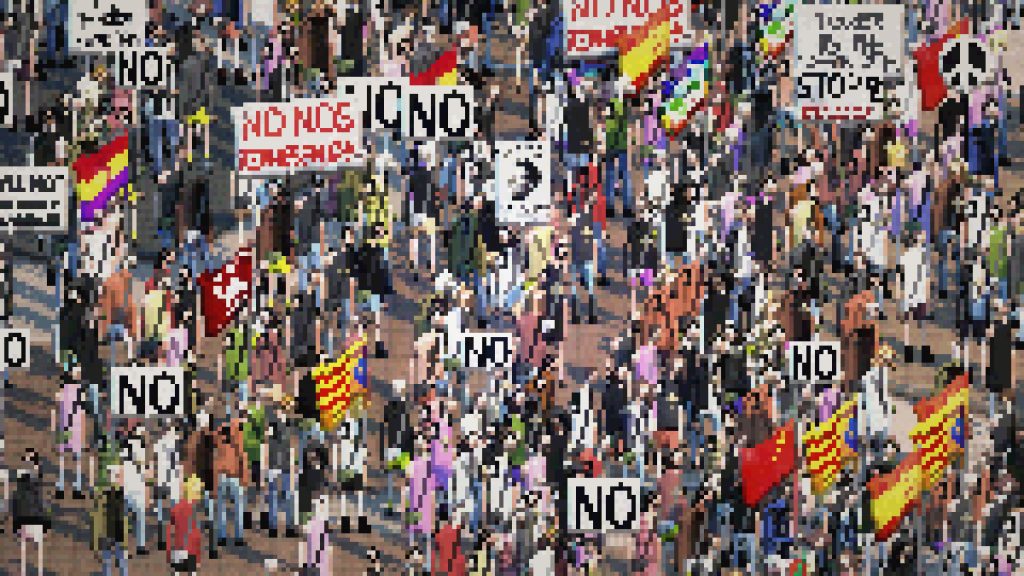
According to the promotional material for this game, each individual member of the crowd has their own AI which does make the crowds look natural and realistic, but no matter which side you play as, you feel like you have no control over any of the actions of the crowd, as it feels the game frequently disregards what actions the player wants and due to that, the game becomes a clicking frenzy as you try to control the crowds. The game would of benefited from being able to select multiple units at once (Like Warcraft 3 and other RTS games), when playing at the police you have multiple formations to use, which I didn’t find myself using much outside of the line and defensive formations as the arrow and skirmish formations felt useless when I thought I had situations to use them in.
The game, even on higher difficulties, didn’t feel as if they posed any challenge. No matter what difficulty Riot – Civil Unrest was played at, it still felt like I spent the whole time left clicking as I tried to get my troops to listen to me.
Visuals
Visually, Riot – Civil Unrest is a beautiful game. It’s 8-bit graphical style stands out well and is really the defining mark of the game. The pixelated styling reminds me of the low-res footage you frequently saw of riots on websites like Liveleak. One of my favourite graphical features has to be the flames from Molotov cocktails, which have a beautiful glow in this game that really helps set the mood.
Audio
The sound in the game accurately represents what a riot sounds like, chaos. The mixed audio of crowds, screaming, footsteps, police and more all add up to a soundscape that sets the mood of a riot.
Overall
This is a game made with great love, there’s no doubt about it. I would have liked it if the game went deeper into the individual stories of protesters or policemen there, as many films, TV shows, books and games around riots and protests have in the past. I strongly believe that if this game released around 2012-2014, it would be making a much larger splash than it is now, as I feel the world has moved on, as it often has, from any major rioting in the last couple of years (although one could point at Venezuela and Paris at the moment, they aren’t on the scale of the Arab Spring) and because of this, the games relevance is lessened.
Despite this, Riot – Civil Unrest isn’t a game I’d recommend for everyone. If you’re political or you enjoy the idea of controlling riots, then this is the peak example we have so far of a game in this political genre and you’ll have at least six hours of fun. But if the concept doesn’t excite you, then it’s a game I’d skip at full price.
Capsule Computers review guidelines can be found here.
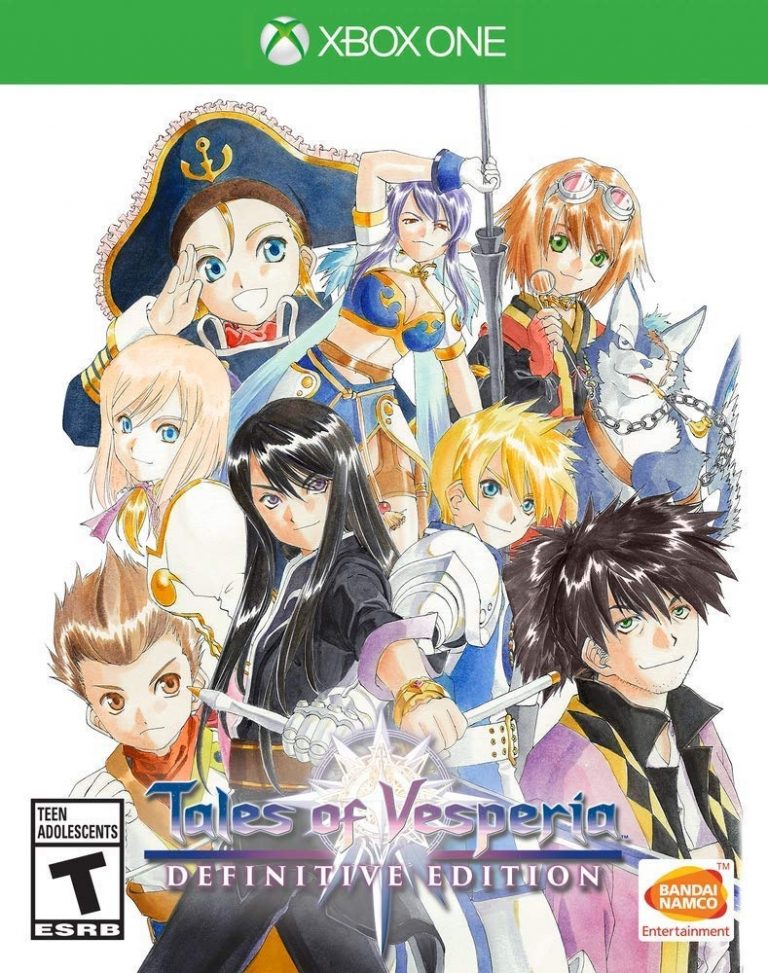
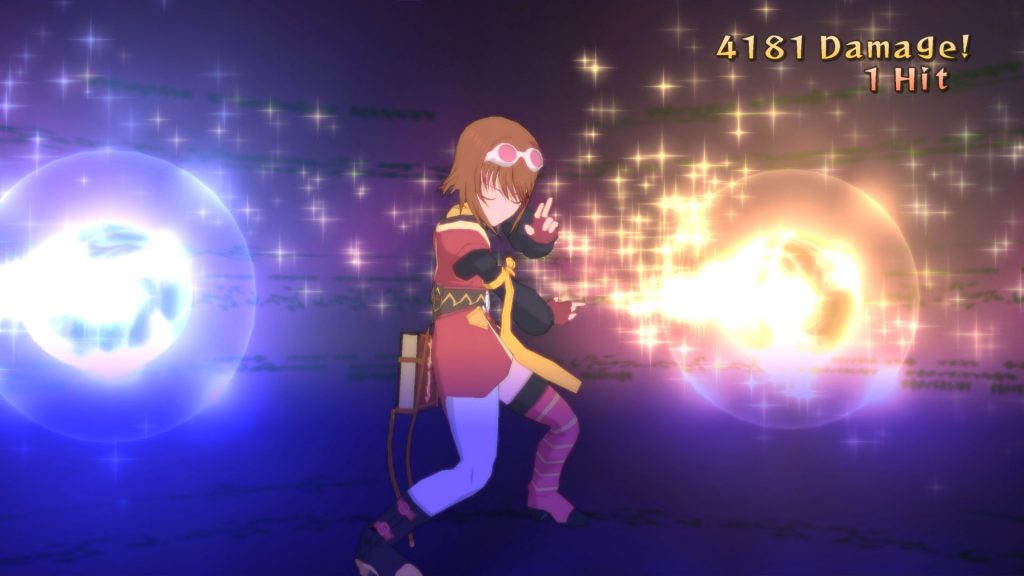
A little over a decade ago Bandai Namco released, for many people, one of the best entries of the Tales series in many years and although they have kept the series going with six different games since it was released, Tales of Vesperia has often been held as a high standard for the series as a whole with only entries like the original Symphonia reaching that point. In what ended up being a bit disappointing for many however was that the game was released with additional content in Japan and this version was never released in the West, turning it into “not that one” in discussions about the series. Now we finally have this version of the game and more with Tales of Vesperia: Definitive Edition, but has nostalgia clouded our memories or is this even more of a great game that fans previously enjoyed?
Story
Set in a world where the majority of technology relies upon the energy from mystical blastia that were created by an ancient race, players follow the journey of Yuri Lowell, an ex-knight trainee turned delinquent from the lower quarter of the capital city. In pursuit of a thief that stole the water blastia that provided the lower quarter with drinkable fresh water, Yuri finds himself on the wrong side of the law once again but this time he is in for far more than he bargained for as his journey finds him being joined by a number of friends and allies who each have their own goals.
As is standard for a Tales game, it isn’t long before this seemingly simple quest to catch a thief quickly turns into something far more dire as we learn more about the danger facing the world and uncovering sinister plots, though Vesperia is more upfront with how dangerous and villainous certain elements of the world are than other games in the series, allowing players to get into the story a bit quicker than the usual slow burning start the franchise is known for.
Another element that makes Tales of Vesperia‘s story stand out is just how amazing the entire cast of characters happens to be. While a few may start out being fairly cookie-cutter in nature before evolving beyond that into their own characters, some start out feeling immediately unique and the way that these characters interact with one another is yet another element that helps boost the journey in this game.
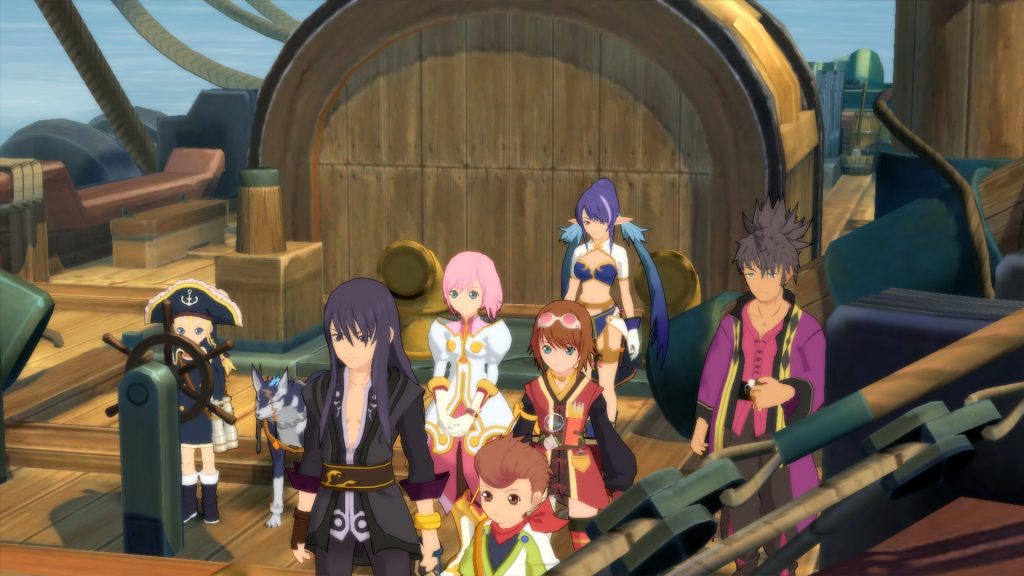
There have been plenty of RPGs that feature main characters that shy away from doing things by the book but Yuri is a real highlight that stands out in this regard. He is more than willing to help out anyone in need regardless of whether or not it may be lawful to do so and treats each member of his party with a different demeanor. This means he is more than willing to tease the naive Estelle or encourage Karol, albeit with some teasing sarcasm at times, while also trying to keep a good relationship with Rita and Judith and being annoyed at Raven, with his feelings towards each of these characters growing closer as the story progresses. Yuri isn’t the only stand out here though as almost every member of the core cast goes through growth throughout the story and especially in the skit scenes that players can find throughout the game.
Interestingly enough, with Tales of Vesperia: Definitive Edition adding a brand new character in the form of Patty and then offering Flynn as a full time party member eventually, it doesn’t feel like they are tacked on in any way. Patty is introduced far earlier in the story than one may expect for an added in character although she doesn’t officially join until some time past that point but her pop-in appearances immediately endear her to the cast while Flynn’s longer presence serves as a great opposite to Yuri at times. These additions to the group as well as the original members create a highly entertaining story that will please newcomers and even offer something new for longtime fans of the series who’ve played the original before.
Gameplay
In standard fashion for the series players will be able to explore towns and interact with NPCs, purchase and synthesize various items and equipment, and of course rest at inns while the rest of the time they will either be out in the overworld or inside of a dungeon area where enemies can be seen in the overworld. After getting a bit into the game players do receive an item that allows for some enemies to be stunned before combat, allowing for an advantage, but along those same lines enemies can trigger surprise attacks that mix up your party set-up making for some interesting fights if you don’t keep your party properly equipped.
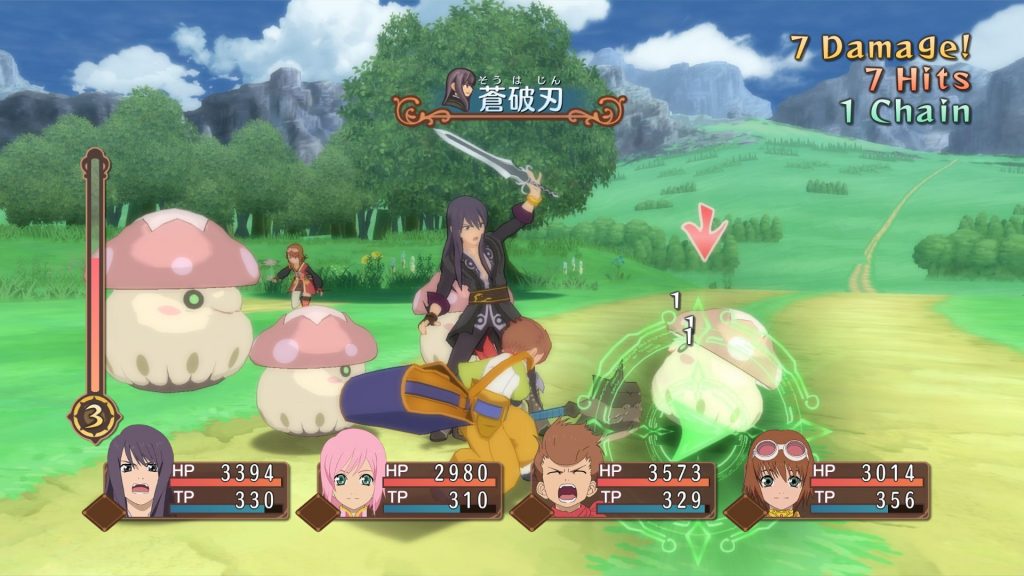
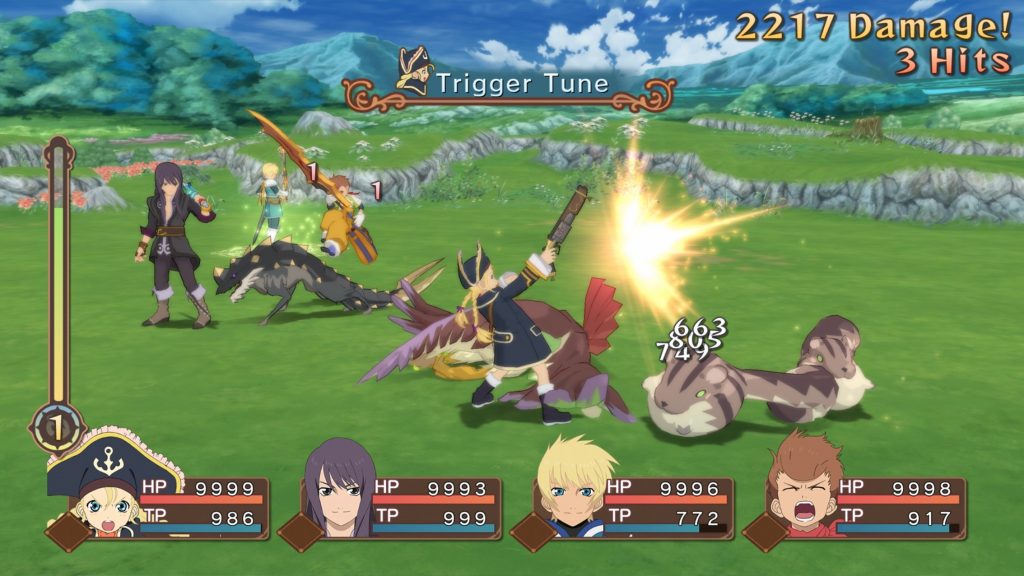
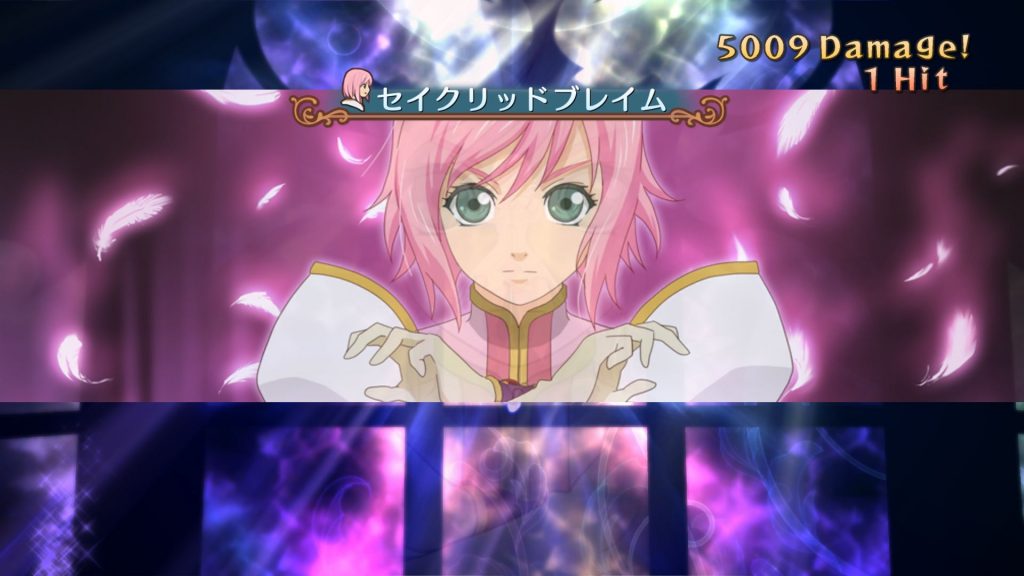
Combat should feel more than familiar to anyone who has played games in the series before as it takes place in real time with players having control of one character while the others operate on AI that can be adjusted to fit nearly any situation. It is rather easy to learn what type of Artes (special moves) can be easily strung into combos with the standard attacks and, as mentioned before, your equipment does play a factor in this. This is primarily due to each character being able to learn passive skills from equipment that can be learned and equipped to provide various bonuses even while not equipping that item.
To make things even more interesting is the fact that, even though Yuri and Flynn are a bit similar, nearly every character handles and plays in a different way allowing for some rather unique experiences depending on who you like to take the lead on in a battle. This is especially true in the case of Patty who features a wide array of different abilities that vary depending on her form.
Since this is an enhanced version of the original release, players can also expect to see a number of new dungeons here and there as well as a few new side quests, though these do remain a problem once again. Similar to the original release, it is incredibly difficult to keep certain side-quests going properly or even trigger them at all since they usually involve returning to an area after completion or talking to a completely innocuous character meaning you will need to be very thorough when exploring a town if you hope to see everything that the game has to offer, including various skits that can only be obtained this way.
Visuals & Audio
Thanks to the extremely colorful art style used by the developers in the original game, Tales of Vesperia: Definitive Edition holds up incredibly well with age and the extra bit of polishing that was applied to make sure the game looked as good as possible on the current batch of consoles. The character designs are lovely and feature a wide array of alternate costumes and there are numerous dungeon designs that keep things feeling fresh when exploring the world.
One thing that will unfortunately surprise some returning players is the fact that the developers could not retain some of the English voice actors from the original release. This means that while old audio recordings are available using the original voice actors and actresses, there are scenes and skill takes where that dialogue is now voiced by someone that may sound rather similar but is still different. This isn’t too noticeable most of the time but there are a moments where scenes were extended or new skills are used where the dialogue will flip-flop voices. If you don’t wish to deal with this however the game does offer the original Japanese voice options at any opportunity.
Overall
Tales of Vesperia: Definitive Edition is the game that many fans of the series were hoping would eventually make its way overseas and now that it has it does not disappoint. Although the voice acting for the English track is a bit shaky at times due to the different voice actors being used, the difference can be ignored in favor of the Japanese track so one choose. With plenty of new content for returning fans of the game and a lengthy storyline with some of the best characters in the franchise even newcomers will find that Tales of Vesperia: Definitive Edition is one of the best Tales games.
Capsule Computers review guidelines can be found here.
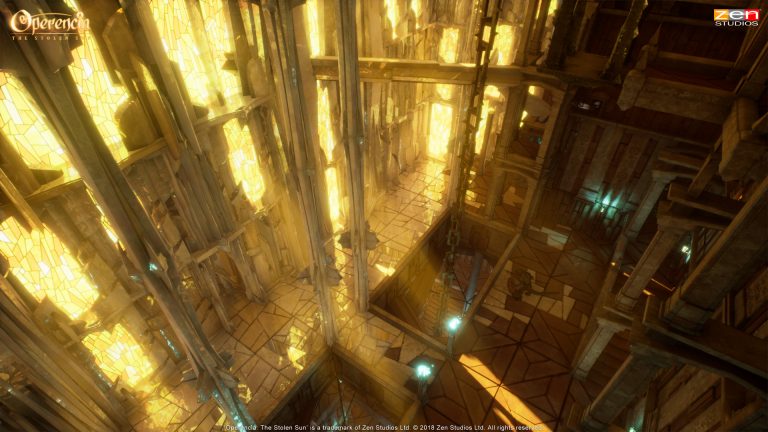
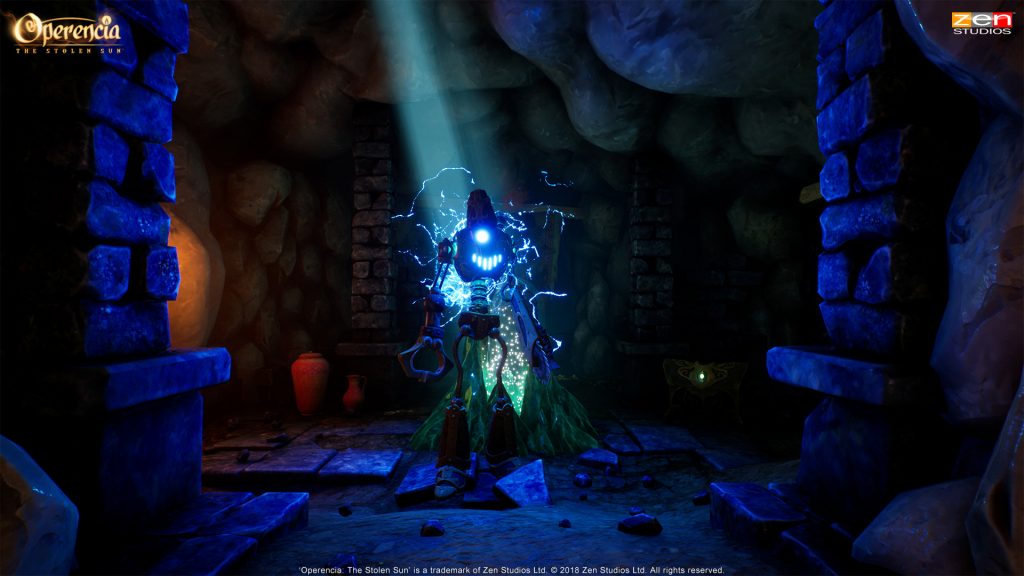
The first person dungeon crawling RPG Operencia: The Stolen Sun has been revealed to now be heading to the Xbox One and those looking to pick it up on PC will now have to do so through a different digital storefront. ZEN Studios has announced that the title will be a console exclusive for the Xbox One in 2019 where it will be available as part of the Xbox Game Pass and that the previously announced PC version of the game will now be exclusively sold through the Epic Games Store.
Operencia: The Stolen Sun will make use of a classic tile-based movement system engaging in strategic turn-based battles at every turn. The entire quest to free the abducted Sun King, Napkirály, thereby saving Operencia from endless days of night, comes rife with malevolent monsters, devious traps and mind-bending puzzles.
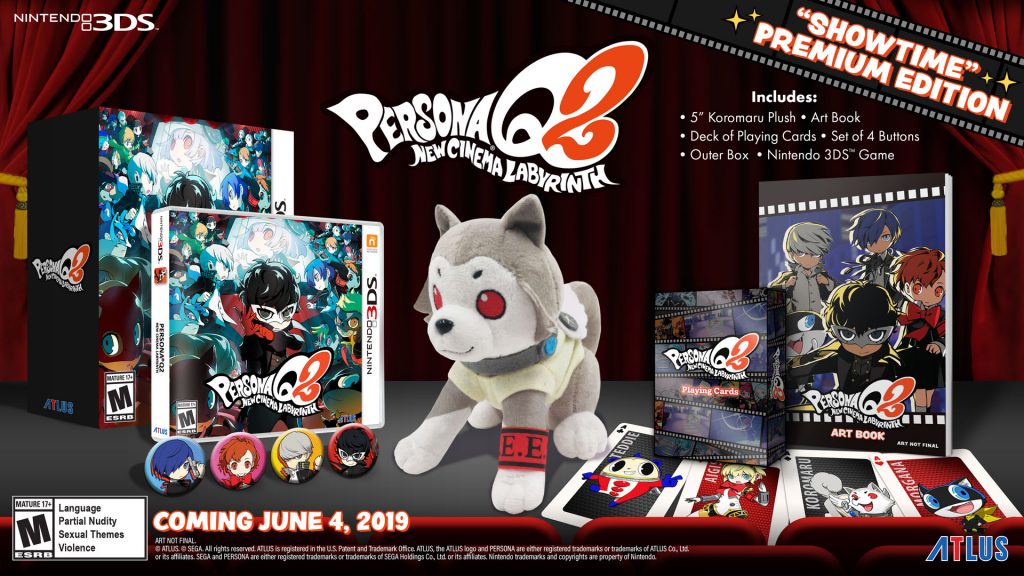
Atlus USA has announced that they are planning on bringing Persona Q2: New Cinema Labyrinth to the West on June 4th for the Nintendo 3DS. The game will be released both physically and digitally through the Nintendo eShop but they did announce that the game will not feature an English dub, instead it will only feature Japanese voice work with English subtitles.
The company also stated that there will be two retail versions of the game with the standard $39.99 launch version including four buttons while the $69.99 “Showtime” edition will include a five inch Koromaru plush, art book, deck of cards, a slipcover box, and the four buttons. Persona Q2: New Cinema Labyrinth follows the journey of the Phantom Thieves from Persona 5 and includes members from both Persona 3 and 4 as they find themselves trapped within a series of labyrinthine movies, each with its own unique twists and turns themed after various movie genres.
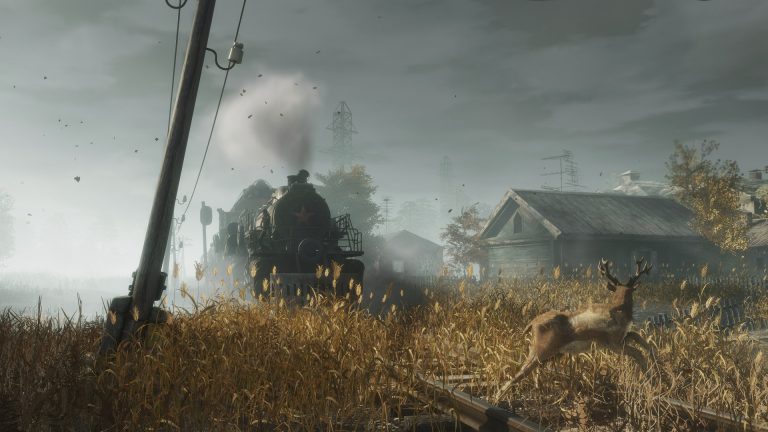
With 4A Games and Deep Silver set to release Metro Exodus in a couple of weeks the developers have released a new pair of trailers, one of which that focuses on showing off the handguns in the game and the other that happens to provide a background for those who have yet to dive into the series.
Five years in the making Metro Exodus builds on the series’ strengths while offering players a new sensation of freedom and exploration in the wastelands of post-apocalyptic Russia. You can check out both videos below and keep an eye out for the game when it is released on the PlayStation 4, Xbox One, and PC through the Epic Games store on February 15th.
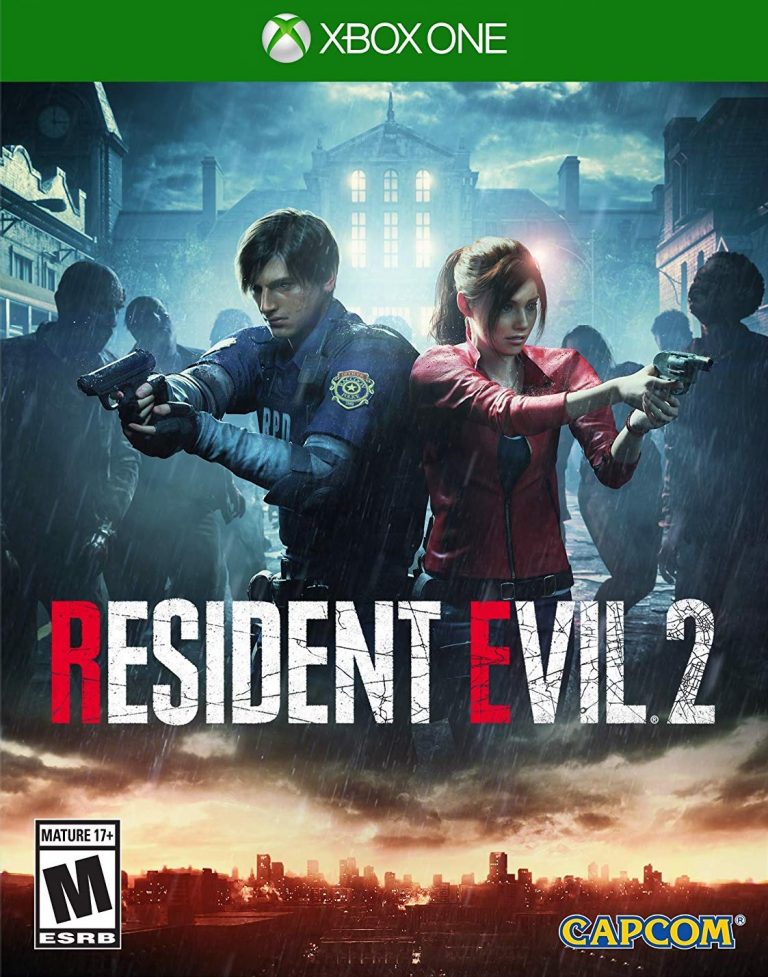
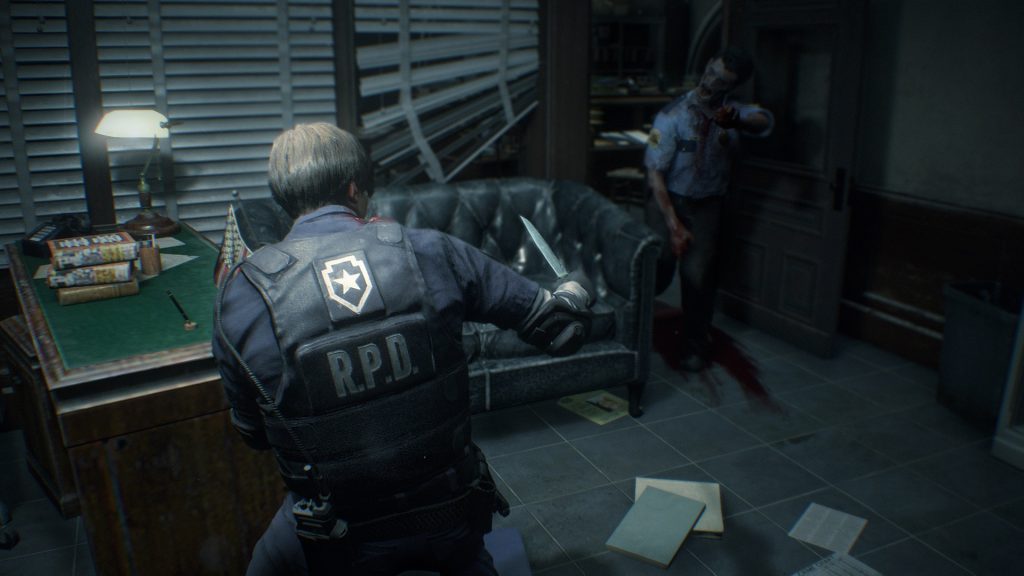
Over the past decade and a half the Resident Evil series has fluctuated between being part of the horror genre, some action horror, to pure action, though two years ago the franchise went back to its horror roots in the form of the somewhat experimental Resident Evil 7. By taking a different approach that brought the horror back to the series, fans were eager to see just how the Resident Evil 2 remake would turn out. Now with such a formative game for many being released with a modern take is this everything fans could have hoped for?
Story
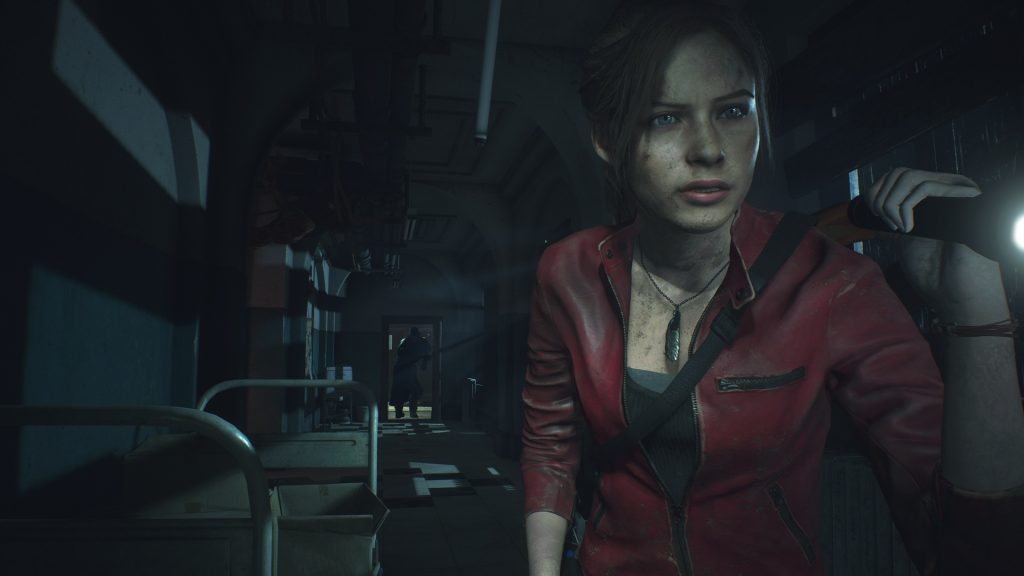
Leon S. Kennedy recently was hired on as a rookie police officer for the Raccoon City Police Department and although his start date was pushed back, he is still ready to go into the city to begin working while a girl named Claire Redfield also heads to the city in search of her brother, Chris Redfield. The two meet shortly after it becomes clear that monstrous creatures have taken over the city and that everyone they run into happens to be a walking corpse. While trying to head further into the city to find survivors as well as answers, the pair are separated with only the police station appearing as the safest option
Those who are familiar with the story of Resident Evil 2 will find that, at least in the broader sense of things, the storyline for the game remains almost entirely the same. Players will have the option to choose either to play as Leon or Claire with the story for each character running along similar paths that vary to certain degrees while aiming for “B” run of the other character afterwards to fill in certain blanks. Along those lines this B run features a mix-up of puzzles and other elements that keep players on their toes for the most part but does introduce a couple of questions about the timeline of some events.
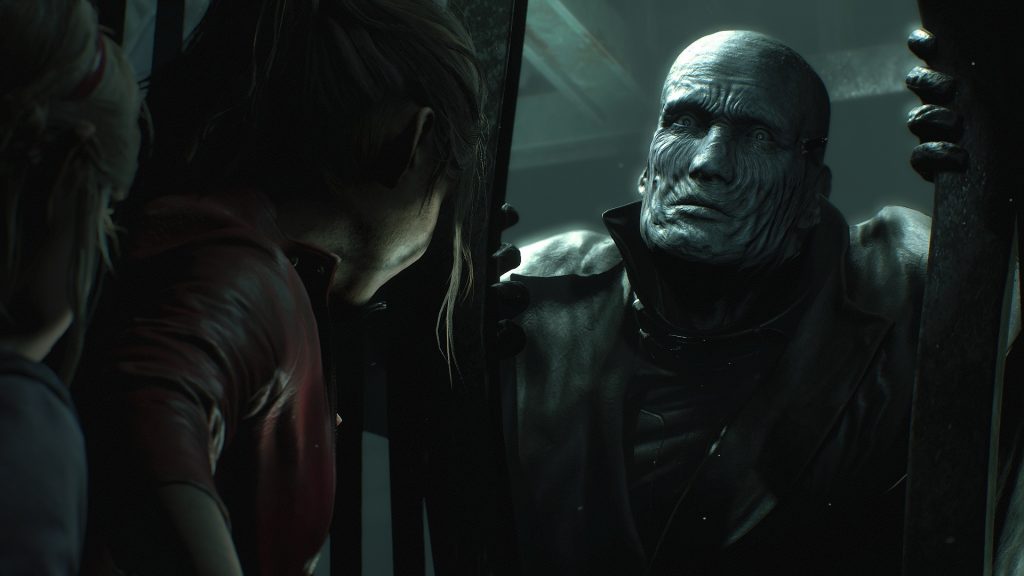
That being said, Capcom has made sure to vary things up greatly, expand upon some elements of the story while snipping a bit as well to make sure that older players will find plenty of familiar areas, progress points, and puzzles that they loved but have now been revamped for a modern era to make the story and progression of the game flow better. This creates an excellent combination of nostalgia and eagerness to see just how well the developers have managed to take such a game and transition it to this style and thankfully they have lovingly done so. The tension of navigating through the police station and subsequent areas always feels rather high since you never quite know what to expect thanks to the changes made to the game and this is especially true in the case of Mr. X.
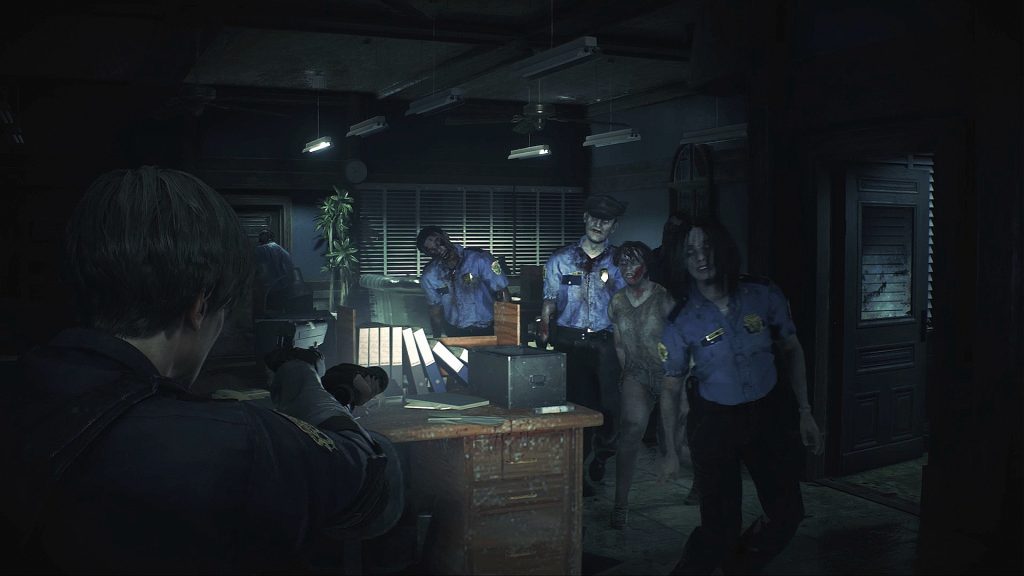
While going into too much detail would spoil elements of the game’s feeling of progression, let’s just say that the new way Mr. X is handled is phenomenal. The enemies themselves feel like far more of a threat than before as well thanks to the way the story presents certain creatures, though it is worth noting that some enemies have been modified with a few missing here and there though the removed enemy types were already incredibly sparse so there is no need to worry about the game suffering from their removal. As a whole this leaves players with a familiar story that has been heightened greatly by expanding a few scenes and creating a true sense of dread that gives the environments in the game a life of their own.
Gameplay
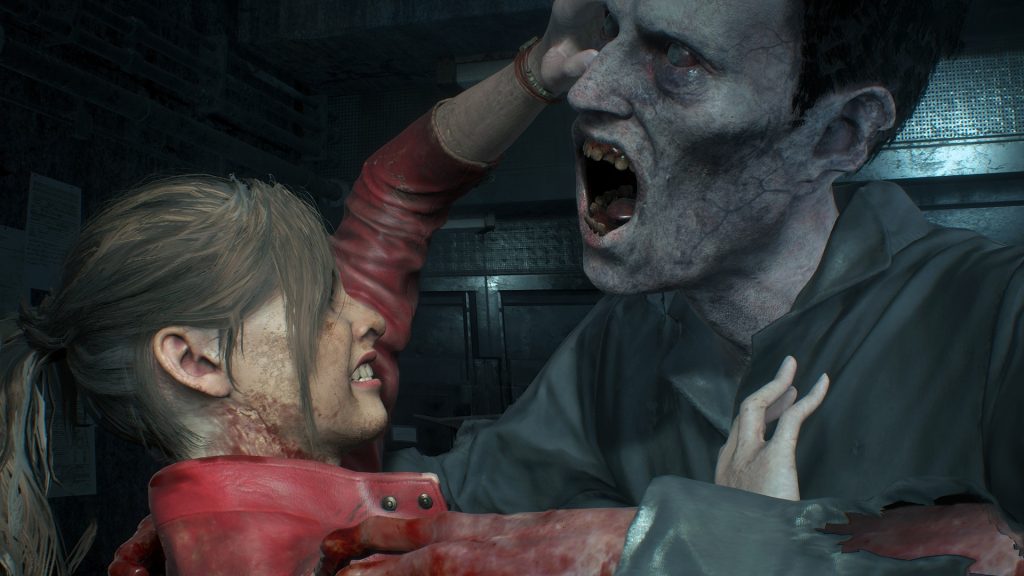
The most immediate change that players will notice is the fact that Resident Evil 2 now plays as a third-person over the shoulder survival horror game. Rather than using tank controls with fixed camera angles players will now have complete control over their characters actions through a system that is best described as a toned down Resident Evil 4. Quick turns are available and aiming is easier than ever but don’t expect to dodge or kick any creatures as there are no quick time events in this game, meaning your best chance against a zombie is to either put it down or do your best to avoid it normally. There are sub-weapons such as combat knives that can turn away a zombie bite and then be retrieved from a corpse but these have a limited durability and grenades remain one use items. In fact, the knife can be one of your most useful tools as not only is it possible to avoid a bite, grapple, etc. but it also can be used to slash a zombie while it is on the ground.
This used to be a known factor but now it is more vital than ever thanks to how intense and draining combat can be. Zombies in Resident Evil 2 are incredibly resilient with headshots seemingly doing only slightly more damage than shots to the body or limbs, making almost every encounter one that you will need to balance the importance of. Do you use limited resources to put down a zombie and potentially leave an area clear from then on? Or do you just try to avoid it and leave it as a lingering threat should you ever have to pass through that area again? Even when you decide to drop a zombie they can be rather tricky at times since not only do they move rather erratically but they can fake being dead more than once. Downed zombies can do anything from immediately come after the player or even wait a few minutes before trying to bust open a door or crawl after you. This is especially true in regards to some later zombie types that can be incredibly dangerous if you don’t happen to be carrying any sub-weapons with you.
Taking on creatures besides zombies have their own little quirks now as well. The dangerous licker can now be stealthed around should you be able to while dogs are more nimble than ever to counterbalance the easier aiming mechanics. As for boss fights, players will find that for the most part they have been retreaded this time around. While this is far from a bad thing, players shouldn’t expect too many surprises in the way of the boss enemies other than the arenas that you happen to face off against them in.
Outside of the combat systems players will find that Resident Evil 2 continues to make use of the familiar limited inventory system that will keep players balancing what they are carrying while trying to not go into areas unprepared. Running around with healing items, weapons and ammo, as well as a key or special item needed to complete a puzzle will often feel challenging but not unfair as the item box is usually never too far out of reach if you plan properly and items that have been completely used up are presented with a checkmark that allows them to be discarded at no loss to the player. In fact, the user interface in this game is incredibly well done as it is kept minimal while playing but features more than enough detail during combat and exploration. Your map will immediately update with the locations of items you found but left behind, show what doors are locked with what keys, and even turn rooms to different colors depending on if there is anything still left to be found inside of it to minimize players blindly searching finished areas.
Now it is worth noting that Resident Evil 2 is actually quite generous when it comes to difficulty options. There is an easy mode that not only allows for enemies to be defeated easier but can also provide some minimal health regeneration making it much easier to clear the game if you simply want to experience what the game has to offer without too much of a challenge. The default difficulty is probably the best place to start however as players are given auto-saves at certain points in the game and can save freely any time they come across a typewriter but otherwise the actual gameplay remains unchanged with difficult enemies and players needing to be very careful with their resources. The hardest option is of course the Hardcore mode that not only makes it so that enemies are tougher but you also need to use ink ribbons to save. This means that you will need to be careful of just when and where you save as auto saves are also removed and make the game much more challenging for those who want a real punishing experience.
With these difficulty options as well as two unlockable game modes that place the player into the shoes of different characters entirely players will have tons of reasons to play through the game more than a few times, especially when it comes to chasing after the coveted S rank and what those grades unlock.
Visuals & Audio
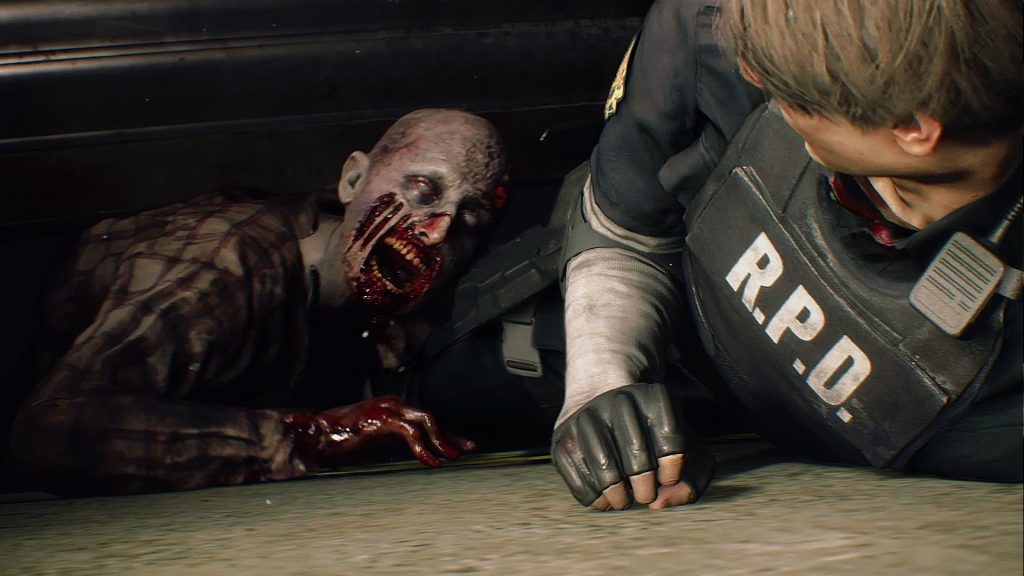
There are a lot of things that help create the tense and horror styled atmosphere of Resident Evil 2 but the one that does the best job is just how gorgeous the game looks. Through the use of the RE Engine not only do we have extraordinary looking environments that feature plenty of lovingly recreated looking designs that have been expanded to fit the new playstyle but absolutely horrific looking creature appearances and gore all highlighted by expertly handled lighting. Zombies are truly gruesome to look at and the amount of decay on some corpses is surprisingly detailed. Damage dealt to the player is visualized for a time while damage dealt to zombies can leave them horrifically maimed with faces torn apart by gunfire or limb snapping off when enough damage is dealt.
The audio is no slouch either as the sound effects, moans and cries of the zombies, and general creature sounds are expertly crafted to create a genuinely terrifying experience that truly shines when wearing headphones but still does a great job over standard stereo. The voice acting is also handled rather well and the little quips of disbelief that Leon and Claire make when facing enemies make for an all the more believable experience.
Overall
There were a lot of ways that Resident Evil 2 could have went when Capcom recreated it and thankfully the developer has pulled out all the stops to make sure that this entry lives up to and surpasses everything that came before it in a survival horror experience. With more than enough content and reason to play through the campaigns multiple times and learning the layout of the gorgeously designed areas players will be eager to see just how far they can push themselves on higher difficulty settings once they learn how to handle things. Sure those who have played the original will still remember the core elements as well as most puzzles and bosses but that does little to truly hamper the experience thanks to the amount of detail that Capcom has put into creating a brand new feeling experience that still holds onto the nostalgic elements that fans loved.
Capsule Computers review guidelines can be found here.
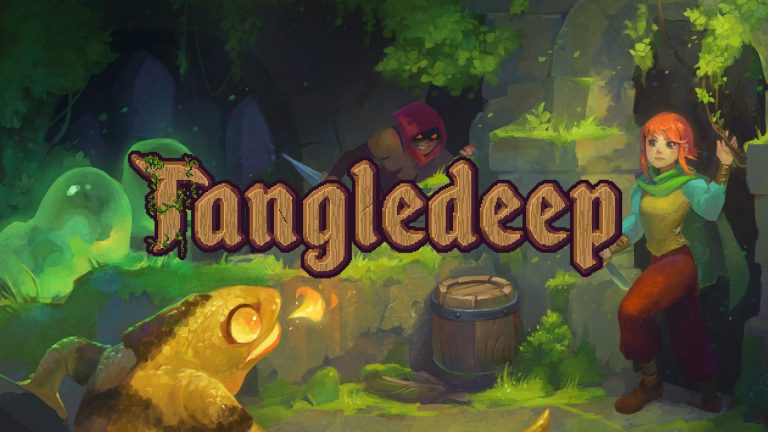
Indie developers Impact Gameworks has launched Tangledeep on Switch. Initially released on Steam a little under a year ago, Tangledeep has been received positively by Steam gamers. Now, Switch owners can get in on the action for $19.99 USD/$26.25 AUD. It’s a slight increase from the desktop versions, which are priced at $14.99 USD/$14.99 AUD on Steam.
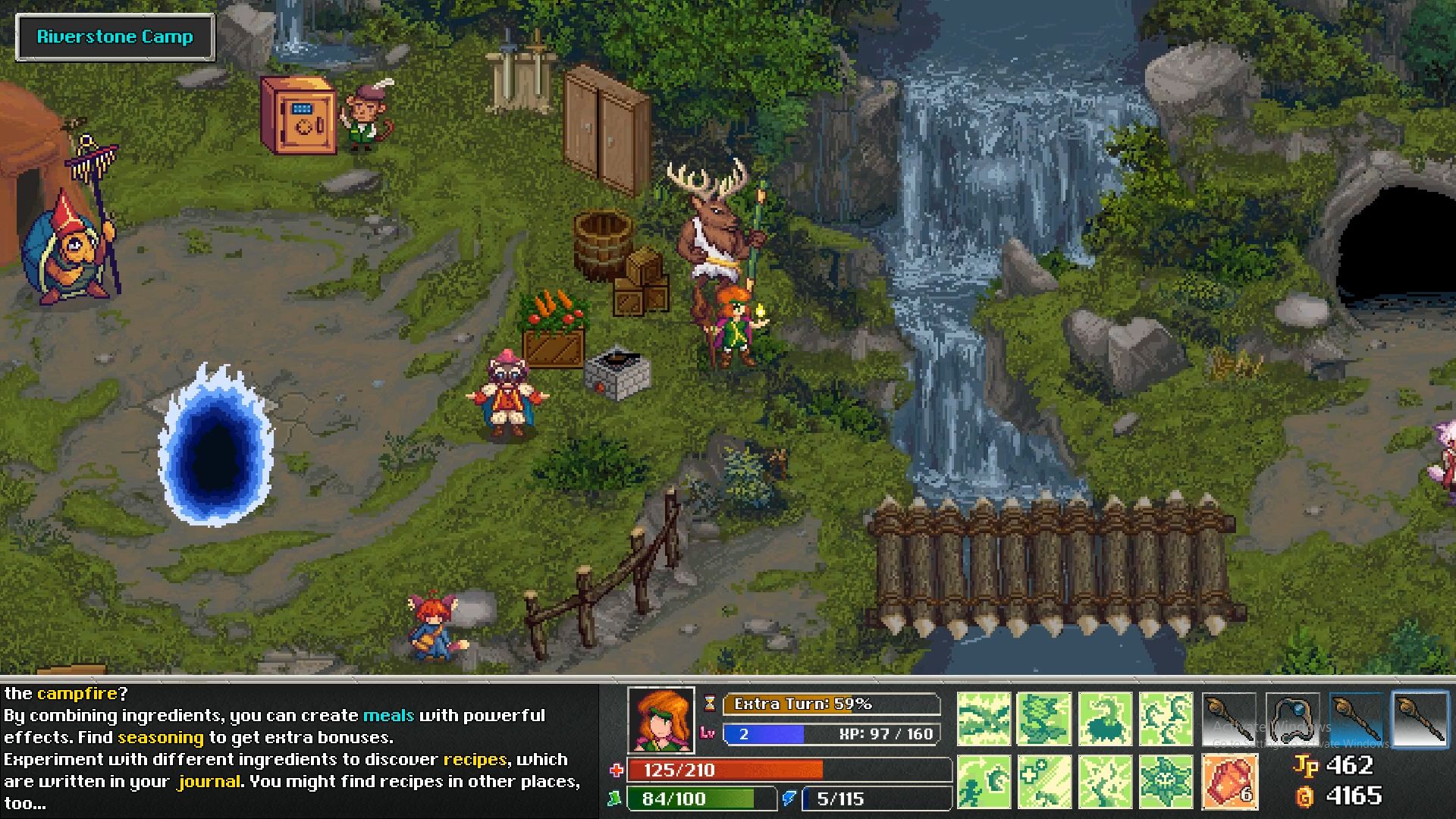
Tangledeep is a rogue-lite inspired by classic RPGs from the SNES era. The game offers 12 jobs and over 100 skills to mix and match. Almost all the monsters in the game can be caught, trained, and even bred. The game offers three levels of difficulty, including the Adventure mode that removes permadeath from the game.
The Switch version of the game adds new monsters, the Riverstone Waterway zone, and an improved UI. Both the Joy-Con and Pro controller are supported.