Ghost Story Games, the development studio led by creative director Ken Levine, today released an all-new trailer for Judas, the single-player, narrative first-person shooter that is currently in development for the PlayStation®5 computer entertainment system, as well as Xbox Series X|S console systems, and PC via Steam and Epic Games Store. Revealed during the Sony State of Play, the trailer marks the most recent update for the title since its reveal in late 2022, and features new, in-game footage captured on PlayStation®5.
The“Who is Judas” trailer offers a deeper look at the game’s setting aboard the Mayflower, a spacefaring city whose citizens are trained to tear each other apart for even the most minor infractions, and where machines control every aspect of business, art, and government. You, as Judas, are the driver of every event in a mysterious story with a new cast of characters to get to know – and to change – in a world where every decision you make affects how the story unfolds.
The leaders tried to turn you into something you’re not: a model citizen.And you sparked a devastating revolution to tear it all down.Will you fix what you broke, or leave it all to burn?
Ghost Story Games was founded by Ken Levine (Creative Director of System Shock 2, BioShock, BioShock Infinite) and former Irrational Games developers. The studio’s mission is to create narrative-driven experiences rooted in immersive world building and gameplay. Their passion and pedigree have resulted in genre-defining experiences for more than 25 years.
LOS ANGELES, CA – January 31, 2024 – Netmarble, a leading developer and publisher of high-quality mobile games, has released a new update for the mobile RPGSeven Knights 2 celebrating the Lunar New Year with several events, new equipment, and an expansion of the Celestial Tower mode.
New Exclusive Equipment has been added to Seven Knights 2 including Steel Gauntlets from Kris, a powerful equipment which increases DEF and Block Efficiency, decreases Skill Cooldown scaling with Transcendence Level, and so on. The new equipment also applies Instant Death when using basic attacks in PvP fields when equipped by Hell Adjutant Knox. The Rachel’s Boots, a Selected Rate Up Equipment, has also been added, which has additional effects applied based on class and revival. Players who enter the Celestial Tower’s normal mode can experience expanded floors to Level 105.
Seven Knights 2 is celebrating Lunar New Year with several in-game events that are now available through February 14, including:
Lunar New Years! Check-in Event: Checking in for 10 days during the event period will reward players with a Lunar New Year Gift Bundle and an event Globe.
Lunar New Years! Teo’s Phoenix’s Wings Special Mission: Clearing in-game missions in the Celestial Tower and daily missions provides the opportunity to obtain rewards including the Vanquisher of Evil Teo’s Phoenix’s Wings outfit, Hero Summon Tickets, and Lunar New Year Coins.
Cosette’s Lunar Shoot & Loot: Players can obtain multiple rewards including Rubies and Lunar New Year Coins using Cosette’s Bullets obtained through Daily Missions, crafting, and other events.
The official sequel to Seven Knights, a game enjoyed by 60 million players globally, Seven Knights 2 takes place 20 years after the original and introduces beautiful open world gameplay. The story centers on the Daybreak Mercenaries who embark on a journey to find the last member of the Seven Knights, “Rudy,” after a series of events involving a mysterious girl named Phiné. Stunning cinematics and graphics powered by Unreal Engine 4 will immerse players in this epic game story filled with unique characters and powerful bosses. Players can collect and develop their heroes and experience a new combat system with powerful ultimates and suppressors.
More information on Seven Knights 2 can be found on the officialFacebook page, YouTube and forums or by visiting Netmarble’s Global YouTube channel.
About Netmarble Corporation
Established in Korea in 2000, Netmarble Corporation is a leading developer and publisher of top-grossing mobile games worldwide. Through powerful franchises and collaborations with acclaimed IP holders, Netmarble strives to elevate the gaming experience and entertain audiences globally. As a parent company of Kabam and SpinX Games, and a major shareholder of Jam City and HYBE (formerly Big Hit Entertainment), Netmarble’s diverse portfolio includes Lineage 2: Revolution, MARVEL Future Fight, Ni no Kuni: Cross Worlds, The King of Fighters ALLSTAR, The Seven Deadly Sins: Grand Cross, and forthcoming PC games like Paragon: The Overprime.
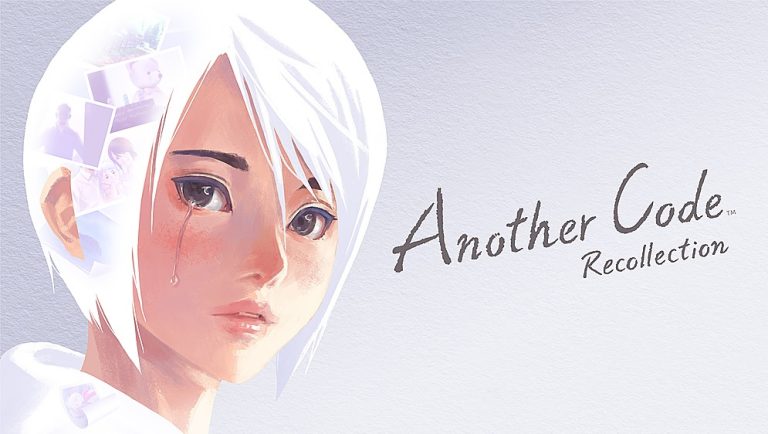
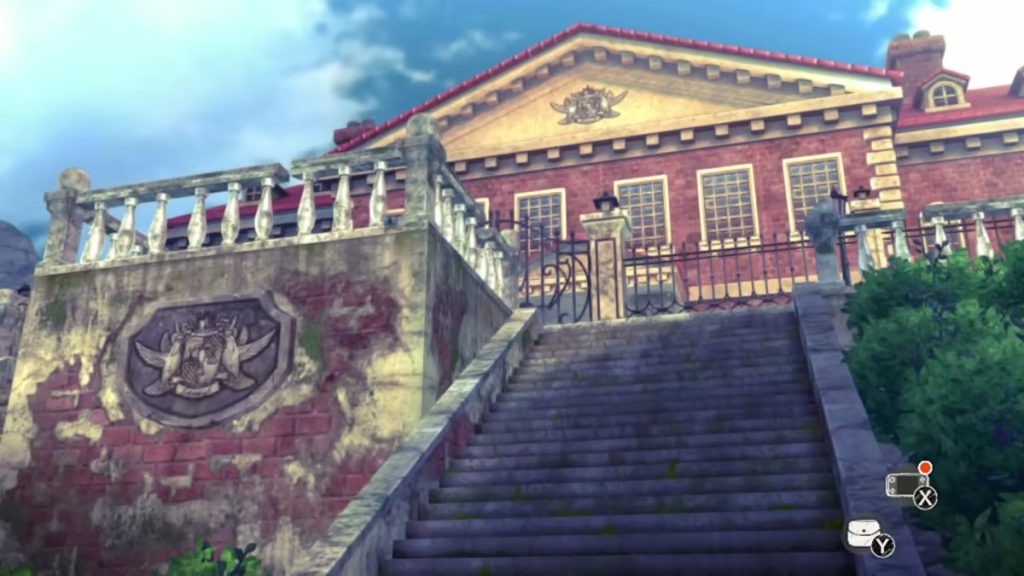
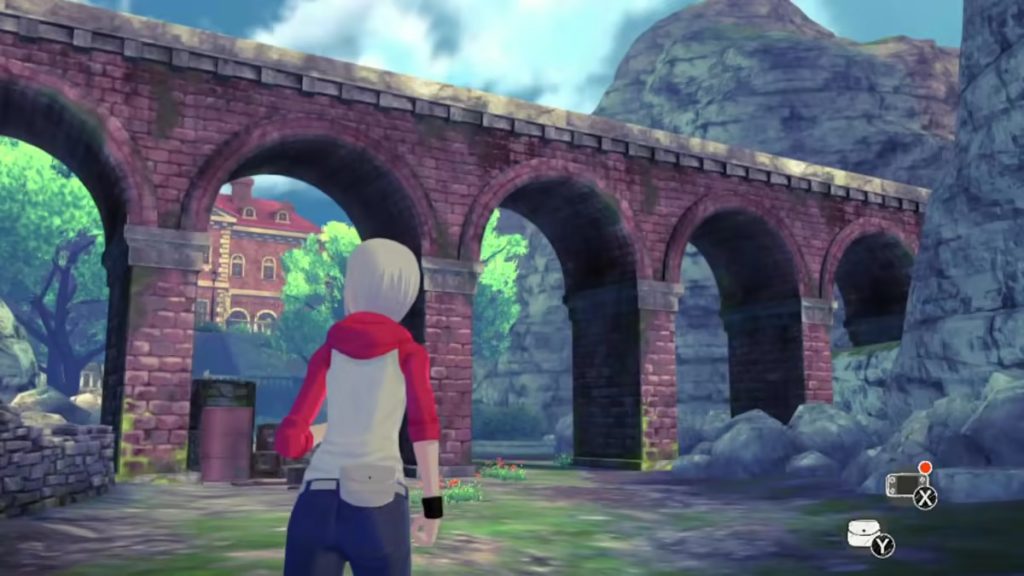
It’s always fascinating to see publishers take risk. Nintendo have done that by re-releasing two pieces of an older, niche franchise with Another Code: Recollection on the Nintendo Switch. For a quick history lesson, this compilation features updated versions of Trace Memory (also known as Another Code: Two Memories) and its sequel, Another Code: R – A Journey into Lost Memories, which released on the Nintendo DS and the Nintendo Wii well over a decade ago. Can these two still attract an audience with an update, or is this one risk that wasn’t worth the reward? Let’s find out.
Story
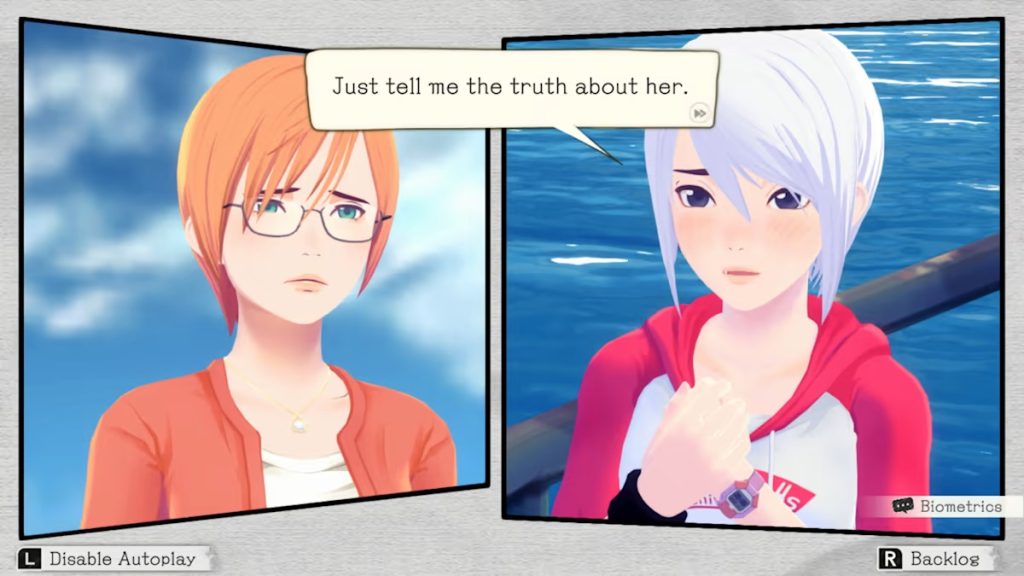
At is heart, this franchise is your typical mystery/puzzle game, split into two games. The first is Two Memories, which has protagonist Ashley looking for answers to a mysterious letter from her thought to be deceased father, who helped pioneer research for human memories. She meets up with a ghost named D on a journey that brings her to a mysterious island, and has to help him restore his memory while finding out more about what happened to her famed parents in the process. The sequel takes place three years later, and brings her to another locale where she meets a runaway also looking for answers. Ashley’s stories are tied to the technology that only she can use to do research, which is basically her unique talent that brings the character full circle into her role.
Yeah, its a bit cookie cutter into the genre and fairly generic, but the story still manages to feel engaging throughout – despite its simplistic nature. I think the second game does feel more like a “episode of the week” more than a fully packaged release, almost as if it was originally thought of as a DLC chapter of sorts, but despite both being rather short, I do think there is something rather charming about Ashley and this world that the team have put together here.
Gameplay
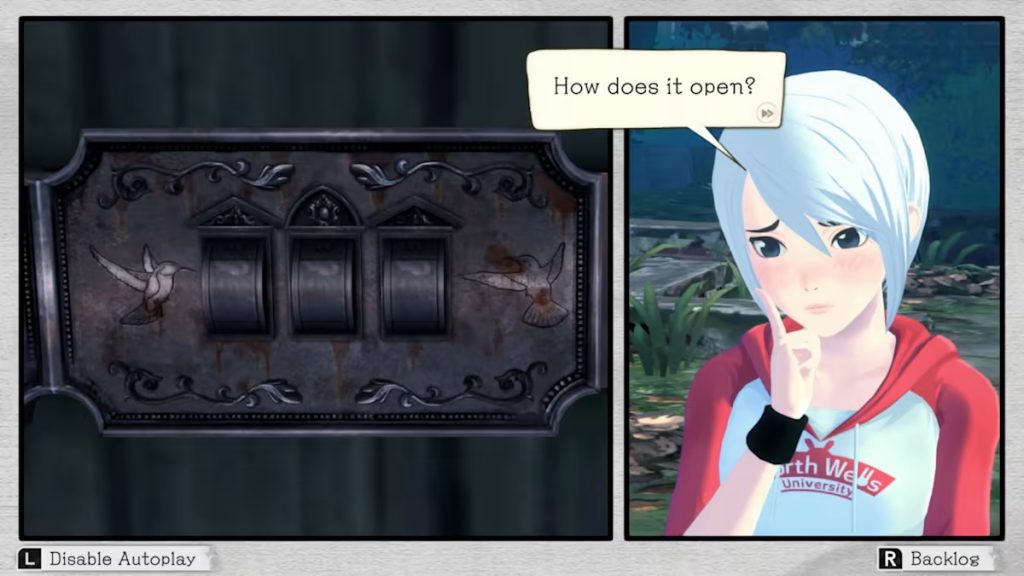
If you are one of those who cherish either of these little hidden gems from the past, a lot has changed, but more-so for the better. The world is now able to be explored and fleshed out, as while these may be labeled as remakes, they’re honestly a new take altogether on both experiences. Players walk around, speak to characters, and participate in puzzles in order to progress the story. A lot of the game is a point and click, with moments that have you have to resolve the puzzles that come before you. Each puzzle is mostly unique, now featuring hints and prompts to guide you forward without frustration.
Because the touch controls are now a thing of the past, this version features both games with minor motion for puzzles and a standard button format for the bulk of the experience. The puzzles are all very simple to solve and most are spelled out rather quickly for the player, with indicators even guiding the way of where to go when prompted. However, there is still a sense of purpose to move forward and the tragically engaging plot keeps things rolling along without the player concentrating on things being too easy, rather focusing on the narrative over the actual gameplay. This means if you are someone that wants your adventure games to be a bit more gameplay-driven, you might be a bit disappointed as while the puzzles are satisfying, most are over quick and really only exist to keep that tale ticking.
I think with Another Code: Recollection, they could have went two different ways with this release. We could have seen a celebration of the original platforms with touchscreen integration, but instead this feels more of a side project, created by someone who really cared about the source material – simply bringing the best parts together for one updated and fluid package. Its very modernized and slick, and that may be for the best. There will be audiences that this title isn’t for as it is marketed towards adolescence. That said, there is definitely a place for this particular odd piece of history on the Switch, and this compilation has a smooth execution and very little to complain about, as the puzzles and story are just so lovely.
Audio
Newly featured voice casting adds a huge layer to both titles in this release and makes it feel modern. The performances are great, and the music comes with equal quality, bringing out an intense and memorable atmosphere that most will love sinking into. The sound effects also add to this, as no pun intended – the past games indeed feel like just a memory with how updated and solid the entire sound design is for this particular package.
Visuals
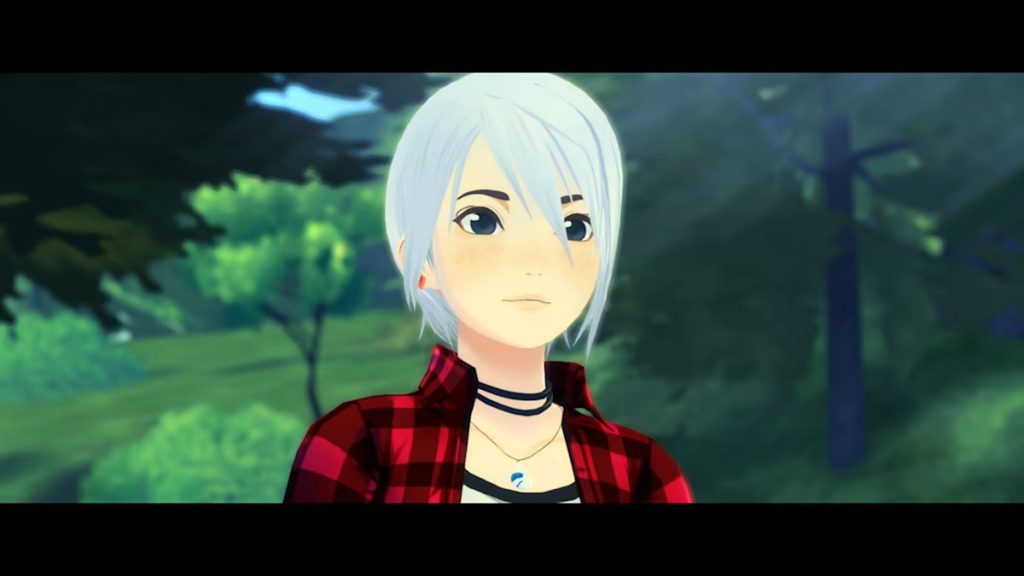
The most jarring and welcome change are the updated visuals. The art style here is fantastic, taking the classic look of both games and fleshing out everything with so much more detail. For some games, that would be just acceptable, but for an adventure title with so many little details sewn into the plot, it makes it super satisfying just to finally get to explore these locales on a whole new level. The animations are fluid and fantastic, and nothing really ever feels rushed or clunky, even though the original titles kind of fit in that whole “budget game” category.
Overall
This industry has a lot of surprises. Another Code: Recollection fits that description perfectly. While the original games were never the top tier of entertainment from their respective generations, the fact that this title exists in this format is truly fascinating and hopefully opens more doors for quality updates ahead for other “hidden gems”. New players may not have a lot of meat to chew on compared to the onslaught of other titles in this same genre, but returning audiences are sure to find a warm, nostalgic joy of simply checking back up on Ashley and reliving what was a light, gripping little tale from a team that truly cared about re-telling it to a new set of fans.
Capsule Computers review guidelines can be found here.
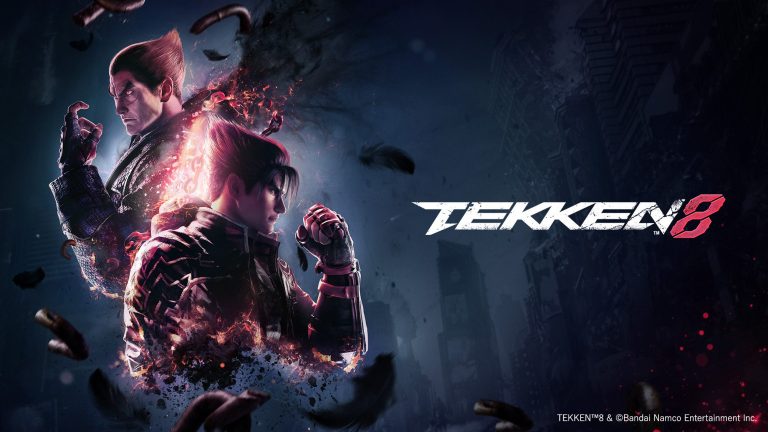
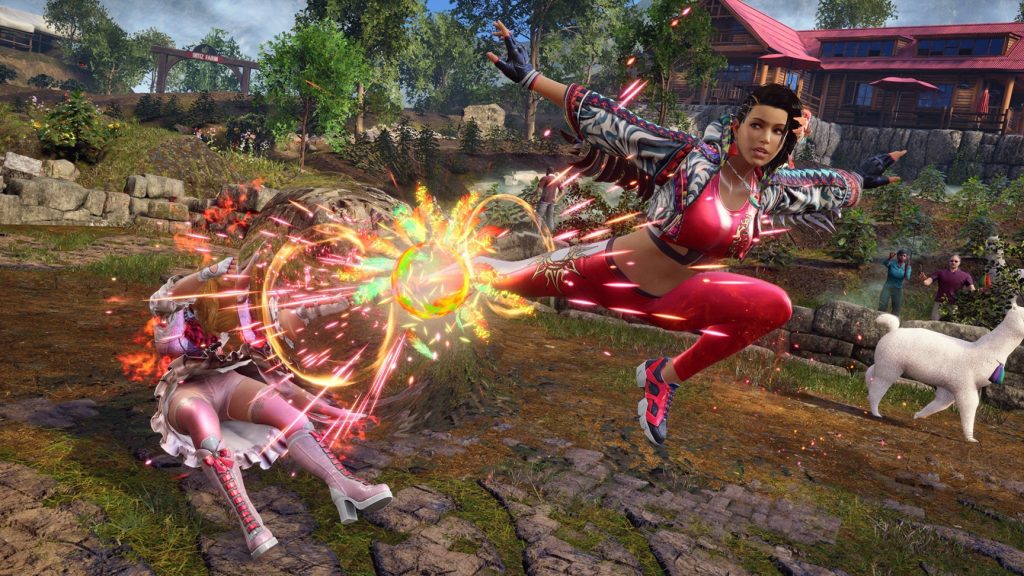
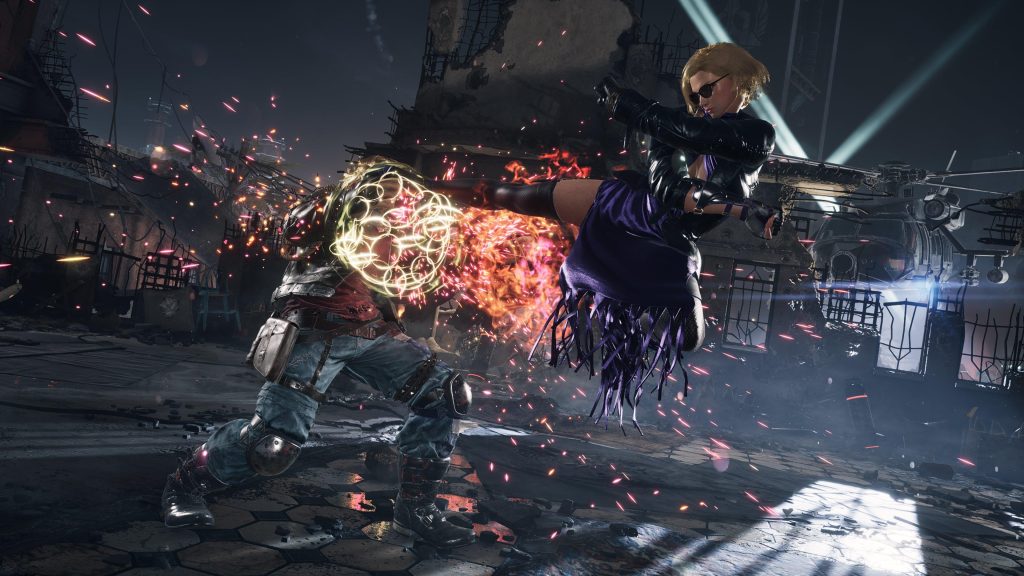
When it comes to fighting games, fans can wait many years for a new iteration to be released. This is usually because the previous version has been given an “enhanced” release or supported through DLC over the past generation but even then for Tekken fans it feels like the wait for Tekken 8 has been quite some time. This is likely because it has been nearly seven years since Tekken 7 released on consoles and showed that the 3D fighting scene is alive and well. Now, with fans eager to see what a new iteration has to offer in terms of combat as well as perhaps seeing just where the story will go after the events of 7, has Bandai Namco managed to pull off a near perfect victory here in Tekken 8?
Story
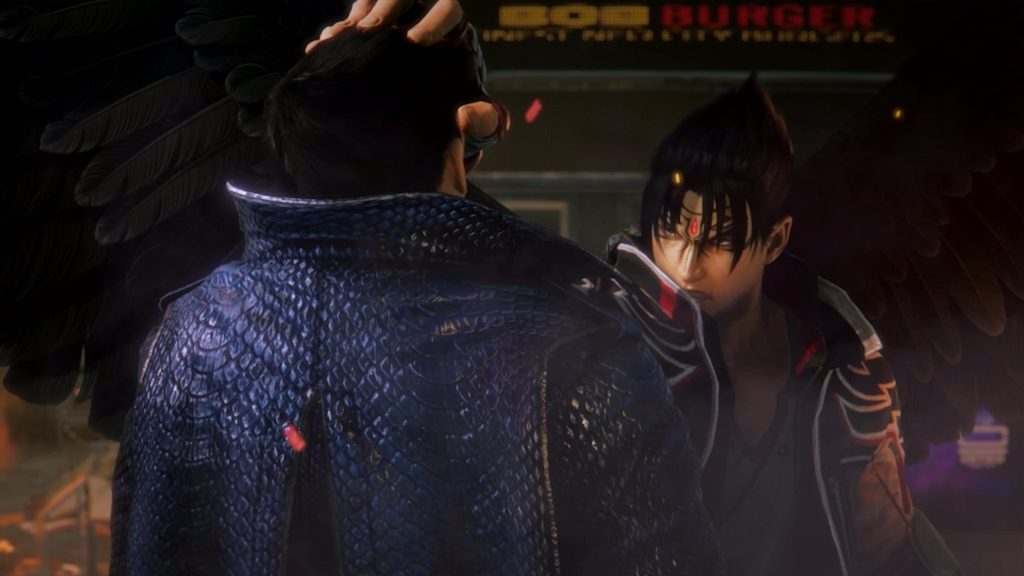
While we won’t go too into detail about Tekken 8’s story mode “The Dark Awakens,” it does follow the events that happened at the end of the previous game with Jin Kazama still struggling to control his new abilities while Kazuya is in full control of his, capable of unleashing so much destruction at once that he brings the world to its knees and announces a new King of Iron Fist Tournament where entire countries will select fighters to represent them, the winners being rewarded and the losers severely punished. As such, Jin must grapple with his abilities while the various forces of the world, both good and evil, begin to move in response to Kazuya’s threats.
The entire storyline is dripping with seriousness despite the absurdity of some of the situations that play out. The cliche elements are worn openly and almost reveled in at times and the twists that are mostly obvious are still treated as major reveals and, perhaps due to the way it is handled by the writers, feels all the better for it. The over-the-top nature, the reveals, all of these elements make Tekken 8’s core storyline a bombastic tale that is as delightful as ever, especially for longtime fans and the newcomer characters being added into it, including a certain extremely familiar seeming girl.
It is worth noting that those who want to see a bit more of their favorite character’s storylines, who may end up getting only a brief appearance or lackluster showing in the core story can still enjoy some extra content in the form of the game’s Character Episodes that allow every character to have a unique ending of their very own alongside specialized fights for them. These work in a similar manner to arcade endings but are a delight nonetheless when paired with the high quality presentation of the main story. There is also “Arcade Quest” which serves as a tutorial and lets players take control of their own created avatar to play the freshly released Tekken 8 in arcades against other people as if it were the real world. This mode is simple at best and mostly seen as a tutorial but it does have some fun jokes from time to time, especially in a meta type of way.
Gameplay
The Tekken series has almost always felt like a game where defense is key to victory. The ability to properly space your character, side-step incoming attacks, crouch or avoid a powerful blow and then unleash a powerful punishing counter-attack that could lead into a juggling nightmare for your opponent were some of the key elements to succeeding against more difficult opponents. Sure, certain fighters benefited from a more active fighting style and putting the pressure on your opponent is always a good thing, but managing to punish a whiffed move could easily swing the fight in your favor or doom you to a nightmarish juggle if you play poorly. You see, despite the fairly simplistic control scheme offered by Tekken’s four-button attack system, every fighter in the game has dozens if not over a hundred different moves that they can unleash and choosing when to properly use these moves, the proper timing of combos, and which moves to chain together has always made Tekken a game that is a delightfully challenging fighter to master but one that has always been enjoyable thanks to the options it provides.
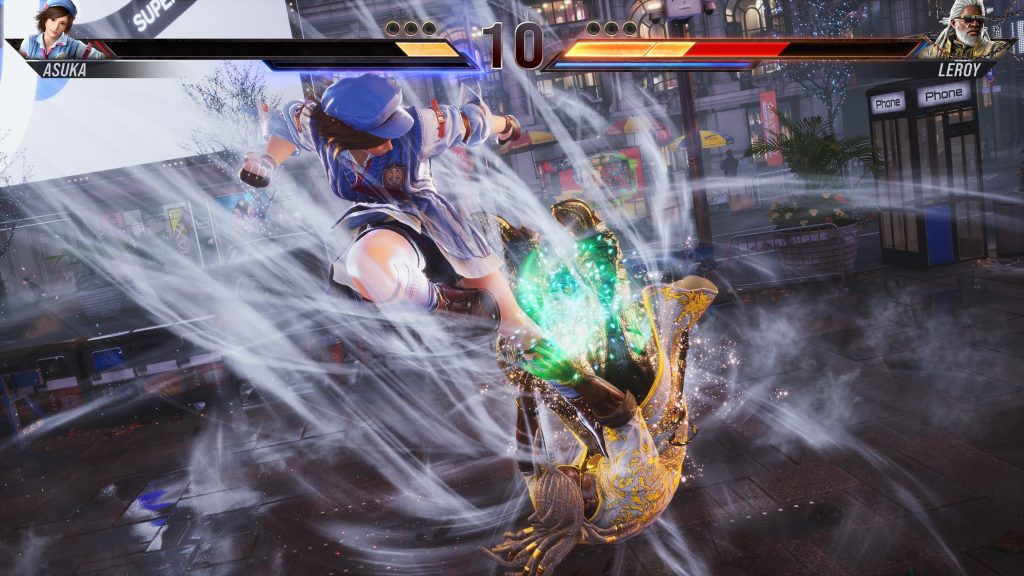
Now in Tekken 8 things haven’t been changed much as it is still as combo and air-juggle heavy as ever but a few new mechanics have been added to make fights more aggressive and reward this type of play. This comes in the form of the Heat System and recoverable health. As players take damage usually, their health bar will decrease but if they manage to find themselves getting juggled in the air or blocking special attacks, their health will still decrease but show a grayed out portion. This portion can be recovered should the player take an aggressive stance and start dealing damage to their opponent instead, giving them a chance to recover a bit of their health lost when they were punished by an air juggle or suffered through a crushing attack. This means that simply dodging left or right or simply blocking isn’t enough to recover, aggression is rewarded.
Along these same lines the Heat system is now a massive mechanic that can factor heavily into how a player wants to handle their character. Every round each fighter has a full Heat meter and can trigger it at any time and provide a wealth of benefits while it is active. Entering Heat mode can be done automatically simply through the press of a button or by unleashing a move that is usually one of the player’s current character’s more powerful attacks. Once in Heat mode, their Heat Gauge will begin to deplete and every single attack they will do, even if blocked, will deal chip damage to the opponent. At the same time, they will also quickly regain any of their recoverable health that might be available. Alongside these already useful benefits of being in Heat mode characters will also be able to use a number of special new attacks for every character, including a powerful Heat finisher that will end their Heat mode instantly but deal a ton of damage if it lands properly.
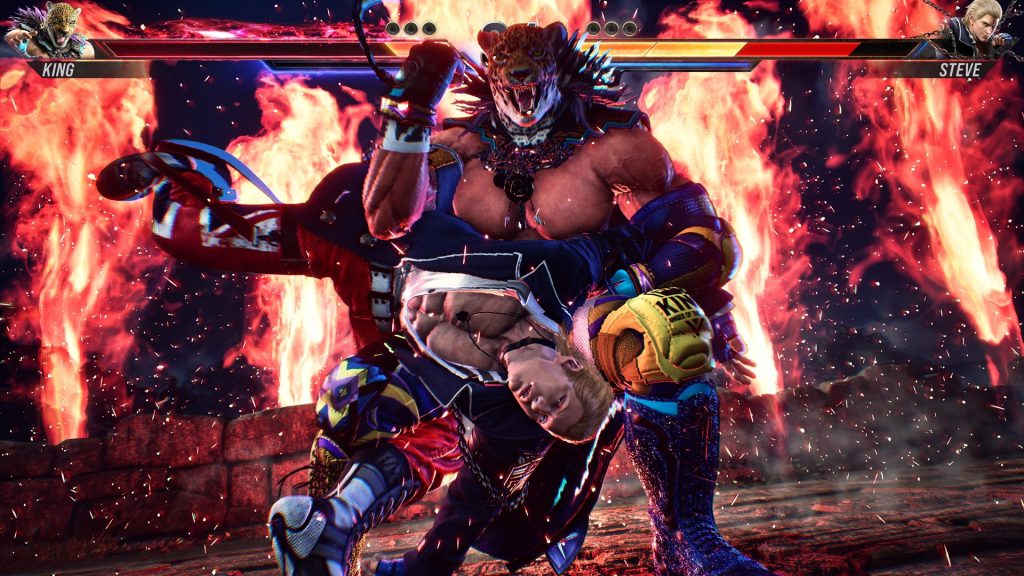
As mentioned before, every round this Heat gauge is restored, meaning players are encouraged to use it to make sure they win a round. Of course, when to trigger this can play a heavy factor in actually winning a match depending on the opponent… do you save your heat gauge to restore health because you ended up on the wrong-side of a whiffed punish or do you trigger the Heat mode and unleash a myriad of attacks capable of air juggling an opponent into near oblivion if done right or even take advantage of chip damage to wear down an opponent. For example, Aliza’s chainsaw attacks can deal plenty of damage to a defending opponent through chip damage alone, combining that with her abilities to air juggle make her a dangerous threat. Along these same lines, King and his powerful grapples can feel deadlier than ever if players play their cards right and trigger his command grabs alongside his combos properly.
If this sounds a bit challenging to learn, it is because it can be, but Tekken 8 has made the best effort we’ve seen in a fighting game to try and give players the tools to learn their favorite fighters and even how to fix their mistakes. Tekken 8 supports the most extensive training modes around with every character having combo challenges, training on when to punish an opponent, certain moves that work best in specific situations, and more. This is incredibly helpful since Tekken characters generally have a massive amount of moves available to them, usually far more than a standard fighting game and while players don’t need to know their favorite character’s every move, this makes doing so far easier. This is simply through training mode as well as the game’s Arcade Quest, a single player storyline involving the player’s created little character learning the ropes of the freshly released Tekken 8 in the arcade scene by slowly introducing mechanics and ramping up the difficulty to match the player’s current Quest ranking.
To take things a step even further, while replays in most fighting games can be recorded simply to relish in the player beating a challenging opponent or executing a “Perfect” victory, this time around replays have an actual real purpose. Players can record their replays automatically or save them manually as they fight against others and even view and download the replays of other online players but the catch here is, the player can actually pause the replay and take control of either character at any time they wish. This means that they can replay a challenging fight over and over again, trying to figure out the best way that they could have avoided losing or landing that combo they were aiming for. Even taking your skills against someone else’s online replays can be a learning tool even if it often can see players trying to punch far above their weight.
For players who want to play with style but also be far more limited, there is also a new control scheme accessible at any time during a match called Special Style. Similar to some other recent games, Special Style makes every character far simpler to control by making a menu appear in the bottom corner and automatically triggering their character’s special attacks, Heat moves, specific juggle combos, grapples, and more. This will allow players to pull off some flashy combos with ease and have fun, but it also cuts their move list down considerably. This means that while Special Style is fun to use and a great way to begin learning a character, truly mastering a fighter requires actually playing with their usual fighting style. Even basic things like unleashing Aliza’s chainsaws or triggering most of King’s command grapples, and even most of Reina’s familiar and intriguing move-set are unavailable in Special Style, so it is far more limiting than one would expect as a “New Player” friendly option and is meant as a teaching tool rather than a proper control method, though that doesn’t mean it can’t be pulled out in the middle of a match as a potential crutch.
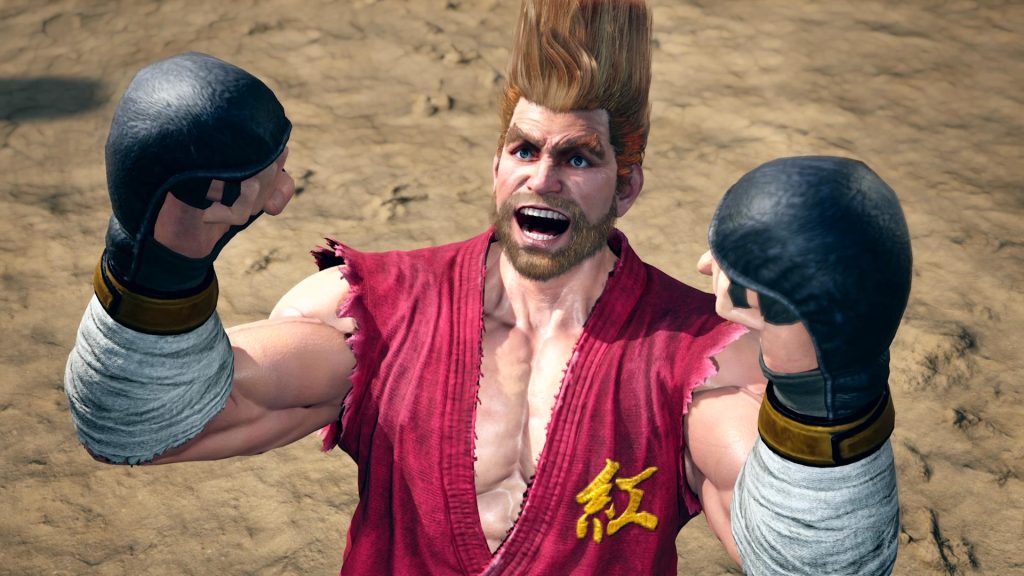
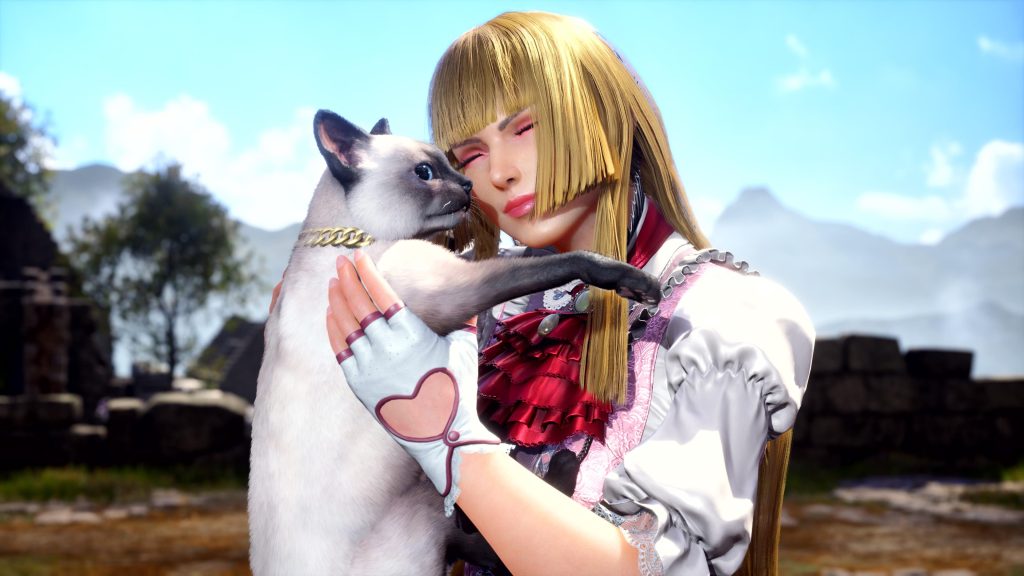
Tekken 8 has launched with an impressive thirty two fighters available to choose from, and while a few longtime favorites may not have made the initial cut, with the likes of Eddy Gordo already being announced as DLC, or not hinted at all (my previous favorite Lucky Chloe) this roster features a number of characters for any type of fighting game player. Be it a rushdown fighter, grappler, defensive specialist, heavy hitter, nearly every type of playstyle can be found here and then some and thanks to all of the aforementioned training modes and ways to learn about a character’s moveset, Tekken 8‘s roster is truly impressive here. It is also fun to note that every single fighter has been released with a variety of different costumes to choose from, be it a classic outfit similar to what fans are usually familiar with or their new look. It is also worth noting that literally every character can be customized heavily with currency earned simply by playing the game. This currency isn’t hard to earn by any means and players can easily unlock multiple costume pieces for their favorite fighter and put their own unique twist on the character as they play either offline through the game’s single player offerings or taking their skills online.
As mentioned earlier, the game features an impressive cinematic story mode that features a variety of fights throughout the storyline and while players don’t really have much choice in the storyline, it is a solid gameplay mode. Those looking to see more of their favorite characters will find their aforementioned Character Stories far more entertaining as it provides extra details about their favorite characters and special endings for each one. There is also the standard arcade mode, versus modes, even Tekken Ball though the ball in this mode seems to really have a life of its own at times, with it acting incredibly strangely at times when struck. As mentioned before, the Arcade Quest serves as a mini-character created story that is simple and designed like a full-length tutorial to learn the game’s elements and a new Ghost Battle that allows players to download the “Ghosts” of other players and fight against a computer that will simulate their moves. Players can even choose to train their own ghosts by fighting against a variety of characters and see how well they can train their very own CPU fighter, though obviously playing online to test your skills is the way to go.
Online players will find that the Tekken Fight Lounge serves as the primary battle hub where players can take their customized avatar to run around and interact with other fighters as well as queue up for Ranked Matches, Quick Matches, create a Custom Room or just a Room for random players to join and test their skills and more. The lounge is a bit simpler than some may hope for when compared to some other fighting games recently released but it is still fairly nicely designed, though players can just search for matches directly from the online menu should they choose. As for the actual netcode, Tekken 8 is far better than its previous iteration with nearly all of the matches being handled quite well even when playing against fighters in other countries or even cross-pay. It isn’t quite as perfect as we have seen recently, as some matches did experience severe lag and even a few disconnects here and there, which I doubt were rage quits given the opponent had a round up at the time. These cases are few and far between however as the netcode does seem to work well more often than not and the rollback does come with some extra customization, just don’t expect the best netcode around at the moment.
Audio & Visuals
Tekken 8 marks the first time that the series has appeared in any way on the current generation of consoles and PC and has not limited itself to past consoles in any way. This has allowed the developers to take full advantage of the current consoles by offering incredibly detailed looking stages for players to battle on, including a number of which with destructible environments and different levels players can break through and that says nothing about the fighter models themselves. Every single fighter has been lovingly crafted to look as impressive as possible in motion with some truly outstanding looking animations to their movesets and, as mentioned before, every fighter has a variety of costumes immediately available for use. The in-game cutscenes shown during the main story mode are incredibly impressive and flow fairly well into the fights themselves while Arcade Quest’s simple design feels intentional but a bit lacking in comparison.
This entry continues the franchise tradition of every character in the roster being able to speak every language possible, including animals. This is because, even in story cutscenes, characters will only ever speak in their native tongue, meaning a French character will speak French to a Japanese fighter and be completely understood and even responded to in Japanese. This has always been a bit of cheeky fun with the Tekken series and that remains true here. The soundtrack consists of some incredible background music throughout all of the game modes and there is even a Jukebox option for players to select music from past games in the Tekken series to enjoy should they choose.
Overall
It was going to take a lot to impress fans after such a long period of time between releases and Tekken 8 has done a near perfect job doing so here. The amount of single player content available is a delight while the online mode is the best it has ever been in the franchise even if it still has some hiccups all while looking like a masterpiece in motion. Fights flow wonderfully as players take advantage of the new learning mechanics to master their favorite characters in an impressive roster of fighters that has something for everyone. There are some niggling issues here and there, mostly with Arcade Quest and some lingering online issues, but Tekken 8 impresses nearly through and through, showing that this franchise has reached new heights all while being as approachable as ever for newcomers and incredibly deep for longtime fans looking to dive into the new mechanics.
Capsule Computers review guidelines can be found here.
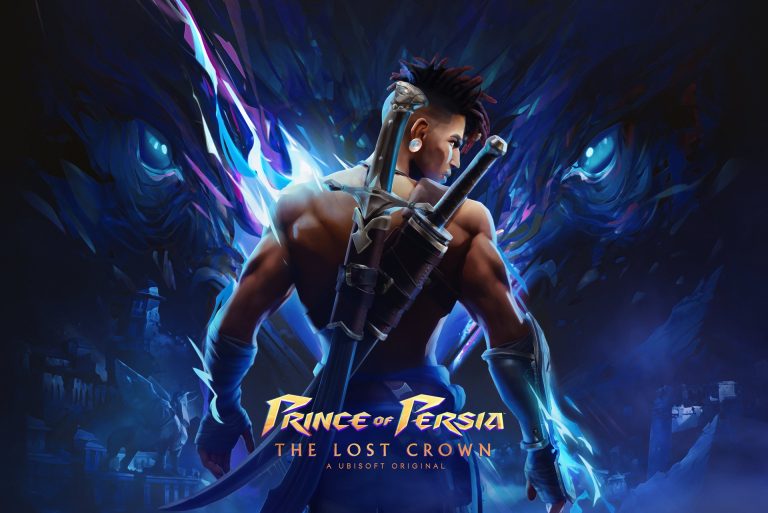
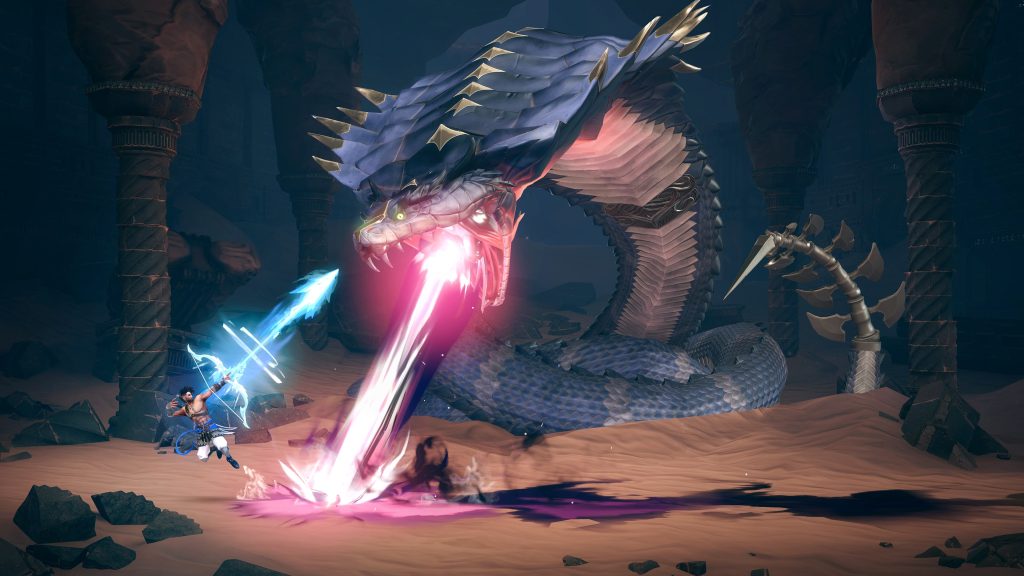
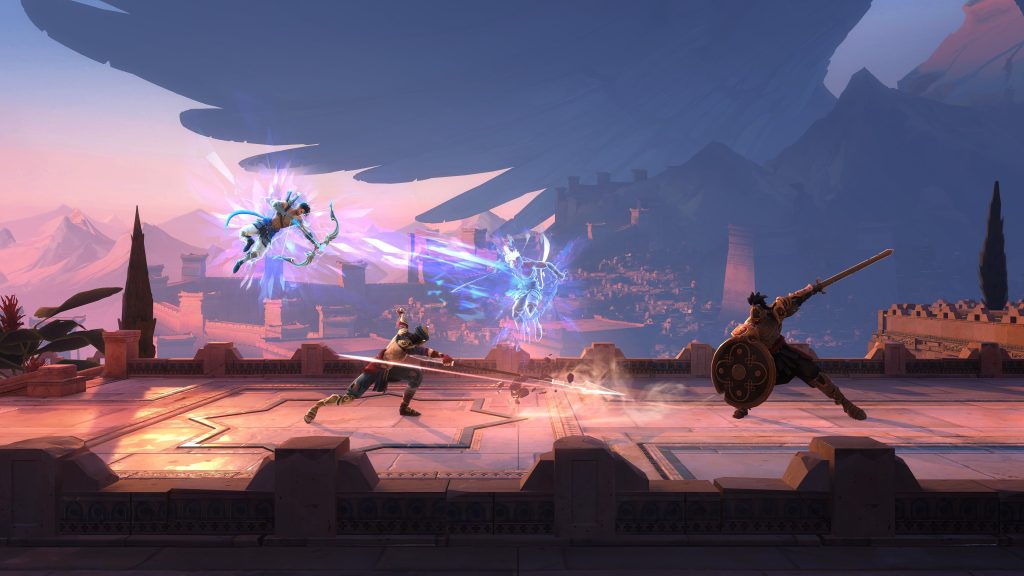
Looking back, it is kind of difficult to believe that it has been nearly fourteen years since a fully realized entry in the Prince of Persia franchise has been released. Sure, there have been efforts to remake one of the original games only for it to land itself in developmental hell and in many ways, Ubisoft’s own Assassin’s Creed franchise has taken on parts of the series’ mantle. Still, there was always something charming and endearing about the history of the Prince of Persia franchise and now being able to once again return to this storied series with a brand new metroidvania entry hopes to be a delight. Are these hopes dashed upon the sands or is Prince of Persia: The Lost Crown a worthwhile entry in the franchise?
Story
Sargon is a young hero and one of the most skilled members of the famed “The Immortals” that serve to protect the Persian Empire from any and all invading forces. After successfully defeating such an invasion, the celebration is cut short when the real prince of Persia Ghassan is kidnapped and taken away to the cursed citadel of Mount Qaf. With his fellow Immortals in tow, Sargon pursues his kidnappers only to find that the once sacred Mount Qaf that was seen as the home of the divine bird Simurgh has fallen into complete disarray and is now a land where time is not as it seems, the undead walk freely while magical beasts roam the hallways and those unlucky enough to survive find themselves trapped within a time that is no longer their own.
With only his skills to guide him and a bit of help from the other Immortals, Sargon must try to rescue the prince while also discovering the root of what happened on Mount Qaf, because resolving this issue might just be the thing that can save them all. Thanks to the flow of time being broken and easily meddled with on Mount Qaf, the story is able to take advantage of unique paradox style situations and allow for interesting setups that would otherwise be impossible. Along these same lines, the storyline is filled with some rather satisfying twists and turns that can be rather surprising. Sure, a few are a bit predictable, but many caught me off guard despite genre staples. There are also a number of simpler side-quests and extra bits of lore and storyline to discover should players choose to take them on. These bits of side-quest are optional and often reward players with talisman charms, tabs that can give Sargon more health, and more but the best part is often learning more about the plights of the humans still surviving within Mount Qaf despite being displaced out of their own time. This allows for a satisfying story that works narratively well alongside its gameplay to create a fulfilling tale for a metroidvania.
Gameplay
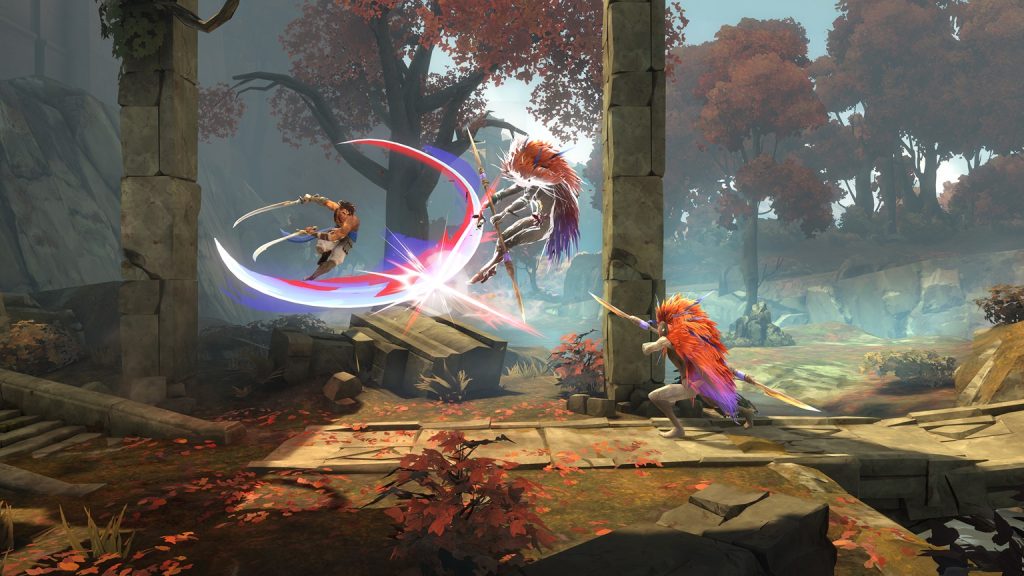
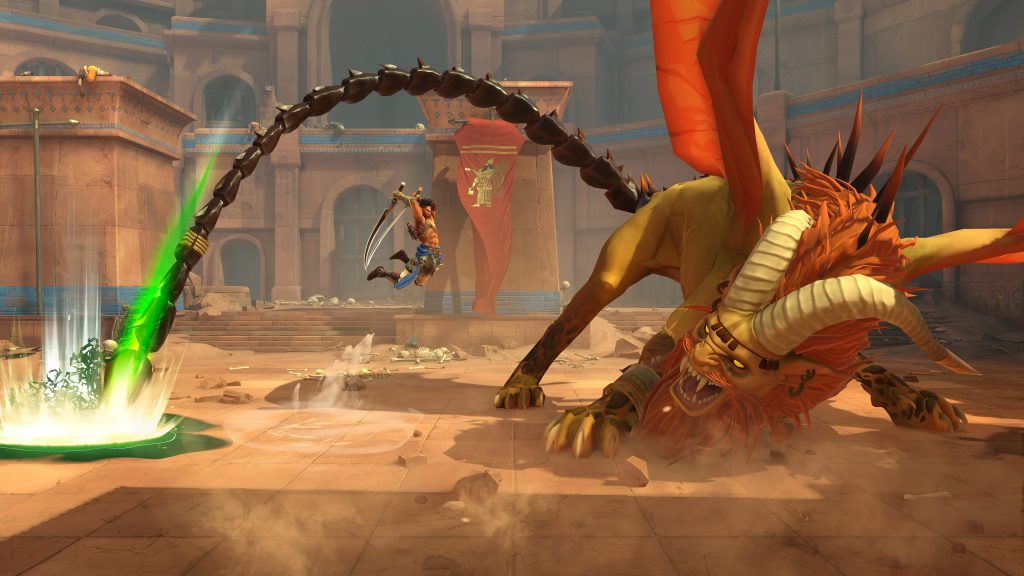
Ubisoft Montpellier has managed to craft a stellar metroidvania styled Prince of Persia game here by combining some expertly crafted platforming sequences, some challenging puzzles, and of course plenty of enjoyable combat with an ever increasing array of options available to players as they progress through the game. Initially, Sargon can only make use of his dual-blades, a simple combo and heavy attack, and the ability to dodge and parry blows. The parry happens to be one Sargon’s most powerful tools as it negates all enemy damage most of the time, though attacks that glow red must be dodged. Along those same lines, yellow glowing attacks can be parried into a punishing counter attack unique to each type of foe, capable of dealing massive damage to the enemy if pulled off correctly. Combat grows increasingly complex as players acquire more upgrades, extending Sargon’s combos, offering new weaponry for him to utilize, providing additional powers, and far more to make the already enticing combat all the more exhilarating.
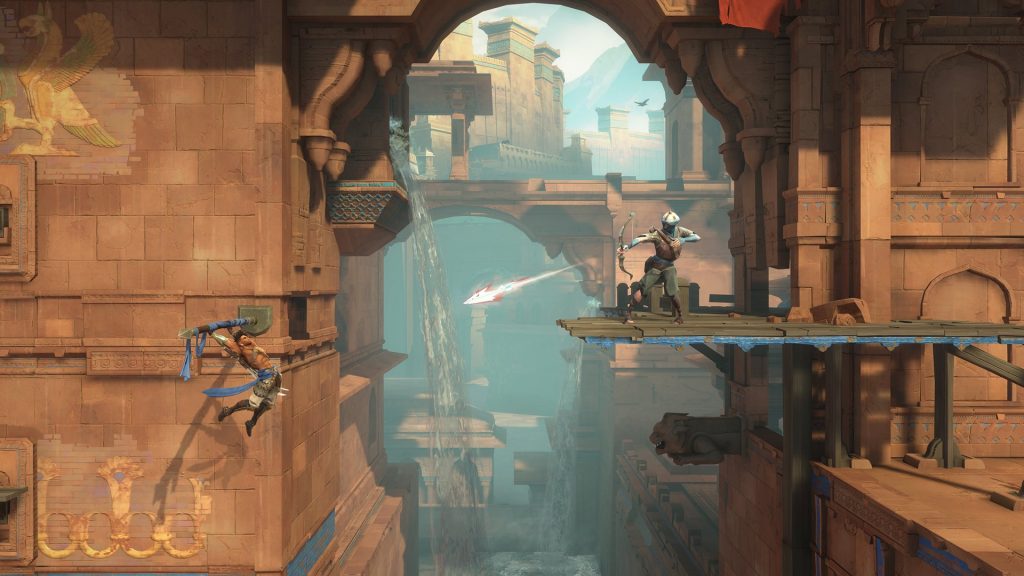
Sargon’s combat flows fluidly thanks to the fact that he controls incredibly well here. Players will find that his snappy animations and the tightly responsive controls make it incredibly easy to make even some of the most difficult looking situations manageable if they have the proper timing. This of course comes in quite handy throughout the multiple platforming puzzles that see players needing to properly navigate trap-laden rooms to reach a switch or item needed to progress through the story or obtain an optional upgrade/unlock. Being a metroidvania style game, The Lost Crown is filled with hidden secrets and optional pieces of content that players can backtrack to uncover once they have obtained the required ability to reach it. In fact, the game offers a variety of options that make marking these locations down a bit easier. Not only does the map automatically update to show unexplored routes, players choosing to use the “Guided” exploration version will even be shown when a certain path is inaccessible without a proper ability. This type of help is minimal and doesn’t really affect much should players truly want the most authentic experience as it usually just points players in the general direction of their next goal.
Another option that is far more useful are Memory Shards. These reusable items allow players to take literal screenshots and mark them on the map of various secrets that they have found already but simply cannot reach at the moment. This could be thanks to players not obtaining the Bow yet or even a far more interesting ability that we won’t spoil here. This extra option to give players a way to keep track of secrets is extremely helpful in a metroidvania as well-crafted as The Lost Crown and makes exploration feel very rewarding. That being said, backtracking through the game still can be a bit annoying at times, even with the various tools on offer to make things a bit easier.
As mentioned before, exploration will often reward players with a variety of bonuses outside of the standard plot advancement. These upgrades include Soma Tree Petals, which when players collect four of will permanently increase Sargon’s health, amulet pieces which can be equipped at the Soma Trees that serve as save points, and even Anthra Surges (chargeable special moves) that can be equipped and changed around. Amulet Pieces come with a vast array of power ups ranging from simply boosting Sargon’s health or increasing the amount of damage he does to making the parrying window easier, slowing time when dodging an attack, or even triggering status effects on enemies.
The amount of amulet pieces Sargon can wear allows for players to customize it to fit their playstyle, whatever it might be. Along these same lines players can also use crystals they obtain throughout the game to upgrade their weaponry at blacksmiths to make their attacks more effective. These various upgrades, side-quests, and unlockables all give players countless options when it comes to exploration and tackling the various enemies and bosses they will encounter, including bosses that have fun and intriguing mechanics to take advantage of with some of the most unique looking bosses having some of the best mechanics, though a few are a bit too straightforward for their own good. It is also worth noting that while most encounters allow for players to immediately challenge their opponent again, a few require a lengthy trek back to the fight that can be a bit too annoying at times.
As mentioned before, the various platforming sections throughout Prince of Persia: The Lost Crown feel perfectly crafted for what players can handle at the time, and if they cannot, they likely don’t have the ability needed to clear an area. These platforming sequences are so well-designed at times that it is easy to simply flow through an entire dangerous section with ease only to look back and realize that you were within a hair’s breadth of hitting a spike-pit on at least three occasions but managed to avoid it due to how tight the control scheme is. This level of platforming is excellent but can be a little annoying when tied into the puzzle mechanic. This is because nearly all of the game’s puzzles revolve around the platforming system and, should players happen to miss a puzzle element or a jump, they may often have to start the entire thing over again despite the fact that they already know the solution.
It is nice to note that despite being a metroidvania, Ubisoft has made sure that Prince of Persia: The Lost Crown is as accessible as possible for those who want to try their hand at the game. They have done this in a number of ways, one of which is mentioned before with a guided experience indicating the general direction of where players should go as well as a variety of difficulty options but things are far more in-depth than that. Should players choose, they can adjust enemy health, the amount of damage enemies deal, the parrying window, how long the invulnerability of the dodge can last, and while we never turned this feature on to even test it as it seemed like it went against the spirit of the game entirely, an option that will open up a portal to skip particularly difficult platforming sections. As stated, since we never tested this option it is unknown if this affects the more challenging platforming sequences that are often required to obtain special unlocks and hidden items but the option is there for those who may need it simply to progress the story. This level of accessibility in a metroidvania is a shockingly surprising one that feels like it should be offered a bit more from time to time, though perhaps not to the same extreme some options are here as it does feel like it goes against the spirit of the game a bit.
Audio & Visuals
Prince of Persia: The Lost Crown features a stylized art style that may make it look a little bit dated at times but does allow the title to run perfectly smooth no matter what players are doing on-screen, even if they are pulling off a stunning looking counter-attack on a massive boss monster. The standard enemies players encounter are designed well-enough and the various places players explore are similarly well handled, though the game’s best designs come in the forms of the bosses that Sargon takes on. These enemies range from mythical beasts to powerful humanoid enemies willing to take the fight to Sargon in intense combat. As mentioned before, combat flows fluidly and looks exceptionally well, especially with how vibrantly colorful everything is in the game. There are a few times that strange screen effects can be a bit distracting though these usually only involve certain puzzle elements.
The voice work throughout the game is handled quite well, with the English cast sounding decent enough with Sargon being the best of the group. It is a bit odd to say that some of the members of the Immortals sound a bit off unfortunately which is disappointing. It is also nice to note that The Lost Crown does offer a large array of voice tracks to choose from should players choose to swap from English. The background music features a great collection of thematic tracks that work well given the exploration elements of the game and some great themes that play during boss battles.
Overall
Prince of Persia: The Lost Crown is a stylistic and wonderful approach to a metroidvania style game that controls just as well as any fan should hope for. With satisfying combat and platforming, some decent puzzle solving that is a bit too simplistic at times, and some great accessibility options, Ubisoft Montpellier has managed to create a stellar brand new entry in the Prince of Persia series and hopefully a sign of things to come for this long missed franchise.
Capsule Computers review guidelines can be found here.
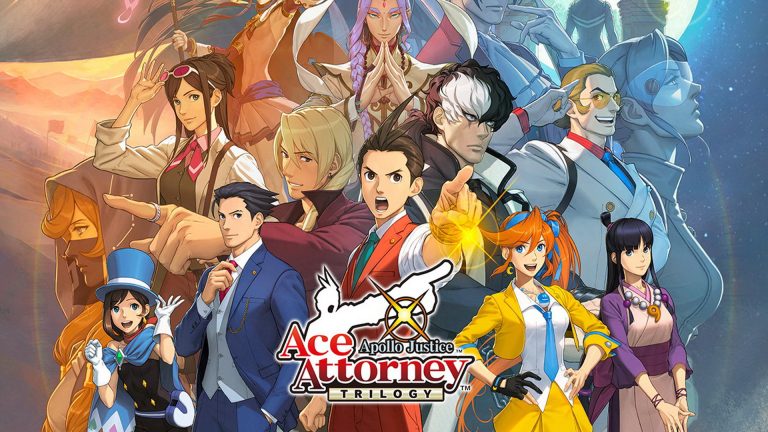
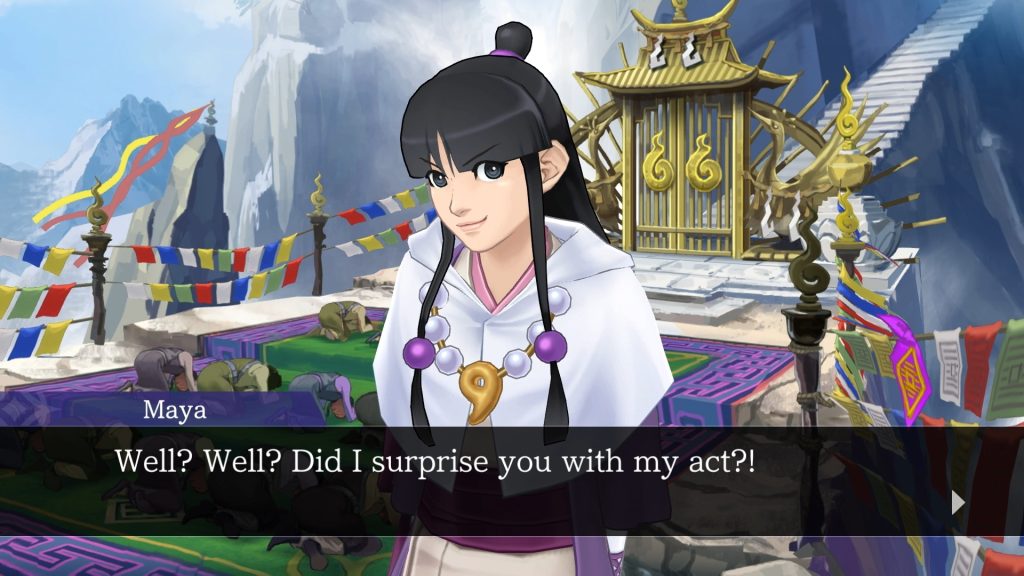
Over the past few years Capcom has been bringing the various Ace Attorney games to modern day platforms, including a pair that had never been released in English before in the form of The Great Ace Attorney Chronicles but there was still a trilogy that had yet to be touched… until now. Although a couple of spin-off investigation games remain untouched, Capcom has put together the Apollo Justice: Ace Attorney Trilogy to bring to the West next, this time bringing Apollo Justice, Dual Destinies, and finally Spirit of Justice all in one package for modern platforms. With enhanced graphics, all DLC included, and finally freed from the confines of the DS and 3DS, is this trilogy of unique games still worth picking up?
Story
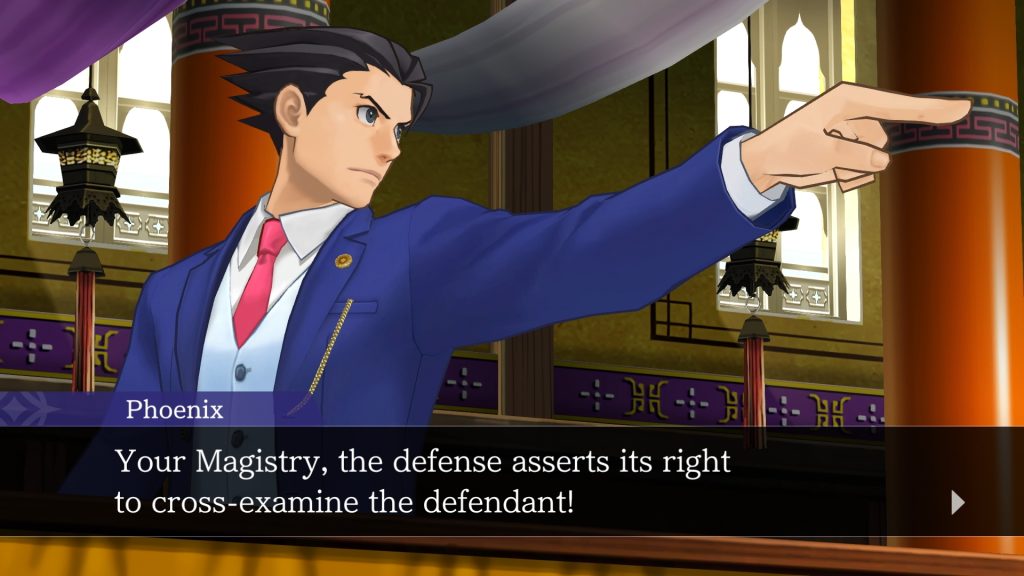
As mentioned before, the three titles contained within this collection are Apollo Justice, Dual Destinies, and Spirit of Justice and each one looks to put a different spin on things as each one adds additional characters while expanding upon the storyline we know of Phoenix and his friends. Apollo Justice starts off the trilogy by taking place over seven years after the ending of the original trilogy and follows the story of newbie defense attorney Apollo who eventually finds himself working for Phoenix Wright, who after a horrible event seven years prior was disbarred and had to give up his attorney’s badge. Apollo Justice finds itself in the weakest part of the trilogy as it offers not only the least amount of cases thanks to the extra DLC added in the last two games but also starts with fan favorite Phoenix at his lowest point while trying to introduce fans to Apollo. That isn’t to say that the story itself is bad by any means, but it does start things off on the wrong foot and meander a bit in a slow burning second case. Thankfully throughout the four cases in Apollo Justice we learn more about the events and truth behind everything that happened to Phoenix in an intriguing narrative all while solving the horrible cases along the way featuring screwy witnesses and even stranger suspects that feel right at home for the series.
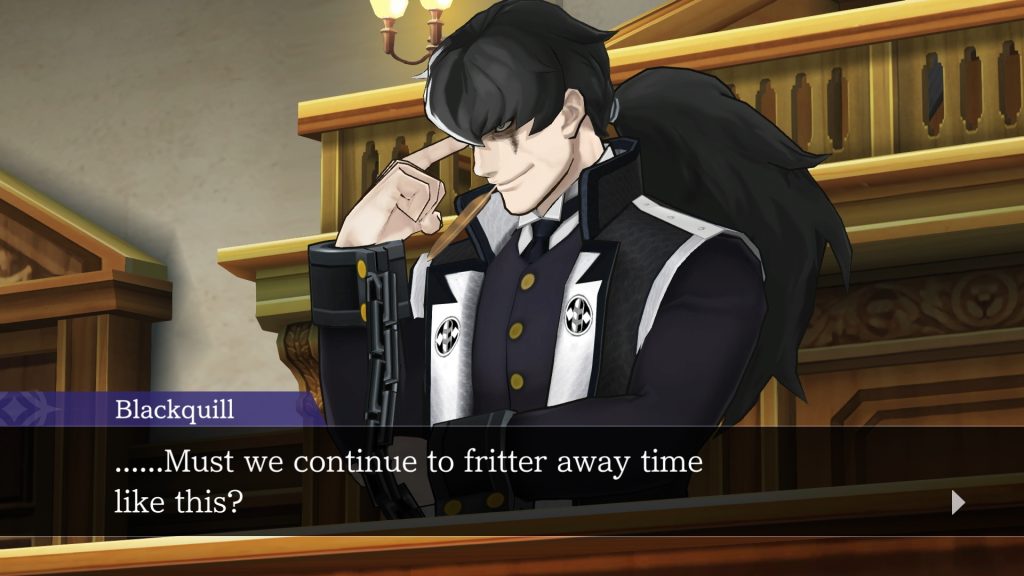
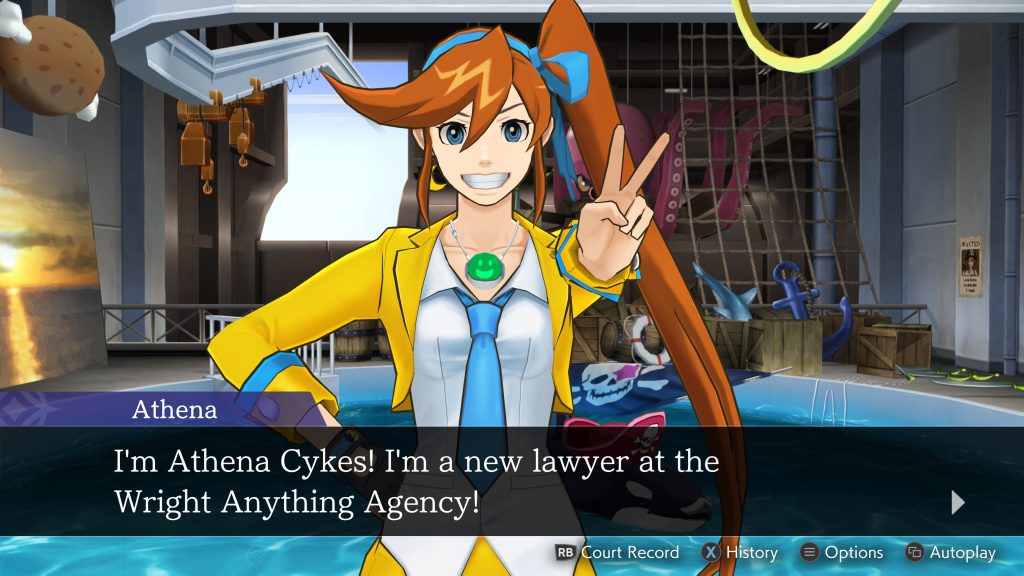
The story then moves on to Dual Destinies that brings newcomer Athena Cykes and her more technical gadgets in to assist both the returning Phoenix Wright as well as Apollo as they take on the mysterious cases flooding the courtroom, including the stranger than ever prosecutor Simon Blackquill. Athena works as a charismatic and energetic extra lead character that largely overshadows Apollo throughout most of the game, though this is mostly thanks to her “Mood Matrix” often playing a bigger role in this game than Apollo’s bracelet did in Apollo Justice. Either way, Dual Destinies‘ introduction of Athena works well to help balance Apollo’s growing role in the story while making sure Phoenix still gets some spotlight. Combine this with a slew of other new side characters that help expand the roster, and this entry tells yet another enthralling narrative spanning across multiple cases.It is also worth noting that, while not considered canon as it is a DLC case, Dual Destinies has perhaps the most ridiculous and entertaining case of the entire franchise and while we won’t spoil it here, it is easily a must play.
Finally the third game in this trilogy, Spirit of Justice, serves as not only the best of the collection but also a proper way to bring nearly every character together for a satisfying plot intertwining multiple cases with an inter-country conspiracy. This version of the game sees Phoenix travel to the kingdom of Khura’in where its own justice system is undergoing radical changes and features cruel punishments for attorneys while Apollo and Athena must hold the fort down at home as they take on even more sinister crimes as memorable as the rest. This version of the game also comes with a bonus DLC case that, while not quite as memorable as the one found in the second title, is also quite enjoyable. It can be a bit difficult to determine quite how one would rank these three games in the collection, but Spirit of Justice is easily the strongest set of cases thanks to its unique setting among the games with Dual Destinies inclusion of Athena as Apollo’s co-lead working great, with finally Apollo Justice being the weakest but still highly enjoyable game in this collection.
Gameplay
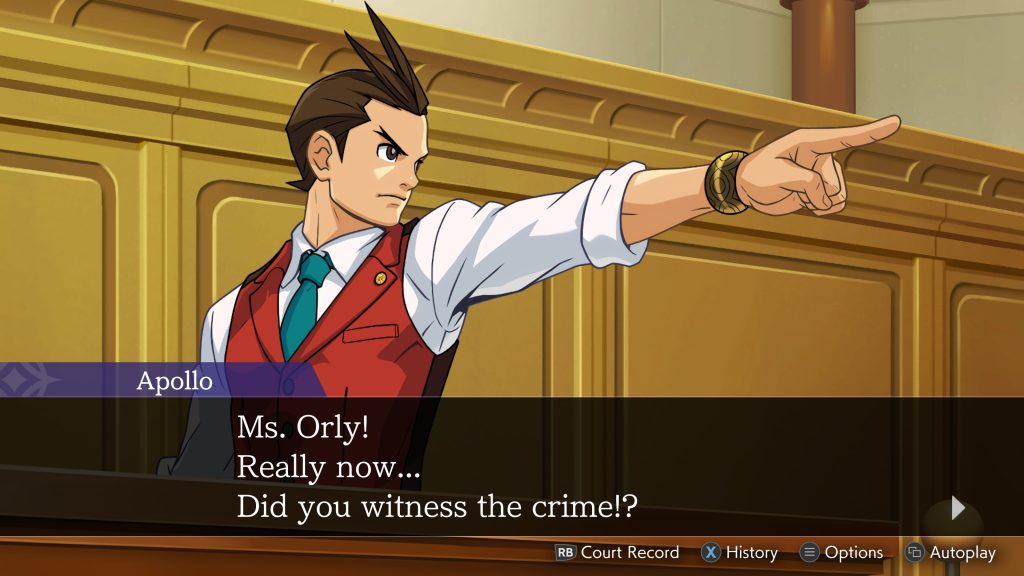
All three games in the Apollo Justice: Ace Attorney Trilogy collection continue to play the same as fans would expect, with the player’s time being divided between investigation segments where they will need to search for clues that will help prove their client’s innocence while also pinning the blame on someone else as well as interviewing various witnesses while the majority of their time will then be spent in the courtroom. These in-court segments see players needing to cross-examine the witness and their statements, press for more information, present evidence when they catch a witness in a lie, and of course solve the puzzles that lay at the heart of every case.
What sets each of these three games apart, besides the narrative and the types of cases that players will need to solve of course, are that each of the characters has their own unique gimmick that comes into play both inside the courtroom and during investigation. In Apollo Justice Apollo has a knack, as well as a magical bracelet, that allows him to catch onto unusual body language when someone is lying or leaving out info that can then be called into question to further push the target into telling the truth. Athena’s gimmick in Dual Destinies is a far more interesting mechanic as she has the Mood Matrix, a little robotic companion named Widget that can provide a display of the emotions that a witness is actually feeling when giving a testimony. This means that they may be sad when talking about something that should be happy or overjoyed when discussing a murdered friend, which can then, just as before, be pushed for further questioning.
Perhaps the most unusual gimmick among the three games comes in with Spirit of Justice as the priestess of Khura’in can hold a seance that summons the last moments of a victim’s death giving players a chance to get an in-person testimony from the deceased, though obviously nothing is as it seems, especially in a country undergoing massive judicial upheaval. It is worth noting that since the latter two games in this trilogy were released on the 3DS, the titles do still heavily make use of “touch-screen” mechanics that are now simply handled through maneuvering an object for examination or selecting a piece of an item for further investigation, often giving players more insight into a certain piece of evidence.
Audio & Visuals
All three of the games have been given a noticeable face-lift to help bring them a bit closer to modern-day standards with Apollo Justice’s DS origins making sure that the game retains its 2D sprites that are gorgeously recreated here with plenty of humorous expressions and expressive reactions to events that happen in the courtroom. Dual Destinies and Spirit of Justice both were released on the 3DS back in the day and also saw the series make the jump to 3D models, which at the time saw a bit of a downgrade in quality but now they look better than ever. All of the 3D models have been refined to look as impressive as possible here and move smoothly with a shockingly funny array of reactions that are just as off-the-wall as fans would hope for in the series. This package also comes with all of the DLC released for these games, so players can change the costumes of Apollo, Phoenix, and Athena as well once she is added into the trilogy. It is also nice to note that, while it is absolutely filled with spoilers and should not be viewed until players have completed all of the cases in the package, the game does offer a Museum packed to the gills with extra artwork, promotional material, and much more that fans will absolutely adore.
Considering all of these games originated on a Nintendo handheld none of them have voice work still of any real kind. Various exclamations of Objection!, Hold it!, and Take That! Still happens throughout the cases by the characters but that is the extent of it here, meaning players will need to be up for a lot of reading. Thankfully the background music throughout all three games remains as strong as ever and appears to have been retouched as well to make sure they sound perfect on television speakers compared to handhelds.
Overall
Although Apollo Justice may be the weakest of perhaps all of the Ace Attorney games, the Apollo Justice: Ace Attorney Trilogy happens to contain two of the best in the franchise as well with both Dual Destinies and Spirit of Justice bursting with content and unique cases that are just brimming with personality and a colorful cast of characters that will constantly surprise newcomers and happily please longtime fans looking to see how the trilogy enhances these classic games. Combine these three games with the lovingly curated museum content and any fan of the Ace Attorney games, or those looking to dive into them, will find this trilogy an objectively great time.
Capsule Computers review guidelines can be found here.
LOS ANGELES – January 31, 2024 – Netmarble, a leading developer and publisher of high-quality mobile games, has released a new game update for its collectible card game RPG, Tower of God: New World. New teammates and limited-time events are now available as part of this update.
Players can add two new teammates to their roster. SSR+ [Punisher] Ren (Green element, Mage, Anima) is a member of the Zahard Royal Enforcement Division, Unit 67. A Wave Controller and an Anima, this Ranker is a prodigy but unable to control his vicious tendencies.SSR [Compressed] Rak (Yellow element / Ranged / Spear Bearer) has shrunk down in size to a large dog after picking a fight with Hansung Yu on Evankhell’s Floor. Some have said that his charm has doubled now that his size is as cute as his personality.
The following in-game events are now available through February 15:
Story Event [Anaak’s Red Forget-Me-Not]: Players have the opportunity to experience special Story and Free stages. By clearing event stories, players can earn multiple rewards including Normal Summon Tickets, SSR Teammate Soulstone, Red Forget-Me-Not Tickets and more.
Anaak’s Red Forget-Me-Not Story Event Exchange Shop: Use event items, such as Flowers earned from the story event, to exchange for various rewards including SSR Compressed Rak, Red Forget-Me-Not Tickets and Growth Resources.
Anaak’s Red Forget-Me-Not Check-in: Check-in the game for 14 days during the event period and obtain rewards including Compressed Rak Hot Deal Summon Tickets, Normal Summon Tickets, Suspendium and more.
Khun Khun Arcade Mini-game ‘Climb the Tower’ Event: Players can enter special mini-game events that are themed to the new year and obtain Normal Summon Tickets once they clear all missions.
In Tower of God: New World, players can take control of fan-favorite characters to ascend the Tower. Join Twenty-Fifth Bam – and more than 70 characters – as he fights his way through the Tower in gorgeous 3D animation that will make players feel like they have stepped into an anime world. Players will experience fast-paced battle mechanics while utilizing a unique Slot System that powers up a particular “slot” instead of a specific character.
Established in Korea in 2000, Netmarble Corporation is a leading developer and publisher of top-grossing mobile games worldwide. Through powerful franchises and collaborations with acclaimed IP holders, Netmarble strives to elevate the gaming experience and entertain audiences globally. As a parent company of Kabam and SpinX Games, and a major shareholder of Jam City and HYBE (formerly Big Hit Entertainment), Netmarble’s diverse portfolio includes Lineage 2: Revolution, MARVEL Future Fight, Ni no Kuni: Cross Worlds, The King of Fighters ALLSTAR, The Seven Deadly Sins: Grand Cross, and forthcoming PC games like Paragon: The Overprime. More information can be found athttp://company.netmarble.com.
PARIS – Jan. 31, 2024 –SnowRunner, the blockbuster off-roading experience from Saber Interactive and Focus Entertainment, today releases its third expansion, “Season 12: Public Energy,” on PlayStation 5, PlayStation 4, Xbox Series X|S, Xbox One, Nintendo Switch, PC and Mac. Watch Season 12’s overview trailer for a first look at all the new content now available!
Available for free to all Year 3 Pass and 3-Year Anniversary Edition owners, Season 12 invites players to the green haven of North Carolina with four new maps, numerous points of interest like power plants, crop fields and an impressive water dam, two new vehicles, and a slew of new activities.
Spring North Carolina back into action!
North Carolina’s state government needs your help to establish a nuclear power station! Participate in the construction of its reactors and supporting facilities by delivering precious, heavy cargo and equipment with your trucks. When you’re not on construction and maintenance missions, you’ll lend a hand to local farmers to cultivate their crops, and even aid local institutions in monitoring environmental pollution.
No adventure is complete without new vehicles. The MTB 8106 is a formidable scout thanks to its fantastic ground clearance and upgradable engine for superior fuel efficiency – perfect for pulling scout trailers without breaking a sweat. For the most arduous tasks, however, the FEMM 37-AT is an imposing heavy-duty truck capable of handling any terrain and delivering all cargo without limitations.
A set of 10 new stickers will also be available for all players as a free update.
A fourth year of content updates is on the way!
And there’s even more to come! SnowRunner’s Year 4 Pass is now available for purchase, with four new seasons packed with exciting content to come later this year! Players who purchase the Year 4 Pass will unlock four exclusive vehicle skins for the ANK MK28, the International PayStar 5070, the Caterpillar CT681, and the Western Star 6900 TwinSteer base game vehicles.
“Season 12: Public Energy” is available now on PlayStation 5, PlayStation 4, Xbox Series X|S, Xbox One, Nintendo Switch, PC and Mac — and automatically granted to all owners of the Year 3 Pass. Save on all the content released since launch with SnowRunner’s 3-Year Anniversary Edition. For more information, check out the game’s page on the Focus Store.
UKRAINE – Jan 31, 2024 –Speed Crew, the high-octane party game from the AAA veterans at Ukrainian publisher Wild Fields, roars onto PlayStation 4|5, Xbox Series X|S, and PC via Steam today, simultaneously joining Nintendo Switch owners at the racetrack alongside the new Dominion Mode, and cross-platform play releasing shortly after in February.
Join a crew of madcap mechanics as the pit crew in charge of keeping engines revving. Start off with small garages at junkyard mud tracks, and work up to impressive tracks in exotic locales. Use different tools to refuel, repair, and replace parts as cars drift in for maintenance. Quickly coordinate with up to three other players on chaotic courses.
Mechanical malfunctions are sometimes the least of the team’s worries, as stormy weather and obscure obstacles disrupt the workflow. Overcome out-of-control conveyor belts, swaying platforms on watery canals, and pouring rain accompanied by lighting strikes. Complete escalating challenges and be rewarded with new characters, costumes, and even higher sponsorship levels.
Work together or alone in classic Campaign Mode, competing against the other pit crews and rise to the top of the leaderboards. Take on a group of unsuspecting mechanics in the new Dominion Mode. Become a double-agent, sabotage the pit crew team and halt car repairs by rigging the track, stunning players, and disabling equipment with the help of tools and power ups.
“We want to bring new audiences, friends, and families together, for hours of fun and wacky antics,” said Daniel Pulodyonny, general Manager for Wild Fields. “We hope players’ experiences are filled with lots of laughs alongside our easy going gameplay style developed for all skill levels.”
Speed Crew is now available on Nintendo Switch, PlayStation 4|5, Xbox Series X|S, and PC via Steam for $19.99/€19.99, and will support localized text for English, French, Italian, German, Spanish, Japanese, Korean, Portuguese, Traditional Chinese, and Ukrainian.
Wild Fields is a Ukraine-based game development company that brings together avid gamers and battle-forged game dev veterans. The team’s skill set has been honed over the years at N-iX Game & VR Studio, an active player in the gaming market since 2012 with a track record of delivering both indie games and AAA titles such as Dark Picture series (The Devil in Me), World of Tanks, and various Paradox projects. Wild Fields aims to deliver high-quality games and bring engaging experiences to their players.
Development Studio Mehuman Games Takes You Behind The Scenes Of The Highly Anticipated Genre-Blend
Oberhaching, Germany, January 31, 2024 – Development studio Mehuman Games and Publisher Toplitz Productions are happy to invite you to take a look behind the scenes of the development of Vampire Dynasty. The first video in a series of ‘Deep Dives’ will give you a glimpse into the storytelling of the highly anticipated game. The blend of action-adventure with open world exploration, intense combat, extensive castle building and an engrossing tale about the burden and pleasure of eternal life as a vampire will be released later this year.
Captivating characters, intriguing storylines, harsh choices and consequences: Vampire Dynasty not only feeds on blood, but also on tropes and clichés associated with the mythical beings that feast on humans’ vital fluid to thrive and survive. The team from Mehuman Games made sure that their storytelling expands on well-known myths as well as folklore, while adding a few fresh twists and turns to the níght loving undead.
In the video, Ian Giedrojć, Sound and Game Designer on Vampire Dynasty, gives an in-depth look into the storytelling process and the connected elements that are used to enhance the gaming experience and make the fictitious area of Sangavia more tangible.
More deep dive videos are planned for the coming months, taking a look at the fighting mechanics, the world building, the music of the game, thrall management and much more.
Further information on Vampire Dynasty can be found on the official Steam product page, where it also can be wishlisted. The game is slated for an Early Access release later this year.
About the game:
Embrace the darkness. Become one with the night. Feast on blood. You are a vampire, although not by choice.
Yet that doesn’t mean that you will not enjoy the perks coming with it. Roam the open world of the fictitious medieval Balkan area of Sangavia, explore and uncover its long kept dark secrets and build an everlasting legacy either alone or with up to four players in co-operative multiplayer.
Features
Explore the open world The mountain ranges, forests, dungeons, swamps, and other areas of the huge game world are filled not only with dangerous enemies and villages to conquer, but offer plenty of secrets and huge rewards for all who are daring enough to tempt fate and explore. Experience the extensive story and the sinister world either solo or together with your friends in co-operative multiplayer.
Build your dream castle You can build and customize beautiful medieval or gothic inspired castles multiple stories high, rivaling the homes of Count Dracula or Vlad the Impaler’s Poenari Castle.
Grow your following You decide who lives, who dies and who will be your eternal follower. Leverage their strengths to ensure only the most skilled join your ranks and ensure the expanse of your vampire lineage.
Use your powers Superhuman strength, heightened perception, enhanced speed and more. Enjoy the perks of being inhuman – see, hear, and taste the world unreachable to the mortals. You can even transform into a bat and traverse the vast landscape flying.
Choice matters Strike fear into the hearts of your enemies and vassals or become a benevolent ruler. Eternity is yours to shape. Depending on your choices, experience a wide variety of possible main story endings, before you continue exploring the open world.
Co-Op Multiplayer Invite your friends to become creatures of the night! Unleash your creativity building your base together, explore dark and broody Sangavia, and prove your prowess as invincible fighters.
About Mehuman Games
Mehuman Games is a team of nearly twenty professionals – from artists to gameplay designers to programmers. At the heart of this passionate group are members of the former Movie Games Lunarium – the studio responsible for the undeniably successful games Lust from Beyond and Lust for Darkness. Currently we are combining our passion for telling unique stories with the latest technological solutions of the Unreal 5 engine to venture into the opportunities of combining epic storytelling with open world sandbox gameplay.
About Toplitz Productions
The German-Austrian publisher, whose name originates from the mysterious Toplitz Lake in the heart of Austria, develops and publishes games with “heart & soul” for all platforms. The company consists of a healthy mix of experienced industry veterans and young talents, all of whom are passionate gamers. They enjoy working with creative developers on many exciting titles, such as those from the “Dynasty” and “Giant” series.