November’s rolling around, which means a new batch of SBS DVDs are also slated for release. We’ve outlined our pick of the bunch below.
Freedom Riders
In 1961, a group of human rights activists, both black and white, began a perilous journey across America’s ‘Deep South’. An area marred by racial tension and violence, many of the 400 activists were often attacked or imprisoned, and the first ‘freedom bus’ they rode in was burnt by the Ku Klux Klan. Petitioning a distant and pre-occupied President Kennedy, the freedom riders were attempting to get the government to sit up and take notice of their constitutional rights – the fact that they too were people, who did not need to be segregated from others they lived alongside. An uplifting journey of resilience and determination, FREEDOM RIDERS is an inspirational look at America’s all-too-recent history.
FREEDOM RIDERS recently picked up a suite of prestigious Creative Emmy® Awards – including ‘Exceptional Merit’, ‘Writing’ and ‘Picture Editing’ in the non-fiction category.
Release date: 2nd November 2011
Wilfred Boxed Set
Winner of three AFI awards, and recently remade for the U.S., both seasons of this hugely popular cult Aussie series about the dysfunctional love triangle between a boy, a girl and a dog who thinks he’s a person is collected for the first time in this ‘Dog Box’.
Release date: 2nd November 2011
East West 101 Boxed Set
With too many local and international awards to count, EAST WEST 101 is the finest crime drama to come out of this country in a long time. Led by a stellar Australian cast, including Don Hany and Susie Porter, and based on the experiences of real-life detectives, this is a fast-paced, gritty series, now packaged up with all three seasons – perfect as a Christmas present for both the uninitiated and diehard fans of the show.
Release date: 2nd November 2011
The Pipe
In the tiny community of Rossport in Mayo, Ireland, five locals spent over three months in jail in 2005, after protesting a gas pipeline that was to cut through the land they and their families have lived on for generations. In doing so, members of this little town took on not only the Irish State, but the might of Shell Oil international.
Documenting a town ripped apart by fractured loyalties and tensions, this tale sounds like a dramatic novel – and yet it is a true story. Compulsory viewing for anyone with an interest in the environment, this is an issue that our world is increasingly seeing – livelihoods and precious land threatened by the interests of big industry.
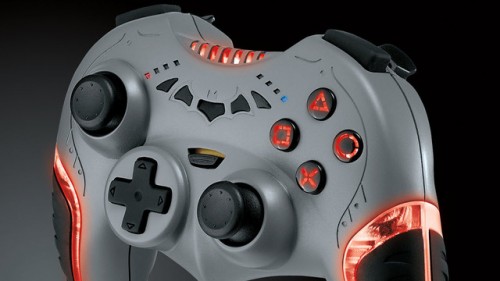
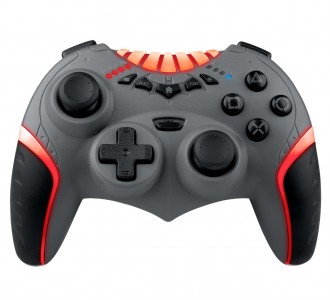
Batarang Controller Developers: Power A Distributor: Bluemouth Interactive Licensed by: Warner Bros. Interactive Consoles: Playstation 3 (reviewed), Xbox 360 Release Date: Out Now
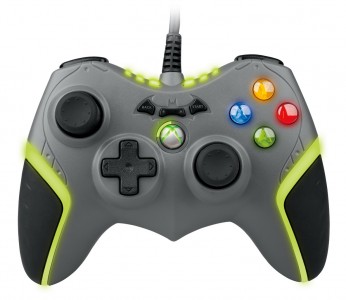
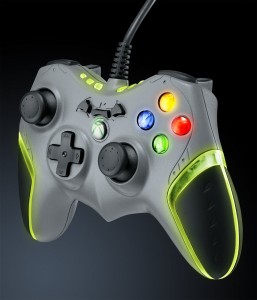
When this came in the mail, I wondered on how do you review a controller? What do you talk about? Well, after a few hours of gameplay with it (and reading the instructions that came with it), the picture is much more clearer. So, without further ado, this is the Batarang Controller. Distributed in Australia and New Zealand by Bluemouth Interactive, the Batarang Controller was developed in conjuction with the release of Batman: Arkham City, the sequel to the highly rated Batman: Arkham Asylum. There are two versions of the control, one for the Playstation 3 (which is the one I reviewed) and the Xbox 360. Other than a few feather shuffles, this is a well designed, well built controller.
Let’s start off with the design of the controller. When Bluemouth announced the controller was heading down under, they did point out the authenticity to the Batarang design. I’d say that they were right. It is beautifully designed. I guess they went with grey because of the rubber holders, but, if memory does serve me correctly, the Batarang is usually black like Batman’s other fifty or so gadgets. But that is really nitpicking at it. The grey looks nice anyway.
It does fell quite comfortable to hold. I can attribute this comfort to the rubber that is place on the handles. It feels smooth to hold it in my hands. Speaking of being comfortable, the L2 and R2 buttons got a bit of a lift. When you look at the top of the controller, you will notice that the ends of the L2 and R2 button are point upwards, instead of a regular L2 and R2 buttons found on an official Playstation 3 controller. This works perfectly. My fingers fit within the buttons, allowing a better grip of the buttons. This isn’t the first time I had encountered something like this. While conducting a preview of Supremacy MMA, attachments of the triggers were available. The thumbsticks are comfortable as well due to the convexing design, fitting into the thumbs quite well.
The controller does sport some cool features. One of the main features of the controller is the LED display that surrounds the controller during play. There are seven colours to choose from, ranging from blue to red to green and yellow. This is all activated via a button next to the start button. It has a lightbulb as a logo. There are battery indicators on the controller themselves, which is nice. It means you don’t have to enter the home menu just to see where the battery levels are. It will also serve as a PC controller, which is a great bonus feature to have. However, I haven’t tried it. It also has an on/off switch button. Odd, but I’ll get into that later.
However, if I have one complain about this controller, it is related to the layout. Let’s look at that picture of the Playstation 3 version. Is there anything odd about anything there? Well, we have the X, Square, O and Triangle buttons present, that’s fine. All of the four shoulder buttons are there as well and in their original positions. Cool. Now the right analogue stick is where it should be, next to the directional buttons… wait, directional buttons? Those are usually on the left of the controller, similar to the four symbol buttons. The Xbox 360 looks like an Xbox 360 controller, so why doesn’t the Playstation 3 controller look like a Playstation 3 controller? Because it sports an Xbox 360 look. As I said, I am really nitpicking here, but when do you make the controller look like the competition. If you are not satisfied with the Playstation 3 controller layout, then you might like this arrangement. I have used a Xbox 360, so I am used to the layout. But what about those who only used official controllers or third party who adhere to the original layout? Oh well.
Another annoying inconvenience is the lack of Bluetooth. Of course the controller contains motion control and it does sport the wireless feature (via an USB RF receiver), which is more than the Xbox 360 version gets. But the Playstation 3 supports Bluetooth and I’m sure it isn’t hard to put it in. I believe that a lack of Bluetooth is the reason for an on/off switch. This can be annoying at first. I had forgotten to switch it off a few times but it will become an automatic process.
Overall
Despite the inconsistent layout with official and third party Playstation 3 controller and the lack of Bluetooth, this is an excellent controller. The design is quite authentic, the LED lights is a nice aesthetic feature to have and having wireless capabilities is a bonus for the Playstation 3 crowd (unless I am mistaken, which I will apologise in advance). Will I recommend it? Yes I will, even if you are not a Batman fan and you are looking for a Xbox 360 button layout for the Playstation 3.
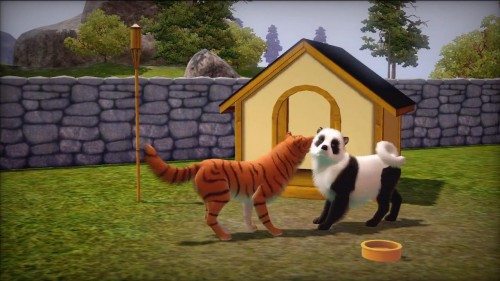
EA Games has released a new trailer for the upcoming The Sims 3 that features internet viral video sensation Randall or more commonly known as ‘That guy from that Honey Badger video’ narrating the clip. Randall spins his colourful narration on the rare breeds of cats and dogs that are available for players who pre-order the Xbox 360 or Playstation 3 version of The Sims 3. These ten rare breeds included the Mabari War Hound, Panda Chow, Tiger Husky and Aztec Panthera, and are exclusive to the console version of The Sims 3 (Sorry PC, but you unfortunately miss out on this one).
The Sims 3 Pets is set to be released on October 20 in Australia for Xbox 360, Playstation 3, Mac/PC and Nintendo 3DS.
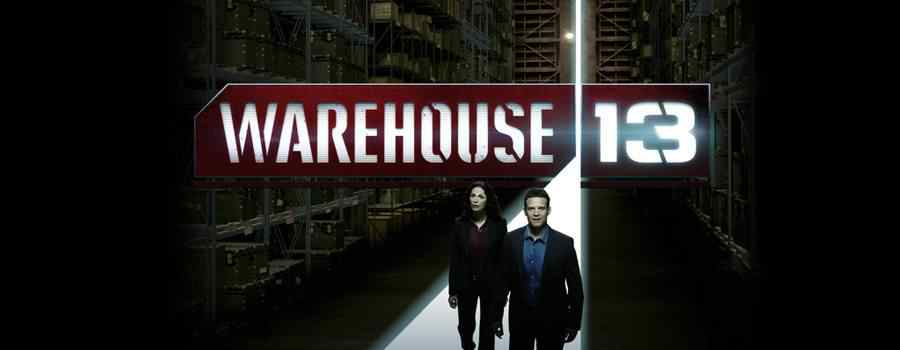
Although it would be awesome to travel through a Stargate to other planets, or crank up the Tardis for a trip around the galaxy, I could never pass up a job at Warehouse 13 or Eureka. Every time I see the Warehouse, sitting alone like a ghost in the desert I get a tiny pang of jealousy towards those who have sworn to protect its dangerous yet often personally attached artifacts. Being able to work amongst such mysterious and misunderstood artefacts, while at the same time being able to interpret and better understand historical events through them; well I cold personally think of nothing more intriguing, or a better excuse for actually want to go to work in the morning.
While the great Richard Dawkins may disagree, sometimes it’s nice to believe in magic and fairies and all that weird and wonderful stuff, so especially in todays world, where this line of thinking is reserved for young girls and old hippies, lies my immense appeal to both shows. Warehouse 13 involves protecting the world from potentially dangerous “inventions”, while the geniuses and visionaries of Eureka spend their days building secret inventions for strict Government use. The two shows are like peas in a pod which has proven valuable to the success of crossover episodes as can be seen when Douglas Fargo of Global Dynamics assists the Warehouse agents on a computer upgrade only to become entangled in the Warehouses many unforseen twists.
There are so many elements that blend together to make both Warehouse 13 and Eureka appealing to so many people. It teaches us to think outside the box and not believe everything we are told, and it also highlights the significance and power of personal much loved items. While the relationship between a male and female partner in any show is usually predictable, with that uncomfortable sexual tension, the opposite could be said of these 2 shows. Warehouse 13 is built on generations of trust that are evident in all its current employees. Agent Pete Lattimer and Myka, who are really the main focus in Warehouse 13, are void of that over the top propaganda whereby each episode threatens to have them sleep together just to achieve ratings.
I urge everyone to give these shows a watch as they have the ability to draw you in and keep you waiting in anticipation as to what’s going to potentially unfold in the series.
As anyone who has ever been on the internet knows, there is an abundance of free to play flash based games on the internet. Some of these are uninspired, boring and often pretty horrible. While others can be a creative wonder and a joy to play.
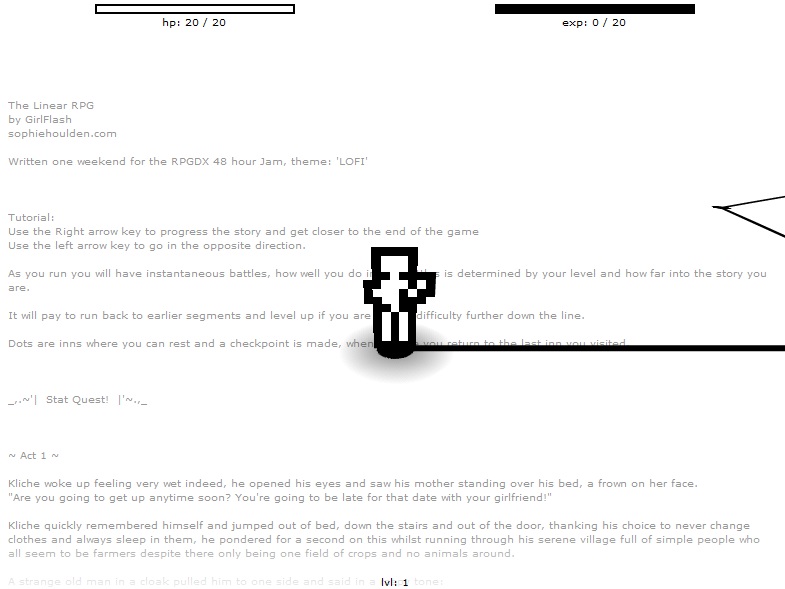
One such game is Linear RPG, by Girlflash; as found on deviantart. The game creatively has the player running an entire RPG on a single line. The story, interestingly enough, is told in the background. What I mean by that is that it is literally behind the gameplay, as scrolling text that progresses as you do.
However, be warned before taking on your linear quest. You will have to do some backtracking.
Of all the Science Fiction series I’ve watched (and thanks to my wife it’s been quite a few), Warehouse 13 is the only one that seems to keep my interest episode after episode, and Season after Season. As such I have asked myself why? What is it about this particular show that has kept me watching when my interest in so many other shows had waned. After much deliberation the best interpretation as to my dilemma I could come up with was “Warehouse 13 brings together so many (in)famous myths and icons as well as concepts we want to believe in and grasp onto, even if just to break up the dull monotony of everyday life which is so void of wonder and magic”.
Anyone with a love of a good conspiracy story or an interest in alternate interpretations of well known historical events and icons will find an immediate attraction to the secret Warehouse 13 and its individually unstable protectors who amazingly manage to successfully form a balanced team. With a storyline that twists and folds on itself, revisiting and reintroducing new and past characters, there is never a dull moment and always a surprise around every Warehouse corner.
Even if you are not a huge fan of Science Fiction, Warehouse 13 would appeal to anyone with even a slightly quirky nature, mostly due to the instantly recognisable artifacts and historical figures cleverly interwoven into the storyline. Additionally there has been exceptional character relationships built over the Seasons, which provide much entertainment and succeed in their primary goal of eliciting many an emotional response from the viewer.
From the dark and mysterious Mrs Fredericks who seems to defy the laws of physics, popping up when least expected, through to Artie and his team of “chosen ones” who protect the Warehouse from those hell bent on acquiring what’s inside, each character has his or her own unique story outlining how they became entangled in the mess that is Warehouse 13. For those of you who are completely in the dark, Warehouse 13, is a secret location that houses the worlds most dangerous and interesting artifacts. From Lewis Carrols looking glass to Sylvia Plaths typewriter, each artifact, while seemingly innocent, houses dark and destructive powers, especially in the wrong hands.
Warehouse 13 is currently in its 3rd Season in the US with a fourth season recently being agreed upon. The show has been met with huge success, with the first 6 episodes being amongst the top 10 highest ranked shows on the SyFy channel and episode 6 holding the record for highest rated show. There has also recently been a cross over between shows which have seen characters from the popular series Eureka featuring in Warehouse capers.
Stay tuned for more Warehouse 13 news as Capsulecomputers interviews some of the stars of the 2 high ranked series including Agent Pete Lattimer on their upcoming visit to Australian fans.
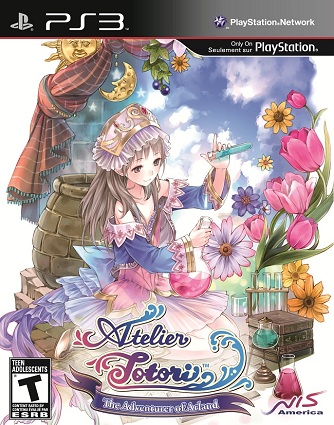
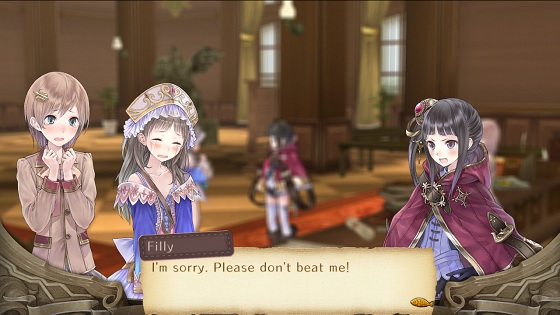
Atelier Totori: The Adventurer of Arland Developer: Gust Publisher: NIS America Platform: PlayStation 3 (Reviewed) Release Date: September 27, 2011 Price:$49.99 Standard, $59.99 Premium
Overview:
RPGs as a genre have evolved much over the years. There are titles which have evolved so much that they cannot even be called RPGs anymore, and then there are also those who have stuck true to the heart of what an RPG game was years ago. Usually the most unmoving formula for an RPG is that of the Japanese RPG or JRPG.
Now while these titles usually do not evolve much past their genre, there are those which take what an RPG is and make it their own. This is what has been done with Atelier series. Being the sequel to last year’s Atelier Rorona; Atelier Totori: The Adventurer of Arland has a tough predecessor to follow but in doing so, creates a wonderful and lighthearted journey rarely found in today’s gaming world.
Story:
Five years have passed since Rorona’s adventures in the Atelier Rorona and in this time Rorona has made quite a name for herself, even taking up a student of her very own. Players take the role of young thirteen year old Totooria Helmond, the daughter of a famous adventurer. Called Totori by everyone she knows, she readily accepts to train under Rorona and become the best adventurer in the world.
Her reasoning for becoming an adventurer is twofold. Not only does she want to follow in her famous mother, Gisela’s, footsteps but also track her down after she went missing many years before on a journey. While the rest of her town and even her own family believe the worst has happened, Totori resolves to find her mother and become the best adventurer the world has ever seen. Of course the first step to becoming an adventurer is to acquire an adventurer’s license from the government, which places Totori on the road of adventure and even discovery.
When the genre RPG comes to mind, the first thing most gamers will immediately think of the standard trope where the world is about to be destroyed, a war is about to break out or some other catastrophe that must be adverted and for some strange reason your commoner of a characters is the only one who can stand against the darkness and protect the world of light. There is none of that here in Atelier Totori.
Perhaps one of the biggest positives about the game’s storyline is the fact that it is very light hearted and has to deal with the emotions of the characters and the journey that Totori must make to find her mother. Now this may not be a huge development at the surface, Totori’s personality is what helps make this adventure shine. She is much more reserved and shy than Rorona was in the past game, and seeing her grow as a person as well as persevere through difficult situations and succeed, knowing you were there controlling the experience made it all the better.
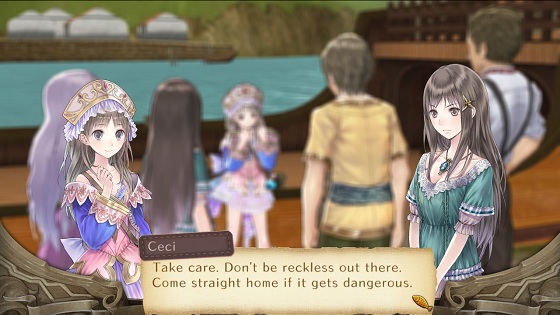
Now while Totori shines as the heroine of the story, the side characters which join you along the way help flesh out the cast with more personality and humor. There are brand new characters such as your childhood friend Gino, an overly strong veteran adventurer Mel, tsundere-like aristocrat Mimi and a very whacky inventor who calls insists he is given a long list of titles named Marc. That isn’t to say that a few cast members don’t show back up to join Totori from the past game such as Sterk. All of these characters have their own unique personalities and bringing them along with you on your adventures will always lead to side interactions as you journey from place to place, making it hard to not like the cast of characters.
Now an interesting thing was done with Totori’s story, they have made it a much more open storyline. There really isn’t a strict plot path that must be taken, though there is a specific deadline that has to be reached after a certain point. Totori’s main way of progressing through the storyline is simply passing time. Players are given three years to venture the world of Arland and upgrade their adventurer’s license which is done through a number of tasks.
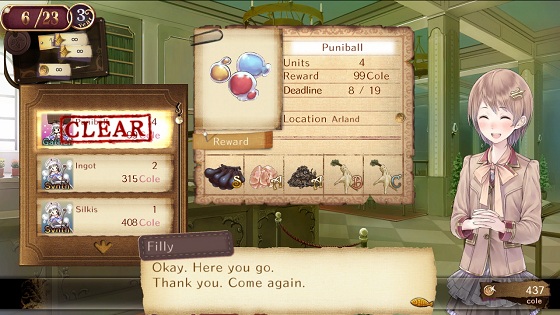
These tasks can best be seen as side missions which range from synthesizing and creating items, traveling to locations, fighting bosses, fighting a certain amount of enemies or gathering certain ingredients. In the end this creates a very unique experience that allows a player to tackle the game with a certain amount of freedom in what they want to do. When a certain amount of adventurer points are acquired, the player can level up their license and unlock more difficult missions as well as more areas to explore and gather materials from.
All in all, there is a definitive ending and certain tasks have to be performed to get the best ending, but there are a number of other endings which can be obtained, including a New Game+ which allows for a much more enjoyable experience.
Graphics:
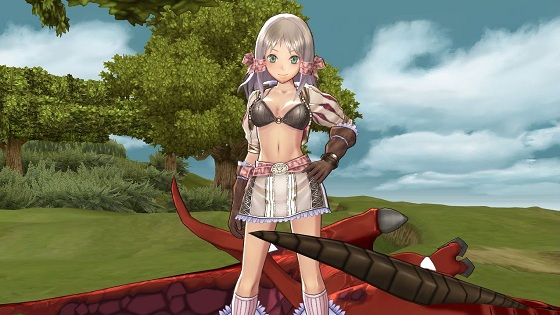
Making a beautiful looking game can be quite difficult, but Gust has begun to make it look like something they are used to on a daily basis. This of course means that Atelier Totori looks absolutely amazing. The character models in the 3D worlds look absolutely stunning and are detailed with intricate designs and outfits, making combat extremely pleasing to the eye. Exploration and gathering areas are amazing to see and well varied in appearance with most areas matching what you would expect to find there, such as nuts and weeds in a forest and rocks and shells by a beach.
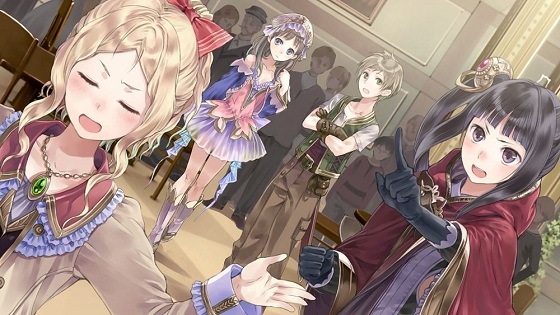
That is nothing however on the artwork whenever players are in a conversation with a character or watching storyline unfold. The artwork for each character is breathtaking and beautiful in both design and coloration. Not only are these impressive, but whenever something special occurs in the story a full-screen artwork is displayed on the screen only driving home the fact that the game’s artwork is absolutely gorgeous.
Audio:
There are a few things that are wrong with Atelier Totori when it comes to what you will be hearing, but the background music is not one of them. All of the music is quite lighthearted and pleasant, usually played with a flute and string instruments. The main theme that players will be greeted to every time they start up the game is very enjoyable and the battle themes fit adequately enough. One complaint however is that while a lot of the soundtrack is fresh and new a few tracks are recycled from Atelier Rorona which is disappointing for those hoping for an entirely fresh audio experience.
Unfortunately the main problem here is the fact that the voice acting is hit and miss at best. Returning characters from Rorona keep the same voice actors which is a plus and Totori’s voice actress matches her personality well. Her meek voice and personality are quite charming and help push her to be an enjoyable main character. On the other hand the newer character’s voice actors sound like they are simply phoning in their roles or simply will be irritating after a short period.
The plus side here is that, since character development and interaction is usually focused on who you bring with you on adventures, you can ignore characters whose voice acting gets on your nerves. Still, NIS America included the Japanese voices for the game if players wish to use that instead, but then they would miss out on Totori’s quality voice work.
Gameplay:
Atelier Totori follows its predecessor quite closely by retaining much of what made Atelier Rorona great and improving on various aspects of it. This has helped streamline the experience and make the title very accessible. One of these neat improvements is the way that players can instant travel between areas in a town. For example, you can be making something in your workshop and need to travel to the bar to turn in items for a mission. Rather than walk to the bar you can simply quick travel right there which makes things move at a brisker pace in towns.
One of the most interesting parts of Totori that is close to Rorona is the alchemy system. The title contains the same easy to understand and manage system that players experienced in past titles. Items you gather from enemies, gather points in the field or buy off of stores all have a certain quality ranking to them from S being the best to E being the worst. When you combine these items into a recipe you can then choose from a number of traits that were on the ingredients you used to create the item and can help improve the quality or effectiveness of an item which is essential to those used in combat.
That being said, items that you carry with you for a long period of time can degrade and become less effective, meaning that it isn’t always recommended to carry strong healing items always with you in bulk, or the next time you are in a pinch that healing salve may do only half of what you expect it to do. This is managed through a rather easy to use inventory management system. Whenever you return back to your workshop you will be automatically asked if they want to deposit ingredients to their container in the workshop. This container holds 999 items and items inside of the container do not degrade and can be easily sorted through with a search system. Given the player’s limited basket carrying ability of 60 items, this easy to use container management makes item gathering and keeping a breeze.
Now there is also a certain amount of fighting that will be had in Atelier Totori outside of alchemy and item management. These battles can sometimes be quite important to gaining points to your adventurer’s license so it is a must to quickly become accustomed to the mechanics. Atelier Totori uses the time tested method of turn based fighting, with enemies and allies attacking at preset intervals shown on the screen. Players will have each have their own health amount and MP amount, but the only people on the team which can use items are Totori and Rorona so it is a must to keep these two protected.
That is where the assist system comes in. Whenever one of your other party members attacks, a bar underneath of their stats will fill up. Once the bar is a quarter full, you can trigger them to jump in front of an attack to protect Totori or even to follow up on an item throw to deal extra damage when their turn isn’t even up yet. This helps provide a real sense that the party is fighting together and working towards the win opposed to the standard system where everyone fights on their own.
Overall:
Atelier Totori: The Adventurer of Arland outdoes its predecessor ably in everything that you could look for. Gust has outdone itself with this release and NIS America performed an outstanding job localizing the title for North American release. Although there are a few issues with the voice cast, Totori herself is more than enough to make up for it.
As a whole, Atelier Totori epitomizes the saying it’s the journey, not the destination. The storyline for Atelier Totori may not be something that everyone would like as there is really no overarching dilemma pushing the player forward. Rather the driving force is to see how well the characters interact with one another and how Totori grows from being a shy girl who grew up in the countryside to an able adventurer willing to take on any job and along the way perhaps find out the truth about her mother. Atelier Totori is a rare game in this day and age and one that should not be missed.
This has been a strong showing for Sunrise this season, with series like Phi Brain with it’s complex and engaging puzzle concept to Horizon on the Middle of Nowhere with it’s bizaare nonsensical sense of humour and now Gundam AGE. Now it is worth noting that I am somewhat of a newbie to the Gundam franchise, having only watched an episode of Gundam Seed and about 3 episodes of Gundam 00. So needless to say, I am not going into Gundam AGE with a wealth of knowledge on the franchise’s history.
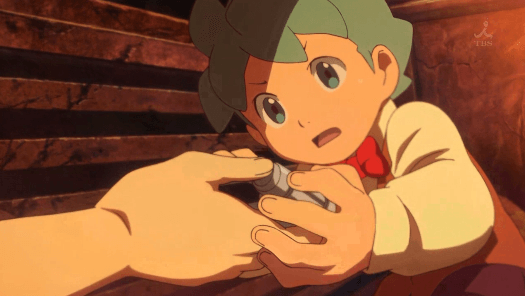
Despite going in without any prior experience with the franchise, I found myself highly engrossed in this first episode. I was hooked in with the emotional cold-open of Fleet’s past and continued to be glued until it’s final moments. It is not everyday an episode opens and ends in all out war and actually pulls it off with ease.
But that is exactly what Gundam AGE has done. Everything felt so grand in scale and as a whole bigger than nearly all of the new series this Fall season (you could make a case for Hunter x Hunter). Which I attribute to both the excellent pacing and execution as well as the well composed characters that held it all together.
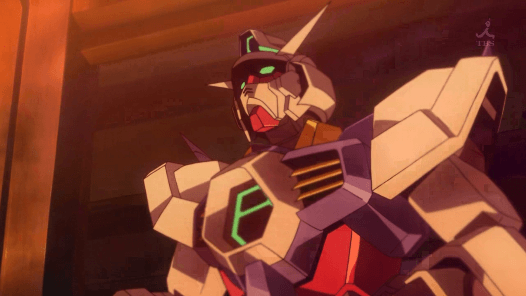
The entire episode really set the bar for what is to come with this series, not only that but the overall production quality of the episode was phenomenal. The animation on show here was awe-inspiring, in particular the fight scene at the end between Fleet’s Gundam and one of UE Mobile Suits.
Fans of the Gundam franchise have been quite vocal regarding the new art-style of this new series with some going as far as to call it “kiddy”. I assure you the artwork here is not what I would classify as kiddy. If anything I’d say it is quite reminiscent of the Mega Man franchise. With a lot of the character designs reminding me of that style. Regardless, it does the job and looks great while doing so.
As for the music, well I am not entirely sold. I personally would have chosen something with a little more punch, instead of the ballad’s that were used. But that is just me. For a series with giant mech fights and as much action as this, I think a much faster paced opening and ending was warranted. Thankfully, the soundtrack shines through with the background music which perfectly captured the mood and atmosphere of what was occuring on screen providing a great companion to the events of the episode.
This first episode of Gundam AGE really set the tone for things to come and if what was on show here is anything to go by we have some really huge things ahead of us with this series. The preview for next episode promises the continued struggle with the UE, which is sure to be enthralling. All-in-all I was completely blown away and eagerly anticipate the next episode to see where this series will take us.
The President of the UFC, Dana White, on behalf of THQ has announced at a Fan Expo in Houston on Saturday that the cover star for UFC Undisputed 3 will be none other then the Middleweight champion, Anderson Silva.
As a result of voting by fans, Silva has beat out Edgar, Jones, Georges St Pierre and Velasquez, the holders of the other weight division belts to take the spot on the cover.
The Brazilian fighter has been hailed by many, including Dana White, as the greatest fighter to ever grace the UFC octagon and it’s not hard to see why. Silva holds the record for the longest winning streak and consequent title reign with 14 wins. He boasts an extremely impressive record at 31 wins to 4 losses, the latter of which includes no knockouts.
Check out the announcement trailer below which also shows what the cover will look like. Are you guys happy with Silva on the cover? Let us know your thoughts in the comment section below.
Check out this week’s downloadable content from Nintendo!
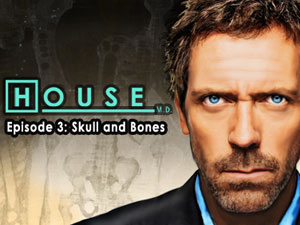
House M.D. – Skull and Bones For Nintendo 3DS/Nintendo DSi via Nintendo eShop and Nintendo DSiWare
Based on the hit TV show, in House M.D – Skull and Bones players take control of Dr. House and his team as they attempt to unravel a medical mystery involving a macho college kid who loses feeling in his arms during a fraternity hazing. Players must find the right diagnosis using patient exams, interviews, lab tests and even surgery in this exciting adaptation.
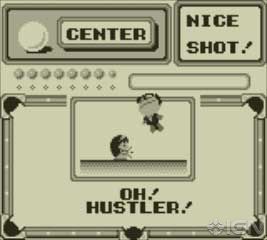
Side Pocket For Nintendo 3DS via Nintendo eShop
In Side Pocket, players can test their billiard skills in two great modes: the traditional 16-ball game and 9-Ball which works as a more contemporary version of the sport. Get ready for some pool action and chalk up!
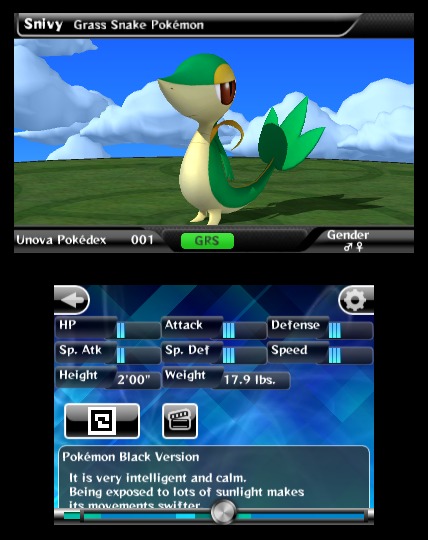
Pokédex 3D Update Available! For Nintendo 3DS
Launch your Pokédex 3D application and select the Settings option, scroll to the bottom and tap the Update button this week to update your Pokédex 3D and unlock a few amazing features!
Also available this week:
Simply Minesweeper (Nintendo eShop / Nintendo DSiWare)