
Home Blog Page 5814

2D vs 3D: The Future of Video Games

2.5D graphics-it’s like old school with a modern twist. Is this the future?

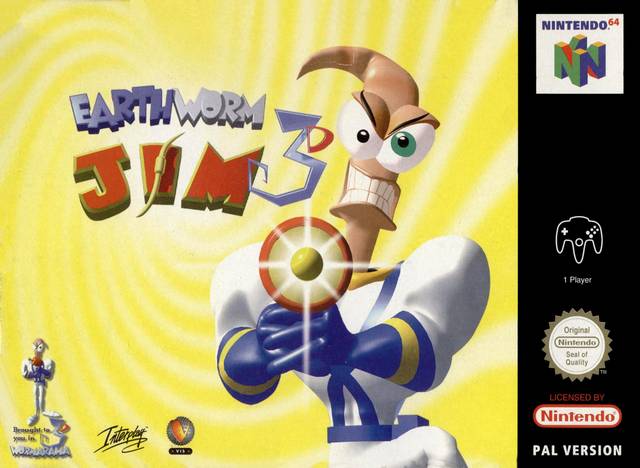
It may be hard to believe but when you think about it, video games are still in a very experimental stage and for the most part are still trying to understand the concept of using 3D graphics. Many of our favorite franchises have been through ‘trial and error’ stages, experimenting through the style. Some have been wonderful such as Nintendo’s The Legend of Zelda, some have dramatically changed the game’s original direction like Capcom’s Megaman Legends, some have seen a few hiccups and bumps along the way before finding something that actually works well such as SEGA’s Sonic The Hedgehog, whilst many other franchises have failed in translating through from 2D to 3D resulting in the franchise to die out, such as Shiny Entertainment’s Earthworm Jim and Accolade’s Bubsy. Hell when Capcom’s released their 3D graphic adaptation of Final Fight, Final Fight Streetwise, the reception was so bad it led to the demise of the developer Studio 8 was shut down. Now that’s bad!
The policy with such 2D to 3D games for most retro gamers is simple-pretend they were never made! Ah yes, ignorance really is bliss!

With time comes experience and developers have begun to learn what works and what doesn’t. Back when 3D graphics were the new and ‘hip’ thing to do, every franchise attempted to undergo a 3D transformation, and were slapped on a 3D at the end (or 64 in many Nintendo 64 exclusives) of it’s title to draw in gamers who were craving to see this new revolutionary experience in gaming-which sometimes would suck. This isn’t to say all 3D translations were bad however. Games like Nintendo’s Legend of Zelda, Rockstar Games’ Grand Theft Auto and Squaresoft/Square Enix’s Final Fantasy made the translation with ease and were arguably improved the franchise for the better. These types of games are often seen as improvements over their 2D predecessors, usually because the third dimension helps add to cinematic experiences and adventure elements among other modern features, although there will always be some diehard fans who will always prefer the originals.
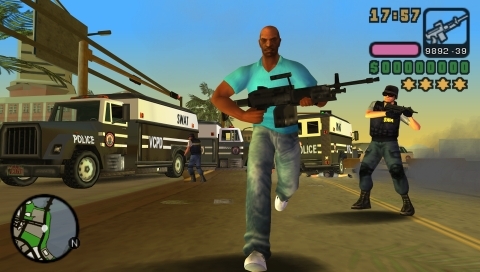
How many people do you know prefer 2D GTA over 3D GTA? None? Yeah, I thought so.

Going a step further, many genres are arguably a lot better with 3D graphics and some wouldn’t exist without them. Take First-Person Shooters for example, as they require a 360 degree view of your surroundings. Can you imagine Battlefield 3 or Modern Warfare 3 in 2D? Nope, neither can I! 3D perception is a necessity for this genre, much like with flight simulation games like Namco Bandai’s Ace Combat which also benefit from this visual boost. Another great example of a genre that truly benefits from the third dimension is sport games, as multi-dimensial movement and realism greatly improves gameplay. Just ask EA Sports during their two decade-long career, who’s games arguably get better with each installment. Yet another genre that benefits from 3D graphics is the On-Rail Shooter of which Time Crisis, House of the Dead, Virtua Cop all have to thank!
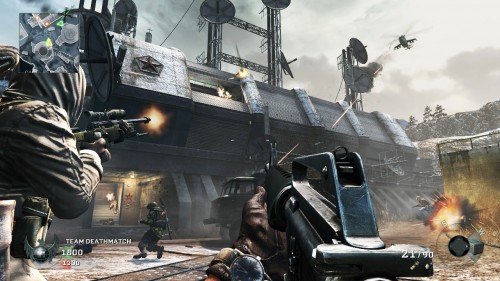
This is probably what Wolfenstein 3D looked like to many gamers 20 years ago.

However a few franchises have seen some rather unfortunate translations into 3D that range from bad to just plain average. Some of which just felt too distant from the original title, some just were inferior and less fun, others were just plain crap. Other than Earthworm Jim and Bubsy as previously mentioned, but other prime examples includes the legendary Contra going 3D in Contra: Legacy of War, SNK’s Metal Slug 3D, Nintendo’s Wario in Wario World, Team 17’s Worms and Capcom’s Megaman Legends, although Megaman Legends did manage to gain a bit of a cult following. But you know what? Those three games all reverted BACK to 2D later on as popular demand from fans. Although to be fair, the Megaman Legends and the Worm‘s franchises did continue their spin off series in 3D, neither have reached the level of high popularity as their 2D counterparts which also have continued.
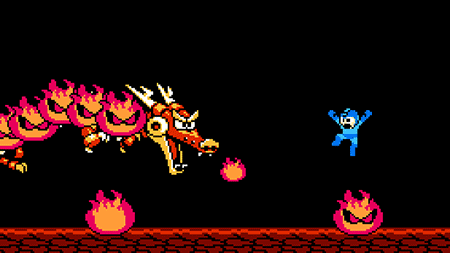
Calm down fan boys! I didn’t say Megaman sucks in 3D, just that it’s 2D titles have been more popular.

In one unique situation, one must make a note of the recently released Bloodrayne Betrayal. This title is unique in the way that the franchise had previously released 2 titles with 3D graphics and movement, and they received mixed criticism, and are considered to be average games. However, with the series third installment Bloodrayne Betrayal, the series took on a 2.5D approach, and has seen much kinder reviews. Could 2.5D be more suited for the Bloodrayne franchise? Based on these results, it’s easy to think so! In a similar situation however, the classic SEGA fighter Virtua Fighter 2 was famously ported to the SEGA Genesis in 2D, changing up the gameplay significantly delivering a much weaker gaming experience. This title wasn’t the first or last title to do so, much, much worse hardware ports from 3D to 2D have been seen throughout history, and there are WAY too many to name. Usually these titles were originally intended on a home console and were ported to a portable device such as a Gameboy Advance, and as a result sucked. Hard.
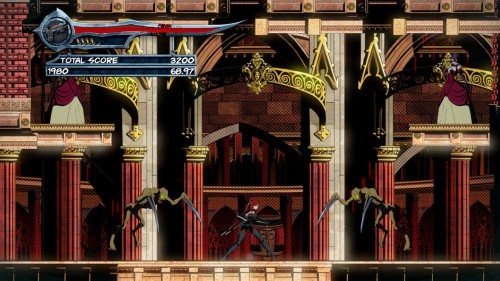
In most cases moving from 2D to 3D is an improvement, but from a 3D plane to 2D one is a seldom but interesting approach!

This leads us into the middle ground what appears to be Nintendo’s latest craze-2.5D! Many Nintendo heroes have been making come backs in recent years with 3D graphics on a 2D plane. Super Smash Bros, New Super Mario Bros Wii, Donkey Kong Country Returns and Kirby’s Return to Dreamland spring to mind. Nintendo isn’t the only company enjoying 2.5D graphics though, many huge titles have been released in recent years that have been huge successes from Sony’s Little Big Planet to Capcom’s Viewtiful Joe.   
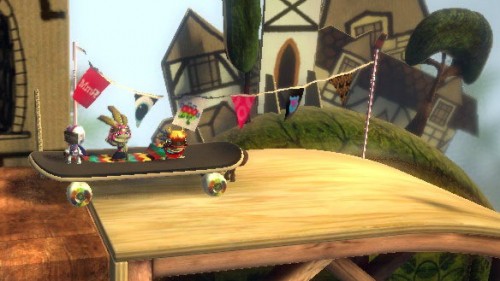
If you think that 2.5D means less creativity, think again!

Now let’s look at some of the biggest competitors and longest-running franchises in the video-game world. For many, the transition has not been easy. In fact many games have even been made previously to ‘test’ out audiences before working on a major release. For example, the Street Fighter EX spin-off series tested the waters of adapting 3D graphics to the Street Fighter series, and didn’t see implementation into the main series until Street Fighter IV although it adopted just 3D graphics and remained on a 2D scale. Some have theorized that Rare’s Banjoe-Kazooie was released to test a test of the consumers tastes at the time to judge whether Donkey Kong 64 was worth developing, although there is little evidence to support this.
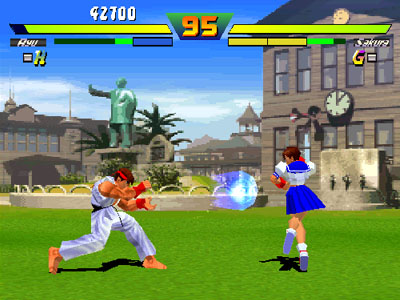
Street Fighter EX is loved by some fans and hated by others, but most will agree that Street Fighter IV is just simply awesome.

As for some games, a bit of trial and error has been necessary, experimenting with different ideas to perfect the transition from 2D to 3D. Easily one the biggest examples is Sonic the Hedgehog, who’s been seen in many different variations of his traditional gameplay in 3D form, but by sticking through it SEGA may have just found the perfect adaptation for him recently. Take SEGA’s 1996 title, Sonic 3D Blast (also known as Sonic 3D and Sonic 3D: Flickies’ Island) for example, which featured 2.5D graphics on a Isometric viewpoint, that has been criticized as one of the hedgehog’s worst installments to date. However SEGA continued to experiment with Sonic and the third dimension, leading to Sonic Adventure and Sonic Adventure 2 on the Dreamcast only a few years later, arguably some of Sonic’s brightest highlights in his career. But SEGA didn’t stop there, they had some hit and misses (ok mostly misses) with experimenting with adapting Sonic into 3D, with the interesting Sonic Heroes in 2004, and then Sonic The Hedgehog in 2006 which while one of the weaker games of Sonic’s, showed much potential. Soon to follow was a low period for Sonic, with a few titles that weren’t as warmly received as his previous ventures, Sonic and the Secret Rings, Sonic and The Black Knight and Sonic Unleashed. These games all experimented with different styles of play and control schemes trying to see which suited Sonic best.

All of this however eventually paid off, with SEGA finally getting things right in 2011 with Sonic Colours-a game tailored after examining previous criticism of previous titles. The game featured 2.5D elements to further entertain old school Sonic fans, switching between the two styles of play to satisfy both types of fans. SEGA also released a 2.5D title, Sonic the Hedgehog 4 within the same year, and plans to continue to do so alongside releasing 3D Sonic games in the future. Things are looking even brighter for Sonic fans now, as Sonic Generations will be launching next month-a title that further expands on the highlights of Sonic Colours, combining both 3D and 2.5D platform gaming.
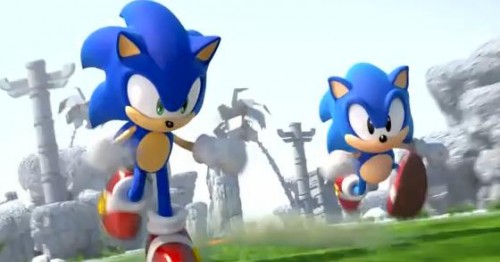
2011 is a GREAT time to be a Sonic fan, weather you prefer playing on a 3D plane OR a 2D one!

Mortal Kombat has taken a similar, but less extreme path as Sonic the Hedgehog. Since the franchise has taken the leap into 3D in Mortal Kombat 4, it has struggled to find it’s way. The 5th, 6th and 7th installments that followed took on yet another style of gameplay with it’s grasp on the third dimension, and yet again took on another dramatic change in it’s following installment Mortal Kombat VS DC Universe, and each style (1-3, 4, 5-7 and MK VS DC) all played dramatically different from each other. The biggest flaw with the leap into 3D was a huge one-in a fighting game that focuses on projectiles rather than combos, projectiles are basically useless when they can be side-stepped in the third dimension. The most recent installment however, Mortal Kombat 9/2011 has solved many of these issues and has been considered by many the best 3D installment to date (if not for the entire series), featuring realistic 3D graphics on a 2D scale, helping to improve the combat system of the game itself.
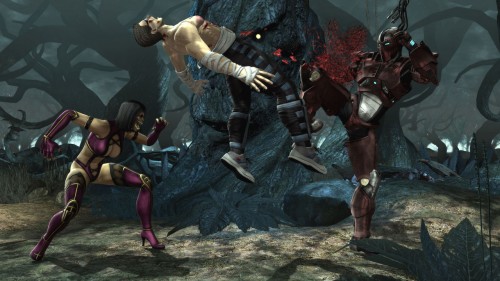
Much like Sonic the Hedgehog, Mortal Kombat has taken a few games to find it’s place with the third dimension, and the results have been beautiful!

Nintendo’s mascot Super Mario is largely responsible for encouraging the leap from 2D to 3D for many games. The immense success of Super Mario 64 in 1996 was a major revolution in video game history. However as amazing as the game and it’s many sequels which have stuck by a similar formula but with gimmicky twists (Super Mario Sunshine, Super Mario Galaxy and Super Mario Galaxy 2), Nintendo and many of it’s fans have noticed the franchise distancing itself from what it used to originally be in the 2D era. This led to the release of New Super Mario Bros (DS, 2006) and New Super Mario Bros Wii (Wii, 2009), which were multiplayer 2.5D games much more like the original 2D games. It’s become quite clear that players get a very different experience from the 2D and 3D Mario games. This could probably be what has led to the release of Nintendo’s upcoming 3DS game, Super Mario 3D Land, which whilst still contains 3D graphics and movement follows a more straightforward path, similar to the side-scrolling 2D days, creating a style of play reminiscent of early Crash Bandicoot games. Much like Sonic the Hedgehog currently is doing in recent years, Mario’s latest adventure will combine elements of traditional side-scrolling Mario titles, such as linear-based levels with a modern open world feel found in recent Mario games, such as moving Mario in three dimensions.
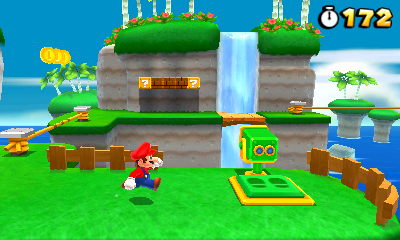
I’ve been praying for this game since 1996. Thank you Nintendo!

However it’s games like Super Mario 3D Land that make gamers dreaming about the future a little confused. Does this mean all Mario games from now on will follow this structure, or is this just a spin-off, once-only thing? This is especially the case with franchises like Nintendo’s Metroid which has recently just made the jump to 3D less than a decade ago. Metroid Prime 1-3 all took place through first-person, but the following title, Metroid: Other M was viewed via third-person, although it did include occasional first-person elements. What may confuse many gamers now is-what direction will Metroid take from now on? Was the first-person view just for the Prime series, or will that continue throughout the entire Metroid series from now on? Or will it be more like Metroid: Other M as it did simulate the original experience slightly more accurately? Chances are, not even Nintendo don’t even know!
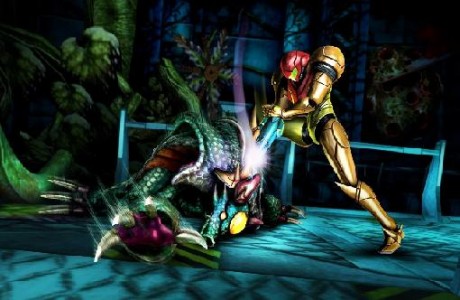
 

Nintendo don’t even seem to know which direction they’ll take the Metroid series at this point.

When looking back at the history of video games, it’s pretty clear that both 2D and 3D gaming have their advantages and disadvantages, and both styles suit different franchises and different genres differently. In some cases both can work well for a particular game, it’s all up to the developer. Regardless of how many dimensions a game is programmed in, the only limits are of the imagination. New concepts are being thought of everyday, and there are many more successful 2D games yet to attempt to enter the 3D world and vise-versa. Heck Icarus Uprising is coming out soon! Will Kid Icarus be a good translation into 3D? I guess we’ll just have to wait and see!
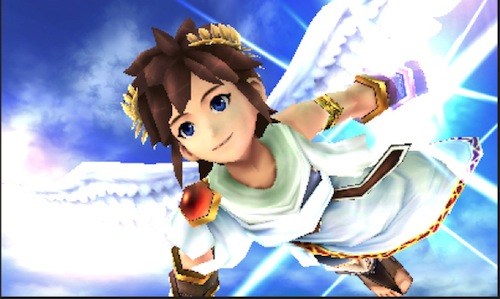
                                                                                            
High hopes for Kid Icarus: Uprising!

Oh, Japan! – #9 Face the Pain

Oh, Japan! is a weekly feature in which I chronicle the wierd, wacky and just plain crazy goings on in Japan. Because we all know, Japan is prone to doing things that make us Westerners say “Oh, Japan!”.

We have covered anime in “Oh, Japan!” before, but not when Japanese animation goes wrong. This week we take aim at one episode of the Naruto Shippuden anime which almost appears that the animators were all tripping on acid while creating this.

It seems as though the animators forgot that they were Japanese and instead made everything look like an episode of Looney Tunes, in turn ruining one of the Naruto manga’s greatest fights (Naruto vs. Pain). Not only that but they completely made the once intimidating villain, Pain, into what appears to be a boneless Sonic the Hedgehog-Wiley Coyote hybrid.  But it’s still good for a laugh, a sigh and an “Oh, Japan!”
 

Monthly Member Rewards #2

Welcome to Capsule Computers’ second Monthly Member Rewards Giveaway! Every month we plan to announce a member and send them a PRIZE from our lucky dip draw, to acknowledge them an active member and thank you for making us your #1 stop for video game and pop cultures news and reviews! We love to reward members by giving away games and other cool prizes to those who stick by us! This month’s WINNER was selected for not just being a loyal member who has been with us for a long time, but earlier this week fought off a few trolls in the shoutbox. The winner is:

cellophane-girl

Congratulations! Our Editor-In-Cheif MasterAbbott will be contacting you shortly. Be sure to check your E-mail, we hope you enjoy your prize! 🙂

WANT TO WIN COOL GAMES AND STUFF LIKE cellophane-girl?

We’re giving away various X-Box 360, PlayStation 3, Wii, P.C., iPhone, X-Box Live Arcade and PlayStation Network games as well Amazon Vouchers and we can’t wait to give them away!

All you got to do is register as a member of Capsule Computers to be in the running for a chance to WIN! For hints, tips and the rules go here for more info.

Be sure to stick around on the site as we do lots of competitions and giveaways as well as the monthly rewards, and do even more on our Facebook and Twitter, so make sure you follow us there and stay tuned for more awesome prizes!

UN-GO – Episode 1 Review


UN-GO
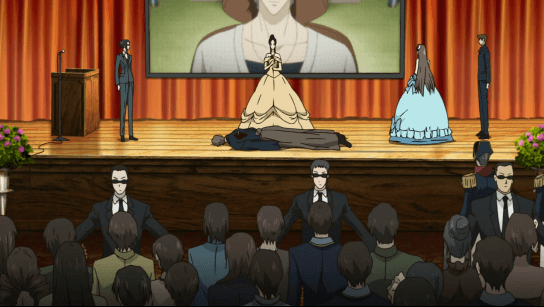
Episode 1 – “Murder at the Ball”

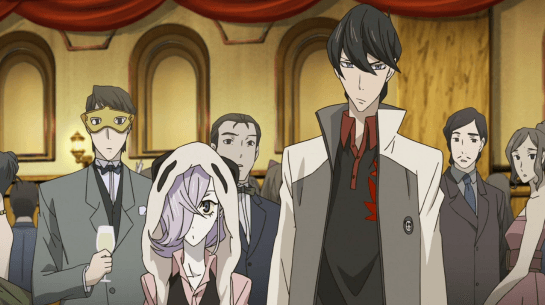
UN-GO could potentially be one of the best new anime series to come out of this season, with an opener this strong. This was an episode in which everything went right. Characters, concepts and setting are all introduced and constructed superbly. There was no low point of this episode.

“Murder at the Ball” not only gives us a taste of what is to come with this series but it also is a great story in and of itself. When a series can pull off an episode that not only works as an episode of the show itself but also as a great piece of television in general. This episode is one of those very special episodes that encompasses the spirit of the show whilst working brilliantly as it’s own story and from the looks of things, this is how UN-GO will be continuing.

There was an episode of Bleach filler during the Bount arc that as a viewer resonated more with me than the majority of the canon material. The reason for that is that it was one of those episodes in which a perfect story was told. It was episode 72, an episode that almost existed outside of the realm of the rest of the series, an episode in which we got a version of the series that actually is what I feel the entire series should’ve been, straight up horror and suspense. It was a great episode with an incredibly unique concept with real stakes. That is exactly what UN-GO has done here from the get go.

With it’s first episode, UN-GO told a complex, engaging and involving story that most series never achieve in their entire runs. The central plot of episode focusing on the mysterious murder is both meticulously constructed and paced perfectly. There was not a single bland moment. Not to mention the final reveal regarding the truth of the murder was both touching and disturbing, a mix that is nearly impossible to capture.

I was left in awe at the way things twisted and turned until it reached it’s natural conclusion with The Defeated Detective solving the mystery. It is uncommon for anime series to feature writing of this quality, it’s honestly refreshing to watch something so well plotted.

Character-wise UN-GO was a gold-mine of memorable characters, each with their own unique personality. The intrigueing thing about UN-GO is the way it handles it’s cast. We are given the bare essentials in terms of their personality, yet we are given so many hints of other sides of these characters that are still to become apparent, without giving too much away. It’s the sort of characterisation you should get in a first episode, enough to understand these people but not enough that you don’t want to know more.

The animation was brilliant as you’d expect from Bones and the art style is absolutely unique. The character designs are very angular, giving a very original look to the series. The world itself is shown briefly for the most part but what is shown is both emotive and quaint, begging the viewer to explore it, but not delivering just yet. That is still to come in future episodes.

The music like the animation was great and really helped to push the story to even greater heights, by setting the perfect mood and atmosphere for the proceedings.

All in all, UN-GO episode 1 was a brilliant episode of anime that not only is a good series opener but also a great story in itself. If the series continues down the path this episode has set for it, then we are in for one hell of a ride with UN-GO, a ride that I’ll definitely be taking.

9-5-capsules-out-of-10

EB EXPO 2011 – Bluemouth Booth Tour

With Batman: Arkham City‘s early release in Australia, many gamers have probably also seen some Batman controllers floating around. At EB EXPO 2011, we were lucky enough to see the Batman controller as a part of the Bluemouth booth, and then some.

EB-Expo-2011-192

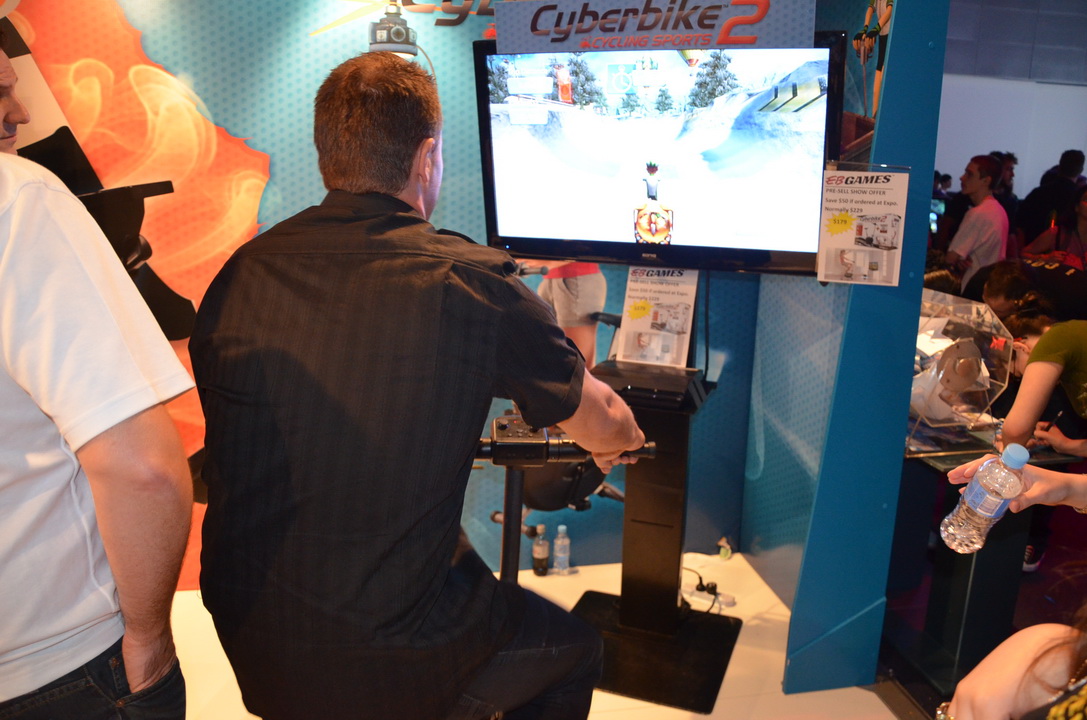
You may recognize Bluemouth for their Cyberbikes that are great for exercise and fun, or their guides for various gaming titles. However, we discovered the company has so much more up their sleeve: think innovative and ergonomic controllers, and racing seats that contour to the user’s body. The Cyberbike 2 was a new product that is a fantastic way to get your heart pumping (I attracted a few stares while I was on it, though!), but our pick would have to be the Air Flo controllers. These awesome controllers look and feel great, and they also have a fan to keep your hands cool while gaming, which means no more sweaty palms!

Take a look at our booth tour with David Tipton, and check out the rest of our coverage here.

Also check out our review for the BATMAN Controller from Blue Mouth here.

EB EXPO 2011 – Nintendo Booth Tour

One of our favourite booths at EB EXPO 2011 has got to be Nintendo. With a huge array of games on display (including The Legend of Zelda: Skyward Sword – yes!), Nintendo’s booth showcased exactly what the brand was all about and reminded us again why we love Mario, Link, and all of the crew.

EB-Expo-2011-211

In this video tour, Jamie from Nintendo takes us on a look around the major titles that Nintendo had displayed. Skyward Sword was fantastic and set up on a podium so everyone could see what was going on; meanwhile, the 3DS games such as Mario Kart 7 and Super Mario Bros 3D were housed across sleek white tables.

The Nintendo booth was insanely packed at all times, and we have to say that we’re very excited at the games that are being developed for late 2011/early 2012. Check out the video tour below, and click here for other EB EXPO coverage.

EB EXPO 2011 – Mindscape Booth Tour

A number of different developers and publishers were located at EB EXPO 2011, and one of those is none other than Mindscape, a software publishing company which distributes Konami and PopCap games.

EB-Expo-2011-074

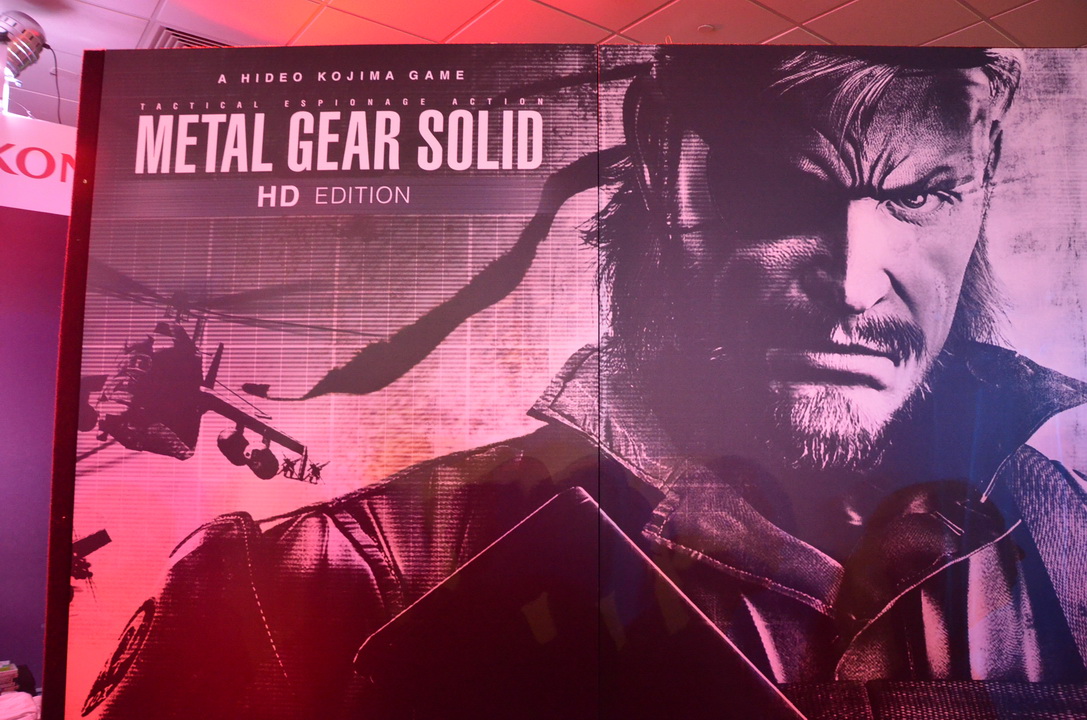
This year at the expo, Mindscape showcased Karaoke Revolution Glee: Volume 3, the Metal Gear Solid HD Collection, and Pro Evolution Soccer 2012. Having been located next to the EA booth, we were worried that Mindscape may get overlooked, but the booth got plenty of attention and had many gamers coming over to check out the latest titles (but really, we just love Solid Snake).

Take a look at our booth tour with Guy Maxwell from Mindscape, and check out the rest of our EB EXPO coverage here.

EB EXPO 2011 – Floor Tour

With EB EXPO 2011 spanning more than 10,000 square feet at the Gold Coast Convention and Exhibition Centre, the event was most definitely Australia’s largest gaming expo in history.

EB-Games-Expo-2011-Sneak-Peak-16

Over 20 exhibitors showcased their products and titles at the expo, so it’s fair to say the floor was jam-packed with gaming and gamers. By far, the most impressive booths at the expo were Razer (who were voted Best Non-Gaming Booth for 2011), Activision (a booth which boasted a massive Call of Duty: Modern Warfare 3 section), and Ubisoft (light-up dance floors for Just Dance 3? Yes please!).

EB-Expo-2011-085

We here at Capsule Computers know that a map doesn’t show enough detail on how the venue is laid out or what individual booths look like, so we’ve captured it on video instead for all of those gamers that couldn’t make it to the event. You can also click here to see the rest of our coverage for the event.

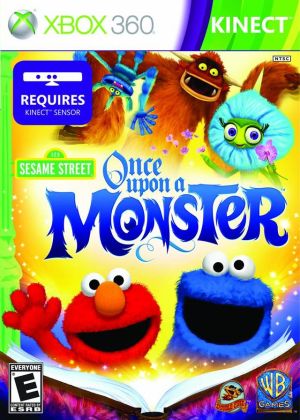
Sesame Street: Once Upon A Monster – Review


Sesame Street: Once Upon A Monster
Developer: Double Fine
Publisher: Warner Bros. Interactive Entertainment
Genre: Kids
Platform: Xbox 360 Kinect
Released: 14th October

Sesame Street is something of an acquired taste for adults; those with children may be able to appreciate its finer points as they watch it with their children, whereas others could be driven up the wall by the high-pitched voices and tot-friendly demeanour. For kids, however, I’m not sure one exists who could resist the charm erupting from the colourful cast of characters, especially for the younger bracket of ages 4, 5 and 6. Despite being interested in the games their older sibling is playing, they are an age group that aren’t really catered for in the world of gaming, so it’s great to see Double Fine have recreated the characters’ diversities and qualities in this most interactive of interactive storybooks.


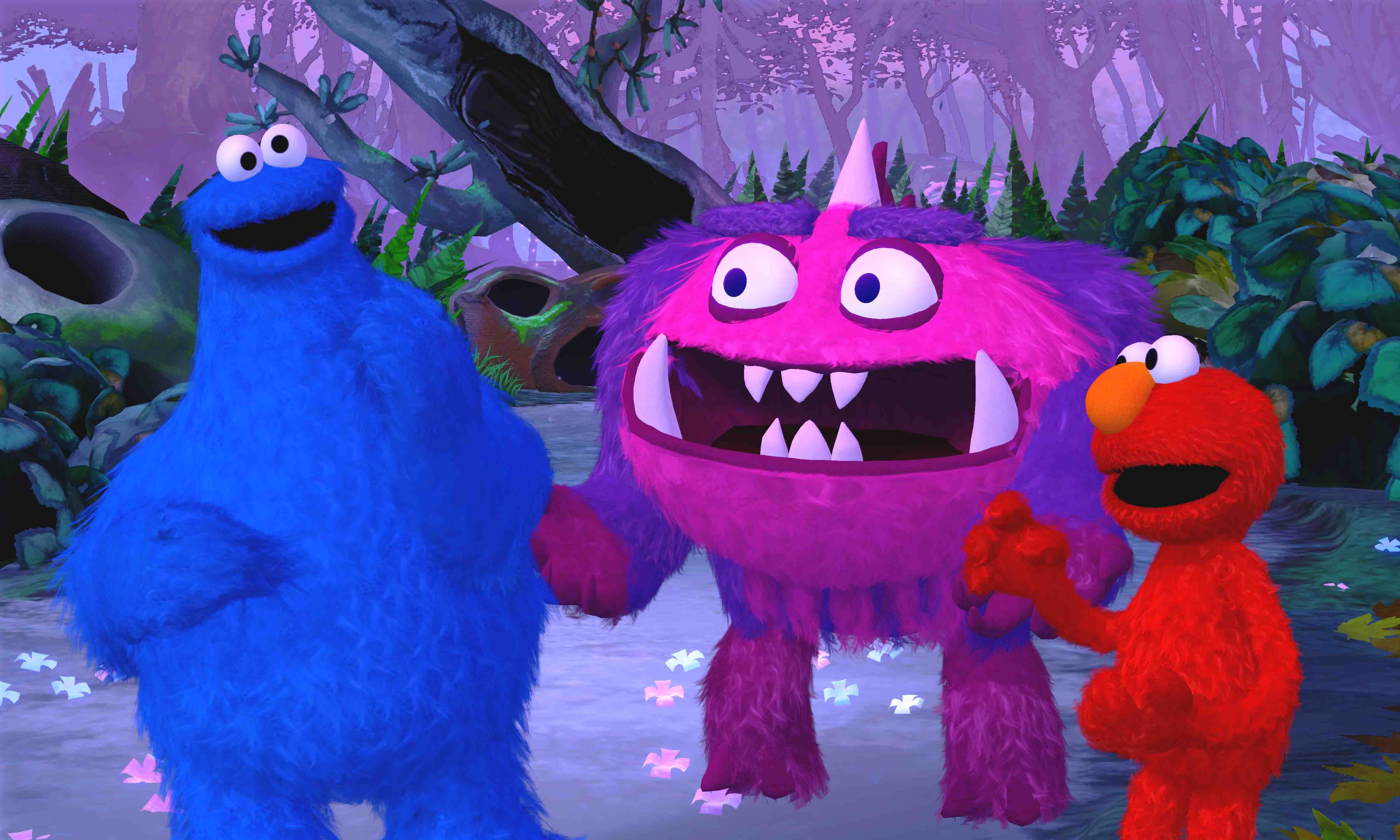
Sesame Street: Once Upon A Monster’s lack of violence is refreshing; finally the underrepresented youngsters are being given a positive playing experience, because most of the games they resort to playing have cartoon violence – even if it is only bopping stereotypical bad guys with a plastic hammer – which send out the wrong message. With the Cookie Monster and Elmo as your guides, as well as doubling up as your onscreen avatars, a feeling of safety and welcome is projected upon you.

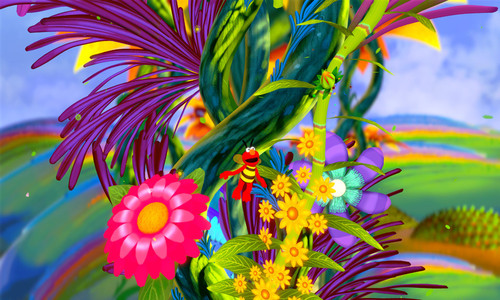
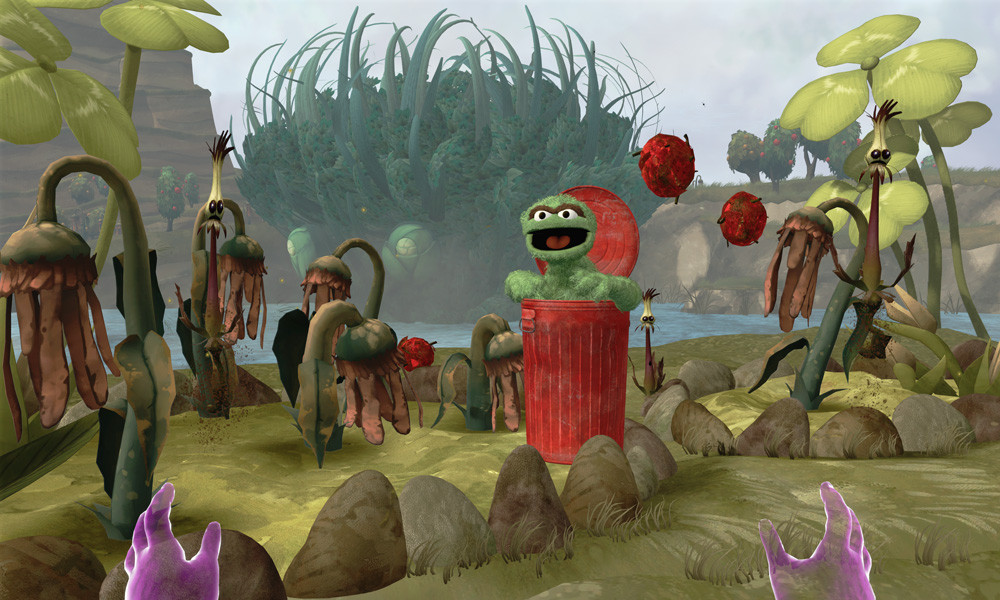
Kinect opens up lots of opportunities, and in spite of approaching its first birthday it is still full of untapped potential. Sesame Street: Once Upon A Monster must be the first of its kind. It’s not an adventure game as you know it, and if you were to describe it in gaming terms you’d probably define it as being on-rails. It’s an interactive storybook, but with the help of Kinect it manages to be more interactive and more immersive than it could have ever been with a controller. You physically turn the page by lifting your arm and sweeping it across as you progress through the 6 chapters, meeting new monsters with problems for you to help them overcome along the way. You do meet old favourites like Grover, a character that injects plenty of all-ages humour into the story, and Oscar, a character designed to account for older siblings or parents watching or playing with the child. Other than that those two and the two you are playing with throughout, though, it’s a whole new set of characters invented for the purpose of the game. All have been well-designed so that you warm to them and see their cuddly side (except from possibly the last one you meet, Ramona, whose jagged teeth make her look a bit too sinister, even after you befriend her and learn she is a harmless, good-natured storyteller).


The monsters you encounter have problems ranging from confidence issues to losing band members, and each of their various dilemmas takes you on a miniature, multiple-page adventure consisting of different types of activity. Some of these activities are slower paced, such as ones where you have to dress people in outfits, whereas others require a higher level of physical exertion, like rhythm-action mini-games where you bang a drum, copying the moves of onscreen characters as you dance to music, flapping your arms to fly or leaning your whole body to decide your position onscreen as you dodge and collect all manner of obstacles and items. Given the unnatural movements brought about occasionally by Kinect, some of the activities that fall under the latter category can be excessively tiring, usually due to going on for ever slightly too long. One such example is when you are leading a march and you have to thrust your arm forward every few seconds for the duration otherwise your entourage will slow down and stop, although it is worth noting that most are absolutely fine and don’t suffer from similar errors in design. Another issue with movement, though not major, was that some poses and dance moves have you looking away or with your back to the screen, which, in turn, means you can’t see the next action you are supposed to be doing.

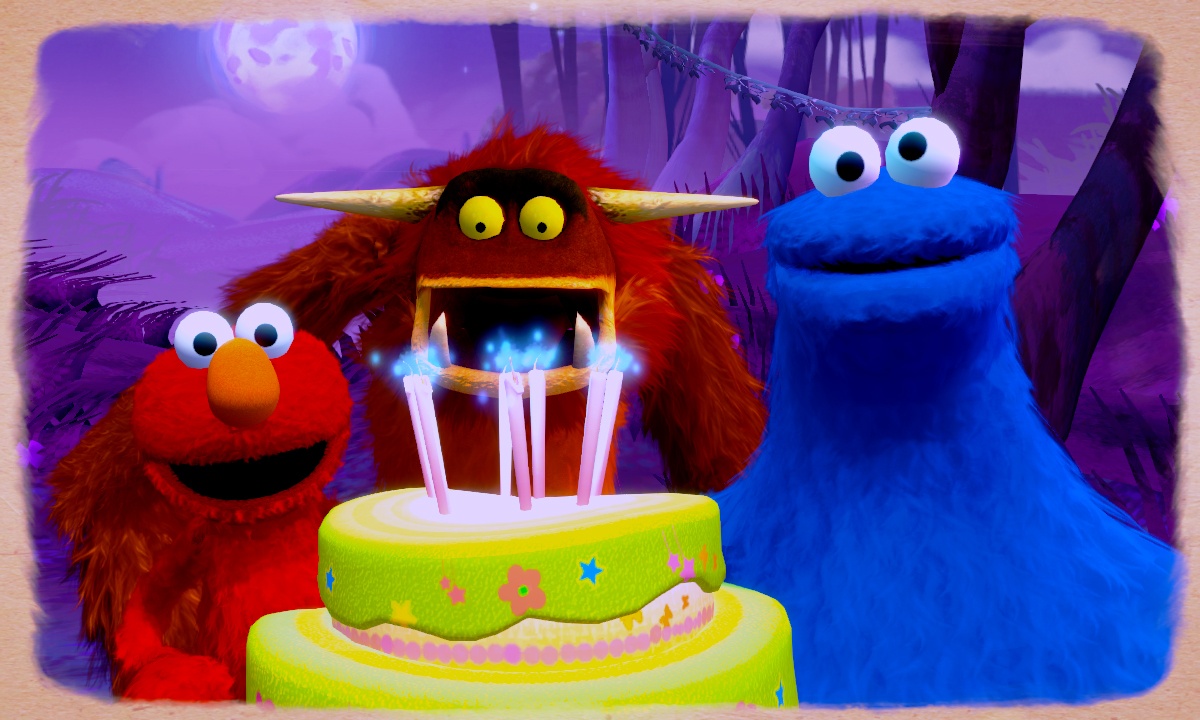
But more impressive than the abundance of different activities is the way in which, over the course of the game, Sesame Street: Once Upon A Monster manages to use Kinect in so many different ways. There are sections which you will be frantically moving around in front of the camera, just as there are more subtle, clever movements, like turning a page and then spreading your arms out to enter the story, or simply something basic like leaning in to blow out a set of candles. It also doesn’t forget about the in-built microphone in the sensor, adding to sections of movement with sections where you have to speak aloud or provide the audio for something. For instance, towards the end when doing Ramona’s chapter you act as the narrator, recording your voice over a set of images in stages. Then your recording is played back to you as one continuous story.


The whole nature of the game creates an intimate playing experience – even the menu screen which gives an overview of the book, complete with comments from the Cookie Monster and Elmo based on the page that is currently open. The Cookie Monster-Elmo dynamic lends itself to co-op play, making the game ideal for a parent to play through with a child, and an uncluttered heads-up display means the transition from cutscene to gameplay is so seamless you barely notice the transition. Just about the only thing that’s displayed is a star rating (you are given a rating out of 5 stars based on your performance, although sometimes it’s simply story-based and it’s impossible to complete the level without earning all 5) which springs up each time you earn a star, but then disappears again.


Sesame Street: Once Upon A Monster is a real breath of fresh air. It just wouldn’t be the same with a controller, as the unique idea to utilise Kinect to make the most interactive of interactive storybooks is a winner. It’s impossible to fail; worse performances are marked down on the scoring system, not given game over or anything discouraging, and regular compliments and reassurances of how well you are doing come from the funny, inviting pairing of Elmo and the Cookie Monster. A colourful, friendly visual-style contributes to make for a fantastic for kids – or to play with the kinds thanks to the option of co-op which allows you to be part of the enjoyable experience. It’s a beautiful game, not only visually but on the inside, and although it will no doubt prove too easy for older players, many will probably pick it up for a self-esteem boost – either from the constant compliments or from the Gamerscore hike owing to the way it readily dishes the achievement points.

9-0-capsules-out-of-10

3G Version Popular As Pre-Orders Open In Japan

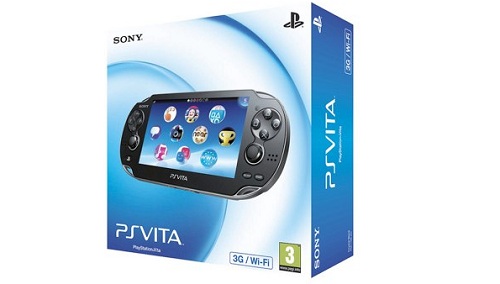
Over in Japan, pre-orders for the highly anticipated Playstation Vita opened to the public. There were long lines at some stores, but other stores had no one. Some did not promote the pre-orders. The growth of online shopping might contribute to this as some would have decided to use sites such as Amazon Japan.

According to Sinobi, retailer and blogger, the 3G version of the handheld is the more popular version that was pre-ordered with 65%. The other 35% was the Wi-Fi only version. They have also provided details for memory cards. Out of all of the pre-orders, 82% had memory cards added to their pre-order. 72% of those who had added memory cards went for the 32GB storage option.

Software is a different story. The ratio (console to software), according to Sinobi, was roughly 1:1. Ok, it isn’t really the best figure, however, it is still too early to call on the reception of the massive launch lineup. Some of these people may be waiting for reviews or wanting more information.

By the way, I do believe the reason the 3G version is more popular due to the first 500,000 units having a 3G pre-paid card of 100 hours for free. It is a very tempting offer, one, it seems, people can not refuse.