
Home Blog Page 5777

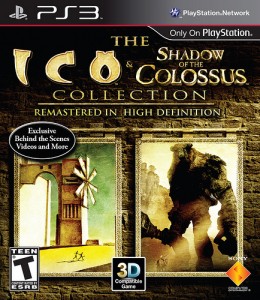
The ICO and Shadow of the Colossus HD Collection Review


ICO and Shadow of the Colossus HD Collection
Developer: Japan Studio & Bluepoint Games (port)
Publisher: Sony Computer Entertainment
Platform: Playstation 3
Release: Out Now
Price: AU$59.95/US$39.99 (Available Here)

Overview
The Playstation 2 was the console of the sixth generation, no matter how hard one argues for the other three consoles. With that claim, there would be a barrage of stellar titles to back it up. With the Playstation 2, there were those classics and ICO and Shadow of the Colossus fall into that category. Both games were developed by Sony Japan Studio (or more commonly known as Team ICO). Although they are not directly linked in story, their themes are somewhat linked, with Shadow of the Colossus referred as the ‘spiritual successor’ to Ico. Now these two Playstation 2 classics have been re-released for the Playstation 3 with updated graphics and support for 3D and Trophies. Only minor changes have been made to Ico, but both games are still the classics they were when they were first release. The gameplay deserves its acclaim, being top notch, the visual are absolutely spectacular, the stories of both games are memorable and enthralling and the music resonates throughout the player’s space with beauty and elegance.
Stories
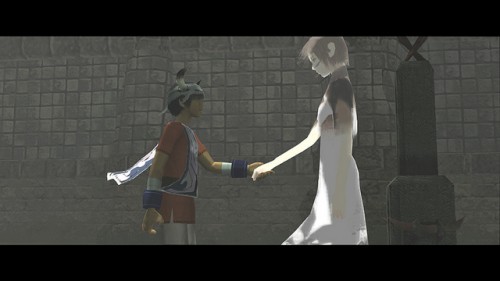
The story of Ico follows a young boy by the name of Ico. What makes him different to every one else is the fact that he has horns growing out of his skull. To his village, that is considered as a bad omen. In order to protect the village from this bad sign, he is taken to a crypt. There he is buried alive in a sarcophagus, where he is to be his final resting place. However, a tremor occurs, freeing Ico from his confinement. He explores this crypt in search of any means of escape when he finds Yorda, a girl in white, imprisoned in a cage. He frees the girl and she joins him on his journey to escape. However, someone in the backgrounds wants to hinder their goal and sends shadow creatures to track them down. This is a story worth investing the time. Instead of using multiple action scenes to divulge into the deeper narrative, it uses the interactions of the main characters to develop some form of trust and compassion.

The characters are worth investing in as they are well-designed and developed. The main strength lies within the chemistry between Ico and Yorda. They are literally the only two characters that are prominent in this game. The gameplay system also plays into the chemistry, of course, as the progress of the game is reliant of the co-operation of the Ico and Yorda. Throughout the game, the player will also learn the culture of Ico’s world. This is prominent at the beginning of the game. It is done effectively through actions rather than dialogue spelling it out for the player, allowing them to form their own meaning behind the cultural definitions of young boys with horns out of their heads. This would be another point in the continuing argument for games as art. Without a doubt, this is a point I am willing to defend. The shadow creatures also connect with the cultural aspects of the narrative. It is revealed that the Queen of the castle is responsible for setting them upon the two.

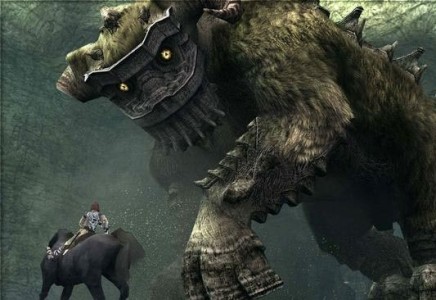
The story of Shadow Of The Colossus is also one of the best that have graced the Playstation family. It follows a man by the name of Wander. He arrives in a temple clutching a female body. He wants to revive a this female, but he must travel the world beyond this temple alone with his horse. His is sent to do a task: defeat sixteen grand monsters, know as the Colossi and his desire to have this female revived will be granted. Throughout the story, Wander changes after defeating the Colossi in appearance, even growing horns. What makes this story memorable is how Wander is depicted. He is a warrior on a mission to save his maiden and would do anything necessary, even risking his own life. The player feels that when they take control of Wander and traverses throughout the land.
Gameplay
The gameplay of Ico surrounds the use of the environment. It contains elements of both platforming, as Ico must jump across gaps within the prison and puzzle, which effectively uses the environments to solve them. The objective of Ico and Yorda is to escape the crypt with their lives in tact. Of course, there will be obstacles along the way, with most of them based on the environmental puzzles as well as some evil creatures.

The main mechanics of the game intertwined well with each other. Ico will climb, jump and defend with his trusty stick (a sword will become available later in the game). The puzzles really make the player think about what to do, depicting a somewhat realistic scenario. They are challenging and require a good deal of puzzling skill, but not too challenging to leave the player dumbfounded. Some puzzles require the services of Yorda. At times, Ico must help her progress throughout the castle by helping her up or providing a pathway. The controls of the game are easy to pick up yet smooth and very responsive. Since this is a third dimensional platformer, this particular area is crucial to the playability of the game. They are basic, where X is to jump and the left analogue stick is to move Ico around. At first, Ico is alone; however, after the introduction of Yorda, Ico can hold her hand, allowing fast paced gameplay. The camera is also postion perfectly almost all the time, with the very rare instance of the camera not focusing on the appropriate area. This is not a game breaking inconvenience, however.
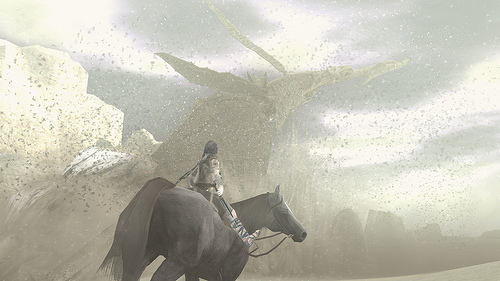
What does make Ico interesting is the lack of a health bar, usually traditional in these type of games. Instead, there are two ways that the game can end against the player. The first is from dropping from a great height, whether it is a failure of a jump or an accidental slip. The second is tied within the objective. Chasing Ico and Yorda are shadow creatures, manifestations of pure darkness summoned by the Queen to hinder our hero’s escape. Ico can not be harmed by any of these shadow creatues, but Yorda can be grabbed by them. If they are able to drag her into a vortex created by them, then she is gone forever and the game is over. This puts further emphasis of Ico’s role as protector. It is his job to protect the young girl from the impeding evil.
God of War Collection Volume II Review

God of War Collection Volume II/God of War: Origins Collection
Developer: Ready At Dawn
Publisher: Sony Computer Entertainment
Platform Playstation 3
Release: Out Now
Price: AU$59.95/US$31.50 (Available Here)
Overview
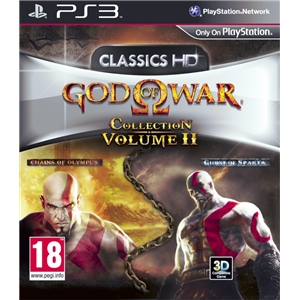
The God of War series have been one of the most successful and prominent series of games for the Playstation family. Spanning three consoles, the games have received critical acclaim among fans and gaming media alike. Due to their popularity, the Playstation 2 and Playstation Portable games have been remastered for the Playstation 3. Chains of Olympus and Ghost of Sparta, the PSP entries of the series, follows God of War I and II in being remastered. So, how do they fare as remastered games?

Stories
Chain of Olympus focuses on the events of Kratos, the hero of the series, before the first game. As a warrior of Sparta, he is sent to the Greek city of Attica to defend the city from an advancing Persian army. Trudging along through the city, Kratos encounters the Persian King. A fight ensures with Kratos emerging victorious. He is also forced to fight a giant basilisk in the city. After successfully defending the city, he leaves, only to see the light of the Sun come crashing down in Marathon. It turns out that Helios, god of the sun, has been abducted. It is up to Kratos to find and rescue him.

Ghost of Sparta focuses on the origins of Krakos and confronting demons of his mortal past. In this game, Kratos is the God of War, which would place it in between God of War II and God of War III. There was an oracle that foretold the demise of Olympus. However, it would not be the Titans that would exact this revenge but a warrior marked by the gods. Zeus and Ares (the God of War at the time) suspect that the oracles talk about Deimos, who is Kratos’ brother. Deimos is kidnapped and tortured in Death’s Domain. Kratos (adult) decides to find his mother in the temple of Poseidon in Atlantis (against Athena’s wishes) and, after finding her, discovers that Deimos is still alive. He decides to embark on a journey to find him.

Both stories are told with the same pacing that the God of War series is known for: very quickly. One problem with the stories is that they seemed quite short. I felt that, due to the small time period, they had a lack of substance and used cliches without having a real twist or new meaning to them. For characters, Kratos is Kratos, a violent, enraged man that only longs for blood of his enemies. I like the consistency with the character. I also like the fact that there is a softer side hiding behind that tough exterior. If the stories were a little longer, more could have been explored in both stories.

Gameplay
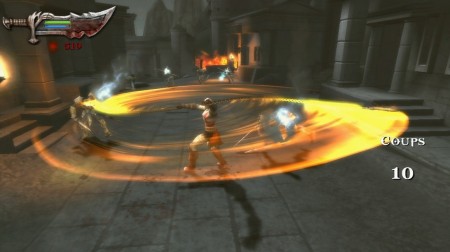
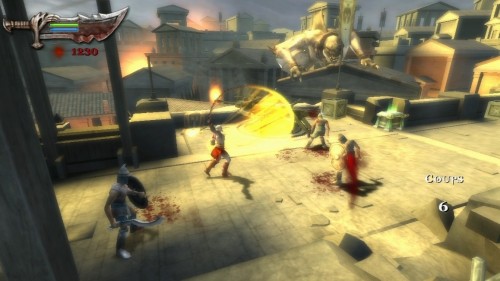
Both Chains of Olympus and Ghost of Sparta pretty much feature the same gameplay that the console brethren feature. The game is hack and slash, but with a lot of blood and gore. Players will use both the square and triangle buttons to dish out light and heavy attacks respecively. Of course, mashing the two together can lead to combo attacks. Special attacks, like a whirlwind attack for the Blades of Athena, are also present, adding variety in your arsenal of attacks. Of course, there are minor changes in gameplay, as Chains of Olympus emulates the PS2 games and Ghost of Sparta emulates the PS3 game. For example, both games feature wall climbing, but Ghost of Sparta only features a quick slide down mechanic. Box-based puzzles also make an appearance, as well as weapons and abilities not seen in the console series.

Quick time events are prominent in both games, or should I say in the whole series. Usually these are done during the boss battles. In these events, the player will have to press a certain button or perform a certain action in order to continue towards the end of the boss fight. Both Chains of Olympus and Ghost of Sparta also differ on this front. In Chains of Olympus, the buttons are displayed in the middle of the screen and rarely, if at all, use the analogue stick. Ghost of Sparta, on the other hand, puts the prompts on the side and more often uses the analogue stick in certain situations.

Each of the games also features a challenge mode for players to complete after they have finished the game. In these challenge modes, it is survival of the fittest as the player will be challenged to the limits. They will often involve hoards of enemies attacking Kratos at the same time, providing a challenge for the player to overcome. Rewards for completing such challenges often involve extra character skins or videos looking at the making of the game.

Overall, the gameplay will quench the thirst for God of War fans. The same hack and slash style of gameplay is prominent, with the weak and heavy attacks in tact as well as some special abilities and magic powers. Box- based puzzles make a return as well as the quick time events. The addition of the challenge mode adds replay value to both titles and rewards the player for the progress they make. Trophies, not originally in the PSP versions, also make an appearance, adding another reason to play some more.

Visuals
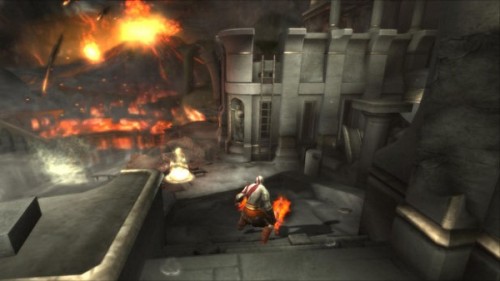
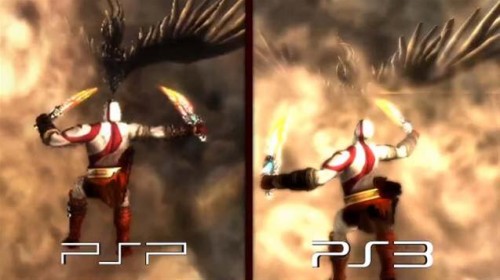
The visuals of Chains of Olympus could have been done a little better when compared to its later portable title. The game looks like a updated Playstation 2 game. The character models look quite choppy and outdated. In fact, they also look a tad bit too colourful at times. This is quite odd for a God of War game to feature those sort of colourful sections. The beginning of the game, being in Attica, is one such example. Ok, it is in the middle of the day, bit I thought I was looking at a portable game (I know what Chains of Olympus was originally).

In comparison, Ghost of Sparta is the star of the collection when it comes to the graphical capabilities. The best way to describe it would be saying this is equal to the graphics of God of War III. They are very well done. The character models are well detailed. The environments are also well detailed and designed beautifully, especially with the buildings. The temple of Poseidon is one such great feat of graphical capabilities. Truly stunning quality.

Audio
The audio of Chains of Olympus is pretty good. The soundtrack is your average God of War fare, epic music coupled with a choir shouting lyrics in an ancient language (most likely Latin). Since Greek mythology is quite epic, this is not a surprise. I do like the soundtrack, in fact. The tracks composed fit very well with the game and its main character, fighting for his life and embarking on an epic journey. One can expect the same with Ghost of Sparta. Voice acting is also not so different. Kratos shouts his lines with that incredibly deep voice of his. I mean, he sounds angry all the time, even when he wants to show compassion. Other characters have good voice acting as well.

Overall
So, is it worth the pick up? Of course it is. It has great gameplay, the visuals are well done to an extent, the stories, despite a lack of time and substance, are still worth playing through and the audio makes the games feel more epic. Whether it is the first time or a return to Kratos, this is one all Playstation 3 owners should not miss out.
9-0-capsules-out-of-10

DmC’s Dante is from a “Parallel World”…

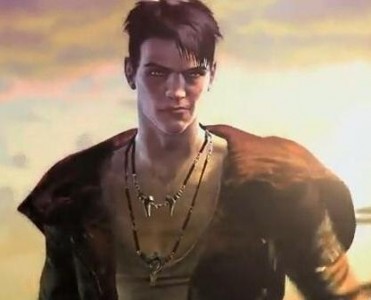
Since Dante’s new look was first shown a good while ago for the upcoming DmC, fans everywhere have been begging Capcom to change their beloved hero’s look back to his classic look. New details have emerged about this title, and in a recent story in Dengeki PlayStation, Ninja Theory have now came out and said that this Dante and re-imagining as a whole will take place in a parallel world.

Yes, you heard that right. Dante in DmC is not Dante from Devil May Cry and it seems everyone either jumped to conclusions too soon, or Ninja Theory are brilliant at damage control. All will be known of course when DmC launches in 2012, but for now this should finally quiet down the riots for Dante to be Dante again for the time being…or so we hope.

Country Dance 2 Now in Stores!

There have been plenty of dance titles to come out as of recent, but none have been catered to the many country music fans out there…until now, that is. As of today, those who want to get down to some of their favorite modern country tunes can rejoice as Country Dance 2 is now on shelves everywhere for the Nintendo Wii.

To give you a quick rundown on what this dance/sing-a-long title possesses, here are a few prominent features that this sequel includes:

  • Star-Studded Soundtrack: 30+ country hits from country music’s biggest artists!
  • User-Friendly Gameplay: Easy to jump in and play – just grab the Wii Remote™ controller and replicate the onscreen dance moves! Fun for all ages and all dance abilities!
  • Don’t be Shy, Belt it Out: New sing-along features and scrolling lyrics let you dance AND sing!
  • Grab a Partner: Supports up to four players at once including duet dancing option that features unique choreography for each player during the same song!
  • Calorie Counter: Dancing is a great way to burn some calories; take advantage of the all new calorie counter!
  • Along with this release comes a shiny new launch trailer that shows the game in action. You can check out that below and dust off that old cowboy hat as Country Dance 2 is out and ready to take the Wii to the south!

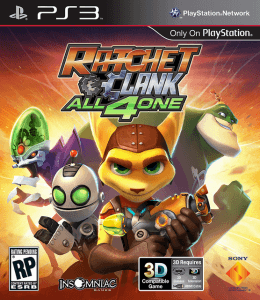
    Ratchet & Clank: All 4 One Review

    Ratchet & Clank: All 4 One
    Developer: Insomniac Games
    Publisher: Sony Computer Entertainment
    Platform: Playstation 3
    Release: Out Now
    Price: AU$79.95/US$35.93 (Available Here)

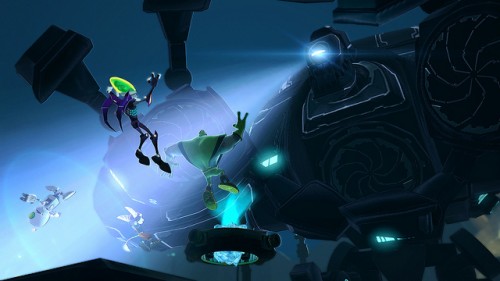
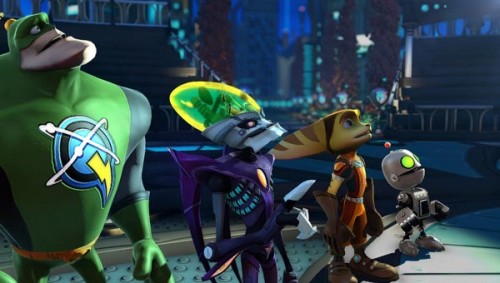
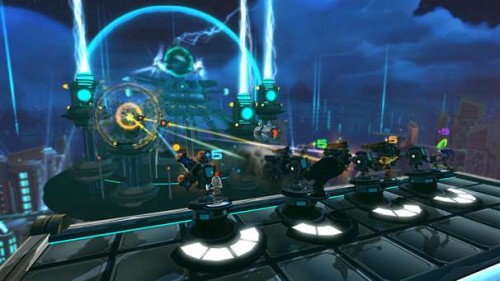
    They’re back. Insomniac’s crazy duo has returned for a new adventure on the Playstation 3. Ratchet & Clank: All 4 One is set after the events of A Crack In Time, the previous entry of the series. Players will follow Ratchet, Clank, Captain/President Quark and Dr. Nefarious as they explore a mysterious island and battle a new threat that will destroy all living things in existence. As a game, it does retain the staples of the series, but there are a few set backs that allows the player to have an immense experience. These seem to stem from the co-op focus, with a fixed camera and fidgety lock-on system. The visuals of the game are not bad; a step down from earlier PS3 titles and the music is good to listen to, especially their main theme.

    Story
    The story starts off as Captain/President Quark (yes, he is the intergalactic president. I don’t know why either) heads off to Luminopolis to receive an “Intergalactic Tool of Justice Award” with Ratchet and Clank by his side, which turns out to be a fake award created by Dr. Nefarious. He, with his trusty butler, awakens a creature known as the Z’Grute, but quickly turns on Nefarious, forcing the four to join forces to stop it. While tracking this monstrosity, robots that don’t belong to Nefarious start following the Z’Grute. It turns out that the robots belong to a facility floating above Luminopolis. The Z’Grute and the four characters are captured, but with the help of an alien called Susie, the four escapes and end up on an alien world. There, they must find out what this new threat is and destroy it quickly.

    The pacing is good and the story is sound. It is nothing special but it is quite humorous. The fact that Dr. Nefarious is part of team of heroes leads up to a few humorous moments, especially between Nefarious and Captain/President Quark. The chemistry between Ratchet and Clank is still there, as it has been throughout the series. Overall, with an okay pace and great use of humour, the player may enjoy the story of the game.

    Gameplay
    Ratchet & Clank: All 4 One isn’t the single player focus that precedes the previous games. Instead, it is focused on co-operation aspect of multiplayer gameplay. Actually, it is forced upon the players. The co-op can be either be played offline or online with up to four players. It is safe to say that the implementation of a so-op focused core mechanic does cause the game to lose its charm. This is a problem when a game decides to make a game in a series that is predominately a single player experience.

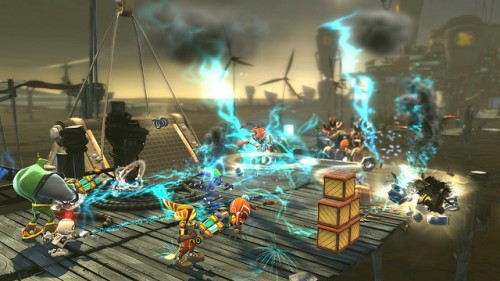
    Ratchet and Clank relies on the shooting mechanics and it suffers to an extent due to the focus on co-operative mechanic. There are a variety of weapons, a staple of the series, some as silly sounding as others. The weapons can also be upgraded via weapon shops around the planets. When one targets a single enemy together, the guns power increases and ends with a slow motion explosion. This is quite awesome; satisfaction is achieved when one sees that slow motion explosion. This will not be achieved when the player shoots alone. In fact, the player will feel the weapons are useless. The lock-on targeting system compounds on the problems. The system will not target the enemy you want at times. This tends to create frustration and small doses of anger.

    Aside from the shooting, the puzzles and platforming that appear in other games of the series do change the flow of gameplay. Players will jump over big gaps, grind on rails and solve rather easy puzzles. There are also jetpack sections, which happens to be a highlight of the game. In fact, these sections are better in general compared to the shooting sections. The obstacles keep the player on their toes. The camera in these sections is generally in a better position. In the game, the camera is fixed to allow the four-player action to stay of the screen. However, that provides a few problems. In these sections, though, the camera is close to the action allowing the player to feel the action.

    Since there will be players who want the single player experience, then the AI will be an important area for them. Fortunately, the AI is up to scratch. If one plays as Ratchet, then Clank is a worthy computerised friend… at times. Of course, there will be times where Ratchet and Clank will team up well. However, Clank will also go off on his own, leaving the player felling alone and cornered, resulting in death or near death. The co-op is done fairly well, with an added competitive point system, but there are no rewards for gaining the most points after a level.

    The boss battles are somewhat average. The first boss battle is at the beginning of the game and felt underwhelming and anti-climatic. The ending of this boss battle sees the characters controls turrets and just shoot down generators (electricity seems to be a shield for the giant worm) and then just shoot him down with a barrage of bullets. They feel that they do not need any sort of strategy to take down these monsters. Just run through to the end and kill it. That is it. It is tedious and unsatisfying. Boss battles should make the player feel relieved and satisfied about destroying the danger. I was relieved that I finished such a tedious run.

    Overall, the gameplay can be fun, but the camera can ruin the experience. Also, it feels like Insomniac wants to punish the player for embarking on a single player experience. The AI is not bad, but it can wander off, leaving the player vulnerable at times. The boss battles could have been executed better and the shooting mechanic feels poorly done. However, the puzzle and platforming sections are done right.

    Visuals/Audio
    The visuals give out a more cartoon look, something the series is quite well known for. The character models are colourful, but not sharp as they could have been. The environments are also in the same camp. They are varied in look and colour. However, like the character models, they are not as sharp as other games in this generation’s series. The design of enemies looks good and also varies from enemy to enemy. It isn’t bad looking, but the game could have looked a little better.

    The music of the game isn’t bad. It is quite good, actually. The music usually fits the action on screen and happens to bring some of the charm of the series. One particular track in the game that deserves a mention is the main theme. This track is often used in the various tracks throughout the game and it is a track worth listening to. It is quite catchy and somehow fits with the overall theme of the game, which is quite good. Other than that, there is not much to say about the soundtrack. Sound effects and voice acting is quite good as well.

    Overall
    Ratchet and Clank: All 4 One is a great game to play with other people, but the focus on multiplayer gameplay does make the game suffer to an extent. There are issues with the camera and the lock-on system while the shooting elements feel redundant and tedious, along with the boss battles. The visuals and the music is also good but could have been a little better. Overall, this is a good game, but if it didn’t divert from its roots, it would have been better.
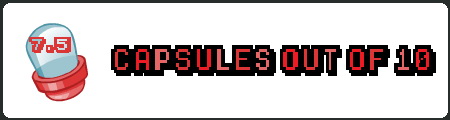
    7-5-capsules-out-of-10

    Pokemon Rumble Blast – Review

    Game Name: Pokemon Rumble Blast
    Platform(s): Nintendo 3DS
    Publisher(s): Nintendo,
    Developer(s): Ambrella
    Genre(s): Action RPG
    Release Date: October 11, 2011 (US) December 2, 2011 (UK)
    Price: $34.99
    BUY NOW!

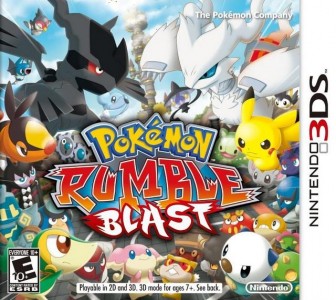
    Many have been long awaiting the debut of a Pokemon title on the 3DS. Why shouldn’t they be though? The series has dominated Nintendo’s handhelds for generations now and is one of the highest selling franchises of all time. Pokemon Rumble Blast is the first Pokemon title to appear on the new 3D platform, and while it is a spin-off, many of the hardcore fans are sure to snag this title up based on name alone. Pokemon Rumble certainly turned some heads a couple of years ago when it appeared on the WiiWare, but the main question is if that same formula can be executed on a portable platform. What is the final result of Pikachu and friends’ first trip into 3D? Here is my review for Pokemon Rumble Blast for the Nintendo 3DS.

    Story:
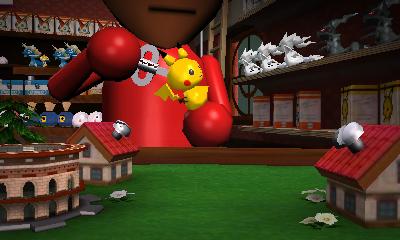
    In Rumble Blast, players take control of nearly the entire roster of Pokemon, but with the creatures themselves now being made out of wind-up toys. Much like the main series, this title thrives on the same idea of “catching them all”, but instead of doing battles in gyms and going through any substantial story, you must take your team of toys throughout various locations and defeat several enemies before tackling one large boss at the end of a stage. If you are looking for a plot that mirrors that of the main line of Pokemon games however, you might be a bit disappointed in the light narrative within this toy-ridden romp as there isn’t much depth to the story told.

    The main story revolves around special fountains that are filled with a rejuvenating element known as “glowdrops”. Due to the rare and powerful nature of this special liquid, many evil Pokemon have been draining these fountains and it is up to you to seek out and defeat the culprits with your team of obtained toys. This of course is happening in a “Toy World” where Pokemon are constantly battling to become the Battle Champion, so both tasks run in unison throughout most of the game. While the plot does assist in giving a sense of progression, the game never allows you to get to know any of the monsters you work so hard to catch. You see, each time you defeat a Pokemon and they join your roster, an unchangeable power stat is already pre-assigned and that particular toy cannot be leveled up. This means that the player has to constantly replace and throw away obsolete party members if they want to progress. While this does make the gameplay more strategic to a degree, it sadly prevents the player from forming any sort of attachment to their team. Some may be able to easily overlook this problem, but I personally couldn’t as nearly every Pokemon title of the past (spin-off or not) has always let the player develop somewhat of a bond with their trusted creature(s). That element is why I think the series is so endearing to start with and without a steady and familiar group of heroes, the story suffers to a great degree due to the lack of any character growth.

    This may sound grim to those who are looking for a famous Pokemon filled experience, I can say that there is some personality to be found in this toy-filled world though. Many towns possess quirky NPC Pokemon who all have been given some light dialogue that can make each chapter feel distinct. The main questline feels random and a bit hollow, but there is a still a small redeeming factor in the sheer variety of creatures that can be found roaming about Toy Town and the many other locations in the game, who are all ready to share some insight, tips, or secrets at a moments notice. Even though this interaction was minor, I feel if the same attention was given to the player’s team, the story would have been much easier to follow and more enjoyable overall.

    Gameplay:
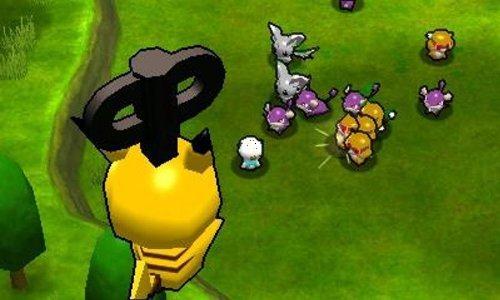
    As I mentioned, Pokemon Rumble Blast consists of the player controlling a toy Pokemon. The heart of the game feels that of a dungeon crawler, as the main objective is simply to fight to the end of each area and keep progressing until one big boss in encountered at the end of a level. Like the main series, each one of these wind-ups have their own move-set, stats, and power level, and all of which must be properly utilized to take on any of the foes ahead successfully. Since each toy cannot be leveled, the player must constantly rely on obtaining coins that are dropped by all opponents they defeat as this currency is used to purchase new moves. It’s a solid system, though Rumble Blast never tries to innovate in it’s mechanics as players progress, which can lead to everything feeling rather bland and repetitive after just a short time.

    Rumble Blast is split up into chapters, and each chapter is made up out of a few separate locations that players can explore to find new dungeons. “Explore” may be a bit too strong of a word though, as these areas are found right beside eachother and aside from one or two roaming opponents, there isn’t a lot to see in any of the overworld as a whole. Each dungeon has a set number of Poke-Toys that can be obtained, and every one of these Pokemon have a unique move-set and power level that is based on how far you may be in the game.

    GAME On! 2011 Festival- Day 3 Wrap Up

    Macquarie University’s three day gaming festival GAME On went out with an exciting bang on October 29 as the family festival day was host to a variety of creative and interesting indie developers. Alongside fellow editor Josh Spudic, I explored the campus, met some interesting people, played some quality games and enjoyed the relaxed atmosphere GAME On had to offer, leaving me looking forward to hopefully many more of these festivals to come in the future!

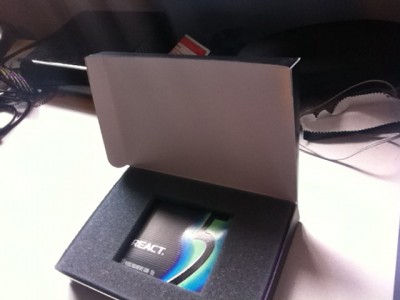
    Upon arriving it was pretty clear that Microsoft was a big supporter of innovative thinking, sporting a rather large tent promoting a variety of creative Xbox Kinect titles. I decided to show off my ninja skills at Fruit Ninja Kinect like a boss, until “Spud” (oh yeah that’s Josh’s nickname, try and catch up will ya?) decided to break the high score of the day. Show off! For playing we were given a free pack of React 5 Gum in easily the most impressive and sophisticated packaging I’ve seen in my life. Upon heading downstairs (yeah this tent had stairs) we were introduced to a variety of other Kinect titles. I got my hands and feet on Sesame Street: Once Upon A Monster as well as Kinect Disney Land Adventures while Spud got a hold of Kinect Sports Season 2. We could’ve stayed there for hours as there was also Just Dance 3 and Forza Motorsport 4, but with such little time on our hands and so much left to see we were forced to march on!

    We’ve reviewed a few of these titles in the past, feel free to check out these reviews for Fruit Ninja Kinect, Forza Motorsport 4, and Sesame Street: Once Upon A Monster.

    Being video game fans and journalists, it’s only natural Spud and I wanted to play some more video games so we ran over to check out the indie developers. First up we met a friendly bunch known as Convict Interactive from Wollongong, who are fresh out of University and seemed eager to be constantly improving their programing skills, looking for feedback and certainly not shy with expressing ideas they’ve been pitching to each other for improving they’re current titles. First we got out hands on Planetarians, a multiplayer shooter for Xbox 360 sporting some really interesting character designs. The concept was really interesting: you battle on a planet of which you can run around and shoot bullets outside the atmosphere, so you can use gravity to help base your strategies and tactics around defeating your friends. Unfortunately the game is currently put on hold, which is a real shame as it does show a lot of potential.

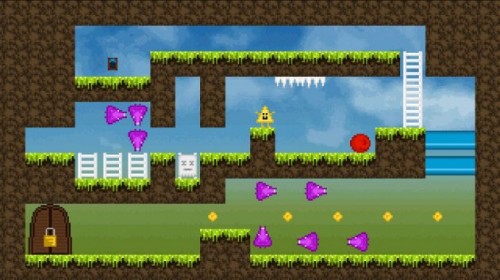
    The big game Convict Interactive wanted to push was a punisher platformer called Triangle Man. In Triangle Man levels are just single screen, so everything seems really simple: you just collect coins, flip switches and reach the end. But no, It’s incredibly hard and the game will try and make you cry like a baby by insulting you with reminders of how many times you’ve died. The game is currently available for purchase via Xbox Indie Games in the Convict Minigames pack of 5, but the team hope to bring it to Steam sometime soon. The team seemed really excited to improve the game and discussed possible new features they plan to implement in order to add more content, including a world map, higher resolution graphics and a variety of alternative costumes. By the sounds of things if they can pull this off Triangle Man could turn out to be a really nice addition to the Steam platform, so keep an eye out for that in the future!

    CLICK HERE TO WATCH TRIANGLE MAN GAMEPLAY PREVIEW AND INTERVIEW WITH CONVICT INTERACTIVE!

    Make sure you check out Convict Interactive’s Facebook, Twitter and official website!

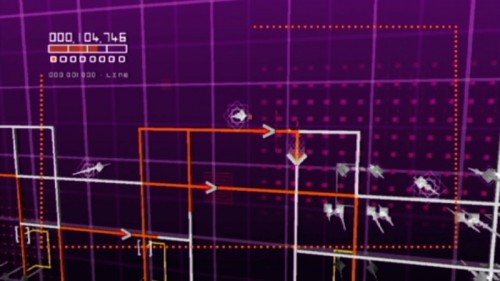
    Without a doubt, one of the most popular booths people were saying ‘yes’ too was of Sydney developer Nnooo. I got my hands on WiiWare title escapeVektor: Chapter 1 which currenly stands as one of the highest ranked titles on the service to date. escapeVektor: Chapter 1 had a simple but effective approach to it, where players take control of Vektor who is trapped inside an evil CPU which you must help escape by using stealthy tactics, and had some really nice polish. Although I completely sucked at this game, I still really enjoyed it and must say it had some really nice polish to it. If your a fan of the WiiWare, it’s definitely worth checking out especially since it’s only 500 points so expect to get some pretty good value out of that!

    What really turned heads however was Nnooo’s upcoming DS title Spirit Hunters. The concept of Spirit Hunters blew me away: it’s a video game that aims to get kids to play outside. The game takes advantage of the Augmented Reality camera features of the device. In Spirit Hunters, players aim the camera at various objects to find different spirits and battle them. It’s a unique concept and very innovative. Keep an eye out for that one as it’s sure to be a hit!

    Make sure you check out Nnooo’s Facebook, Twitter and official website!

    Article continues on page 2.

    Triangle Man Gameplay and Interview with Convict Interactive

    GAME On festival this year was nothing but sheer fun! I met a variety of awesome indie video game developers the first of which was Stephen Barnes and Rebecca Fernandez Convict Interactive. Rebecca was kind enough to gives us a an in-depth run through of their punisher-platformer Triangle Man. The title has already seen a release in a pack of 5 called Convict Minigames via Xbox Indie Games, but the team plan to hopefully bring it to Steam soon. Check out the video below as Rebecca shows us the incredibly difficult level design of Triangle Man, and discusses some possible new features the team has been looking into including for future Steam version of the game.

    Make sure you check out Convict Interactive’s Facebook, Twitter and official website!

    CLICK HERE FOR MORE COVERAGE OF GAME ON FESTIVAL 2011!

    Oh, Japan! – #10 Weird Al Japanovic

    Oh, Japan! is a weekly feature in which I chronicle the wierd, wacky and just plain crazy goings on in Japan. Because we all know, Japan is prone to doing things that make us Westerners say “Oh, Japan!”.

    We have covered all kinds of weird things on “Oh, Japan!” but never have we delved into the world of Western/Japanese crossovers. This week we have a very weird, Weird Al Yankovic appearance on a Japanese variety show, dating all the way back to 1984.

    Unfortunately for Weird Al Yankovic, he doesn’t exactly understand what is going on around him and as you’d expect his appearance results in quite a weird viewing experience. After beating out an hilarious rendition of “Eat it”, Weird Al comes face to face with a giant Lobster who doesn’t particularly seem to be very fond of the weird foreign celebrity in there midst. You can check it out below, there is no doubt you’ll be lost for words besides “Oh, Japan!”

    Alternator Gameplay Run Through

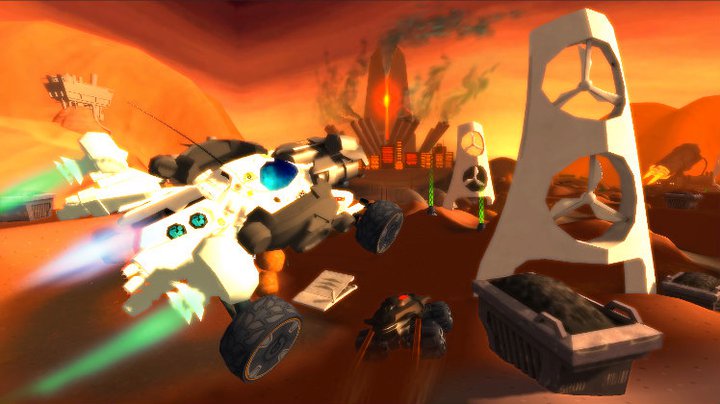
    We met up with Bryan Moses, director of Alternator Industries at the GAME On festival 2011 held at Macquarie University this year where he gave us quick run through the recently released browser-based game Alternator. Created for the ABC, Alternator is a fast and furious futuristic racing game that also educates on renewable energies. Bryan also talks with us about possible IOS and XBLA ports as well as a potential animated series and other exciting stuff!

    You can play the game online for FREE here! You can also check out Alternator Industries’ Facebook, Twitter and official website!

    CLICK HERE FOR MORE COVERAGE OF GAME ON FESTIVAL 2011!