
Home Blog Page 5639

Next Gen Flash Memory Card Security Under Development by Five Leading OEMs

0

SanDisk, Sony, Panasonic, Samsung, and Toshiba are collaborating on the “Next Generation Secure Memory Initiative,” a new content protection technology for SD cards and other solid state (flash) memory cards, as well as other storage devices. The five original equipment manufacturer (OEM) giants have agreed in principle on the collaboration last December 19.

Under the Initiative, said companies will start preparing promotion and licensing for HD-capable security for embedded and flash memory used in advanced consumer retail applications such as mobile devices. All parties involved are optimistic that development of technologies and progress of the Initiative will be well underway early next year, and flash memory cards and other storage products that will be using the technology will be out in the market before 2012 ends.

The early announcement does not detail direct impacts on online and digital consumer content use and proliferation. The five companies cited are currently developing a website for the collaborative effort to provide further details to the public.

Import Play: Sengoku Basara 3 Utage

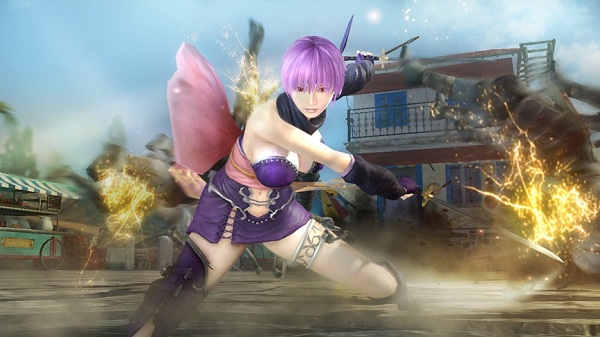
Sengoku Basara: Samurai Heroes (also known as Sengoku Basara 3 in Japan) hit the West on October 12, 2010 with unfortunately abyssmal sales.  Because of the low sales (due to absolutely no marketing in the West) Capcom has unfortunately decided to not release Sengoku Basara 3 Utage (also known as Sengoku Basara 3: Party) in the West.  For those who have no idea what the Sengoku Basara franchise is (that would be the bulk of you), it’s basically Dynasty Warriors except that it’s made by Capcom and deals with Japanese history (the Sengoku period) instead of Chinese history.  Oh, and the combat is way more in depth and satisfying, but we’ll get to that.  Tecmo Koei does make a game that deals with Japanese history (also the Sengoku period, with some characters from other periods thrown in) called Samurai Warriors, but that follows the same basic structure as the Dynasty Warriors series.

The story behind why you may have never heard of this franchise is a bit of a sad one.  In Japan, the first installment (on the PS2) is simply called Sengoku Basara, but in the West it is called Devil Kings (and the name isn’t the only change it brought with it).  With Devil Kings came significant changes to the game.  Some sources indicate this was done to prevent comparisons to Tecmo Koei’s Samurai Warriors, others say it was done to the ensure that the Western audience wasn’t put off by the overt Japanese themes the game brought with it.  An interview with the game’s producer, Hiroyuki Kobayashi, reveals that they wanted the Western version of the game to be darker.  Whatever the reason, the game was a mangled mess by the time it reached Western shores.  Much of the scenery and level design was changed to avoid looking as if you were in Japan.  Japanese architecture turned into boring castle walls and bland hillsides, footsoldiers were turned into demons, anubis and robots, characters were given odd personalities and very generic backstories.  The difficulty was made signficantly easier for the West (as was the trend back in the day) and several characters were even cut from being playable, though still remained in the game as enemy NPC’s.  All in all, the game was awful compared to what it originally was though the combat was still fun and enjoyable, save for some core changes they made to each characters playstyle to make the game easier (called priming, but it’s not important).

After the commercial failure that was Devil Kings, Capcom forwent the Sengoku Basara franchise in the West, releasing several sequels in Japan (with much success).  For reasons unknown, Capcom decided to try out the franchise in the West again last year with Sengoku Basara: Samura Heroes (Sengoku Basara 3) and decided to not change a thing from the Japanese release.  The characters were all the correct names, all had the same combat, they kept in all of the Japanese influences and stories and quiet honestly it was incredible except for one problem.  They didn’t market it at all.  As a result it didn’t sell at all.  Now I’m not a business wiz like Capcom’s Christian Svensson, but I’m pretty sure if you are going to localize an established franchise to a foreign market, you need to inform said foreign market of the game and why they will like it.  I believe that concept is called marketing, but hey, I could be wrong.  When asked why this game isn’t coming to the West, Svensson replied back with a pretty adamant “you guys had two chances to prove to us that you wanted this series, you aren’t getting any more” vibe.  And so with that dies the Sengoku Basara franchise in the West, again.  Maybe in another couple of years, after another several sequels are released in Japan, Capcom will decide to grace us with a third chance (hopefully with a better thought out strategy than “let’s silently release this and then blame the consumer for not knowing about it”).  Interestingly enough, the Sengoku Basara anime’s second season was just announced to be localized.  How’s that for mixed messages?

So now the only way to experience this great change of pace from Tecmo Koei’s Warrior franchise is in Japanese.  Luckily it’s a combat driven game so it’s still playable without knowing any Japanese, though you are definitely going to miss out on the interesting stories that unfold as well as some of the finer nuances to the combat.  But let’s get down to it, what’s the difference between Sengoku Basara and Dynasty/Samurai Warriors?  Well, for starters, if you’ve ever played one of Koei’s Warriors games then you know that each and every character follows the same basic combat routine (known as the charge system).  You mash the attack button one to six times, finishing the combo at whatever interval you chose with a charge attack.  Each character has their own unique weapon and combat style (except in 7 where the weapon they use determines their fighting style, effectively cutting the variety down) but they all play the same, more or less.  It all boils down to the player putting in the exact same button inputs over and over, adnauseum.  The difference with Sengoku Basara is that each character has their own, unique fighting style with no two characters playing alike, which sounds a bit like Dynasty Warriors’s concept but keep reading.  The combat is a bit like Devil May Cry, in the sense that combos are more the name of the game rather than forcing the player to end each and every combo within 6 attacks, a la Dynasty Warriors.  The enemies are still frail and numerous (save for the other generals) so it’s not going to play much like Devil May Cry, but the combat is definitely faster and more action packed.  One character might be able to teleport a short distance after each attack, linking into a new attack, allowing you to shoot around the battlefield while another might summon dozens of demonic arms all at once to attack.  Basically what I’m saying is, they each have their own moveset that you get to level up (a little) and customize (a little).

Another significant difference is the overall style of Sengoku Basara (Basara actually means stylish).  Dynasty Warriors, while certainly over the top with it’s concept of one general felling thousands of soldiers in a few swipes, lacks the same pizazz that Sengoku Basara has.  Capcom has taken some of the more iconic warriors from the Sengoku period and given them some very affective flair.  Nobunaga, for example, is well known for his ruthless as a warlord and so Capcom went the extra mile and basically turned him into the Devil, granting him demonic powers and just a very sinister aura.  Similarly the legendary warrior Honda Tadakatsu, known for his immense prowess in battle and legend that he came out of the war without ever receiving a wound, is a monolithic robot in Sengoku Basara.  These are just two characters, though I would say they are the most noticeably altered from what we would consider “the norm”.  Aside from the changes to backstory and lore, Sengoku Basara is very colorful, with attacks being eccentuated by the reds of fire, blues of ice, yellows of lightning, etc., depending on what element your player is.  It’s all done so that combat is not only in depth enough to grant the player a decent challenge but that it looks great while you are playing.

So what’s new in Utage?  Well, Utage is sort of special in that it’s basically an expansion, like Monster Hunter Unite or Fable: The Lost Chapters.  What this means is that it contains everything that the previous game had, but has more content and has the ability for you to transfer your save.  So for starters, many characters that were in SB3 but were unplayable are now playable characters, some making their debut as a playable character (even though they have been there as a story character for several installments). Along with that are new stages, more weapons, a harder difficulty, more allies, basically a ton of extra content that’s been added on to an already fantastic game (just that it’s in a language that you likely can’t understand).

Alright, enough text.  I’ve been rambling about the series for too long now, check out the stream (which I should be able to maintain for most of the day) to see what the game is like in action.  Keep in mind it’s in Japanese, which shouldn’t prove too much of a burden but I might need to take a quick look at some translation sheets to figure out what I’m doing.  Enjoy!

Update:  Stream is over for now.  Thanks to those who checked in.  For those who missed it, I’ll be streaming this over the course of the next few days so keep an eye out.


Intel’s Third Generation Atom Chip to Launch in Leading OEM Devices By Early 2012

0

Toshiba, Samsung, Acer, Asus, Lenovo, and HP are among the leading retail original equipment manufacturers (OEMs) to use Intel’s third generation Atom chip in their mobile devices early next year. This is in lieu of Intel’s December 28 announcement of the commercial availability of its most recent mobile Atom-based platform previously referred to as ‘Cedar Trail.’

News of Intel Atom-based reference design smartphones and tablets going out to potential manufacturers earlier this month signaled Intel’s intent on catching up to the mobile device race, and with the new Atom chip’s features, the technology giant aims to make a lasting impact in the mobile market. The third generation of Atom chips sported as much as a 20% increase in battery life and performance improvements compared to second generation Atom technology, which translates to an average 10 hours of battery life for a Netbook running on the system.

Other highlighted features include:

  • Dedicated media engine that allows full 1080p HD video, Blu-Ray content, as well as HDMI and DisplayPort options.
  • Wireless connectivity features like Intel Wireless Music and Intel Wireless Display.
  • Thinner system board design that makes for sleeker and thinner Netbooks.

Intel’s Atom-based platform also enters intelligent systems markets like healthcare equipment and entry-level digital signage in 2012.

Sonic the Hedgehog 4 Episode 2 Teaser

The wait for the inevitable sequel announcement is over good folks. SEGA have released their first offical teaser for Sonic the Hedgehog 4 Episode 2. A short 30 second trailer clip. The video doesn’t reveal anything gameplay-wise, but it reveals some interesting information about possibilities in the instalment to come. Following Sonic’s solo outing in the first episode of this popular downloadable game, it appears that a few familiar faces will be rejoining the adventure along with the Blue Blur himself. Naturally, we can expect to see Doctor Robotnik/Eggman up to his same old hijinks, but 2 other Sonic series veterans are returning to the fold.

The first is naturally, Sonic’s long time sidekick Miles “Tails” Prower. Will this be a matter to adding a second selectable character? Or perhaps a hint towards co-operative 2-player gameplay? At this point players and fans can only speculate. The second character inclusion comes as a nice surprise, as viewers are shown the silhouette below, and what is described as “The rebirth of a villian.” It appears as though Metal Sonic, probably THE fan favourite villian of the series is also making a return. After his inclusion in Sonic Generations, many fans like myself are glad to see SEGA giving him a chance in the antagonist spotlight yet again.

The trailer ends with the promise of new surprises and the confirmation that Sonic 4 Episode 2 is looking at a 2012 release. Retro Sonic fans who own an Xbox360, PS3 or iOs device should keep their eyes peeled for this future release. “The Saga will continue in 2012.” It’s already given me something to look forward to next year!

Hunter’s Trophy Review

Hunter’s Trophy
Developer: Kylotonn
Publisher: BigBen Interactive
Platform: Playstation 3
Release Date: Out Now

Overview
Hunter’s Trophy is a game where players can live out the life of a regular hunter, using real world hunting regulations and the motion control of the Playstation Move. The game comes with a plastic gun to outfit with both the Move and Navigational controller. Players create profiles and semi-customise their hunters and go into a Career as a hunter, go for a Quick Hunt or get some practice at the shooting range. However, is it really the perfect hunting simulation or should it be one of the targets of the shooting range?

Gameplay
In Hunter’s Trophy, the player will live out the opportunity to hunt for different types of game, whether they are small or large. Players can choose to hunt in swamps, plains and forest. The game captures the sport of hunting very well. One must go at a slow pace, find clues and draw out their game. Hunters will be given a pack of dogs to help draw out their game. Each hunt has a quota and will count towards a final score, which takes into account accuracy and penalty shots among others. In essence, it captures the realistic world of hunting and I applaud this game for doing that.

Packaged with the game is orange and grey plastic gun. It is divided into two parts: the barrel and the stock/grip. The gun itself feels like a gun or what a gun would feel like, I imagine. It is quite sturdy but there will be a slight off balance of weight due to the Move being right at the end of the gun. Inserting the Navigation controller mimics loading a shotgun with its shells, signalling a readiness to hunt some game. The gun is fine as it is, although it is quite strange that the stock/grip is coloured orange instead of brown.

There are three modes of play for the player to choose from. One of these modes of play is Quick Hunt. In Quick Hunt, the player chooses their hunting ground, their time of day and what type of game they want to hunt before proceeding to the customisation screen. Once that is done, then it is time to hunt some game. This is a great option for those who want to just play for a short amount of time. It is also great practice for Career Mode.

The game also features a Career Mode. In Career Mode, the player is tasked to go through a set number of hunting grounds and completing challenges, usually meeting a quota of animals as specified in the player’s hunting plan. For example, the plan may ask for the player to hunt for a boar and a deer. If the player over indulges on their quota, they will be penalised, as well as shooting protected animals, such as females and children. Shooting pests, like foxes, however, will actually increase the player’s score at the end of the hunt. This can be compared to an online leaderboard, but it only shows surrounding players, not the top players, which is quite questionable. Why would it be restrictive with the leaderboards?

The third mode of Hunter’s Trophy is called the Shooting Range. In here, players can practice their shooting skills in three types of practice modes: trap, target and silhouette shooting. Players play for points as well as increase their familiarity of the gun attachment. This is also the only mode where multiple players can actually join in. However, it is not adding a second player via a second Move. It is passing the gun to the next player. It is alright if one wants to practice without the game or want to add that second player. Yes, there is no online co-op play or any online multiplayer, which could have worked in a game like this.

The game does offer customisation, although it is pretty limited. The player can choose their gender, their clothing and weapon of choice when they do go out for a hunt. That is all they can choose. Most of these items are in fact locked at the beginning, so that bow one wants has to be unlocked through Career Mode. To be honest, this feels like a let down. The game should have facial and body customisation, allowing the player to shape their hunter as they would like. In addition, with the Playstation Eye, the camera should have captured the face of the player and morph it into a face of the hunter.  Further clothing options and some form of customisation for the weapons could have added to the individuality of each hunter. Alas, one can only wish for these things.

The game offers two control methods: regular controls and Playstation Move. If I had to recommend one of these schemes, then it would have to be the regular control. I am not against motion controls in gaming, however, the motion control here are below average compared to other games. More often than not the Move is quite inaccurate, which leads to frustrating moments and missing what could have been the killing blow. The calibration is fine, it is just the cursor does not match where the Move is being pointed to. I believe this was designed with the mindset that the Eye should be right in the middle of the screen. It is also a tad bit too sensitive when the Move it’s turned to face another direction. This is quite awkward when the player manoeuvres around the hunting ground.

Visual and Audio
The visuals are quite bad, to put it bluntly. Character and animal models have minimal detail and the environments are quite ugly to look at. I was not expecting a grand, realistic environment, but it could have looked better. The colours are quite muted where they should have shined. Animations are not bad, but there is one that raises my eyebrows. After collecting the dead game, the hunter simply walks to it and collects it like it is something to put in one’s pocket. Considering that the game is quite big for a space that small, why does it simply pick it up and put it in its pocket? I’m sure something else, like hanging it by the hunter’s side, would have been better. This is a game where realism is hammered to the player, but the visuals are anything but. The audio is limited mostly to the menus, with decent orchestral music playing in the back ground. The sound effects during the hunt all match up with their respective purpose, so all is alright in the audio department.

Overall
Hunter’s Trophy is great for the hunting enthusiasts but for no one else. The game barely offers anything in terms of gameplay and still manages to create a somewhat frustrating experience if one wants to use the Playstation Move. The visuals are very bad but the audio seems to be decent, with good use of the ambiance of the environment. One might have fun with the game but that fun will dwindle after a certain period of time. Couple that with constant spelling mistakes in a time where people are paid to make sure every word is spelt right and one has a mediocre experience that should be only picked up by those who love the sport of hunting.

5-0-capsules-out-of-10

Bionic Commando, VVVVVV, & More come to the eShop

The last eShop update of 2011. It’s been a good year for downloads on the eShop for the most part, and Nintendo are ready to deliver a handful of new downloads, across all three platforms.

The most notable release this week comes in the form of the already mega indie hit, VVVVVV. In this retro-esque title, players must assist Captain Viridian in finding five crew members and save a dimension on the brink of destruction. You can pick VVVVVV up for $7.99 on the 3DS.

Those up for an actual classic will be happy to know that the Game Boy version of Bionic Commando is also now available for $3.99 on the 3DS Virtual Console. Commandos not enough? Try some fruit…erm..cake! For the DSiWare, owners can snag up Cake Ninja and rip baked goods to shreds for $4.99 or 500 points. This game looks a bit familiar, but you can’t say a clone is a bad thing in this case. Wrapping up the handheld downloads is Slingo Surpreme, priced at $7.99 or 800 points.

Need more nostalgia? The WiiWare is seeing it’s usual one offering a week and what an odd yet interesting way to go out of 2011. Carmen Sandiego Adventures in Math: The Big Ben Burglary…(yes, that Carmen) can now be purchased for 600 points.

Not a bad grouping this week, and hopefully we will get even more nice offering as 2012 rolls in. So, anything you plan on picking up this week?

Get your Hoops on with Basketball: Hoops of Glory

Are any of you out there ballers? If so, strap on your hi-tops (or sneakers, or insert-brand-heres), grab your iOS device, and get ready to play some ball! Synqua Games have released Basketball: Hoops of Glory, a unique sports game that toes the line between catering for the basketball fans and the casual gamers who have picked it up for a bit of procrastination fun. With one-touch contols, great graphics, realistic physics and addictive gameplay, this is certainly a title to take a look at.

Basketball: Hoops of Glory follows Brodie – or Bro-Dawg, as the cool kids say – who wants to become the bestest basketballer ever. So it is your job to mentor, coach and aid Bro-Dawg to victory!

There are a few different modes: Practice, Challenge, Arcade and Time-Attack. There are also additional stages for Challenge mode available as an in-app purchase (99c for an additional 25 challenges).

Basketball: Hoops of Glory is available NOW for the iPhone, iTouch and iPad for FREE – Grab it HERE

Gantz manga is at it’s end

1

The Gantz manga is at it’s end. In the author’s notes for the 6th/7th issue of Shueisha’s Young Jump magazine, Hiroya Oku announced that he wants to draw the ending for the Gantz manga in 2012.

The manga follows a young Tokyo man, Kei who is brought back to life after a deadly subway accident, along with a group of random individuals. Kei and the other resurrected people go on a violent, seemingly endless missions at the behest of an unseen host, fighting aliens, and whatever else he and his team are commanded to go up against.

Back in 2000, the debut Gantz manga was released in an issue of Young Jump, and the 33rd manga volume will ship in Japan next month. The manga also inspired a television anime series animated by Gonzo as well as two live-action movies. In January, North America received the 20th English volume of the manga. The magazine (Young Jump) issue’s official release date is set for January 4.

Gameloft holds massive sale on Android for New Years

All around the world many people received new phones for Christmas or whichever holiday they celebrate and many of those phones may run using the Android service. Now what better way to get your new phone up and running than to pick up a few Apps from the app store, correct? Well what if you could do that, but for a whole lot cheaper than you ever thought possible? Well then we have some good news for you as Gameloft is holding a special 24 hour sale on their whole catalog of Android titles.

All the titles will be priced at $0.99 instead of their usual price. There are 22 games in total and the full list of them can be found on Gameloft’s website here. This includes “The Adventures of Tintin The Game” and “Modern Combat 3: Fallen Nation.” Now this sale isn’t just for people who just obtained their phones, it is available to everyone, even previous owners. Which of these apps are you willing to pick up during this sale?

Mission: Impossible – Ghost Protocol Review


Mission: Impossible – Ghost Protocol
Studio: Paramount Pictures, Skydance Productions, Bad Robot
Publisher: Paramount Pictures
Format: Cinema
Release Date: 15 December, 2011
Price: Available Here

Overview

Franchises these days tend to be squeezed to their last drops, a lot of people blame this on either the studio’s greediness or a lack of creativity and courage to try and create a new concept and new characters to love. This is Mission Impossible’s fourth run at the silver screen, and while it has never been hailed as the most influential or thoughtful film, it is known for the great blend of action, suspense and just enough effort to make it seem legit (something infamously missing from Michael Bay flicks).

So does Mission: Impossible – Ghost Protocol deliver once again? Or has the amount of volumes in the series left us with a washed out version of the franchise?

Story

Initially they were tossing up between ditching the ‘Mission: Impossible’ part of the title, its pretty obvious even in the way that they’ve styled the poster that they wanted to depart from the name. Personally, I think they should’ve just called it what it is: Tom Cruise doing awesome things, getting really beat up and saving the world.

The movie is like every male’s wet dream (not that type, the other type), being the stoic, strong hero who takes a beating, gets back up, and can coolly and calmly deal with insane situations that would make anyone else have a heart attack. Oh, and then there’s Jane Carter (Paula Patton).

Patton is just about the most gorgeous woman in the world, who can also kick some serious ass. She’s Mission: Impossible’s version of a Bond girl, but without the patriarchal values and with more combat skills. And, just in case you didn’t get it before, she is a looker. So I guess that just adds another reason for testosterone-fuelled individuals to watch this movie.

As we have come to expect from Mission: Impossible movies, there are some crazy stunts and some truly amazing scenes. One of the scenes from the movie is probably one of my favourite action, stunt scenes. And the fact that Tom Cruise did it without a stunt double (although plenty of wires) makes me have some extra respect for him. Or just some respect, since there wasn’t really much of a foundation to start with.

However, despite some awesome action sequences, I wasn’t that blown away. The fight scenes were average, the story was quite simple and there were a couple of plot holes here and there that a sarcastic person such as myself picked up. It definitely beats a Michael Bay movie, but not by a comfortable enough margin in my opinion. There was no interest in the storyline, nothing drew you in overall, just in scenes.

You don’t care a whole bunch for the characters, there is some backstory and a little depth but not enough to really drive it. The only character I really cared about was Benji (Simon Pegg). Pegg revitalized the movie a little and gave it another dimension, with his rambling comedy, and I doubt I would have enjoyed the film if it wasn’t for him. His timing is excellent, and he had great comedic chemistry with Brandt (Jeremy Renner).

In the two most suspenseful scenes in the movie, Pegg manages to make you laugh, which gives you this great sense of relief as the suspense cools off. Including him in the cast is a great move on the behalf of the franchise, it stops it getting dry and boring.

However, I wasn’t really expecting any of these things anyway. It’s a movie you see when you want to switch off, suspend your disbelief and have some fun. And that is more than okay.

The one glaring thing for me was the final scene. It feels so forced and has little to no purpose, and I wish that they hadn’t included it – even if it then left loose ends. It is just terribly awkward and elicited many a grimace.

Visuals

If there is one thing that you can’t fault this movie on, it’s the graphics. The movie is partially shot with an IMAX camera, at director Brad Bird’s insistence. This provides a higher quality image, and in some scenes this pays off a lot. In one particular scene on the outside of an extremely tall building, you can almost feel the wind on your face as the camera pans down the side of the building. There is a lot more of a tactile feel visually than is usually experienced in 3D movies.

Apart from the superior equipment and style of filming, the shoot locations are also quite beautiful. They utilize the environments to the best of their ability, and the cinematography is quite excellent. Visually, it is amazing, so it is quite easy to glaze over the lackluster story line.

Audio

The soundtrack for the movie is what you’d expect from an action film, the whole sweeping, massive sound with the Mission: Impossible theme pops up a few times. The music, in itself, is good, however I have to say my favourite part in terms of sound is when there was no music and the tension was incredibly thick in the air. You’d be surprised how tense you get just from the sound of fabric brushing against each other. In that instance, the music playing gave you an out so that you could start to breathe again.

However, and yes I will bring this up again, the last scene was less than desirable. To accompany the forced dialogue, was heavy handed emotional music that just highlighted the jarring nature of the scene, both in terms of the chemistry between the actors, as well as the contrast between that scene and the rest of the movie.

Overall

Mission: Impossible – Ghost Protocol gives you what you expect. It’s a action-packed flick with awesome stunts, great graphics, and the general Mission: Impossible theme. The plot has been spread thin over the movie and remains plainly simple. There is very little intrigue beyond the scene’s inherent suspense, so don’t concern yourself too much with paying long term attention.

Mission: Impossible – Ghost Protocol delivers what is expected of it, and nothing more really. The highlight of the movie is Simon Pegg’s performance, and that’s mostly because it is so different from the rest of the film. It’s fun, explosive, and a perfect film to zone out to.

6-5-capsules-out-of-10