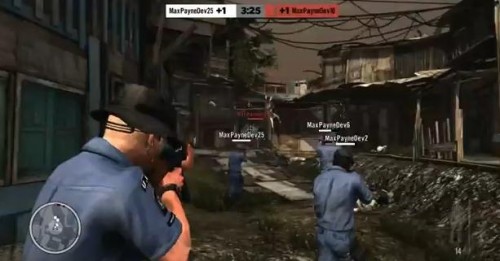
Max Payne 3’s release date is getting closer, and Rockstar have providing a ton of sneak peeks as of late when it comes to the game’s single player mode. Today though, a new video was released that details what many will be curious about, and that is the newly implemented multiplayer mode.
I know, most of the time we see half-assed multiplayer added in at what looks like last minute for story driven titles like Max Payne 3, and most ignore the mode completely after just a few minutes spent. Rockstar do not have the terms “half-assed” in their vocabulary though, and have went out of their way to make this outing both true to the series and enjoyable to all participants.
In the video below, we get nearly three minutes of footage from multiplayer, with many features and modes detailed. The first feature of sorts mentioned is the incorporation of bullet time into the experience. When a player activates bullet time, every player in their direct line of sight also enters the slowdown, and each player must think quick to take out their targets.
Max Payne 3’s flagship mode for multiplayer is none other than Gang Wars. This mode will have story-based rounds of matches using warring factions from the single player game, where the story changes depending on the outcome of each match. Payne Killer is a bit more familiar, with two players cooperatively taking the roles of Max Payne and his partner, Raul Passos as they try to survive against waves of enemies.
You can check out the video in full below, and pick up the full monty of Payne when it hit shelves May 15th.
Developer: EVENT Interactive Publisher: Interwave Studios Platforms: iPad (Reviewed), iPhone, iPod Touch Release Date: March 24th, 2012 Price: $1.99 Buy It Here
Overview
rComplex was a much beloved indie title from 2009. EVENT Interactive has reimagined the running man’s tale to bring us rComplex for iOS. With infinite run games such as Temple Run and Jetpack Joyride cramming iTunes, can rComplex stand above the crowd?
Visuals
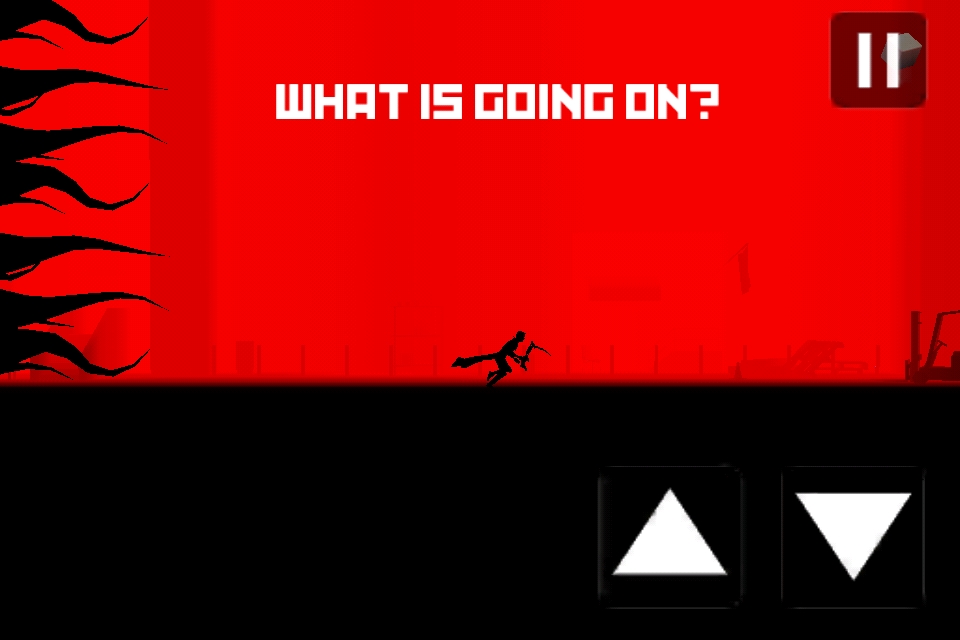
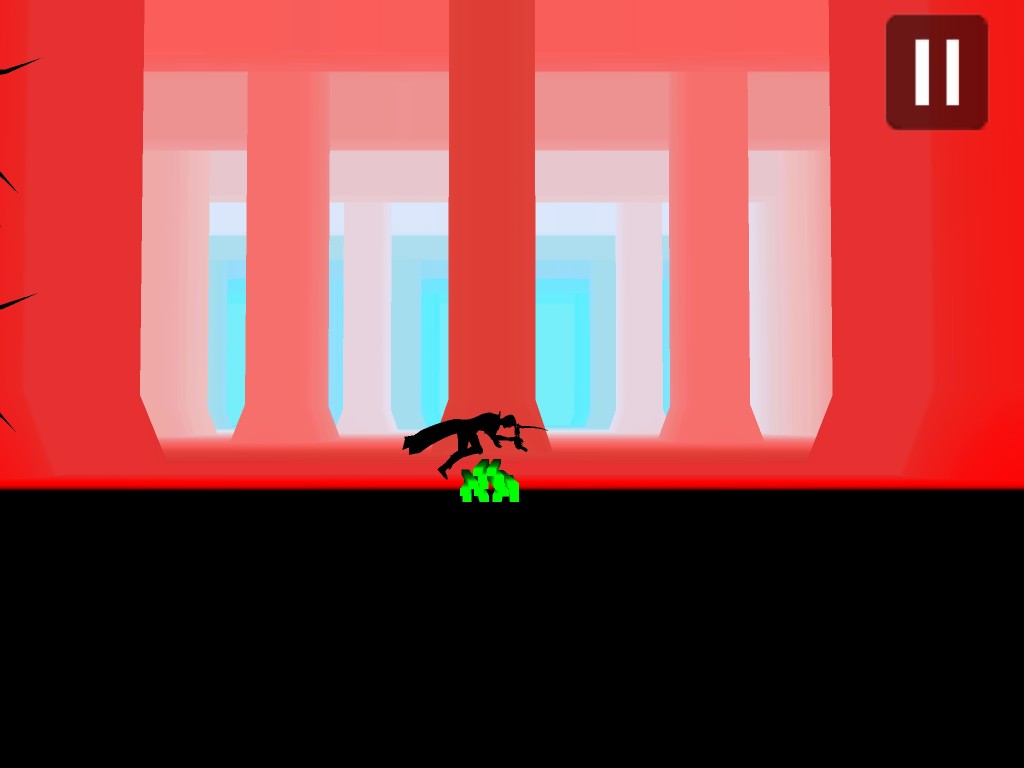
rComplex is a visually stunning experience. Bright reds, blues, and greens contrast sharply against the foreground of black. The style reminds me a little of Mirror’s Edge crossed with Limbo. On both the iPhone 4 and the new iPad, rComplex runs well with no slowdown. All slide obstacles are shown in electric blue and all jump obstacles are bright neon green. Although this is a good idea on paper, it stumbles on execution at times. Some of the obstacles are very small or thin, such as the bicycles, the wire park benches, and the ladders and can be incredibly difficult to see in such a fast moving game. While this is annoying on the larger iPad screens, this becomes hair pulling level frustrating once the game is shrunk down for the iPhone screen. Some the obstacles are simply not designed with iPhone and iPod touch users in mind.
Audio
I have only one major complaint about rComplex when it comes to sound. I want more of it. Indie music legend Roger Hicks provided an amazing soundtrack to the game that is completely addictive and worthy of its own album release. Unfortunately the album would only reach extended play length at best. The music during game play is the same track looped over and over. It is a great track, but I want to hear more. It is utter shame to have such a talented musician provide music for the game but only provide a small handful of tracks. I liken the experience to not eating all day and smelling a great feast being cooked up, then sitting down at the dinner table and being handed a small sampler plate. To say it’s a disappointment would be an understatement.
The only other issue I have with rComplex’s audio experience is the voice acting. It can be a hit or miss experience, there are moments when the voice actor doesn’t sound natural or convincing when delivering his lines. Most of the time, the voice acting is passable, but those awkward moments can be a bit of a shock to the system.
Gameplay
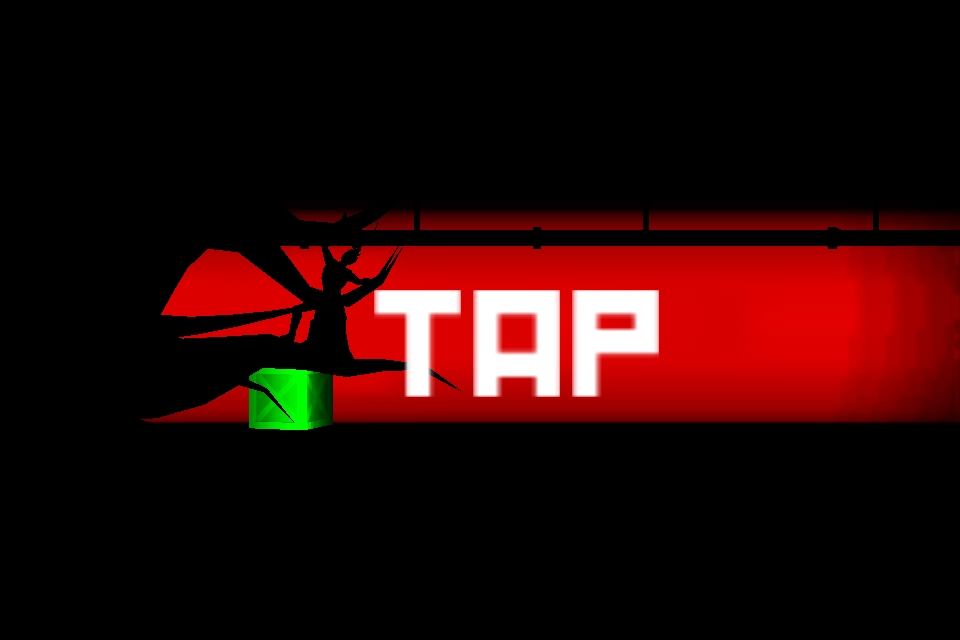
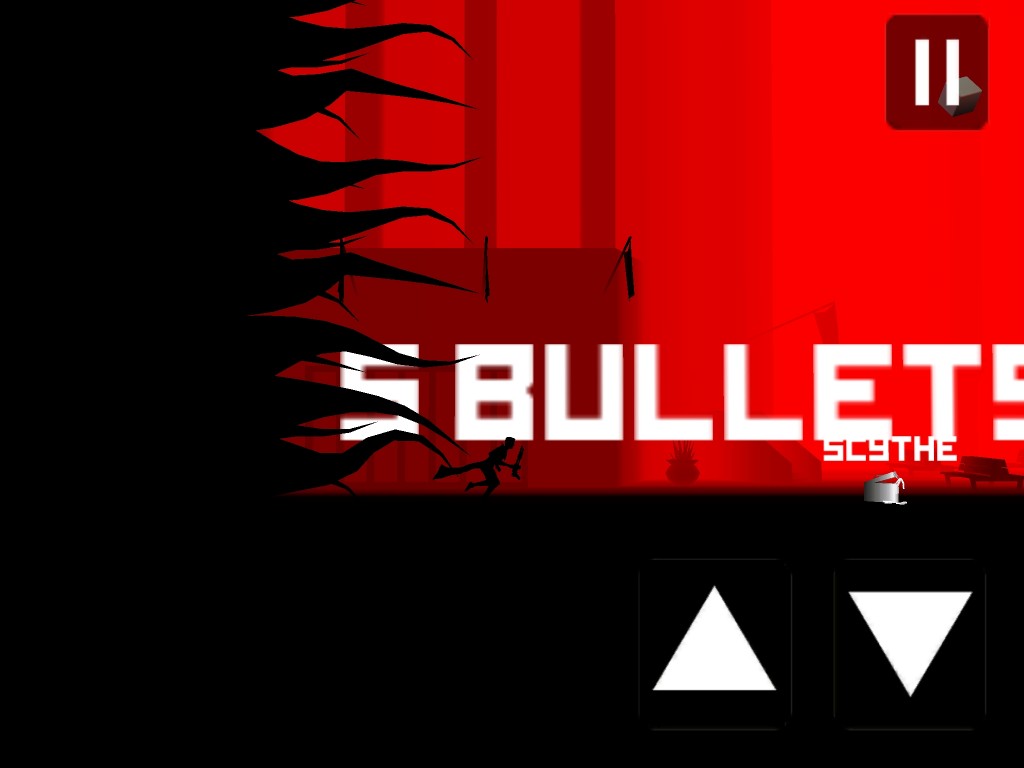
If I could section off the first three levels of rComplex and call it a game, I would immediately hand rComplex 10 capsules out of 10. If only. The game play is simple yet incredibly fun and addictive. You play the running man who wakes up without his memories with a giant wall of tentacles forever chasing you. Leap over, slide under, or swerve around obstacles as you make your daring escape on foot and on motorcycle. When the tentacles come too close, fire off one of your precious few remaining shotgun shells at the tentacles to beat them back for a short time. And when it comes down to it, you have one scythe blade to cut yourself free from the tentacles’ deadly grip. If you are lucky, you will be able to scoop up three more rounds for your shotgun or a new scythe blade. Once in a while you will be able to slide into Zen mode and the tentacles will fall back, allowing you to concentrate on dodging obstacles. Hit one however, and the tentacles come rushing back for your flesh. The story is told through a short comic book style cut scene in the beginning of each level and small flashbacks retold by the running man as you collect memory blocks throughout the run. Although the story is not deep or involved, it’s a nice addition to spice up the game.
Controls are available in two forms, tap buttons and slide. Tap provides two buttons, one for jump and one for slide. The longer you hold them, the further and higher you jump or the longer you slide. I personally prefer this control scheme for the smaller iPhone screen. However for the larger iPad screen I prefer the original slide touch controls. Slide up for jump, slide down for sliding. I personally find the buttons are simply too big and unwieldy to be comfortable on the iPad. Tapping the tentacle monster on the left side the screen will shoot the tentacles on both control schemes. The controls are well thought out and work well in rComplex.
In the first few levels, the game is enjoyable and challenging. There is enough difficulty that you will fail a several times, but not enough to have to fight off the desire to hurl your Apple device into the closest hard surface. But eventually, the difficulty ramps up so high, progressing becomes a matter of sheer luck. The problem lies with the speed obstacles rush towards the running man, the difficulty seeing certain obstacles, and the sometimes shoddy collision detection. A recent patch zoomed the camera back further to lengthen the time players have to react, but it is simply not enough. I also noticed slide obstacles are more forgiving than leap obstacles. But worst of all, there are the odd times your feet clear the jump obstacle but somehow the running man goes face first into the ground. There is great potential in rComplex, but game play issues severely hamper the rComplex after several levels.
Overall
rComplex is an enjoyable game with some serious flaws. It has flashy visuals with a great soundtrack, but needs more music than the same song played over and over ad nauseum. Too much of a good thing does become a bad thing. The game play is incredibly fun in the early levels, but once the difficulty ramps up, it becomes practically impossible to progress. The rComplex is advertised as a game for players with dexterity and mental perseverance, but in later levels, it feels more like a game for the lucky and the borderline masochistic. Thankfully the developers are actively in the midst of addressing the gameplay difficulty. However, until these problems are ironed out, gamers without robotic reflexes and eagle eyes should think twice before purchasing.
Madman Entertainment has announced via press release that they have signed a deal with Hasbro Studios, the TV division of Hasbro Incorporated, for distribution of Hasbro titles.
The new distribution deal means that many of Hasbro’s popular titles will see a release in Australia through Madman Entertainment. Titles such as Transformers: Prime and My Little Pony: Friendship is Magic will now see distribution throughout Australia thanks to this deal broke between the two companies.
This deal further solidifies Madman as one of the leading film and television distribution companies within Australia. Madman plans to release several Hasbro licensed titles, including Transformers: Prime and My Little Pony: Friendship is Magic in June 2012.
What do you think of Madman distibuting Hasbro titles? Let us know in the comments section below.
Following the impressive release on Xbox 360 and PlayStation 3, the PC version of Shoot Many Robots has just been given a solid release date. This 2D shooter platformer will be released as a digital download purchase on the Steam platform on 6 April 2012.
The PC version will support an impressive resolution of 2560×1600 and a blistering frame rate of 60 fps. The game will also feature PC optimised controls and menu interface, and will be fully integrated with Steam matching, Facebook matchmaking, Steam achievements, and integrated voice chat. Gamers who pre-order the game through Steam will get some cool bonuses.
“We’re dedicated PC gamers here at Demiurge Studios, and we wanted to make sure and take the time to do the PC version right,” said Albert Reed, CEO. “We rebuilt the controls for PC and overhauled all the user interface so it won’t feel like you’ve turned your keyboard into a gamepad that makes clicky sounds – every detail has been considered to make this an optimised and seamless experience.”
Unity and Madfinger games, the developers of the hit iOS and Android third person shooter Shadowgun have formed a partnership to release a free sample level project chock full of innovative and unique techniques relating to the Unity Engine. The Unity Engine has multiple features that compliment development for all platforms ranging from a heavy focus on mobile and web based games through to console and PC/ Mac publishing. The project includes a lot of tips and the techniques which Madfinger used in order to fine tune the Shadowgun code to be utilised with the Unity Engine.
For a really interesting read, have a look at the in-depth details regarding Madfingers use of the Unity Engine and how they explain in much more detail how they optimised gameplay in Shadowgun with the engine. They explain everything from Alpha Blending through to character shading in the code which are much efficient and have less of a drain on gameplay and the fluidity of the experience.
Beyond Entertainment has shared some more release dates for their upcoming DVD collections. This time they have confirmed the release of a new collection for both the Pawn Stars and Storage Wars television series.
The first DVD collection, Pawn Stars: Season Two collection, looks into the pawnbroker business by following the pawn business escapades of the Harrison family. The other collection being released is Storage Wars: Season One collection, which is a reality show that follows the adventures of a band of bidders who engage in storage auction and consignment.
Pawn Stars: Season Two and Storage Wars: Season One each have a RRP of $39.95 and both collections will see a release on 2 May 2012.
She is known to many across as the Blog Princess or the Blogging Idol, and by her stage name Shokotan. It has now been confirmed that Shoko ‘Shokotan’ Nakagawa will be starring in and performing the opening theme song for Saint Seiya Omega.
The famous Japanese Blogging Idol has already formed herself an illustrious music and voice acting career, having previously handled the opening theme song of Tengen Toppa Gurren Lagann, ‘Sorairo Days’.
She will be performing the new opening theme for the upcoming Saint Seiya Omega anime series, which will be a new version of the classic opening of the first Saint Seiya series, ‘Pegasus Fantasy’. Shokotan’s version will be titled ‘Pegasus Fantasy Omega’ and will first be heard during the premeire of Saint Seiya Omega on April 1st. She will also be playing the role of Athena in the series.
You can listen to the original series opening below to get a feel of the song, if you have not heard it before. Also you can check out Shokotan’s bizarre blog here. What do you think of Blog Princess, Shokotan performing the opening theme of Saint Seiya Omega? Let us know in the comments section below.
Namco Bandai Games have announced through Weekly Shonen Jump magazine that they have licensed the Hunter x Hunter anime series for adaptation into a PSP game focusing around the Hunter Exam arc. The player will take control of Gon and Killua as they set out to become Hunters.
That is all the information we have on the game as of now, but it is worth noting that the mysterious ‘X’ teaser site that Namco established the other day, that a lot of people speculated to be counting down to a reveal of a Hunter x Hunter game, is still up and running in full on teaser mode at the time of posting. Perhaps there is another Hunter x Hunter game still yet to be revealed?
What do you think of a Hunter x Hunter PSP game? Also what other consoles would you like to see a Hunter x Hunter game on? Let us know in the comments section below.
Bitter Sam Developer: Moon Active Publisher: Moon Active Platforms: iPhone (reviewed), iPad, iPod Touch Release Date: March 15th, 2012 Price: $0.99 (HERE)
Overview
It’s another day, and there’s another physics-based platformer out on the iOS platforms. Bitter Sam involves dropping a surly creature named Sam through over one hundred levels to serve in the twisted experiments of a lab scientist. Is the game’s attitude enough to differentiate Sam’s adventure from the plethora of other options out there, or will it just leave a bitter taste in your mouth?
Gameplay
Sam is a bitter guy, and it’s not hard to imagine why. Being kidnapped by a scientist and forced through descents into various dangerous environments isn’t exactly anyone’s idea of fun.
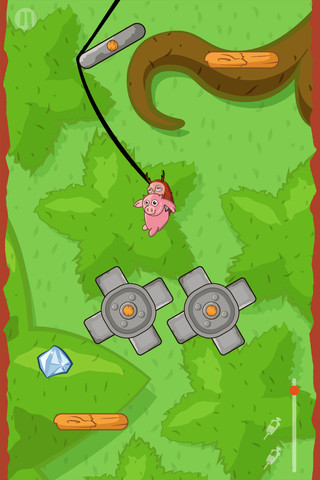
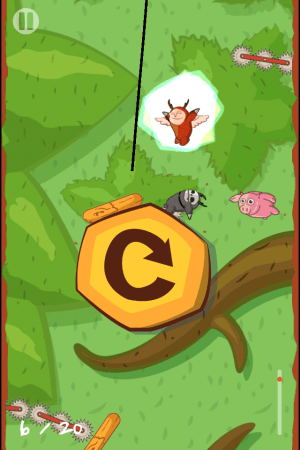
But if he’s to survive, it’s up to you to guide him safely through the game’s levels so he can live to be grumpy another day. Bitter Sam uses simple tilt-based controls. As Sam ropes down each level, you’ll tilt your device left or right to lean him one direction or the other, avoiding spiked bars and saws that can cut his rope until he reaches the end of the stage. There are also power-ups to pick up along the way: Sam can use pigs as objects to destroy obstacles and avoid damage, and he can also pick up blue rope, which will temporarily prevent his rope from being shredded by those pesky saws.
There’s a crystal included on each level, and unlocking further “worlds” (there are five worlds, each with twenty levels) requires that you collect a certain number of these. Some of these are really easy to get, while others require a good deal of level memorization and perfect timing. It’s just difficult enough that unlocking new worlds is a challenge, but you’ll never throw your phone at the wall in frustration. If one level’s crystal is too hard to get, chances are that the next one will be simpler to get.
Despite its polish and responsive controls, Bitter Sam‘s main fault is its simplicity. Between the tower-climbing games, descent games, and physics-based platformers that have come before, the game really fails to bring anything new to the table and it does begin to get a little repetitive. The level design is intelligent enough for this never to become frustrating, but you’ll find it hard to play for extended periods of time. That being said, if you’re looking for something to fill five minutes, Bitter Sam provides a fun experience that has a level of polish to match, a rarity in the world of rehashed, copycat applications.
Audio & Visual
Bitter Sam really shines in its presentation. Not because it’s the most beautiful game out there or because it has a breadth of voice acting, but because the way it presents Sam’s attitude in the way he looks, moves, and sounds as he descends down the game’s levels is remarkably endearing in a fashion that’s almost sadistic.
When Sam bumps into a level’s walls, the way he’s animated and the satisfying “thud” make it almost fun to shove him into them. When Sam dies, he finally smiles, the horrors of his sad life all over, as his soul rises upwards. And all of this is backed with a merry tune that’s a bit more creative than the bog-standard that’s arisen in other cartoon platformers. In essence, when the game uses outstanding art and audio design to make even dying fun, you know it’s doing something right.
Overall
Bitter Sam is a game whose attitude sets it apart from similar titles. While you may find other physics-based platformers with controls as intuitive as the ones in this app, no other game I have encountered on iOS has made dying such a pleasure. Sadism aside, because of the clever level design, every death feels like a lesson you can learn from, and the stages are short enough starting back at the beginning feels like only a small setback. Despite this, you may get a little tired of Sam over the hundred levels of the game, so I advise taking it slow. In bite-sized chunks, Bitter Sam will win you over with its charm and simplicity.
Remember that live-action Japanese drama series based off the Mirai Nikki/Future Diary anime and manga? Well earlier today a trailer for the television series was released online showing off what is the first footage of the series to date.
You can check out the trailer below. The drama series will be titled Mirai Nikki: Another World and will as the title suggest be set in an alternate reality/world. The series will focus on a new character that will be engaged in the battle of future diaries. Familiar characters such as Gasai Yuno however are set to appear predominantly.
Mirai Nikki: Another World will begin next month of the 21st of April. It is currently unknown if the series will recieve simulcast treatment in the West from sites such as Crunchyroll, but as of now it remains to be seen.