Offroad racer Jeremy McGrath had a game release a few weeks ago and now he’s decided to do something good with his share of the profits. Jeremy McGrath has announced that he will be donating his profits to Bethematch.org, a website dedicated to finding bone marrow donors which had found a match for Jeremy’s wife Kim McGrath to be able to get treatment for her Leukemia.
Racing game fans who passed on downloading Jeremy McGrath’s Offroad on Xbox Live Arcade and PSN when it came out, might want to reconsider as Jeremy’s profits will be going to a pretty good cause. Even if not interested in the game Jeremy hopes that people will get tested to be added to the Bethematch.org registry to change a life like Kim’s. Players can check out the Bethematch website HERE. And those wanting to send well wishes for Kim’s treatment now that she’s found a donor can post them to their Facebook HERE.
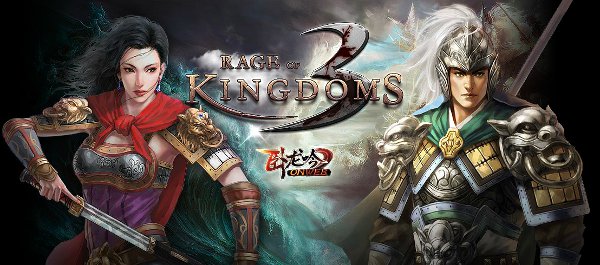
Enough romancing those 3 Kingdoms, a new Free to Play MMO strategy game begins the rage. Rage of 3 Kingdoms is currently in open beta from publisher RMS Entertainment Studio and brings players back to the Chinese 3 Kingdoms to fight for dominance. With over 600 heroes from the period, with more than 100 special abilities and unit types, players will have plenty to choose and explore. Some of the generals are a little harder to get though as players must earn them through different means such as naval scenarios and infiltrating levels, but these can also reward with resources like Crystal and Soul.
Better yet OffGamers is making it even easier to get into the game, offering exclusive Newbie Codes to aid brand new players by providing 100 Gold, 500 Merit, and 2000 Silver to give a little starting boost. Players wanting to check out the beta for this new experience with the 3 Kingdoms can get access from the OffGamers website HERE.
Recently an interesting thread opened up on reddit about Game development, it posed the question “Describe what developing for each console you’ve developed for is like”, I don’t think anyone expected some sort of awesome response. But programmer Cory Bloyd (corysama) responded with a pretty lengthy explanation about his experiences, like mini reviews for each console over the years. You probably could have guessed it, but yes the PS3 is the hardest, disappointingly the Dreamcast didn’t get much of a wrap either. The reviews don’t really go into too much detail, but it gives you the general jist, I was suspicious about this because it almost sounded like someone had just made it up when you read it. But apparently the guy works at Munky Fun, so there you go. See below!
PlayStation 1: Everything is simple and straightforward. With a few years of dedication, one person could understand the entire PS1 down to the bit level. Compared to what you could do on PCs of the time, it was amazing. But, every step of the way you said “Really? I gotta do it that way? God damn. OK, I guess… Give me a couple weeks.” There was effectively no debugger. You launched your build and watched what happened.
N64: Everything just kinda works. For the most part, it was fast and flexible. You never felt like you were utilizing it well. But, it was OK because your half-assed efforts usually looked better than most PS1 games. Each megabyte on the cartridge cost serious money. There was a debugger, but the debugger would sometimes have completely random bugs such as off-by-one-errors in the type determination of the watch window (displaying your variables by reinterpreting the the bits as the type that was declared just prior to the actual type of the variable —true story).
Dreamcast: The CPU was weird (Hitatchi SH-4). The GPU was weird (a predecessor to the PowerVR chips in modern iPhones). There were a bunch of features you didn’t know how to use. Microsoft kinda, almost talked about setting it up as a PC-like DirectX box, but didn’t follow through. That’s wouldn’t have worked out anyway. It seemed like it could be really cool. But man, the PS2 is gonna be so much better!
PS2: You are handed a 10-inch thick stack of manuals written by Japanese hardware engineers. The first time you read the stack, nothing makes any sense at all. The second time your read the stack, the 3rd book makes a bit more sense because of what you learned in the 8th book. The machine has 10 different processors (IOP, SPU1&2, MDEC, R5900, VU0&1, GIF, VIF, GS) and 6 different memory spaces (IOP, SPU, CPU, GS, VU0&1) that all work in completely different ways. There are so many amazing things you can do, but everything requires backflips through invisible blades of segfault. Getting the first triangle to appear on the screen took some teams over a month because it involved routing commands through R5900->VIF->VU1->GIF->GS oddities with no feedback about what your were doing wrong until you got every step along the way to be correct. If you were willing to do twist your game to fit the machine, you could get awesome results. There was a debugger for the main CPU (R5900). It worked pretty OK. For the rest of the processors, you just had to write code without bugs.
GameCube: I didn’t work with the GC much. It seems really flexible. Like you could do anything, but nothing would be terribly bad or great. The GPU wasn’t very fast, but it’s features were tragically underutilized compared to the Xbox. The CPU had incredibly low-latency RAM. Any messy, pointer-chasing, complicated data structure you could imagine should be just fine (in theory). Just do it. But, more than half of the RAM was split off behind an amazingly high-latency barrier. So, you had to manually organize your data in to active vs bulk. It had a half-assed SIMD that would do 2 floats at a time instead of 1 or 4.
PSP: Didn’t do much here either. It was played up as a trimmed-down PS2, but from the inside it felt more like a bulked-up PS1. They tried to bolt-on some parts to make it less of a pain to work with, but those parts felt clumsy compared to the original design. Having pretty much the full-speed PS2 rasterizer for a smaller resolution display meant you didn’t worry about blending pixels.
Xbox: Smells like a PC. There were a few tricks you could dig into to push the machine. But, for the most part it was enough of a blessing to have a single, consistent PC spec to develop against. The debugger worked! It really, really worked! PIX was hand-delivered by angels.
Xbox360: Other than the big-endian thing, it really smells like a PC —until you dug into it. The GPU is great —except that the limited EDRAM means that your have to draw your scene twice to comply with the anti-aliasing requirement? WTF! Holy Crap there are a lot of SIMD registers! 4 floats x 128 registers x 6 registers banks = 12K of registers! You are handed DX9 and everything works out of the box. But, if you dig in, you find better ways to do things. Deeper and deeper. Eventually, your code looks nothing like PC-DX9 and it works soooo much better than it did before! The debugger is awesome! PIX! PIX! I Kiss You!
PS3: A 95 pound box shows up on your desk with a printout of the 24-step instructions for how to turn it on for the first time. Everyone tries, most people fail to turn it on. Eventually, one guy goes around and sets up everyone else’s machine. There’s only one CPU. It seems like it might be able to do everything, but it can’t. The SPUs seem like they should be really awesome, but not for anything you or anyone else is doing. The CPU debugger works pretty OK. There is no SPU debugger. There was nothing like PIX at first. Eventually some Sony 1st-party devs got fed up and made their own PIX-like GPU debugger. The GPU is very, very disappointing… Most people try to stick to working with the CPU, but it can’t handle the workload. A few people dig deep into the SPUs and, Dear God, they are fast! Unfortunately, they eventually figure out that the SPUs need to be devoted almost full time making up for the weaknesses of the GPU.
Episode 08 of CC: Anime is nowlive. Each month, thanks to our good friends at Siren Visual, we will be giving away a prize in a monthly competition held through CC: Anime.
To win, listen to the podcast for the question and once you have an answer email it in along with your name and address to[email protected]. At the end of the month, a winner will be randomly selected from the pool of entries. The winner will then be announced on the next podcast.
This month, we will be giving away a copy of Durarara!! – The Complete Series, on DVD thanks to our good friends at Siren Visual. If you have yet to listen to CC: Anime you can do so here.
Listen to the podcast and then send your answer in along with your name and address to [email protected] Good Luck!
Welcome to another episode of CC: Anime, Capsule Computers Monthly Anime Podcast! In our eighth episode, the CC: Anime crew discuss the latest anime and manga news, take part in the “Anime Anarchy” game show segment, as well their impressions of the Summer 2012 anime season.
We also have a huge giveaway this month. Do you want a chance to win a copy ofDurarara!!– The Complete Seriesfrom Siren Visual? Follow this linkto find out how.
Cast: Luke Halliday, Travis Bruno, Benjamin ‘Linkage Ayexe’ Webb, Simon Wolfe and Philip Federico
We hope you enjoy CC: Anime Episode 08, be sure to let us know what you think.
We all play games to have fun right? Well, apparently all of us who want to find enjoyment in games are complete and utter buffoons lacking even a modicum of intelligence. We all would rather challenge our thumbs instead of our minds. At least according to David Cage, that is.
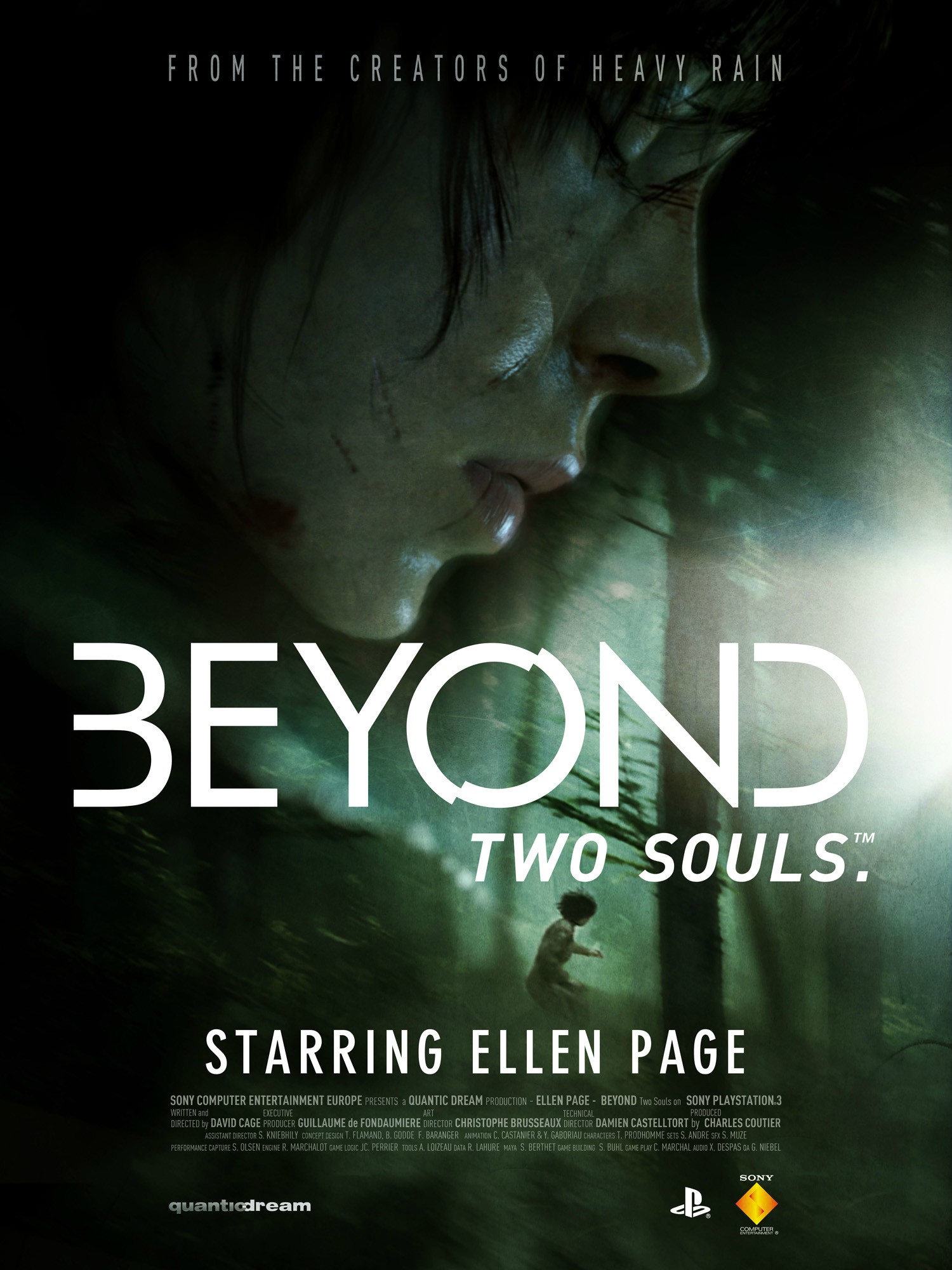
That’s right the pompous head of Quantic Dream is at it again with his outlandish and much reviled nonsensical comments. This time around he is claiming that he knows what you want, even if you don’t know you want it, and that he doesn’t want players to have fun with his new game Beyond: Two Souls.
In a recent interview with EDGE Online, Cage proceeded to grace us with his usual misguided sentiments, most prominent of which is that he’s “not interested in giving [players] ‘fun’.”
Cage went on to state, “My goal is to surprise people, to give them something they want without knowing they want it. I want to create an emotional journey, a unique experience.” He further commented, “I am not interested in giving them ‘fun’, I want to give them meaning; I don’t want to challenge their thumbs, I want to challenge their minds.”
Clearly the man is on one of his ego-trips yet again, but to add a sense of hypocritcal finality, Cage closes the interview with EDGE by saying, “Maybe this is not what most people out there actually want, but this is the goal I set myself with Beyond: to create something different.”
I think this all pretty much speaks for itself.
Do you play games to have fun? What do you think of David Cage? Let us know in the comments section below.
Braid and LIMBO are the poster children of indie games. They’re the ones everyone plays, but they’re gateway indie games. From there some will move onto the harder stuff, fully detaching themselves from the “mainstream” and sneering at anyone ignorant enough to enjoy Call of Duty.
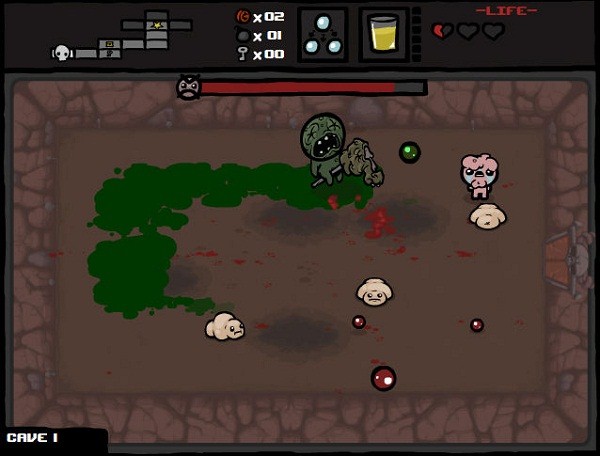
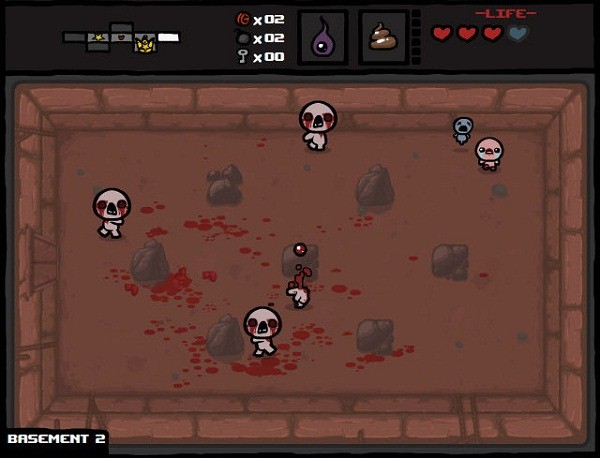
My indie inclination began, as it so often does, with Braid and LIMBO, but the candy that finally lured me into the indie game unmarked van was The Binding of Isaac.
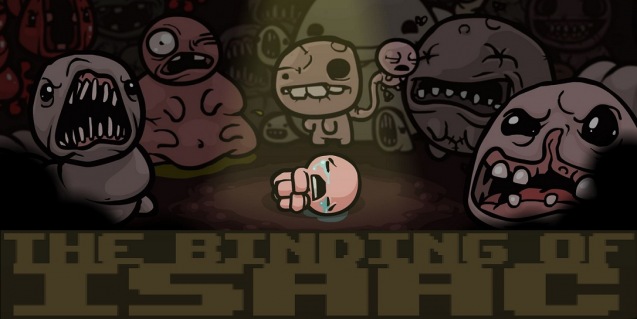
With Super Meat Boy co-creator, Edmund McMillen, at the helm, The Binding of Isaac is a twisted little title that blends dark humour, a creepy aesthetic, and addictive gameplay elements from dungeon-crawling RPGs and old-school arcade shooters.
The game parallels the Bible story of the same name, in which God tests Abraham’s faith by asking him to sacrifice his son Isaac. As Abraham prepares to commit the deed, God intervenes at the last moment, declaring it a rather douchey test of faith.
The game begins with a cute little animation detailing that story, minus the divine intervention. Isaac escapes his mother’s holy wrath by fleeing into the basement, where he must fight deformed, childlike, increasingly-disturbing enemies, and eventually, defeat his mother.
As expected, the game is full of religious references. Biblical iconography is rich ground for games to explore, but many won’t, as it courts controversy – Isaac’s Nintendo 3DS port was cancelled at the last minute due to concerns of blasphemy.
Beyond religion, the game is largely about childhood, told in a deeply personal yet universal manner. It exhibits a childish humour in bodily fluids; demonstrates a hyperactive imagination; presents the parent as a Godlike figure; touches on sibling relationships; and plays on familiar childhood fears of monsters hiding in the dark, of not fitting in, growing up, loss, pain and death.
The way the game combines elements of these two themes makes for a fascinating world, unique among games. Isaac uses items that are either Biblical artefacts – the Dead Sea Scrolls, the Crown of Thorns – or traumatic childhood memories – the severed head of his dog, the spirits of his siblings. He fights enemies with traits, names and designs along the same lines: among what seem to be his deformed brothers and sisters, Isaac faces the Four Horsemen of the Apocalypse and personifications of the Seven Deadly Sins.
There are some truly dark moments, involving themes that are not often examined in video games: during later playthroughs, Isaac journeys into his mother’s womb and fights an unborn fetus, dragging up uneasy implications of abortion.
There’s not a lot of direct storytelling, but we slowly come to know Isaac far more intimately than most video game characters. We see his fears through thoughts and dreams as he lies in the cold darkness, shivering, crying. His extreme vulnerability makes him one of the most sympathetic characters in gaming: his only defense is his own tears, and when he dies, he loses everything. Hell, even increasing his strength via power-ups carries a gruesome price: new abilities will transform Isaac physically, often through painful injuries. Collect a few, and soon Isaac will be a gnarled, barely-recognizable mess.
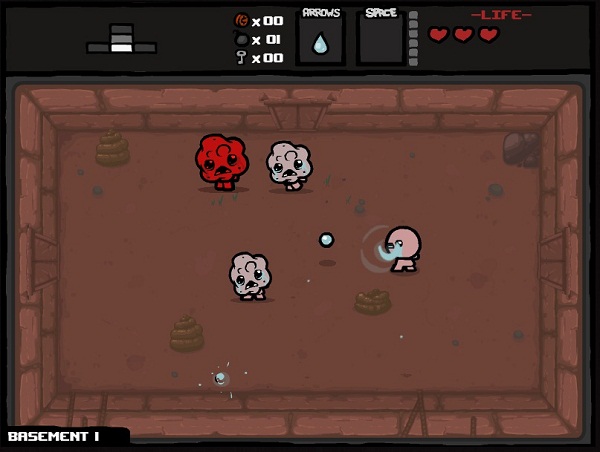
Everything that happens to him is entirely undeserved, and this is where the game design feeds back into the themes. Randomly-generated dungeons supersede the forgiving hand of a designer, meaning that levels are often unfair. You found a golden door, no doubt hiding sweet loot, but there’s no key in the level to open it? Sorry kid, life’s not fair. Game design, and by extension gamers, take for granted that for every obstacle there’s a way around it, but that’s not always how things work.
This occasional unfairness harks back to the early days of gaming, when built-in challenge could all but break players, but success was all the more satisfying as a result. It borrows elements from two old-school, notoriously-difficult genres: arcade, twin-stick, bullet-hell, shooter games like Ikaruga or Geometry Wars, and dungeon-crawling RPGs like Baldur’s Gate or the early Zelda games.
Randomization and perma-death encourage repeated playthroughs, and conjure memories of arcade game design. It all contributes to the game’s addictiveness: a different layout every playthrough means that victory always feels just out of reach. Died? The next try could give you good stuff. Died again? Well, maybe the next one. Or the one after that.
Wrapped around that addictive gameplay core is a great visual style, very characteristic of Edmund McMillen. If you’ve seen Indie Game: The Movie, you’ll recognize his personality and style, which the film explores in relation to his previous project, Super Meat Boy. He discusses a love of drawing monsters as a kid, and the artwork shown looks very familiar – obviously McMillen was in his element designing the disturbing creatures Isaac faces.
Perfectly complementing the visuals is Danny Baranowsky’s haunting soundtrack. Reviewing games, I always have the most trouble discussing the sound design. I just don’t have the musical vocabulary to explain why I like or dislike something. But even to someone as musically handicapped as myself, Baranowsky’s compositions perfectly capture the emotions of the game: each piece of music is at once mysterious, ominous and unnerving.
The Binding of Isaac has all the hallmarks of a great indie title: it’s modest in scope, with massive replay value, genuinely addictive gameplay, and an incredible art style and soundtrack. But its appeal runs deeper than that: it feels like the most personal game I’ve ever played. Isaac’s fears are relatable, and in revealing them, McMillen has bared his soul creating this game.
Disney are notorious for having limited home releases of their classic movies – their Platinum and now Diamond ranges will hit shelves for a year or two and then disappear into ‘the vault’, leaving titles like Beauty and the Beast and the Lion King unavailable, often for years. The Diamond range is the most recent series of releases and is the first range to come in the Blu-ray format.
Fans of the classic Disney toons of yesteryear will be pleased to hear that 101 Dalmations and it’s follow up, 101 Dalmations 2 London Adventure are both heading for a release on Blu-ray on August 15 this year. Although 101 has seen a relatively recent release on DVD (2008), Blu-rays of remastered animated films are often an incredibly improved experience that are more than worth a revisit.
Both movies will also release on DVD and digitally, with the original film offering a highly extensive selection of extras, including deleted songs, original TV spots from 1961 and a good dose of behind the scenes features. As usual with recent Disney releases, the Blu-ray will be accompanied by a DVD to make sure that every member of the household is kept happy.
Today Viz Media announced that they are going to be offering the Blue Exorcist manga digitally a full three months before the release of the physical version of the same volume. This will begin with the eighth volume which has already been released digitally, while those who prefer a physical copy will need to wait until November 6th.
For those who don’t know Blue Exorcist follows the story of a boy named Rin Okumura who was raised by a famous exorcist. One day however he learns that he is in fact the son of Satan when Satan himself slays his protector and father figure. Vowing to get revenge, Rin vows to destroy Satan and learn how to become an exorcist.
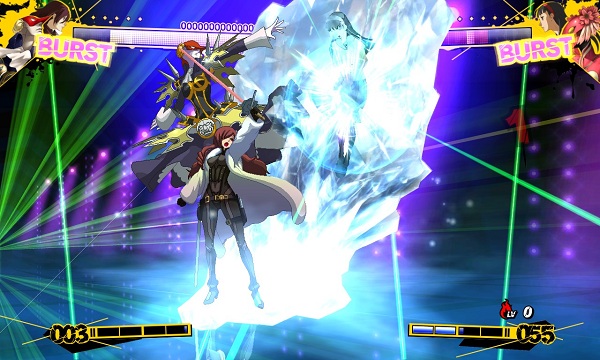
Interestingly enough, the Xbox 360 version of Persona 4 Arena has been having issues with its online play. Atlus has acknowledged the issue and stated last week that they were investigating the problem. Gamers in the West were concerned about this news, as unlike Japan the Xbox 360 version of titles often sells equal or not better than their PS3 counterparts.
Well today the game’s official blog was updated by director Kazuhisa Wada. In this update he apologized for the issue and stated that the developer of the game, Arc System Works is working on a patch for the game and in fact it has already been completed. Now all gamers have to wait for is testing and authorization. It is good to know the patch is almost already ready and this means that the patch will likely be ready for release in North America when Persona 4 Arena hits stores on August 7th.









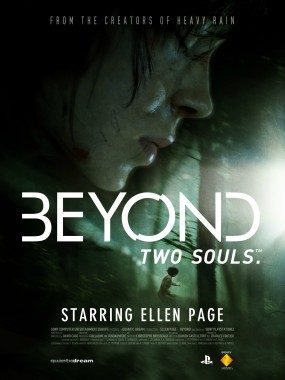 We all play games to have fun right? Well, apparently all of us who want to find enjoyment in games are complete and utter buffoons lacking even a modicum of intelligence. We all would rather challenge our thumbs instead of our minds. At least according to David Cage, that is.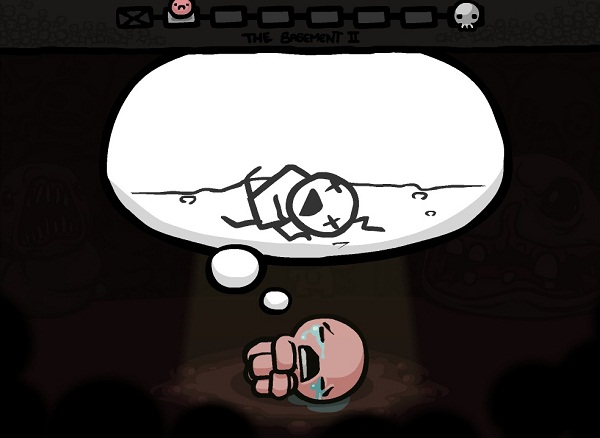

 Today Viz Media announced that they are going to be offering the Blue Exorcist manga digitally a full three months before the release of the physical version of the same volume. This will begin with the eighth volume which has already been released digitally, while those who prefer a physical copy will need to wait until November 6th.