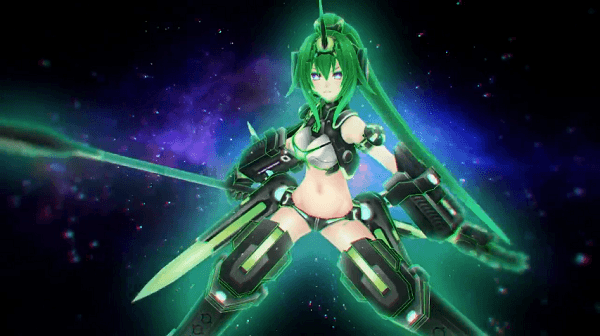
With Hyperdimension Neptunia Victory II set to be released in Japan on April 23rd for the PlayStation 4, Compile Heart has chosen to release the opening video for the game. You can check out the video below where not only are we given another look at the older version of Neptune as well as some of the mascot characters in the title but also a look at the recently revealed Next transformations for Purple Heart, Green Heart, White Heart, and Black Heart.
Also shown is Uzume, a new CPU Goddess, that is capable of transformation where, unlike the other Goddesses, will see her act as a younger lighthearted version of herself.
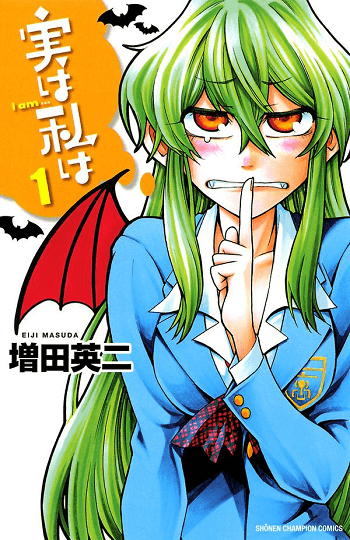
Earlier this week Seven Seas Entertainment was teasing an announcement concerning some new licenses and a few days ago they delivered. The company has announced that they have acquired the license for Kashiwa Miyako’s The Testament of Sister New Devil, also known as Shinmai Maō no Testament, as well as Eiji Masuda’s Jitsu wa Watashi Wa manga.
It is worth noting that the localized name for the latter manga is a bit strange as it is now My Monster Secret. The first volume for The Testament of Sister New Devil is set for release in February 2016 while the first volume of My Monster Secret will be released in January 2016. Of these licenses, the first series currently has an anime adaptation airing while the latter currently has an anime adaptation planned.
For those who don’t know, Jitsu wa Watashi Wa is a romantic comedy manga following a boy named Asahi Kuromine who is terrible with keeping secrets though he has always managed to keep his crush on the mysterious girl Youko Shiragami hidden. Then one day he manages to find out that she is in fact a vampire, and a rather strange one at that. Now that he knows her secret, he plans on keeping it as best he can while using this new found closeness to spend time with her despite the numerous other strange oddities that appear around the school.
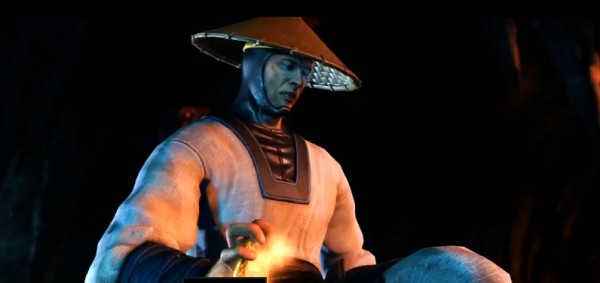
The other day Mortal Kombat X had quite a “brutal” reveal, and now we have some meat to go along with it (not that Meat). Today, Netherrealm have dropped a trailer, detailing the story for Mortal Kombat X, and it seems to be quite involved. While the previous installment was more of a reintroduction of sorts to the tale, this version looks to carry much more weight with Raiden leading a pack of new combatants yet again.
I won’t spoil it, but quite a few veteran fighters can be found within the clip, as well the new faces such as Cassie Cage. Check out the clip below while trying to ignore the fact that Goro is a pre-order bonus (c’mon Netherrealm, he is a mainstay), and get ready for MKX to drop next month.
Earlier this year Bandai Namco shocked the Western gaming scene when they announced that they would be localizing J-Stars Victory Vs.+ for release in North America and Europe for the PlayStation 4, PlayStation 3, and PlayStation Vita. While no release date has been announced as of yet, English gameplay footage of the PlayStation 4 version has recently made its way online and can be found below.
For those who haven’t been following the game, J-Stars Victory Vs.+ is a crossover fighting game featuring characters from numerous popular Jump series including well known characters such as Goku from Dragon Ball Z, and lesser known ones such as Medaka from Medaka Box.
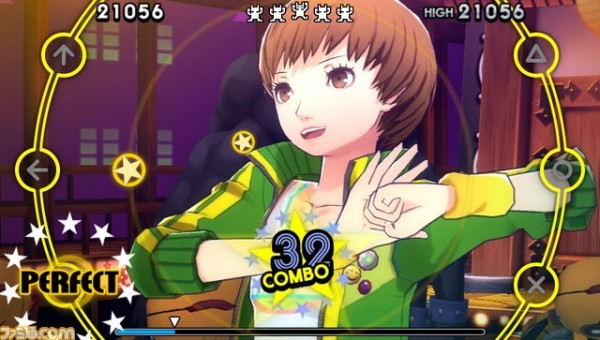
A pair of new trailers for Persona 4: Dancing All Nighthave been released by Atlus and they happen to focus on the Protagonist of the game, generally known as Yu Narukami, and Rise Kujikawa. It is worth noting that these trailers are the Japanese release for the game which means that the Japanese voice actors are voicing the same characters as before, though hearing Rie Kugimiya as Rise takes some getting used to.
Following the incident in Yasoinaba, Rise has returned to her idol work and Yu happens to meet up with her in the city where she asks him for help before calling in the rest of the Investigation Team to help solve the problem.
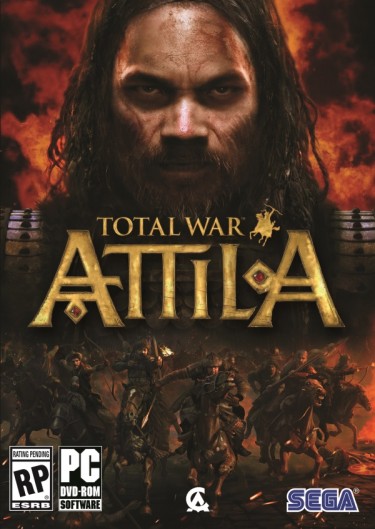
After finishing up their terrifying adventure in the horror genre, Creative Assembly is returning to their strategic mainstay, the Total War franchise. The franchise is venturing into the often forgotten era between the collapse of the Roman Empire and the Middle Ages in Total War: Attila. Gamers will take control of one of the many factions battling for power and lead their armies into battle while managing the political intrigue at home.
Story
After several centuries of Roman power, the Roman Empire has split into two and the Huns are invading from the east. The power vacuum created by the split has left many factions fighting over the remaining pieces. The grand campaign will let players choose one of ten factions and lead them to glory. Beyond the initial cinematic setting the historical stage, the real plot will be the one the player creates from success and failure.
Gameplay
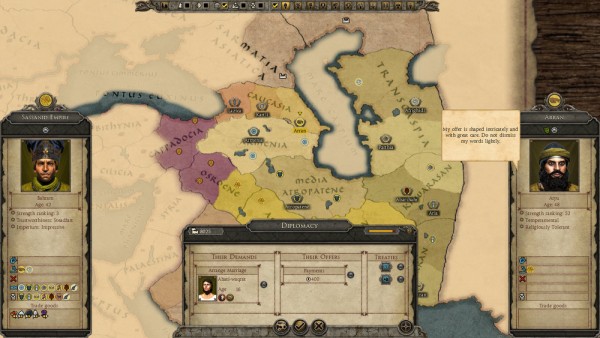
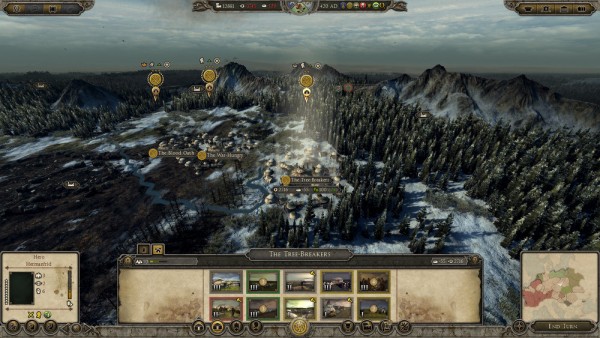
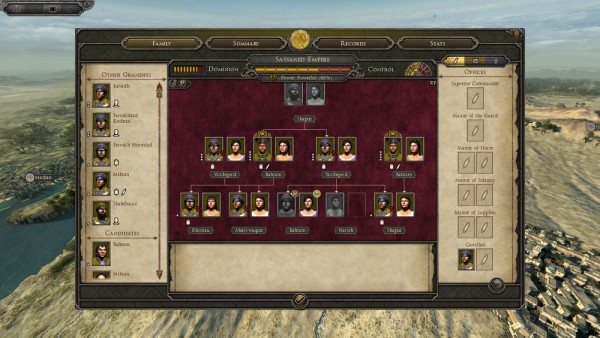
Total War: Attila plays much like previous titles at its core. The campaign mode gameplay is a turn based strategy where players will build their armies and their kingdoms. Players will start out with a small empire and a ruling family. From there, they will begin to build their cities, research technology, make friends, and start killing off enemies.
Whether through more peaceful means or through military conquest, players will need to complete a series of objectives to claim victory. There are three levels of victory, minor, cultural/military victory, and major victory. Each have their own set of requirements, such as surviving to a certain date, controlling a certain number of territories, and so on.
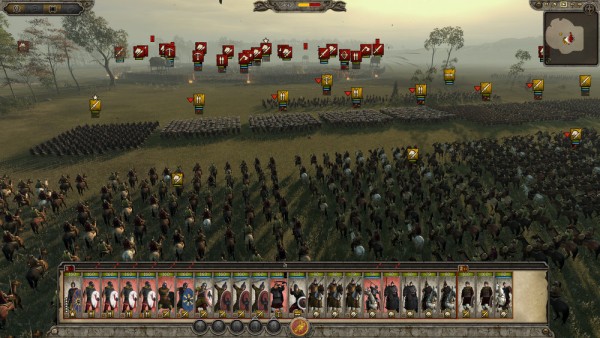
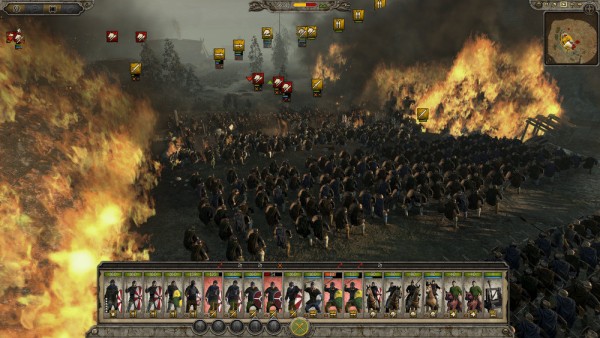
Conflict can be sorted out by leading the men into a real time strategic battle or allowing the computer to come to a decision for the player. Unless the battle is completely pitched in the players favour, it is almost always the better choice to let the player command their troops in battle. Unlike more traditional RTS titles like Starcraft and Command & Conquer, the focus in Total War: Attila is troop movement and positioning. Players will face off in a battle against the enemy with their army numbers already established. With a maximum of 20 units to begin and another 20 for reinforcements that will march into battle after a short delay, a successful commander must be able to position their troops for the greatest tactical advantage and strike at enemy weaknesses with the correct unit. Creative Assembly builds on the simple premise with unit morale, exhaustion, ammunition types, and formations, creating a surprisingly complex battle without need for resource management or special abilities.
Creative Assembly has made a valiant effort in making Total War: Attila as newbie friendly as possible. The prologue campaign serves as an extended tutorial and the advisor provides a stream of helpful gameplay advice. With the difficulty cranked down to the easiest level, the game is still pretty daunting to those new to the genre. Part of the challenge comes from the sheer scope of the game. Managing internal politics, external diplomacy, cities, and the armies is a lot to digest at once. Although the prologue campaign tries to ease new players into the game, there is still a lot for a new player to learn in such a short period of time.
There is a ton of content in Total War: Attila, making its $44.99 USD asking price quite reasonable. The grand campaign has a starting scenario for each of the ten factions that range in difficulty. Campaigns can be played solo or with others. For those who would prefer to skip the turn-based kingdom management and get straight to the fighting, a variety of battles are available in single and multiplayer. Notably, players can participate in some of the most famous battles in the era in Historical Battle mode.
The controls in Total War: Attila are solid. As most with most RTS titles, the game has hotkeys up to the nth degree and those migrating from other genres will be at home with the WASD camera controls. The combat UI is well designed, lining the bottom of the screen with unit commands and keeping a full list of units and their statuses prominently displayed at the bottom of the screen. Troop position uses a drag and drop system that is so easy that it only takes an extra drag to have the unit facing in the exact direction and formation you may desire. The campaign map’s UI is a little more complicated and convoluted. A lot of important screens have been banished to unlabeled buttons at the bottom of the screen, making it a bit more challenging to master.
Visuals
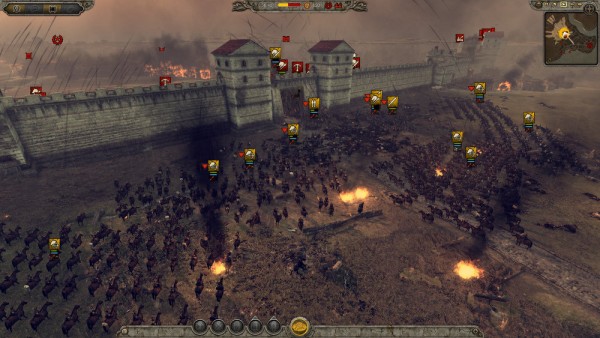
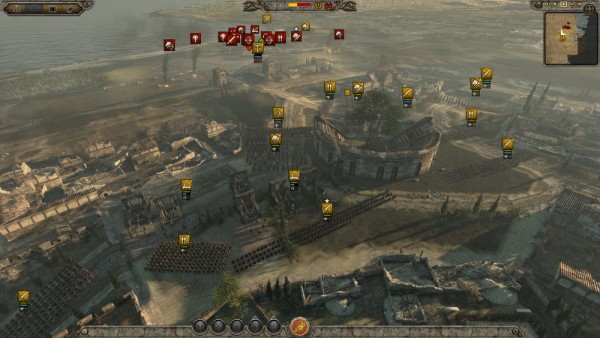
Total War: Attila is an excellent looking game. The landscape is detailed and lush. Once fights begin breaking out, the ordered units begin engaging in chaotic skirmishes that is quite a sight to see. It is very easy to forget how good the battles look in the game when players tend to be obsessed with the larger picture, but remember to zoom in once in a while and enjoy Creative Assembly’s attention to detail.
On the hardware side, Total War: Attila can be demanding. I noticed that particularly nasty sieges can cause frame rates to drop substantially. Good news for those with weaker computers though, the game has quite a few options that can be dialed down to support aging systems.
Audio
The soundtrack is a finely composed piece of work. It strikes the right notes of epic and exotic, which fits in perfectly with the game’s Dark Ages theme. It is an absolute shame that the soundtrack is not available on its own, while soundtracks for previous titles like Shogun II: Total War are widely available. The sound effects have also been treated to an equally solid performance. Small touches like hearing the noises of nature when the camera is zoomed in is a nice touch.
In stark comparison to the soundtrack, I found the voice acting to be extremely weak. The voice actor behind the advisor does a good job of his lines, but the remaining tends to range between just acceptable to downright cringe worthy. Part of the problem is that the lines written for these actors are a bit lame to start off with, but poor base material is little excuse for how utterly poor some of the acting is.
Overall
Total War: Attila is a solid title for anyone into RTS games. It is a decent choice for people new to the genre who are willing to muscle through a serious learning curve for a big payoff in the end; however, those looking for an easier entry into the genre should pick another game. Total War: Attila combines solid gameplay, great visuals, and a stellar soundtrack into one polished RTS.
Capsule Computers review guidelines can be found here.
We are getting close to Wrestlemania. The Grandaddy of them all, the Super Bowl of Sports Entertainment. WWE builds the first three months of every year towards one day that defines the rest of the calender. This is where careers are defined, memories are made, and legends are born.
If it were only that easy. Not every WrestleMania is laced in gold, and not every match has been a showstopping experience over the years. That is why we are here today, folks. While we will eventually get to the best of the best for this yearly show, its time to reflect of the worst moments in the history of WrestleMania. Doing just that, you can not even reflect upon a bad moment without recalling sad circumstances where one Superstar became guilty for overshadowing another, taking away that moment of success for another. It can happen on a personal level or a larger scale, and this list covers the worst limelight thieves ever to strap on boots.
So, let’s begin, shall we?
5.WrestleMania 9: Yokozuna vs Bret Hart – The Hogan Show
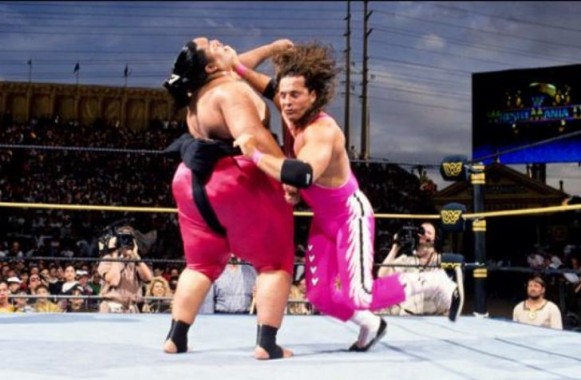
So this match didn’t start off that bad, to be honest. After a bit of build-up, Bret Hart and Yokozuna went one on one for the WWF Championship. This was the main event of a very forgettable WrestleMania, and it could have been serviceable as such if the original thought processes behind the pairing actually stuck. Bret Hart had very good chemistry during this match with the big man, and the whole gimmickry surrounding the fact that Bret was a technical wrestler and had to change his entire style in order to win made him an instant underdog. I know some hate these bouts, but I have always been a huge fan of the concept alone. This was not David vs Goliath, it was Einstein vs Goliath, as one man had to use his brain in order to come up with a strategy to defeat a large foe, and the crowd was mostly into it.
The crowd however did not have the “privilege” of listening to a special guest commentator Randy Savage. Sure, this was sort of awesome, but Savage was not good at calling this match and spent most of it hypothesizing about if he could take on Yokozuna. The number one rule of ringside commentary is not to up-sell yourself over the in-ring competition, and while Savage was fine, he did not do Bret or Yoko any favors with his words. After around eight minutes of back and forth, Mr. Fuji blinds Bret, allowing Yoko to get the pin. Sure, short matches suck, but we were not even ready for what would come next.
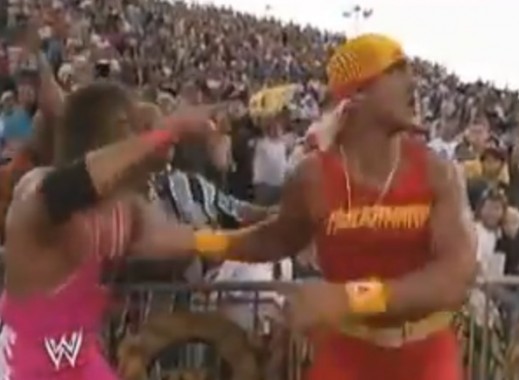
Hulk Hogan came from out of nowhere, intruded upon Yokozuna’s moment, and then managed to get his own match and win the WWF Championship in less that thirty seconds. What just happened? It was terrible, it was disgusting, but the crowd was happy. Back then, smarks were not a thing and people were just happy to see their favorite wrestlers live. It was all about the experience, and this match is really where a turning point would take place and fans would simply decide with their voices on who to support. Bret Hart went on to be one of the most beloved entertainers in history, Yokozuna fully recovered- winning the title again later that year, and Hogan kept being Hogan in every promotion he would visit. I wouldn’t call it the birth of the smark, but it was a breaking point – where change was needed and fans could finally see how backstage politics worked. It wasn’t about who they wanted to win or making a star, but instead another way to give Hogan a title he did not need at the biggest event of the year. In retrospect, the fans hate this match, but back then – it just another reason to feed into Hulkamania, brother.
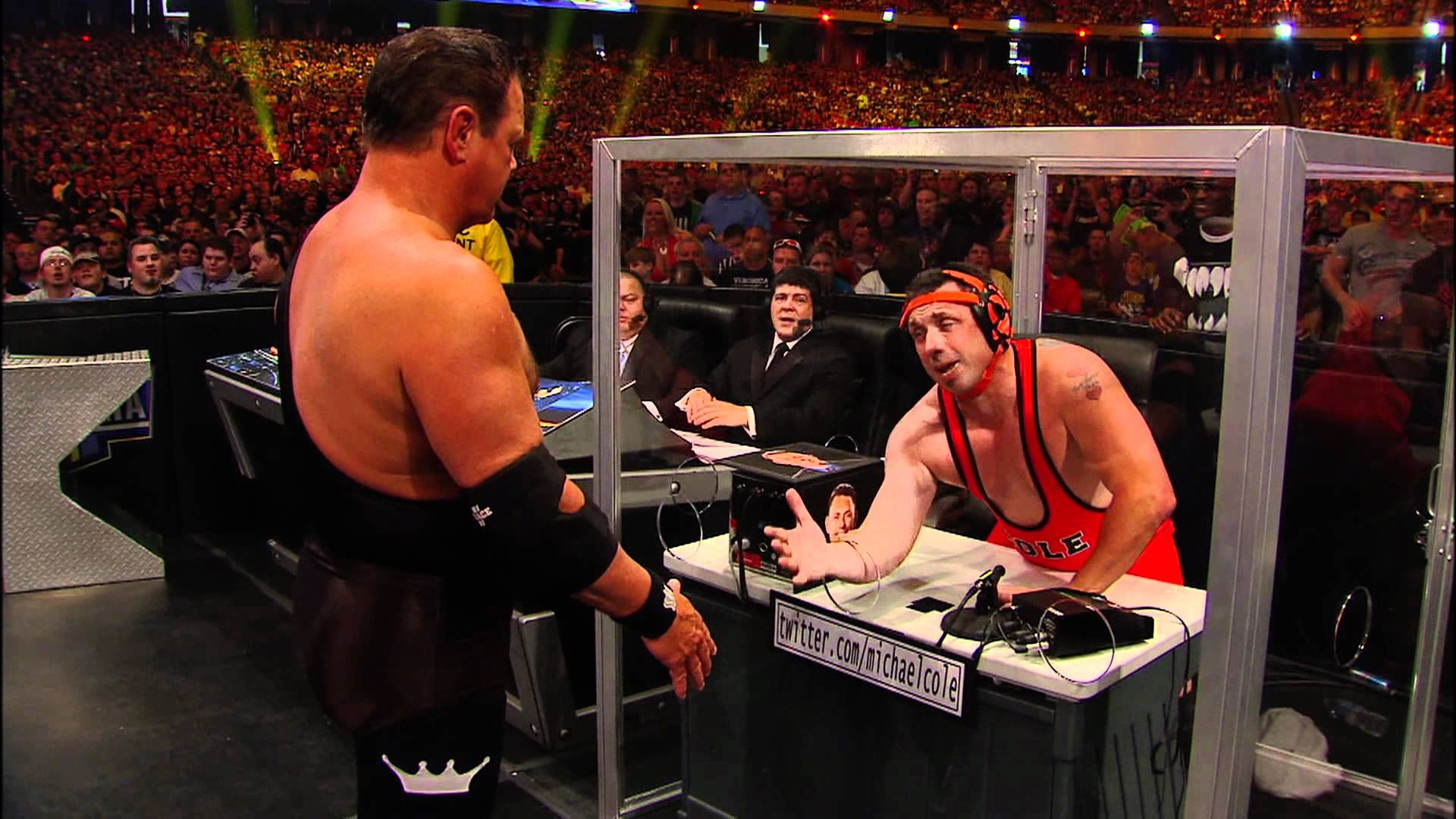
4. WrestleMania 27: Jerry Lawler vs Michael Cole – For Far too Long
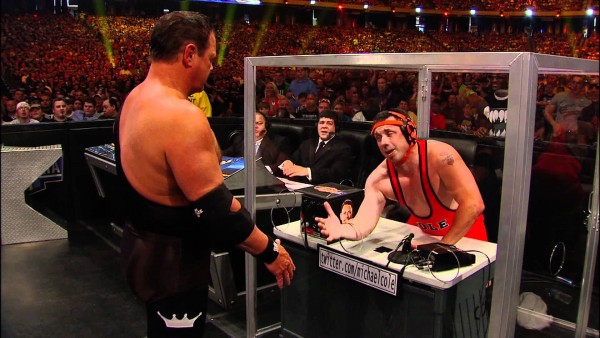
There isn’t a lot to say about this terrible match. I would not even have it on this list under normal circumstances, as lets face it, it kind of can be interesting to see the commentators duke it out, especially someone as seasoned and sharp as Jerry Lawler. Sadly, nearly 27 agonizing minutes of promos, match (if you want to call it that) and Stone Cold shenanigans took away from what could have been another person’s spot. Sure, Cole has earned a piece of the pie over the years, but it was like the writers just wanted to keep adding more and more to this match – and it didn’t even conclude the feud as it ended in a disqualification. A voice – or the “Anonymous General Manager”, called a DQ, to which Stone Cold accepted. Fans should be grateful that since this match, there has not been a lot of commentary feuds, and Cole and Lawler have since made good with each other.
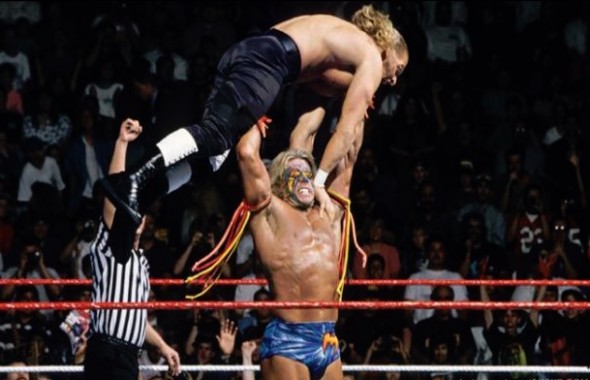
3. WrestleMania 12: Ultimate Warrior vs Triple H – Warrior Rises
You ever wonder who create the monster that buries talent that is Triple H? Well, that would be none other than The Ultimate Warrior. Warrior was primed for a huge return to Wrestlemania, fighting Hunter Hearst Helmsley in what was one of the most disappointing efforts of all time. Triple H delivered a pedigree right off the bat, but without even missing a beat, Warrior rose up, hit his signature moves, and got the lightning fast win over the cerebral assassin. At least Sable was there, I suppose?
Like Bret Hart, this did not hurt Triple H whatsoever as c’mon, the man is the COO and married to Vince’s daughter. It is however an embarrassing match to watch and if you are one of those wrestling fans who like to show your non-interested friends good matches to get them hooked – the absolute last piece of footage that should ever be shown. Warrior passed away in 2014 and while this match is still terrible, it does kind of add to that stubborn charm that he embodied in his larger than life personality.
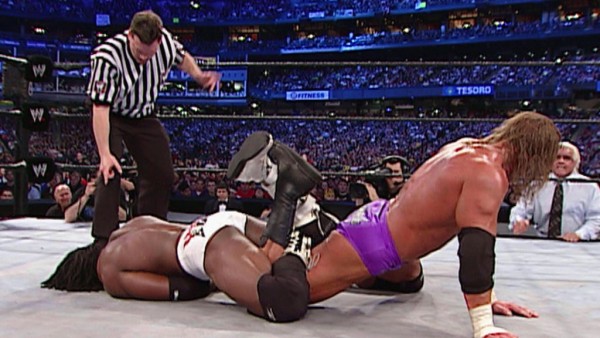
2. WrestleMania 19: Booker T vs Triple H – HIT THE MUTE BUTTON!
A lot of you may remember this as a decent bout with a huge build-up. Booker T finally brought the Houston Hangover out of his arsenal, and we got to see a very technical Triple H. If you have fond memories, un-mute the television and then watch this match. Leading up to Wrestlemania 19, Triple H hounded Booker about his criminal past. It was a sterotypical storyline that was nearly as bad as the Katie Vick scenario, but it worked to hold the feud together between the two until Wrestlemania 19 took place.
Before the bell even rung however, Jim Ross and Lawler started bickering and taking sides and it was on. For the entire first half of the match, fans at home had to hear these two yell at each other over who was right and who was wrong and constantly relive Booker T’s merits over and over. Its over-acting at its finest and completely soiled the match for many listening in, expecting to hear such a great team call a match. Normally, Ross and Lawler hit it out of the park, but I remember this match very clearly and while it was nice to have backstory, it was not a good thing to hear Jim Ross nearly lose his breath from yelling at King over and over. This bitter back and forth subsided and both men calmed down (though JR was the main one who was agitated), but over the years this one match that sticks with me for all of the wrong reasons. This match is wonderful, but due to poor commentary, it comes in at this spot as both men lost the limelight entirely that night.
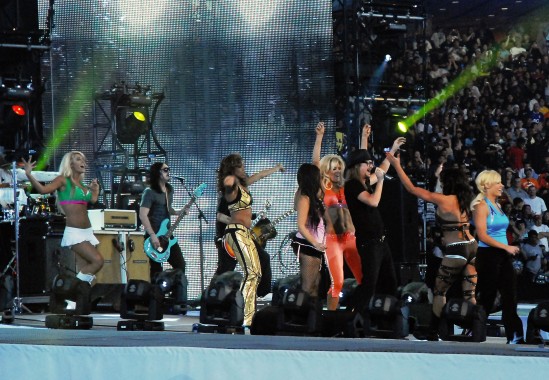
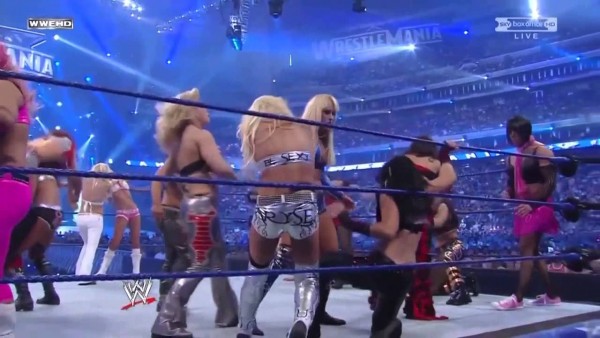
1. WrestleMania 25: Divas Battle Royal – Kid Crock
I understand the premise of a musical guest for a wrestling event. These events are a big deal, and having a decent act to lead into a match can honestly do a lot to make the show feel that much more special. Kid Rock however was terrible. Performing a mini-concert of outdated songs, this musician definitely got his Mania moment by destroying a match that would not have been good, but ended up taking terribly.
You see, this wasn’t just any Divas Battle Royal, it was a homecoming for Divas who paved the way for the division. Current talent was joined by older faces, eager for one last moment to shine in the business. Entrances are the way to do this, as we get to know who is in the match and soak in a bit of nostalgia at the same time. Much like the gimmick battle at Wrestlemania 17, this match featured a lot of divas, including Sunny, Molly Holly, Victoria, and…well….Joy Giovanni? Instead of having entrances, we just saw all of the divas head to the ring and hop in during this Kid Rock concert, leaving fans scratching their heads as to what was happening. No one on commentary knew who was in the ring outside of one or two divas being eliminated, and the ring work was atrocious due to the large amount of chaos happening all at once. I like the Divas, and Santina winning was odd, but still humorous in its own way, but this match was disrespectful, poorly executed, and a stain on a division that has never really recovered from the joke WWE played on the Divas during what was supposed to be a fun way to pay tribute.
So there you have it. All of these moments are our personal worst, but don’t worry – the best is yet to come. I can say that I had a ton of honorable mentions, but I find Giant Gonzalez and Undertaker to be just a hair better that our contenders here, and who doesn’t love some fun filler? WrestleMania 31 is right around the corner, and let us hope that every moment is golden for the year of 2015.
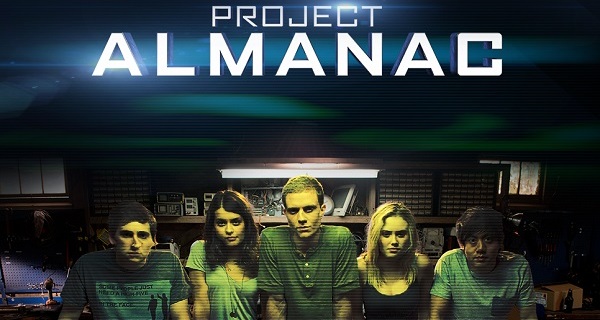
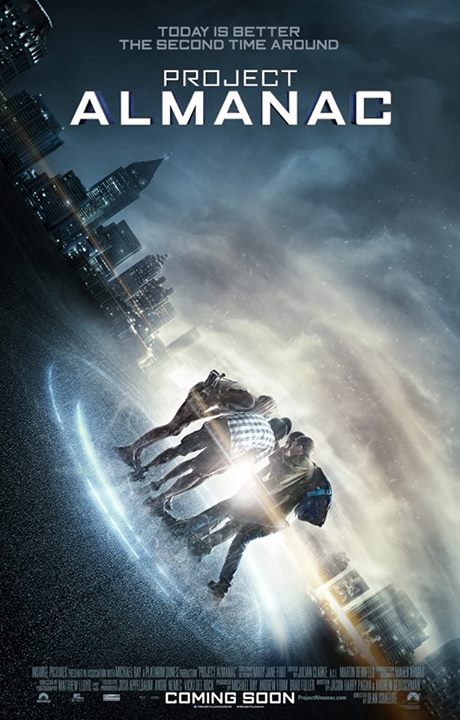
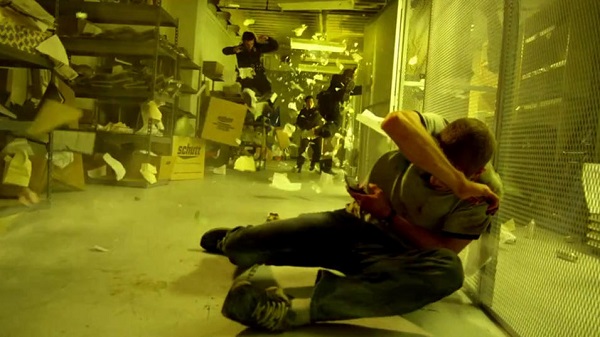
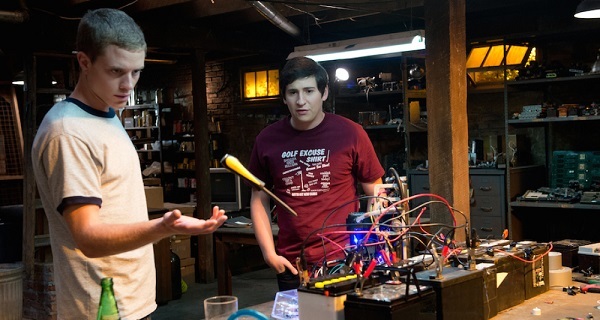
To coincide with the theatrical release of Project Almanac, Paramount Pictures has released a number of behind-the-scenes featurettes with the actors and director providing hints about the film’s plot as well as showcasing some of the film’s more interesting special effects.
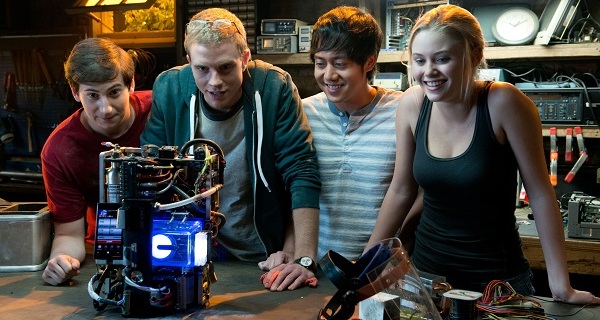
The film follows the journey of a group of teenagers who build a time and must deal with the consequences which arise from messing with the timeline. The film is being made by Insurge Pictures, MTV Films, and Platinum Dunes (A production company created by Michael Bay). It is directed by Dean Israelite and stars Jonny Weston, Virginia Garnder, Allen Evangelista, and Same Lerner.
You can find the video below and you can also read our review of the film, here.
When you’re growing up, it’s common to have fantasies about having powers which would allow you to have an advantage over your peers. For myself, I was always interested in being able to relive specific moments and change them in hindsight through some manner of time travel. Tapping in to these fantasies and exploring the possible consequences is a popular trope within sci-fi and can be found in a lot of the genre. Recent films like Chronicle engaged in a similar exploration of a teenage power fantasy. It is in this context that I explored whether Project Almanac can tap into the same teenage fantasies.
Story
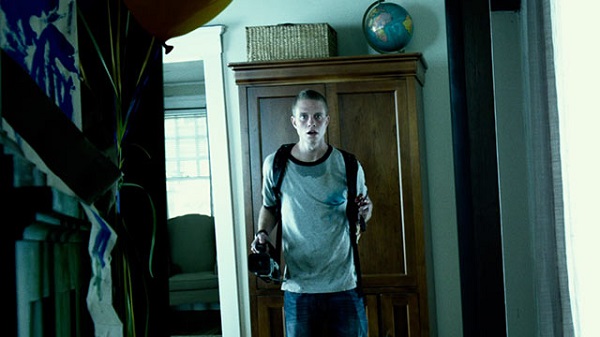
The narrative follows David Raskin (Jonny Weston) as his friends and his sister help him with his application to study at MIT. His attempt is successful, but his application for a scholarship to cover his tuition fees is not. His unemployed mother is forced to sell their home and so David turns to investigating his deceased scientist father’s work to find if there is anything he could use to obtain a bigger scholarship. While searching through his attic, he finds a video recorder which appears to show footage of the present day David attending his own 7th birthday. Further investigation of his father’s basement leads to him and his friends finding a device which allows them to travel through time. Understandably, playing with the timeline leads to unexpected complications which David and his friends need to resolve.
From the outset we see that David and his friends are quite intelligent and practical. The film takes great pains in trying to establish the role that these protagonists have in highschool as being at the bottom of the social hierarchy. They are nerds, through and through. This does work to set up their actions when they finally acquire the power of time travel as they go back to pass exams, get revenge on bullies, and win the popularity of their cohort. This is the awesome concept which the trailers for this film so eagerly suggest: what happens when teenagers get their hands on a time travel device and mess with causality? It’s unfortunate then that this concept is only explored in a very shallow and heavy-handed manner.
The plot at various stages appears to hint at some greater mystery which then never ends up being developed. The prime example of this is the dramatic build up around David’s father who died under mysterious circumstances on the same day the footage of David in the past was made. When the narrative catches up to that moment in the film, the resolution is incredibly anti-climactic. It’s almost as if the director decided to pull out Chekhov’s gun, put it on the table between the audience and themselves before running off to do something completely different.
This tactic could certainly work to help misdirect the audience’s attention while something more intriguing develops. The performances of the entire cast are excellent as they try to bring some manner of weight and verisimilitude to characters. The problem is largely that they are hamstrung by the demands of the plot. Instead of having characters explore the dangers of messing with time in an interesting way, we are treated to a 20 minute advertisement for Lollapalooza (the music festival). The characters end up being individuals who don’t appear to have personalities beyond what is required for the plot. Characters become stupid, illogical, and emotional not in reaction to various twists of fate but seemingly rather for the sake of plot. Nothing is ever explored and detail and everything gets glossed over.
I found this to be a great disappointment in the film’s script for how it chooses to forgo its hinted science fiction quandaries for dull and shallow teenage drama. As the timeline fractures and the action unfolds in the third act, any semblance of reasonable character motivation is thrown out the window. It is as if the characters (to quote Eddie Izzard) “have had their common sense glands removed”. You might argue that I shouldn’t be expecting so much from teenagers, but even teenagers with raging hormones are not quite as nonsensical as some of these characters become. I feel at this point that a quote from my companion after the review screening is apt: “Teenagers ruin everything”.
Visuals & Audio
Project Almanac doesn’t do too many interesting things when it comes to visual effects as it’s not quite that type of sci-fi. This film showcases some interesting special effects which are largely given away in the trailer. The sequence shot at Lollapalooza (a music festival) does a great job of conveying action and excitement, but ultimately I came away feeling like the film was trying to sell me tickets.
The film is shot in the “shakey-cam” style of handheld filming made popular in recent times by the Blair Witch Project. It is a favourite on the indie scene for covering up low-budget effects and creating a sense of realness to the action. When used correctly, it can grant the action on-screen with a sense of intimacy as it feels like you’re watching a friend’s vacation video. When used incorrectly, the style can become quite annoying and even insight some degree of nausea as the camera bounces around and pans too quickly. This film largely succumbs to the latter, but seasoned movie buffs should be okay with the editing and pace. Furthermore, maintaining the illusion does make the characters a little stupid as they run in to danger to collect the camera.
The film does not engage in too much non-diegetic music. The only scenes which stood out in regards to music was the aforementioned Lollapalooza sequence which had footage of various bands playing. There isn’t much to comment upon beyond that.
Overall
This film was largely a disappointment. The first act had some interesting set up for the plot which was promptly abandoned in favour of nonsensical drama. The characters become bland and the narrative becomes plot driven. I feel that at some point during production, a major script rewrite was undertaken which then removed anything which would have made the story interesting as a science fiction film and instead was replaced with badly done teen drama. I would not recommend this film to anyone who isn’t a fan of Degrassi level teen drama. There are other, better sci-fi films which do time travel in a much better way.
Capsule Computers review guidelines can be found here.
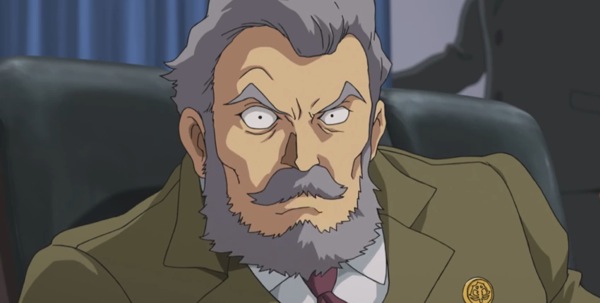
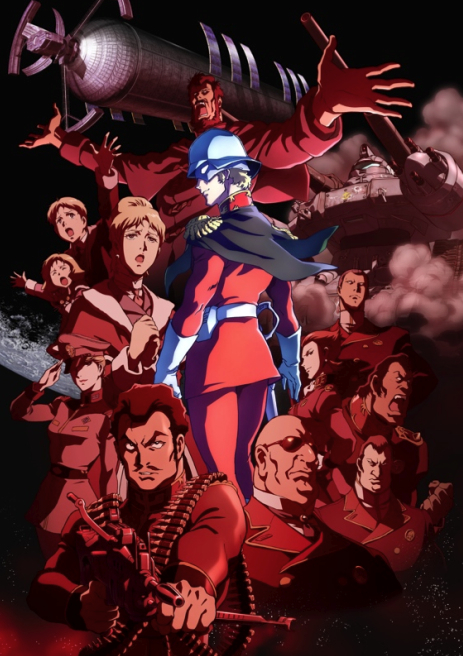
Anime Consortium Japan, the parent company of Daisuki, has sent out a press release to remind fans of Sunrise’s Mobile Suit Gundam series that the first episode of the OVA series Mobile Suit Gundam: The Origin, “Blue-Eyed Casval”, will be available for premium rental streaming beginning tomorrow.
From 8am JST (UTC/GMT+9 hours) on February 28, 2015, the OVA will be available from Daisuki.net, the Google Play Store and Amazon Instant Video for $6.99 USD for 72 hours. Services other than Daisuki.net are not guaranteed to be available in all territories. Prices will vary depending on the buyer’s location. It will be available worldwide except in China.
For those prefer to own something permanently instead of just renting it, the collectors’ edition release is available for pre-order here ahead of its release on April 24, 2015. This collectors’ edition will feature dual audio, subtitles in several languages and several physical bonuses and on-disc extras.


 Earlier this week