


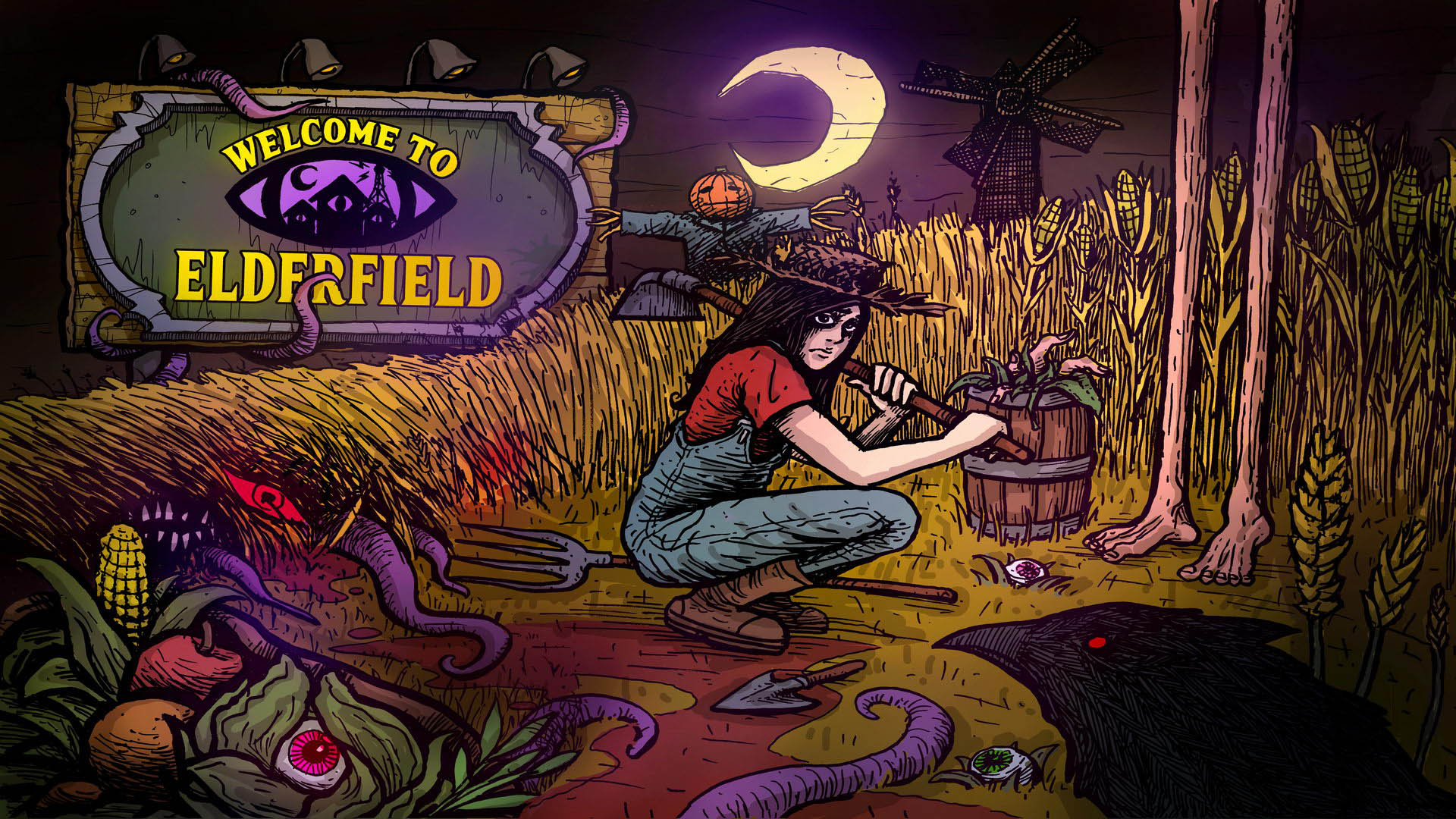
Welcome to Elderfield
Developer: Chris Cote
Publisher: Kwalee
Platform: PC
Release Date: Available Now
Price: $17.99 USD – Available Here
Overview
When it comes to the “cozy farming” genre it starts to feel like nearly everything has been done in some way or another. Then someone comes up with a new dynamic twist to try and put a unique element into their game, be it transforming into a yokai and dating yokai or simply expanding on the classic formula with a whole “if it ain’t broke, don’t fix it” mentality. Then there are developers that look at the genre and decide to throw the whole thing on its head by making a farming game that may have some cozy elements to it but is also a horror game through and through. That is how we end up with a game like Chris Cote’s Welcome to Elderfield, a game looking to take the standard simple farming lifestyle and throw in a bunch of horrors and old gods to spice things up. The question is, is Welcome to Elderfield worth the visit now that it’s filled with spooky mysteries and horrific monsters?
Story
Players take on the role of an unnamed protagonist who, one night, finds themselves in the woods during a rainstorm for unknown reasons. In a desperate attempt to get home, they stumble across a strange ritual happening in the forest where tentacle face cultists welcome them and then sic a twisted creature upon them, seemingly as a test. Once the player beats the monster, the cultists vanish after saying that the player is the perfect subject going forward, only for them to wake up in bed as if the night before had never happened, even if the town of Elderfield is far from the norm. It isn’t until the player learns that the nearby farm, run by a man named Hans, has fallen into disrepair and could use some help, that they begin to learn just how over their heads they’ve gotten themselves into.
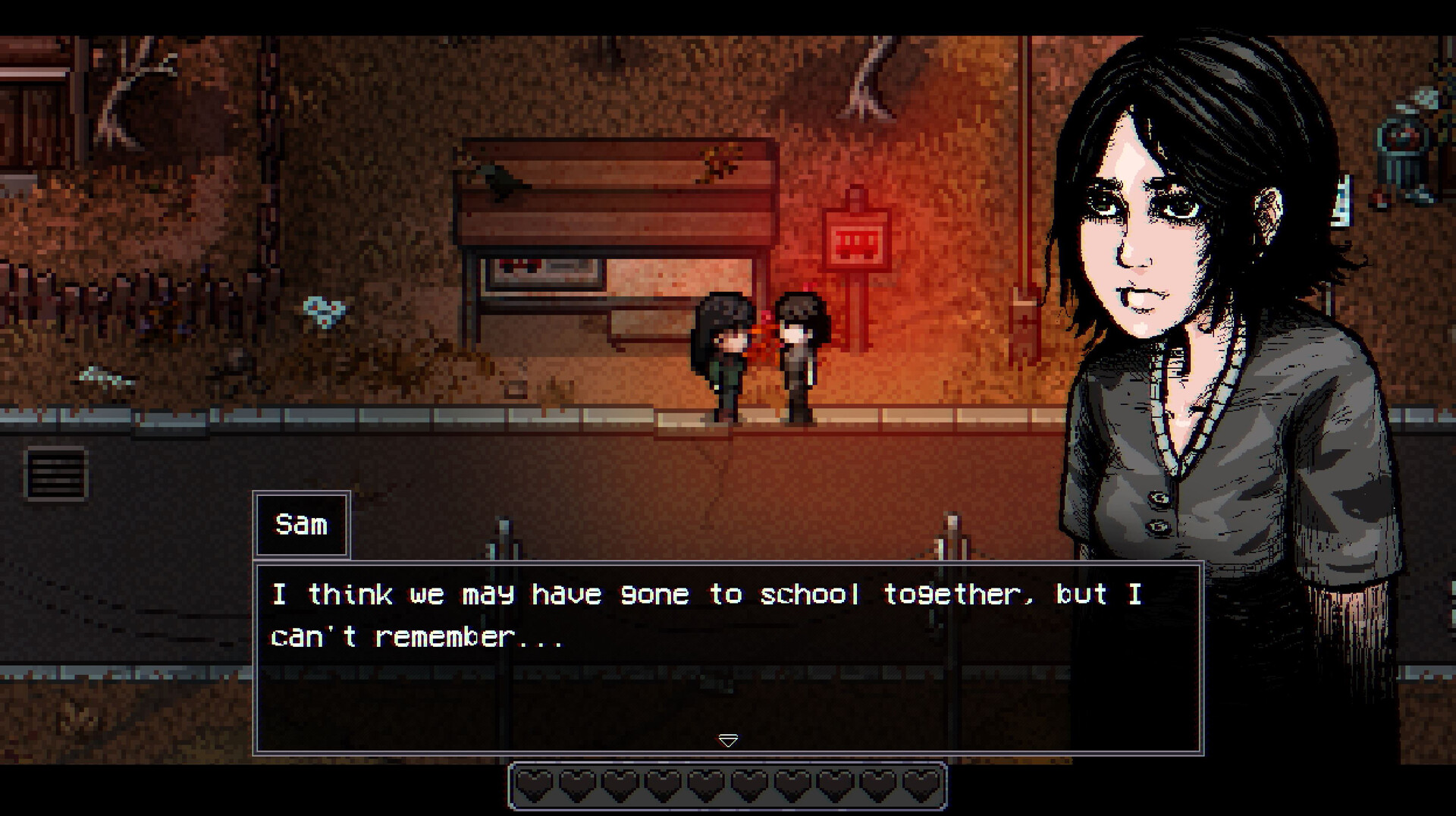
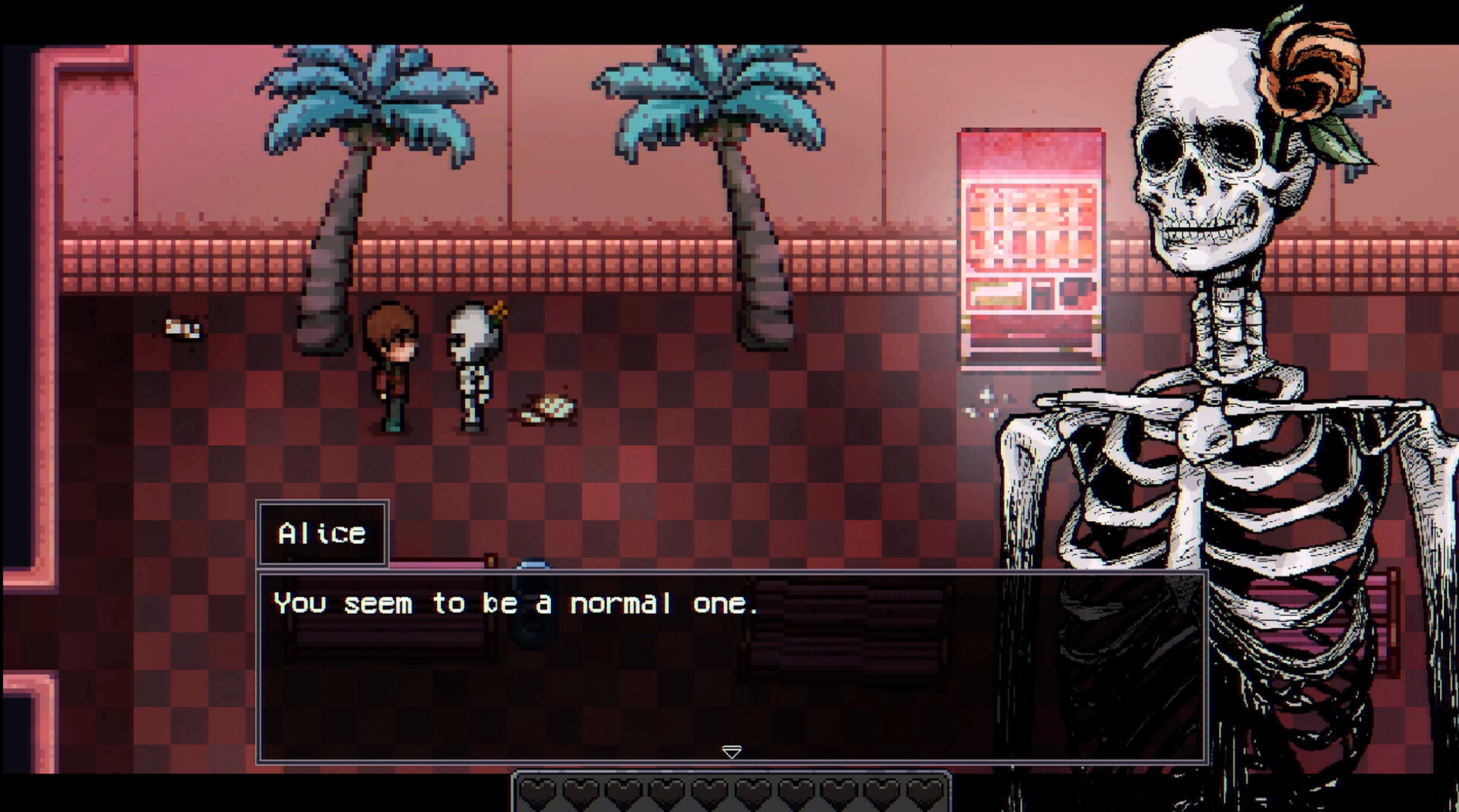
Not only is Elderfield a hot-spot for seemingly everything supernatural, but the tentacle-faced cultists were real and seem to be monitoring a strange stone pillar on the farm. From then on players meet with the farm owner, a gigantic skeleton named Hans who “shed his skin” and kept growing until he couldn’t leave the home and now is leaving it up to the player to fix things up, including clearing the growing fields of “ghost tentacles” to allow them to properly plant and grow all manner of crops as well as clear out weeds, rocks, and branches to try and make space. Though that is only the tip of the iceberg as players soon find out that not only is the giant skeleton a fairly common sight, so common that one of the romance options is a female skeleton that loves flowers, but also a ghost librarian, blob of slime, and then a variety of other human options with their own quirks. Of course, that doesn’t even touch upon the numerous other strange haunts, mysteries, daily threats, ever-watching old gods that expect to be worshipped in some manner, and of course… the Tax Man.
Welcome to Elderfield’s overarching storyline does exist but it takes more of a backseat to the every day occurrences that happen to the player throughout their time with the game. Every day a new “mystery” appears on the television and it can be anything from fish-like people appearing near the lake front, childish rumors that if you chant for a dog to come out to play three times at night it’ll appear thirsting for blood, or that a gigantic egg has randomly appeared in the local apartment complex even though no one’s seen any bird that could lay it. These types of random daily events give players extra encouragement to explore places they may have been before, or never seen until now, since these can create entirely new events or play out differently depending on how well the player handles the situation in combat or their luck with the “d6 rolls.”
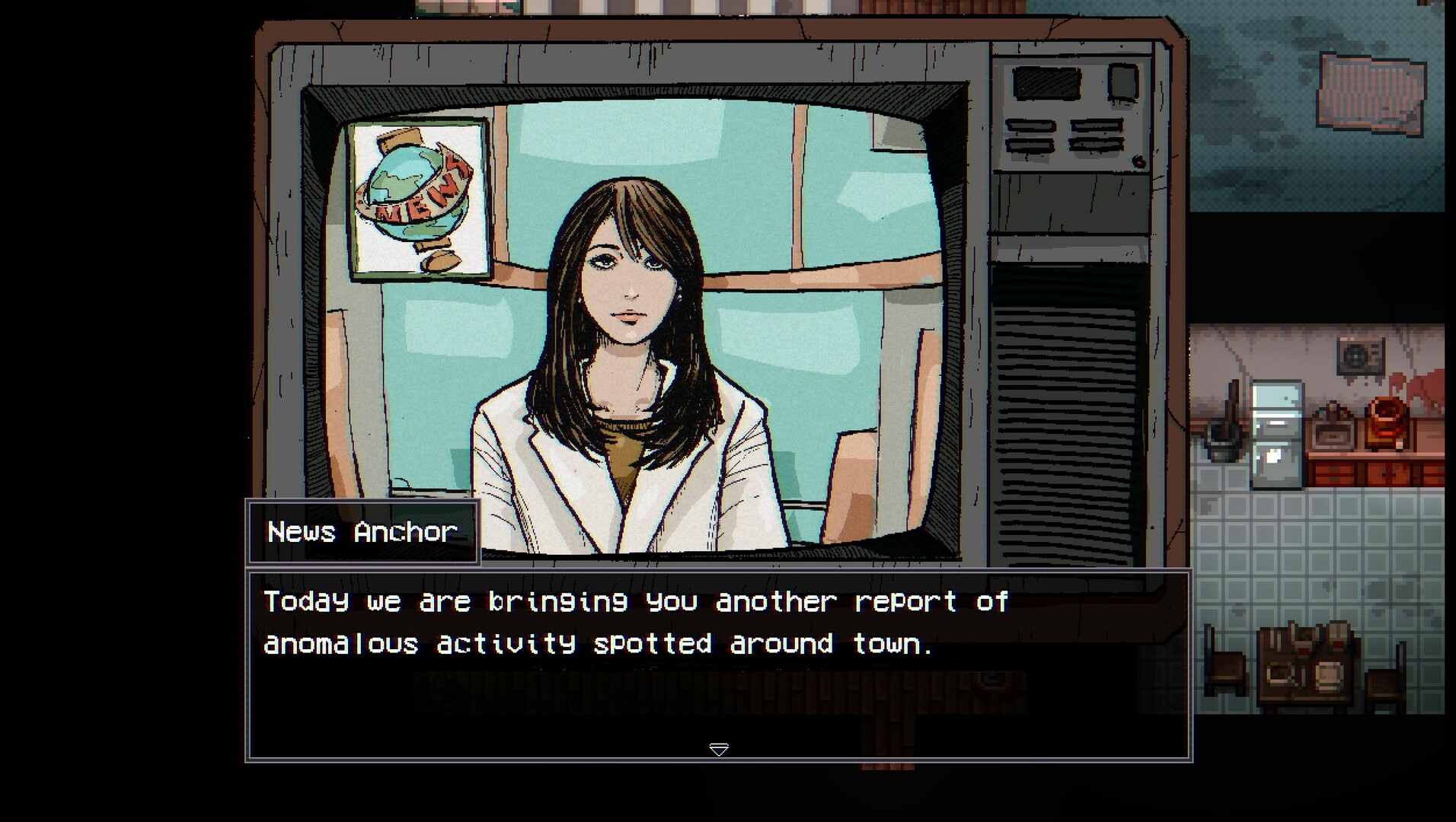
Outside of the day to day mysteries and haunts players will also come across numerous other oddities that beg to be investigated, be it a haunted looking ATM, messing with an odd looking fish sticking out of the water, or whispering a prayer in a sewer shrine, all of which have their own little roll events that can benefit or punish the player as a result. The various quests players receive from the residents of Elderfield are something of a hit and miss variety, mostly because of how mundane they are often treated afterwards. One of the earliest quests involves helping a lonely old man turn a pile of gathered debris and give it life and the only result is both of them saying how much they love each other and that’s it. While eerie, that’s not much narrative payoff.
This happens to be the case with a wide variety of missions, be it having to free someone trapped within their apartment for weeks by an unknown force and them shrugging it off, fishing up some mutated octopus to summon a gigantic boss that doesn’t phase the employees by any means, the way it is treated entirely mundane by the occupants of the town gives the feeling that it lacks actual gravitas and threat. Since, if no one else is afraid, why should the player be? It also doesn’t help that the romance options in the game, while fun, are so varied in the way that a few of them are straight up monsters or eerie in their own rights, and have no real developing personality as players grow closer to them. There are some events that rely on players growing closer to characters, and it is good to do so anyways, but for the most part there is almost no change in their dialogue or personality outside of this. Even marriage seems to be treated as an afterthought.
This leads to Welcome to Elderfield often feeling like its treading water. Players manage their farm while slowly finding new bits and pieces of storyline to unfold for them, either through a new piece of mail to arrive or completing a previous questline to see what new horrors await them. That isn’t to say that the story isn’t good, as the general narrative is pretty solid and there are as many quirky fun moments from interacting with random NPCs and inspecting parts of the town as there are spooky ones, especially factoring in the way the game’s unique old gods play a role and how twisted some of the depths of the town end up being, though we won’t detail them here, but it does meander around and lose its own pacing far too easily.
Gameplay
Welcome to Elderfield is a bit of a strange title as its blend of cozy, horror, farming, and RPG combat make it a mixing pot that gives players plenty to do while also giving some elements not quite enough love as they probably deserve. As per usual, the title features four seasons that boil down to creepy named versions for Spring, Summer, Fall, and Winter, and what crops grow, certain events happen, and other things such as the very limited holidays, only take place at certain times. There are a few key differences though compared to the usual farming game as the title does not have a stamina meter of any kind, meaning farming and gathering resources can be done as long as players want, though other threats can arrive as a result, nor are players required to actually go to sleep.
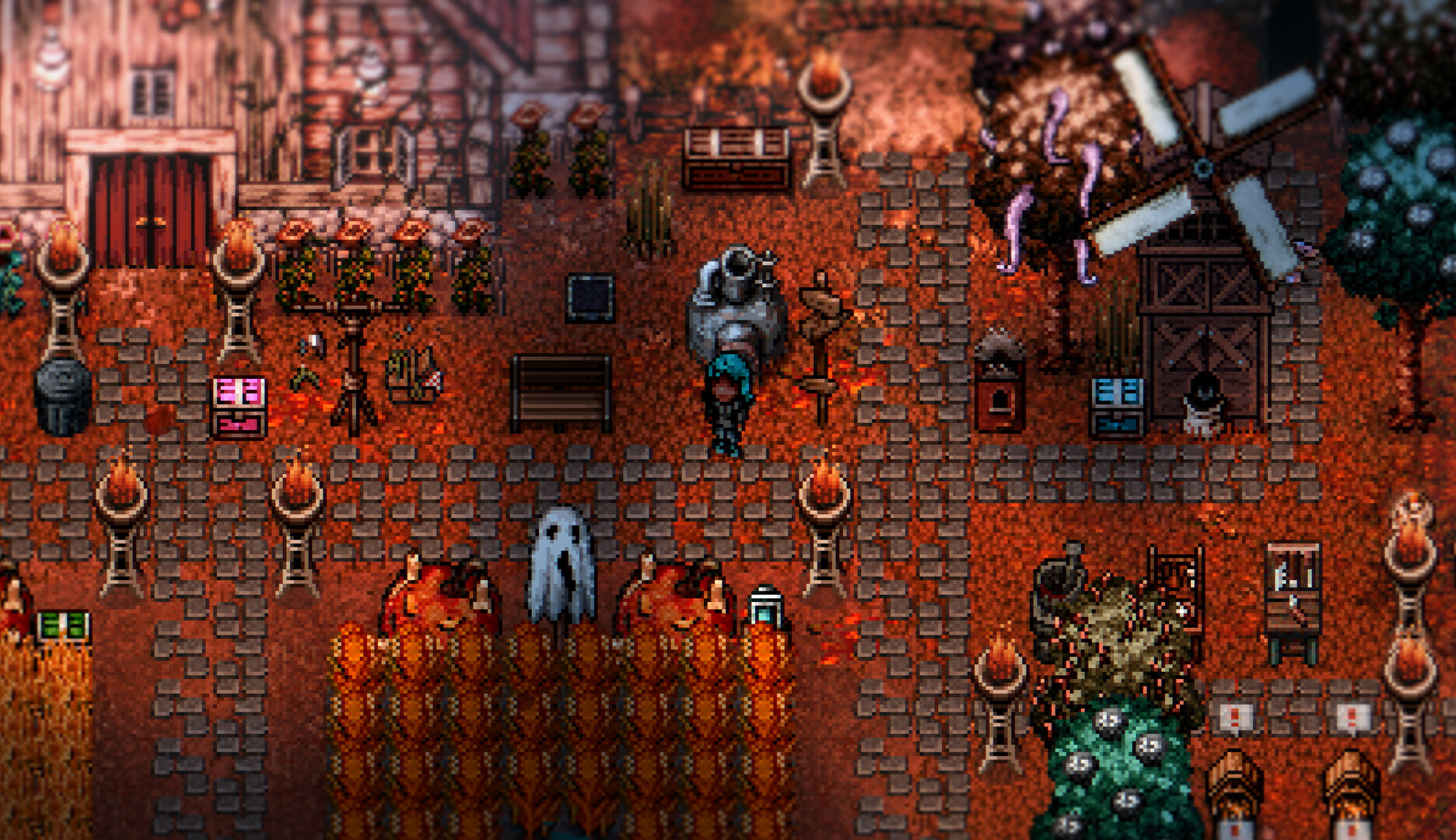
Instead, players will start to slowly suffer debuffs the longer they go without sleeping, with one day not doing anything, two days reducing how much XP they earn, and increasingly worse debuffs from then on. In fact, while players can save at any time simply by visiting their bed, or other beds in specific locations, the only way to fully restore health and MP, as well as cleanse all curses and blessings, is to take a shower. The problem is, showering also makes all enemies that were previously defeated respawn. This makes it so that while players can utilize food or gathered items to restore their health and MP, or even use magic to restore their health somewhat, they’ll eventually need to rest to cleanse themselves of debuffs if they find themselves suffering far too many, as they can stack up to 5 times, meaning if a particularly long or poor set of rolls can see the player’s attack or defense reduced all the way down by 50%. Though this can also see their blessing boosting their luck by 30% removed as well.
On the flip side, sleeping is also a risk as players will find themselves passing time easily but also needing to roll a d6 to make sure that nothing horrible happens to them throughout the night. This can be anything from a nightmare causing them to be inflicted with a curse, a deep rest blessed by one of the gods that comes with blessings, or even being attacked in the night by a creature depending on the roll. In fact, practically everything indirectly involved with the farming revolves around rolling a d6. Investigating a mystery or haunted object, slaying an enemy to loot the body, digging through trash, opening a pouch of gems, all of these rely on the roll of a die and the player’s luck, sometimes literally as it does appear a higher luck stat increases the chances of obtaining a higher roll.
For example, a 1 or 2 is considered unlucky, 3 and 4 are neutral, and 5 and 6 are lucky with different consequences depending on what they are tied to. Praying to a god’s altar and rolling a six can award a number of blessings while rolling a one at the same altar will inflict numerous curses instead. Similarly, looting an enemy corpse and rolling a one might give players just a piece of meat while six can result in not only receiving a slew of cooking/crafting ingredients but also food and equipment as well. This is one element that is a bit annoying and quick to notice throughout Welcome to Elderfield. Crafting weaponry or armor may seem like a good idea at the start, it quickly becomes obvious that players reserve any ore they receive from mining to upgrade their farming tools or crafting other items such as scarecrows, totems, or offerings to the gods for boons. This is because the gear obtained by taking risks with the game’s mysteries or defeating enemies is far superior to anything the player’s can forge on their own.
In fact, players are encouraged to select one of the old gods to pray to on Sunday and become a devotee, providing them access to limited crafting recipes unique to that god as well as certain locked doors that also provide unique items. One such door in my case happened to have an extremely powerful spear inside that not only boosted my character’s agility and other stats, but improved their attack and magical attack far more than my already advanced weapon dropped from the previous location’s boss.
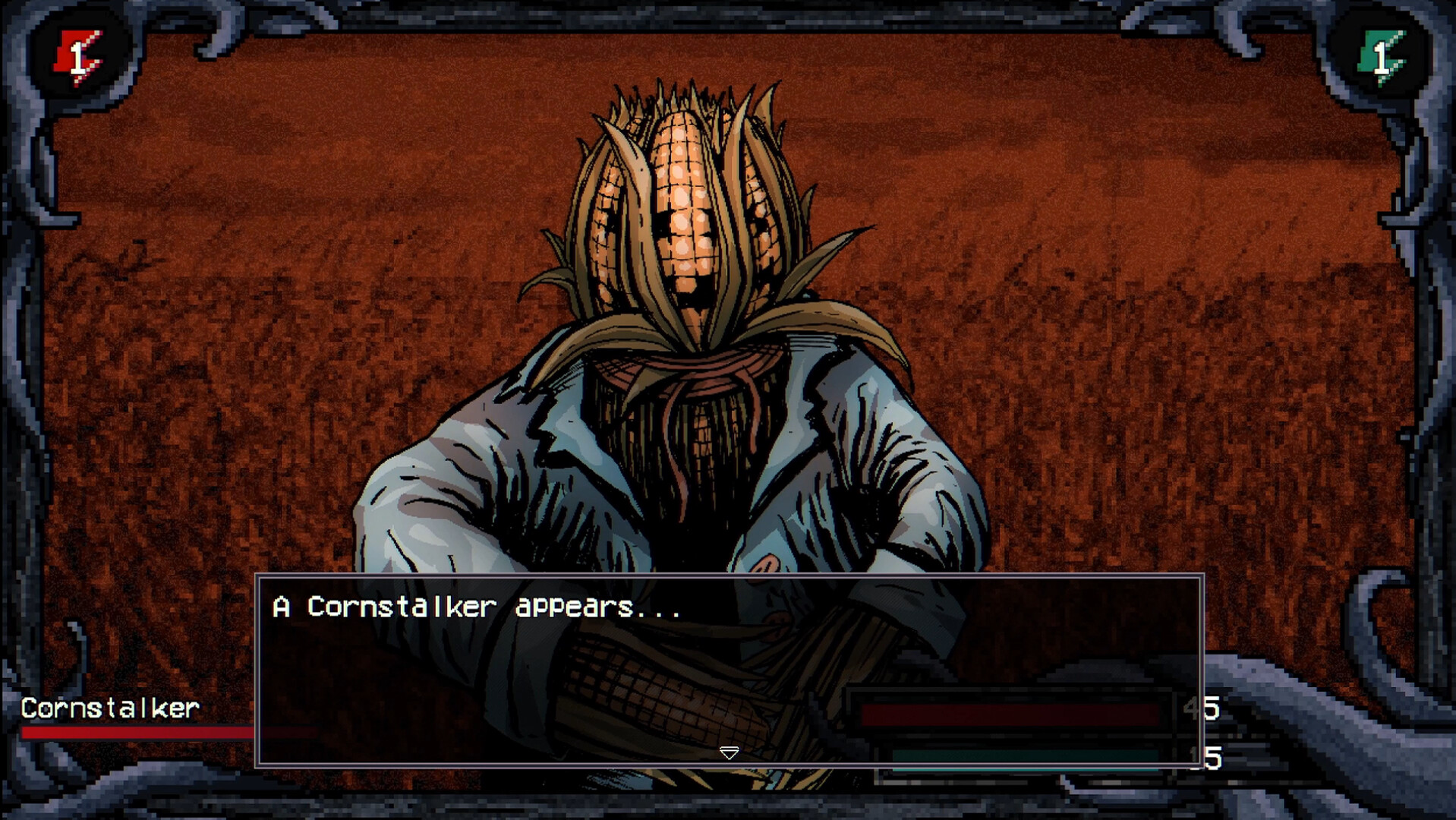
Speaking of combat, it is worth noting that the game does seem to feature the farming element as more of a backdrop to exploring the world and fighting than anything else. Players will plant and water crops, drop whatever items they feel like into the processors that will take hours to complete, and then set out on an adventure to complete a task or gather items, usually fighting enemies along the way in turn-based combat. This turn-based fighting is rather solid and while players may only have one turn at the start of the game they’ll eventually unlock two turns in a row. Players can utilize standard attacks to deal damage to enemies, “rituals” that cost MP to cast spells, skills that also utilize MP, items, or flee and suffer some potentially harmful side effects later on as a result. It is interesting to note that even if players end up dying in combat, the game does not actually end with a game over. Instead they will be transported back to their home, thinking it was a nightmare, and losing a chunk of cash as a result, though this is also dependent on what difficulty players have chosen for themselves as there are worse penalties on harder difficulties.
Audio & Visuals
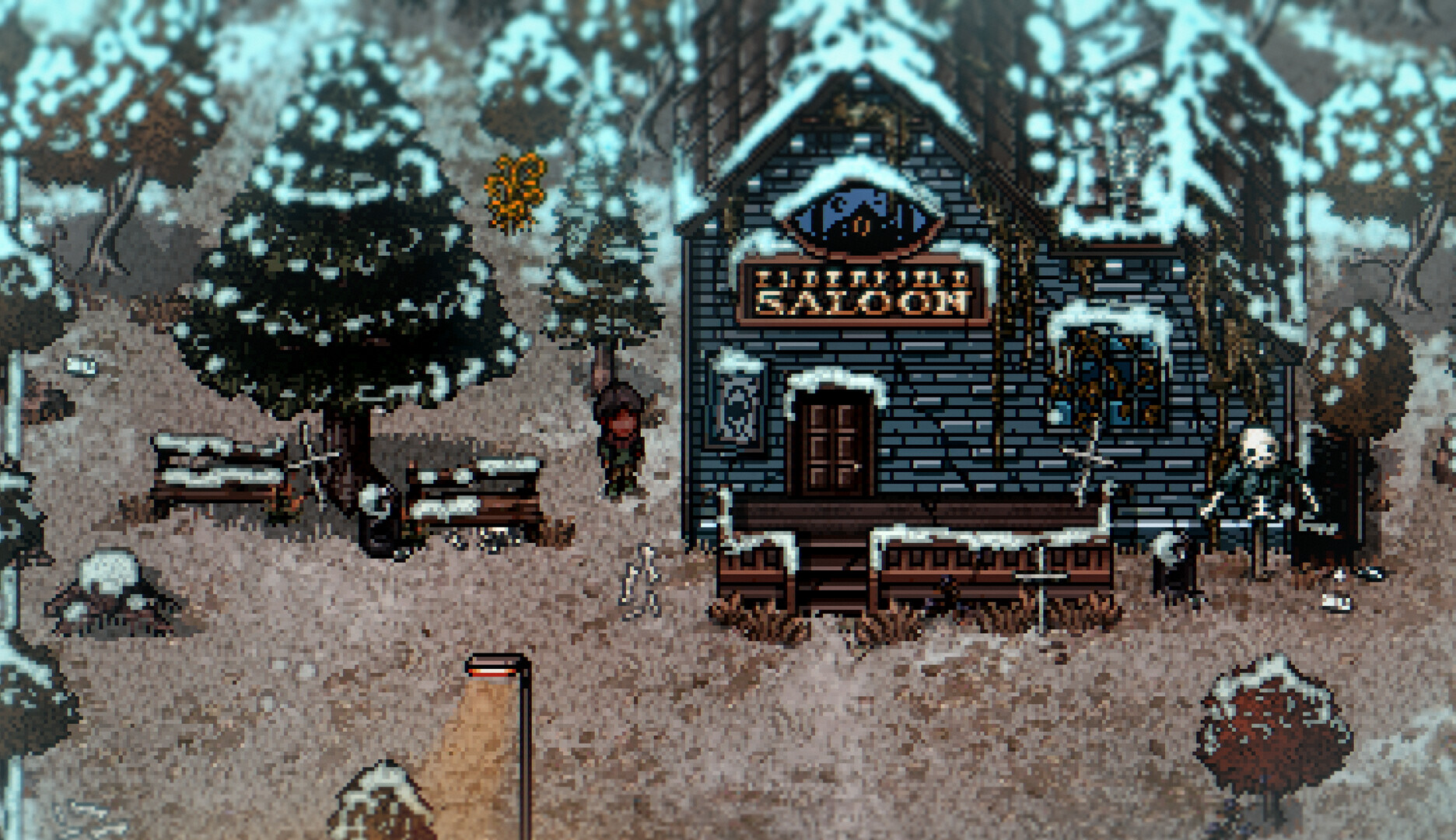
One aspect that Welcome to Elderfield does exceptionally well is provide a completely foreboding atmosphere almost everywhere the player travels. Even the fanciest homes in Elderfield still feel like they might have something wrong with them as a result, even if they don’t, but obviously these creepy elements are at their strongest when exploring haunted locations or dangerous areas, seeing ghost NPCs randomly spawn and despawn at a distance, navigating through a twisting forest filled with dried out remnants of shrines to the old gods, and of course the multitude of monsters filling the land, both friendly and hostile. Most of the friendly NPCs that players interact with will have a character portrait of some kind unless they are tied to one of the mysteries that players can encounter and their designs range from fairly straightforward to downright creepy, even when they are human and not a skeleton with a penchant for flowers.
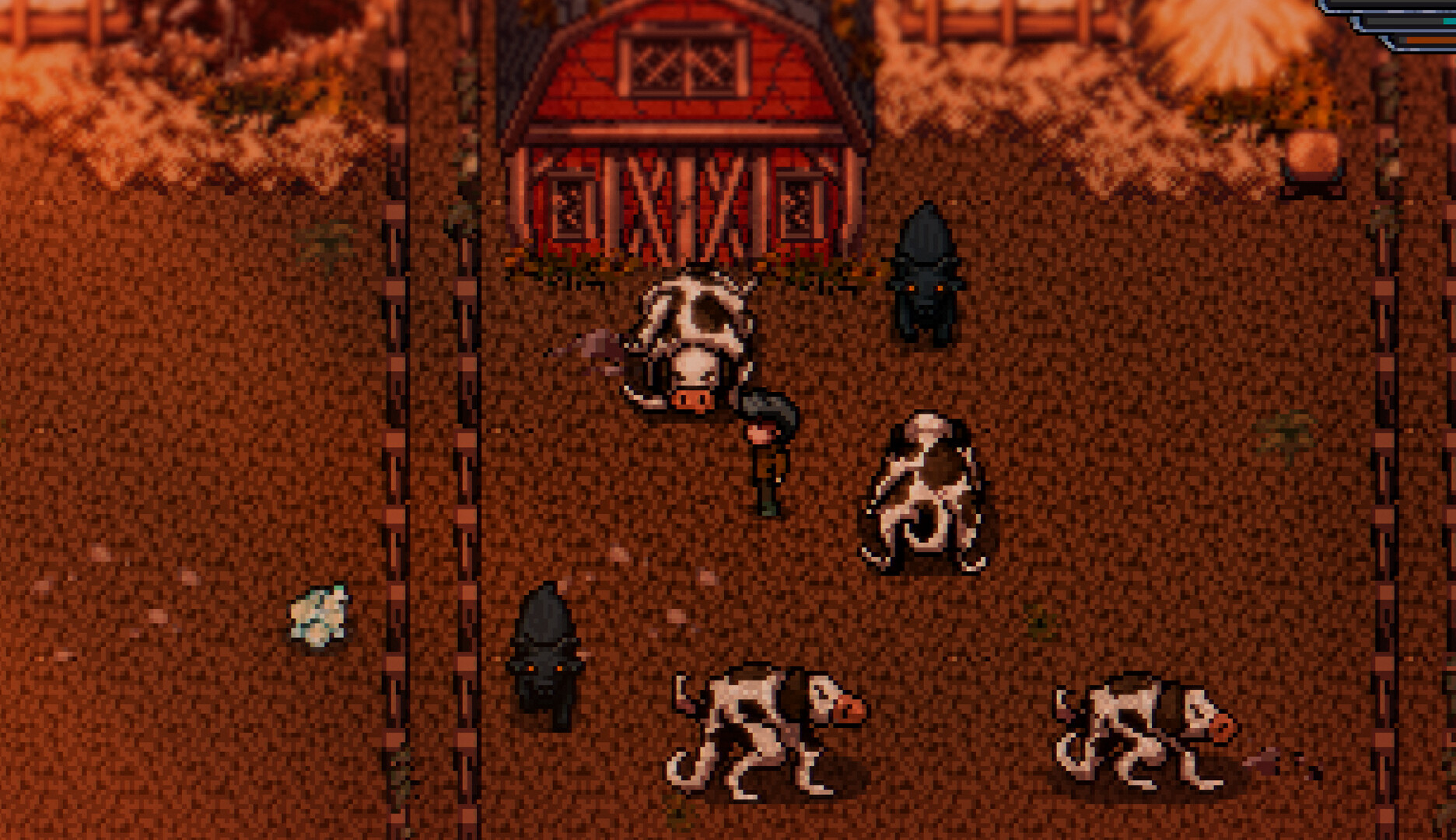
Of course, this type of design philosophy really hits home when it comes to the monsters that players will need to face down. Everything from rats with multiple eyes to vacant eyed shoppers who will randomly transform into twisted eldritch looking beings in a shopping mall to horrific fish people, the random creatures haunting the forest, or even the monsters dwelling deep within the mines that are ready to strike should the players annoy them with their mining, all of them are grotesque looking in the most impressive manner. Heck, even some of the crops and plants that players grow on their farm are horrific and even need to be put down to be properly harvested. This is especially true for bosses and the occasional random encounter that often sees players needing to take on exceptionally challenging foes that are similarly some of the best designed in the game.
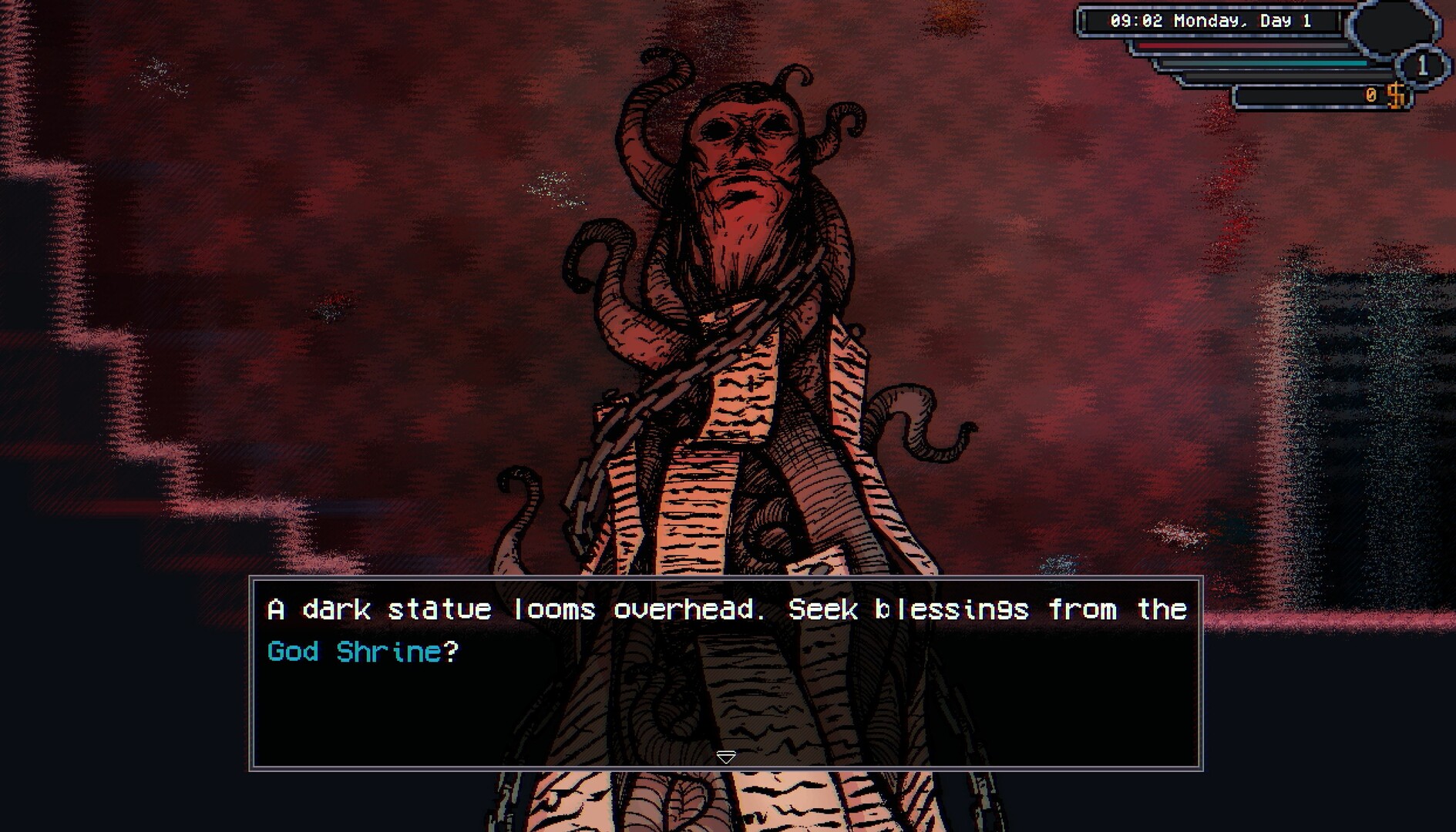
It is worth noting that while there is voice work in the game, it is only done through the Weather Channel radio station and it literally involves unlocking stories by talking to people around town and inside hidden locations to unlock these stories that can play in the background of the radio while inside the player’s home, offering creepy and eerie stories they can listen to while cooking or managing their inventory and storage box. Outside of that, the game features no other voice work for characters and while the soundtrack is decent for a horror game, we found it to be surprisingly lacking given the game’s design and most tracks missing that feeling of dread players should expect.
Overall
Welcome to Elderfield takes familiar elements of a cozy farming system and throws a dark twist on everything by throwing creepily drawn horror elements at players at every corner. Be it twisted plants that grow alongside wheat, monsters living alongside everyone else without a care in the world, or supernatural entities seeking to doom the town, players never quite know what they’ll get into on any given day. That being said, the farming grind does eventually start to settle in and become rather rote, especially late game, and while the setting is incredibly interesting and has some unique characters, the lack of reaction to the world and any variation in the relationship dialogue with the romanceable characters is disappointing.
Capsule Computers review guidelines can be found here.

