


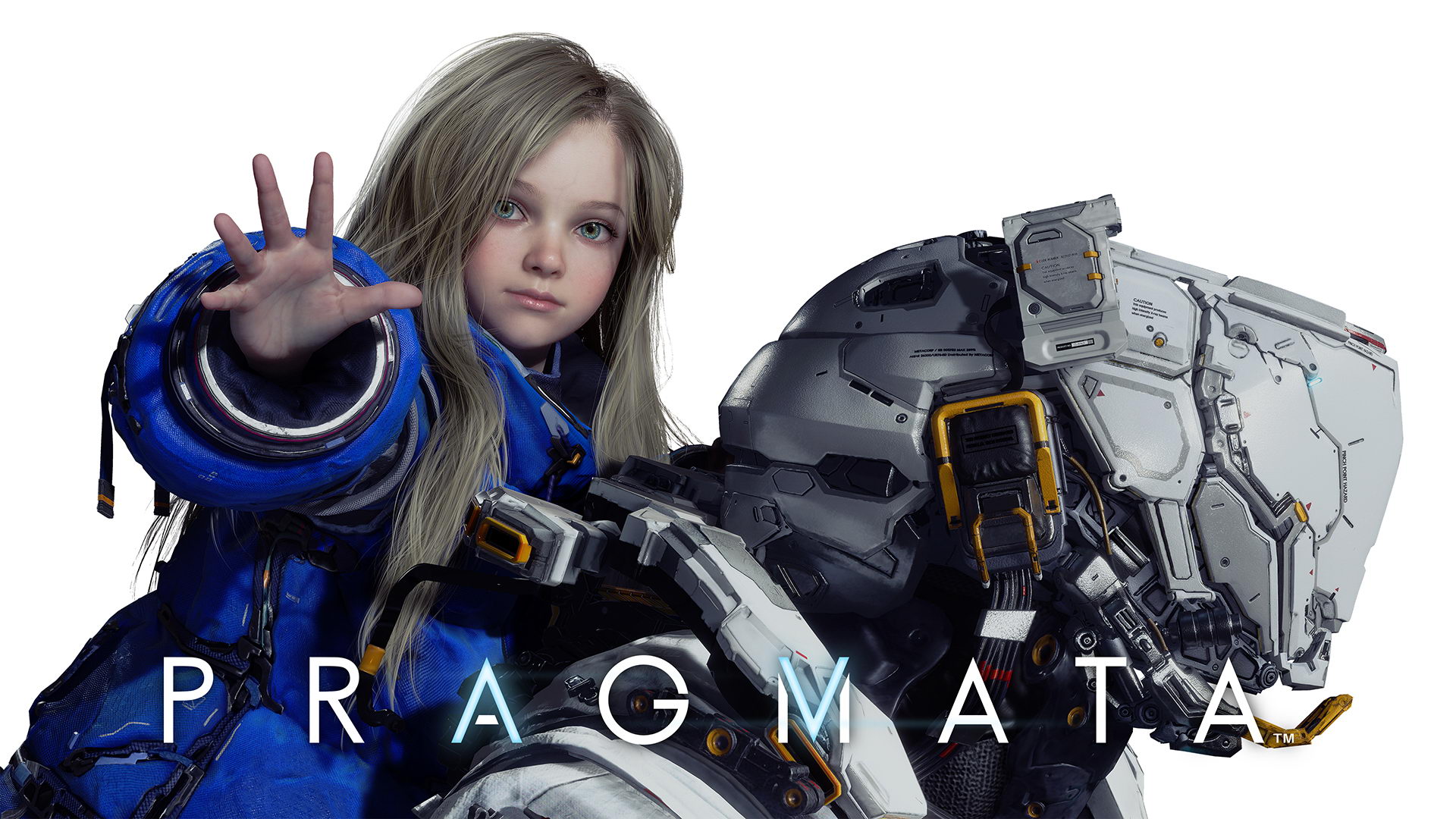
Pragmata
Developer: Capcom
Publisher: Capcom
Platforms: Switch 2, PC, Playstation 5, Xbox Series X (Reviewed)
Release Date: Available Now
Price: $59.99 USD – Available Here $109.95 AUD – Available Here
Overview
Over the last few years Capcom has been knocking it out of the park by revisiting some of their most popular franchises either through remakes, remasters, or brand new entries. While a few may have had their issues they generally have been on quite the roll, but the only problem was that almost every title that saw this level of success was just that. An existing franchise and those that weren’t were smaller in scale. Pragmata on the other hand is something entirely different and was first revealed six years ago and given a number of delays before finally arriving. So with Capcom finally trying to dip their toes into a brand new game entirely, is Pragmata a worthy risk?
Story
Set sometime in the future the Delphi Corporation has discovered a rare mineral that can only be found on the moon and allows for the creation of “Lunafilimant” that can replicate practically anything through cutting-edge 3D printing. Establishing a moon base called the Cradle, Delphi has turned this lunafilimant into a brand new industry that is pushing science beyond anything many could have dreamed of. Unfortunately, communications with the Cradle have gone completely dark and Hugh Williams and his crew have been sent up to repair whatever might have gone wrong to shut down communications. Upon arriving at the Cradle they find it oddly quiet and devoid of human presence. Before the crew can investigate further a massive moonquake rips through the structure, killing most of Hugh’s crew and separating him from anyone who may be alive as he careens into the abyss.
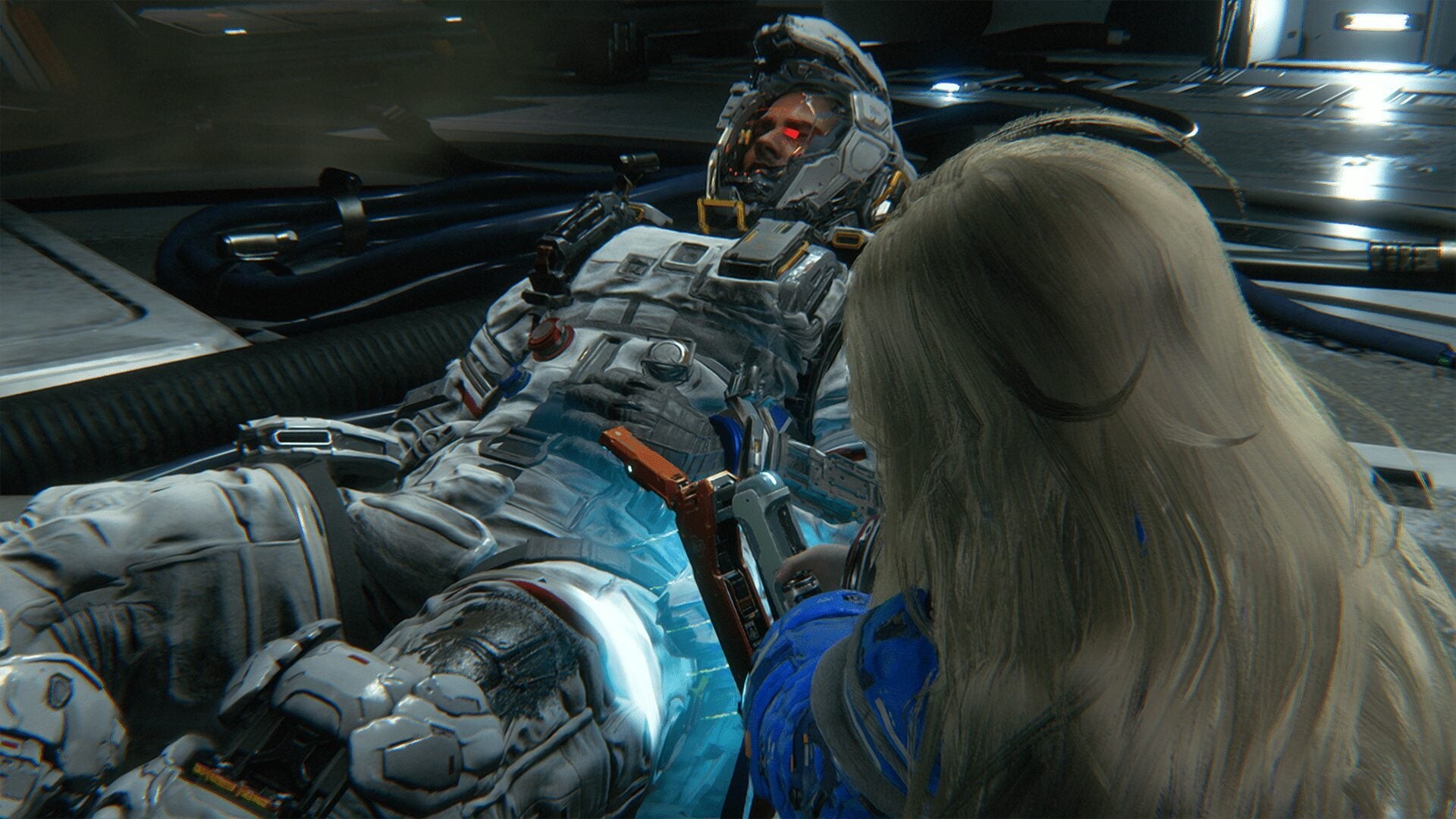
Hugh awakens to find a mysterious little girl repairing his damaged suit using lunafilimant who introduces herself as an advanced android that has been in storage for so long she has no memories other than what she is. Nicknamed Diana by Hugh, the pair soon discover that the Cradle’s AI, IDUS, has gone rogue and started crafting robots capable of killing anyone in their path. With IDUS looking to block their escape at every turn, it will be up to Diana and Hugh to hack and shoot their way through the remnants of the moon base and uncover just what happened here and find a way back to Earth.
Pragmata‘s narrative works quite well by keeping things intentionally vague as players begin their journey with Diana. Despite being able to hack her way through anything, the android girl knows just about as much as Hugh does going in and this allows players to uncover the mysteries throughout the roughly twelve hour long game on their own. These mysteries tend to unfold through optional side-content and collectables but the bigger reveals and twists are front and center when it comes to advancing the plot. That being said, it is a bit too predictable and also a little on the slow side at times. Hugh himself even makes a joke about how they’ve become master door unlockers after coming across yet another door requiring multiple nodes to be unlocked to bypass. It is worth noting that there is extra story content to be unlocked post-game as well through a series of challenges though that’s all we’ll say on that.
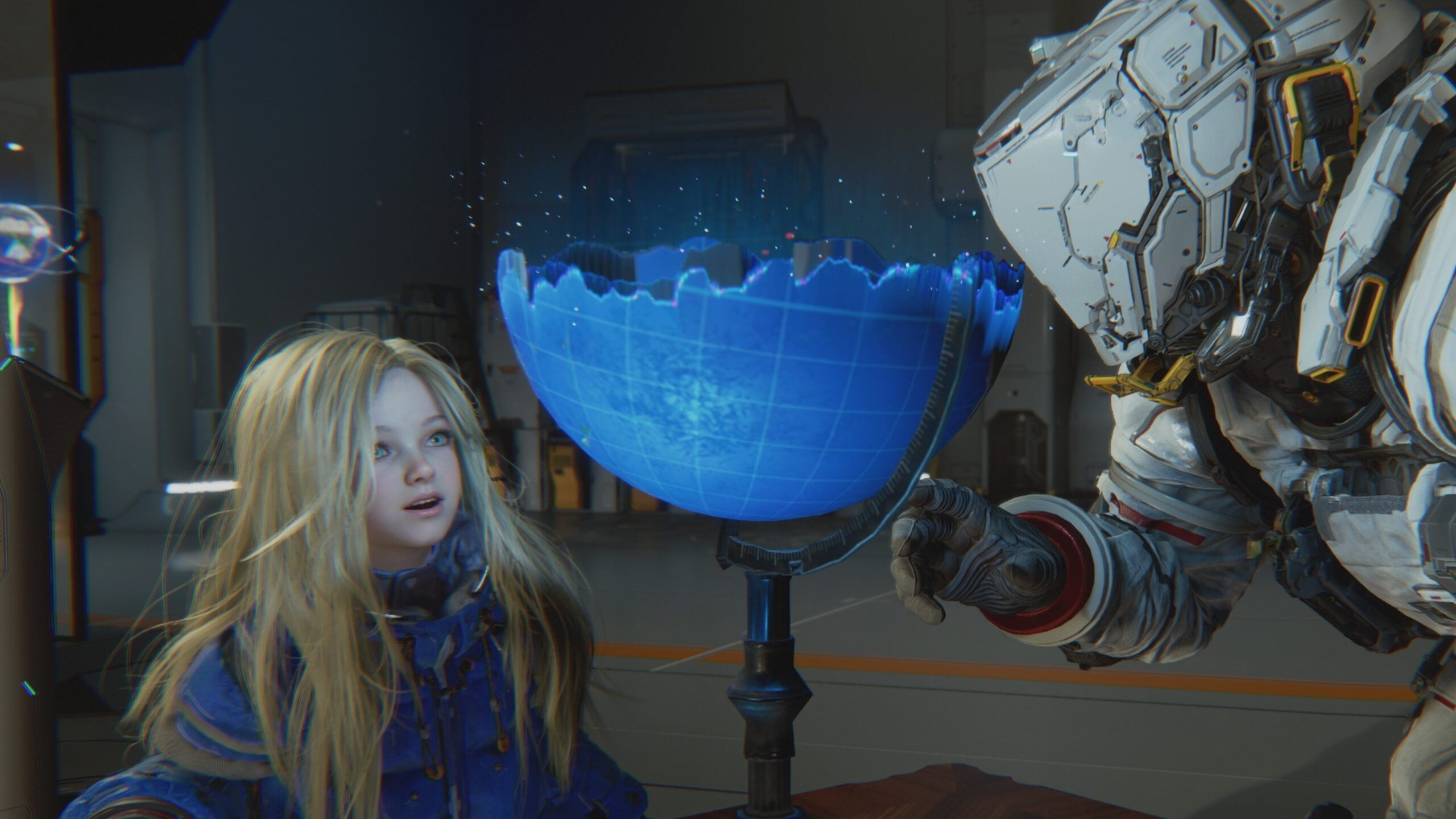
Thankfully while the core narrative may be predictable outside of a few twists and important minor details, Pragmata more than makes up for it with Diana and Hugh’s story and how they interact throughout the journey. Early on we learn that Hugh never had kids nor does he like them but we quickly see him become all but the most doting father when it comes to Diana, responding to her questions with well thought out answers and even stopping to ponder her more philosophical ones as well. While going through an area Diana may chime up about something she’s seen and Hugh will talk about it with her, humanizing both himself and the android.
Similarly, Diana herself is just a shining spot throughout the game. While those who may not like kids might get a bit annoyed at her cheerfulness, she is almost always exuberant about new finds and anything that Hugh can show to her. This includes REMs (Read Earth Memories) that work to replicate kids’ toys or parts of Earth back at the player’s shelter which she will then play with from time to time. Talking with her here can have her pass a basketball at Hugh, try to give him a flower crown, or even hand him a crayon drawn picture she’s made to show off how grateful she is that he is taking time to teach her things. These interactions are truly heartwarming and some of the best parts of the game.
Gameplay
Pragmata is likely one of the most unique third-person shooter many will have played in quite some time thanks to the fact that every encounter is basically two game modes mashed into one. While Hugh himself is capable of wielding a replenishing handgun (and eventual automatic rifle), an offensive, tactical, and defensive weapon all at once they mean little to robots that have been designed to ignore all kinds of incoming fire, letting it bounce off their metal armor. This is where Diana comes in. Anytime Hugh aims at an enemy robot a grid will appear alongside his aiming reticle that players will need to navigate using the face buttons in real time to hack the robot open, allowing him to shoot at and deal massive damage to their vulnerable interior parts or weak points.
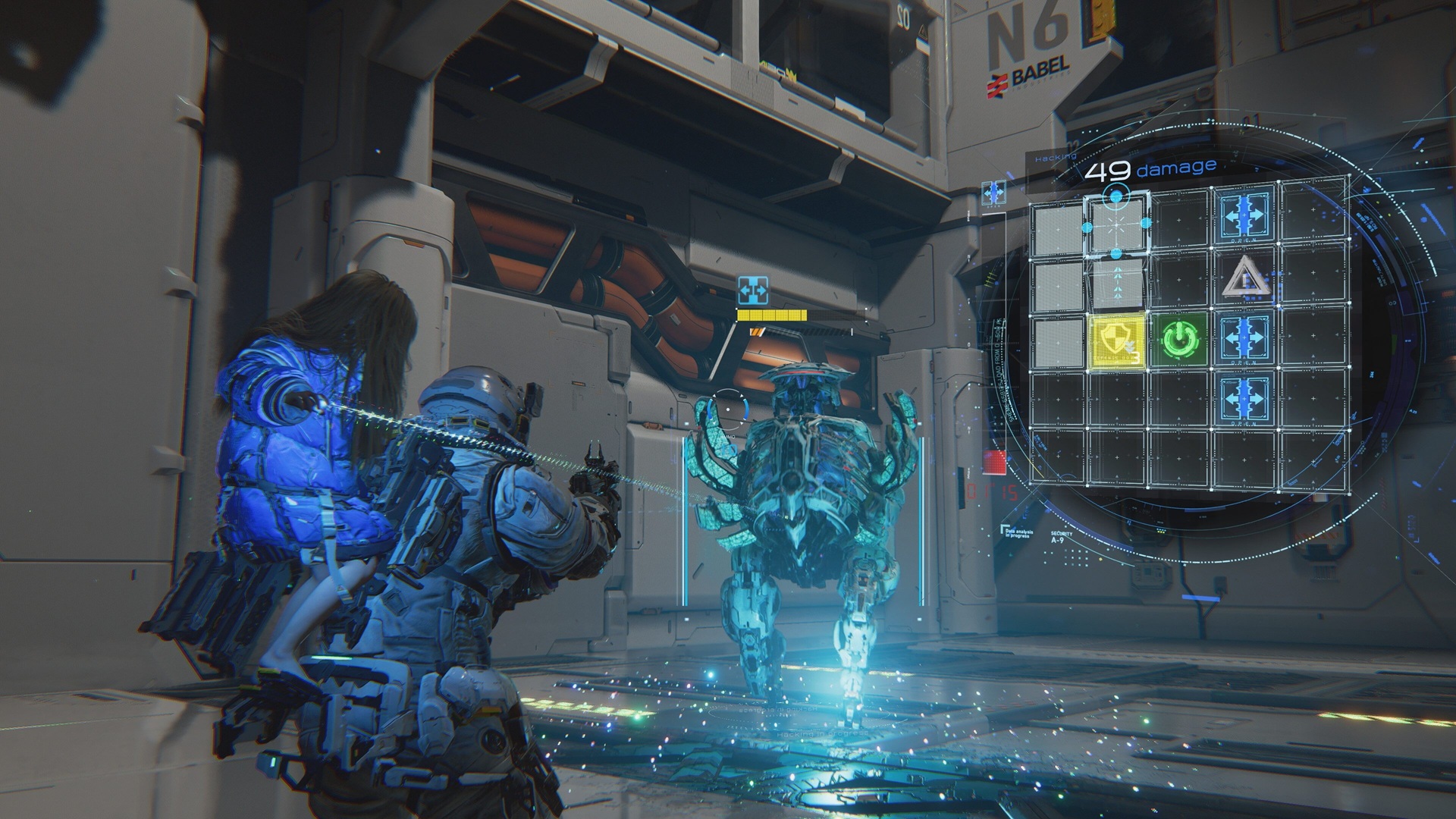
This makes for a shooter that requires a fast pace and focus at the same time and one that isn’t afraid to escalate things quite drastically to throw a challenge at the player when needed. While the first few bots will simply require a small pathway to hack, more encounters will feature different kinds of bots mixed in and flooding the arena, making sure Hugh must dodge and weave to avoid being hit and interrupting the hack of their current target. Stronger bots will also have larger or different shaped hacking panels, with some even featuring panels that will auto-fail the hack if they are run into. Thankfully there are a ton of ways that players can build both Hugh and Diana to take on the significant array of enemy types that IDOS throws their way.
Hugh’s primary weapon is a standard pistol that slowly refills over time and players will eventually unlock an automatic rifle later on that deals less damage in favor of rapid fire. Alongside his primary weapon Hugh can wield a variety of offensive weapons, eventually being able to carry two of them at a time as well as tactical weapons after acquiring an upgrade, with these offensive weapons offering a lot of variety. This includes a shotgun-like blaster, a charge-rifle capable of piercing multiple enemies, homing missiles, and more. Tactical weaponry offers a similar variety such as shooting out slowing net-like structures, sticky bombs that shrink the hacking board, and even riot blasters that knock bots down for a breather. Finally, the defensive weapon players can acquire include a hologram for bots to target, drone swarms to help in combat, and even shields to deploy. Unlike the primary weapon though, all of these weapons have a limited amount of ammo and must be acquired either on the fly or re-equipped back at the base.
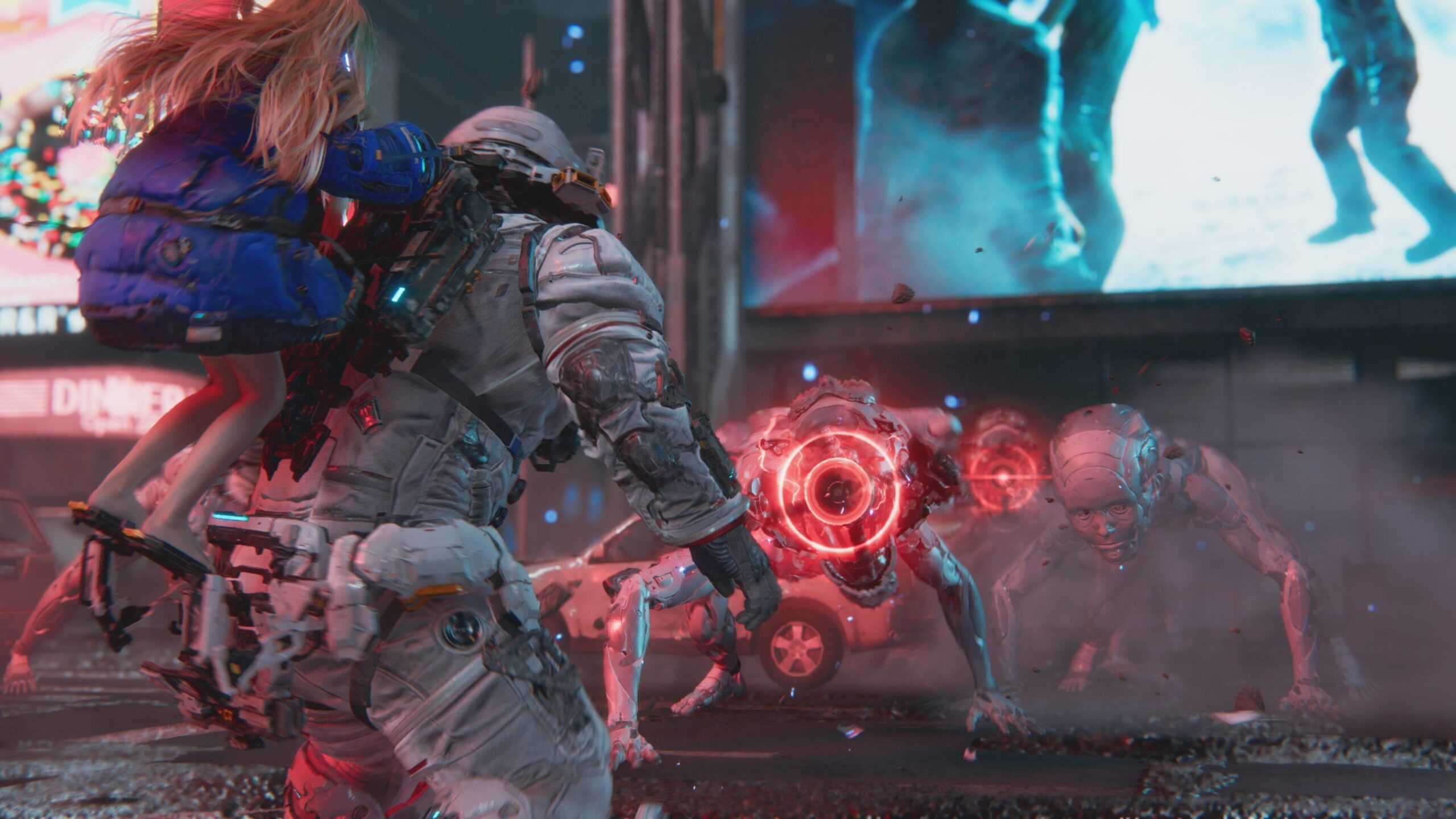
Diana has her own special abilities as well through the form of hacking bonuses. These come in an array of forms as well but are all triggered the same way and that is passing through them while hacking a bot open. These mods include things such as lowering the bot’s defense, stunning them, spreading the hack to multiple bots, and even confusing it to attack other bots for a time. The more blue nodes that the player hits while hacking a bot keeps the bot open for longer and eventually these nodes can be transformed as well to add various effects when hacking an already opened bot. This can do things such as increase damage dealt, overheat the bot, or even trigger further hacking damage.
If players hack enough enemies they can also fill Diana’s “Overdrive” gauge that, when triggered, will automatically hack open and deal damage to all bots in the area to help even the field a bit. Players can also spend portions of Diana’s hacking gauge to auto-hack enemies after a certain point in the story, making more challenging bots easier to conquer or escaping a dangerous grab. It is also worth noting that the overheat mechanic is how players can “stun” bots and perform a critical attack that will instantly kill most of the bots in the game. Diana’s various hacking bonuses also are limited in use and must be acquired in the field again or, just like Hugh, restocked at the base.
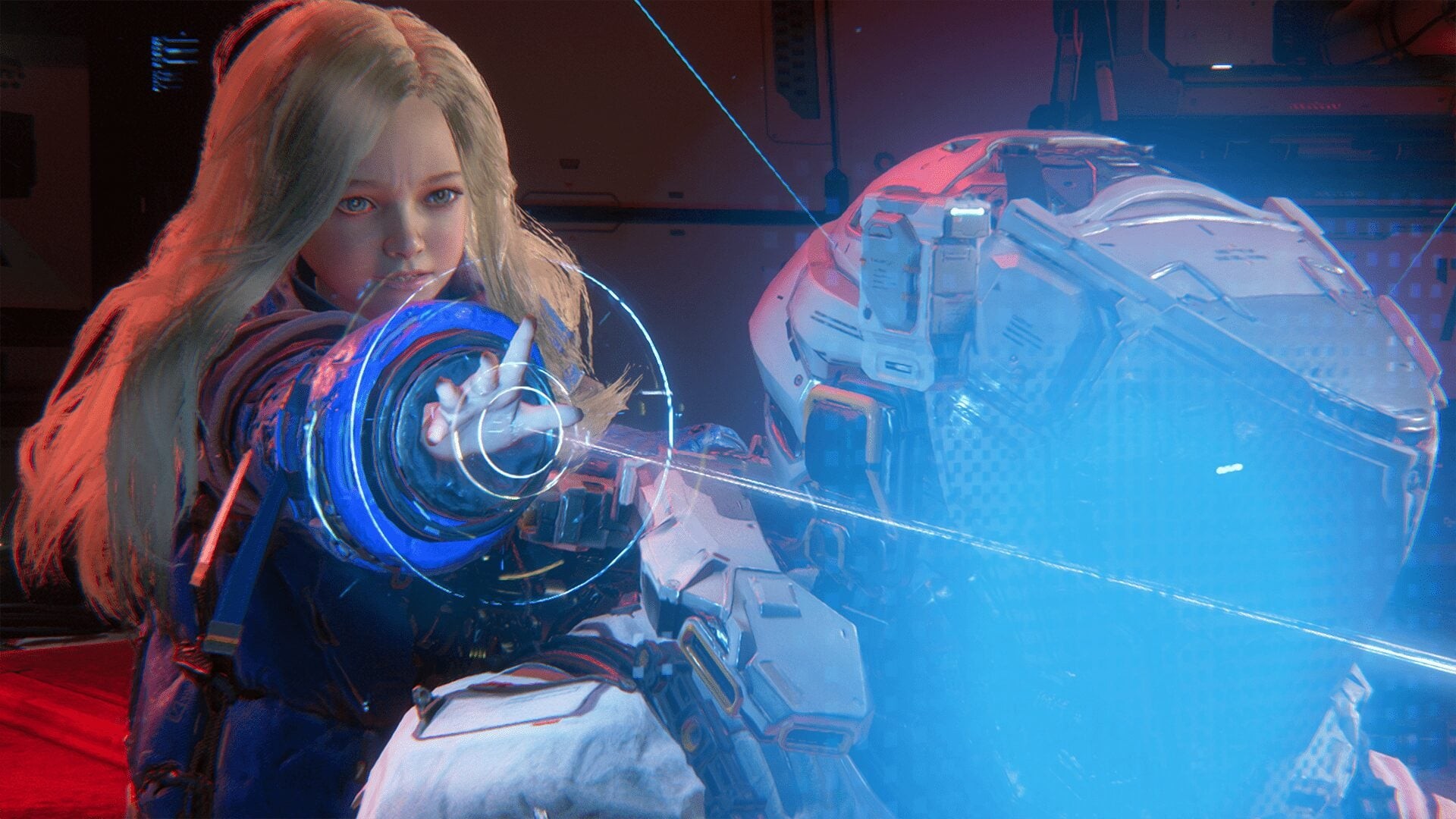
Add this amount of customization to further mods that do things such as increase Hugh’s health, the range of the hacking meter, and many more, and there are a vast array of ways to customize the game’s combat to the player’s liking. Rarely are players placed in a situation that they are told there is only one way to slay an enemy other than the simulations but more on that in a moment. Along these same lines players can use “lim” dropped by enemies and obtained from chests to upgrade their weaponry, unlock suit mods, increase the healing capacity of health pods, and more. Similarly upgrade nodules can be used to upgrade Diana’s hacking as well as Hugh’s total health and his primary weapon.
The simulations that players can take on are entirely optional but worth undertaking thanks to their rewards. These rewards include various collectables that players would usually find out in the field such as upgrade materials, Cabin Coins, and upgrade nodes. Cabin Coins can be spent on bingo boards that are generally “mystery” items that tend to be either bonus information about the different bots, bonus mods and weapons, a hidden backstory that spreads throughout the game, and extra costumes for Diana and Hugh to wear. This means collecting Cabin Coins is quite useful and while completing every simulation isn’t necessary to unlock everything, players may want to challenge them.
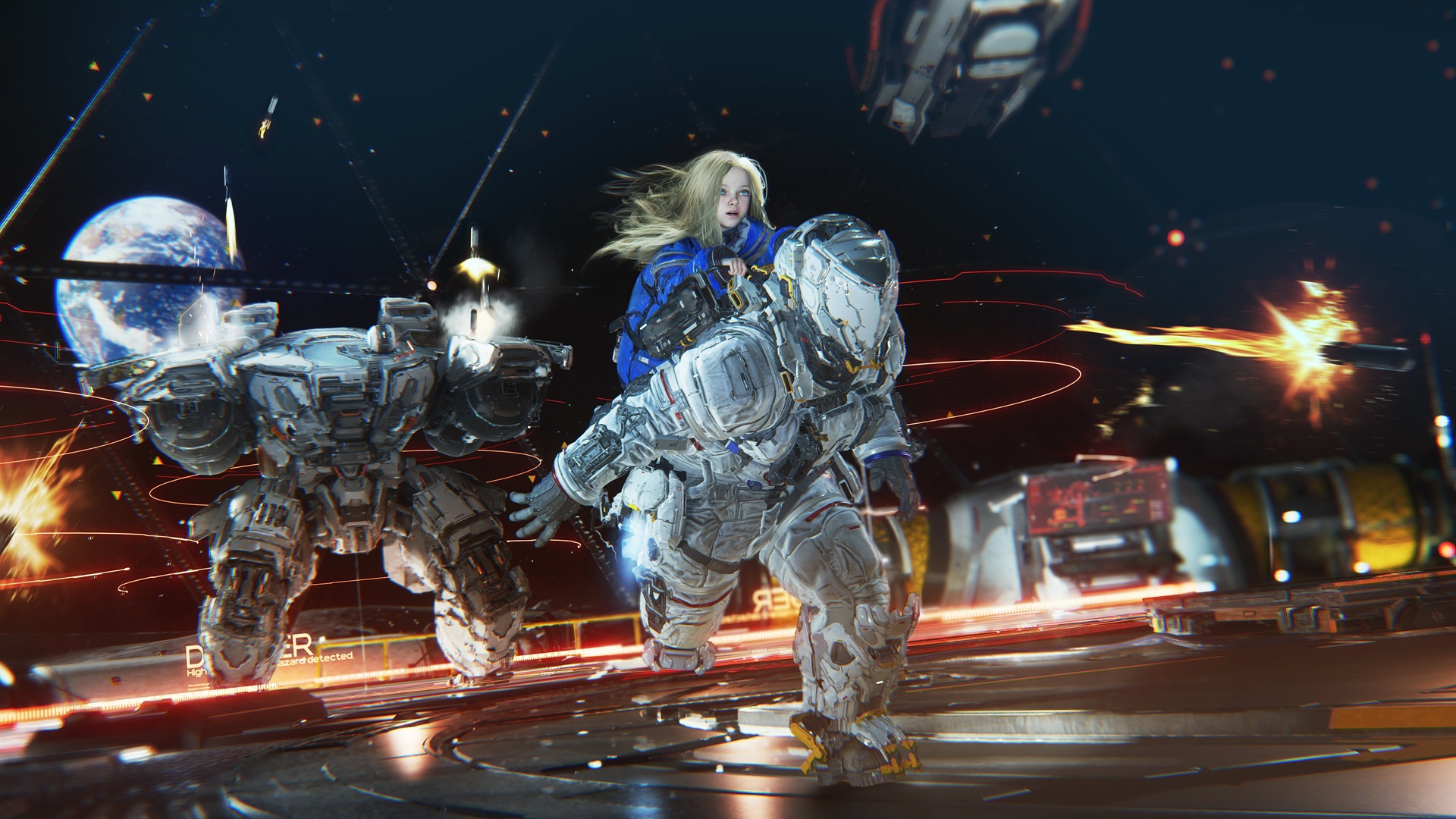
These simulations will task players with things such as reaching an objective within a time limit or slaying enemies and then two additional tasks as well such as taking no damage or finishing in an even faster time than asked. Add these optional tasks with the bonus content that is unlocked once players complete the game, including a New Game+, an additional post-game challenge mode, and even a harder difficulty and you have a game that does everything to keep players as engaged as possible and with its addictive split of combat and puzzles mixed into one, Pragmata succeeds in nearly every way.
Audio & Visuals
Pragmata does a stellar job at presenting a NASA-like design to the futuristic lunar base while also making sure to go a step beyond, adding enough sci-fi and twisted elements to deliver a unique world to traverse, especially with the rampant AI triggering printing errors throughout the station, and enemies to battle. Enemy variety is quite high, even if a few are simple enhanced recolors, or Mk IIs, of earlier bots, and their designs are quite solid, especially when it comes to the bosses players will need to battle against. The design of Hugh is kept fairly basic thanks to his space suit but a number of variations can be unlocked while Diana is always bursting with charm and similarly has a few costumes to unlock.
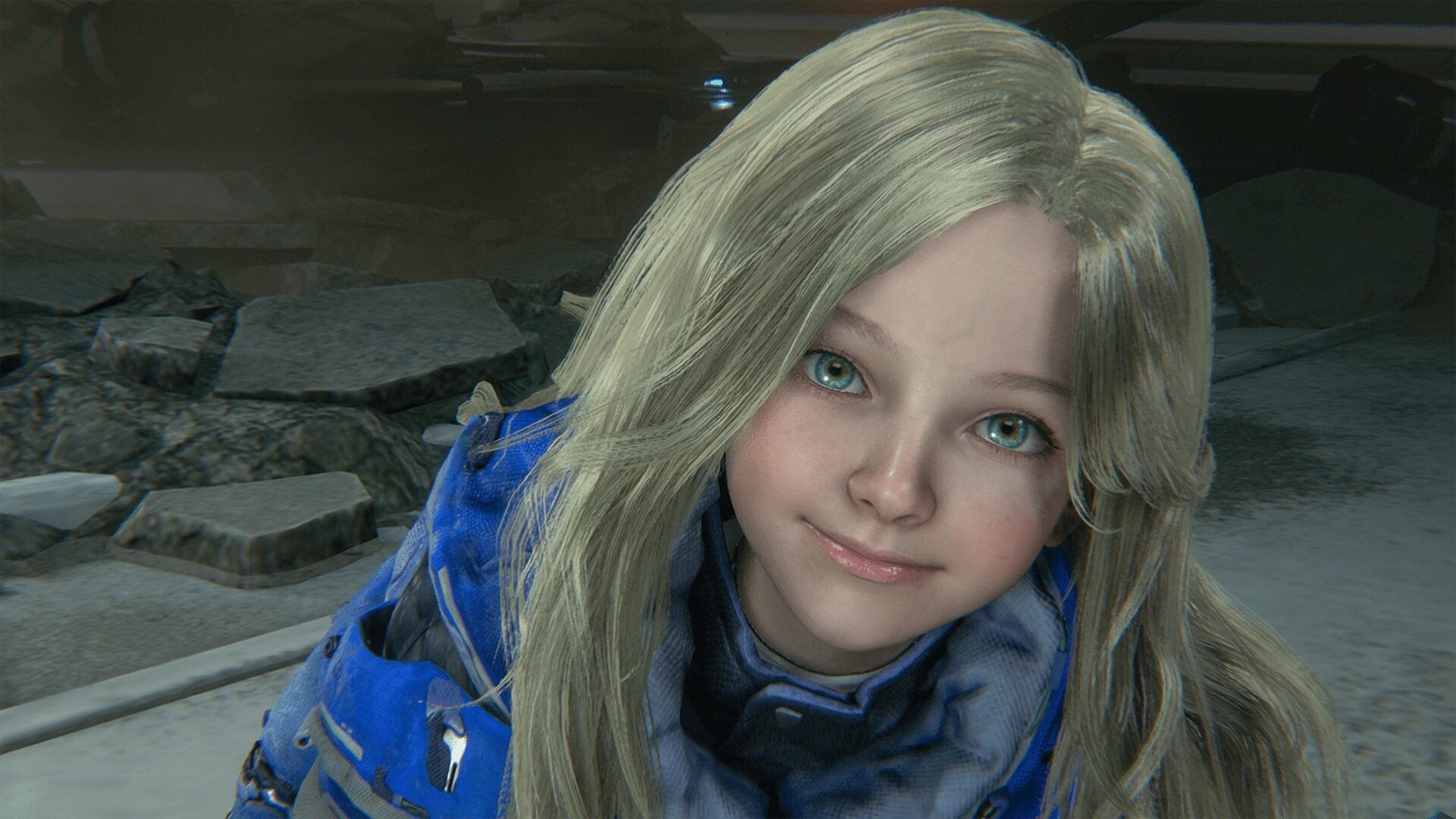
The voice work throughout the game is handled quite solidly, though Hugh’s initial voice work is a bit gruff when dealing with Diana. This does soften though throughout the game and helps show how he starts seeing the android as more than just a robot. Diana’s voice acting is stellar and fits the exuberance of a child-like character seeing things for the first time perfectly. The soundtrack is a bit of a mixed bag as there is some decent combat music but it feels like it could have been better, while the atmospheric sounds while exploring are similarly okay but not anything exceptional.
Overall
Pragmata is an experiment that has turned out to be successful in nearly every way. Blending the hacking puzzle-esque gameplay with the gunplay makes for intense and chaotic feeling battles that keep players engaged in every fight. While the overarching storyline may not be the most unexpected or inventive, the writing of Hugh and Diana as well as their interactions are genuinely delightful. This makes Pragmata a fresh new experience that offers something many will likely have never experienced before and despite its minor drawbacks definitely deserves attention.
Capsule Computers review guidelines can be found here.

