


Final Fantasy Resonance
Developers: Square Enix, Lancarse
Publishers: Square Enix
Platforms: PlayStation 5 (Reviewed), PC, Xbox Series X, Switch, Switch 2
Release Date: October 22, 2026
Price: $49.99 USD – Available Here
Overview
When a gacha game reaches its “End of Service” and is shut down, the best most of its fans can hope for is taking some screenshots of their favorite characters. In recent years some more prominent gacha games were at least given “offline” versions that allowed fans to still view their characters and any story that they had unlocked for them. For other lucky fans, their favorite gacha titles were simply put into permanent maintenance mode where the servers are kept alive but no new content is ever made, but that has never been the case for a Square Enix gacha title. Despite having a large number of gacha games under their belts, every single one that was shut down was never given any special treatment. That is until the announcement of Final Fantasy Resonance as it looks to take advantage of Final Fantasy Brave Exvius after being shut down two years ago. The question is, has Square Enix successfully managed to transform the gacha game and its mechanics into a solid RPG?
Story
Rumor has long been told that the eight elemental crystals that exist in the world serve as a balance and that should they ever be broken, destruction would be wrought upon the land. In the Kingdom of Knights, Grandshelt, Rain is the commander of the airship squadron and has been ordered to investigate the Earth Shrine containing the Earth Crystal after reports that the magical barrier has vanished. Alongside Lasswell, his friend and right-hand man, the two find that a mysterious soldier has made short work of the guards and practically kills both Rain and Lasswell with a single swing of his blade.
After disabling both fighters, the dark knight destroys the Earth Crystal right in front of them and prepares to finish the pair off, only for him to be driven back by a mysterious girl that was trapped within the crystal. Upon fleeing the shrine, Rain and Lasswell find that their airship squadron has been destroyed and the capital is aflame as the dark knight, calling himself Veritas of the Dark, and leading a squadron of similar knights, are leading a crusade to destroy the crystals around the world and kill anyone that should stand in their way. After suffering such a crushing defeat, Rain and Lasswell, under order of the King and their own free will, choose to set out after Veritas to try and protect the other crystals.
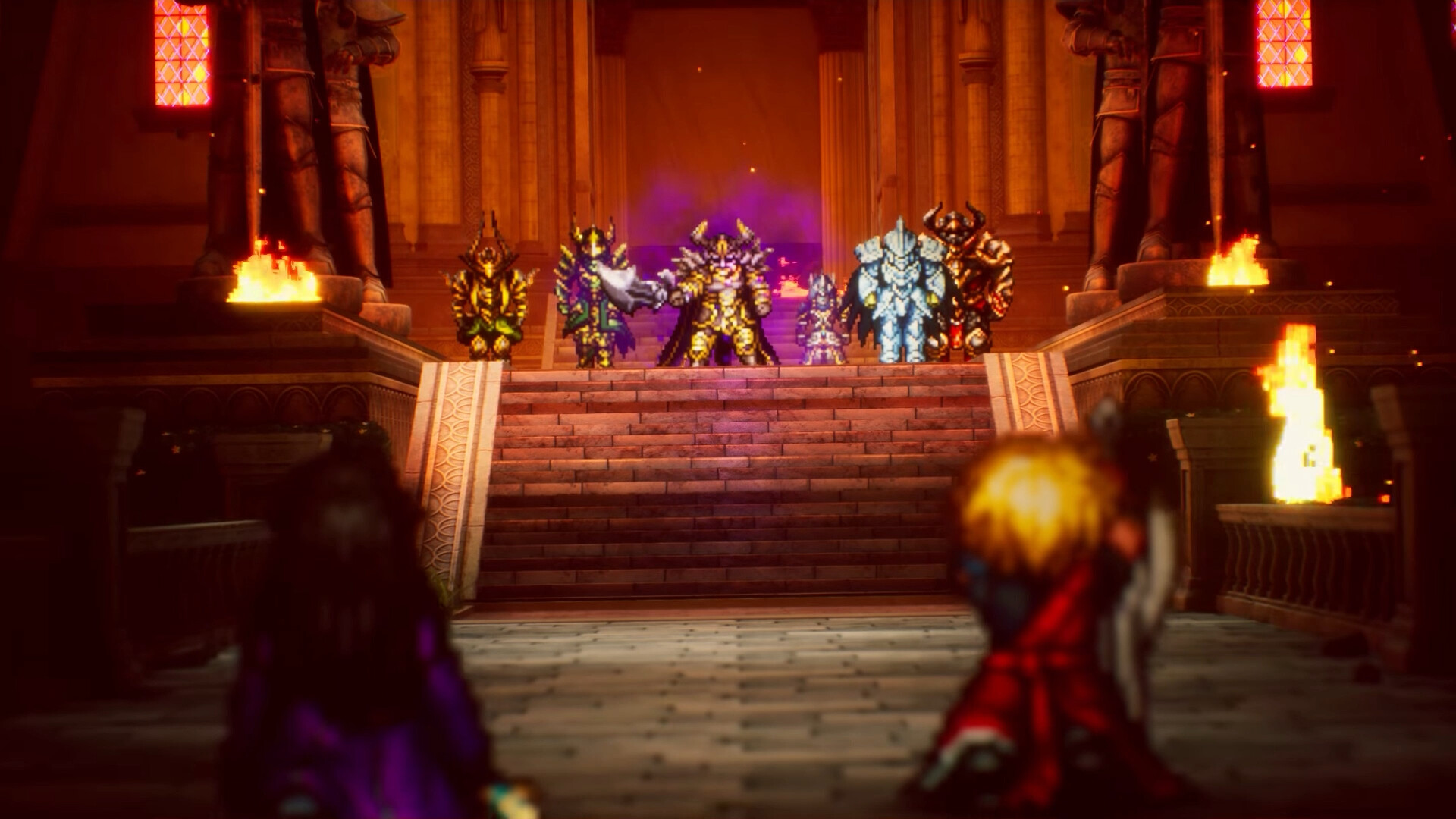
Before doing so however they find themselves being followed by the strange girl who was within the crystal who has managed to wake up, only now she remembers nothing about herself other than her name. Fina. With Fin by their side the pair set out in an effort to chase after the knights only to find themselves one-step behind every step of the way, finding even darker forces that have allied themselves with the knights as long as it serves to suit their greater interest for evil.
Final Fantasy Resonance does a solid job adapting the original starting arc of Brave Exvius and making it not only coherent but also bridge together the various places players will explore, side-characters, and the plot points without making them seem unnecessarily padded like they were originally. It also reworks a few character arcs for better flow, including some origins and the way that characters interact with one another outside of the core storyline, including some fun little interactions as players explore the world in “skit” like dialogue sequences that pop-up and play while traveling in a town or the overworld.
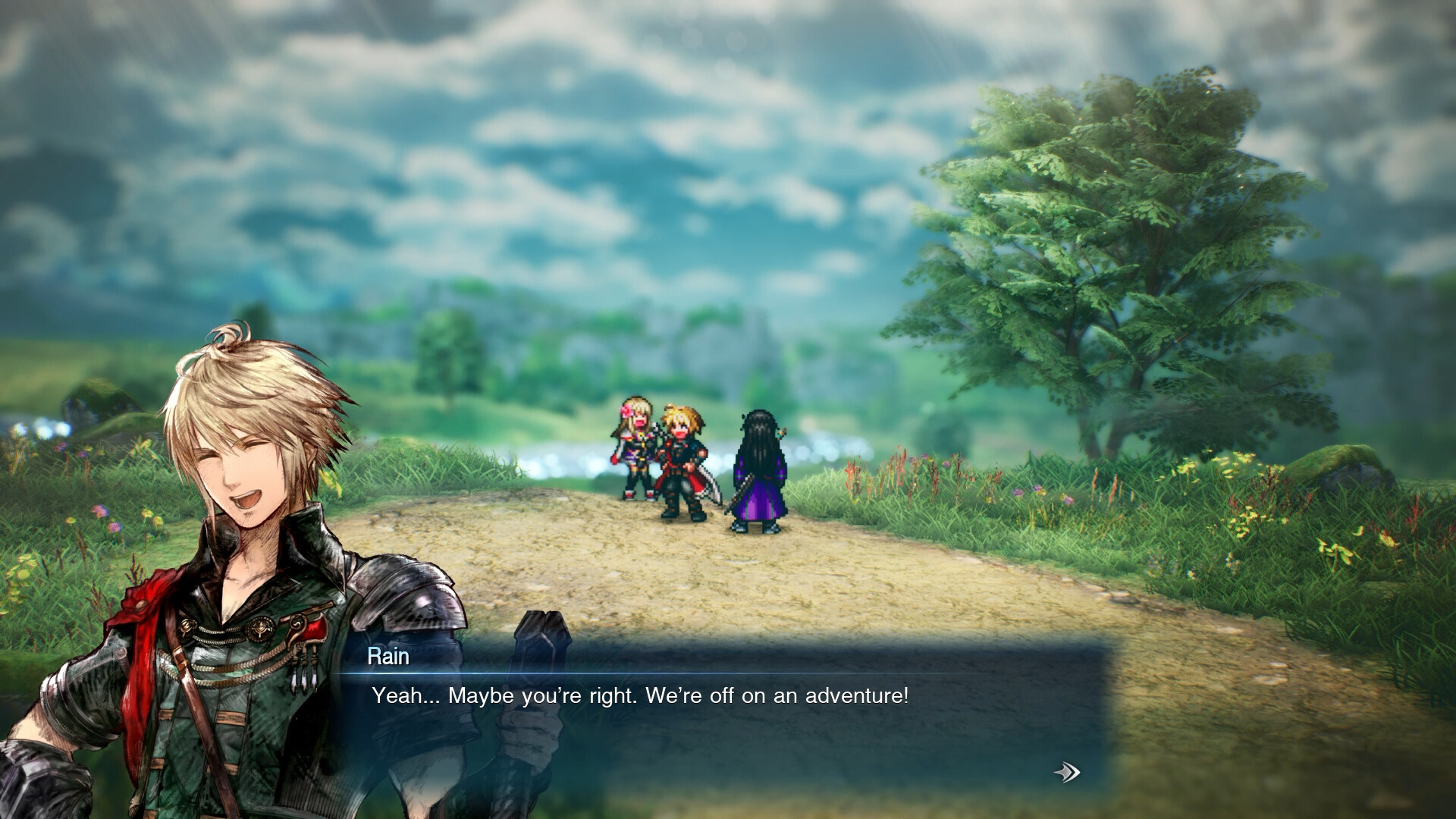
Considering the storyline does work on adapting mostly the entire first arc of the gacha game, players who are well versed in it will find that outside of the various tweaks in Final Fantasy Resonance the narrative won’t surprise them much. Thankfully for newcomers this will feel like a classic JRPG storyline following a trio of heroes gathering allies along the way as they seek to save the world from destruction and numerous unexpected twists and turns, including many that will be quite shocking to newcomers. There are also a large number of side-quests that tend to be quite emotional which is a nice touch and also appear to be almost entirely new to the game, as many focus on expanding the world lore or giving extra depth to the player’s party members.
Gameplay
Final Fantasy Resonance is incredibly close to some of the most original Final Fantasy titles as it makes use of many of those same elements while exploring, such as having players travel an overworld map on foot, then on chocobo, and eventually even an airship to navigate around. Unlike more recent Final Fantasy titles, Final Fantasy Resonance features a random encounter system that is indicated by a flashing circle on the player’s mini-map, going from green, to yellow, to red when battle is about to commence. These battles only happen within a dungeon or on the overworld while players can freely explore a town without issues. This does mean that trying to go an alternate route to unlock a treasure chest or obtain a collectable item, such as the tablet fragments that a certain princess wants for bonus rewards, will trigger extra battles.
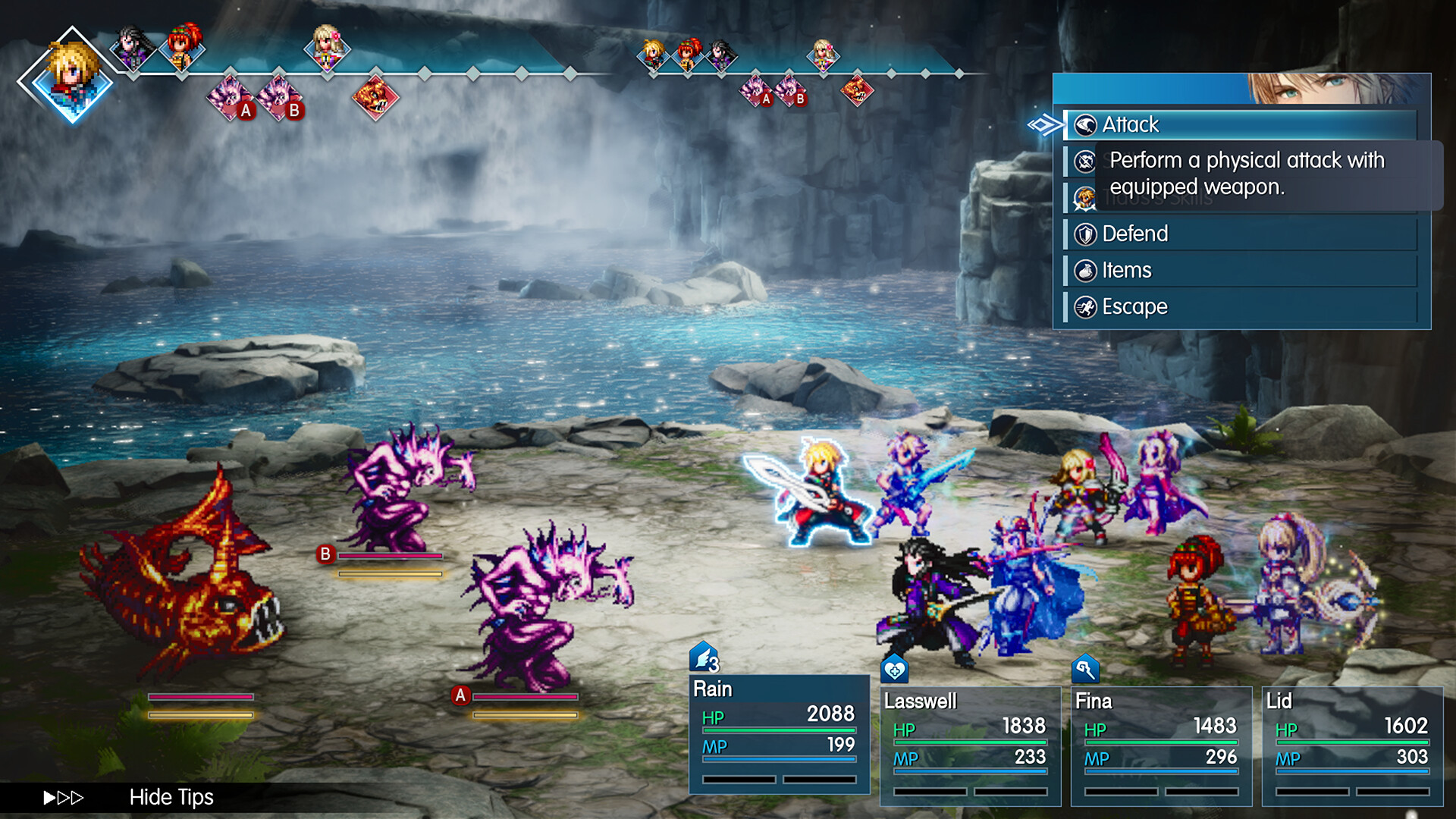
As players enter a fight they will find themselves taking part in turn-based fights but the game does not feature any ATB system, instead the player’s party and their opponents will act out their turns dependent on their speed, with faster units being able to attack early. It is also worth noting that players can adjust the speed of combat should they wish animations to play out faster, though it does not appear that the game remembers the player’s speed choices. Players will want to make use of their skills to figure out an enemy’s weakness as almost every enemy has a weakness to at least one element and while players can use Libra to reveal it at the cost of some MP and a turn, it is easy to figure out most of them on their own. Every enemy has two meters, their HP meter and stagger meter and while normal attacks will drop the stagger meter a set amount, striking a foe’s weakness not only deals more damage but drains the stagger bar heavily. Once a foe is staggered not only will they not be able to take an action on their turn, but they will receive additional damage for the rest of that turn and give the player’s party member that staggered them a “Free Attack” at the end of the turn to lay down some extra pain.
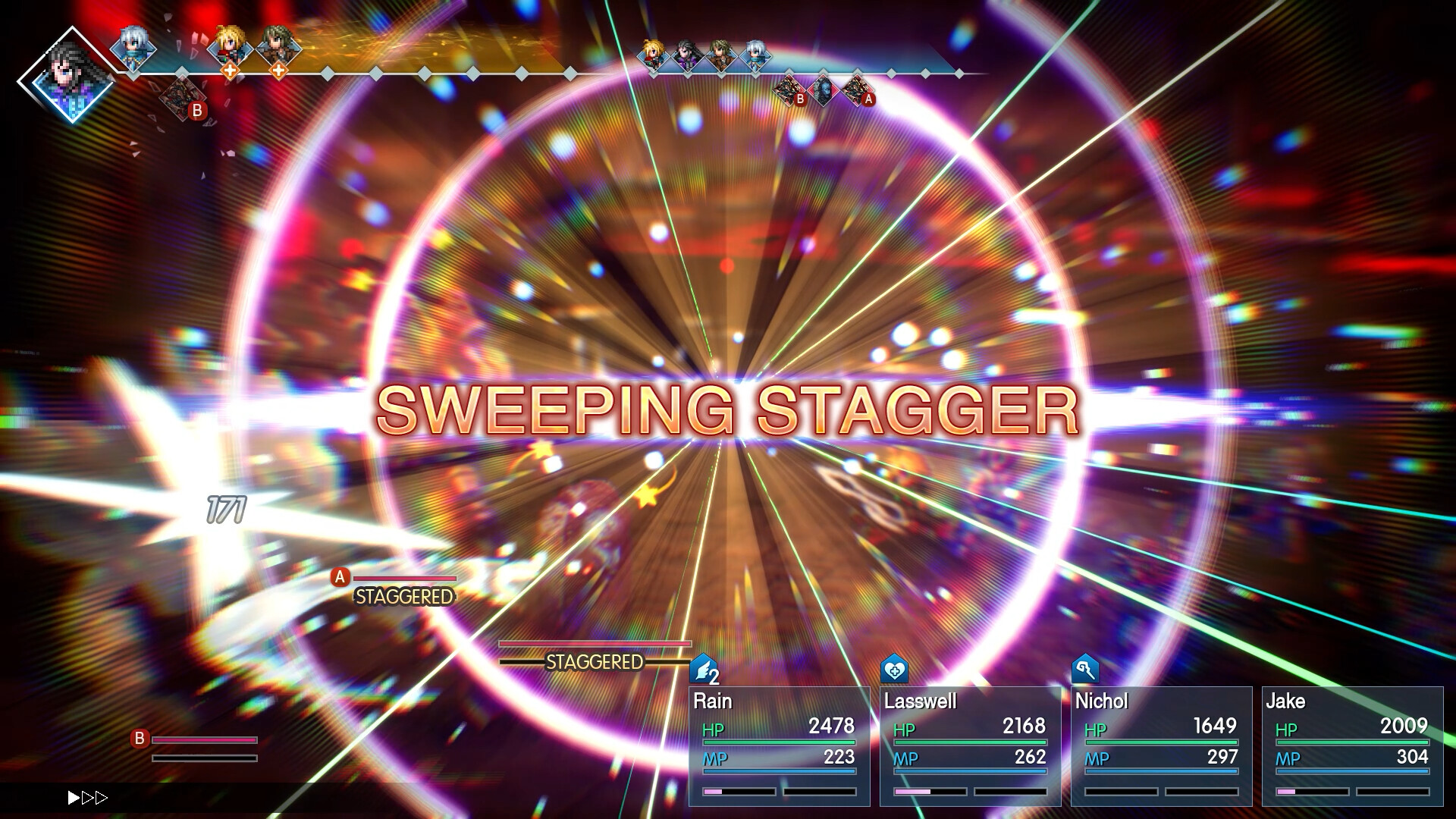
Players will want to take advantage of this stagger system as it will play a major role in other mechanics as well. Should the player stagger all of the enemies on the field, or if there is only one foe, then they will trigger a Sweeping Stagger that not only gives every character in the player’s party an extra attack but also allows them to select one of their equipped Visions to use their ultimate skill. Depending on the Vision the skill can heal the player’s entire party, deal massive elemental damage to a single foe, deal massive damage to an entire group of enemies, and more. This, along with the fact that players will obtain extra EXP for finishing a fight without getting damaged, extra money for overkilling enemies, and bonus Mastery Points for finishing off staggered enemies, means players will want to take advantage of these systems to overpower their foes.
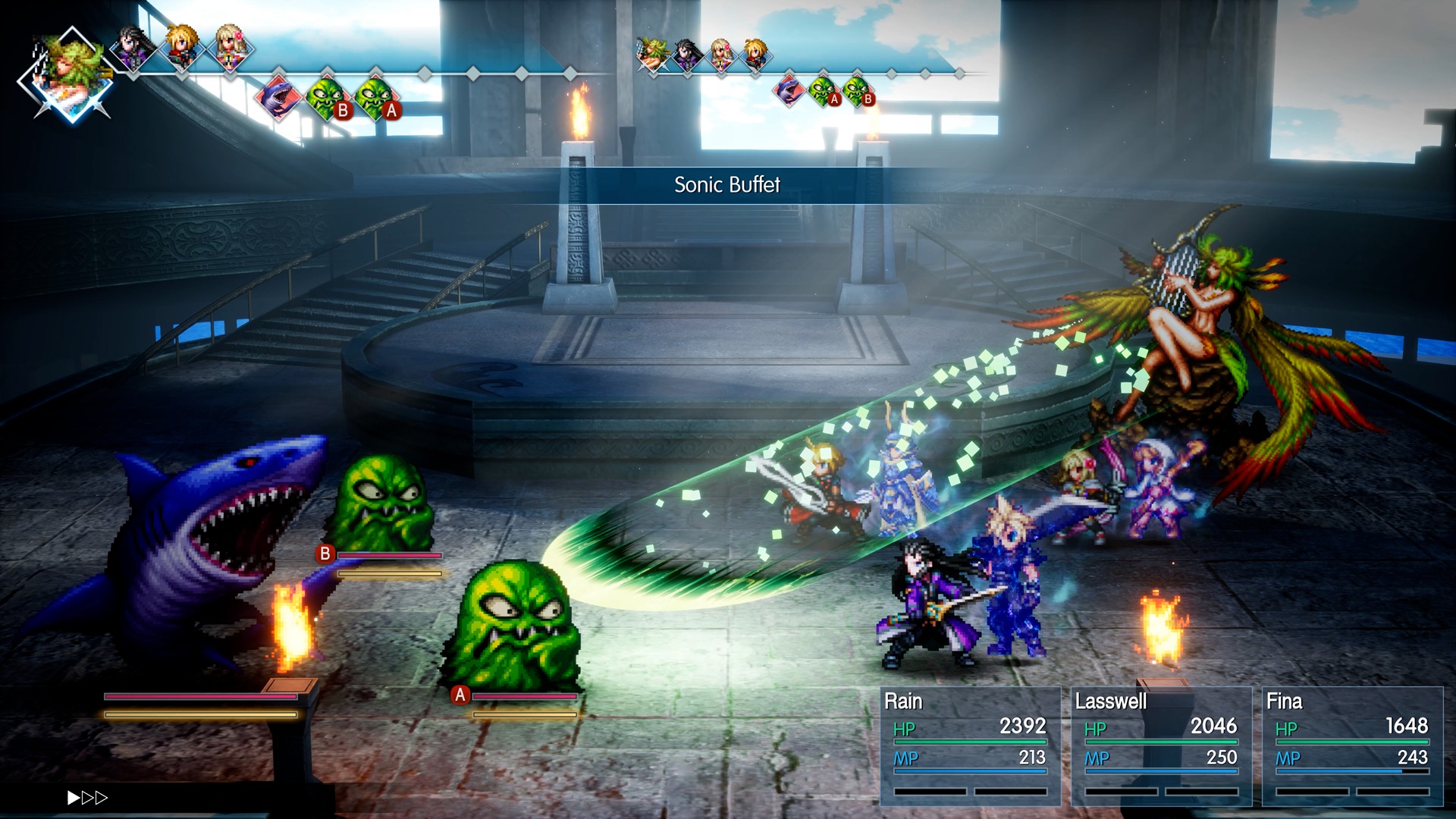
Thankfully there are a lot of ways to do this and Final Fantasy Resonance isn’t afraid to give players all the tools that players can handle and this comes in the form of Visions. These Visions are the gacha game’s equivalent of the characters that players would have pulled for in the original gacha only now a large number of them have been made available for easy access simply through exploring. Upon arriving in each new land or unlocking a new area, players will find that there are various Shrines of Light that each contain one Vision featuring a hero from a past game in the franchise such as Cloud, Warrior of Light, Terra, Tidus, or even simpler ones such as a Chocobo or White Mage. Fighting with each of these Visions equipped to a character provides that Vision’s skills as secondary options for that unit and also rewards mastery points at the end of every battle.
After players have gained a mastery level they will often obtain a bonus of some sort, this can be a new skill, a new permanent stat boost, increased AP, or more. The special aspect of this is that when players swap out their Vision with a different one, it is possible to re-equip all previously unlocked abilities and boosts at the cost of AP. This can be as simple as boosting healing by 10% for 10AP to making a fighter a non-stop attacking machine by training them and then equipping them with Counter Physical Attack and Counter Magical Attack, each at 20 AP a piece, learned from different Visions, and making it so they will always attack the enemy that targeted them. In fact, the player can even do this to their entire party if they feel like grinding it out, making it possible to create an absolutely broken team should players feel like it, especially since the Normal difficulty already feels very tame.
Other than equipping various pieces of armor and accessories to boost the party member’s stats, there are also magicite shards, fragments, and larger, that can be used to “Limit Break” a Vision and unlock their higher tier skills. For a Vision such as Terra, this means she will be able to cast spells such as Fira and Watera instead of their base versions as well as additional buffs and debuffing spells. Speaking of limit break, that is also a mechanic that has returned in combat though it will likely only rarely appear due to combat difficulty being a bit on the lower side outside of boss fights. After taking and dealing enough damage every character will slowly fill up their Limit Break meter that, when activated, triggers their ultimate skill to deal massive damage to a foe.
Similarly, a certain character in the player’s party will eventually be revealed as an Esper, a character that can communicate with summoned spirits. This means that players will be able to summon a powerful ally at a high MP cost that will fight alongside them for three turns before delivering their devastating ultimate attack and vanishing. Only one summon can be active at a time and players will need to hunt down extra summons beyond the first one that they receive due to story reasons, but this adds an extra layer to combat, especially should a boss start to turn out to be more challenging than players expected.
Audio & Visuals
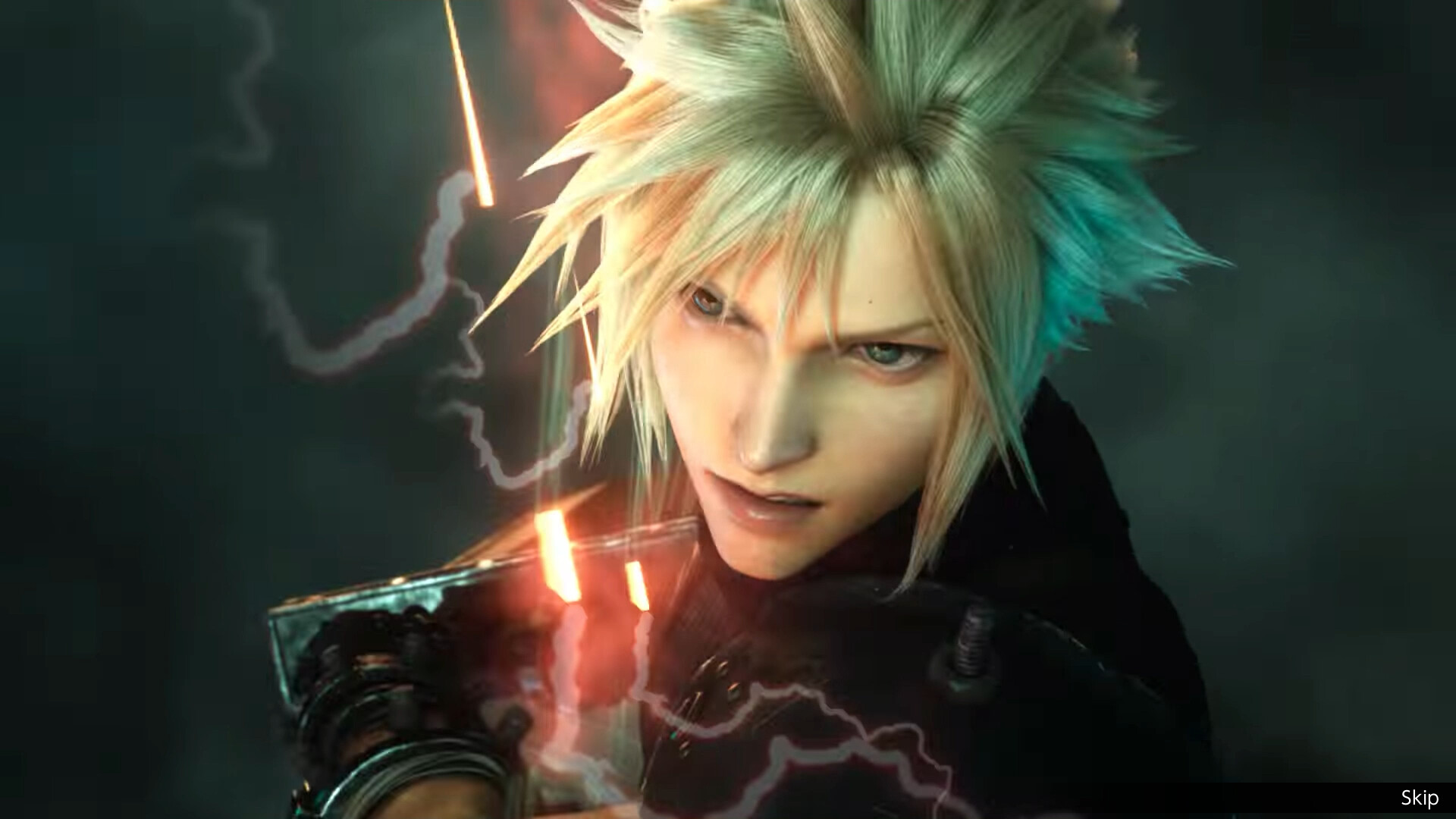
For quite some time Square Enix has been making use of their “HD-2D” style to produce some of the most unique and best looking pixel art games throughout the years and now Final Fantasy Resonance shows just how impressive that can be when applied to an already established franchise. The environments and character sprites are gorgeous looking with highly detailed portraits used during dialogue. It is worth noting that while most of the game’s combat and scenes are presented in the pixel-art style, special cinematics and the Visions’ ultimate skills are presented with a more modern presentation. In fact, whenever a named Vision uses an ultimate attack it appears to be ripped directly from their version from Brave Exvius.
Players have the option of playing with either the English voice track or the Japanese voice track and it is worth noting that a large portion of the game is surprisingly voiced. The English voice actors do an admirable job with their characters, especially during dramatic scenes, but it is worth noting that all of the cinematic attacks from the Visions are only available in Japanese, so even if players are using the English dub. The soundtrack is handled quite nicely with a mix of original tracks and classic theme songs used liberally throughout the game, and it is also nice to note that whenever players are acquiring a Vision from a specific game, such as Final Fantasy I or Final Fantasy VII, one of those game’s themes will play during the moment.
Overall
In many ways Final Fantasy Resonance does exactly what Square Enix was likely hoping for, taking a failed gacha project and turning it into a successful RPG that can still be enjoyed for everyone who missed out on the mobile game’s short lifespan. With tight and decisive combat with a laundry list of options for building the player’s team to take on enemies, and a predictable enough but enjoyable storyline, this is a game that harkens back to the roots of Final Fantasy in a number of successful ways even with its few lingering gacha-style elements hanging around. That being said, those familiar with the game’s origins will likely find themselves a bit unimpressed with the game’s storyline since it is mostly the same and retreading old ground, meaning this is mostly for newcomers that never touched Brave Exvius or those who loved the gacha game and want another taste only in an actually real RPG.
Capsule Computers review guidelines can be found here.

