


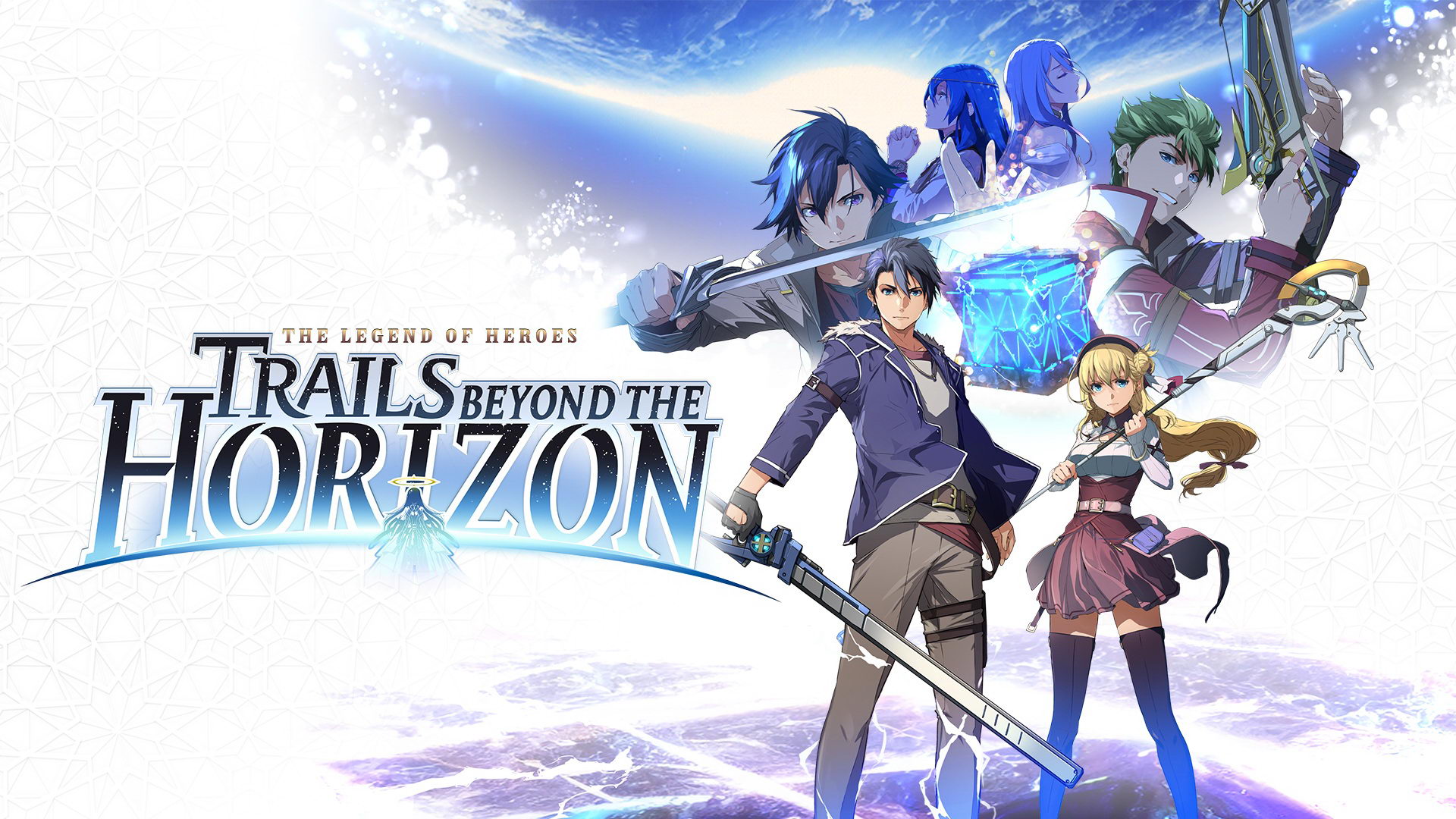
The Legend of Heroes: Trails Beyond the Horizon
Developer: Nihon Falcom
Publisher: NIS America
Platforms: Switch, Switch 2, PC, PlayStation 4, PlayStation 5 (Reviewed)
Release Date: January 15, 2026
Price: $59.99 USD – Available Here
Overview
It is hard to believe that there would be a time that not only would the Western releases of The Legend of Heroes franchise manage to catch up to the Japanese releases of this incredibly lengthy franchise, but that the game’s that helped kick it off would be getting remade at the very same time. A few months ago we reviewed the fresh remake of Nihon Falcom’s Trails in the Sky 1st Chapter and now here we are, visiting the most recent release in a story featuring characters and plot elements spanning all the way from that very first game twenty-two years ago. It’s not often that a video game sequel requires full knowledge of its predecessors, and in many ways The Legend of Heroes tried to do that with Daybreak, but now that everything has gathered together in The Legend of Heroes: Trails Beyond the Horizon, players best be ready for the most character packed, lore heavy, game of the franchise since Reverie.
Story
If it wasn’t clear from the opening, it is not recommended to play Trails Beyond the Horizon without beating both Trails Through Daybreak and Daybreak 2 first. In fact, even the game’s included “recap” of events that players can view is very limited compared to what actually happens in the games and the countless different factions and players involved in the plotlines, let alone the brief info it gives of other characters. This becomes immediately evident as the story kicks off with Arkride Solutions’ Van Arkride taking part in a special “training” simulation to test out new ways to use the “Shards” weapons systems alongside a number of other allies. This includes Kevin Graham (Trails in the Sky), and Rean Schwarzer (Trails of Cold Steel) and a few of each of their compatriots also joining in on this practice exercise. Combining these three major players into one large group wasn’t just coincidence however, it was all orchestrated not only to advance the weapons tech of Arkride Solution’s Agnes’ father’s tech, but also to help them bear witness to the next “great step” for humanity.
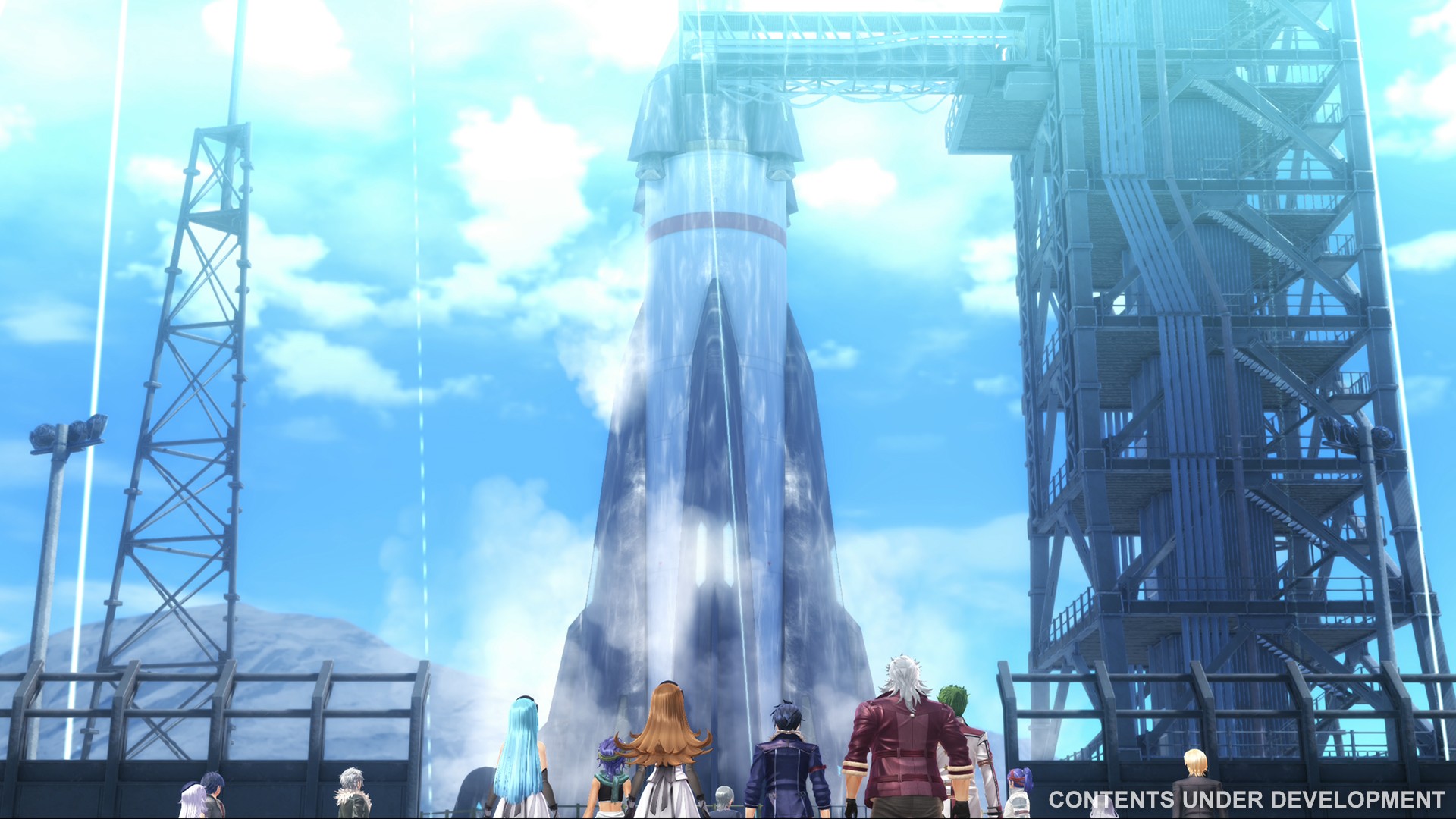
Agnes’ father and president of Calvard announces and kickstarts the Project Startaker. A mission that consists of three phases to try and help achieve manned space flight. Before the gathering of every big shot the initial test went off without a hitch and when the second phase manages to deploy an unnamed dummy mech into space while Van, Kevin, and Rean, and all of their companions were enjoying some downtime with the best and brightest, it wasn’t long before eventually the third phase of the project, actually sending an astronaut into space for the first time ever, would be happening. The only problem is, there are far more sinister forces at work in the form of unknown forces moving behind the scenes, remnants and resurgences of Ouroboros, the mysteries of Agnes’ Genesis device that remains unsolved, and eventually to make matters worse, the story splits into three separate storylines along the way, each following a main character and cast of its own each trying to solve one or more of these mysteries along the way.
To say that The Legend of Heroes: Trails Beyond the Horizon is as dense of a plot the franchise has ever had would be something of an understatement. The introduction of the prologue might be a bit on the slow side and even the first act that serves as a way to introduce the vast amount of characters that will be in the game and help freshen players back up to the mechanics of the game world but nearly everything beyond that point will feel like players are being steeped in countless developments, twists, and even more mysteries from almost every angle.
It is interesting to note that while each character route is handled fairly well, they don’t quite feel like they all have the same level of impact, especially in regards to character development. For the most part Van’s storyline feels like retracing the past and learning more about things that have already been in development while helping to expand only some of the cast members, and leaving those in dire need of development still lacking. On the flipside, it does feel like Rean is once again given the special treatment here as as not only does Rean manage to pull together quite a few familiar faces from the past, the most out of the entire cast, it also happens to feature some of the biggest revelations before things start really kicking off in the latter half of the game. Along these same lines, Kevin’s route features plenty of intriguing and interesting details that feel like they’ve been underexplored before and seeing how these characters handle these mysteries was easily one of the best parts of the split storyline.
One thing that is worth mentioning, and while we won’t go into detail here to avoid spoilers, is how The Legend of Heroes: Trails Beyond the Horizon manages to come to a close. Fans of the franchise have seen wars come to an end through bombastic means in other story arcs, cults and their demonic gods being eliminated in others, but here the story leaves players hanging with a massive question mark as to where the story can go from here. Again, while avoiding specific details, the events that play out in the latter half of the game have global consequences, especially for the land of Zemuria. This type of cliffhanger is unusual even for a Legend of Heroes game, making the wait for the next one all the more dire considering this is the first time English players have caught up with the Japanese audience.
If there was anything that was an issue with the way the story was handled, is that despite pulling together so many familiar and returning faces to not only join the story in a partial way but also as playable characters, they don’t actually interact with characters from other story arcs too much. Outside of the initial prologue that sees everyone gather together, a bit of intermission here and there, and the mostly optional Grim Garten dungeon that can see characters fight alongside one another that never have a chance to otherwise. This is partly due to the way that the storyline splits amongst the cast members and while it is understandable that trying to juggle such a massive cast is quite the challenge, seeing some more interactions between the members would have been a delight for longtime fans of this long running franchise.
Gameplay
In many ways The Legend of Heroes: Trails Beyond the Horizon still plays the same as the first two Daybreak games with players still needing to spend time exploring the world, taking on and completing side-quests and the occasional investigation if they happen to be playing as Van, taking part in mini-games, and of course obtaining plenty of loot and gear to customize the team with. As mentioned before, the game is broken up into story segments following each of the three primary party leaders of Van, Rean, and Kevin who all have unique content of their own.
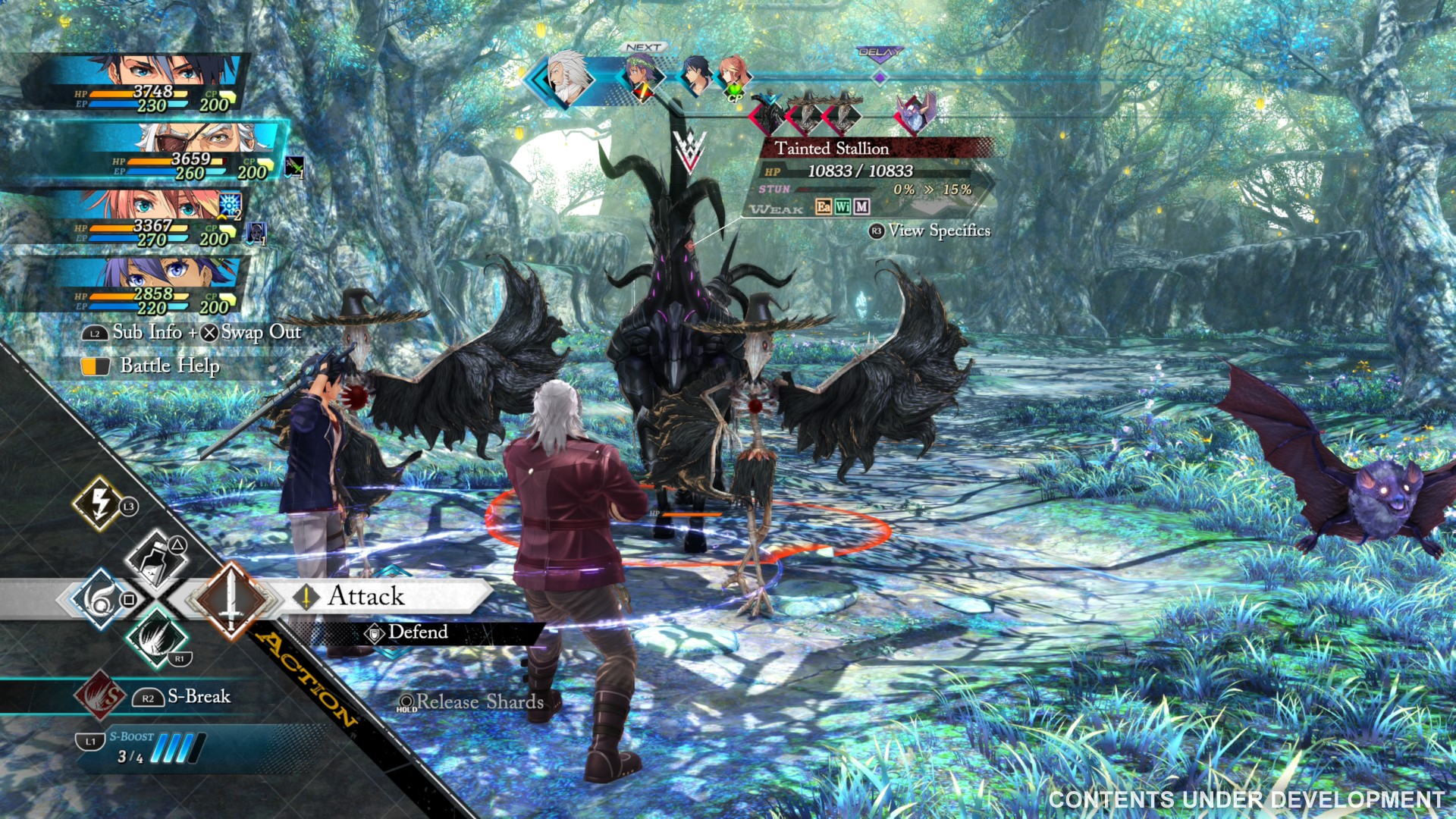
The combat gameplay is also mostly the same, though a few extra tweaks have been made to keep things interesting. Similar to the first two Daybreak games and the remake of Trails in the Sky 1st Chapter, players will have the option to fight against enemies in open-field action based combat to freely dish out damage and dodge incoming attacks. This is a great way to eliminate smaller foes and now players can even cast “Quick Arts” after dealing enough damage to target elemental weaknesses and even charging up a “heavy attack” that can stun an enemy while dealing heavy damage. Players can choose to kill enemies in action combat if they wish but sending out “shards” when enemies are stunned not only deals additional damage but also transfers the game into its turn-based RPG style combat that is far more controllable and gives players a number of more options to work with. Interestingly enough, players can even withdraw their shards at any time to transition back into action combat if they wish to.
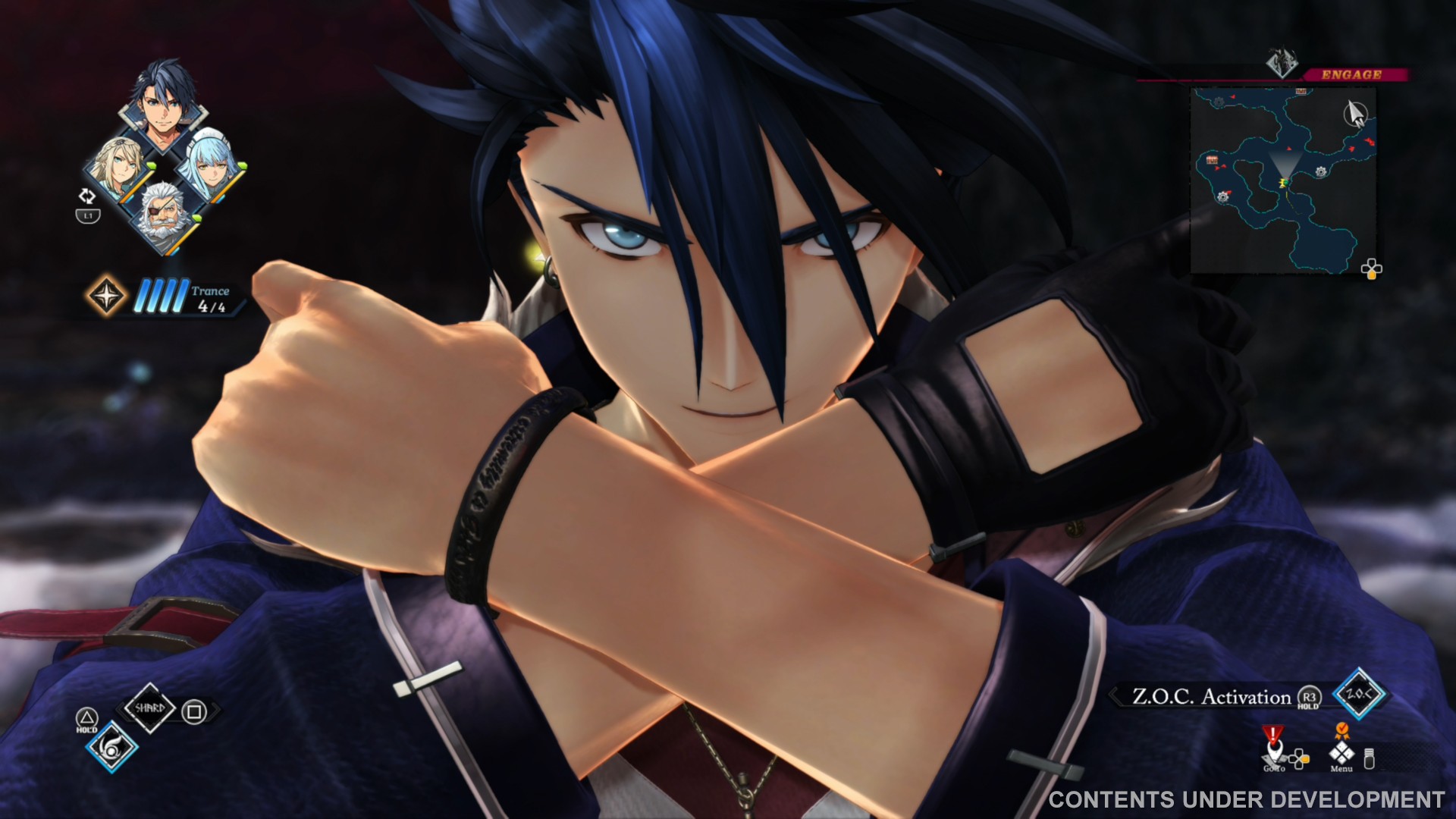
In the turn-based combat players can have access to their full line-up of Arts, Crafts, and use items during their turn as well as lining up attacks to target the most enemies at once or standing near allies to chain attacks together. Similarly S-Crafts remain as powerful as ever. The turn based system maintains most of the same mechanics as before though a few new elements have also been included here that also play a role into the action combat as well. The first of these is a “ZOC” mechanic that during action combat slows time and gives the player’s party a damage boost and in turn-based fights works to not only Double Shard Boost the current character, giving them extra turns or immediately casting Arts, or offering impressive buffs to dish out a lot of damage.
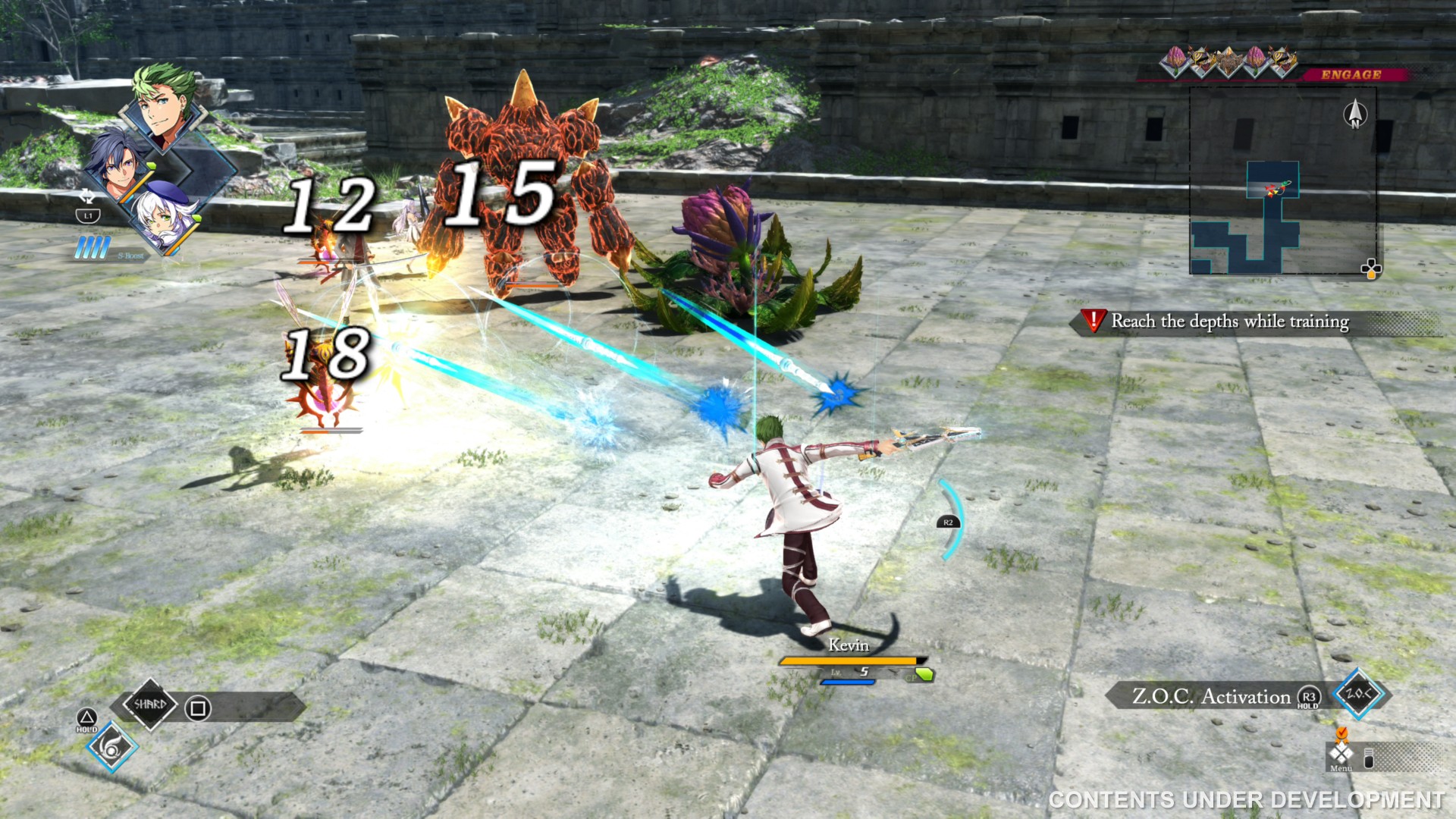
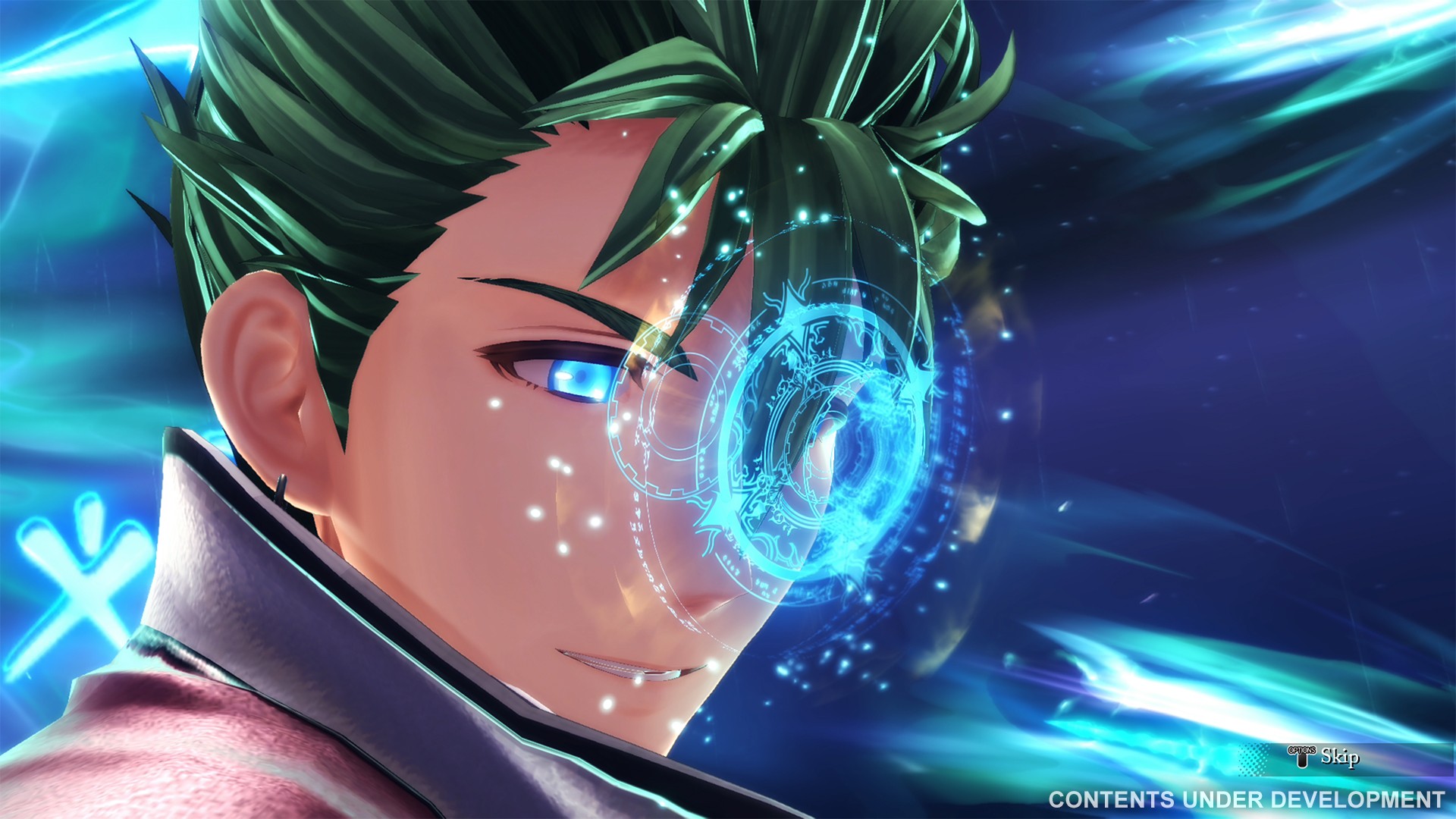
Other new elements in the turn-based combat come in the form of Shard Commands. Shard Commands take a large portion of the Shard Boost meter but can temporarily provide party wide buffs to the entire party such as increasing overall damage, restoring health and providing shields, and more. Awakenings are another new, but slightly more limited, mechanic in action combat as only a select few characters that have special modes, such as Judith and Van, can power up and transform into a powered up version that most fans should expect and is a great way to annihilate smaller enemies or lay into mid-bosses or even bosses themselves before triggering the turn-based battle.
Other than that most other elements remain the same as ever. Players can equip various types of Quartz into a character’s Orbal gear to obtain special buffs and unique Arts specific to a certain element and of course standard equipment as well. It is worth noting that, despite this now being the fourth game to feature “action” based dungeon combat, the game’s camera still struggles to keep up with the action, especially with characters that have wilder attack patterns. Plus, the longer players battle it out using the game’s action mode the more they will notice that most enemies will have incredibly poor AI or only a few simple attacks, making fighting some enemies actually more challenging to fight in turn-based combat than action, which shouldn’t be the case for an RPG such as this one.
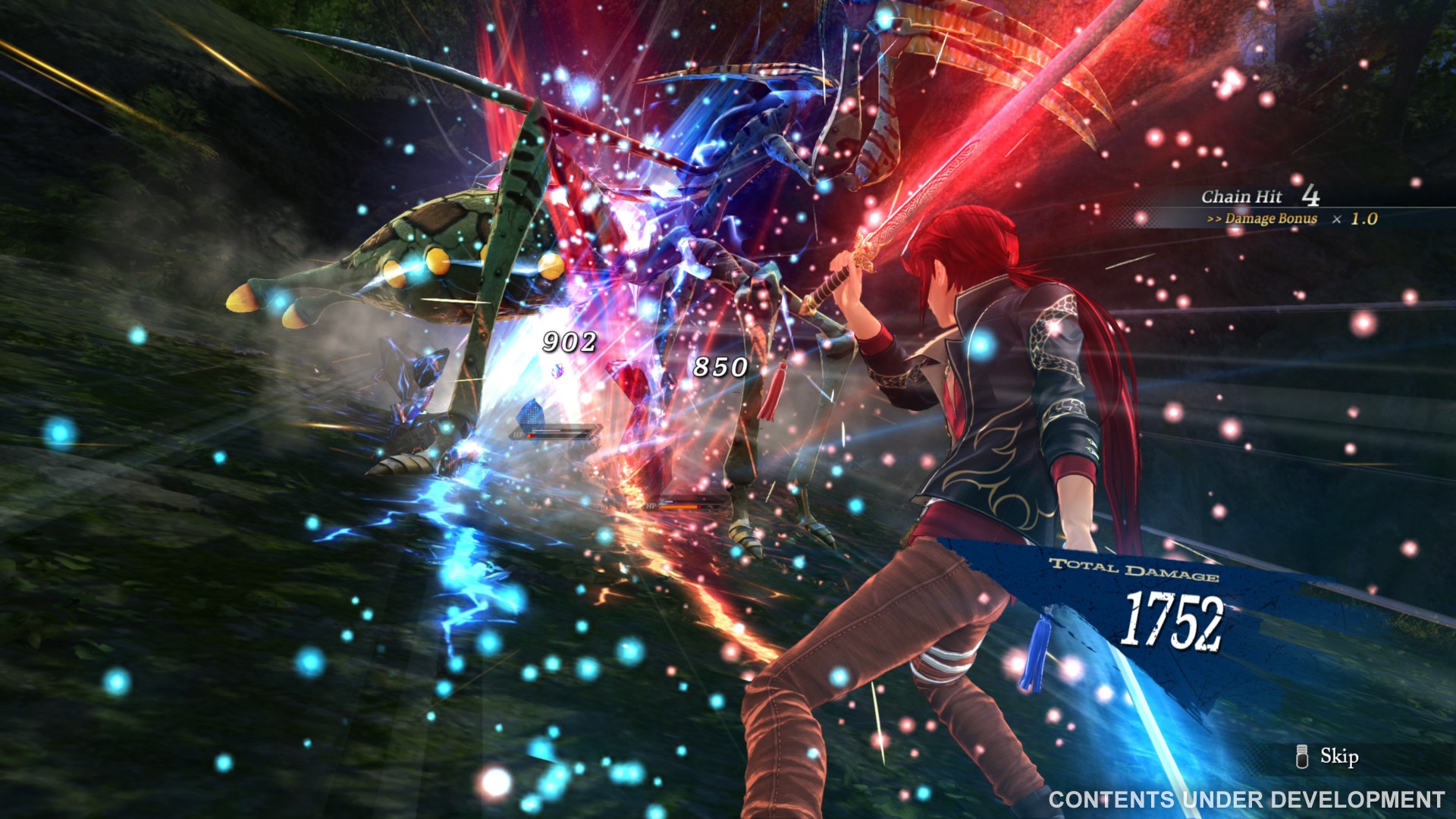
As mentioned briefly before, Trails Beyond the Horizon does bring back the randomized dungeon system but this time around it is called “Grim Garten” due to… circumstances. The dungeon still is the best way to obtain strong items and power up characters and use teams that otherwise are impossible throughout the game and see a few interactions that players wouldn’t see due to the way teams are split up. It is a great addition to carry forward, even if it feels rather lazy overall, but at least adding new ownership and a few extra elements does bring a fresh twist to the location.
Audio & Visuals
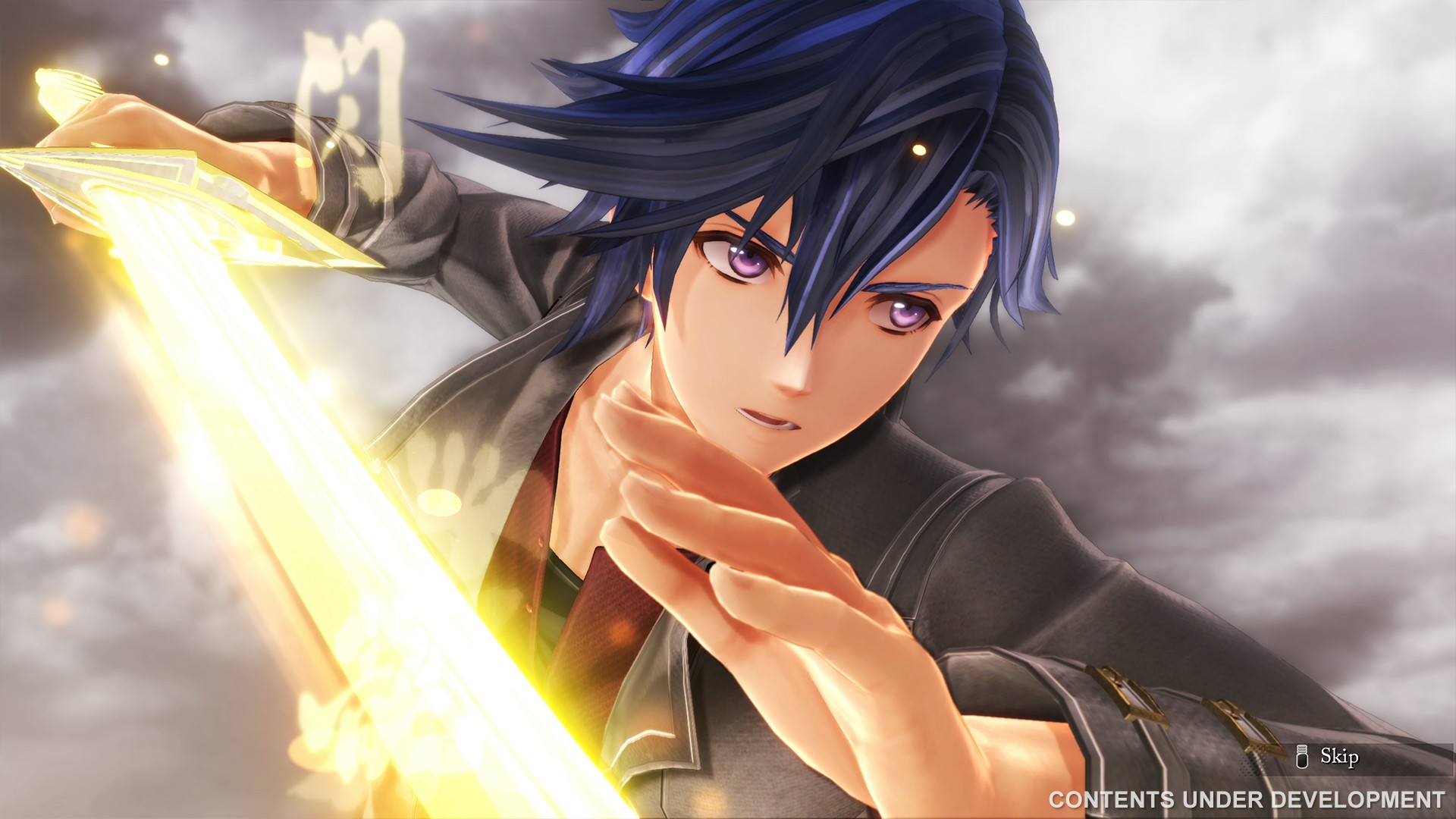
Trails Beyond the Horizon continues to show how Falcom has improved over every release with more details added to the already countless characters and the fancy looking action during special moves and the more action packed cut scenes. It is also nice to note that it is nice to see a large number of older characters get an updated look or completely redesigned in a few cases. The monster designs and the environments that players will travel through are fairly interesting but there are some low quality textures in some dungeons.
NIS America has provided an English voice track to accompany the original Japanese dub and it appears that they have managed to retain all of the original English voice actors. The dub is handled nicely and will be familiar to longtime fans though those that prefer the original Japanese will find it readily accessible. The soundtrack features some excellent pieces of background music, especially during combat sequences with a number of locations having unique tracks and some nice lows to go along with more dramatic scenes.
Overall
The Legend of Heroes: Trails Beyond the Horizon takes some impressive steps forward narratively by setting up some major stakes for whenever the next game in the franchise is set to drop, though it does it by forgoing any attempt at making the game accessible to all but the longest running of fans. Bringing together characters from countless story arcs and following their journey’s separately creates a storyline that can have some pacing issues but thankfully despite these issues the strong writing of these characters that fans have come to know helps keep everything together. The gameplay is mostly the same as the previous two entries but that is far from a bad thing as it works quite well and the few additions to the combat system add some extra tools to the player’s belt. Trails Beyond the Horizon offers a lot of what fans could have hoped for when it came to continuing the franchise’s story, but now for the first time ever in the West, players will be left wondering just when that story will be continuing.
Capsule Computers review guidelines can be found here.

