


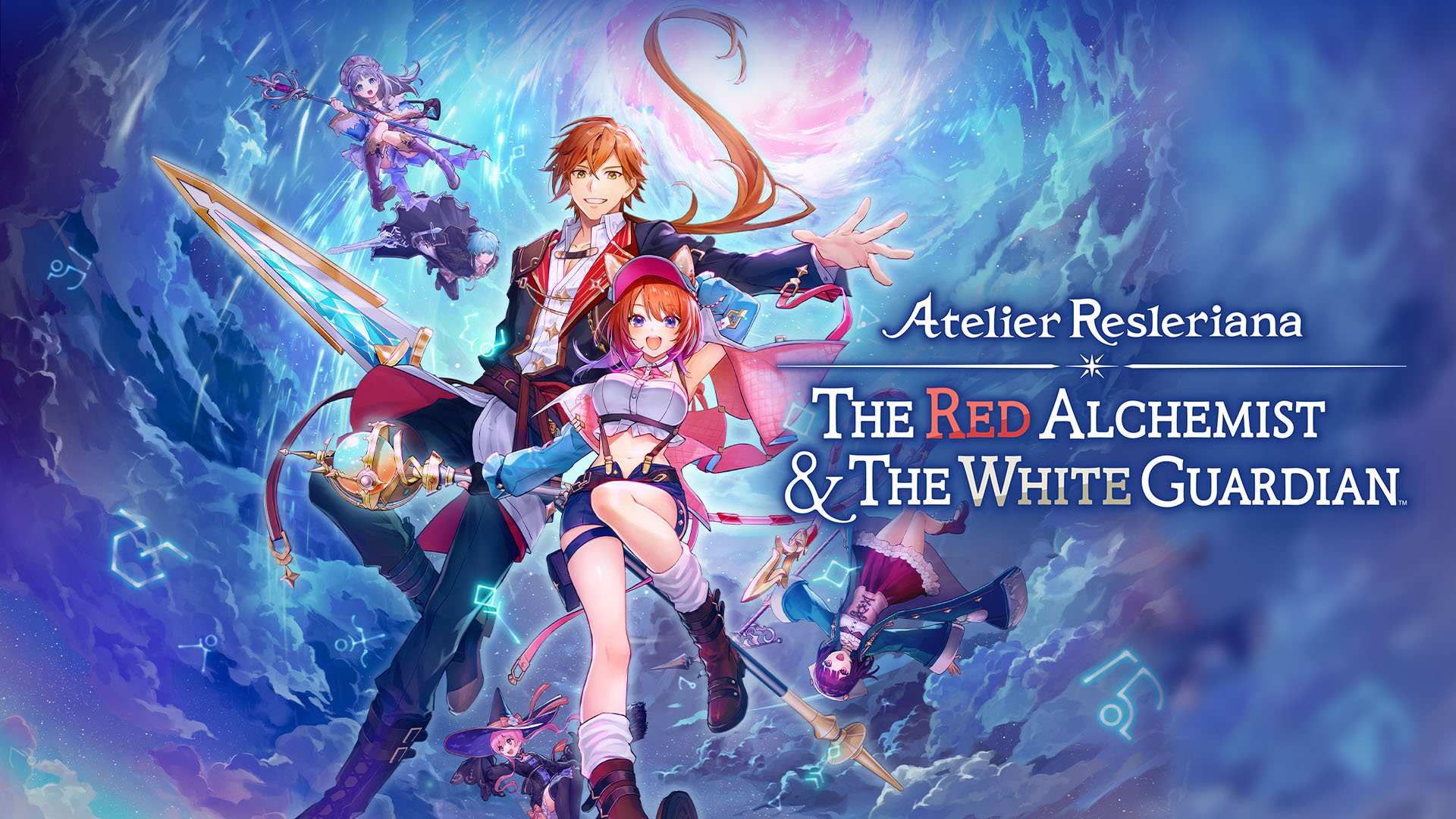
Atelier Resleriana: The Red Alchemist & the White Guardian
Developer: Gust
Publisher: Koei Tecmo
Platforms: PlayStation 5 (Reviewed), PlayStation 4, Switch, PC
Release Date: Available Now
Price: $59.99 USD – Available Here
Overview
When it comes to the Atelier franchise, fans never quite know what to expect after one of their trilogy reaches a conclusion. With the Ryza series concluding a couple of years ago, it saw the release of a gacha game called Atelier Resleriana: Forgotten Alchemy & the Liberator of Polar Night that told its own original storyline following a pair of main characters named Resna and Valeria and their allies coupled with as many familiar alchemists and warriors from past games as pullable characters.
Unfortunately, such is the way with most gacha games, Atelier Resleriana’s global servers never quite hit the highs of the original Japanese release, seeing its eventual closure earlier this year, ending the original storyline for English audiences even as the Japanese story continued with a brand new arc. That being said, this wasn’t the end for all things Atelier Resleriana as Koei Tecmo and Gust have crafted a simpler but enjoyable game pulling from the gacha title’s lore and concept of character cameos, though not quite leaning on it as heavily as Nelke & the Legendary Alchemists, and releasing Atelier Resleriana: The Red Alchemist & the White Guardian.
Story
Over a decade ago a strange red mist swept through the town of Hallfein and in its wake nearly the entire town’s citizenry vanished and devastation was left behind. Since then, the town has been left to rot, thought cursed by many but when a renewed effort to revitalize the town is brought, two former residents make their return in an attempt to both revitalize the town and find out the secrets behind what happened that day, and for one perhaps find why they were given such a unique relic by their passing father. When starting the game, players will be able to select either Rias Eidreise or Slade Clauslyter as their main character but this only changes a few small elements at the start and some minor extra background information for each as the two quickly meet one another within a freshly uncovered ruin. Rias is a fledgeling adventurer looking to restore the town in honor of her grandfather all while trying to raise his shop, the Mistletoe Miscellaneous, back to prosperity, while Slade must uncover the secret behind the Geist Core given to him by his now dead parents.

Through their combined efforts and a little luck, the two find that the ruins obtain something long thought lost in the region, an alchemist’s atelier and one that has mana in it as well as Rias manages to craft a simple but crude medicine. Not too long after, Slade discovers that his Geist Core can trigger Dimensional Pathways to open up within the Atelier to allow for exploration in strange unknown dungeons to reach far off locations. With this power at their hands, it will be up to this duo, a small collection of familiar faces directly helping, and a bevy of other familiar faces along the way to try and figure out the truth of what happened all while revitalizing Hallfein to its former glory.
Now it is worth noting that, despite sharing the same name, Atelier Resleriana: The Red Alchemist & the White Guardian (mostly) does not require players to have played the failed global release of the gacha game to understand the storyline since the two primary characters here and the setting itself are completely new. The storyline itself is rather tame and similar a bit to the slice of life stylization that many of the older Atelier games featured with some extra drama worked in here and there to keep things fresh. This includes more than a few twists here and there to keep players guessing as to the reality of what happened and its source, but don’t expect anything too dramatic. Thankfully the primary characters themselves are strong showings for leads here.

Rias is a bit of a show-off and too carefree for her own good but she has an infectious personality and charm that really shines while Slade serves as the proper more serious foil to her while also playing the straight man to most of her actions. Now one thing that is worth noting is that every other character of note in the game is from another Atelier franchise, calling themselves “wanderers”, but unfortunately the actual direct contact players have is limited to four. This includes Raze from all the way back in Mana Khemia 2: Fall of Alchemy, the ever charming witch Wilbell from numerous Atelier entries, the beloved Totori from Atelier Totori, and fan favorite Sophie from her own pair of games. While this is a strong roster of additional playable characters that join the player’s party including their interactions with Rias, especially seeing Totori and Wilbell again, it is unfortunate that it is actually only four. This is because there happens to be so many other characters that are included in the game’s storyline as they make often dramatic entrances to start with but are relegated to side-quest givers, gatherers, and even some out of character moments as well through basic interactions.

This of course includes everyone’s favorite Ryza as well as Klaudia, Ayesha, Logy, Meruru, Marlone of all girls, Mu, Shallotte, Plachta, and more, with only a few surprising legacy characters not being included such as Rorona. Oddly enough the legacy characters from Atelier Resleriana directly appear as well this includes Resna and her feline demi-human ally Izana, Valeria and Heidi, and even the primary antagonists of the first major arc of the gacha game, Lara and Geron who were a massive pain to beat back in the gacha. It is in these moments that those who have not touched the original gacha title will feel a bit lost as to who these characters are and what they mean to one another directly, let alone the fact that they are talking with Rias or Slade. This feels like a missed opportunity to not allow players to have more interaction with some of these characters, especially since many now exist only in this game thanks to the closure of the gacha title that birthed them. One of the best aspects of the Atelier franchise has always been how great the characters are and unfortunately it just isn’t taken advantage of to its fullest here.
Gameplay
In many ways Atelier Resleriana: The Red Alchemist & the White Guardian returns to its classic gameplay roots here by offering both turn-based combat, a simpler form of item synthesis, and of course plenty of materials to harvest both from the dungeons and fields but also from the monsters themselves. Rias and Slade can move around freely as players explore locations, with players needing to swap to one or the other from time to time in order to either use Rias’ whip-staff to swing across tree branches or pull herself up to an edge while Slade can use his Aegis to open up hidden paths. Practically everything can be harvested in the field and the player’s basket is quite large so they are encouraged to gather as many materials as possible, especially rare ones or those only available by using a gathering tool such as a scythe or axe.

While exploring out in the field, or within dungeons, time can pass and the materials players can harvest as well as the enemies that spawn in each location will change depending on whether it is night or day. Players can attack enemies in the open field to gain an advantage in the turn-based combat, with players being able to have three fighters in the front line and three in the backline. Characters in the frontline will be the active attackers and each turn these characters can choose to use a standard attack to build up TP, spend TP to use a skill, or use an item crafted by alchemy that has a limited number of uses and vanishes when used up. Every enemy is weak to certain elemental types and players can target them for extra damage and the chance to “break” an enemy’s guard, making them more vulnerable for a short period of time. While entirely turn-based it is interesting to note that players can actively guard incoming attacks to reduce damage and properly timed blocks will reduce incoming damage even further and restore TP a bit.

Characters in the backline can be swapped into the frontline during a character’s turn but their primary benefit is the Unity system. As players battle they fill up the Unity gauge and can use part of the gauge to perform extra attacks by combining magical attacks or skills with fighters from the front and back grows or even using items that, when properly utilized together, can trigger even more powerful combinations when used on enemies or allies. This allows for plenty of interesting combinations and ways for players to explore with not only their combat items but how they want characters to be positioned in their party as well, as limiting as a six person party can be. It is interesting to note that the mechanic that saw various buffs or weaknesses be applied to allies and enemies in the turn-order from the mobile gacha game has transitioned here as well, with players being able to reap beneficial rewards by stealing bonuses from enemies.

Outside of the field and back in the atelier players will find a far more simplistic item synthesizing system. Most recipes in the game are learned through either buying them through a merchant, acquiring them from a treasure chest, or simply obtained as a quest reward, while others can be discovered through lucky synthesis. Crafting specific items requires a certain set of base ingredients and aligning their “color properties” properly will apply additional bonuses to the item, including adding extra items alongside the base ingredients to improve the quality, damage dealt or health recovered, amount, status boosts, or even increasing the price of the item. This simpler synthesis is a far cry easier than past entries and may be a bit off-putting for those who liked the more complicated processes in more recent entries but it does make the title’s signature mechanic far more approachable. Combine this with the fact that players can, rather quickly, obtain the ability to clone synthesized items at a price, but thankfully money is rarely an issue in the game thanks to Rias’ shop.
As mentioned before, one of Rias’ goals is to restore the town of Hallfein and the best way to do this is to draw in more people to the town through her shop and while she can simply place basic ingredients out for sale, it is also possible to synthesize items that are directly meant to be sold or can be sold for a high value, boosting both the player’s money and the status of the town overall. Selling items at the shop can be done through painstaking organization or handled randomly by fairies, more on those later, and these shortcuts do help keep things moving even when it comes to grinding out some money or fairy levels. The fairies are little guys that all look alike and reside within Dimensional Pathways but have special abilities that will not only provide a buff to the player’s party while traveling through that randomized dungeon but also can be hired on at a price befitting their skillset.

Every fairy has different abilities at cleaning, selling, and tending to the shop and assigning them to the right categories helps sales. It is interesting to note that anytime players are out adventuring, the fairies will recover stamina on their own, encouraging players to balance selling items at Rias’ store and going out and adventuring with her friends, increasing bonds with the other Wanderer alchemists who can send players out on side-quests or even sent out themselves on gathering missions, making for a fairly rewarding loop despite the aforementioned missed chance of giving players a big party roster to work with.
Audio & Visuals
Atelier Resleriana: The Red Alchemist & the White Guardian is an impressive looking game and while it may not quite reach the levels of a certain other Atelier game released this year, it does have its own sense of charming color palette. The character designs are as wonderful as ever for the new cast of characters and seeing so many returning characters from older games now being shown in far higher quality than they ever were before, with many being limited to the PlayStation 3, PS Vita, or even PlayStation 2, seeing them in their full glory is a real treat. The environments themselves are wonderfully varied, ranging from the magical feeling Dimensional Pathways to the explorations through the vast fields and varied designs of the forests and even the mines that rarely feel overused. It is worth noting that some enemy designs are unfortunately far too simple, even by Atelier standards, and palette swapping also occurs quite quickly.

This release unfortunately does not feature an English dub of any kind though it is nice to note that it sounds like all of the original Japanese voice actors, including those from the mobile game, have returned to reprise their roles here. It is a bit unfortunate that not all of the returning characters have a lot of spoken dialogue but it is still a nice touch for those that do. The soundtrack features a classic collection of fitting music for the game, with a catchy battle track and enough varied exploration music to keep things feeling fresh from area to area.
Overall
Atelier Resleriana: The Red Alchemist & the White Guardian manages to deliver a charming yet impactful storyline that fumbles its guest characters a bit too much to take advantage of the franchise’s greatest strengths, the characters themselves, but still pulls it together with satisfying combat mechanics and exploration. Combine this with a satisfying loop of synthesizing items in a simpler but approachable system and selling items to restore the town and this title not only will attract longtime fans eager to see their favorite characters again but potentially newcomers looking for an easier entry point, even if they won’t know all of the returning cast.
Capsule Computers review guidelines can be found here.

