


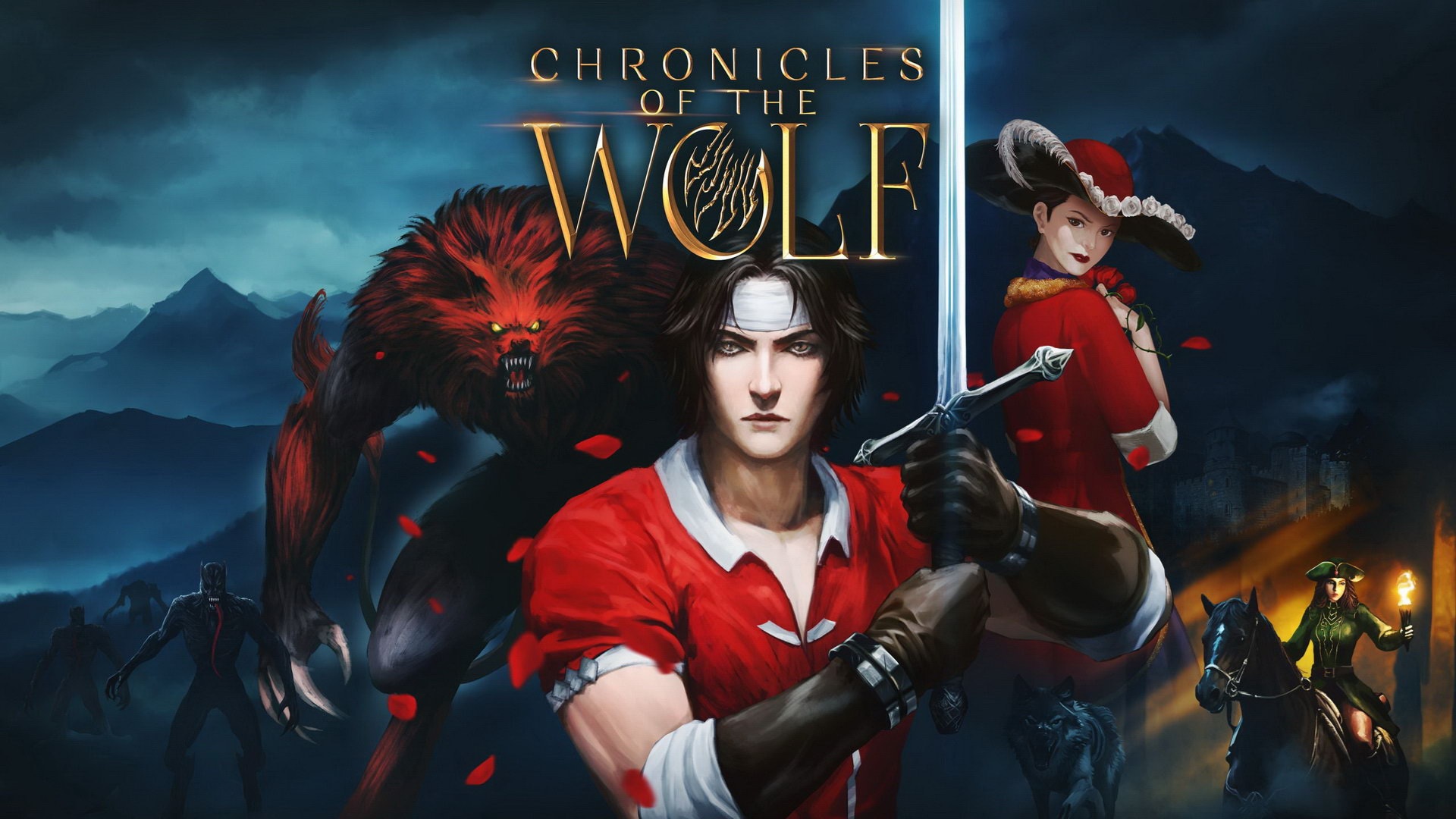
Chronicles of the Wolf
Developer: Migami Games
Publishers: PixelHeart, PQube
Platforms: PlayStation 5, PlayStation 4, Switch, Xbox One, Xbox Series X/S (Reviewed), PC
Release Date: Available Now
Price: $19.99 USD – Available Here
Overview
There is a reason that the Castlevania franchise is so beloved and even is seen as part of what started the whole metroidvania genre, given that half of the franchise’s name makes up the genre of course. These titles see players explore vast, generally 2D limited locations where players will battle against all different manner of foes, unlocking new powers and weapons along the way that will help them gain access to previously unreachable areas or breach a barrier blocking their way. Throughout the years, these metroidvanias have each added their own unique takes and quality of life features to try to set themselves apart and make a mark of their own, but how about one that sticks almost as close to the original Castlevania as possible?
Chronicles of the Wolf happens to be just that as Migami Games has made sure to stick as close as possible to the original Castlevania elements for better or worse while putting their own lore on things. Does this retro approach that adheres heavily to the old-school formula work out well for this one or was this hero’s adventure better left for the wolves?
Story
Mateo Lombardo is a freshly anointed acolyte of the Rose Cross Order, a band that is often tasked with hunting down the very monsters that haunt the night and slay innocents throughout Europe. In his first stask as a fresh knight, Mateo and a battalion of other Rose Knights are sent down to Southern France where rumors of a powerful beast that has slain countless innocents roams the lands. Upon arriving in the land of Gévaudan the knights find their entire under attack by a mysterious but extremely powerful creature that manages to slay every single knight in the Rose Cross Order, with only Mateo being left at death’s door.
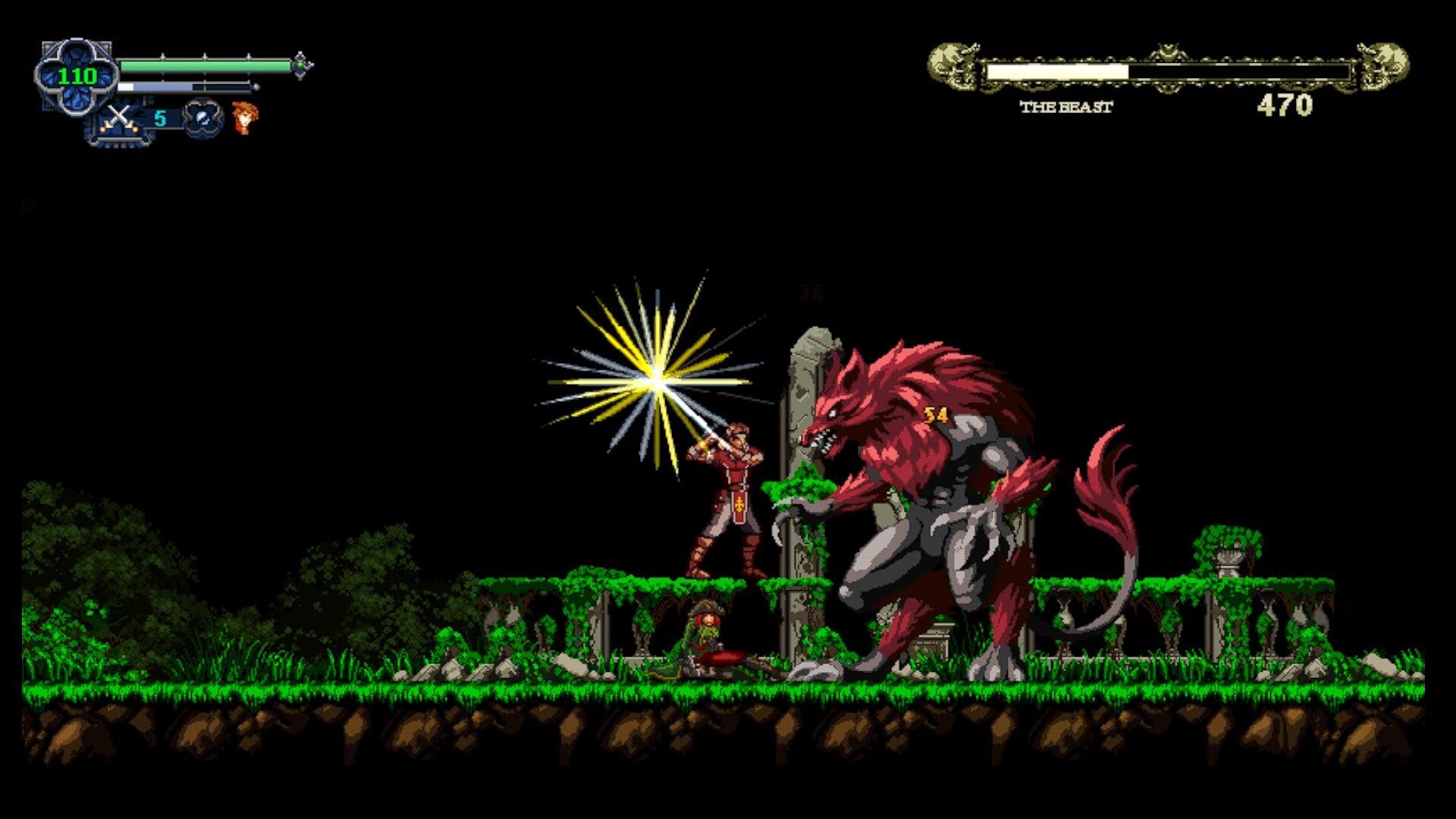
Through the help of a female huntress, Mateo manages to rise to his feet and learn that the werewolf-esque Beast of Gévaudan is the creature that has slain his allies and has laid waste to the lands, summoning monsters, raising the undead, and creating all kinds of disasters that have left the few surviving members of the area barely clinging to life.With very little to go on initially other than that the beast must be slain somehow, Mateo must navigate through the villages outside only to find that the evil of the Beast has spread far and wide, making for an expansive adventure where a beast has far more allies than one would expect, even if Mateo himself slowly gains a gathering of ghosts and living allies as well that want to see the evil put to rest forever.
Chronicles of the Wolf is an interesting little metroidvania in that it actually tells a fairly impressive storyline. Part of this is thanks to the fact that the Beast of Gévaudan is actually based off of a legend from the 1760s in the exact same region of France where up to over a hundred deaths were blamed on an unknown but historically wolf-like looking beast. Combine these real life legends and the fact that these tidbits are peppered throughout the storyline itself, including slightly altered names of some of the first victims and suspected nobles at the time and it makes for an interesting premise. It also helps that, as players explore, they slowly understand and reveal a bit more about the real nature behind the beast and the “cult” that has surrounded its origins, though we won’t go further into that to avoid spoilers.
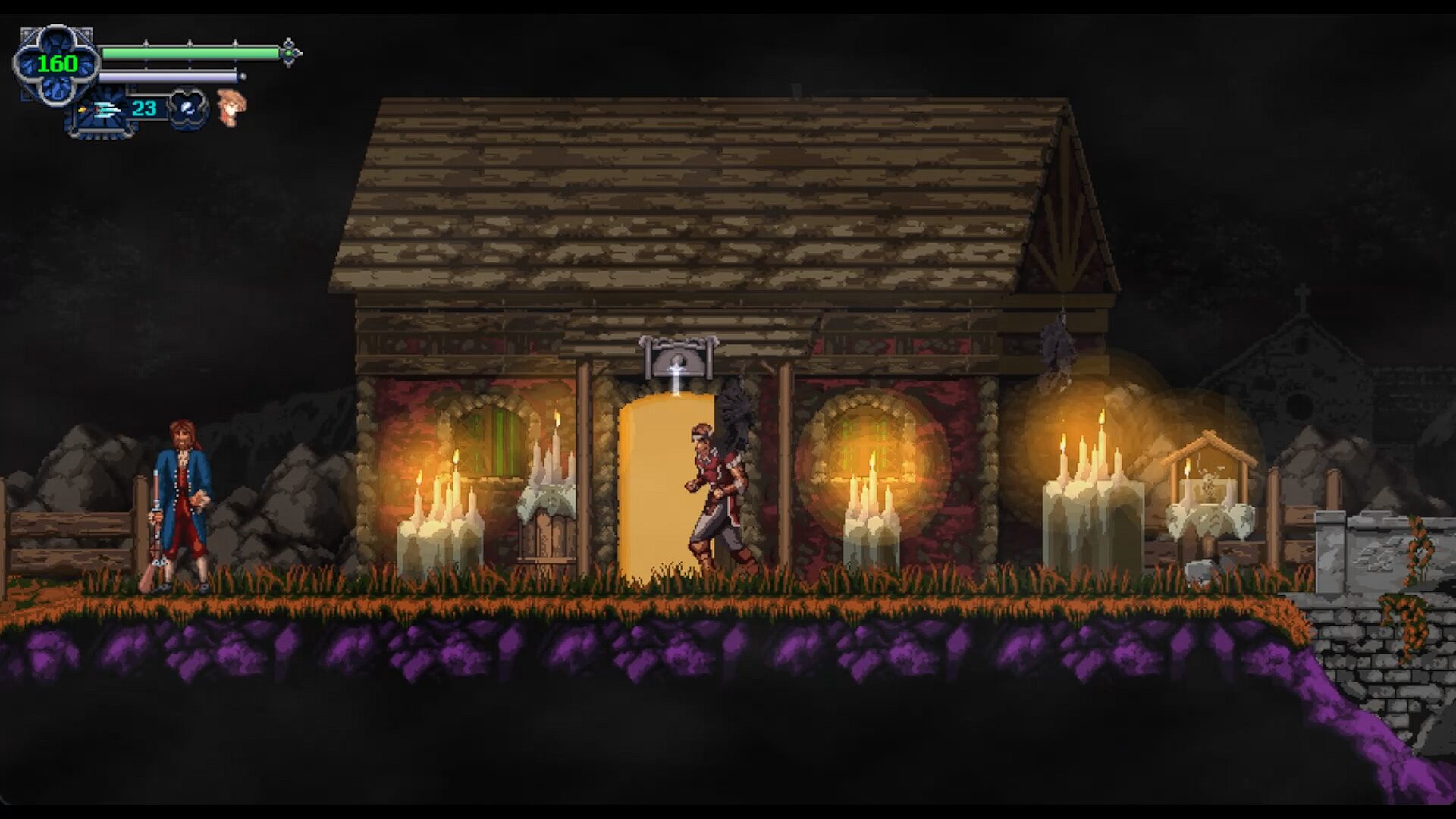
That being said, it is worth noting that the game does have multiple endings and some of them are a bit on the obscure side and are actually “bad ends” though players can simply reload their saves and avoid going that route if needed. Going after the true end does require quite a bit of extra effort but does unlock an additional game mode that we will mention later on. It is also nice to note that, upon completing the game, players will still be able to explore the post-game with all of their abilities and tackle a number of new post-game optional bosses and challenges which is always a plus, especially since a few add some extra context despite being optional.
Gameplay
Chronicles of the Wolf is a metroidvania through and through, almost to a fault in fact. Players, taking control of the aforementioned Mateo, will find themselves awaking in a town where it turns out that the bare minimum of “training” given to him was nothing compared to the beasts and monsters in the wild as players will find that they will need to traverse through a large map along 2D screens, navigating up ledges through platforming and dropping down to access other locations and more. Initially, besides his basic sword, dual-daggers to toss, and minuscule magic spell, Mateo is woefully underprepared for the challenges he is about to face and the obstacles that block his path. The poor boy can’t even slide without obtaining a bell first of all things.
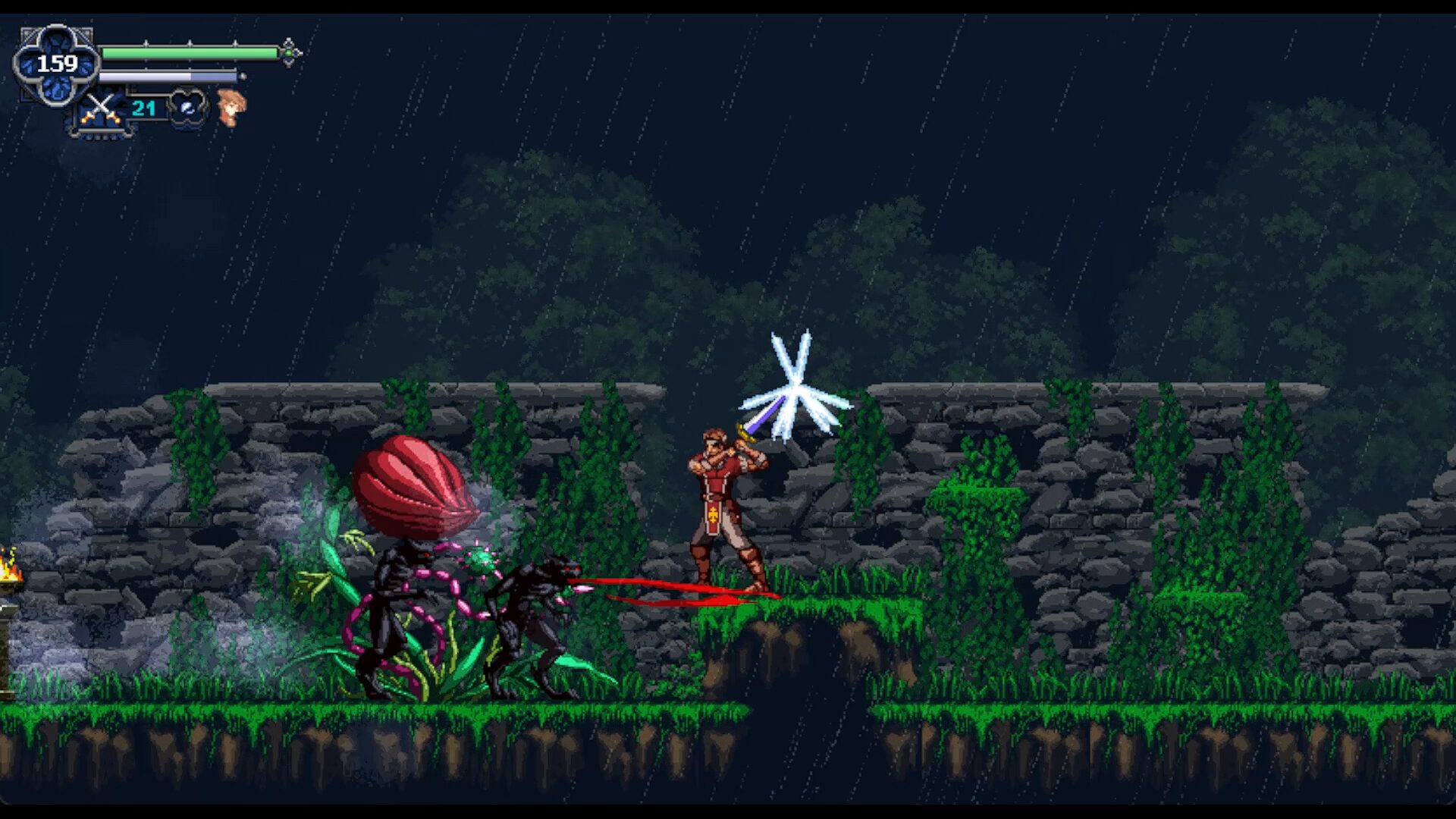
Yes, as one would expect from the genre players will continuously notice various obstacles and objects that are just out of reach or impassable at the moment, meant only to be retrieved later once Mateo has unlocked the ability to double or even triple jump, let alone air-dashing or the aforementioned sliding. Some of these are obvious, others are far more hidden such as the classic “fake walls” that can hide something as simple as an extra bunch of gold to an entirely new piece of equipment that can often be far stronger than what players might find in a shop or even at all. Unfortunately, while the map in Chronicles of the Wolf is serviceable enough and does label save spots and portal rooms, more on those in a bit, it is woefully lacking in quality of life elements. Not only can players not zoom in or adjust it in any way, but it also does not indicate a “blocked” passage or found item that players saw but couldn’t get at the time, meaning players will either need to screenshot it for later or hopefully remember it which in 2025 is something that’s more annoying than “retro.”
Mateo’s combat abilities are a weird bit of balanced and useless depending on what players are wielding and facing off against at the time and thanks to some stiff controls and, once again, a lack of quality of life, combat can be an issue even when it works well. Mateo can wield a wide variety of weapons and, depending on the type, it will swing in a different fashion. Daggers are the quickest and have short range, swords are standard slashes straight ahead, two-handed weapons create large arcs in-front of him and are slow, and firearms such as rifles can be used at a distance but lack the ability to properly aim and are slow to use. Ironically, given that nearly all projectiles can be destroyed by hitting them, a two-handed weapon is often the best approach even if it is slower. That being said, should players actually want to swap weapons there is no quick-swap between two different weapons being equipped or anything of the sort. Instead players need to pull up the game’s menu (oddly initially mapped to LB), go to the equipment screen, select weapons, and choose that weapon before going back to fight. Not being able to even equip a ranged and melee weapon at once is a strange oversight and hinders the fluidity of combat though stiffness seems to be the name of the game with Chronicles of the Wolf.
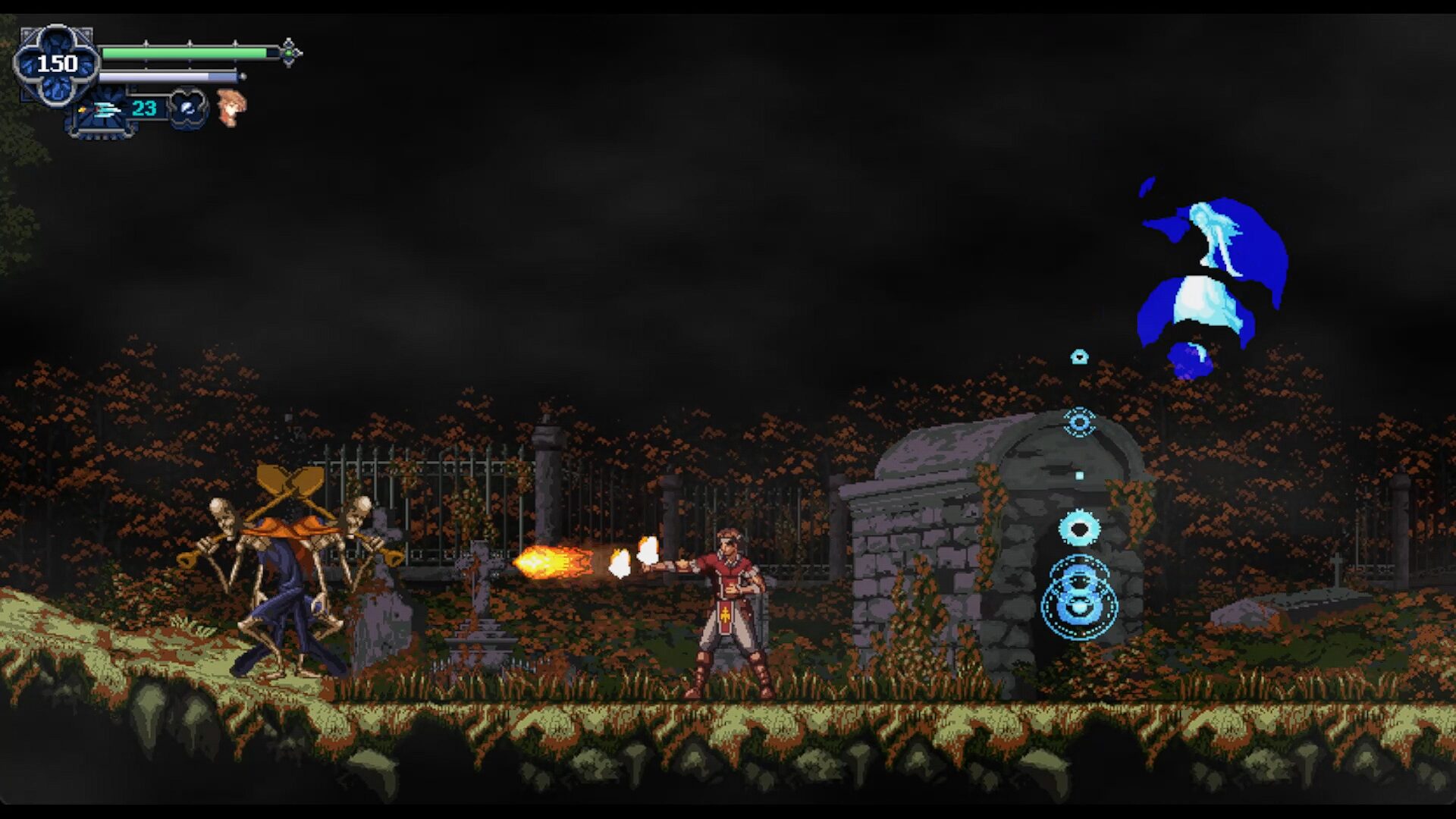
There are a few other combat abilities that Mateo eventually obtains that makes up the melee combat. Spells that players obtain can be used to damage enemies at a distance at the cost of Mana and even clear obstacles sometimes, “tools” picked up from the environment such as bombs, chakrams, a throwing dagger, and more cost “Orbs” to use that also drop from enemies and destroyable objects in the environment can close this gap a bit but even these can be a bit unwieldy at times. Along the journey players will also meet and be joined by a number of Ghosts that were slain by the Beast or past heroes looking to restore order to the current era and impart some of their power temporarily to Mateo. This can be done with a simple button press and, ironically unlike weapons, the ghosts can be swapped on the fly and use Mana when activated, providing strength boosts, temporary invincibility, or even cleansing Mateo of ailments to name a few.
Earlier we mentioned stiffness a bit and that is sadly true for most movement and even some combat in Chronicles of the Wolf and while this may be an attempt to stick true to the classic Castlevania feel of the original release, it is about as die-hard as they come. Mateo moves stiffly, jumps stiffly, and only after players get a good portion into the title eventually feel like they are playing a suitable fighting character compared to how they started and while this sense of progression is nice, it does hinder the early hours of the game, especially right at the beginning when players are finding themselves at their weakest and suffering from another poorly implemented mechanic, the save rooms and the fact that enemies always respawn with the exception of animals that drop healing food, meaning even making a wrong turn or coming across a dead-end means having to dodge or fight everything in a room again.
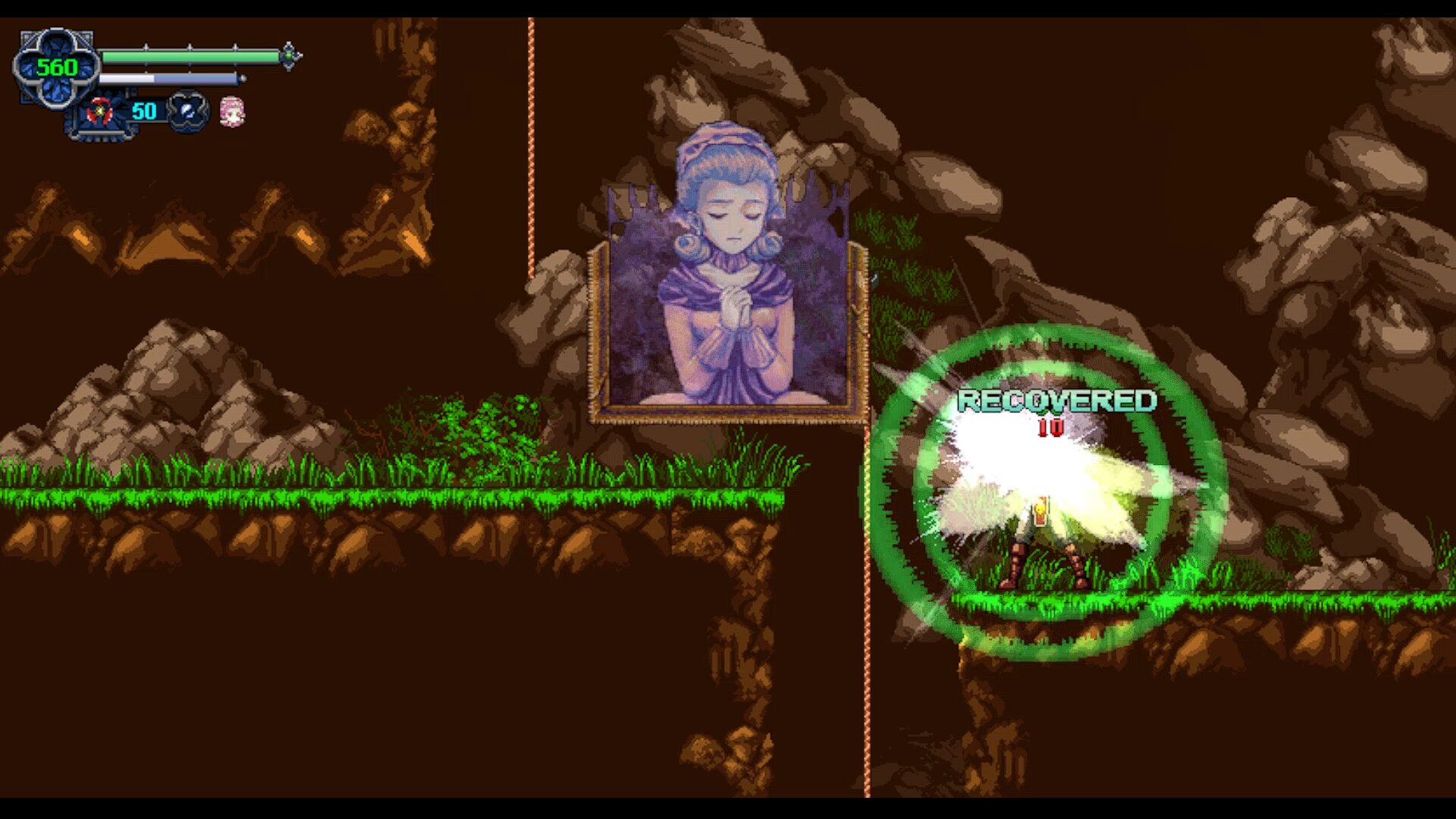
Having save rooms isn’t inherently wrong, in fact it works as a solid mechanic most of the time and these locations also allow players to fully heal when they run across them. The bad thing is they are so poorly spaced out that players will dread the fact that their running low on health and the last save room was so far back and, since enemies always respawn, there is no good choice but to try and push forward towards likely death. This is exacerbated by the fact that thanks to the aforementioned stiff controls and combat animations deaths can feel incredibly cheap, players taking damage from hits or traps they should have clearly avoided but were hit by nonetheless. It also is worth noting that there are a number of, while telegraphed, instant kill moments in the game that players will feel cheated out of their progress as a result. This means that while players may want to save the money they get from slaying monsters to buy better equipment at the newest shop they might come across, it’s best used to keep stocked up on healing items.
One thing that must be complimented about Chronicles of the Wolf are the bosses that players fight against. While the first boss may not make the best impression, the various bosses afterwards each set a new standard for the game’s encounters, making these a real highlight that both feels justifiably difficult and a real feel of accomplishment when defeating them, mostly since it often requires memorizing their attack patterns and taking advantages of their openings to deal out punishment. That and, except for a few post-game challenges, most have save rooms within justifiable travel distance.
Audio & Visuals
It is clear from the onset that Chronicles of the Wolf is looking to mimic the classic Castlevania aesthetic by putting its own unique twist on things here and there. The retro style graphics work quite well with there being a solid amount of enemy types, though a few palette swaps do make their way into the game and anytime players spend underwater looks incredibly strange. It is also worth noting that background environments, while interesting the first time players explore them, are a bit lackluster overall, especially considering how often players will need to backtrack through some areas and fight the same respawning enemies over and over again. Alongside the pixel graphics for character sprites, shops feature character portraits that range heavily in quality from impressive and believable looking blacksmiths to some truly disturbing female shopkeepers that look deformed more than anything else. It is nice to note that there are little “CG” style scenes for certain events that happen throughout the game and these each are handled nicely.
The voice track for the game is a mixed-bag but not because of performances, it is thanks mostly due to how infrequent and sporadic it actually is. Random NPCs can talk just fine while many others are completely silent, even quest givers can be entirely silent. Meeting ghosts for the first time is often presented with voice work and the whole narration is handled by the famous Robert Belgrade (the voice of Alucard in Symphony of the Night and many other titles) is a nice touch, but incredibly underutilized to the point that it almost feels like a bait and switch. Thankfully the background music works well-enough with each location players traveling through having its own atmospheric track, though only a few of the creepier ones really stand out as memorable.
Overall
It is quite evident that Chronicles of the Wolf is a clear love letter to the classic Castlevania but unfortunately it happens to step a bit too far into classic territory to the point that it actually hinders its potential in the process. While old school loving fans may enjoy the lack of quality of life elements to the map and combat, stiff controls, and poorly placed save rooms, these elements feel rough in modern day, even for a game looking to pay homage to such a beloved franchise. Thankfully, the atmospheric level designs and solid storyline featuring real elements based off of the legend help make it a bit more bearable in the end.
Capsule Computers review guidelines can be found here.

