Empire of the Ants is 2024’s dark horse for Game of the Year. It feels fresh, and interesting, and blends its RTS gameplay with exploration to create a truly unique experience. In this footage, we tackle the first couple of hours of the game where the basics of combat are taught, while the world slowly begins to open up.
Empire of the Ants – Gameplay
Embark on an epic journey into the infinitesimal in this photorealistic strategy game. Play as a fearless ant and guide your colony through the dangers of the forest.
Experience an immersive journey and defend your lands through tactical and strategic battles in an epic, microscopic world. Become #103,683, the Ant Savior: lead your colony, rebuild a home, protect it, make it prosper, and conquer new territories throughout different seasons. Exploration, strategy, combat skills, and alliances with local wildlife will be crucial to emerge victorious from the many challenges lying ahead.
Inspired by Bernard Werber’s bestselling Empire of the Ants, the game offers a strategic experience right off the pages of the iconic book series.
Empire of the Ants Developer: Tower Five Publisher: Microids Platform: Windows, PlayStation 5, Xbox Series X|S Release Date: 7th Nov, 2024 Price: $39.99 USD
Recommended – “With its unique take on exploration and deep yet accessible combat mechanics, Empire of the Ants is a gripping masterpiece of an RTS that is wonderous to behold, making it one of 2024’s greatest stand-outs.”
LORDS OF THE FALLEN V1.6 LAUNCHES WITH A REFINED ONBOARDING EXPERIENCE, FURTHER PERFORMANCE & GAMEPLAY BALANCING, AND MORE
Monday, 4th November 2024 – HEXWORKS, a CI Games studio, has today released update v1.6 for dark fantasy, action-RPG Lords of the Fallen, which delivers an enhanced onboarding and tutorial experience based on feedback from veteran players. The update continues the studio’s dedicated post-launch support for the game, with a more exploration-friendly Umbral realm, alongside a raft of additional gameplay and performance improvements. The release of v1.6 arrives ahead of Lords of the Fallen’s launch day debut for PlayStation® 5 Pro, featuring a 40% increase in pixel density, with an enhanced Performance Mode running at 4K60 based on 1440p, and Quality Mode running at a native 4K30.
To mark the release of Lords of the Fallen v1.6, the standard version of the game will be available on Steam at a 50% discount from 6pm GMT (10am PT, 1pm ET, 7pm CET) this evening until 11th November, at $29.99/£24.99/€29.99.
With version 1.6, new Lords of the Fallen players are more empowered on their journey across Mournstead, with a series of changes during the early part of the game. These include a more gradual onboarding into the Umbral Lamp’s unique abilities, and improved navigation in the tutorial area. As for the wider community, a highly-sought player request has been the ability to more thoroughly explore Umbral – the game’s secondary, darker realm that runs alongside its core world. While retaining its dark allure and tension, the changes – which include subtler soundscapes, an adjusted enemy spawn curve for improved pacing, and reduced vignette effect – all combine to better support exploration of the Umbral.
Rounding off the update is a raft of additional performance updates and further difficulty adjustments, including mob redistribution, adjusted ranged enemy perception, and improved platforming. Full patch notes are available to read.
Founded in 2002, CI Games is an independent, global video games developer and publisher. The company has created internationally recognised and celebrated titles for nearly 25 years, including the acclaimed Lords of the Fallen and Sniper Ghost Warrior franchises. CI Games has two internal studios: HEXWORKS, which is currently developing the next major instalment of the Lords of the Fallen franchise due in 2026, and Underdog Studio, which is currently in pre-production of an original, fantasy action-RPG, due in 2028.
New exciting project GAMM – Game Museum to be unveiled during Checkpoint Festival of Interactive Experiences in Rome this month
4 November 2024, Rome: The team behind VIGAMUS The Video Game Museum of Rome has joined forces to create Kabuto, an innovative and tech-driven start-up founded by veterans of the entertainment industry to create, manage, and develop a new venture, GAMM – Game Museum.
Located in the heart of Rome at Piazza della Repubblica, GAMM will launch on November 30, 2024, just after Checkpoint – Festival of Interactive Experiences taking place on 28 – 29 November at Casa del Cinema di Roma.
GAMM was born from the extraordinary success story of Vigamus – The Video Game Museum of Rome, which has hosted over two million visitors from around the world since its inception in 2012. Open 7 days a week, GAMM will span approximately 700 square meters, divided into two levels and three thematic areas. It offers an immersive and interactive journey through the world of video games, combining cutting-edge digital content with a collection of unique, valuable artifacts. It promotes the interactive medium as a form of cultural art and expression.
The museum is designed not only for video game enthusiasts but also for families, young people, tourists, schools, academies, and industry experts, and for anyone interested in discovering the unique cultural medium that has, over the years, captivated and moved people of all ages and backgrounds.
Marco Accordi Rickards, Director of GAMM said: “GAMM – Game Museum aims to highlight the cultural and artistic value of video games as interactive works allowing visitors to immerse themselves in a path based on the combination of history, technology, and the exploration of gameplay.”
Luisa Bixio, Co-Founder of Kabuto said: “GAMM will be an immersive museum space, where video games as a cultural medium can be explored from the origins to the latest evolution, visitors from all over the world will be able to discover a new location in the heart of Rome.”
GAMM Opening: November 30 Location: Piazza della Repubblica, Rome Opening hours: 7 days a week from 9:30 AM to 7:30 PM, and on Fridays and Saturdays also from 8:30 PM to 11:30 PM Website:www.gammuseum.com
Checkpoint – Festival of Interactive Experiences Dates: November 28-29 Location: Casa del Cinema, Rome, Largo Marcello Mastroianni 1 Admission: Free, subject to availability Website: https://checkpointconference.com/
GAMM Website:www.gammuseum.com (the website will be active from November 4, 2024)
About KABUTO s.r.l
KABUTO is an innovative and technological start-up with a rich heritage rooted in over 25 years of experience in the field of interactive works. It was founded by the team behind Vigamus Group. GAMM – Game Museum aims to constitute the evolution of the Group’s history in preserving, promoting, and expanding the cultural and artistic value of the interactive medium as a cutting-edge museum space. Our journey has seen the development of several key assets, including the VIGAMUS – The Videogame Museum of Rome, which opened its doors in 2012, and the VIGAMUS Academy, offering specialized training since 2014.
Slitterhead is a horror and sci-fi-themed action-adventure game, although it’s not a scary game like Silent Hill, which is designed to elicit fear in the player. The game marks the return of Keiichiro Toyama – one of the key minds behind the first Silent Hill and the three Forbidden Siren iterations – as a game director, and also the first title released by Bokeh Game Studio. Toyama’s previous horror games stand out for their originality, weirdness, and suspenseful, non-linear storytelling that gets stranger as the player advances through the game. That was one of the main reasons why I kept coming back to the Siren series, as my curiosity got the best of me despite the games being hard in a kind of tiresome way. Slitterhead is a spiritual successor to Siren in many ways, encompassing many of its elements while providing more action-focused gameplay. That said, can Slitterhead deliver an enticing and accessible experience without losing its soul in the process?
Story
Slitterhead is set in the cluttered streets of the fictional Kowlong. The city is inspired by the real-world Kowloon, a chaotic walled city in the middle of Hong Kong that was demolished in the 1990s. The story follows Hyoki, an entity devoid of memory and physical form, and the people he possesses as a means to hunt and eliminate shapeshifting, brain-devouring creatures known as Slitterheads.
The hunt will lead Hyoki and his group to understand more about the origins and motives of the Slitterheads, which are connected to something even more sinister than their preference for human brains. The protagonists also experience some development, with their backgrounds being revealed gradually. The overall plot is also drip-fed, which makes things interesting at first but ends up dragging on for a bit too long. Regardless, Slitterhead provides an intriguing story with many layers, and it all gets more and more strange and sinister as the player advances through the game.
Gameplay
The game is divided into missions that take place in the streets of Kowlong and other specific locations. Slitterhead pays significant homage to another title by Toyama, Forbidden Siren. Thus, fans of Siren will appreciate Slitterhead‘s Asian urban setting as well as the sound direction and gameplay elements directly drawn from Siren. The missions are also structured similarly to the aforementioned title, featuring a “second loop,” where players get to replay missions but with new objectives and story developments. That’s a clever way to add substance to a game while sparing resources, but it also means that players will only have a handful of locations to explore.
Slitterhead‘s gameplay features a mix that involves investigation, rapid vertical chases through the streets of Kowlong, and, primarily, combat against the Slitterheads. The investigation and exploration sections of the game mainly involve locating and eliminating them. Using Hyoki’s synchronicity with the Slitterheads, players can briefly see their most recent memories left in items and other objects. Hyoki can also hijack the enemy’s field of view, allowing players to see what the monster is currently observing, further aiding in the hunt.
Since Hyoki does not have a physical body, he must possess living creatures that have enough affinity with him in order to pursue his prey. Common humans’ basic abilities and the blood jump mechanic – which enables the player to reach high places in seconds – create a fast-paced, dynamic, and enjoyable navigation experience. Hyoki can possess and dispossess humans at will. For instance, if the player is on top of a building but a Slitterhead escapes to the streets below, they can execute a suicide jump and possess another human before hitting the ground.
Special humans with a heightened affinity with Hyoki compose the main cast of the game. Designated as “rarities,” these characters possess exclusive and powerful combat abilities that are partially shared with other rarities and ordinary humans. This leads us to the central element of the gameplay: Combat. It’s not like missions are teeming with monsters, forcing the player into combat frequently. Rather, enemy encounters are relatively scarce for a good chunk of the game. That said, there’s a lot of emphasis on combat mechanics, allowing players to unlock and enhance rarity skills by using points earned through exploration and stage completion. These skills are varied and intriguing, granting rarities something akin to “jobs” in RPGs. Some rarities focus on healing and support, others on manipulating humans, while some rely on sheer brute strength, even using humans as suicide bombers.
The combat is brutal and bloody, just like the rest of the game, and occurs from the same third-person perspective as the exploration sections. Fundamentally, the combat works well with solid controls. Players have access to attacks, blocks, and dodges that form the basic combat mechanics. Common humans are clumsy and deal low damage, but their real function is to serve as bait, ammunition, and sacrifices. Furthermore, their abilities highlight their true usefulness; for example, the War Cry ability compels a Slitterhead to attack the human who used it, allowing rarities to regroup, heal, or strike unexpectedly with longer and more powerful combo strings and skills.
Combat can be fun and varied. This diversity does not extend to enemies, who are generally the same few simple mobs, with bosses that do not change much in appearance or attack patterns. That said, the most significant issue with Slitterhead lies in its exploration and enemy-tracking set pieces that take away much of the agency the player could have during these segments. That means that the answer to any little obstacle that could require a bit of thinking is handed to the player for free, with Hyoki even repeating the answer after a couple of minutes. Furthermore, secrets revealed through sightjack and dialogues with rarities during intermissions are eventually resolved by the characters themselves.
Hyoki’s sightjacking abilities would be enough to detect enemies, adding depth and challenge to the gameplay, so why does the game feature colored auras and deafening sounds pointing to enemies’ exact location? In Siren, Shibito were located solely through sightjack. It was challenging and somewhat tiresome to use in that game, but in Slitterhead, the explore-able area is relatively small with numerous landmarks for cross-referencing. This results in exploration that’s little more than a glorified visual novel with constant interruptions and cutscenes, making the game feel dragged-out and boring. None of these issues would be as problematic if players had the option to disable tips, markers, and unnecessary visual clutter as desired. The four difficulty levels only affect combat. It’s high time developers started providing a more customizable experience that accommodates different skill levels and tastes.
Visuals
The graphics are simple but effective. The neon-lit streets of Kowlong feel lifelike, with busy open-air markets and rows of buildings on every side, creating a mature, dark 1980s atmosphere. The models and textures of common characters are basic and tend to overlap, with variations mostly in clothes and hairstyles. However, the rarities feature more varied and appealing designs, such as textures featuring small details like the scratches on Alex’s helmet.
Common monsters suffer from the same issue as ordinary human characters, with repetitive designs inspired by marine creatures. I expected the game to be more grotesque and disturbing in this regard, but to be fair, it offers its share of unsettling moments. Regardless, the art style and themes in Slitterhead are unique and should appeal to players seeking something unconventional.
Audio
Akira Yamaoka, from the Silent Hill series, is responsible for the soundtrack and overall sound design. The guttural chants from Siren are present, further emphasizing the game’s mystical Asian atmosphere.
The soundtrack combines Yamaoka’s signature chill, ambient tracks with more action-oriented and suspenseful tunes which frequently feature Asian motifs that will probably sound strange to many but fit the game very well. Regardless, the intermission menu track contains a vocal passage that annoyed me to no end.
The game mostly doesn’t have voice-overs. The few lines the characters have are mostly spoken in English, although NPCs usually speak Chinese. The remaining dialogues are grunts and repeated one-liners.
Overall
While Slitterhead can be considered a true spiritual successor to Forbidden Siren, it’s not the return to form I expected. The excessive emphasis on accessibility during exploration made it redundant, serving only as story exposition and making it feel like padding until the next encounter with enemies. The implementation of diverse combat mechanics ends up feeling a bit wasted on few and repeated enemies. Despite that, the story retains the suspense, mystique, and gruesomeness that Siren is known for, making Slitterhead an interesting experience for horror fans.
Capsule Computers review guidelines can be found here.
Watch the Action-Packed BLUE LOCK vs. Japan U-20 Match on November 10 Only on Crunchyroll
Sydney, Australia (November 4, 2024) – Over the weekend, Kodansha officially revealed the roster for the Japan U-20 Team inBLUE LOCK 2nd Season. Covering the acclaimed “BLUE LOCK vs. Japan’s U-20” arc, BLUE LOCK’s adversaries made their debut yesterday in Episode 29, while the official match airs this Sunday November 10, 4am AEDT.
Going heel-to-toe against BLUE LOCK XI is the newly revealed Japan U-20 National Team, which includes Oliver Aiku, Ryusei Shidou and Sae Itoshi, who is the brother of Blue Lock XI’s Rin Itoshi.
The full Japan U-20 National Team roster, along with the Japanese cast voicing these characters, includes:
Ranse Kurosa voiced by Chiaki Kobayashi
Kento Cho voiced by Jun Kasama
Teru Kitsunezato voiced by Gakuto Kajiwara
Sae Itoshi voiced by Takahiro Sakurai
Itsuki Wakatsuki voiced by Taito Ban
Haru Hayate voiced by Kensho Ono
Miroku Darai voiced by Yusuke Shirai
Kazuma Nio voiced by Takuya Sato
Teppei Neru voiced by Shunichi Toki
Gen Fukaku voiced by Chikahiro Kobayashi
Ryusei Shidou voiced by Yuichi Nakamura
Oliver Aiku voiced by Satoshi Hino
Shuto Sendo voiced by Akihisa Wakayama
BLUE LOCK 2nd Season is currently streaming on Crunchyroll with episodes simulcast every Sunday 4:00am. The first season of the series and BLUE LOCK THE MOVIE -EPISODE NAGI- are also now available to stream.
About BLUE LOCK
Japan’s desire for World Cup glory leads the Japanese Football Association to launch a new rigorous training program to find the national team’s next striker. Three hundred high school players are pitted against each other for the position, but only one will come out on top. Who among them will be the striker to usher in a new era of Japanese soccer?
BLUE LOCK 2nd Season – Official Synopsis:
After making it this far, 35 players stand, but now the Blue Lock program itself faces elimination from Japan’s very own U-20 National Team. Vicious rivals will have to team up to defeat the national youth team if any of them want a shot at the striker position. Can they put aside their egos long enough to win together, or will they lose divided?
BLUE LOCK is based on the on-going manga series by Muneyuki Kaneshiro, published under Kodansha, which currently consists of 30 volumes and over 40 million copies in publication. The BLUE LOCK anime seriesis produced by Studio 8bit. BLUE LOCK 2nd Season is directed by Yuji Haibara (The Slime Diaries), with character designs by Kenji Tanabe and music by Jun Murayama.
Additional BLUE LOCK characters and Japanese (JP) and English (EN) voice actors include:
Yoichi Isagi voiced by Kazuki Ura (JP) and Ricco Fajardo (EN)
Bachira Megumi voiced by Tasuku Kaito (JP) and Drew Breedlove (EN)
Ego Jinpachi voiced by Hiroshi Kamiya (JP) and Derick Snow (EN)
Reo Mikage voiced by Yuma Uchida (JP) and Kamen Casey (EN)
Rin Itoshi voiced by Koki Uchiyama (JP) and Matt Shipman (EN)
Seishiro Nagi voiced by Nobunaga Shimazaki (JP) and Bryson Baugus (EN)
Tabito Karasu voiced by Makoto Furukawa (JP) and Clifford Chapin (EN)
Jingo Raichi voiced by Yoshitsugu Matsuoka (JP) and Aaron Campbell (EN)
Kenyu Yukimiya voiced by Takuya Eguchi (JP) and Jim Foronda (EN)
Ikki Niko voiced by Natsuki Hanae (JP) and David Matranga (EN)
Shoei Barou voiced by Junichi Suwabe (JP) and Matthew David Rudd (EN)
Gin Gagamaru voiced by Shugo Nakamura (JP) and Lee George (EN)
Gurimu Igarashi voiced by Aoi Ichikawa (JP) and Kyle Igneczi (EN)
Eita Otoya voiced by Kengo Kawanishi (JP) and Davon Oliver (EN)
Hyoma Chigiri voiced by Soma Saito (JP) and Aaron Dismuke (EN)
Anri Teieri voiced by Eri Yukimura (JP) and Kasi Hollowell (EN)
Zanetsu Tsurugi voiced by Kazuyuki Okitsu (JP) and Matthew Elkins (EN)
Junichi Wanima voiced by Ryota Suzuki (JP) and Christopher Guerrero (EN)
Jyubei Aryu voiced by Katsuyuki Konishi (JP) and Bradley Gareth (EN)
Aoshi Tokimitsu voiced by Shinnosuke Tachibana (JP) and Jordan Dash Cruz (EN)
Hirotoshi Buratsuta voiced by Bin Shimada (JP) and Garrett Schenck (EN)
Yo Hiori voiced by Eiji Mikami (JP)
Nijiro Nanase voiced by Kakeru Hatano (JP)
###
About Crunchyroll
Crunchyroll is the global anime brand that fuels fans’ love of anime. With the ambition to make anime an even bigger part of pop culture, Crunchyroll offers fans the ultimate anime experience and destination centered around a premium streaming service. Crunchyroll has the largest dedicated anime library, an immersive world of events, exciting theatrical releases, unique games, must-have merchandise, timely news, and more. Anime is for everyone and is accessible to stream across territories through Crunchyroll—whether on the go on mobile, through gaming consoles and big-screen devices at home, or on desktops anywhere.
Crunchyroll, LLC is an independently operated joint venture between U.S.-based Sony Pictures Entertainment and Japan’s Aniplex, a subsidiary of Sony Music Entertainment (Japan) Inc., both subsidiaries of Tokyo-based Sony Group.
Experience the Fan-Favorite Tactical RPG Like Never Before
SYDNEY (NOV 4, 2024)– SQUARE ENIX® have now released their iconic turn-based tactical RPG TRIANGLE STRATEGY™ on the Meta Quest platform.
Watch the TRIANGLE STRATEGY Meta Quest launch trailer here:
TRIANGLE STRATEGY on Meta Quest offers a complex, tactical battle system enhanced by intuitive VR controls that make for the most hands-on RPG experience yet. Utilize 360-degree 3D movement on the battlefield and place characters yourself to fine tune a combat strategy that places you in the center of the action. The title also supports Meta Quest’s Passthrough* feature, meshing the game’s environment with real-world surroundings to create next-level immersion.
From the team behind OCTOPATH TRAVELER and BRAVELY DEFAULT, TRIANGLE STRATEGY is an acclaimed tactical RPG that challenges players to determine the fate of three powerful kingdoms embroiled in conflict – Glenbrook, Aesfrost and Hyzante. Players will guide protagonist Serenoa Wolffort and his faithful companions, childhood friend Prince Roland, fiancée Princess Frederica Aesfrost and the steward of House Wolffort Benedict, on their journey to navigate their way through this new conflict.
* Specs will vary depending on the device in question. On the Meta Quest 2, the background is displayed as a greyscale.
About Square Enix Ltd.
Square Enix Ltd. develops, publishes, distributes and licenses SQUARE ENIX® and TAITO® branded entertainment content in Europe and other PAL territories as part of the Square Enix group of companies. The Square Enix group of companies boasts a valuable portfolio of intellectual property including: FINAL FANTASY™, which has sold over 195 million units worldwide; DRAGON QUEST®, which has sold over 91 million units worldwide; and the legendary SPACE INVADERS®. Square Enix Ltd. is a London-based, wholly owned subsidiary of Square Enix Holdings Co., Ltd.
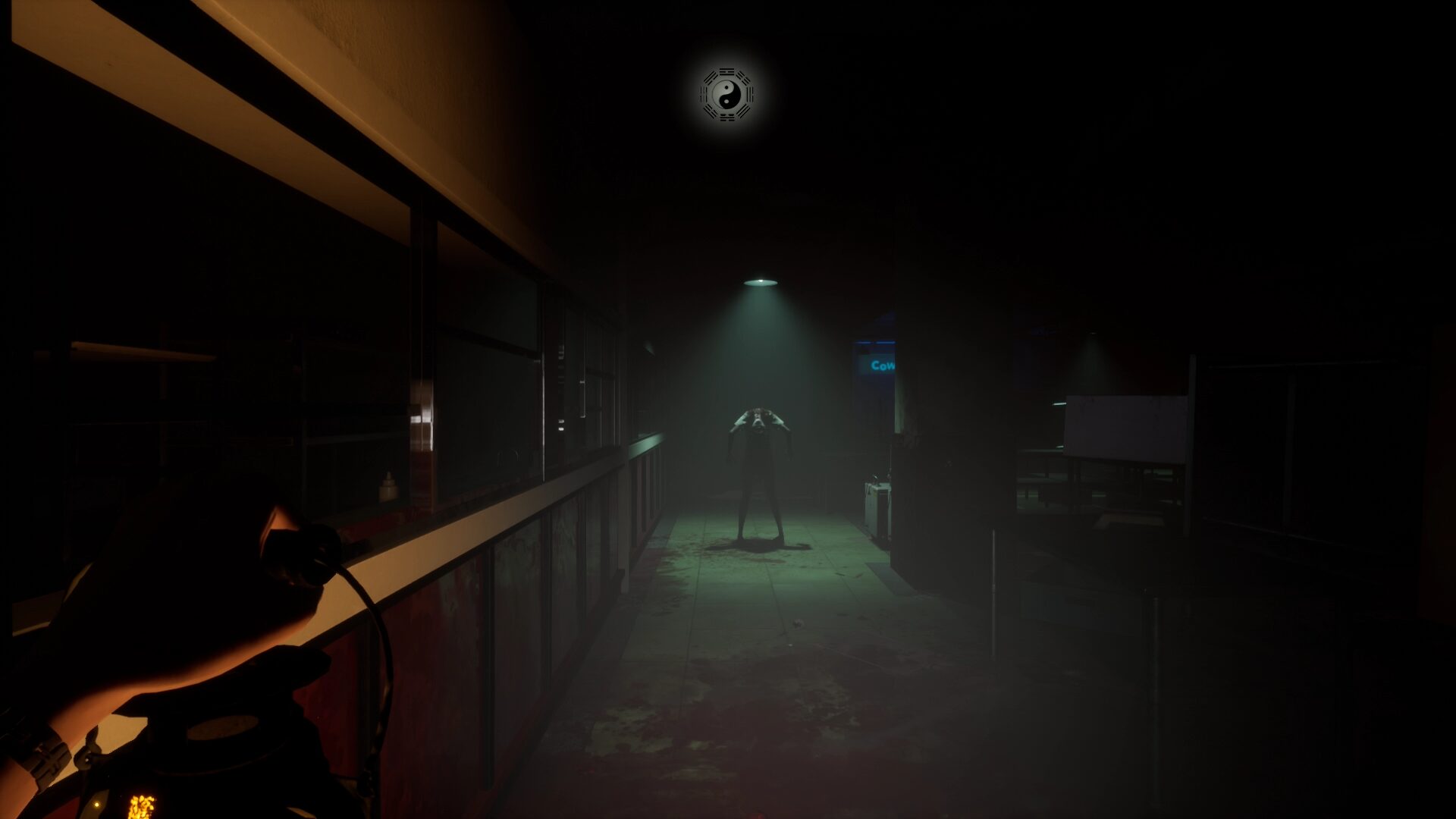
It’s always interesting to see how different a horror game from another culture is handled. Sure, many horror fans are familiar with Japanese developed horror games that have taken inspiration from Western films and of course plenty of Western horror games, but few of these happen to feature some of the unique horrors that can be found from Eastern cultures. Such is the case with The Bridge Curse 2: The Extrication. Created by Taiwanese developer Softstar Entertainment as a standalone sequel, this horror game looks to deliver some different kinds of scares steeped in Taiwanese mythology and ghost stories. Does this different approach to horror make the title worthwhile now that it has arrived on consoles?
Story
There have always been rumors about ghosts haunting the halls of Wen Hua University, likely due to historic killings that happened on the premises long ago, but when a student film looking to retell the horrors of these killings starts making a stir online when their trailer features a ghostly hand out of nowhere, it draws the attention of an investigative journalist looking to learn more about the school during the dark of night, hoping to find clues as to what happened there and the origins of the chilling film trailer. The story then shifts to three film students looking to make their own mark in the haunted halls by filming a horror movie of their very own, only to find that the horrors are all too real when they find themselves separated by ghostly hands and pursued by unspeakable terrors as they all try to survive the night and perhaps find out why this university is a hot spot of supernatural activity.
Set in Taiwan, players will notice quite quickly how heavily steeped in the culture the game is and how much Taoism plays a factor into the supernatural aspects of the premise. Full knowledge of Eastern mythology isn’t necessary to get the most out of this horror game but it will help players to understand some of the deeper meanings behind the various terms used when explaining the events that happen at the school and the numerous pieces of lore that are scattered throughout each chapter. That being said, it is nice to note that The Bridge Curse 2: The Extrication tells a very solid horror story that is weaved between four different character’s viewpoints as the happen throughout the game, sometimes simultaneously, all of whom experience their own horrors and hauntings that are not only quite scary at times but very interesting as well since it always feels like there is a sense of tension in the air, even when just messing around with a friendly ghost dog.
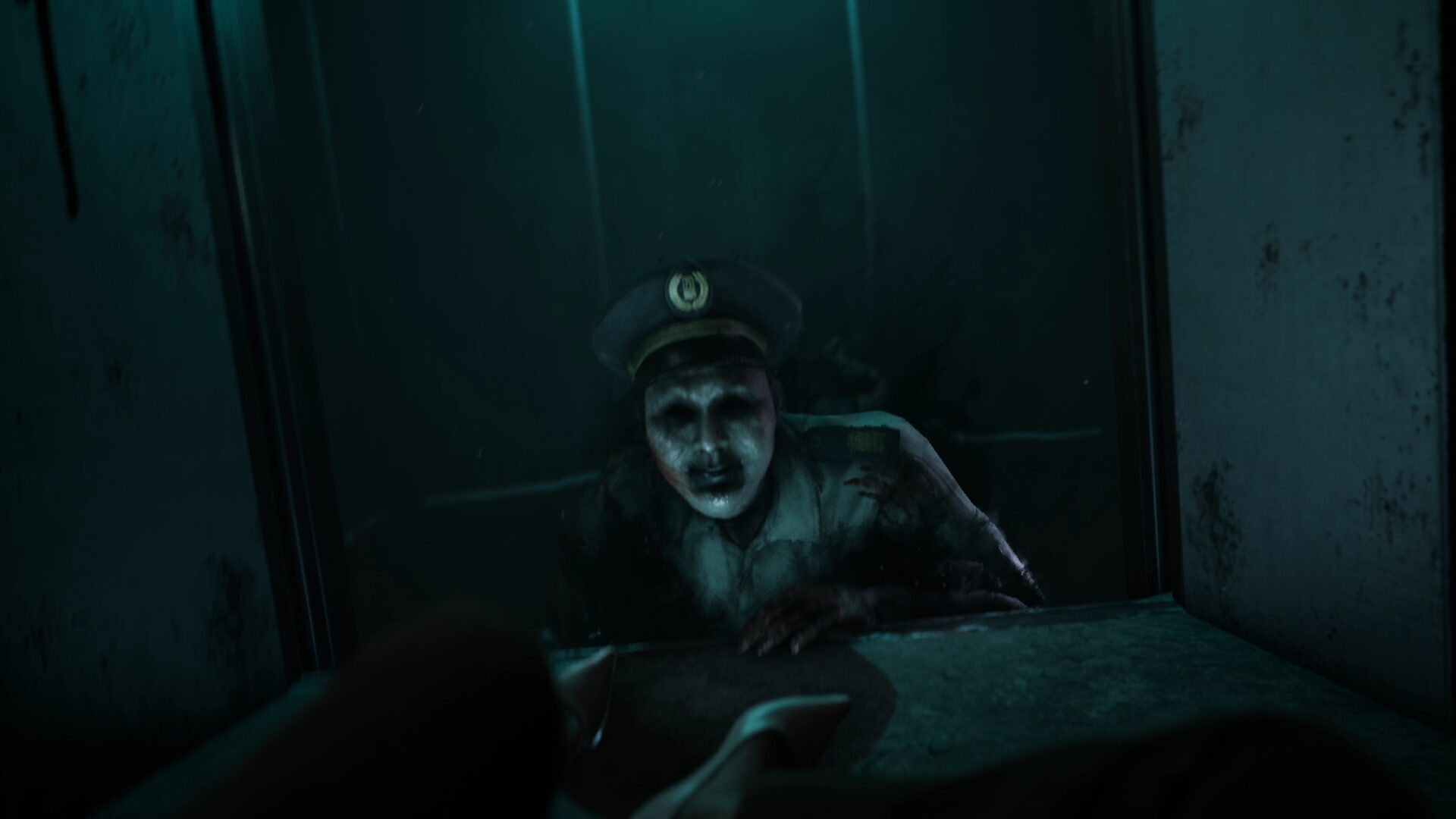
In fact, the various ghost encounters are some of the best parts of the game as players must find themselves dealing with a terrifying game of red-light green-light with a ballerina or sneaking through a location with an undead girl that can literally see behind herself because her head is hanging on by a thread. As for the characters themselves, the three film students have a solid feeling bond even if a certain mustachioed man is way over the top and the journalist also is handled quite well with her own segments. The horror title feels like it manages its time well and doesn’t overstay its welcome, clocking in at a bit over six hours for those who really want to search for as much lore as possible, culminating in some satisfying reveals that still keep some mysteries up in the air for a potential continuation of the horrors experienced here.
Gameplay
Played entirely in first person, players will spend most of the game navigating the halls of the university searching for the next clue to the mystery or piece to the current puzzle blocking their path. Some of the characters will be provided with a mystical lantern that plays a pivotal role in the game since it is used in multiple ways, such as uncovering hidden secrets from the past, a way to temporarily stun an attacking ghost, or even a tool to dispel supernatural shadows. While exploring players, as mentioned before, will find plenty of different rooms that contain optional pieces of lore that range from simply basic collectables or pieces of lore to secret items that can unlock unique interactions at certain points.
Similarly, the game’s various puzzles are presented in a way that makes them feel challenging but fair. Rarely did it ever feel like a puzzle was thrown up as an obstacle meant to stall for time or frustrate players, instead they have just the right level of balance between being tricky but solvable at the same time. This means that the game has found a real sweet spot for making sure that players feel rewarded for conquering a puzzle using the context clues given without having something directly spelled out for them, though that doesn’t mean that there aren’t a few real challenging ones that might stump players for a bit.
As mentioned before, one of the best parts of the game is when players have to deal with a direct confrontation with the many ghosts. The ballerina sequence easily stands out as a personal favorite and perhaps even the best moment of the entire game thanks to how tense players will feel while dealing with the red-light green-light mechanics and how unnatural the enemy feels. Other encounters range in quality and some have their own puzzles involved as well, meaning players need to solve something or take certain actions in an effort to survive. While carrying the mystical lantern the player can survive being attacked one time by using the lantern to stun them before having to wait for the lantern to recharge. If they are caught again before, then it’s game over. It is worth noting that the enemy AI is a bit on the weaker side here, especially when it comes to ducking under tables as they simply cannot do it. The final boss can crush them, though oddly enough the finalencounter’s AI seems to be the worst of them all, making it so players almost have to go out of their way to get damaged unless they end up getting lost while running away.
Audio & Visuals
It must be said that Softstar Entertainment has put a lot of effort into making sure the designs of the ghosts are as impressive and detailed as possible. There’s a reason we keep coming back to saying how impressive these encounters are after all and part of that is due to how gruesome or unnatural they appear, really driving home the spooky factor. The character models are also handled decently well while the school itself is packed with little details that makes me wish there was more to interact with at times.
As for the voice work, the English voice actors handle their roles well enough and do match the passion of a solid B-Movie performance but it does feel like playing with the original Chinese dub with subtitles is the best way to go. Not only do the performances feel more authentic but they also help highlight a certain over-the-top character’s personality a bit better. There’s not much in the way of background music outside of key locations but this helps with the overall eerie feeling of exploring the haunted halls as there are plenty of spooky noises used to great effect to help nail the atmosphere.
Overall
The Bridge Curse 2: The Extrication delivers an unnerving ghost tale that doesn’t overstay its welcome and provides plenty of scares and puzzles along the way. The English voice work isn’t quite up to snuff with the original Chinese dub and the enemy AI is a bit lackluster which makes most of the pursuit challenges too simple but thankfully this is balanced out by a satisfying puzzle difficulty and some wonderfully horrific ghost designs.
Capsule Computers review guidelines can be found here.
It’s hard to believe that it has been nearly a decade since the original Life is Strange was released by Square Enix. Perhaps it’s due to the series continuing with different characters and releases throughout these years but sometimes returning back to its roots might just be what the franchise needed. That happens to be the case this time around as Square Enix has handed the previously held reins of Max Caulfield’s story from Dontnod to Deck Nine to tell a brand new tale following everyone’s favorite quirky girl with super powers that had to deal with impossible choices in dire circumstances. So now with Max now in a brand new place in life and once again finding herself having to investigate a mystery with supernatural powers, is Life is Strange: Double Exposure a worthwhile continuation to a story once thought finished?
Story
It’s worth noting before we begin that Life is Strange: Double Exposure takes place following the events of the original game, meaning that those who have somehow yet to play the first game will find direct spoilers mentioned here. That being said, while numerous references are made about the past and events of the first game, the story told here is mostly self-contained, meaning that players can choose to jump in here should they wish, they’ll just be missing out on numerous references and the meaning behind certain items and a key choice early in the game.
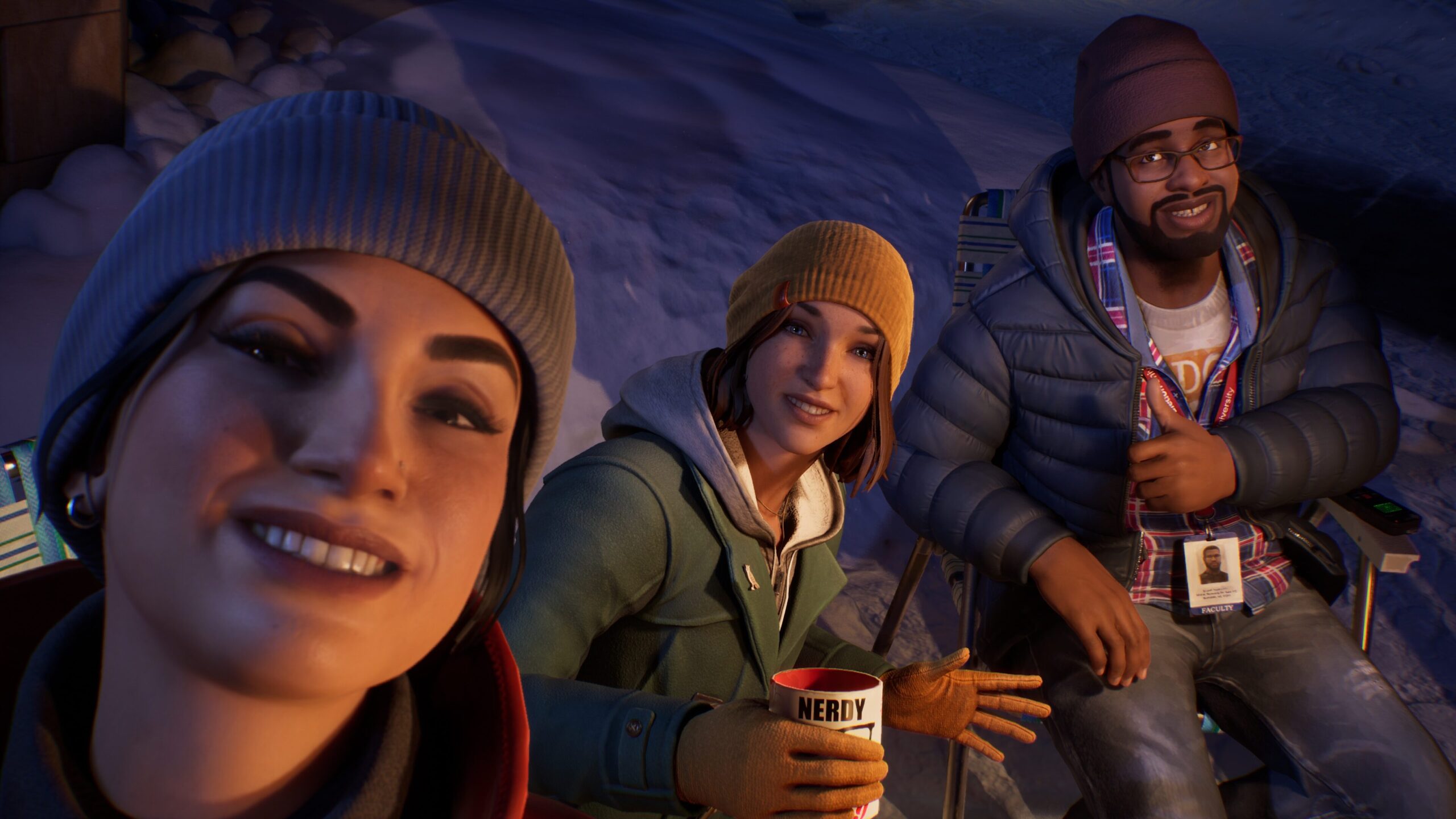
With that warning out of the way, a decade has passed for Max Caulfield, who is now a full grown adult and an award-winning photographer that has landed herself a position as Photographer-in-Residency at the prestigious art school Caledon University. This means that not only as Max found herself a stable income working as a lecturer and teacher in photography for aspiring students, but perhaps the first place she can feel at home in nearly a decade. Regardless of whether players chose to either sacrifice Chloe or sacrifice Arcadia Bay (the game’s very first major decision) players can still immediately see that she is haunted by the actions and result that transpired, whether it means the sacrifice of her closest friend and potential love interest or sacrificing a town full of people she knew. This can be seen through numerous past messages on her phone, memories scattered around her home, the fact that she swore to stop using her time rewinding capabilities and causing them to have all but vanished, and even how secretive she is with her past even to her new best friend Safi.
One night as Max, Safi, and their shared friend Moses were relaxing and taking in the stars, tragedy strikes when Safi leaves early. Max finds that Safi has been killed by a gunshot and, with no perpetrator in sight or even any clues to go off of, it is up to her to try and figure things out, that is after she spends a couple of days locked away to try and compose herself after the loss of her new best friend. With her rewinding time powers near unusable, Max finds herself stuck in a world where her friend is dead. Or is she? Max soon realizes that she has a brand new type of power, one that allows her to shift between two timelines; her current one where Safi is dead and a brand one where Safi is alive and well. With these new supernatural powers in hand, Max vows to discover the true culprit behind Safi’s murder all while trying to make sure the living Safi doesn’t meet the same fate.
Life if Strange: Double Exposure tells an interesting and strong starting story that does its best to try and hook players early with a mystery that simply cannot be explained and only gets more confusing and twist filled the further Max investigates what is happening. Tie this together with the fact that her timeline shifting powers allow her to swap between the Living and Dead worlds and experiencing vastly different interactions with characters in each timeline and it makes for an intriguing opening few chapters. It is worth noting that while not episodic like the original game, the story is still separated into five chapters, usually with a major twist or reveal happening at the end of each one, where, at the end of every chapter, players can compare their choice and action percentage with others, including revealing some actions players may never have even noticed.
The interesting story developments are helped by the fact that many of the other main characters and even side characters that Max will interact with are handled quite well and being able to see how these characters interact with her in one timeline compared to another is always interesting, especially should players make an enemy of someone in one and end up being a close ally in another. Many of these characters are given their own motives that Max needs to work around and with to get what she wants while others will eagerly help her, creating some unique dynamics in an already colorful cast. That being said, there are some side characters that feel like they barely get the time to feel relevant and others that downright feel off, especially with how Max interacts with them. While one early introduced love interest is handled well, including the fact that it can come into play in both timelines, the other feels incredibly off-base both in tone and situation. It almost feels as if the writers were simply checking off a box with the only option available given the few fully fleshed out characters they had to work with.
Another aspect that feels a bit off is how the game handles the original events of Life is Strange. Players will be able to choose what happened back in Arcadia Bay with one choice that will continuously come up over the course of the game through various references and even major callbacks in the late game. The problem here is, the writers had to make due with the fact that one choice means that Chloe is dead and the other means she is alive while the rest of the town was destroyed. Having Chloe live and the following way that the writers handle her near non-existence in the story will likely divide and even anger some of the original fans, while letting her die ends up feeling far more impactful story wise given how things play out throughout this game’s story.
Unfortunately, while the storyline does feature some rather surprising twists and turns as well as some major revelations, it also doesn’t feel like it ever goes quite as deep as one would expect following Max’s original adventure and lacks a lot of the same emotional impact. Yes, there are dark themes that are explored but it feels like the team was afraid to step too far into how vile things can be on a college campus or how dastardly things can become, even at an art school. Instead a lot of the drama is instead placed around the supernatural powers themselves and while this works fairly well, especially given how the last couple of chapters develop, it does lessen the dramatic impact of the game’s story. It also is worth noting that a few major plot points feel like they are simply dropped for no reason whatsoever. A major event takes place shortly into the third chapter that is barely talked about over text message and then never explored further or even mentioned again and a few other events are given the same treatment and this was with full exploration of each chapter, including the “Ultimate” edition’s cat DLC which is cute but feels underutilized even if it is simply there as a bonus.
What drama does come into play through the various clues and mysteries that players solve all end up tying into one thing whose resolution feels… unsatisfying at the least until things kick into overdrive for the culmination of the story. As for the game’s ending, we won’t spoil what happens here of course, but it feels rather surprising and a bit out of place in some regards, even if it does show that Max has grown from being a helpless feeling teenager into an adult capable of taking on anything she puts her mind to. That being said, there is one part of the ending that will certainly leave many wondering just what Deck Nine has planned next.
Gameplay
For the most part Life if Strange: Double Exposure plays similarly to previous entries in the series as Max will often have various locations she can explore with plenty of objects in the environment she can examine, spots she can take photos, and of course the people she can talk to or interact with. Max’s cell phone will keep track of her next “objective” indicating what character will advance the story and giving players free reign to interact with everyone and everything else without worry. Her cell phone also plays another role by providing a knock-off version of social media where characters will update and comment on Max’s photos and events happening at the time. Interestingly enough, these messages change depending on what timeline Max is in at the time, making sure to offer plenty of variety and also looks at how different some characters are between timelines. She can also view a journal containing her notes and feelings, which annoyingly needs to be flipped through from the start every time, and polaroid collectables scattered through each of the five chapters.
Obviously the biggest difference this time around is the fact that Max’s powers no longer rewind time but instead give her the ability to not only “peak” between the Safi Alive and Safi Dead timelines but swap between them entirely at certain locations. This is a rather unique feeling mechanic and works quite well, especially when some parts of the game vary wildly in appearance and tone depending on the timeline. Through this mechanic players will also find themselves interacting with two versions of each character, having to balance and remember who they may have wronged and who might like them depending on the timeline. For example, one character might be thankful and friendly to Max in the Safi is Alive timeline and completely despise her in the Safi is Dead timeline and the game does allow players to make a mistake if they aren’t careful.
Along these same lines players will find certain doors open that otherwise are closed in one timeline or items that may be missing and can be taken from one to another. Max can even “peek” into the other timeline from her current one to spy on what someone is doing or eavesdrop on a conversation that may reveal a secret she can leverage or the location of an item. It is interesting to note that while the whole “Your decision will have consequences” isn’t the most accurate here in many regards as the game often pulls up this notification after the simplest of choices, though more than a few of them never seemed to make an actual difference.. The only truly notable choices that seem to make differences are “Major choices” that players can turn warnings on for, being notified that this choice is a major one and if they are sure of their decision.
Her timeline swapping abilities are the crux of many of the game’s various puzzles on getting into locked rooms or digging up dirt on someone in one timeline and then using it in the other to figure something out or probing at them using what they should never have known in the first place. There are also a few puzzles that simply involve figuring things out on a puzzle box or putting together evidence but these are kept rather minimal surprisingly. Another thing that is kept shockingly barebones is a later evolution of Max’s timeline traveling powers, the ability to move an item from one to another. This power is used once throughout the entire game by the player and only one other time during a cutscene, making what seems to be an incredibly useful and interesting ability rather useless as it is only used twice and both happen only through story provocation. This is also unfortunate as there are a number of moments this power could come in handy, but they simply are unable to be used.
In many ways, that often feels like the case with Life if Strange: Double Exposure, plenty of interesting gameplay ideas that just aren’t given time to flesh out beyond the main timeline traveling powers. Even the photography and “double exposing” photographs only serve a purpose of obtaining optional dialogue until the latter becomes a key mechanic for a few moments near the end of the game. Otherwise things such as gathering and reviewing evidence only happens a couple of times and even the option of having timed conversations where other characters talk with Max as she explores only happens at the start of the game. Sure, players can listen in to other NPCs talking on the campus but she can’t reply to them. This keeps the general gameplay limited and far more so than one would expect given how unique the timeline swapping powers are at first, especially once puzzle solving takes a back seat in the last couple of chapters.
Audio & Visuals
Life if Strange: Double Exposure has a wonderful and slightly stylized looking art style with its character designs and the world itself. The character models are nicely detailed and Max (if players purchase the “Ultimate Edition”) can wear a variety of outfits as well that change from chapter to chapter. The Caledon Campus is also nicely handled but is a bit on the smaller side as far as exploration goes as players really only have free reign to explore at set points. One thing that is a very nice touch is how different the atmosphere and decorations of the campus is when comparing the two timelines. Since it is near the holidays, Living timeline is filled with holiday cheer and decorations while Dead timeline is somber and events are canceled, leading to a stark contrast. One thing that is noticeable however, even on the Xbox Series X, is that the game can stutter slightly when transitioning between timelines or have a bit of odd slowdown when peaking between them in busier locations.
The voice acting is quite fitting and Max’s voice actress has returned to reprise her role here. The other characters are similarly voiced quite well, though there are some audio balancing issues from time to time. This has been largely fixed from how it originally was, but occasionally characters will still talk far softer than another, making players have to rely on subtitles to catch what was actually said.The soundtrack features an impressive list of indie bands that all provide different pieces of background music that range from simple orchestral tracks to full on vocal tracks depending on the scenes and they are all used to great effect to try and make scenes have more impact, especially with the bigger twists and revelations they usually accompany.
Overall
Life is Strange: Double Exposure does a solid job reviving Max’s story with a brand new setting and moving her forward in life to the point that not only can we see how she’s had to deal with the chosen events of Arcadia Bay but also come into her own once things take a turn for the worst again. With a mostly well-written cast of supporting characters and some unique powers that make for some very interesting exploration, Double Exposure feels like it has a lot to offer at times while also not quite delivering enough of an emotional punch like one would expect from the franchise and also leaving far too many story threads on the table while limiting the use of some of Max’s most interesting abilities. This doesn’t mean that the title is a bad one, far from it, but it feels like it had the potential to be so much more.
Capsule Computers review guidelines can be found here.
New FINAL FANTASY XI Crossover Raid Detailed in Latest Live Broadcast
2nd November 2024 – During last night’s Letter from the Producer LIVE broadcast, FINAL FANTASY™ XIV Online Producer and Director Naoki Yoshida revealed a new trailer for Patch 7.1 “Crossroads,” the first major update following the release of the latest expansion Dawntrail™, alongside the release date of Tuesday 12th November 2024.
During the broadcast, Yoshida showcased “Echoes of Vana’diel,” the highly anticipated crossover alliance raid series with FINAL FANTASY XI, the first MMORPG from SQUARE ENIX®. The first raid in the series,“Jeuno: The First Walk,” will be implemented in Patch 7.1, bringing the worlds of both iconic MMORPGs together in 24-player battle content as adventurers journey into the world of Vana’diel. Yoshida also looked at the upcoming “Ultimate” difficulty 8-player raid (coming in Patch 7.11), first “Chaotic” difficulty 24-player battle content (arriving one week after Patch 7.15), updates to PvP content, Hall of Novice tutorials, and more.
The Patch 7.1 series will feature new content, updates and more, including:
New Main Scenario Quests – Crossroads
New Dungeon – Yuweyawata Field Station
New 24-Player Alliance Raid – Echoes of Vana’diel – Jeuno: The First Walk
New Trial– The Minstrel’s Ballad: Sphene’s Burden
New Unreal Trial– The Jade Stoa (Unreal): Face off against Byakko, one of the Four Lords, at level 100
Chaotic Alliance Raid– The Cloud of Darkness (Chaotic): A new 24-player, high-difficulty raid arriving one week after Patch 7.15
New Ultimate Raid– Futures Rewritten (Ultimate)
New Allied Society Quests – Players will be able to participate in new allied society quests for the Pelupelu that are designed for battle classes and jobs
A New Custom Delivery Client – Nitowikwe
Additional Role & Wachumeqimeqi Quests – Players who have completed all Dawntrail role quests or all Wachumeqimeqi quests will be able to enjoy a finale to wrap-up their respective stories
New Hildibrand Quest Series – Everyone’s favorite inspector returns for more antics in Dawntrail
New Game+ Support for Patch 7.0 – Replay main scenario quests, job quests, and role quests
Duty Support Additions – Support for the non-main scenario quest dungeon Halatali will be implemented, with further additions in the future
Player Housing Update – The ability to select interior designs from different residential areas regardless of the location of the plot and new interior designs will be added
Player Versus Player Update – Rework of multiple Crystalline Conflict maps, PvP action changes, and more
Miscellaneous Updates – Additional updates for the Hall of the Novice with training for a wide range of different battle mechanics, NPC voiceovers added to Doman Mahjong, and more
Also announced during the broadcast, FINAL FANTASY XIV: Dawntrail — The Art of Succession -Relics of Heritage- is scheduled for release on 29th April 2025 and is now available for pre-order at the Square Enix Store with pre-orders at other major booksellers beginning from 2nd November. This full-color art book contains hundreds of pages of artwork created for the Dawntrail expansion, including illustrations of characters, environments, equipment, and more. The physical art book also includes an in-game item code for a wind-up Erenville minion. For more information, visit: https://sqex.to/db3ZB
Flibustier Paris is a family-owned jewelry brand, creating makes high-quality jewels “Handmade in France”. In collaboration with FFXIV, Flibustier Paris has created a dedicated collection of 3 bracelets in gemstones and 925 silver, representing each Grand Company from the game: The Maelstrom, The Order of the Twin Adder and The Immortal Flames. Pre-orders start today on Friday 1st November on both International and Japanese Flibustier Paris websites. For more information and to pre-order, please visit: https://flibustierparis.com/
With more than 30 million total registered players, there has never been a better time for newcomers to begin their adventures in the critically acclaimed FINAL FANTASY XIV Online saga. The Free Trial includes all content from A Realm Reborn™, the Heavensward™ and Stormblood™expansions (and updates through Patch 4.58). Free Trial players can enjoy hundreds of hours of award-winning gameplay and story experiences equivalent to three full FINAL FANTASY titles, without limit on playtime. More information can be found at: https://sqex.to/FFXIVFreeTrial
About Square Enix Ltd.
Square Enix Ltd. develops, publishes, distributes and licenses SQUARE ENIX® and TAITO® branded entertainment content in Europe and other PAL territories as part of the Square Enix group of companies. The Square Enix group of companies boasts a valuable portfolio of intellectual property including: FINAL FANTASY™, which has sold over 195 million units worldwide; DRAGON QUEST®, which has sold over 91 million units worldwide; and the legendary SPACE INVADERS®. Square Enix Ltd. is a London-based, wholly owned subsidiary of Square Enix Holdings Co., Ltd.
Explore Sengoku Dynasty’s evolution with marriage, legacy, and dynamic community bonds, as 1.0 launch introduces fresh content
Oberhaching, Germany, November 1st 2024 – Developer Superkami and publisher Toplitz Productions are pleased to reveal the latest insider video for their multi genre open-world village builder, life simulation and survival game Sengoku Dynasty.
With only a week to go until the game leaves early access on PC, Sengoku Dynasty has added substantial content and enhancements through several game defining updates over the last 14 months during its early access status.
The latest insider video revealed today provides more insight into how relationships within the game will flourish, with Version 1.0, you’ll engage in romantic dialogues and quests, marriage, birth and even childcare, paving the way to transfer your legacy to an heir which will be added in an upcoming update after the release.
Furthermore, new weapons and improved gear will be accessible and you’ll even have access to a complete Samurai weapon set! Improved AI for animals and enemies will also be noticeable for Version 1.0.
A big part of Sengoku Dynasty’s charm is how immersive the game feels, of being at the heart of your community as you form those crucial social bonds. In version 1.0 you’ll notice how NPCs will now greet you with a friendly “hello” and bid you farewell with a word and a bow that illustrates their attitude towards you. The higher your Dynasty Level and the happier your communities, the more respectfully you’ll be treated by NPCs.
Other important features include a character creator and female character option, giving you the ability to define your character’s gender and appearance.
Sengoku Dynasty leaves early access for PC on November 7th, stay tuned for details on consoles coming in 2025.
For more details on Sengoku Dynasty players can visit the games official Steam page here.
About Superkami
Superkami is a studio with one mission – to let talented people make the best games they can. As an agile, fully remote studio with a team all over the world consisting of experienced veterans and ambitious newcomers they seek to bring unique content to a whole new audience through their innovation and style. Their first announced title is Sengoku Dynasty – an open-world survival builder set in the beautiful world of medieval Japan.
About Toplitz Productions
The German-Austrian publisher, whose name originates from the mysterious Toplitz Lake in the heart of Austria, develops and publishes games with “heart & soul” for all platforms. The company consists of a healthy mix of experienced industry veterans and young talents, all of whom are passionate gamers. They enjoy working with creative developers on many exciting titles, such as those from the “Dynasty” and “Giant” series.