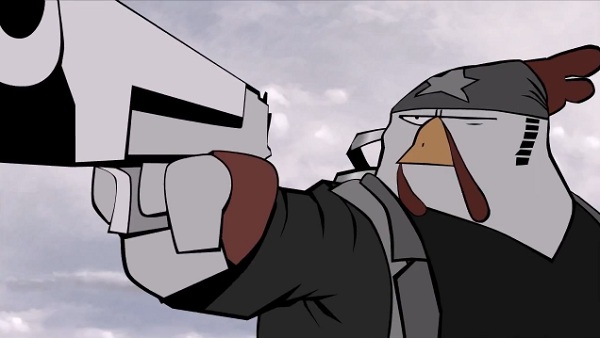
Developer of Rocketbirds: Hardboiled Chicken, Ratloop, have chosen a strange way to announce that they will be bringing the PSN action game from the PlayStation 3 to the PlayStation Vita. As in, they didn’t announce it at all really. The only thing that the company chose to do was upload a simple video to YouTube which can be seen below.
The video is also very scarce on details about the game other than the fact the Vita version of the game will be released sometime this holiday season. Besides that they are mostly flaunting all the praise the original version received set alongside gameplay which is likely from the PS3 version…
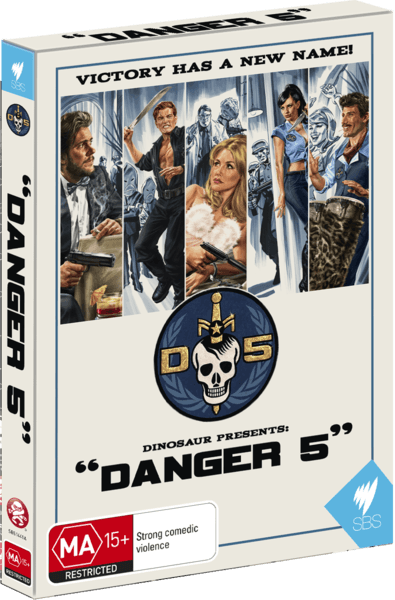
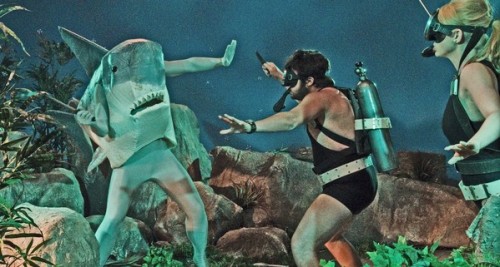
Danger 5 is a short action comedy series of Australian origin, produced by a modest production studio called Dinosaur and it was picked up for broadcast by Australian broadcasting company, SBS. The show aired on the SBS One channel where it premiered in February 2012.
Danger 5 is a 1960s style spy comedy and takes place in a fictional World War II setting, and as such has the war and political undertones that characterised such comedies. If you’ve seen spy comedies like Get Smart, then Danger 5’s production and delivery will feel familiar. Danger 5 is a bit of homage to that era of comedy, but adds a whole lot of crazy to the mix.
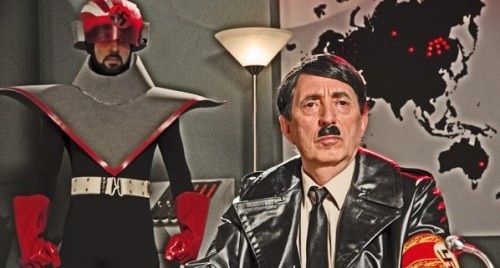
With its World War II setting, Adolf Hitler and the Nazi forces obviously play a big role as the main antagonists, and there was a bit of controversy surrounding that in the Australian press as it seemed to them that the series was exploiting the atrocities of World War II just for entertainment. Rest assured Danger 5 is all in good fun. Apart from referencing some historical figures, it makes absolutely no explicit or even implicit mention, reference, or depiction of the actual historic events that transpired during the World War II. It’s a purely fictitious take and takes place in a whole different time period and setting.
This is a show that doesn’t take itself seriously, doesn’t try to make a statement, and you as viewers just need to turn your brain off and have fun with it. Now that I got that out of the way, on with the review!
Story:
Danger 5 takes place in a rather unique 1960s inspired version of World War II, Adolf Hitler (played by Carmine Russo) and his Nazi army are the root of all things evil and diabolical. The world is in danger…and now five brave international spies, together known as the Danger 5, must work together to put a stop to Hitler’s evil schemes and above everything else…kill him.
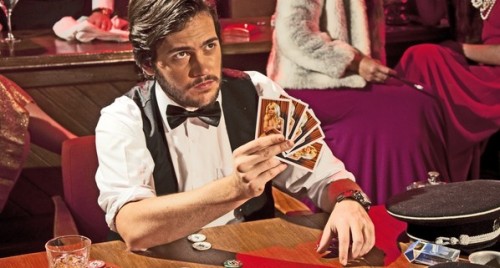
The Danger 5 team is made up of Tucker (played by Sean James Murphy) who is a rather uptight and serious Australian, Pierre (played by Aldo Mignone) is your stereotypical smooth talking European with the exotic accent, Ilsa (played by Natasa Ristic) is a cold and seductive Russian woman who speaks only in her native language but even so she and her English speaking comrades seem to have no trouble understanding each other, then you have the laid back and rugged American spy Jackson (played by David Ashby), and finally there is a British woman named Claire (played by Amanda Simons) who much like Tucker is serious and uptight. Oh…and their commander is a talking Eagle…yup.
The main series has five episodes, each more hilariously ridiculous than the next. Each episode sees the team taking Hitler and his troops head on while also putting a stop to whatever evil scheme is brewing. The team takes on all sorts of adversaries, from Nazi dinosaur soldiers to Nazi cyborgs. The team has to deal with really odd schemes such as one where there is a sexually transmitted disease of some sort that transforms people into blonde sex craved Germans, and one where Hitler attempts to rob all the national monuments of the world. It’s absolutely over the top and ridiculous, and the reason why it’s just so entertaining.
The writing and dialogue is deliberately corny, cheesy, and awful, but all in a very good way. The show never takes itself seriously, and even when it tries to be serious you can expect something hilariously lame and awkward to ruin the moment. The show is loaded with running jokes, for example, whenever someone dies in the arms of Pierre they always use their final breath to share a cocktail recipe, and whenever Hitler makes his escape there always seems to be a window for him to jump right out of, and also the fictional advertisement that plays at the end of each episode.
There are also a fair share of racist jokes, cheesy puns, and just really lame jokes that are akin to the style of humour of 1960s comedy, but all in a really good way. It’s all just so very random, surreal, and strange, such as this one scene where a woman walks inside a man’s moustache or one where everyone fires bullets with imaginary guns…it gets plenty weird like that.
The characters do a good job as they’re a fun bunch and are well acted. The main characters have a good dynamic between them as they are often butting heads with each other and have their share of romantic tension. They behave in an extremely stereotypical fashion but still end up being charming, Ilsa in particular is a really interesting character in terms of the way she treats her team and reacts to situations, and Pierre serves as that charming comic relief with the thick accent and upbeat attitude.
It’s fun for what it is, and as lame and weird as things get, you can’t help but just smile at how ridiculous and over the top everything is. It’s not trying to be serious, and as such, shouldn’t be taken that way.
Visuals and Audio:
In terms of production values, Danger 5 is one of those cases where it’s so downright awful that it’s absolutely awesome. The production values are deliberately low budget as the special effects are akin to what was present in productions from the 1950s and 1960s, using toy-like props and really cheap and simple costumes.
It’s hard to believe that this show was made in 2011 because you could very easily convince someone that this show originally aired during the 1960s as it’s just really that authentic. It’s hard not be impressed by how well they’ve replicated the production style of the old school spy action genre, and even the music and audio quality is similar to what you would expect from that era. The weirdest thing that this show does that it has some actors portraying multiple characters, which is a pretty cool touch that only an offbeat show such as this can get away with.
Extras:
In terms of extras, there are the usual trailers and such, but the coolest one being this extra episode that was originally released on Youtube in five parts. This episode serves as a prequel of sorts, showing how the Danger 5 team was formed and how they handled their first mission where they go up against an army of female Nazi soldiers covered in diamond.
Overall:
Danger 5 is what it is, a non-serious and extremely retro spy action comedy that is loaded with the most generic and yet most uniquely unusual sense of humour. It’s hard not to appreciate what the show is setting out to do and how it’s so down to earth in its delivery. Danger 5 succeeds well at what it’s meant to do and if you’re looking for a comedy that breaks the mold and is totally out of this world, then give Danger 5 a chance, but please keep turn off your sense of logic and reason before you do.
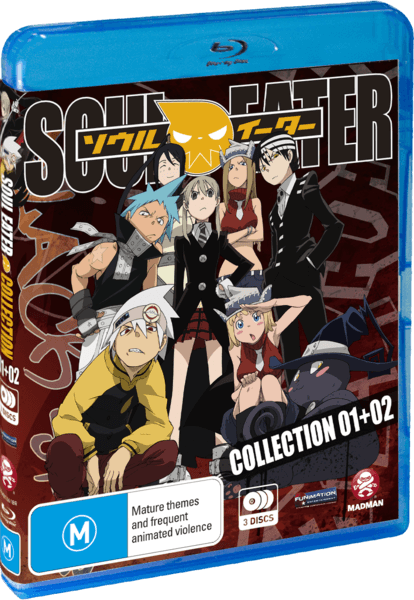
Soul Eater The Complete Series (Collection 1+2 and Collection 3+4)
Studio: Bones Publisher: Madman Release Date: March 15, 2012 Format: Blu-Ray Disc (Reviewed), DvD Price: $69.95 (C1+2, C3+4)
Overview
“A sound soul resides within a sound mind and a sound body.”
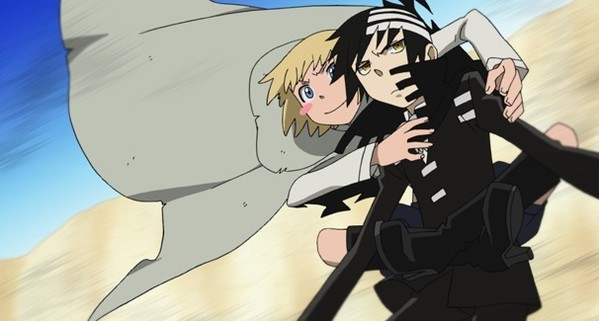
Soul Eater is an Anime adaptation of the highly stylistic Manga of the same name, written by Atsushi Okubo. The Anime adaptation takes this stylistic art-direction and gives it a fluid motion and colour pallette that is quite befitting of the series premise. And while the ending has caused a controversy, it is still a series that you should pick up and this review will hopefully explain to you why.
Story
The world of Soul Eater is a strange one, with Witches, Weapons (humans that can turn into weapons) and Meisters running around – as well as the Lord Death running a city. The story follows a small class of Weapons and Meisters at the Death Weapon Meister Academy set up by Lord Death himself as they progress through their classes as well as special assignments against witches, demons and the like. The basic premise is that each Weapon-Meister team has to collect 99 Kishin souls and 1 Witches soul in order to promote the weapon into Lord Deaths next Death Scythe.
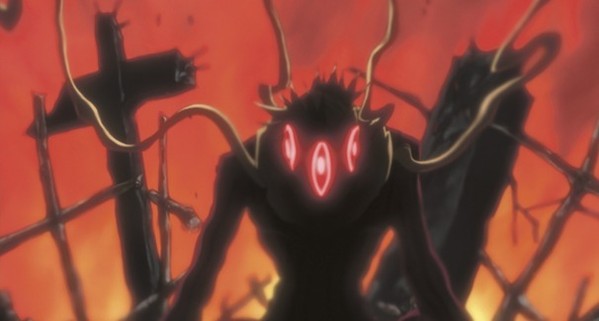
Fortunately the story isn’t so straightforward, a group of witches attempt to awaken a powerful Kishin with the power to destroy the world. Actually, the Witches are actually some of the most interesting aspects in this story. Each Witch seems to be based on some kind of creature, (For example, Eruka who is based on a frog and Medusa who is based on a snake) and have some fairly interesting powers, even if some of them are exaggerated to comedic effect. These Witches are the driving force behind this story, with their shenanigans and evil plotting causing the DWMA to react. Of course, this seems to be a war instigated from long ago, so maybe the Witches have a reason to do the evil stuff that they do.
The first arc follows the Meister Maka and her Weapon Soul as they attend class and attempt to rank themselves up to Death Scythe status. Unfortunately events turn for the worst when Medusa shows up and attempts a revival on the Kishin, which has the power to send the world into madness. During the course of this arc, we are introduced to the entirety of the main cast, ranging from other Meisters, such as Black Star (sorry I can’t find an adequate star on my keyboard) and Death the Kid (Lord Death’s Son), and their weapons, Tsubaki (A woman that can transform into a variety of different Ninja-ish weapons) and Patty and Liz (A pair of high calibur magic handguns). The story progresses fairly well, with sub-stories and a flowing continuity and has a finish that you may not have expected.
The second arc follows a new group of Witches led under the Arachnophobia banner and they seem to have similar plans for world destruction. This time, the Witches are hunting for the magic tools created by Eibon to use with the Kishin to send madness throughout the world. I actually really enjoyed the second arc a lot more than the first one, even if they both of a very similar quality in greatness. The only problem with this arc, for me, was the ending. The ending in this arc finishes the story completely, in a particularly closed manner to boot.
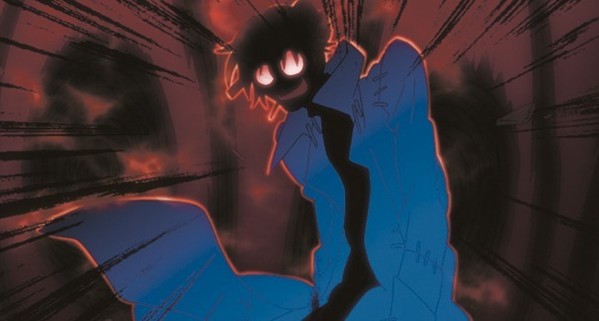
It’s not so much that there was a closed ending that bugged me, it’s more of what happened during the ending. SPOILARZZ!! The main character Maka ends up with a whole bunch of powers that were not established in the story previous to this episode and then somehow the tone and art-style changed slightly, the main enemies personality literally switches 180 degrees and a whole bunch of other nonsense is spouted. In the words of Excalibur himself, the production staff must have “Fools!”. The way the final episode was handled was abysmal at best, you should watch it (the ending) only to see how terrible it is before switching to the manga for the actual story.
Overall, apart from that one episode, Soul Eater has an amazing story and this is something that I would recommend with this Anime to anyone who has yet to pick up this series.
Visuals
The very first thing that you’ll notice about Soul Eater, even at a glance of the front cover, is that it has a highly unique visual style that is both highly detailed, relatively simple and incredibly exaggerated all at the same time. I know that may sound quite contradictory, but I assure you that it is not. These visuals are very unique.
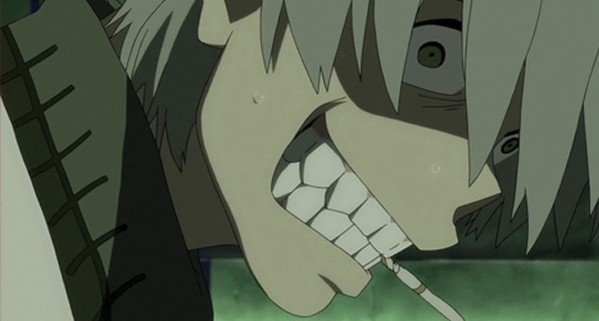
Each character has a very simple design behind them, but they also have a very unique look that often reflects their personality. For example, Franken Stein is very mad scientist looking (with his lab coat and exaggerated stitch marks) while Black Star looks like your typical Shonen styled character (exaggerated of course, he’s probably a parody of Shonen characters in general with his ‘I have to be the best’ attitude played up to the extremes).
What I found most striking visually was that a lot of the inanimate objects seem to have personalities of their own. Take the sun and the moon for instance, each one is constantly carrying a different facial expression. However, this does not just fall down to these two objects, even if they are the most distinctive. Objects like Eruka’s tadpole bombs also seem to have some personality. Even featureless objects seem to come to life (figuratively) in Soul Eater. In one episode one of the Witches are carrying a syringe with Black Blood and it’s over-exaggerated size and style made it seem like it had a personality that may have otherwise been non-existent.
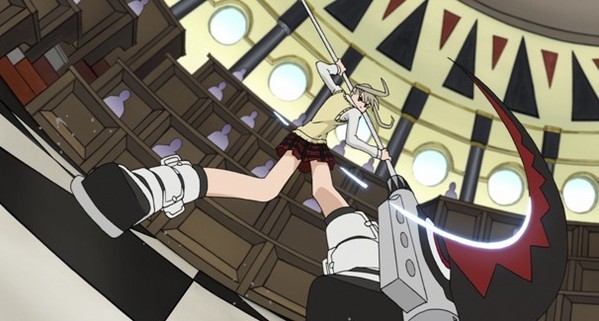
Honestly speaking, the visuals in this show are insanely awesome and incredibly fluid. For example, there was this fight scene in the under-part of the academy and it was so incredibly fluid and dynamic. You do not get this level of fluidity from most other Anime programmes, so this is definitely a plus for this title.
Audio
Soul Eater features a 5.1ch soundtrack to accompany the visuals in this amazing show. The surround sound sounds most-excellent and is definitely something that enhances the overall feel of the series.
Another notable thing about the Audio was how much the voice-actors suited their characters. Franken Stein, Spirit, Maka, all of the characters and their voice-actors synchronised so well that it was hard to watch the Japanese dialogue, considering how out of place the voices seemed to my ears. I also feel as though the western actors portrayed the comedy a lot better than the Japanese actors in the show.
This show is also audibly quirky in that many of the characters (witches in particular) all have habits of saying and doing incredibly weird things. For instance, Eruka’s insistence on saying “Ribbit” every so often.
What’s to talking about audio without mentioning how well the opening and ending theme songs work with the tone of the show? Honestly, the only ending theme that I thought didn’t work with the tone of the show was the first ending theme. Other than that, the two opening songs fit the show perfectly, as does the second ending theme. The third ending theme, I thought, suited the show at that time, but not as a whole.
Extras
Soul Eater features an amazing number of special features to peruse at your leisure. I would highly advise listening to the Audio Commentaries by the voice actors on various episodes as well as the clean opening and ending themes. The one major special feature that I couldn’t get into were the mini episodes for the ‘Soul Eater Late Show’.
Essentially these were to be played before each episode aired over in japan, but they were untranslated when they were put onto the disc and I don’t think the comedy translated as well for me. Also, they used the first ending theme as the intro to each episode and that annoyed me to no end. However, people who enjoy Japanese humour and the Japanese voice cast will probably love these.
Collection 1+2 Special Features –
Soul Eater Late Show (Eps. 1-26)
Episode Commentaries
Textless Songs
Collection 3+4 Special Features –
Soul Eater Late Show (Eps. 27-52)
Episode Commentaries
Textless Songs
Overall
Soul Eater is a wonderfully vibrant Anime series with an aesthetically pleasing art style. The episodes are all well done and the series follows an amazing series of arcs in it’s short life-time. It’s filled with amazing characters, great personalities and a very clever writing team who have created a show that will resonate with your soul.
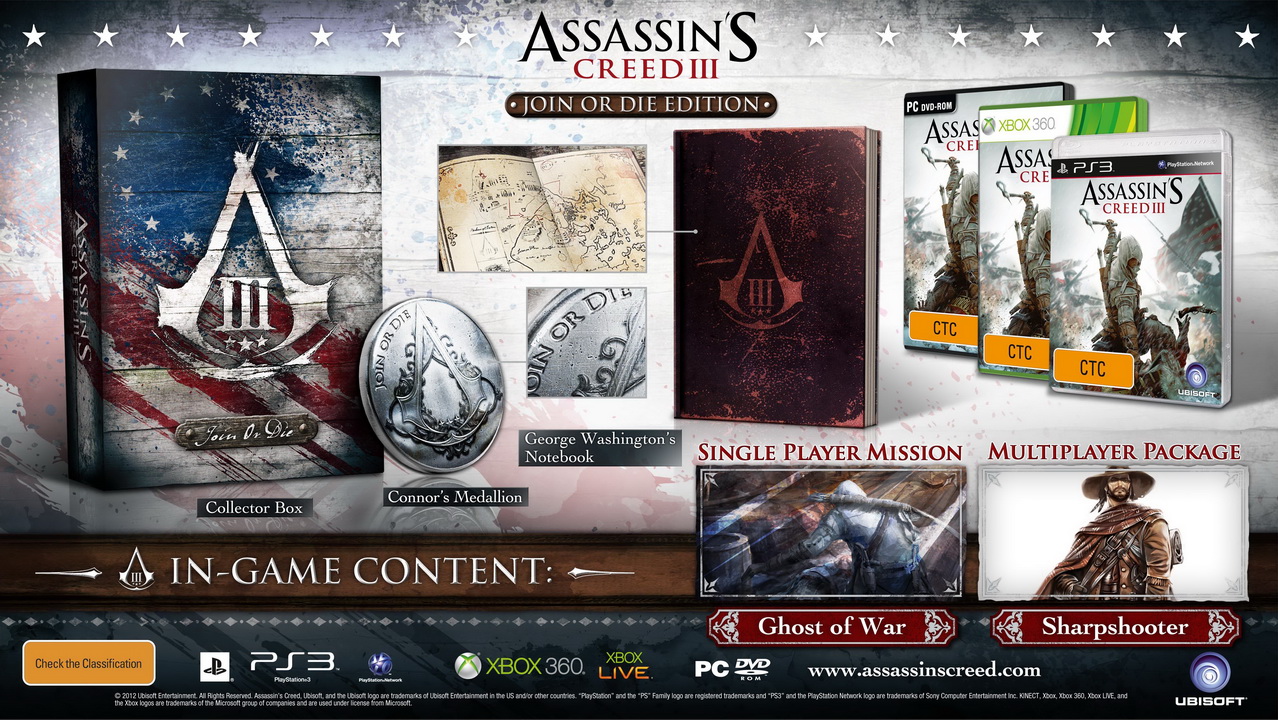
Ubisoft of Australia have revealed to us the details behind the Special Edition releases that will be available for their upcoming blockbuster title, Assassin’s Creed III, the third instalment into the massively successful Assassin’s Creed franchise.
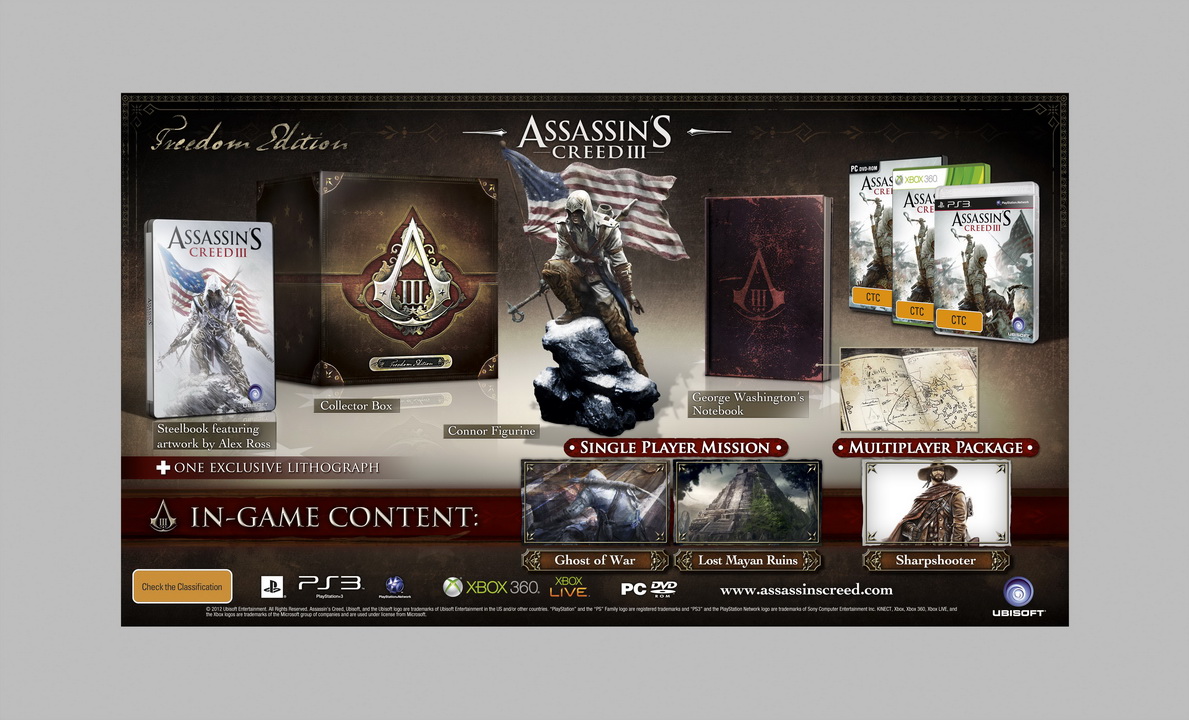
Here are the details of the contents of the special editions as seen in Ubisoft’s press release:
The Freedom Edition
This prestigious edition includes everything an experienced Assassin needs to become a freedom fighter. It includes:
– Assassin’s Creed III retail game
– A 24-cm high-quality figurine of Connor
– A steel book case art drawn by awards-winning comic artist Alex Ross
– George Washington’s notebook revealing all the truth & secrets about the Assassins and the Templars during the American Revolution
– One exclusive Lithograph
– 2 in-game Single Player Missions:
Lost Mayan Ruins: Connor’s mission leads him in an old Mayan pyramid, full of mysteries and revelations. Players will be able to unlock Captain Kidd’s fabled cutlass, a deadly, brutal and beautiful piece of steel.
Ghost of War: The tide of the Revolution turns into the Templars favour. Defeat your enemies and unlock The Pontiac’s War Club, a powerful Native American weapon.
– 1 in-game Multiplayer Package:
The Sharpshooter package: Unleash the Sharpshooter fury in multiplayer with 1 new character, the Sharpshooter, 1 Relic, 1 Emblem, 1 special Picture and the Title of “The Jester”.
The Join or Die Edition
“Join or Die” a single call to action which will determine if players are ready to fight for freedom. It includes:
– Assassin’s Creed III retail game
– The medallion of the Assassins
– George Washington’s notebook revealing all the truth & secrets about the Assassins and the Templars during the American Revolution
– 1 in-game Single Player Mission:
Ghost of War: The tide of the Revolution turns into the Templars favour. Defeat your enemies and unlock The Pontiac’s War Club, a powerful Native American weapon.
– 1 in-game Multiplayer Package:
The Sharpshooter package: Unleash the Sharpshooter fury in multiplayer with 1 new character, the Sharpshooter, 1 Relic, 1 Emblem, 1 special Picture and the Title of “The Jester”.
The Special Edition
The Special Edition features a special packaging, the retail copy of the game and an exclusive single player mission (see below) and more:
A Dangerous Secret: Fight against a secret that could jeopardise the funding of the revolution. In case of success, you’ll be rewarded with an exclusive weapon: a Flintlock Musket.
So there you have it, Assassin’s Creed III is set for release later this year on the Xbox 360, Playstation 3 and PC on October 31st, 2012. The game is also said to be in development for Nintendo’s Next-Gen console, The Wii U.
What do you think of these Special Editions? Will you be picking up one of them? If so, which one? Let us know in the comments section below.
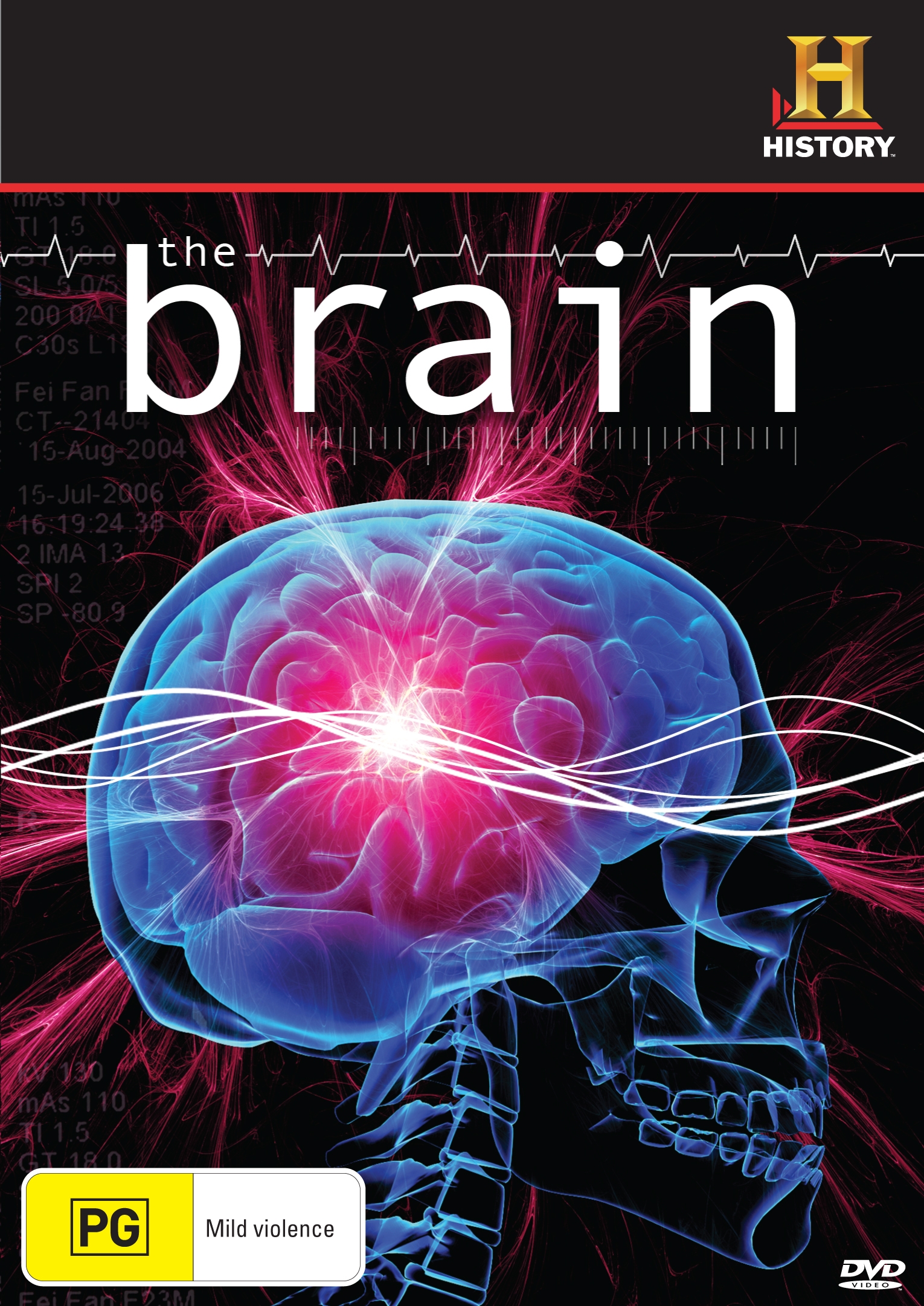
Anyone who has ever marveled at the human brain and how it works should be interested in the special put out by History coming out May 2nd. The Brain explores the interactions of instinct and reason, and how memory and decision making take place. Examples examined in the special are a soldier making decisions when under attack, how autistic persons develop their uncanny talents, and the difference between the brains between an “good” and “evil” person.
The human brain is one of the most amazing mechanisms we use on a daily basis. Being so complex yet the brain only averages 1.5 kg and only needs about as much power as a light bulb, something old cartoons seemed to have gotten right. The Brain covers much of the advancement in research we have had in the last 5 years, which far surpasses the previous 100 years and you can find out for yourself May 2nd, when it releases for RRP $14.95.
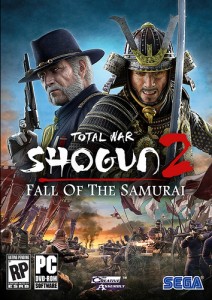
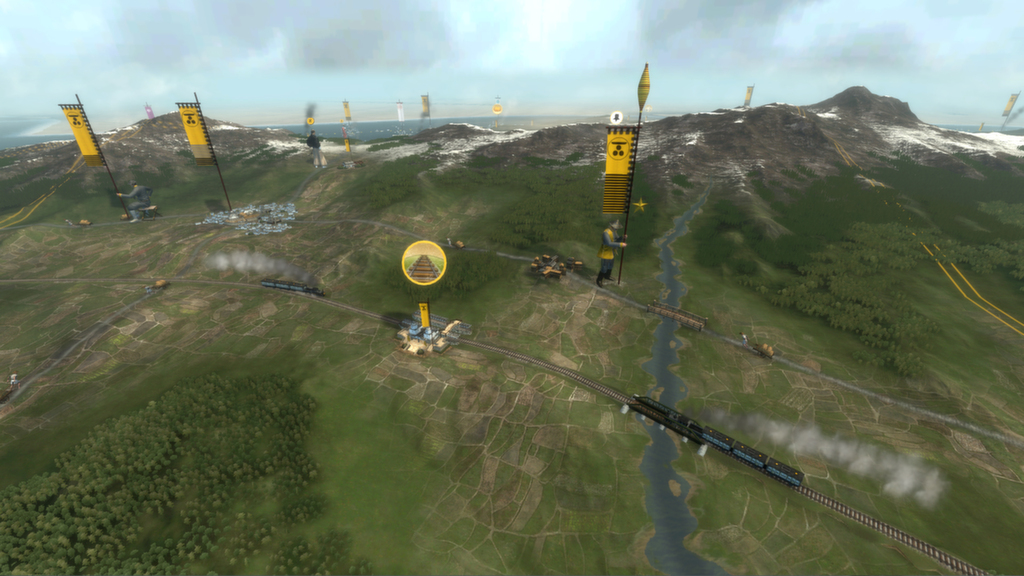
Total War: Shogun 2 – Fall of the Samurai Publisher: SEGA Developer: The Creative Assembly Platforms: PC Release Date: March 22, 2012 Price: (Download) $26.99 – Here; (Limited Edition) $23.99 – Here
Overview
Total War in itself has become a widely popular strategy franchise that envelops historic battlegrounds and the stories that have been ingrained there. However, the most intriguing sense of these titles is that players can forge their own futures by conquering or allying with groups of their choosing. Rewriting history the way the player deems fitting offers loaded choices that many leaders have faced before. Is total war the answer? Let’s take a trip down dictator alley to find out.
Story
Land of the Rising Sun has kept its gates shut from the outer world long enough. The year is 1865, and foreigners appear at Japan’s borders discussing trade and military expertise. Modernizing seems essential to the Emperor, but many clans view this as an imposing threat to their heritage and beliefs. While the Emperor is instilling techniques and weaponry gained from the West, the Shogun followers are less than happy to oblige.
A civil war is brewing, and the Westerners know it. As the voice of the Emperor shifts to modernization, will the Shogunate assemble to defend their ancient beliefs? There will come a time to draw the line between pride and honor – will you cross it?
Gameplay
One of the very first choices that a player will have to make is deciding between the Shogunate or Imperial armies. While this determines your starting point and allowable combat units, the differences can be seen in the bonuses that each clan carry. While some Shoguns are exceptional at guerrilla warfare, other Imperials can prove devastating at sea. Faced by the advantages and discontent of modernization, it is ultimately the players choice in clan development.
No matter the campaign difficulty you choose, opposing factions and even uprising rebels will stop at nothing to delay your progress. There are a few ways to deter such incidences: gather strong alliances, monitor taxation, uphold honor in invasions. Acquiring alliances for trade is important, but gaining strong allies in war speaks volumes. Requesting a “Join War” will allow you to walk across allied land to attack a warring faction. However, this alliance could be limited on a number of turns or as strong as indefinite military access. Such allegiances should be sought after to promote prosperity through the rest of your towns.
As the seasons begin to change, taxation will weigh heavily on your controlled townships. Proper attention is necessary in order to maintain positive income, but a rebellion can be unavoidable at times. As a revolt is mounting, you can administer several techniques to lower resistance such as disbanding armies, promoting inner town growth, and expanding trade. However, lowering taxes might not be necessary if you are a fan of brute force. Cutting down rebels with your own army will relieve some tension without having to worry about taxes.
Longevity is Fall of the Samurai’s lasting quality. Even though there is a choice between automated and user controlled battles, armies can be manipulated by a player in ways automation does not consider. Players add in an option of unpredictability that can result in an underdog victory or even an overwhelming defeat. By playing out each battle, a campaign can last an extensive amount of time. To add even further longevity, I found myself reloading from previous saves to replay close battles. I cannot be the only one that hates admitting defeat.
Connecting with a single character becomes hard in strategy games because they usually die quickly as more soldiers replace the fodder. Yet developing an army’s general in this installment shows involvement and progression as you can allocate specific traits and add bonuses to combat. Sending your commander into gunfire is reckless and will cause fellow units to retreat upon his death. Losing such as valuable member can cripple the greatest clans, so protecting this asset immerses you into the general’s character with an outside consciousness.
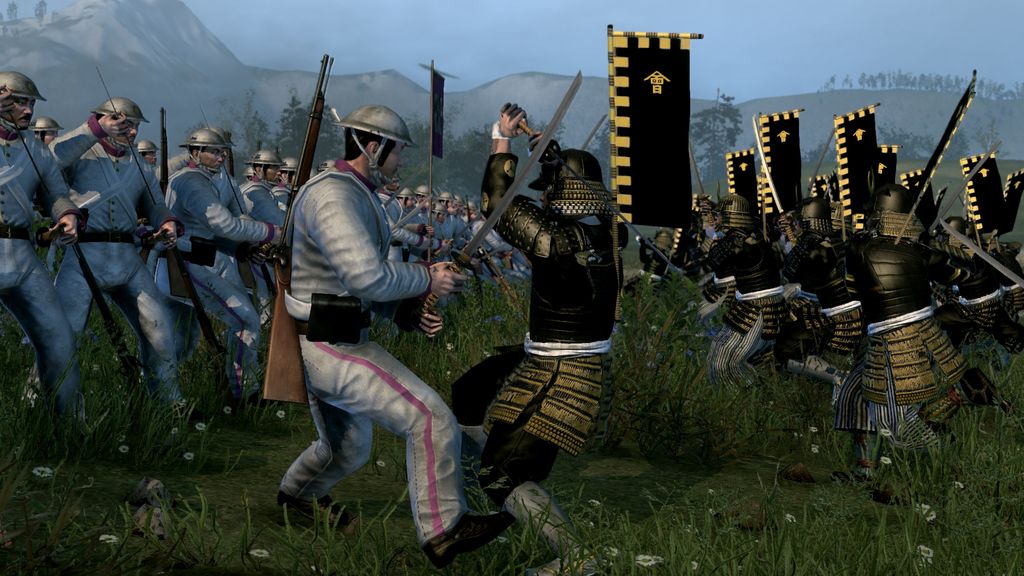
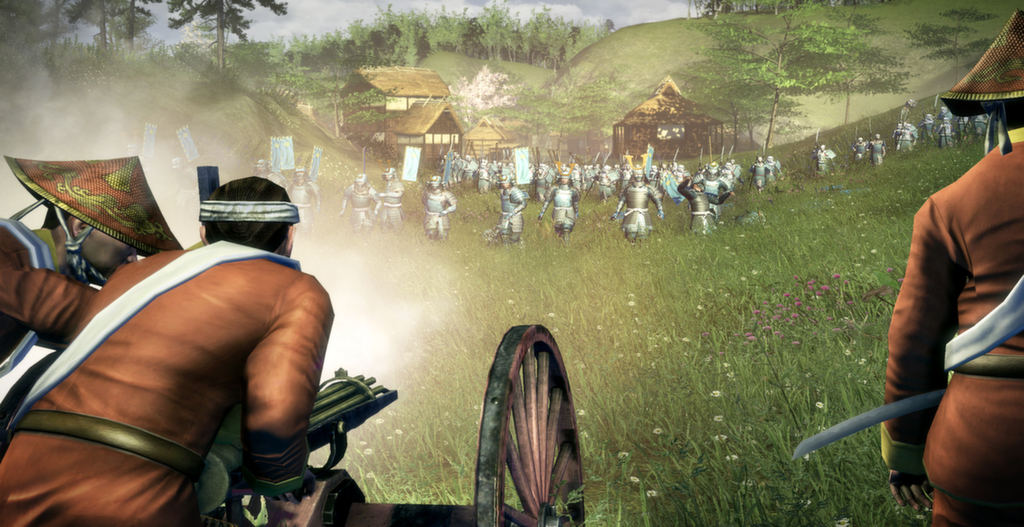
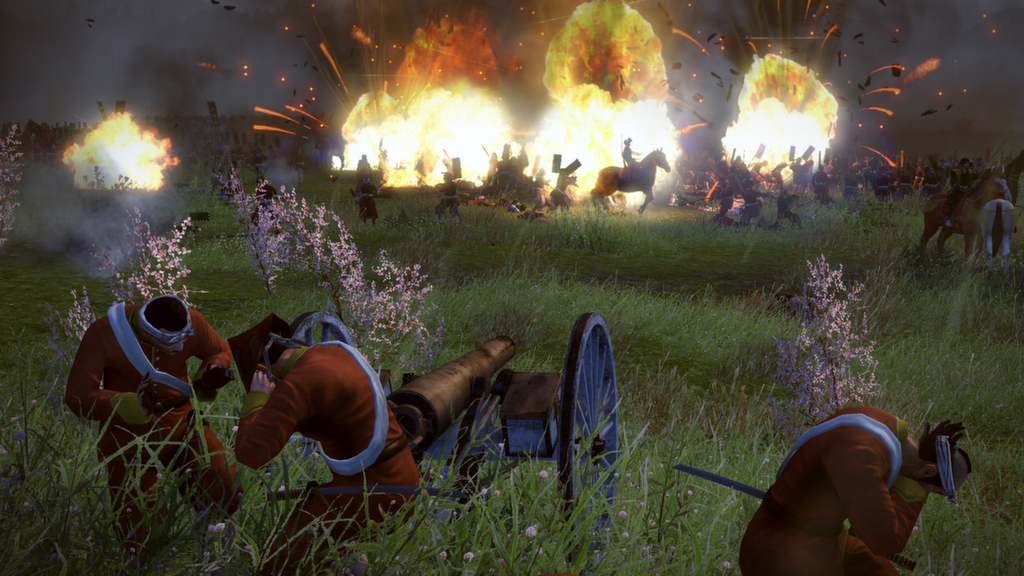
Updates in weaponry become increasingly noticeable as time progresses. Starting with basic Spear Levy troops that are mostly effective against cavalry, you can acquire naval fleets with torpedoes and ground troops with Gatling guns. Modernization has drastically changed the way of war in Japan, and battling such troops with bow and katana becomes fruitless. Even land battles are no longer safe from the clutches of naval gunships as explosive shells can be cast upon the ground with a short delay of impact.
A personal favorite addition to Fall of the Samurai that must be mentioned is the ability to drop into third person mode on selected units. Whether you are actually controlling a torpedo from your naval ship or behind the turret of the Gatling gun, the experience changes the intensity of combat as you fully take control. There are two emotions that I feel conjointly during this experience: gleeful exhilaration and empathy. Enemies running right through your gunfire is a heated mix with both emotions that leaves you an excited mess. Moments of “The Last Samurai” flash through my mind as the Shoguns charge willingly forward – ready to die.
Beyond the normal campaign, players can enjoy two types of multiplayer which are Avatar Conquest and Multiplayer Campaign. Creation of a personal avatar takes customization further providing bonuses and traits by player preferences. With limited spending power you are able to choose units to your liking to battle against your upcoming foe. Avatar Conquest works more like a play as you go focusing more on battles than building up a community. Opposing the one-and-done philosophy, this version of the campaign provides the same experience as the normal campaign but with players – not CPUs – in control of other clan territories.
Visual/Audio
The soundtrack associated with this standalone edition represents a strong distinction in traditional Japanese folk music. Listeners can identify the Japanese flute (Shakuhachi) and stringed instrument (Koto) that were often used to express traditional values of Japanese life. Having these instruments involved in the creation of the game shows that the developers took the time to understand the culture of Japan’s past.
Visual effects can be noticed quite regularly and are quite pleasant to watch. Upon zooming into the devastation of a battlefield, you can discover the outstanding visuals that the destruction has to offer. As cannonballs reach their mark, gulfs of flame will overcome those nearby and send them flying from the targeted center. Brilliant lights make for a glorious death.
Overall
What does a strategy genre set out to accomplish? Is it to engage an audience at multiple intervals or provide ongoing challenges? Fall of the Samurai meets these expectations by delivering several difficulties and presenting many obstacles during the campaign that will frustrate and challenge the player. A necessary frustration required to internalize strategies that build on a player’s commanding prowess and luck.
In addition, the offered visuals impose a sense of harsh reality as the repetition of gunfire and explosions have drastic effects on your army. Whether it be a cannon or Gatling gun, you will enjoy the slaughter or be horrified by the onslaught of your clan.
To those who that think they would need to purchase the original Total War: Shogun 2, do not fret. Fall of the Samurai can be played as a stand-alone version not requiring the original to play. If you are looking for a strategy game with a historical background, look no further.
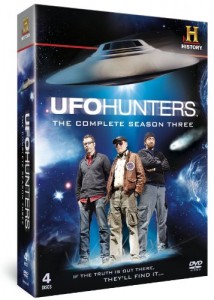
Beyond Home Entertainment has confirmed that they will be releasing two DVD collections on 2 May 2012. Both these collections will be of interest to those who are interested in the science and theories surrounding extraterrestrial beings.
The first is UFO Hunters: The Complete Season 3 collection, where the editorial team behind the UFO magazine search for documentation and hard evidence on reported and rumored UFO sightings. The second collection, Ancient Aliens: Season Two, offers similar content except that the focus is on theories surrounding the idea that extraterrestrial beings have visited and inhabited our planet in the past,
Both collections have a RRP of $39.95 and will be released on DVD format for now.
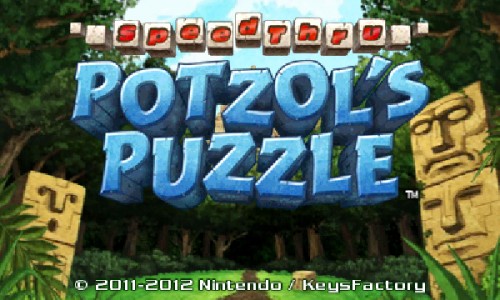
Fans of puzzle video games should keep an eye out for the upcoming SpeedThru: Potzol’s Puzzle, which will be arriving as a digital download on the Nintendo eShop on 5 April 2012, and will be exclusive to the Nintendo 3DS platform.
This unique puzzle title takes place in mysterious 3D world called Kaotl, where players will get to explore three different lands with over 90 stages, each presenting a unique puzzle challenge. The main twist to this puzzle title comes in the form of its gameplay mechanic, where players control these 3D blocks and navigate them through each stage by fitting through narrow spaces while collecting items. The game will also have multiplayer support in the form of local wireless and even allowing two people to go against each other on one Nintendo 3DS console.
A 3D trailer for the title can now be downloaded from the eShop.
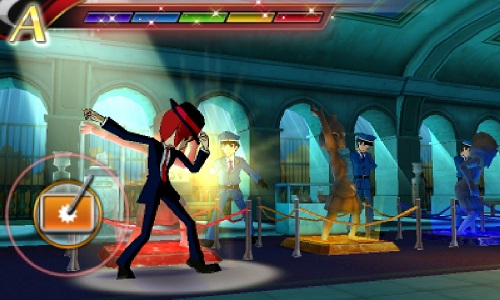
Sega and Nintendo have announced today that their upcoming rhythm action adventure tile, Rhythm Thief and the Emperor’s Treasure, will be getting a Western release and has been confirmed to happen on 12 April 2012 exclusively for the Nintendo 3DS handheld.
Rhythm Thief and the Emperor’s Treasure will attempt to combine the traditional rhythm mini-game collection format with a proper adventure story to deliver a unique portable gaming experience. The game will feature over 50 rhythm based challenges and take place in a 3D anime style Paris where you play as Raphael, a performance criminal with the goal to rob artifacts from famous museums…only to return them later.
Not only will the title feature a single player story mode, but it will also allow players to challenge other players in a variety of rhythm based puzzle challenges.
A playable demo can now be downloaded from the eShop.
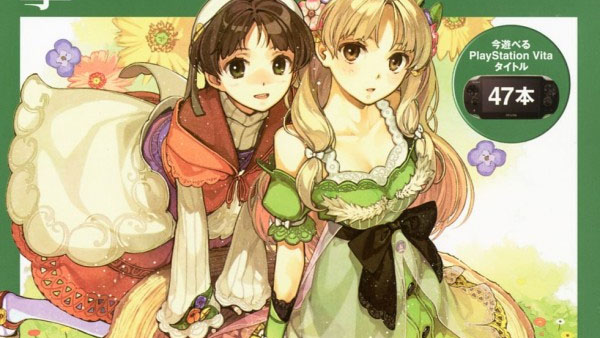
It was revealed today via Dengeki PlayStation that the official name for Gust’s Project A14 is now being called Atelier Ayesha. In this reveal we see two characters introduced to readers in the form of main character Ayesha Artool and Nio Artool, the main character’s sister. This game will also feature a new character designer known as Hidari, who handled the character designs for the Fractal anime.
The plot of the game will follow Ayesha who goes on a journey to search for her little sister Nio who has gone missing. In the image above, Ayesha is the blond female. One of the new features that will be included in this Atelier game will be a system that is being called “Connect the Memories.” Expect more details as time goes on as Atelier Ayesha is set to be released in Japan on June 28th with a hopeful localization announcement for the West coming sometime after that.