

Home Blog Page 4962

Epic Mickey 2: The Power Of Two Review

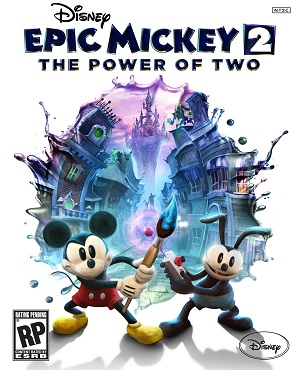
Epic Mickey 2: The Power Of Two
Developers: Blitz Games Studios (Mac, PC, PS3, Xbox 360), Junction Point Studios (Wii), Heavy Iron Studios (Wii U)
Publisher: Disney Interactive Studios
Platforms: PlayStation 3, Xbox 360, Wii, PC, Mac, WiiU
Release Dates: 18/11/2012 (NA, All Platforms), 23/11/2012 (EU, All Platforms except WiiU), 30/11/2012 (EU, WiiU)
Price: USD$58.10 (Available Here)
Overview
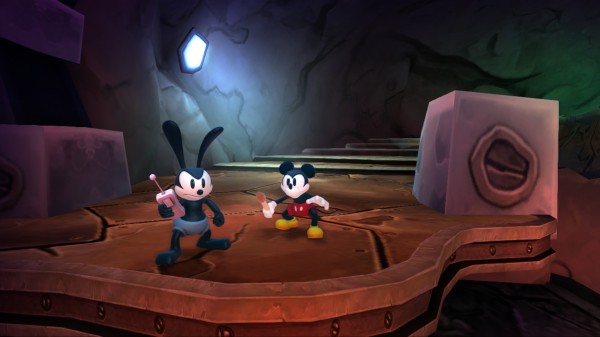
Mickey Mouse and Oswald The Lucky Rabbit return to the video game scene with Epic Mickey 2, the sequel of 2010’s Epic Mickey. Instead of being a Wii exclusive, Mickey and Oswald make an appearance on all major consoles. Wasteland is once again in strife and it is up to the team of Mickey Mouse and Oswald The Lucky Rabbit to stop the disturbance. Despite the great story, visuals and sound design, there are more than a few gameplay flaws that makes Epic Mickey 2 look like a silly symphony of poor game design.

Story
The story of Epic Mickey 2 immediately follows the events of Epic Mickey. In Epic Mickey 2, a character known as the Mad Doctor returns to Wasteland. After singing that he is a changed man and will be a good guy from now on, he warns of a new threat, one that is causing earthquakes throughout Wasteland. Oswald the Lucky Rabbit, also from Epic Mickey, helps the Mad Doctor despite being his foe at one stage. Gus, Oswald’s friend, and Ortensia, Oswald’s love interest, do not trust the Mad Doctor, so they call upon Mickey’s help. Mickey returns to Wasteland and teams up with Oswald to fight a new evil that plagues Wasteland. The story is quite good. They play with the themes of trust through Mickey and Oswald’s partnership as well as with the Mad Doctor in his quest to turn over a new leaf. It is told with colourful and spectacular visuals and some catchy musical numbers.
Gameplay
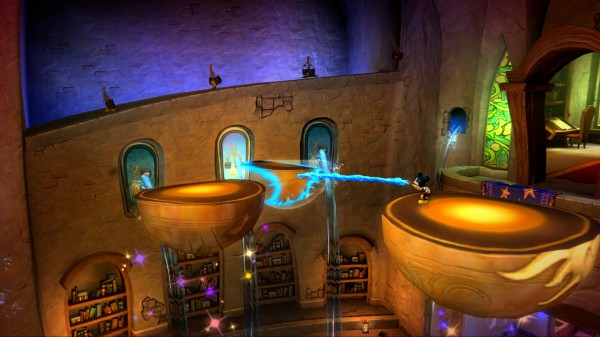
In any platforming game, it is imperative that the elements are executed with perfection or, at least, close to perfection. Sadly, Epic Mickey 2 can not be put in either category. The most important element, jumping, is quite a clumsy mess. Unfortunately, this comes down to a few elements. At times, the player would not know what surfaces are safe to jump on or what ones will slide you down. Take one of the earlier sections involving rubble. Looking at said rubble, it does look climbable. Believing that the rubble to be used, I decide to actually climb it, only to find out it is unclimbable. There is no distinction for the player to see what is climbable and what is not. The camera is also a big issue, but that will be discussed later.

Throughout the game, players will need to complete objectives and solve puzzles using Mickey’s paintbrush and Oswald’s remote control. Unfortunately, the creative team behind the design seemed to have run out of ideas on what challenges the player must go through as the game will get very tedious and very repetitive. The same type of challenges will continuously pop up; bringing more frustration on top of the game’s other issues. Compiling to the problem are the objectives themselves. At times, they are not quite clear. Puzzles can also be confusing for the player as well and these problems pop up right from the start. There is a somewhat redeeming factor and that is some decisions will affect the game down the track. It is not as deep as other games with decision making as part of their game design but it also means that no two playthroughs are the same, if one does play through this game a second time.
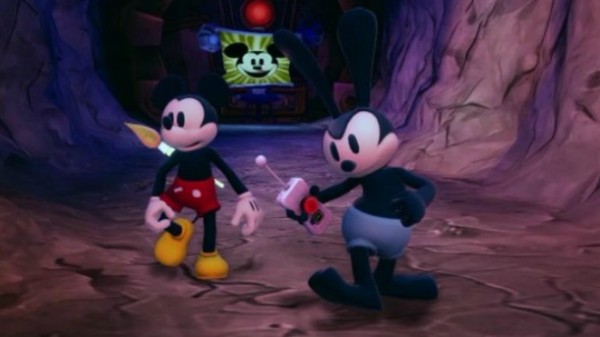
Combat is also an issue. Using the magic paintbrush, Mickey can either thin out his enemies or paint them so that they join Team Mickey while Oswald uses a remote control. This is a good idea to allow the choice for the player to choose how they will deal their enemy, but the execution of it is quite bad. Collusion detection is the main problem. The hit detection area given to enemies is quite small compared to the greatly bigger hit detection area for Mickey. For the enemies, they are forgiven for missing an attack. The player could avoid it only to be hit afterwards. On the other side of the spectrum, it is all about perfection for the player. They would have to be spot on with their attacks, whether it is from a paintbrush or a spin attack. This is an unforgiving challenge upon the player.

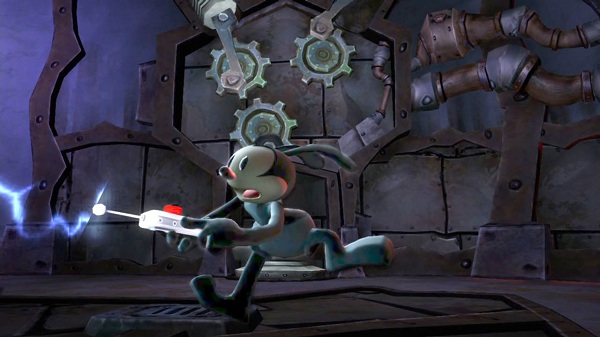
Speaking of Oswald, he is now Mickey’s partner in crime. With that said, he is far from a lucky rabbit. If the player is someone who prefers a single player experience, prepare to be disappointed with Oswald’s AI. While he will follow Mickey around, at times, Oswald would just do his own thing. Players use the O button (PS3 version) to call him in order to progress through a level. There will be times where Oswald would just disobey the player or do something completely different. Combat is no exception to bad AI as he will get in the way of Mickey’s attack. A fix to this would be to allow the player to take control of Oswald when required, like the LEGO video games. Yet, such an option is not present, leaving single players fuming with frustration. This would be a good time to grab a friend and play through the game with them. They can not be more incompetent than the AI.

From the commentary concerning the first Epic Mickey, the camera was an issue which plagued the platforming elements. While I can not compare the camera in Epic Mickey 2 from its predecessor as I have not played the first game, I will still say that the camera is bad for a platforming game. This affects the jumping mechanic immensely. Gaps can be distorted to give off the illusion that the gap is shorter than it really is, often resulting in an unnecessary death. The default position is too low, even if the player manipulates the camera’s position. This is where the Playstation Move is handy, even recommended. The Move controls the camera as well as aiming with the paintbrush, knocking two birds with one stone. It is quite a blast with the Playstation Move.
Visuals & Audio
While the gameplay mechanics is not exactly great, the visuals are at the opposite spectrum. The cartoon world is colourful and full of life. The cutscenes, both the cartoon and game engine cutscenes, are stunning and add to the story. Environments give the game the charm that a Disney cartoon gives to its audience. More often than not, I would paint the world so that I could reveal the beautiful cartoonish world that the art designers created. I would suggest to the player to do the same thing.

The audio is also done right. In fact, music happens to be one of the core mechanics of Epic Mickey. Throughout the story, there will be the odd musical number, with the first one appearing at the beginning of the game. Disney only brings high quality musical scores to the table and Epic Mickey 2 does not disappoint. They are fun and catchy with some good lyrics. The orchestrated score is excellent. It will change with every decision made in the course of the game, which is an interesting idea executed right. Voice acting is present for most characters and it is enjoyable.

Overall
Epic Mickey 2 had the potential to be an excellent game. It has a great story, interesting characters, colourful visuals and a score that is heavenly upon one’s ears. Sadly, it receives the score it does because it fails on the gameplay front. Camera issues, jumping issues, a shoddy AI partner, repetitive objectives and confusing level design and puzzles add to the growing frustrations that the player develops as they play this game. Mickey Mouse does deserve better than this.

6--capsules-out-of-10

Capsule Computers Podcast Episode 066 – Dawn Of A New Day

2

Hi Everyone! Benjamin “LinkageAX” here and welcome to our new and improved gaming podcast! You’ll notice that we’ve shaken the core concept up a bit and that we’ve shaven a few minutes off the total running time. This means that you get a more streamlined podcast based around things that are relevant and current.

Please enjoy our first show of this format.

Cast: Luke Halliday, Travis Bruno and Dustin Spencer; hosted by: Benjamin Webb.

Music for this podcast is from: Metroid Prime

Thanks for listening and let us know what you think!


SUBSCRIBE: iTunes Podcast Channel | Podcast RSS Feed

DOWNLOAD: iTunes | MP3 (right click/save as)

Send all your video game or podcast questions, hints, suggestions, answers to questions and feedback to [email protected]

SPECIAL ANNOUNCEMENT

Special Mention to our partners over at Razer, us here at Capsule Computers we are geared by gamers, for gamers.


STORIES COVERED IN THIS PODCAST:

Points of Interest:

Luke:

Assassins Creed 3

Travis:

https://www.capsulecomputers.com.au/2012/11/first-dynasty-warriors-8-screenshots-are-very-impressive/
https://www.capsulecomputers.com.au/2012/10/grand-theft-auto-v-spring-2013-release-officially-announced/

Dustin:

WWE 13

Myself:

https://www.capsulecomputers.com.au/2012/10/xcom-enemy-unknown-review/

Ben and Luke:

Mario Kart 

Thanks for listening. Copyright Capsule Computers Pty Ltd – All Rights Reserved.
All Other Samples Are Copyright And Property Of Their Official Copyright Holders.

Dracula: The Shadow of the Dragon Revealed

0

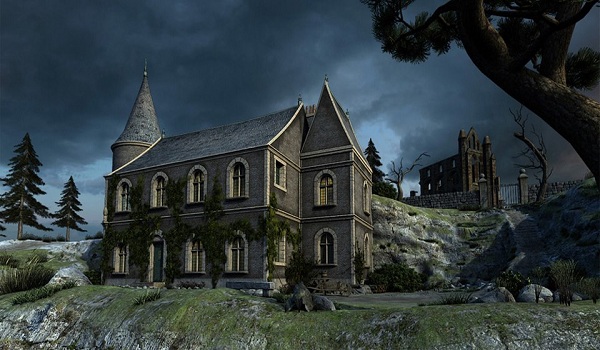
Anuman Interactive has just announced its latest title in “Game Connection Europe” week, with the reveal of a supernatural based game, Dracula: The Shadow of the Dragon. Not much is currently known about the title other than the player will venture to the four corners of the globe and back in a “totally original storyline”.

Anuman Interactive’s General Manager Stéphane Longeard explains:

“We’re very pleased that ‘Dracula: the Shadow of the Dragon’ is to take its place in the Microïds catalogue and we have every confidence in the talent and ability of the Koalabs teams to complete the project.”

Anuman seeks to become a real force to be reckoned with in adventure game titles, starting with the release of Dracula: The Shadow of the Dragon. With Stéphane Marty, who co-founded Koalabs, adding:

“We’re convinced that working with Anuman Interactive will be good not just for Koalabs but for all adventure game enthusiasts, too.”

Dracula: The Shadow of the Dragon is set for release in the second quarter of 2013.


The Kirishima Thing Review


The Kirishima Thing
Studio: Showgate
Publisher: Japan Foundation
Format: Cinema (Japanese Film Festival)
Release Date: Sydney – November 23, 2012, Melbourne – December 1, 2012
Price: $17 – (Buy Here)

Overview:
I seen many films of the 16th annual Japanese Film Festival this year, but none quite like The Kirishima Thing, a wildly inventive and thought-provoking film brimming with purpose.

It’s a film about unraveling the structure of the layered ecosystem that we call society and how the very nature of human existence necessitates such a hierarchy, one that ultimately wrings the life out of us all. Bleak? Perhaps. Honest? Absolutely.

The Kirishima Thing may not be the best film on the card for the 16th Japanese Film Festival, but it is undoubtedly the most interesting.

Story:
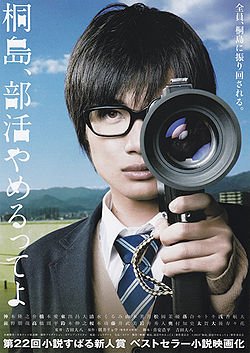
Based upon Ryo Asai’s novel ‘Kirishima, Quit the Club’ and directed by Daichahi Yoshida, The Kirishima Thing follows a few days in the life of a group of high-school students after the sudden disappearance of the popular guy Kirishima. Throughout the film we begin to see the structure that Kirishima sat atop of slowly unravel and ultimately crumble and in the end become born anew.

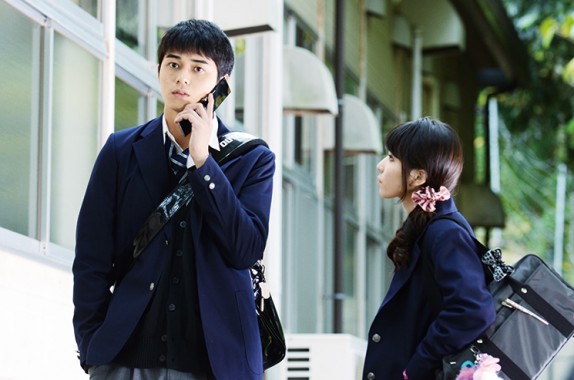
Interestingly enough the eponymous Kirishima never appears in the film, instead we follow a multitude of characters from all walks of life and witness how the disappearance of Kirishima effects them in a variety of different ways and throws the entire school’s ecosystem out of whack. All of this plays out through non-linear story-telling with the story jumping back to show things from another character’s perspective.

With Kirishima gone there is an undoubted void left in his wake, his disappearance unexplained, he will not return anyone’s calls, not even from his own girlfriend. He leaves his position on the volleyball team completely empty after he quits, leaving a usually benched player to try fill his boots. His best friend Hiroki suddenly rises in popularity throughout the school. All the while inner conflict breaks out throughout the schools social groups. All of these people relied on Kirishima in some way, whether it be directly or indirectly. When he up and leaves without any explanation things are thrown into disarray. What do they do now that they don’t have Kirishima to depend upon?

We see the way things change throughout the film and the way these characters connect with one another. But perhaps the two most interesting characters are Hiroki and Maeda, both at the opposite end of the social spectrum. Hiroki struggles to deal with the growing expectations placed upon him by the rest of the school, with it all mounting upon him until it all comes out in the films final and best moments. Maeda on the other hand struggles to find freedom of expression in a society that damns him for it. He spends the entire film trying to make a zombie movie for the school film club despite his teacher telling him that he needs to make something more relatable to students such as himself. It’s ironic that in the end Maeda’s existence and school life in general much like a zombie flick is dictated by a survival of the fittest mentality. At the end of the day, they’re all just eating each other alive – That is society.

Everything culminates in glorious fashion on the school’s rooftop where all sides of the school societal structure are brought together. Here we see the boiling point of the simmering pot the movie had been up until the point, all the emotions begin to overflow and release. After all is said and done, everyone moves on. Kirishima is a thing of the past, life goes on and the cycle repeats. Decidedly the hierarchy is needed because without it, all that exists is chaos. But what real difference does it make if you control the chaos? It’s still chaos no matter how you paint it.

In the film’s final moments we get the most poignant scene of The Kirishima Thing. Hiroki, now the new Kirishima of the school’s social structure asks Maeda whom is still in his place at the bottom about his camera and his dreams. “Are you gonna be a famous director? Marry a pretty actress? Become rich?” He asks. Maeda simply and with maturity far beyond his years responds, “No.”

Of all the people in the school, Maeda understands the way of the world best and he isn’t deluded enough to think that the boy running around with an old 8mm film camera has much chance of doing those things. He is smart enough to know that however grand the moments that fill his school life may be, it will one day be over and unlike his favourite horror films, there will be no sequel. But that doesn’t mean he won’t live life his own way. He rejects society just as much as it rejects him, he won’t make it to the big time, but he will continue his passions on his own terms. After seeing Maeda’s freedom from the system, Hiroki realises just how trapped he is by it and almost in denial he desperately tries to call Kirishima one last time, but there is no answer all that remains is the sound of silence.

The film concludes quietly, as if nothing had ever changed. The titular thing with Kirishima soon to be forgotten and in it’s place the next big thing. This endless miserable cycle starts anew. It’s a harsh reality, but that’s the world at it’s most sincere – harsh.

Visuals and Audio:
The Kirishima Thing is not only a complex and deeply thoughtful film but it’s also a very beautiful one aesthetically. There are a lot of great set-pieces used in the film, the best of which is undoubtedly the rooftop, which by the end of the film has almost taken on a life of it’s own. Most high-school dramas portray the school akin to a prison or in a way that makes it feel as though the students are trapped there. The Kirishima Thing on the other hand uses the school in a number of different ways, when things are going well for the students or things are at the very least calm, the school appears cozy and inviting. Conversely when things are spiraling downwards there is a cold and chilling look to the school and when things finally reach boiling point the heat feels heavily apparent. The school itself is a representation of their society and as it changes so does how the school is presented. Yoshida definitely has a keen eye for angles, utilizing many creative and interesting shots to capture both the cast and the school in which they are inhabiting. All in all it makes for a splendid visual experience along-side an inventive story-telling experience.

In terms of audio, the film’s soundtrack is phenomenal. Each track is precisely timed and never obtrudes into scenes instead only adding to them. I must commend Yu Takahashi for his theme song “The Sun Also Rises” which he contributed to the film, it’s a haunting tune that carries the weight of emotion exhibited within the film with ease.

Overall:
For all it’s brilliance, The Kirishima Thing is still a difficult film to recommend. It is not at all a film you can just switch your mind off for 2 hours and enjoy, instead it’s a film that demands your attention and pokes around in your mind long after you have finished watching it. It will make you think and it may even confuse you due to it’s non-linear story-telling. If that’s not up your alley then this probably isn’t the film for you, but if you enjoy something meaningful and at times even profound then by all means go see The Kirishima Thing.

It is a quite simply a masterpiece social commentary that will enter through your mind and tinker with your soul. It’s like smooth jazz on a winter’s night, The Kirishima Thing is humanity in its most rawest form and is essential viewing for all those who love film at its most thoughtful.

8-5-capsules-out-of-10

22Cans’ Godus Has Us Curious

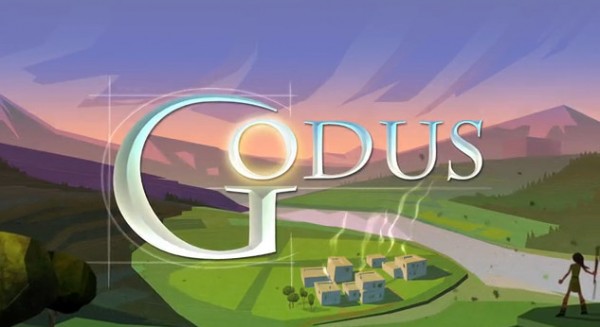
If you are one of the 1 million+ players, who have been tapping away at the Curiosity cube, then you would have been surprised with a Kickstarter campaign reveal on a recent layer for a project called Godus.

Godus is a God-Sim that the Peter Molyneux headed 22Cans hope will be their first true game since forming their new studio…however, they’re going to need £450,000 to make it. Peter Molyneux is known as the God of God games (I was going to say King, but…), inventing the genre with the 1989 hit Populous. He revisited his niche with the Black & White franchise, and now he hopes to tackle the genre once again, putting together all the nuggets of knowledge he has acquired over the years to create the perfect God game.

22Cans offer a great summation of what they are aiming for with Godus on the Kickstarter page, saying, “Populous was created over 22 years ago, and we believe that to date, nothing has come close to emulating its powerfully godlike experience. It’s this experience we aim to reimagine. GODUS blends the power, growth and scope of Populous with the detailed construction and multiplayer excitement of Dungeon Keeper and the intuitive interface and technical innovation of Black & White.”

With 27 days to go until the December 21st funding cut off, and almost 4 days in, Project Godus has accumulated over a quarter of their requested funds with £125,666. Although signs are good, it will be interesting to see if 22Cans can keep the momentum rolling and reach their funding goal. You can help make Godus a reality by visiting the Project Godus Kickstarter Page. Any contribution is welcome, although there are some cool rewards at multiple tiers of pledges.

Unchained Blades Exxiv localization under consideration at XSEED

A few months ago XSEED released a unique dungeon crawler called Unchained Blades as a downloadable title on the PSP. The company also is planning on releasing a 3DS version of the game on the eShop, though an exact release date for that version is currently unknown.

Obviously the lack of the 3DS version has worried many about what will become of the series and if the game’s sequel, Unchained Blades Exxiv, would be localized. One inquisitive fan took to the company’s Facebook page a few weeks ago and asked them just that. GoNintendo managed to catch their response to this fan which followed as thus:

“We’re still struggling to get the original out on 3DS first. After that’s finally out the door (hopefully December), then maybe we can start thinking about the sequel.”

Unchained Blades Exxiv contains many of the same themes as it’s predecessor with some minor improvements and, ironically, it is also meant to be released on the PSP and 3DS in Japan. So whether or not this sequel ever makes it to Western shores will likely have a lot to do on if XSEED can manage to release Unchained Blades on the 3DS and how well the game sells on the eShop.

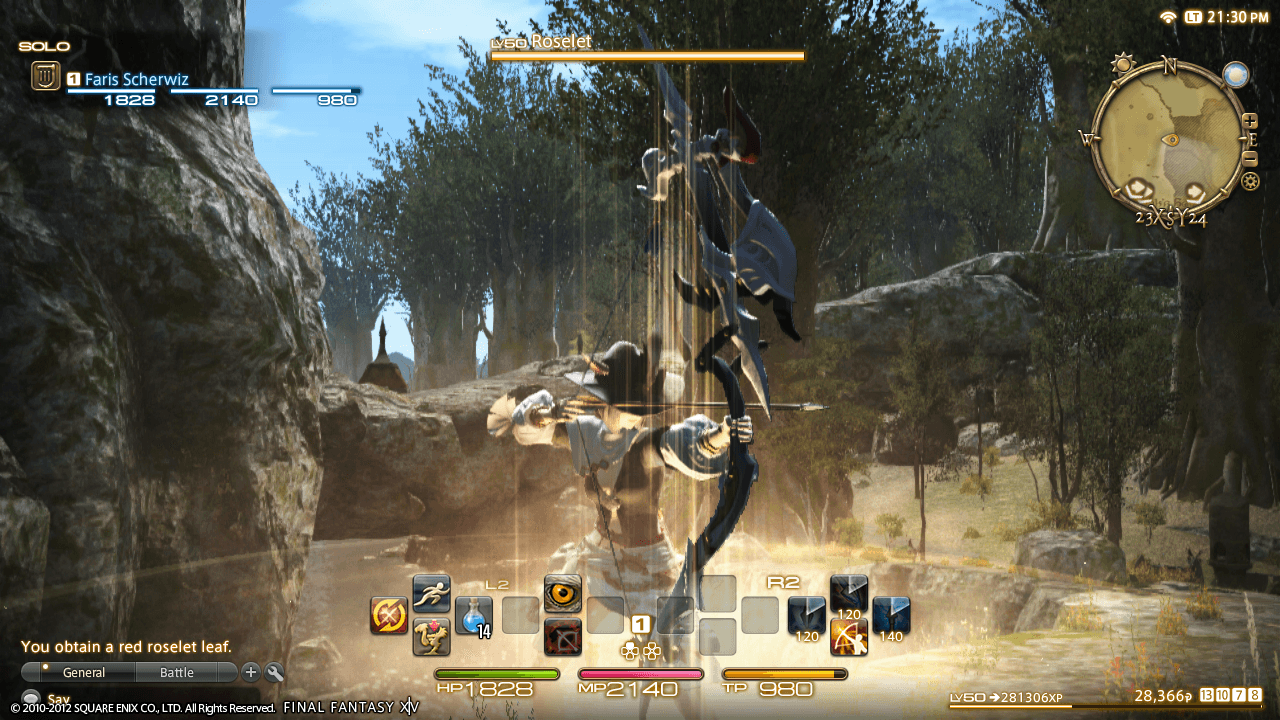
Final Fantasy XIV: A Realm Reborn alpha footage of the ‘Black Shroud’ released

Some new footage of Final Fantasy XIV: A Realm Reborn was released a few days ago and can be seen below. In the video below we see two different characters explore the Central Shroud area which is apparently in The Black Shroud zone.

It is worth noting that the footage only shows exploration and the amazing graphics that Final Fantasy XIV: A Realm Reborn will sport when it is released and those looking for combat footage will be disappointed. Currently Final Fantasy XIV: A Realm Reborn does not have an exact release date, though Square Enix is aiming to release the game on both he PC and the PS3 at the same time.

Senran Kagura: Shinovi Versus’ box art revealed

Today Marvelous AQL revealed what the official box art for Senran Kagura: Shinovi Versus will look like once it has been released to stores in Japan on February 28th next year. As you can see the the right (click the image for a larger version), the box art features the classic main character Asuka facing off against one of the new characters in Shinovi Versus, Yumi.

Currently Senran Kagura: Shinovi Versus has only been given a release date in Japan and although possible localization of the game is very slim, fans of the franchise can easily import the game thanks to the fact that the Vita’s physical games are region free. Various details including some more information about Yumi and other characters in the game can be found on the game’s official website here.

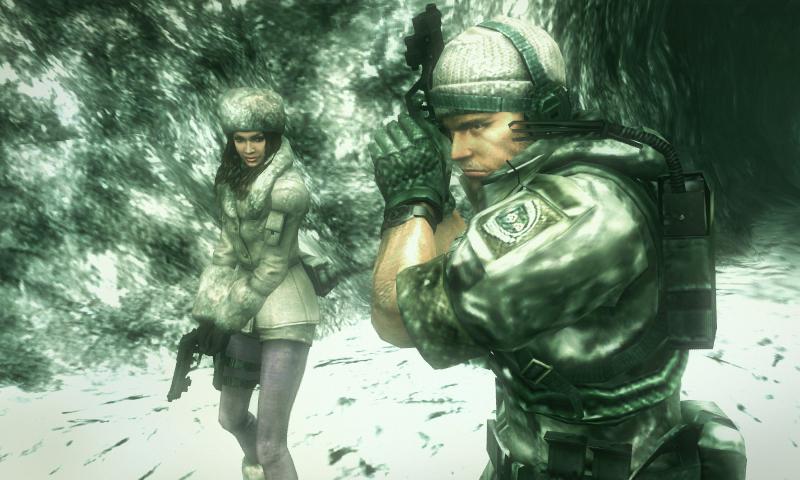
Resident Evil: Revelations rated for Xbox 360 and PlayStation 3

If you thought that you never picked up a Nintendo 3DS but still want to play Resident Evil: Revelations then we have some good news for you. If these listings from Korea’s video game ratings board are to be believed, Capcom is planning on releasing Resident Evil: Revelations for the PlayStation 3 and Xbox 360.

It is worth noting that these ratings are brand new as the 3DS version of Revelations was already rated back in July. Currently Capcom has not spoken up about these ratings but it wouldn’t be too much of a stretch to assume that a possible digital release of Resident Evil: Revelations in HD may occur sometime in the future.

Brink developer to reveal new game next week

0

Today the developer behind 2011’s Brink as well as the PC version of the game Enemy Territory: Quake Wars, Splash Damage, added a simple teaser to their official website. As you can see in the image above, the teaser tells us that something will be announced on November 29th.

Unfortunately for those who want to guess the title, there is little information, in fact there is practically nothing to go on. Though given the company’s history with FPS and their… sales… perhaps this is something entirely new for this team of developers. Stay tuned to find out more next week when this teaser is fully unveiled.