



K-pop Idol Stories: Road to Debut
Developer: Wisageni Studio
Publisher: PQube
Platforms: PC, Switch, PlayStation 5, Xbox Series X/S (Reviewed)
Release Date: Available Now
Price: $19.99 USD – Available Here
Overview
When it comes to managing an idol or an idol group, the concept isn’t entirely uncommon in the West but it is rather rare as many of the bigger titles focused on this remained Japanese exclusive, with Idolm@ster’s individual and team training titles never being released in English and only just recently a certain horse racing idol game arriving last year. Now though we have a title focused on an entirely different brand of music with K-pop Idol Stories: Road to Debut. Developed by Indonesian Wisangeni Studio and published by PQube, players are placed in charge of managing an up and coming label, but is this development game worth the time?
Story
The player’s story begins with their former idol group giving their final concert, having run out of money to continue their operations and while the CEO, the player’s friend Joo Won, isn’t too upset, he is worried that the player may not be able to make it in the industry with how they handled their team. This is immediately squashed as the player is emailed an acceptance notice from WG Entertainment, an on-the-rise studio with flashy stars and ready to bring the player on as a new manager for their new project. Project KIS. After meeting with the CEO and Vice President, the player is then given a few options about how they want to target their idol group. Fantasy, Cute, or Glamor and then mostly given free reign.
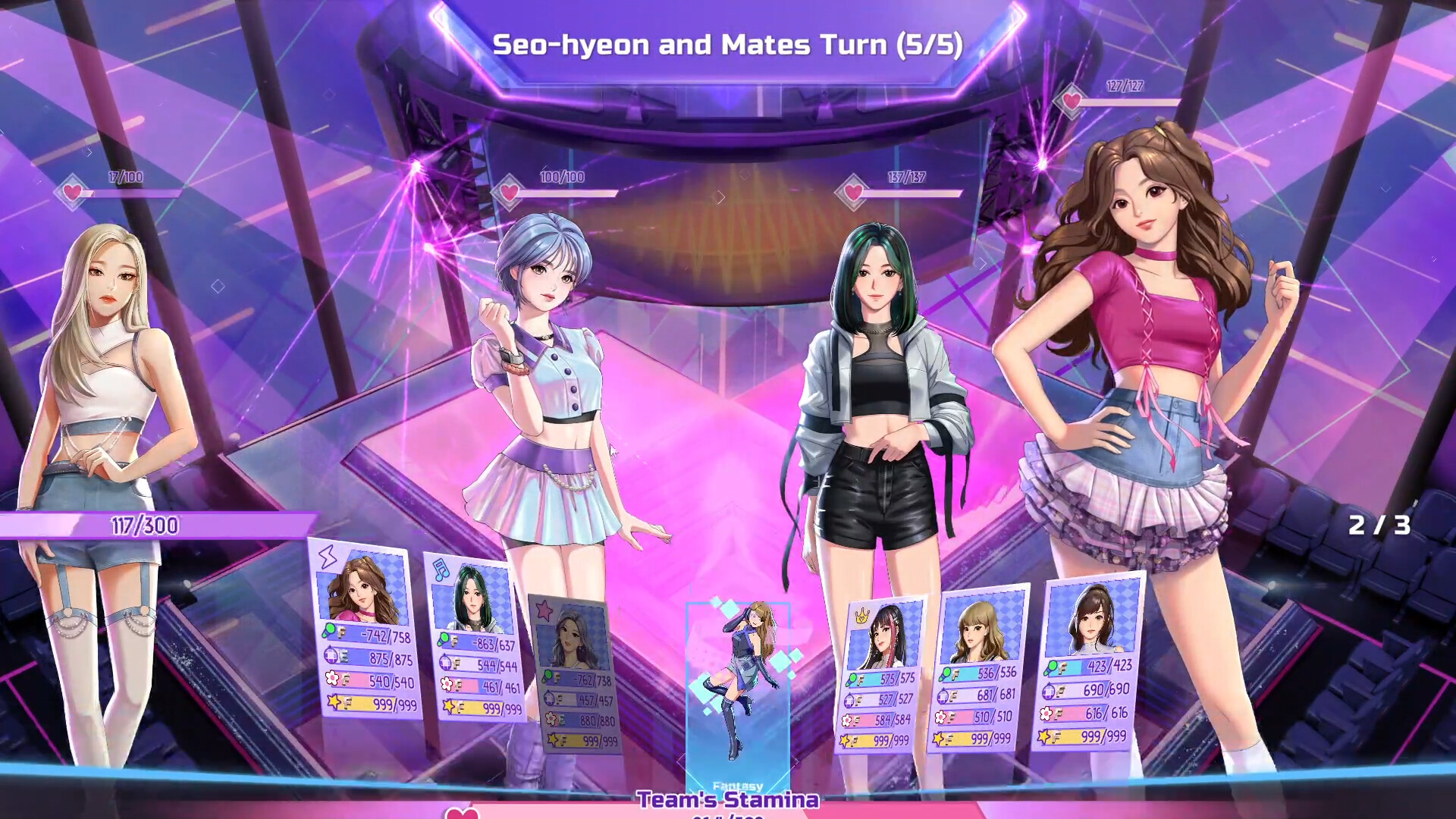
From here players will be able to hold auditions for idols with there being only a certain number of available girls total, though players can choose to take their idol group all the way up to a whopping eight members or even stick to a solo girl for a single debut. Either way, depending on the girls that the player hires it will also potentially affect what storylines they might see as each girl has a unique story that can play out alongside the core goal of Project KIS, and that being to debut the idol group against rivals from other companies throughout multiple evaluations and finally take part in an awards ceremony at the very end.
Although the main storyline may be very linear, what happens along the way is determined entirely by RNG it seems so players will need to play the game multiple times to see various storylines and how they unfold. For example, in the first run of K-pop Idol Stories we saw an idol named Yue manage to not only obtain her dream but also accomplish her true goal in a rather emotional fashion, especially since she bonded with the manager afterwards. Similarly another hired idol that we were training was beginning to flunk out of school and her parents were laying it on thick that she would need to quit being an idol if her grades can’t keep up. Ironically though, while this storyline did play out most of the way, it did not manage to finish and the other two girls that were part of the group did not have any storyline started at all, with the exception of a single scene.
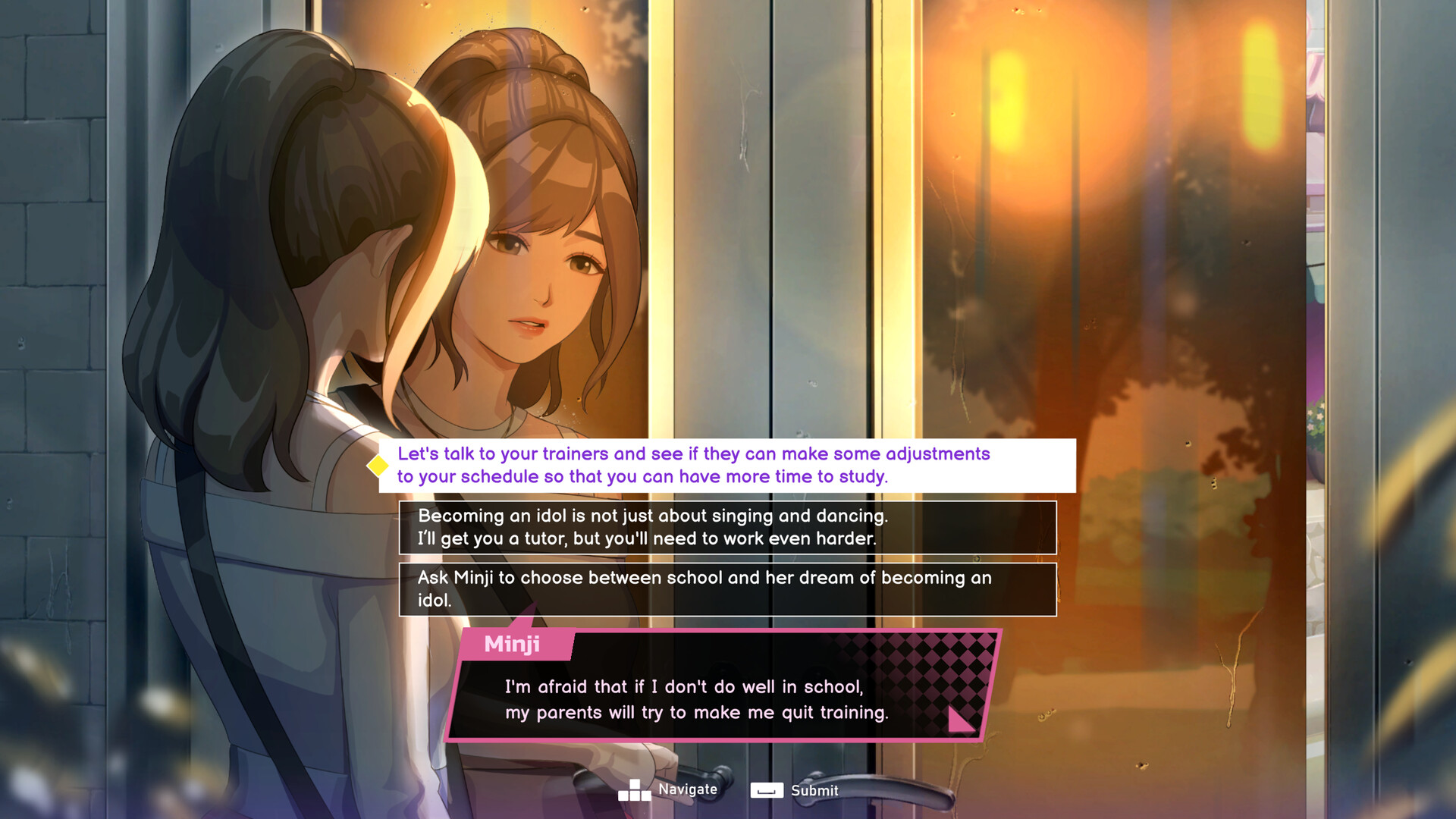
While this is nice for the point of replayability, especially since a full run through of the game takes a little over four hours once players get the hang of things, it is a bit disappointing that there is no way to trigger specific events with specific characters or even have a choice in regards to who is developed other than avoiding hiring an idol entirely. It is also worth noting that while players can interact with other members of the studio staff, none of these interactions are really detailed outside of a few here and there and most tend to involve repeating the exact same dialogue. So much in fact that the game will use the same female lines even when one of the male characters is meant to be talking, calling them a girl or she.
It is nice to note that K-pop Idol Stories isn’t all sunshine and rainbows about the idol industry. While it doesn’t take a hard stance against it or condemn it in any way, it does show that there are risks that come with being an idol. This includes storylines that involve stalkers, obsessive fans wanting to potentially harm them, aging out of the industry, and more. The fact that this is addressed is a nice touch, and players can select various dialogue responses during these scenes, and other story scenes involving their idols, that affect their moods, relationships, and stats.
Gameplay
K-pop Idol Stories: Road to Debut is a fairly straightforward development simulation that involves building a team of idols ranging all the way from a solo artist to a massive eight girl group and anywhere in-between. To do this, players must hold auditions, hire which girls they want on their squad, and then train them to compete against other idols in the industry during three evaluation periods before finally making their proper debut as an idol group. All while trying to stay afloat with enough money to keep going since, while the CEO can give the player a little extra leeway if they run low on funds, doing so too often can result in him shutting down the project.
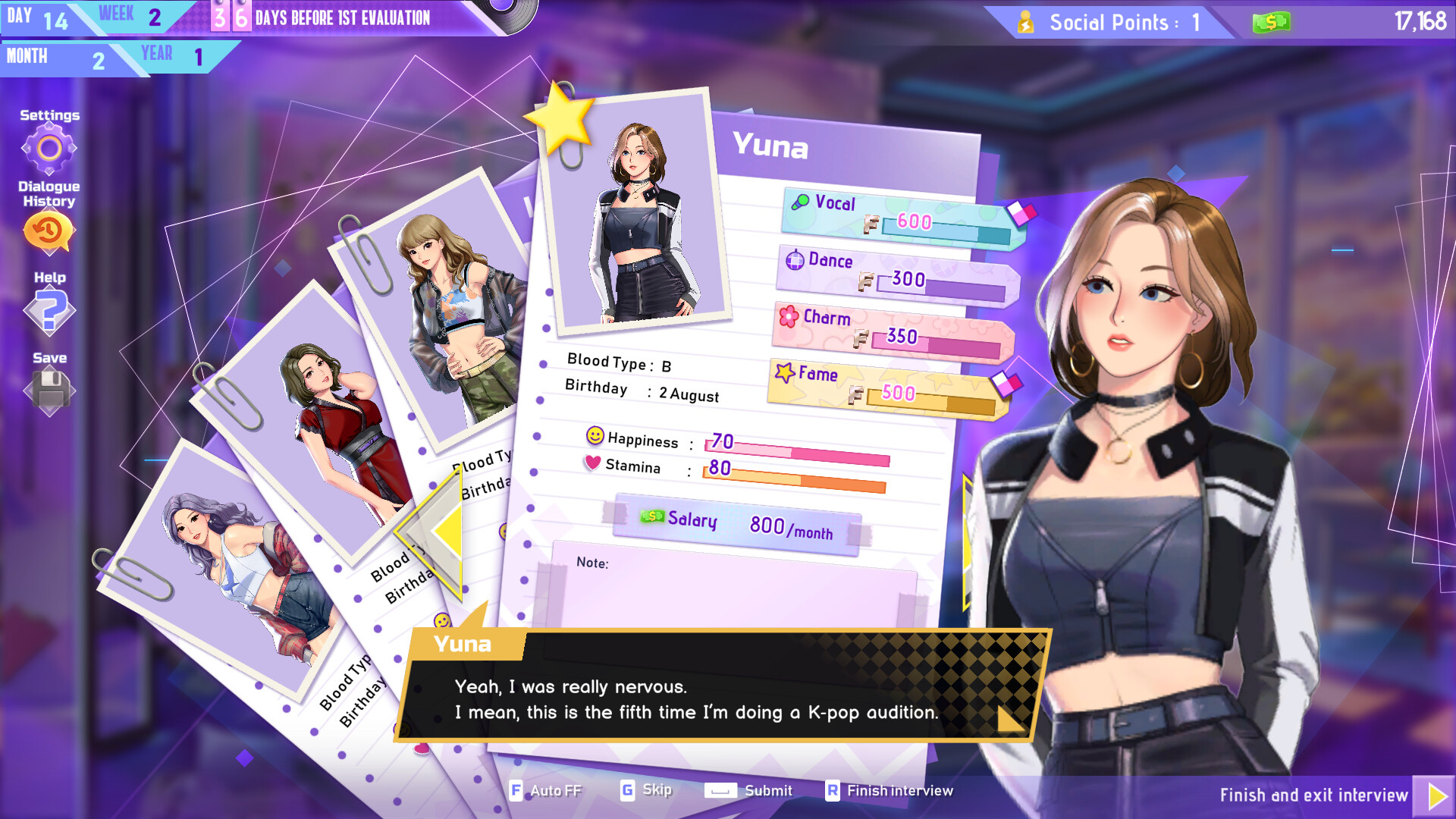
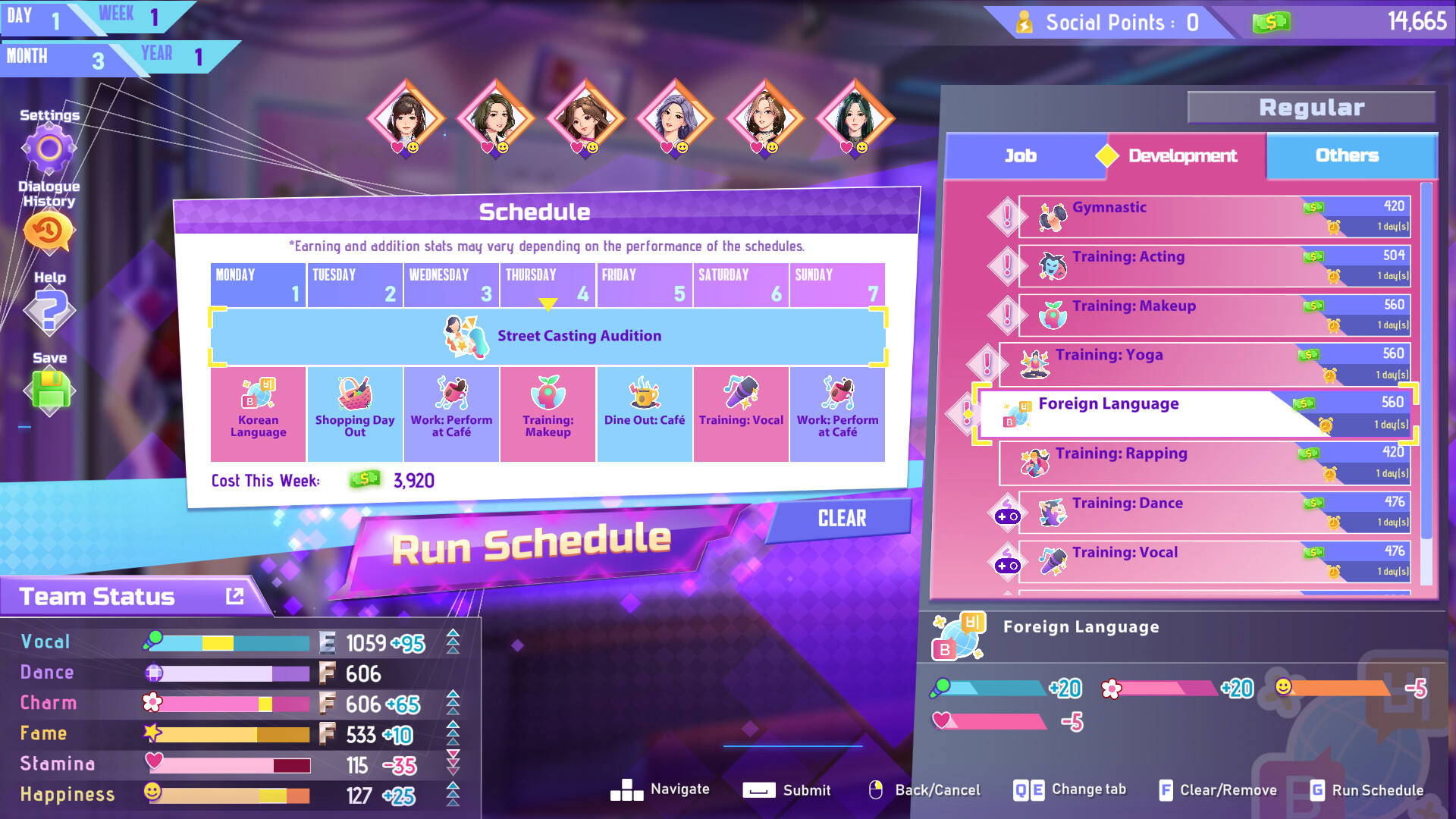
Everything is slowly introduced to players though most of it is rather simple at best. Every week there are seven days players will be able to schedule out various tasks for their idols to do and the manager can also hold auditions at the same time, though adding new girls into the team will bring them in at their base value and lower the group’s overall abilities until they are similarly trained. Either way, every girl has a certain strength and weakness when hired as well as a salary they must be paid every month alongside dietary requirements that also cost money but restore their stamina every week depending on what the player chooses. Every idol has four stats that players will need to increase and these are Vocals, Dance, Charm, and Fame with their chosen group dynamic of Fantasy, Cute, or Glamor factoring into which stats are most important. As the girls are trained throughout the week they will lose stamina and happiness that can only be regained by taking time off, going to the spa, or even going on vacation eventually.
While the schedule system starts off simple with only a few options, players will unlock various extra training methods through an always visible “tree” that explains how some better methods for training are unlocked, though most of these are tied to tiny percentages or bonds with the various colleagues in WG Entertainment. This means that players can unlock the ability to start going on a picnic if they are lucky on a day off or, if the player manages to get close enough with certain colleagues as mentioned before, even work as a back-up dancer or take on various gigs to try and earn money as well. Working gigs not only improves fame but also rewards the player with money since almost every other option outside of a day off costs money, whether it is training, massages for the idols, or anything else. While we never were up against the wall when it came to money until one point where, ironically we triggered a loan segment the day before money literally rolled in by the hundred thousands, it can play a role if players aren’t careful.
This is especially true once other costs start to pile up. Idols can be injured or slip-up while training and need medical attention and players can pay extra insurance every month per girl to always have that option covered. This keeps the girls happy and active rather than sidelined or unhappy they must pay out of pocket. Similarly, hiring a driver can avoid missing gigs or running late due to traffic but can be rather exorbitant as a cost even if it means missing out on opportunities here and there. Finally if players get there, there is the bodyguard option that can not only protect idols from incidents in the field but also story situations as well, though this is also a rather hefty cost.
Balancing the budget and making sure the players’ idols are trained and dressed correctly for every evaluation is the only goal here but there is some assistance along the way through interaction points. Every week players get two interaction points and can use them to interact with other staff members or even the idols themselves. While a bit random until players figure out what each character likes through repetition, players can invite characters out or discuss things with them to gain relationship points that can unlock extra training moments, bonuses to various training methods, literally just money, and even extra gigs entirely such as auditioning to be in a movie or on a fashion magazine for a nice chunk of change. These auditions though are rather absurd in their low success rate, with the highest being 10% and lowest being 5% chance and taking the place of training or rest time.
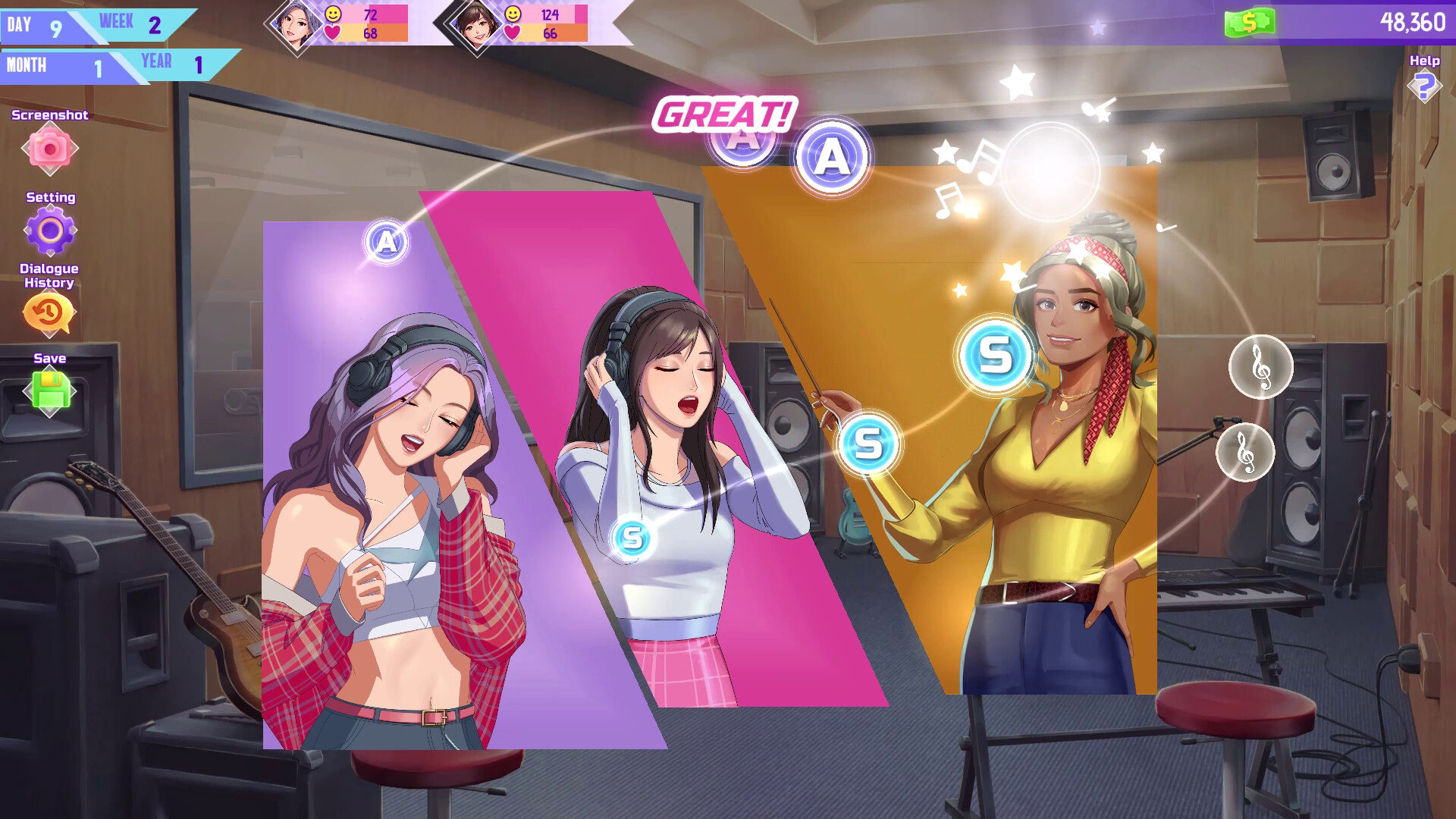
While hanging out with others or even during some training activities players can trigger mini-games that usually offer a bit of money or increase the happiness or training value from an activity. These range from taking part in a Korean BBQ of cooking items on a grill and moving them off before they burn, pouring drinks at a bar at the fill-line, pressing lights in the proper order a few times, or even simply turning a gacha machine for an extra stat boost. There are also smaller elements once players get closer to debut such as designing their “album cover” in a glitchy system and even the types of glow wands fans will be waving that provide stat boosts to the girls. These mini-games and later design elements are simple but do help break up the monotony of the game a bit.
This is something of a problem that K-pop Idol Stories: Road to Debut has. While there are new storylines to uncover and various chances to see new content and take in new idols, they all follow the same goal and same training methods. This means that things can grow incredibly monotonous and repetitive if players don’t take a break here and there. It is also worth noting that while the game does appear to offer a New Game+ option, it doesn’t seem to offer much in the way of useful content to carry over other than a paltry influx of money at the start compared to what we had at the end added to the starting $50,000 players are given to work with.
Audio & Visuals
K-pop Idol Stories: Road to Debut has fairly decent visuals and mostly sticks true to being a visual novel with Live2D style character portraits for the idols themselves while the standard characters players interact with have only minor details. Despite the game offering a gallery on the player’s cell phone any CGs that players unlock in a playthrough they are not shown at all in the phone nor is there any gallery viewable in the main menu which is disappointing. Another disappointing fact is that the debut concert is incredibly generic. It features only the standing Live2D sprites in the player’s chosen costumes in the same generic pose while the music video moves around behind them and occasionally slides them around.
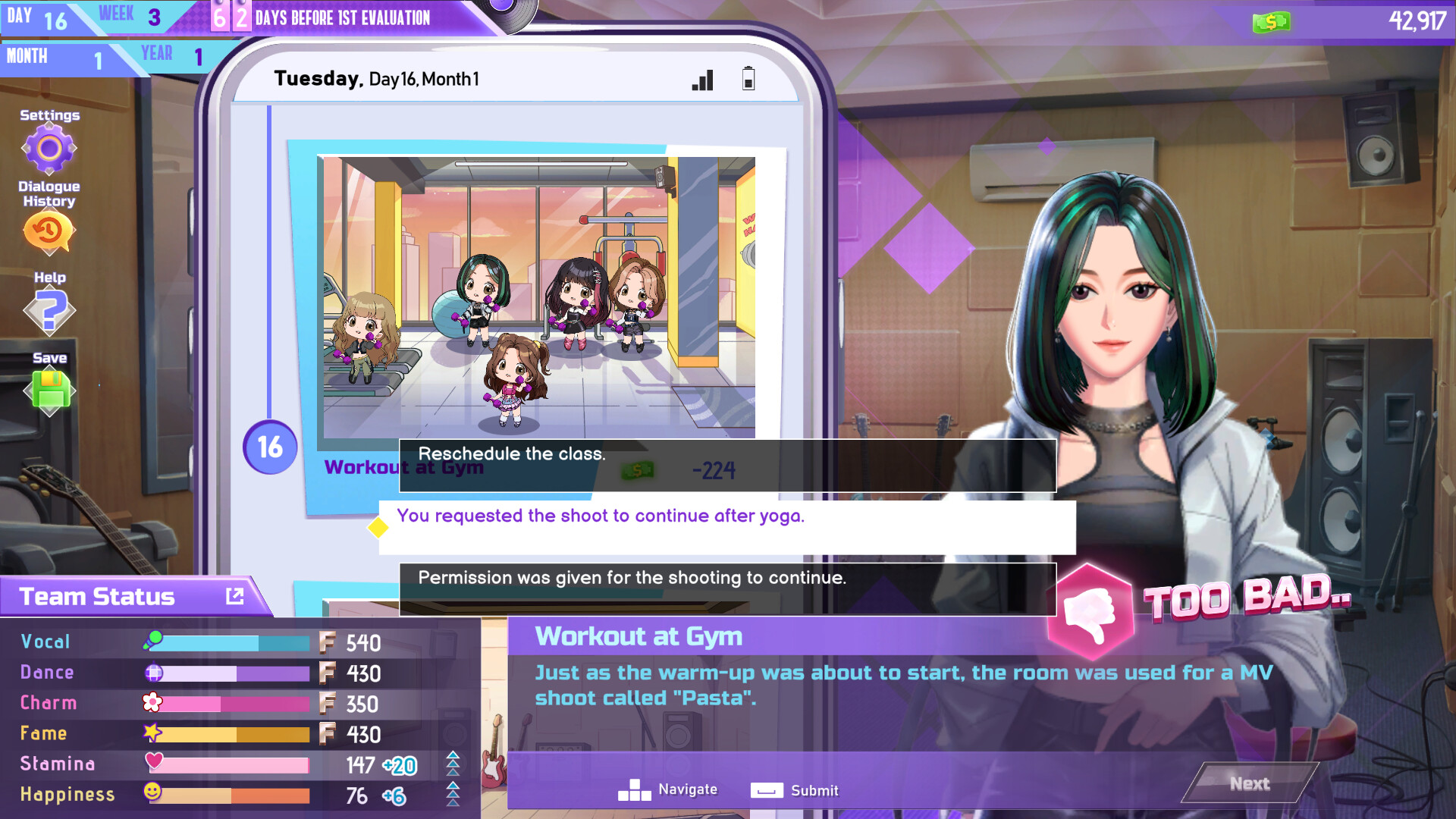
While taking part in the training the idols that players have are shown in chibi form and are rather cute and have a little bit of animation change depending on the task but that’s about it. The game does not have voice work of any kind but it does feature a nice soundtrack featuring a decent collection of standard background music as well as a handful of original K-Pop songs that players will be able to listen to and even have their idol group perform near the end of a run.
Overall
K-Pop Idol Stories: Road to Debut is a structurally sound idol group simulator that allows players to manage the various elements of building a team to their own preference and to fit their goals, but unfortunately the heavy focus on RNG for different or unique story development and lack of New Game+ benefits, or even an alternate core storyline, makes replaying the title quite boring despite the fun loop of balancing funds while ensuring your idols can shine as bright as possible in the time you have to train them. If only it felt more rewarding when everything is said and done.
Capsule Computers review guidelines can be found here.

